A buyer may send one photo and ask, “Can you make this model?”
That is a normal starting point. It happens all the time in small kitchen appliance sourcing. But for an electric meat chopper, a photo is only the beginning. Before a quotation becomes useful, the supplier still needs to know the capacity, bowl material, plug type, voltage, packaging style, and where the product will be sold.
Sometimes the buyer calls it a meat grinder. Sometimes they call it a food chopper. Sometimes there is no product name at all, just a screenshot from another store. That is not a problem. The problem starts when both sides assume they are talking about the same product, while the actual configuration is different.
This guide is written for importers, wholesalers, private-label buyers, and e-commerce sellers who want to choose an electric meat chopper for bulk orders without going back and forth for every small detail.
At JINJIE, we usually treat this type of inquiry as a sourcing discussion, not only a price request. Before recommending a model, we prefer to understand the buyer’s market, capacity range, bowl material preference, plug requirement, and OEM plan.
Buyers can review the current JINJIE electric meat chopper range before narrowing the capacity, bowl and configuration required for a project.
The Same “Meat Chopper” May Not Mean the Same Product
In real sourcing work, the words are not always used in the same way. One buyer may say “meat grinder” but send a bowl-style chopper photo. Another buyer may ask for a food processor, but the product they want is a simple household chopper with a bowl and blade set.
This is why the first step is not price. The first step is to confirm the product type. A bowl-style electric meat chopper is different from a traditional meat grinder. The structure, usage scene, packing method, and customer expectation are not the same.
A good supplier should help you clear this up early. Not with a long speech. Just with a few practical questions: what capacity do you need, which bowl material do you prefer, what market are you selling to, and do you need OEM packaging? Once these points are clear, the quotation becomes much more useful.
Capacity Is More Than a Number
Capacity looks simple on paper. In practice, it affects almost everything around the order.
A compact model may be easier to position for daily home cooking. A larger bowl may look more attractive for family use or wholesale display. But the bigger model can also change the color box size, outer carton quantity, loading space, and final retail price. It is not only a product detail. It becomes a shipping and pricing detail too.
When we discuss capacity with buyers, we usually try to connect it with the sales channel. A small online store may want a model that looks good in photos and ships safely in single parcels. A distributor may prefer a product series with several capacities, so they can cover more price levels in the local market.
That is why “2L” or “3L” is not enough by itself. The selected model, actual bowl size, box dimensions, and carton packing should all be confirmed before the buyer compares prices from different suppliers.
Bowl Material Changes the Way the Product Is Sold
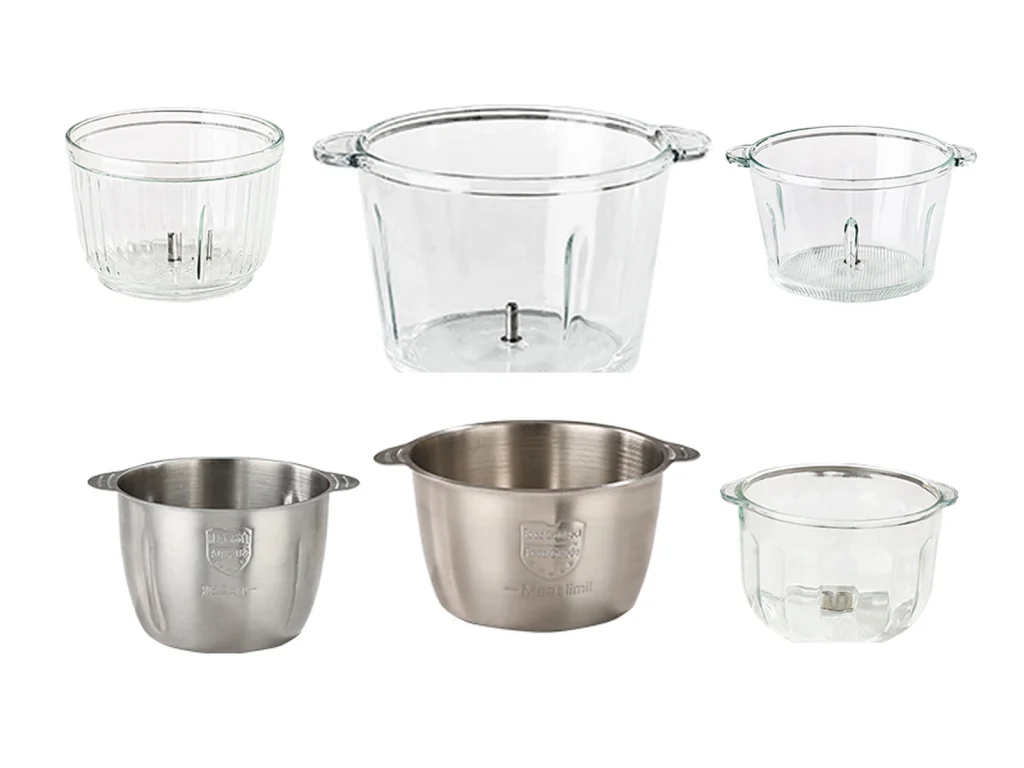
Stainless steel and glass bowls can both work, but they do not create the same feeling for the buyer’s customer.
A stainless steel bowl usually gives a practical kitchen-appliance impression. It looks clean, simple, and useful. For some wholesale markets, that is exactly what buyers want. It does not need too much explanation.
A glass bowl has a different advantage. The user can see the chopping process, and the product often looks better in photos or short videos. For online listings, that visual effect can help. Of course, glass also means the packaging discussion becomes more serious. The bowl needs proper protection, especially if the product will be sold through e-commerce channels.
So the question is not “Which bowl is better?” The better question is: which bowl fits your sales channel, customer expectation, packaging budget, and target price level?
The Motor Is Not Visible in the Product Photo
This is one of the places where buyers can easily compare the wrong things.
Two electric meat choppers may look almost the same from the outside. The main body shape, lid, and bowl may be similar. But the motor option, control method, blade structure, and safety design may not be the same. A photo cannot show all of that.
Before you use one supplier’s price to push another supplier, make sure the configurations are really comparable. Ask which motor option is used for the selected model, what control type is available, and whether the product has the safety features required for normal household use. If the supplier has videos or detail photos, those are often more useful than one clean catalog image.
Small difference during inquiry. Big difference after customers start using the product.
Plug, Voltage, and Certificates Should Come Up Early
These details are sometimes left until the end, especially when the buyer is still testing the product idea. That can work for a casual discussion, but not for a serious bulk order.
Voltage, plug type, label information, manual language, and available certificates should match the destination market and the exact product configuration. A document for one model does not automatically cover every version. A different plug or voltage may require extra confirmation.
A careful supplier will usually ask where the product will be sold before giving a final answer. That is not slow service. It is part of responsible sourcing. For electrical appliances, unclear market information can turn into problems later: customs questions, retail listing issues, or after-sales complaints.
Use the Compliance Documentation page to understand how model, electrical version and destination market affect the document review.
OEM Details Start Before the Color Box
Many private-label buyers think OEM starts when the color box artwork is ready. In actual production, it starts earlier.
Logo position, panel sticker, plug type, voltage, manual language, barcode, product label, outer carton mark, and even product color may affect the order. Some changes are easy. Some depend on MOQ. Some need more time because packaging files and sample confirmation must be checked before mass production.
If you are planning a private-label project, send the brand information early. A logo file, rough packaging direction, target market, and expected order quantity can help the supplier judge what is practical. It also avoids a common problem: the buyer confirms a low standard-product price first, then adds OEM details later and finds that the cost has changed.
For private-label electric meat chopper projects, JINJIE can discuss logo, color box, manual, plug, voltage, label, and outer carton requirements according to the selected model and order plan.
The OEM / ODM process explains how regular product customization, tooling adaptation and new product development are handled at different project depths.
Packaging Is Where Small Mistakes Become Visible
Packaging rarely feels urgent at the inquiry stage. After shipment, it can become very visible.
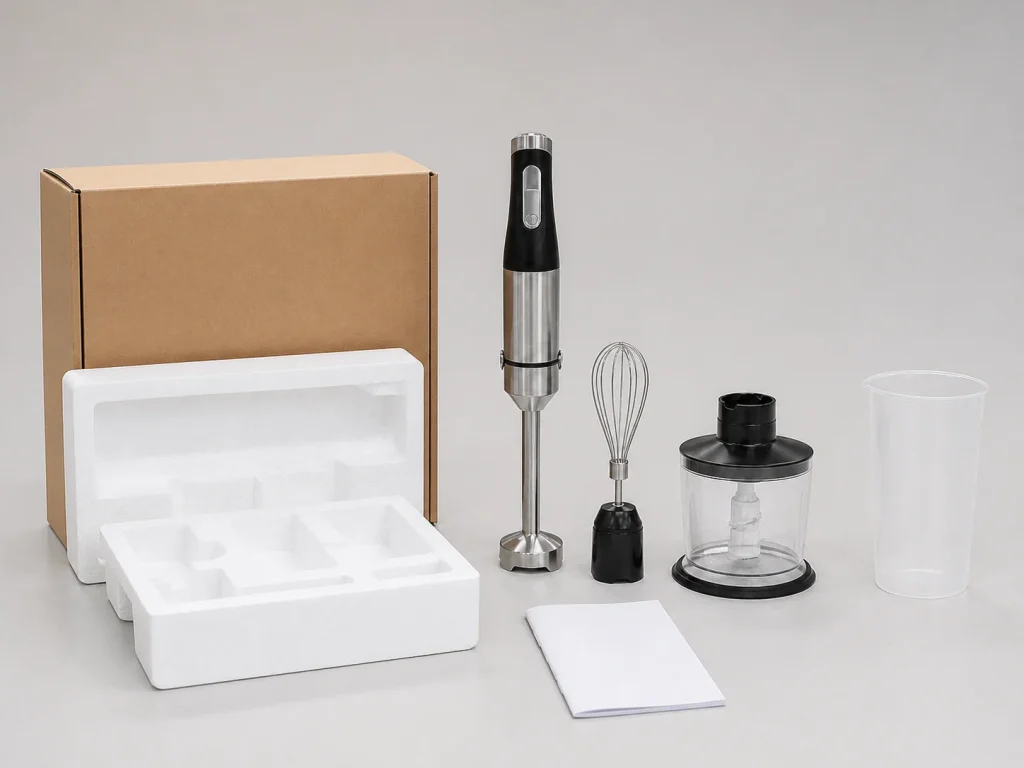
An electric meat chopper normally includes several parts: the motor unit, bowl, lid, blade set, power cord, manual, and sometimes additional accessories. If the inner protection is weak, the product may arrive with scratches, broken bowls, dented color boxes, or missing parts. Not a big issue during quotation. A real issue when customers receive the goods.
For wholesale orders, the buyer should check color box size, outer carton quantity, carton dimensions, and shipping mark. For e-commerce sales, the question is stricter: can the package survive single-unit delivery? A glass bowl model and a stainless steel bowl model may need different protection.
Packaging is not just decoration. It is part of the product cost, the shipping plan, and the after-sales risk.
Packaging and supplied-part checks should also be included in the agreed quality and inspection scope before shipment.
A Better RFQ Saves Several Rounds of Messages
A short message like “Please send best price” usually leads to a rough answer. The supplier can reply quickly, but the quotation may not mean much.
A better RFQ does not need to be long. It only needs the right information. Tell the supplier your target market, expected quantity, preferred capacity, bowl material, plug type, voltage, OEM needs, packaging requirement, and whether samples are needed first.
For example, a buyer can say: “We are looking for an electric meat chopper for wholesale and online sales. Please recommend stainless steel and glass bowl options suitable for private label. We need logo and color box customization, plug option for our market, and available certificate information.”
This kind of message gives the supplier enough context. The first quotation will be closer to the real project, not just a placeholder price.
Before You Confirm the Model
Choosing an electric meat chopper for import or wholesale is not about finding the most beautiful product photo. It is about matching the product with your market.
Capacity, bowl material, motor option, control type, plug, voltage, certificates, packaging, and OEM details all need to fit together. If one of these details changes, the quotation may change too.
Our suggestion is simple: confirm the product configuration before comparing prices too seriously. Once the model, package, and market requirements are clear, the rest of the sourcing process becomes much easier to manage.
If you are preparing an electric meat chopper project, you can share your target market, expected quantity, bowl preference, plug type, packaging needs and OEM requirements with JINJIE. We can help recommend a more suitable direction before the quotation is finalized.
FAQ
What should I send if I only have a product photo?
Send the photo first, but also tell the supplier your target market, expected quantity, plug type, voltage, bowl material preference, and whether you need logo or color box customization. Otherwise, the first price will usually be only a rough reference.
Is stainless steel bowl or glass bowl better for electric meat choppers?
Both can be suitable. Stainless steel bowls often fit practical wholesale markets. Glass bowls can look more attractive in product photos and online listings. The better choice depends on your sales channel and packaging needs.
Can I use one model for both wholesale and e-commerce sales?
Sometimes yes, but the packaging may need different consideration. E-commerce orders usually need stronger protection for single-unit delivery, especially for glass bowl models.
Can the logo and packaging be customized?
Yes, logo and color box customization are usually available for OEM orders. The exact options depend on the selected model, order quantity, artwork, and production arrangement.
Do I need certificates before placing an order?
You should confirm available certificates or test reports before bulk order. They should match the selected model, voltage, plug type, and target market.
What affects the final quotation most?
Capacity, bowl material, motor option, control type, packaging, OEM requirements, certificates, order quantity, and shipment plan can all affect the final price.