When buyers search for electric meat chopper suppliers in China, the first few pages can look almost copy-and-paste.
Similar product photos. Similar promises. Similar words like factory, OEM, fast delivery, good quality.
The difference usually appears later, after the first quick quotation. It appears when you ask which models are in regular production, how product changes are controlled, whether documents match the selected model, and whether the supplier can repeat the same configuration after the first shipment.
We have seen this many times in sourcing communication. A supplier can reply quickly, but still be unclear about packaging files, sample change records, carton information, or what happens when the buyer reorders six months later. Fast reply is helpful. It is not the same as stable manufacturing support.
This article is not about finding the cheapest electric meat chopper in China. It is about choosing a manufacturer that can support importers, wholesalers, distributors, and private-label buyers in a more practical way.
At JINJIE, this is also how we prefer to handle manufacturer discussions. A useful project should start with the buyer’s market, order plan, OEM direction, and packaging expectation, not only a request for a quick number.
Start by reviewing the current electric meat chopper range, then compare suppliers against the same product and project requirements.
Similar Photos Do Not Prove Factory Control
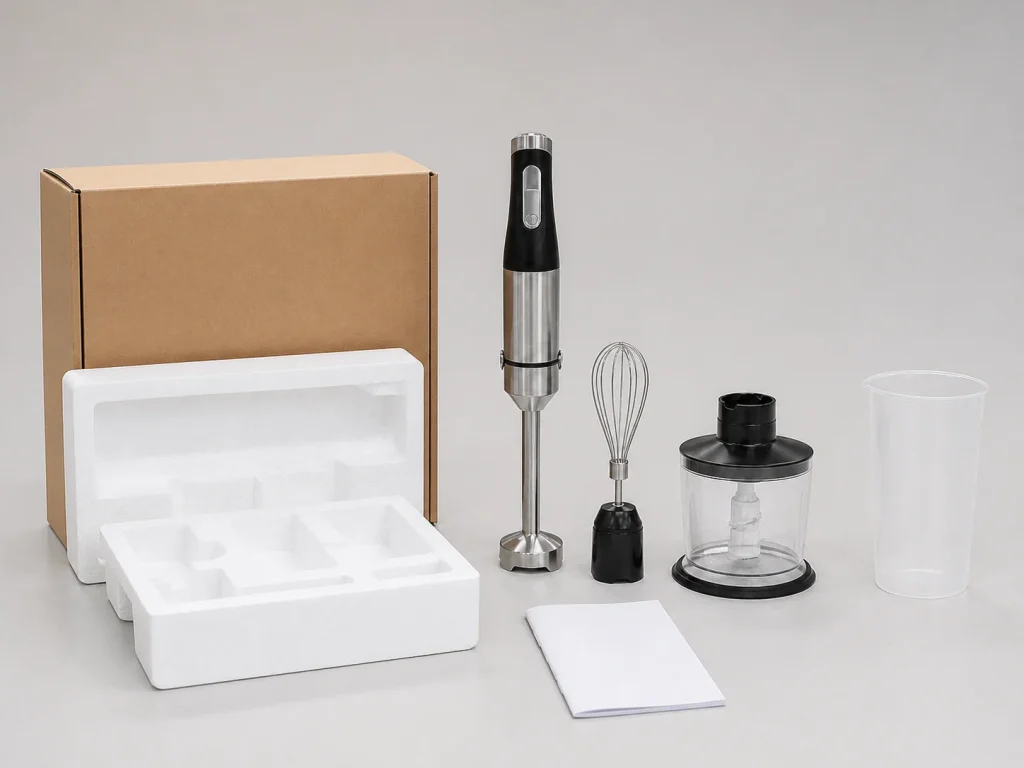
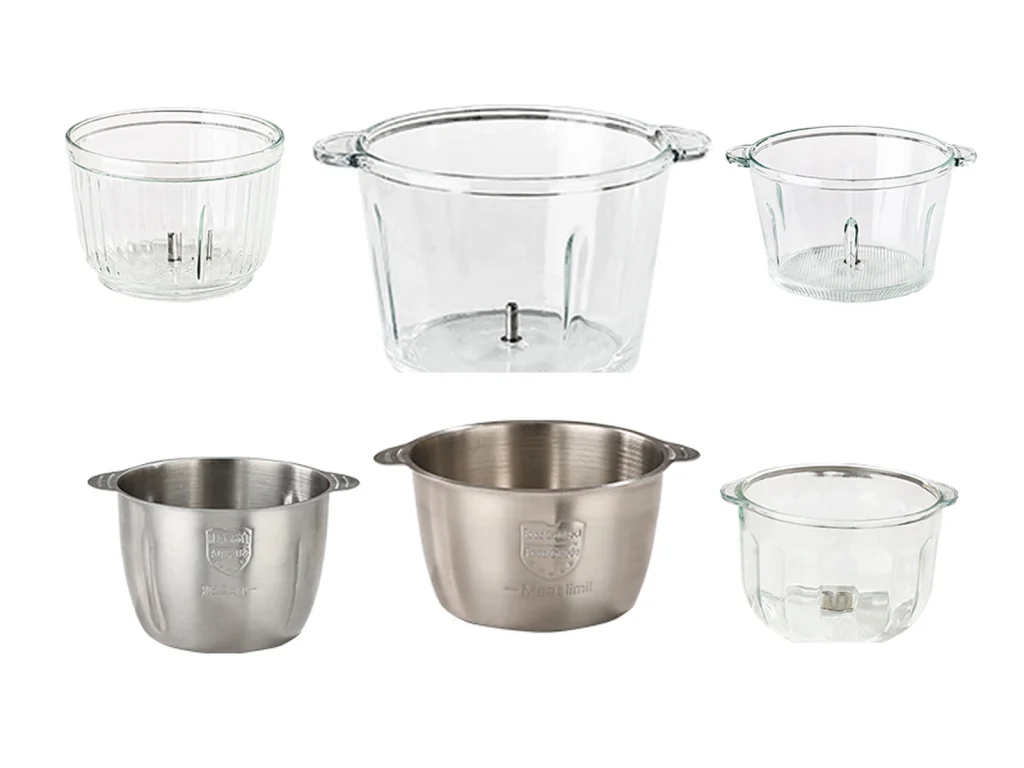
Electric meat choppers are easy to compare visually. A stainless steel bowl model, a glass bowl model, a lid, a motor unit, a blade set. From the outside, many products look close enough.
But factory evaluation does not stop at the photo.
A real manufacturer should be able to bring the discussion back to controlled details: which version is in regular production, which parts can be changed, which packaging files are final, and which configuration is used for repeat orders.
That is different from simply saying nice product or best price. For B2B buyers, the supplier’s ability to explain and control details is often more important than the first catalog image.
Regular Models Are Easier to Repeat
A long catalog can look impressive. It does not always mean stronger manufacturing support.
For importers and distributors, regular production models are more useful because the factory is more familiar with the structure, accessories, packaging, assembly flow, and common order questions. Repeat orders are also easier when both sides know exactly which model and configuration were confirmed last time.
When we review an electric meat chopper project, we pay attention to whether the supplier has a clear product series rather than a random list of small appliances. A useful series gives the buyer room to test one model first, then expand later without restarting the project from zero.
For JINJIE, a practical electric meat chopper project usually starts from regular model options, target market, OEM feasibility, and repeat-order needs, rather than sending a long catalog without direction.
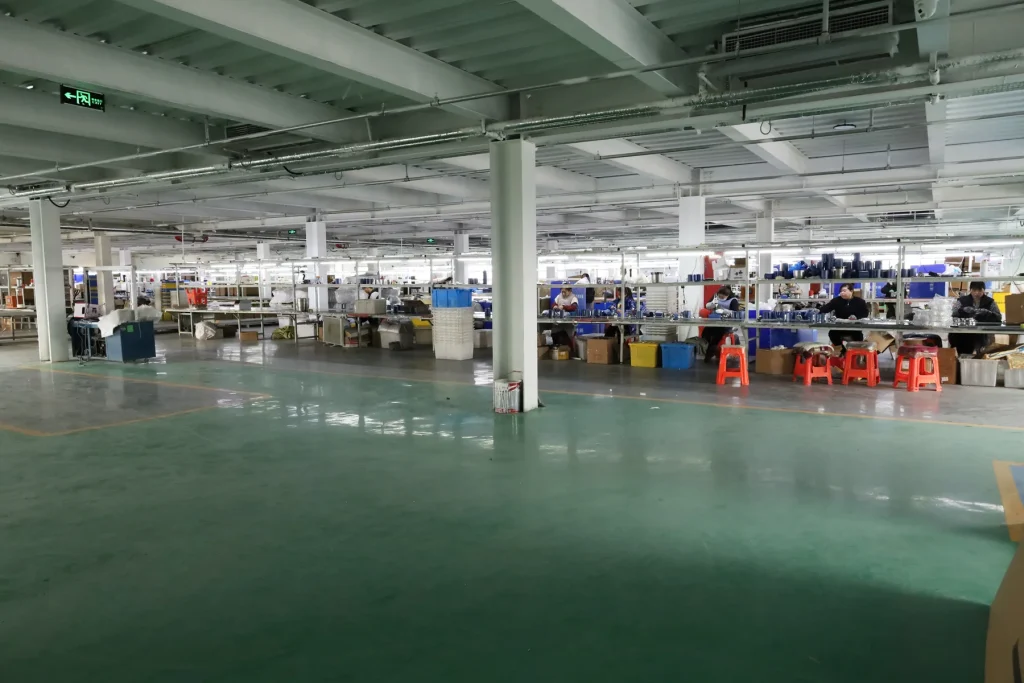
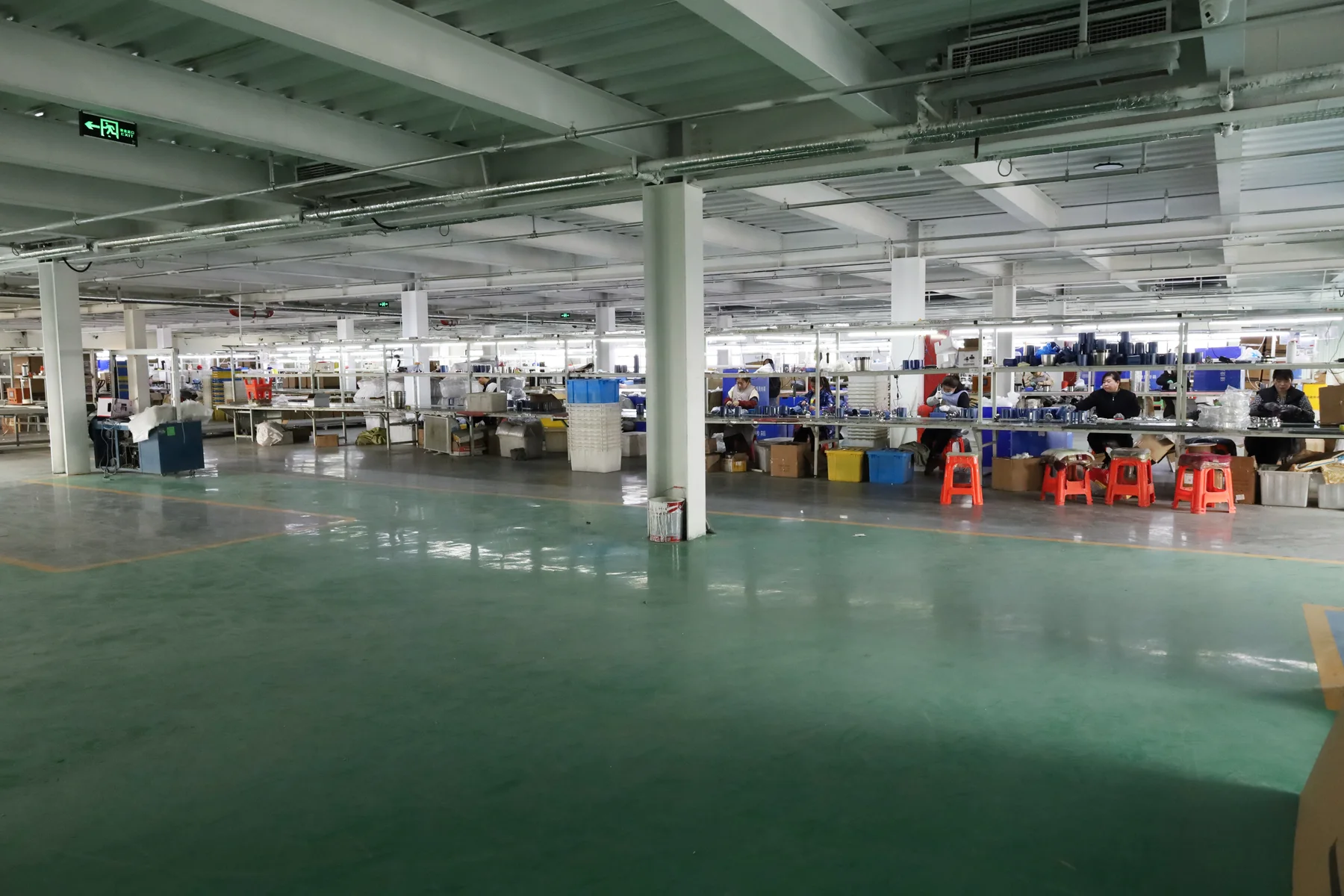
The Manufacturing page shows the production stages and real environment behind that repeat-order discussion.
OEM Answers Should Be Specific, Not Automatic
For private-label buyers, OEM is usually where a weak supplier becomes easy to spot.
Almost everyone can say yes to logo and color box. The better question is what exactly can be changed, on which model, at what quantity, and before which production step.
A practical manufacturer will talk about logo position, color box artwork, manual language, plug type, voltage, panel sticker, product color, barcode, outer carton mark, and sample approval. They may also tell you that some changes are simple, while others depend on MOQ or production schedule.
That kind of answer is not less professional. It is more professional.
This is also how we prefer to handle OEM discussions at JINJIE: confirm what can be changed, what needs artwork approval, and what should be checked before sample or bulk production.
Review the three project routes on the OEM / ODM page before asking a supplier to quote changes beyond a regular model.
Electrical Documents Need Model-Level Confirmation
Electric meat choppers are small appliances, but they are still electrical products. Plug, voltage, label information, manual language, and certificates should not be treated as general words on a supplier profile.
This issue often looks harmless in the beginning. A buyer asks for a quotation. The supplier quotes a general model. Later, the buyer says the product is for a specific market and needs a different plug or document. Then the quotation changes, the sample changes, or the timeline becomes less clear.
Better to bring it up early.
A manufacturer should check documents against the selected model and final configuration instead of giving a loose answer. A certificate or test report for one version does not automatically mean every bowl material, plug, voltage, or configuration is covered.
JINJIE’s Compliance Documentation page explains why certificates and reports must be checked against the exact product and market.
Boring work. But much safer before shipment than after.
Quality Control Should Be Visible Before Shipment
Many factory websites say they have strict quality control. That sentence alone does not tell you much.
Ask how the product is checked. Not in a complicated way. Just enough to understand the process. For an electric meat chopper, the supplier should understand incoming material checking, assembly checks, function testing, appearance inspection, accessory checking, packing inspection, and pre-shipment photos or videos when needed.
The timing also matters.
If inspection standards are discussed only after production is finished, the buyer has very little room to adjust. It is better to confirm the main checking points before mass production starts: what should be included in the box, how the blade set is packed, whether the manual is in the correct language, and whether the outer carton mark follows the buyer’s requirement.
Use the Quality & Testing page to review the inspection, performance, electrical and durability checks that can be aligned to the selected model.
Small things. They are exactly the things customers notice when something is missing.
Export Packaging Shows Whether the Supplier Knows Bulk Orders
Packaging is where sourcing mistakes become visible.
During quotation, packaging may look like one line in the cost sheet. After delivery, it can become broken bowls, dented color boxes, scratched parts, missing manuals, or complaints from online customers. This is especially true for glass bowl models and e-commerce channels.
A manufacturer with export experience will not only say color box available. They should be able to discuss inner protection, outer carton packing, carton quantity, carton size, shipping mark, accessory arrangement, and loading estimate if the buyer is planning a container order.
For wholesale distribution, carton strength and loading efficiency may matter more. For online sales, the product may need better single-unit protection. Same product category, different risk.
Packaging is not decoration. It is part of the order.
A Good Factory Controls Changes Before Bulk Production
The sample stage is where many details start to move: logo position, box artwork, plug type, manual language, accessory list, carton mark, or small product adjustments.
A good manufacturer does not only send a sample and wait for approval. It should help the buyer close open points before mass production. Which sample is approved? Which packaging file is final? Which label version should be used? Which details are still pending? If these points are unclear, bulk production can follow the wrong version even when the sample looked fine.
This is one of the biggest differences between a quick supplier and a stable manufacturer. The quick supplier sends things fast. The stable manufacturer controls changes before they become expensive.
Warning Signs Before You Place the Order
Some warning signs appear early if you pay attention.
Be careful when a supplier avoids product configuration, gives the same answer for different models, cannot explain packaging, talks about certificates in very general terms, or does not ask about plug and voltage. Also be careful if OEM answers are always yes, but no one explains MOQ, artwork timing, sample confirmation, or production limits.
Low price is not the problem by itself. The problem is low price with unclear details.
For B2B buyers, unclear details usually become extra cost somewhere else: sample delay, packaging change, document confusion, after-sales complaints, or difficulty repeating the same order.
Before You Choose a Manufacturer
Choosing an electric meat chopper manufacturer in China is not only about comparing product photos and unit prices.
The better manufacturer is the one that can explain its regular models, control product configuration, discuss OEM details honestly, check documents against the selected model, prepare packaging for your sales channel, and keep repeat orders consistent after the first shipment.
Sometimes the best supplier is not the one who gives the fastest answer. It is the one who asks the right questions before the order becomes expensive to change.
That is the manufacturer worth keeping in your supplier list.
If you are comparing electric meat chopper manufacturers in China, send JINJIE the product direction, OEM requirements, packaging expectations and market details before requesting a model recommendation.
FAQ
How can I tell whether a supplier really understands electric meat choppers?
Ask about regular models, product structure, packaging files, sample process, OEM limits, plug and voltage, and document matching. A supplier who understands the product should be able to explain these details without only repeating best price or good quality.
Why are regular production models important?
Regular models are easier to repeat, inspect, pack, and reorder. For importers and distributors, this is often more valuable than a long catalog with unclear product continuity.
Can I customize logo and packaging for private-label orders?
Usually yes, depending on the selected model and order quantity. Logo position, color box, manual language, label, barcode, and outer carton mark should be confirmed before production.
Do certificates cover every electric meat chopper model?
Not always. Certificates and test reports should be checked against the exact model, voltage, plug, and final configuration. It is safer to confirm this before sample approval or bulk order.
Is the cheapest manufacturer the best choice?
Not if the configuration is unclear. A low price can be useful for comparison, but buyers should also check product structure, packaging, documents, quality control, and repeat order stability.
What should be confirmed before bulk production?
The approved sample, packaging artwork, plug, manual language, label, carton mark, accessory list, and inspection points should be confirmed before mass production starts.