A buyer sends a manufacturer a spreadsheet showing 300 appliances in October, 400 in November and 500 in December. Sales sees a demand outlook. Purchasing expects a capacity discussion. The manufacturer may need to know whether any materials should be prepared. Without a shared purpose, the same spreadsheet can lead to three incompatible plans.
An appliance purchase forecast should make the next supplier conversation more specific. It tells the supplier which future purchases the buyer is considering and what response is needed. It should not leave either party guessing whether an estimate is an order, whether preparation is authorized or whether a production opportunity has been reserved.
This guide covers household appliance importers and private-label buyers planning repeat supply. It does not announce a JINJIE reservation program, fixed forecast period or cancellation policy. Any commercial or legal effect of the communication depends on the actual arrangement and needs appropriate review.
Give the forecast one purpose before sending it
Decide what the manufacturer should do with the information. You may want to know whether the proposed purchasing pattern fits the available product, identify material dependencies or request terms for a separately bounded advance commitment. These are useful but different questions.
Say whether the quantities represent consumer sales, your intended supplier purchases or desired receipts. A sales forecast of 500 units does not necessarily mean a factory purchase of 500 when you already hold usable stock. A request for 500 units at your warehouse needs another timing basis from 500 ready for collection.
Keep the forecast’s status visible in the communication and attachment. If it is for planning only, state that purpose and request the supplier’s understanding. Do not assume a label alone overrides an existing contractual arrangement or an instruction elsewhere in the same message. Have the authorized commercial team resolve any ambiguity before dependent work begins.
Use CIPS’s demand-forecasting discussion as a general reference: historical demand, sales information and planned marketing activity can inform future requirements. For supplier communication, the buyer still has to translate those requirements into identified products, purchasing periods and the response being requested.
Ask for one usable outcome. A supplier answer identifying a material constraint and the next decision date can be enough for a planning forecast. Another situation may call for a scoped quotation. Do not insist that every early estimate produce a firm delivery commitment.
Show the configuration behind each quantity
Identify the complete appliance, destination version and retail presentation relevant to the proposed purchase. Family totals can be useful for an initial discussion but often need allocation before product-specific preparation can be assessed.
For example, JINJIE’s current quotation identifies SD-02 with a nominal 2 L stainless-steel bowl, 400 W and digital controls. SD-01 is a separately listed nominal 3 L steel-bowl configuration at 500 W. Those references help distinguish a forecast line; they do not establish interchangeable parts, customer preference or a production plan.
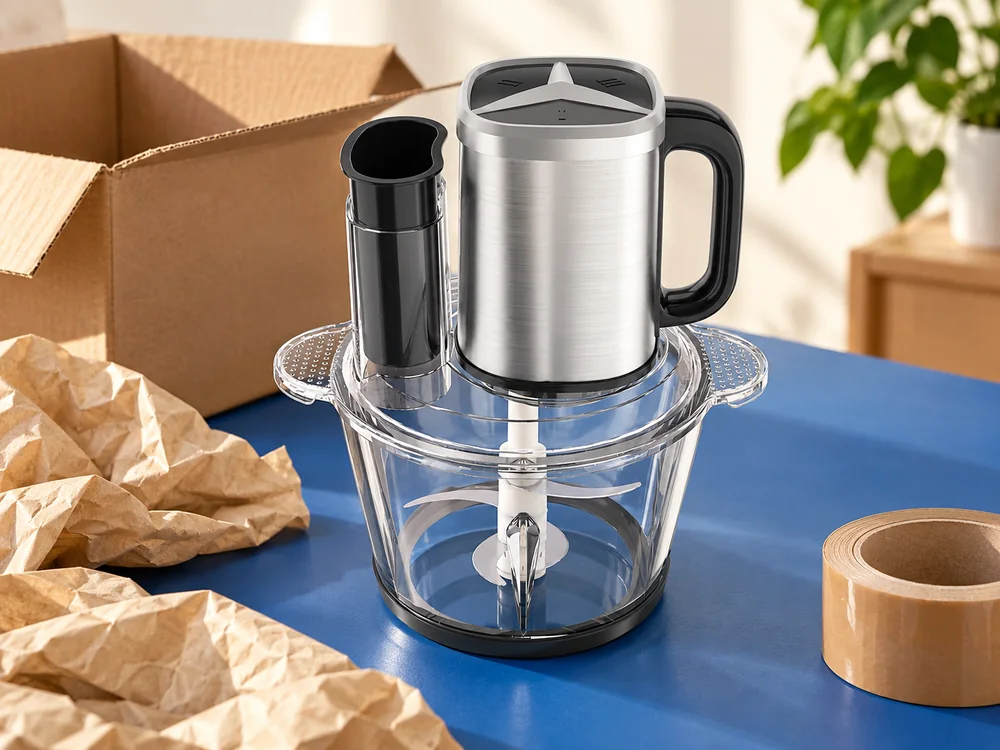
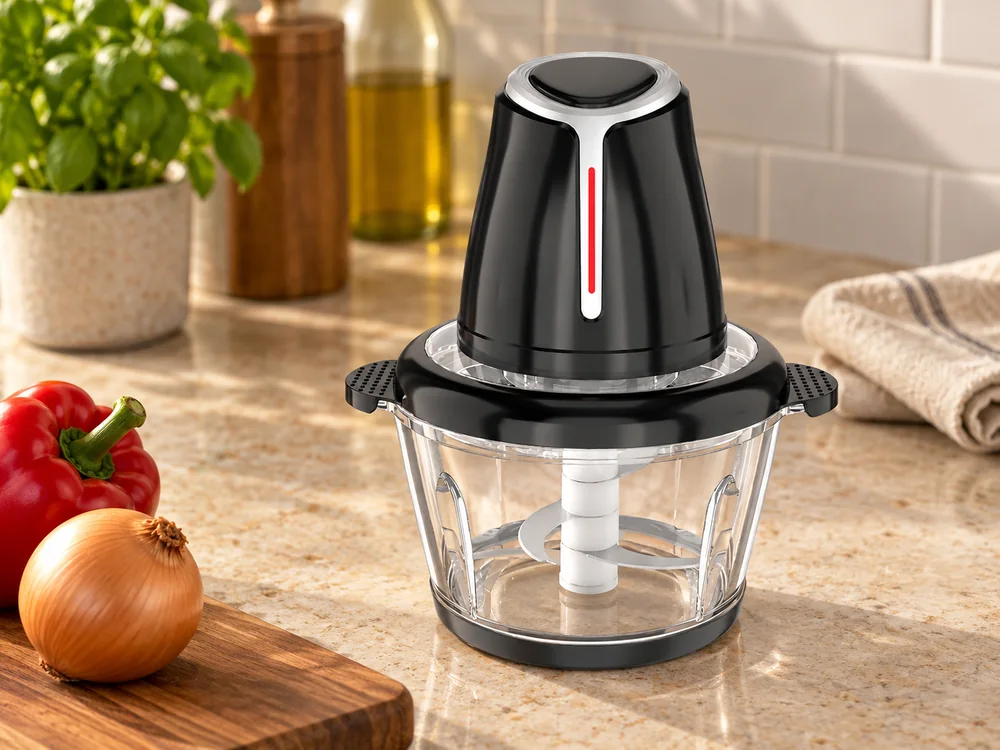
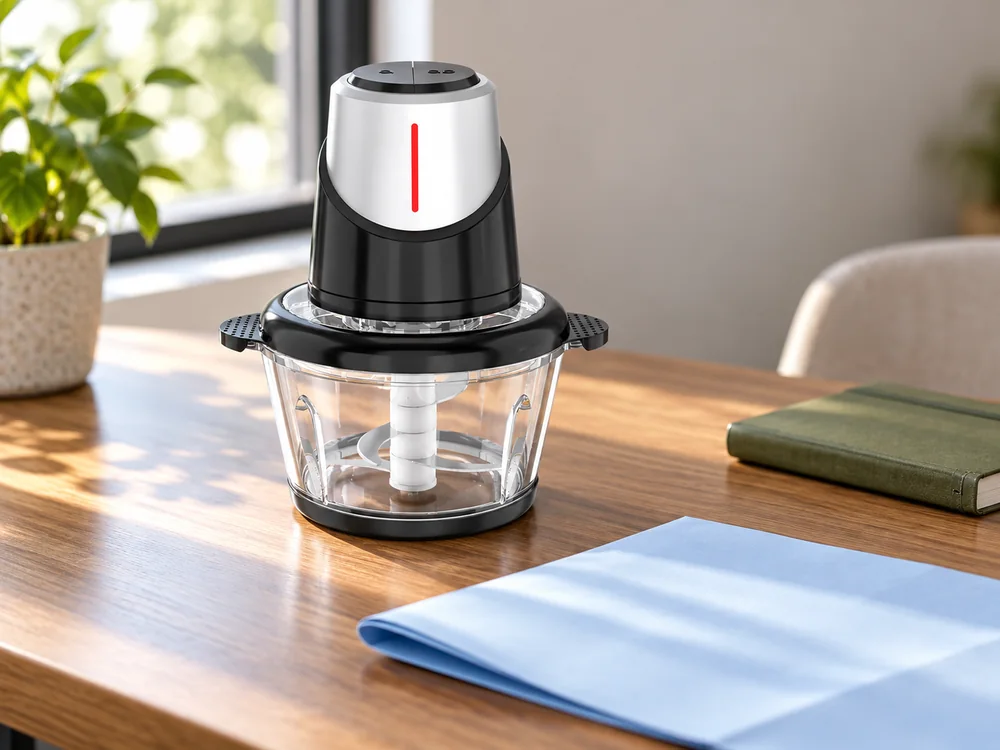
Use the JINJIE electric chopper category to locate the proposed platform. Connect each line to your accepted product reference rather than sending an unexplained buyer nickname. Mark an undecided model as undecided so the supplier does not prepare for a selection you have not made.
Where one platform serves several markets, show the unresolved version split. A total of 600 across markets may be credible commercially while the electrical or packaging allocations remain open. The supplier needs to know which preparation can be evaluated now and which answer still depends on that split.
Separate alternatives from additive demand. If you are considering 300 SD-02 units or 300 SD-01 units, presenting two 300-unit lines without explanation can imply 600. State the selection relationship and which question will decide it.
Use time periods that reflect a real decision
Choose the planning horizon from the actual supply discussion. There is no universal three-month or thirteen-week requirement for these appliances. A near-term version decision and a later potential range expansion can need different levels of detail.
Describe what the date means: order release, goods ready for collection or usable receipt at your location. If you need a receipt outlook, distinguish the factory’s scope from onward transport and receiving. Use named events rather than a column headed only delivery.
Identify the next date by which a decision could affect preparation. A buyer can share an estimate early while leaving an optional finish open, but the supplier should explain when that choice becomes necessary. The important boundary is the actual dependency, not the number of columns in the spreadsheet.
Ask whether quantities in later periods are new demand or quantities postponed from earlier periods. Moving 100 units from October to November should not leave them in both totals. Keep actual accepted orders separate so a forecast revision does not accidentally erase or duplicate an existing commitment.
Avoid rewriting the horizon merely to preserve the same total. If demand weakens, the forecast should show it. If the expected timing changes, keep the shift visible. A stable total can conceal a purchasing pattern that no longer fits the preparation being discussed.
| Forecast line detail | Information the buyer supplies | Supplier response to request |
|---|---|---|
| Product reference | Selected complete offer or clearly marked alternative | Whether the platform and version can be discussed |
| Quantity meaning | Expected purchases, sales or desired receipts | Whether the proposed basis is usable for planning |
| Period and endpoint | Named event and date range | Relevant dependencies and current timing basis |
| Commercial status | Planning estimate or separately agreed commitment | Acknowledgment of the intended scope |
| Open buyer decision | Unresolved selection or presentation detail | When the answer is needed for dependent work |
Distinguish the base case from uncommitted opportunities
Build the main outlook from your current evidence. Identify existing sales, firm customer commitments and planned campaigns with their actual status. A distributor’s expression of interest may justify a scenario without becoming funded purchasing demand.

Give an uncertain opportunity its own quantity and decision point. A useful message might say the base plan concerns 300 units, while a separate retailer proposal could add 200 if accepted by a stated review date. Do not describe the combined 500 as a firm repeat order before that condition is resolved.
Use a smaller number of meaningful scenarios. A lower case can test the exposure if sales soften; an upper case can reveal the dependency if demand increases. The supplier should understand what changes between them, not be asked to guarantee every hypothetical quantity simultaneously.
For an invented example, a buyer expects purchases of 250, 300 and 350 units across three periods, or 900 overall. A separately pending retail opportunity could add 200 in the third period. The potential total is 1,100, but only the 900 belongs to the stated base forecast. None of these quantities is a JINJIE minimum or demand prediction.
If the opportunity is not accepted, the base forecast has not automatically fallen by 200. That distinction protects the conversation from an exaggerated growth case becoming the apparent normal order. If the opportunity becomes firm, revise the relevant line and ask for a current scoped response.
Evaluate advance preparation by its bounded exposure
The supplier may identify an input whose earlier preparation could help a later purchase. Ask what exact item, version, quantity and activity is proposed, together with the commercial treatment. Do not assume a forecast has already reserved stock or production.
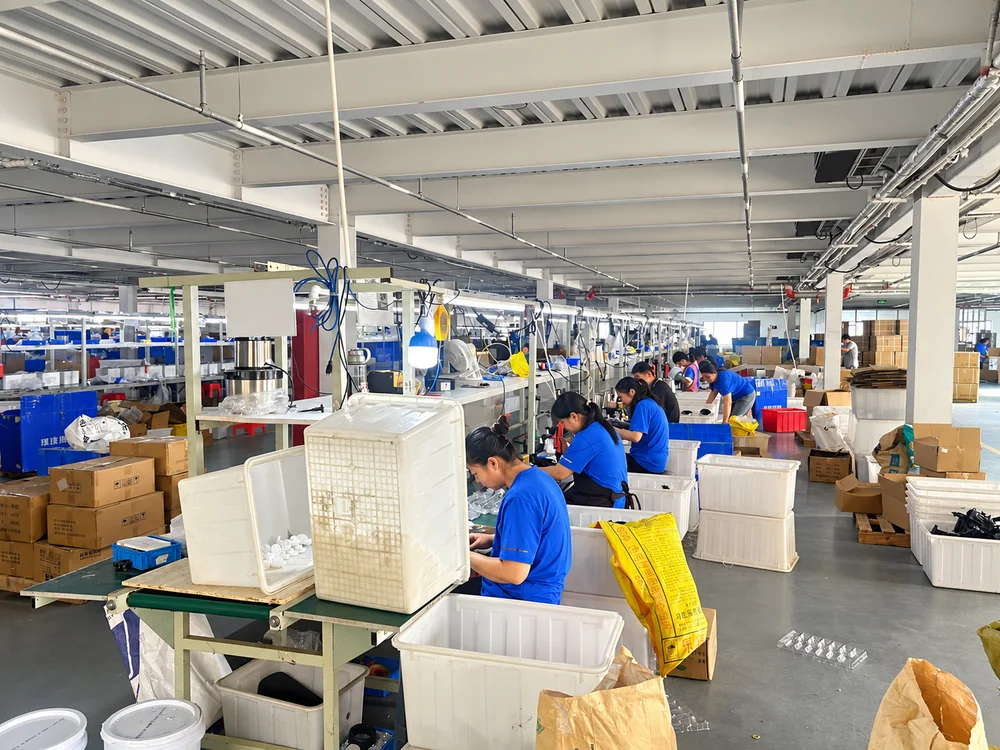
The JINJIE manufacturing discussion can help locate the preparation dependency. The actual proposal should explain what earlier work changes and what remains to be completed after a later purchase is released. A quantity of one component is not a quantity of complete appliances ready to sell.
Use the JINJIE OEM and ODM discussion when the input is buyer-specific print, finish or another agreed presentation element. Unfinished artwork can limit preparation. Committing to dedicated material can create exposure if your later version or demand changes.
Consider an invented proposal for 1,000 sets of buyer-specific printed material at USD 0.60 per set. The material amount would be USD 600, apart from any other applicable work. If only 700 sets have a defined use under the relevant arrangement, the remaining 300 represent USD 180 of material purchase value whose treatment needs a decision. This is not a quote, a waste forecast or a statement that the buyer necessarily owns the material.
Compare that bounded proposal with the actual benefit. It may shorten one identified dependency, but it may not move the final goods-ready date if another required input remains later. Ask what outcome changes before approving an advance commitment for the sake of general reassurance.
Establish ownership, payment, storage, revision, collection and unused-material treatment through the actual accepted terms. Appropriate professional review may be needed. This article does not determine who bears loss or grant cancellation rights.
Obtain an answer that separates feasibility from reservation
A response that a product is generally feasible can support the next discussion. It does not necessarily identify reserved material, a production slot or a delivered quantity. Ask which level of answer the supplier is giving and what later commitment would be required.
Keep a tentative timing response attached to its prerequisites. If the electrical split or artwork remains unresolved, preserve that dependency rather than removing it when reporting the date internally. Conversely, do not treat a missing response as confirmed inability to supply.
Compare the answer with the action you actually need. If purchasing must decide on dedicated material, a broad catalog confirmation is insufficient. If the forecast is early horizon planning, a detailed final shipping schedule may be unnecessary. Match the next request to the unresolved decision.
Do not announce capacity allocation to retailers from a forecast acknowledgment. Ask for the specific quantity, period and terms before relying on a reservation. Keep the buyer’s retail commitment within the evidence and accepted arrangement currently available.
Update the same forecast without changing orders accidentally
Send a dated revision that identifies changes from the prior outlook. State whether a quantity is reduced, deferred, added or moved between versions. Keep the previous record so both parties can understand what changed rather than interpreting a new total without context.
An invented revision moves 100 units from the first period of the 900-unit base forecast to the third. The new periods become 150, 300 and 450, still totaling 900. That timing change can affect preparation even though the total is unchanged. It does not amend an already accepted order unless the responsible parties have separately agreed that change.
If a committed purchase is affected, use its actual order reference and obtain the appropriate accepted response. Review work already done and the proposed alternative. A forecast spreadsheet should not become the informal route for cancelling purchased goods.
Record the cause of a material forecast change. A campaign postponement, slower sales and a version decision have different implications. Sharing the cause can help the supplier identify relevant preparation instead of guessing that every change means the product has lost demand.
| Situation after the supplier review | Appropriate next action | What not to infer |
|---|---|---|
| Planning outlook understood; no preparation agreed | Retain the next forecast update | Reserved stock or production |
| One input has a useful advance-preparation proposal | Assess its specific benefit and exposure | Approval of the complete future order |
| Needed version allocation remains open | Resolve that buyer decision | All versions available on one schedule |
| Forecast timing changes | Explain the shift and request its preparation effect | Automatic amendment of accepted purchases |
| A mandatory requirement is confirmed unmet | Consider a suitable offer or revised plan | That an unanswered question has already failed |
Review the forecast against the decision it supported
Compare the earlier forecast with the relevant actual purchasing outcome on the same basis. Do not compare a forecast of warehouse receipts with purchase orders released during the period. That mismatch can create a false impression of poor accuracy.
Identify which information would have changed the advance decision. A forecast that was numerically close may still have missed the version split needed for preparation. Another may have been uncertain but useful because it kept an uncommitted opportunity outside the material commitment.
Improve the next forecast selectively. You may need clearer quantity meaning, a named sales owner or an earlier version decision. Do not respond to one variation by demanding a long-range guarantee your business cannot responsibly give.
Share a defined purchasing outlook with JINJIE. Include the actual product, markets, quantity meaning, periods, forecast status and the response you need. Ask separately about any bounded preparation proposal so planning information and commercial authorization remain understandable to both parties.
FAQ
Does a forecast entitle us to the earlier quoted price?
Not from the forecast alone. Obtain the price scope, validity and any quantity or commitment conditions in the actual accepted arrangement. Keep an old estimate separate from the current purchasing proposal.
Can we omit confidential customer names?
Ask what information the supplier needs to assess the product and preparation task. A market, version and quantity can sometimes support planning without disclosing a customer’s identity. Follow the actual disclosure rights and agreement rather than assuming everything must be shared.
What if sales wants the optimistic case sent as the main forecast?
State the evidence and condition behind that case. The authorized buyer should decide which quantity can support a commercial discussion and which remains a scenario. Hiding uncertainty does not create the purchasing funds or customer commitment.
Should we withdraw the forecast after an order is placed?
Keep the accepted order identifiable and explain whether its quantity is included in or separate from the remaining outlook. That avoids double counting. Continue forecasting future purchases only where it serves an actual planning purpose.