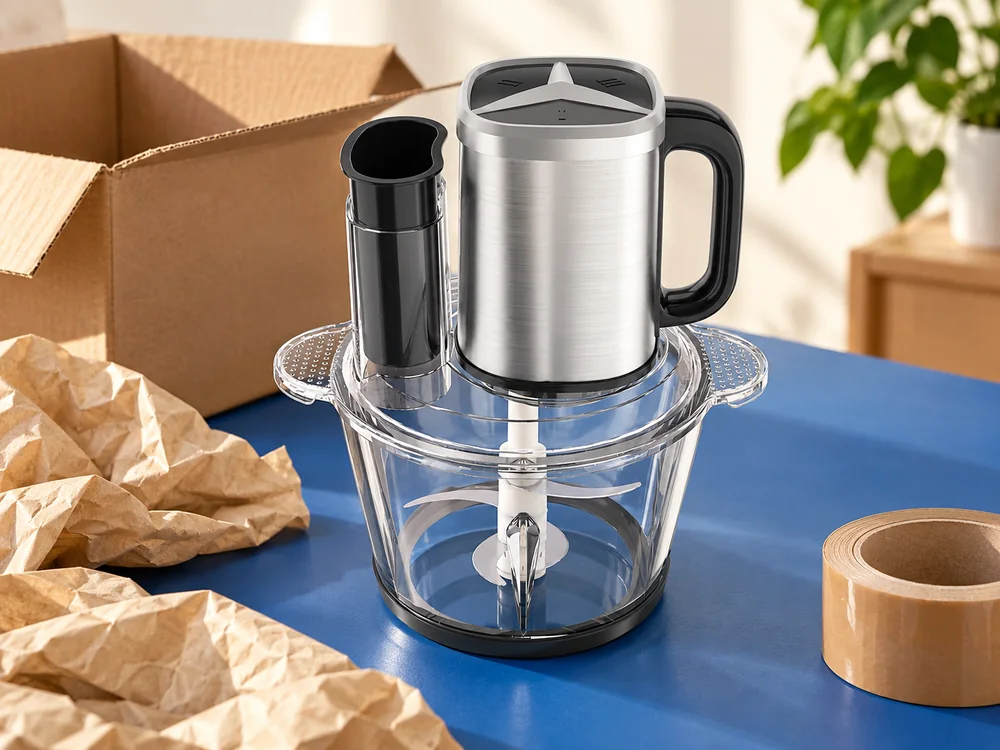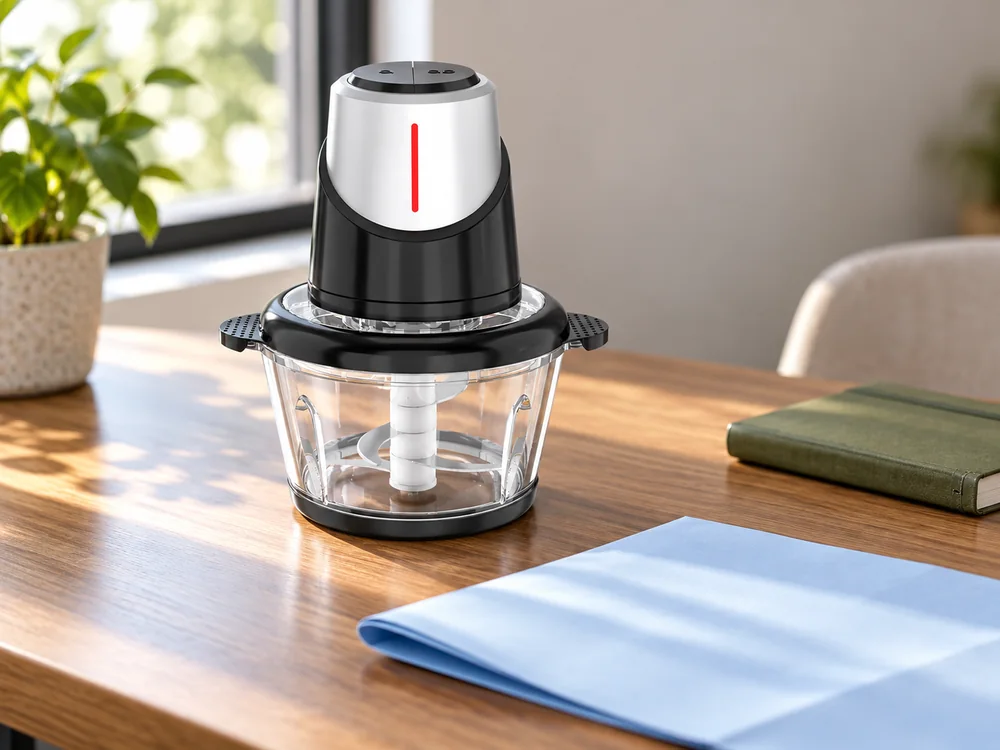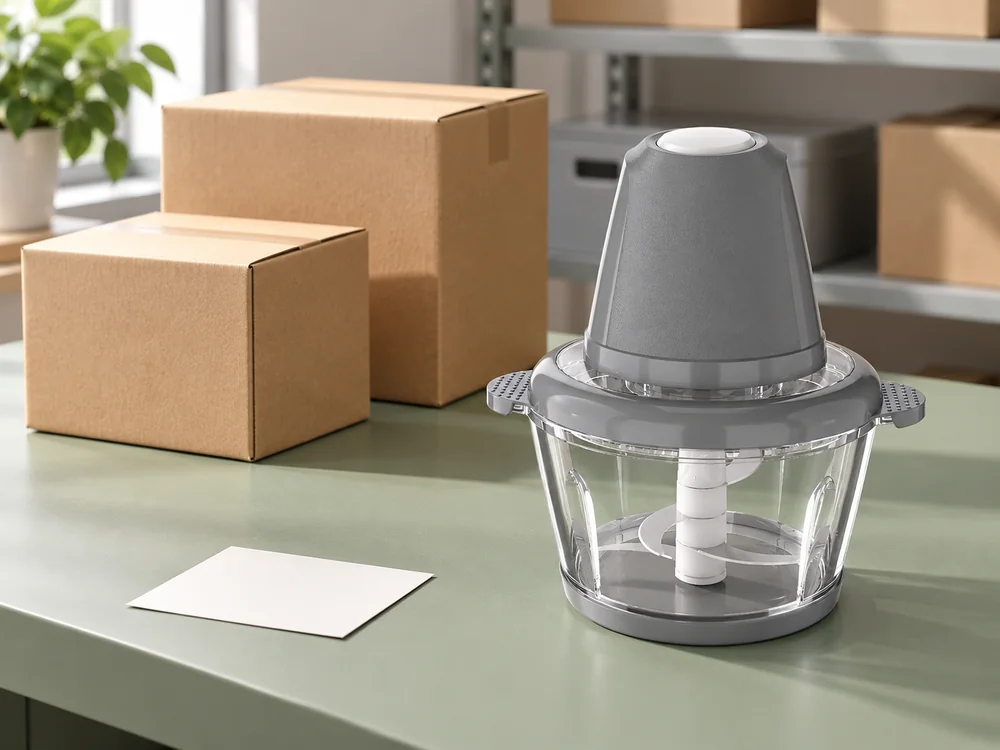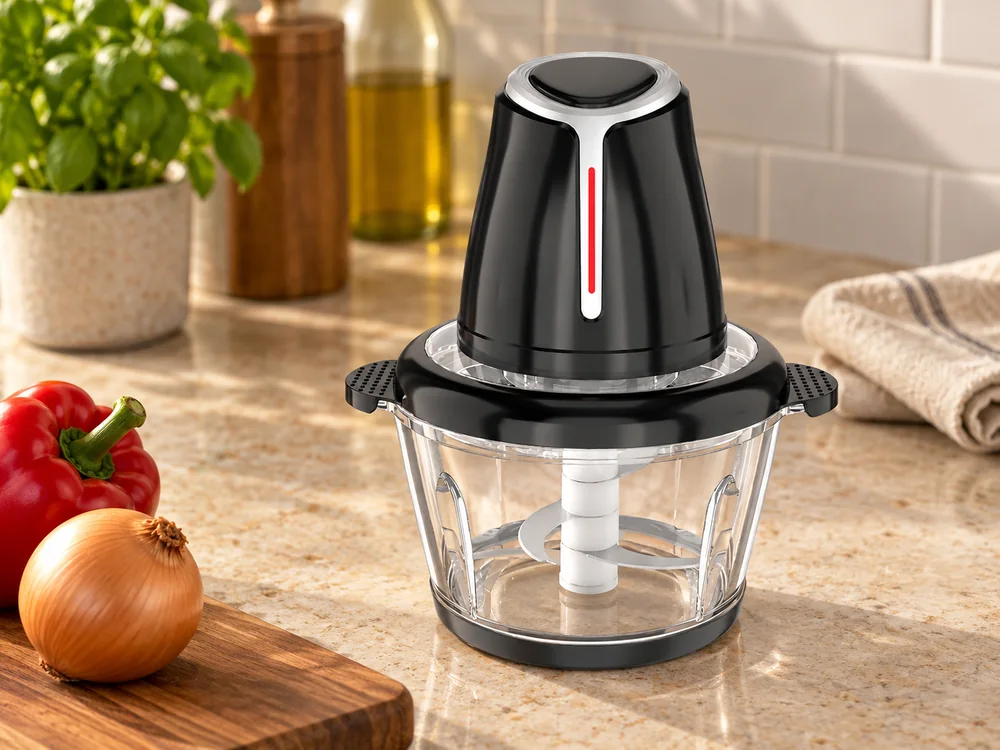
A retailer wants a demonstration unit alongside its new electric chopper. Purchasing can send an appliance, but that alone does not create a usable demonstration. Someone still has to identify the correct offer, explain the supplied contents, arrange an appropriate setup and decide what happens to the unit after display use.
Small appliance retail demonstrations deserve a separate plan once the product has been selected. The buyer’s decision is how to support a credible customer explanation without turning display stock into an uncontrolled operating program or promising results the selected appliance has not established.
This guide covers importers, distributors and private-label retailers preparing household food-preparation products for retail presentation. It does not offer a JINJIE demonstration staffing service or provide operating instructions. Any powered activity needs the selected product’s instructions, an appropriate local setup and responsible authorization.
Decide whether the customer needs a static display or a live demonstration
Write the question the presentation should answer. Customers may need to see the bowl size relative to the motor unit, recognize the controls or understand what is included. A static presentation can address those questions without running the appliance. A proposed food-preparation result requires a different plan and supporting information.
Do not combine every possible activity under the word demo. A shelf display, staff familiarization, a public live session and a recorded advertising video have different audiences and requirements. Identify the chosen activity before allocating units or asking the manufacturer for materials.
For example, the current JINJIE quotation identifies SD-01 with a nominal 3 L stainless-steel bowl, 500 W and digital controls. The physical sample can help a retailer explain the complete product’s appearance. Those fields alone do not provide food load, operating cycle, output quantity or permission for repeated public sessions.
Use the JINJIE electric chopper category to locate the platform being presented. Keep its actual version attached to the retail offer. A demonstration of a glass-bowl model cannot automatically stand in for an order whose key selling difference is a steel bowl.
Choose the least involved presentation that answers the customer question accurately. If a powered demonstration would add little to the explanation, its extra preparation and oversight may not be worthwhile. If an important result cannot be shown responsibly with current information, revise the presentation rather than improvising operating conditions.
Use the approved retail offer as the demonstration reference
Identify the motor unit, matched vessel, lid, blade assembly and any additional agreed contents. Distinguish an item supplied in the box from a prop used to make the display easier to understand. The customer should not discover that a prominently shown attachment was optional only after purchase.
Check the demonstration unit against the version customers can buy. A development sample may differ from the agreed production offer. If that difference affects the presentation, obtain a suitable unit or clearly limit the activity. Do not rely on an old sample because it is already at the branch.
Keep model identity, buyer item code and current instructions together. Staff should be able to find the applicable product information without guessing from housing color. Two visually similar versions can still have different controls or supplied contents.
Prepare one short customer explanation from the settled offer. It can identify the preparation role, visible configuration and included items. It should not add unverified speed, durability or safety claims to make the display sound more persuasive. Questions outside the approved scope belong in a follow-up route.
The JINJIE OEM and ODM discussion is relevant when presentation assets must match a private-label version. Ask which current images and information are available for that configuration. Agreement on a logo does not by itself settle every photograph, instruction or retailer statement.
Prepare a presentation brief that staff can actually use
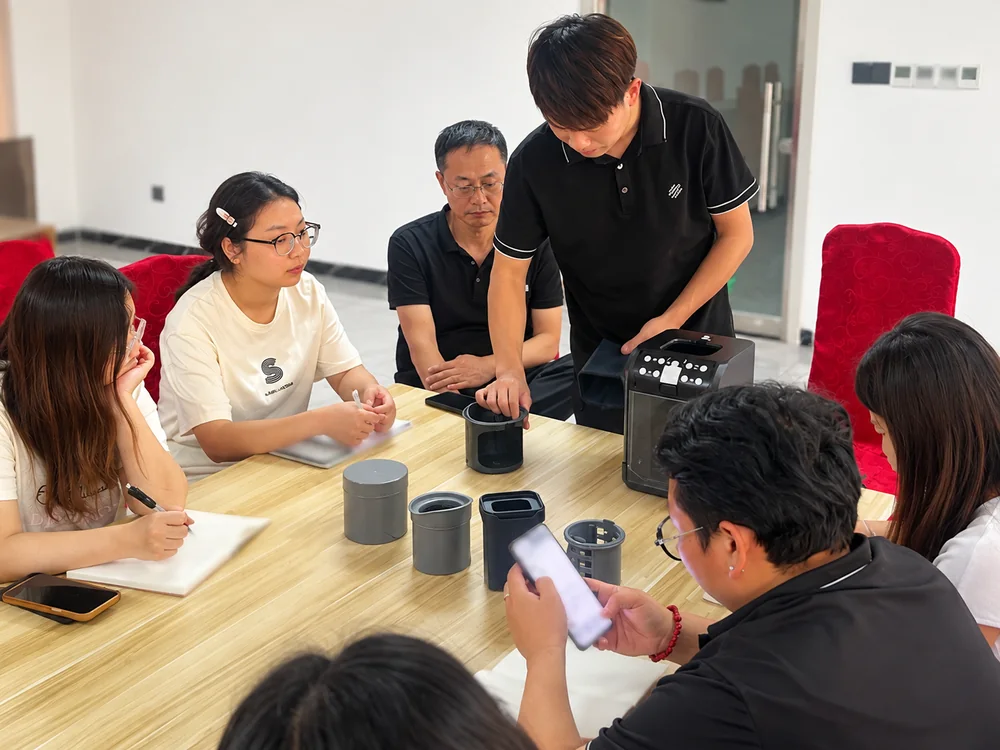
A useful brief identifies the purpose, product, allowed activity and person responsible. For a static display, it can specify the visible set, placement and customer explanation. A powered activity needs the applicable operating and local arrangements established by the responsible parties, not a buyer-created shortcut.
Build the explanation around a few likely questions: what is supplied, what preparation role the model serves, how its visible controls are described and where the customer finds the applicable instructions. Avoid converting the brief into a catalog of every claim used for the broader product family.
Show which points staff can answer directly and which require a technical or commercial response. A colleague can identify the included bowl but may not be authorized to assess a customer’s unusual ingredient or promise a replacement part. An accessible escalation contact is more useful than encouraging improvised answers.
For powered presentations, obtain the current instructions and a suitable assessment of the proposed setting. Food handling, cleaning, electrical arrangements, supervision and audience access may need relevant local review. This article does not determine those requirements or prescribe operating limits for JINJIE models.
Do not supply a presentation script that conflicts with the instructions. A repeated sequence filmed for convenience can become an implied use claim. Where the actual demonstration requires preparation or pauses, hiding those steps can change what the customer reasonably expects.
| Presentation format | Buyer needs to establish | Purchasing implication |
|---|---|---|
| Static complete-product display | Actual supplied set and clear item identity | Allocate the correct display version |
| Staff familiarization | Applicable information and escalation route | Supply suitable units and approved materials |
| Public powered session | Product instructions and appropriate local authorization | Do not fund an unassessed operating plan |
| Recorded product explanation | Accurate version, image rights and supported statements | Approve the asset against the real offer |
| Wider branch rollout | Repeatable preparation and named ownership | Expand only the support plan that can be delivered |
Keep the demonstration honest about what it establishes
A static display helps customers inspect appearance and contents. It does not demonstrate food results. A single powered session can show what happened in those conditions; it does not establish every ingredient, operating pattern or performance comparison.
The US Federal Trade Commission’s advertising substantiation policy requires a reasonable basis for objective advertising claims before they are communicated. That matters when a presentation becomes promotional content: the finished message can imply a result even without a spoken performance promise. Obtain the appropriate market review for the actual material.
Keep the selected product and demonstrated conditions identifiable where relevant. If editing removes part of the workflow, make sure the finished explanation does not misrepresent it. Use current supporting information for any measurable assertion rather than inferring a universal result from an attractive clip.
Compare the whole message with the customer’s likely takeaway. A pile of prepared food beside the appliance may imply it produced that output. If the scene is illustrative, arrange the content so it does not masquerade as an actual result. The same discipline applies to a website image, printed shelf card and live explanation.
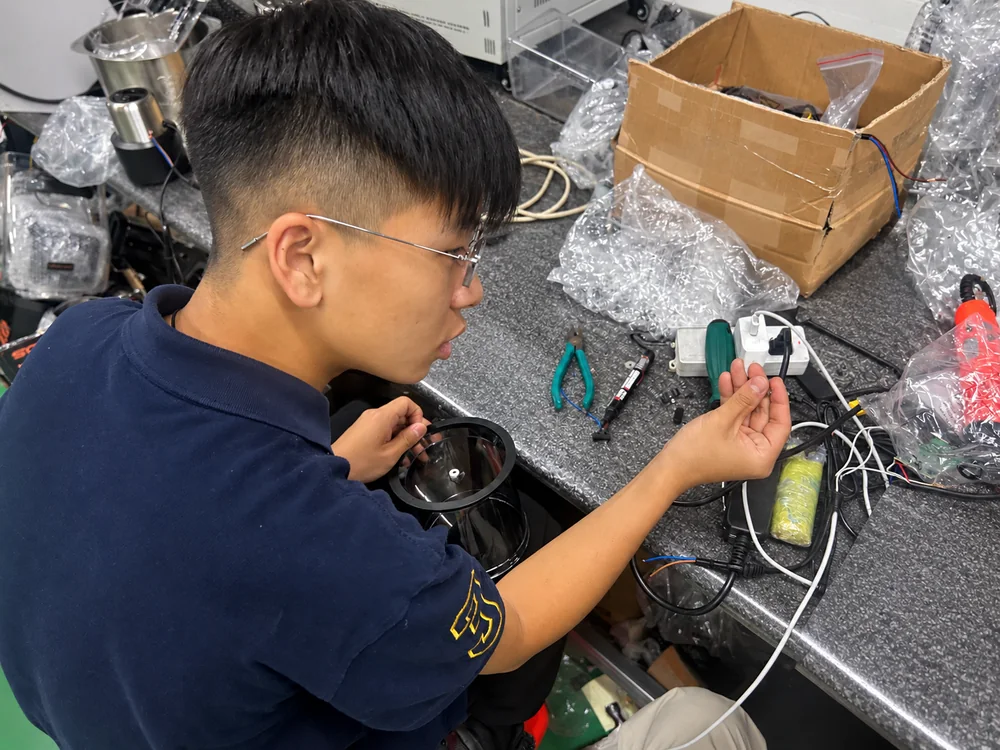
Use the JINJIE quality and testing discussion for a scoped question about the selected product’s evidence. Do not present a factory capability photograph as proof of the demonstration outcome. Product evaluation and retail presentation can inform each other while remaining different records.
Budget demonstration units separately from saleable inventory
State whether display units are bought, loaned or provided under another actual arrangement. Identify ownership, transport, setup, loss or damage treatment and the eventual return or disposal route. A request for free demonstration stock is not an accepted supply policy.
Use separate quantity roles in the opening order. Consider an invented rollout with 12 branches, one display unit per branch and two centralized replacements reserved for display problems. That requires 14 demonstration-role units. If 240 units are intended for ordinary sale, the combined quantity is 254, not 240 with displays deducted silently.
The illustration is not a JINJIE minimum or recommended reserve. A smaller program may use a rotating display, while a larger network may need different support. Choose the allocation from the actual presentation plan and the available supply proposal.
Calculate the complete program cost. Suppose those 14 units cost an assumed USD 20 each, branch preparation costs USD 25 for each of 12 branches and the approved content work costs USD 220. The illustrative opening cost is USD 280 plus USD 300 plus USD 220, or USD 800, before any other applicable charges.
If 100 additional sales each contribute an assumed USD 8 before this program cost, their USD 800 contribution equals that opening cost. That is a break-even illustration, not a prediction that the demonstration will produce 100 extra sales. Compare expected incremental contribution with the actual cost and confidence in the sales effect.
Do not attribute every sale near a display to the program. Availability, pricing, branch traffic and other promotions can influence the result. A useful pilot records the selling opportunity as well as the observed sales, so expansion is based on more than an enthusiastic anecdote.
Protect the distinction between display use and a new retail unit
Assign an identifiable display record before distributing units. Receiving and store teams need to know which appliances are allocated to presentation rather than ordinary sale. Keep the inventory system consistent with the actual ownership arrangement.
Specify who checks the display’s condition and current contents. Missing items, outdated product information or a replacement with the wrong version can undermine the explanation even when the original rollout was correct. A routine display check should address the customer offer, not merely whether the appliance is still on the shelf.
When a display is moved, retired or proposed for sale, assess its actual condition and the applicable retailer and market requirements. A handled or operated unit should not automatically be relabeled as untouched new inventory. Agree a truthful route with the responsible party.
If a concern suggests a product or safety problem, stop the affected activity and use the appropriate qualified escalation. Staff should not repeat a troubling event to obtain a video, open the motor unit or invent a repair. A display program does not change the underlying customer or product responsibilities.
Retain the applicable information for the version shown. If a new shipment changes the retail offer, assess whether the display and materials need an update. Do not make stores infer the change from a different carton arriving at the warehouse.
Pilot the program to answer an expansion question
Choose a small implementation whose findings can affect the wider decision. The question might be whether staff can explain the supplied set without recurring confusion, whether the approved setup fits the branch space or whether preparation costs exceed the planned budget.
Record the support needed to make the pilot work. A presentation that succeeds only because the central buyer spends hours assisting each branch may not scale as originally costed. Include that effort when comparing rollout choices.
Distinguish a product question from a presentation failure. If customers expect an excluded attachment, correct the offer explanation. If staff lack current information, repair the handoff. If the actual product does not serve the intended customer task, return that question to product selection rather than expanding a misleading display.
| Pilot finding | What it means to investigate | Next decision |
|---|---|---|
| Customers identify the supplied set correctly | The explanation appears usable in that setting | Consider expansion with the same version control |
| Repeated questions about excluded contents | Presentation and offer may disagree | Correct the content before adding branches |
| Setup needs unplanned local support | Original budget or format is incomplete | Reprice or simplify the program |
| Operating arrangements remain unresolved | A powered activity lacks its necessary basis | Hold that activity; assess a static alternative |
| Product suitability becomes uncertain | The retail task may not match the platform | Resolve selection before wider presentation |
Settle the material issues before expanding. Once they are resolved, optional changes in wording or prop color should not keep the program in indefinite review. Reopen approval when the product, activity or evidence changes, not because another cosmetic suggestion becomes available.
Ask JINJIE about the selected product and available presentation information. State whether the request concerns static displays, staff information or a separately assessed powered activity. Include the actual model, supplied-set requirement, destination, branch quantities and intended purchasing arrangement so the response addresses the real program.
FAQ
Can one demonstration appliance rotate between branches?
That can be a planning option if ownership, transport, condition checks and timing are workable. Allocate it as a shared display, not stock available in every branch simultaneously. Obtain any necessary setup approval for each intended use.
Should a preproduction sample be used for a launch video?
Assess whether it represents the actual offer. If a visible or functional detail differs, obtain a representative unit or restrict the material accordingly. A small disclaimer should not carry a major mismatch in the main product message.
What if branch staff ask for additional operating claims?
Send the specific proposed statement for an appropriate product and market review. Until it is supported, keep the explanation within the settled scope. A customer question is a useful reason to investigate, not evidence that a new claim is true.
Can we recover the program cost by selling the display units?
Treat that as a separate, truthful disposition decision based on condition and applicable requirements. Do not subtract an unconfirmed recovery from the opening budget. Identify the units and keep any sale description consistent with their actual handling and use.