A paid appliance sample arrives at the buyer’s reception desk, but the person who should evaluate it is in another city. The parcel contains the wrong electrical version and no clear record of the supplied set. Shipping has delivered a package without delivering the purchasing review the business funded.
Small appliance sample shipping should be arranged around the identified reviewer and product, not simply the fastest quoted parcel service. The buyer needs the intended unit to arrive in a usable condition, with an appropriate receiving and customs route, in time for the decision it is meant to support.
This guide covers household appliance evaluation and approval shipments. It does not publish JINJIE sample freight rates, guarantee customs clearance or prescribe a country’s tax treatment. Obtain current route and import advice from the responsible carrier or qualified adviser for the actual shipment.
Send the intended unit to the person who needs it
Identify the sample’s purpose before booking transport. An evaluation unit helps resolve a product-selection question. A later approval unit may address the selected configuration or presentation. Their destination, contents and useful arrival date can differ.
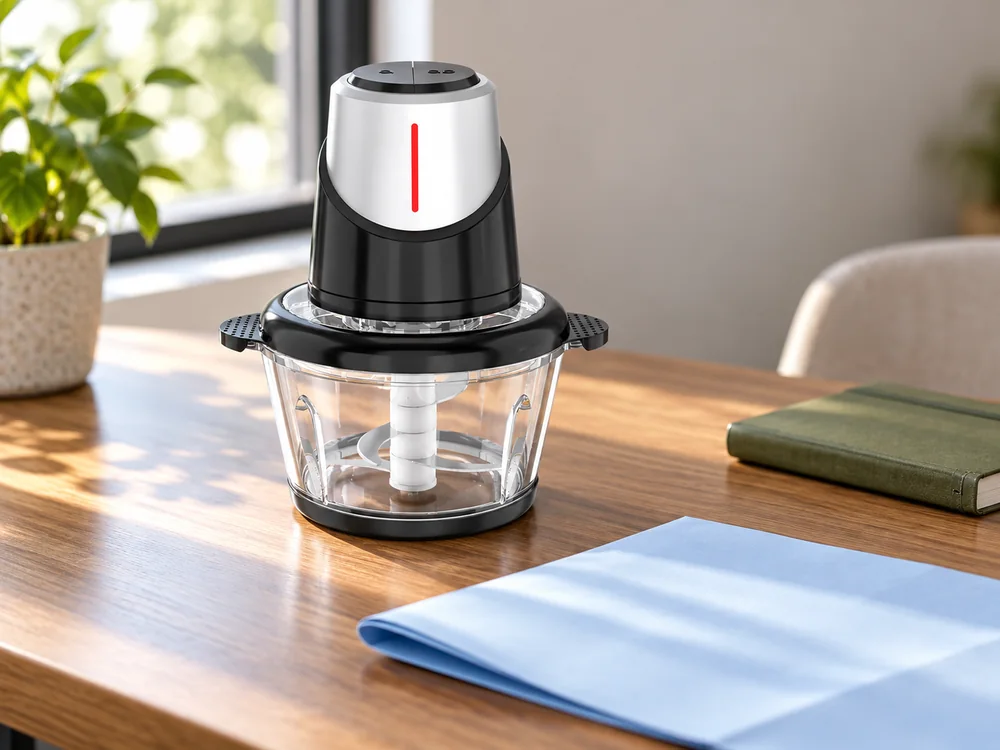
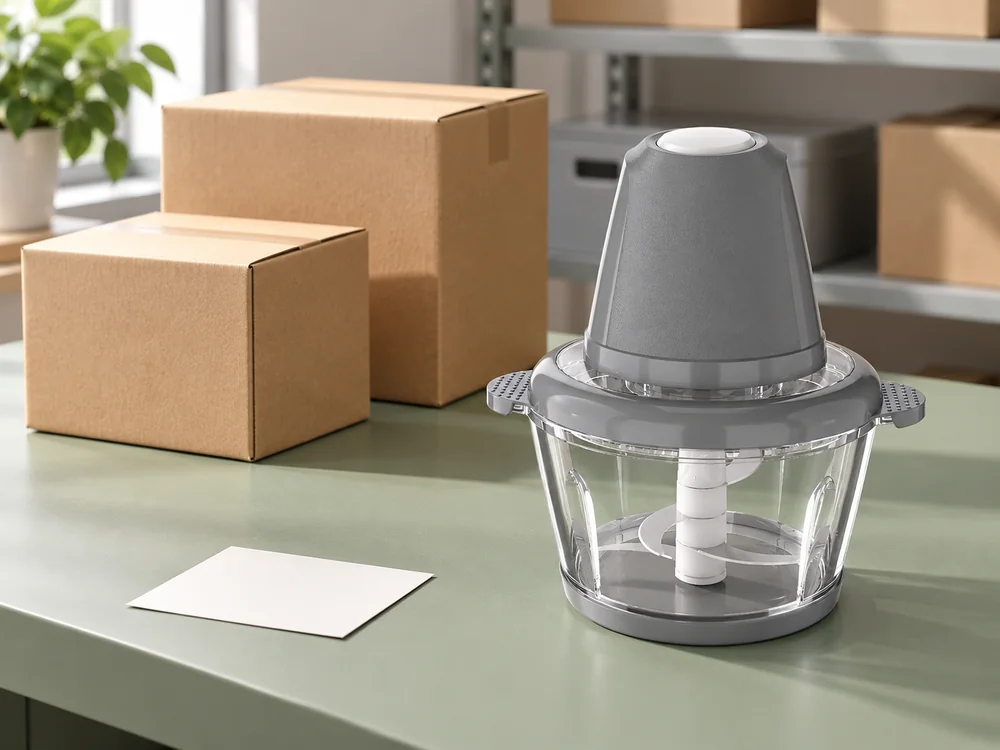
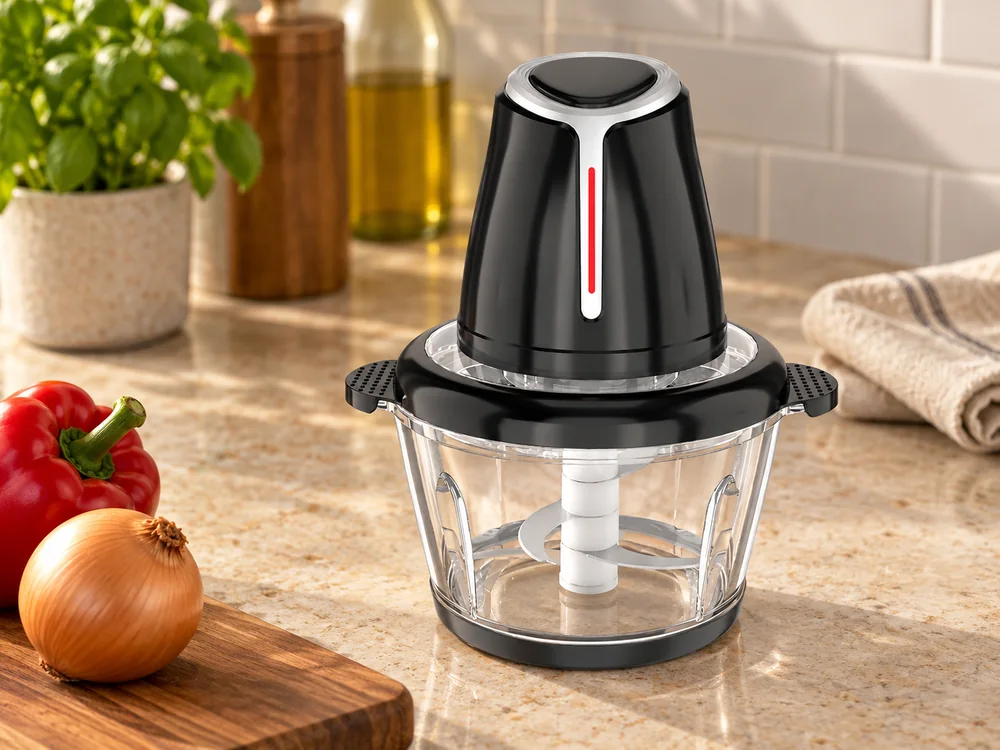
Choose the complete product reference and supplied set. JINJIE’s quotation lists SD-04 with a nominal 2 L glass bowl, 400 W and digital controls. SD-03 is a separately listed nominal 3 L glass-bowl model at 500 W. A similar photograph or an ambiguous file name should not decide which sample is sent.
Use the JINJIE electric chopper range to identify the proposed platform, then agree the actual sample description. Keep any difference from the intended production version visible. A substitute can answer a limited question without approving a configuration it does not represent.
Name the physical recipient, responsible reviewer and receiving address. A headquarters address may be convenient for invoicing but unsuitable for the review. Ask whether the recipient can receive the parcel, respond to delivery questions and pass it to the assigned reviewer.
If several teams need access, choose the sequence before dispatch. Sending one unit directly to the technical reviewer can remove an unnecessary onward movement. Where an activity changes the unit or leaves it unsuitable for another task, discuss a separate sample rather than assuming one appliance can serve every stage.
Compare transport proposals on the same receiving outcome
Ask for a route proposal using the actual packed shipment, destination and service scope. Record who arranges collection, who pays the quoted freight and which destination costs are included or excluded. A factory-collection figure and a delivered-parcel figure cannot be compared as though they include the same work.
Obtain packed measurements and weight for the identified shipment. Nominal bowl capacity is not a parcel dimension. The carrier’s quotation should identify its charging basis and any assumptions rather than leaving purchasing to infer them from an appliance photograph.
Compare the useful arrival estimate with the review date. Separate product preparation, transport and any receiving or clearance dependency. Paying for a quicker transport leg does not solve a sample that will not be ready for collection until after the review.
Use an invented comparison. One route is quoted at USD 70 for the stated scope and another at USD 110. The extra USD 40 is worth assessing if the second route has a supported chance of preserving a valuable review opportunity. It is not justified merely because its service name sounds faster. These amounts are not JINJIE or carrier rates.
Do not convert an estimate into a guaranteed arrival internally. Keep the provider’s actual scope and conditions attached to the planning date. When a delay would affect a retailer meeting, agree a fallback such as rescheduling or a limited file review rather than promising a physical unit that has not arrived.
| Shipping decision | Information needed before booking | What the buyer can decide |
|---|---|---|
| Unit and destination | Identified sample, reviewer and receiving address | Where the parcel should actually go |
| Transport comparison | Packed data and comparable service scope | Which supported route fits the review |
| Useful date | Preparation and receiving dependencies | Whether acceleration would change the outcome |
| Customs preparation | Actual goods description and responsible recipient | Who supplies and answers required information |
| Onward movement | Next reviewer and condition needed | Whether one shared unit is practical |
Make the paperwork describe what is actually being shipped
DHL Express’s US shipping-document guidance explains that customs paperwork depends on the goods, destination and service. It distinguishes transport information from customs-invoice information, including the shipment purpose and commodity details. Apply the actual route requirements with the responsible provider rather than copying a form used for another country.
Use a clear description of the appliance and actual quantity. State the real reason for the shipment, such as evaluation, where appropriate. The relevant value and classification need a correct basis for the destination. The word sample is not permission to invent a zero value, use an inaccurate description or assume duty-free entry.

Assign someone to answer clearance questions. The carrier may need the recipient or importing party to provide information. An unreachable contact can leave a prepared shipment unresolved. Keep the shipment reference and relevant product description accessible to that person without circulating unnecessary private customer information.
If the unit is loaned or expected to return, obtain advice on the available route before shipping. Temporary movement procedures may have eligibility, documentation and return conditions. Do not assume an ordinary sample parcel automatically qualifies, or that a used return can travel under the original outward description unchanged.
Check special contents separately if anything beyond the appliance is requested. Demonstration ingredients, unusual additional items or a proposed modification can change the shipment description and review. Do not add unrequested contents after the paperwork and transport proposal have been prepared.
Protect the matched sample without pretending the parcel is final retail packaging
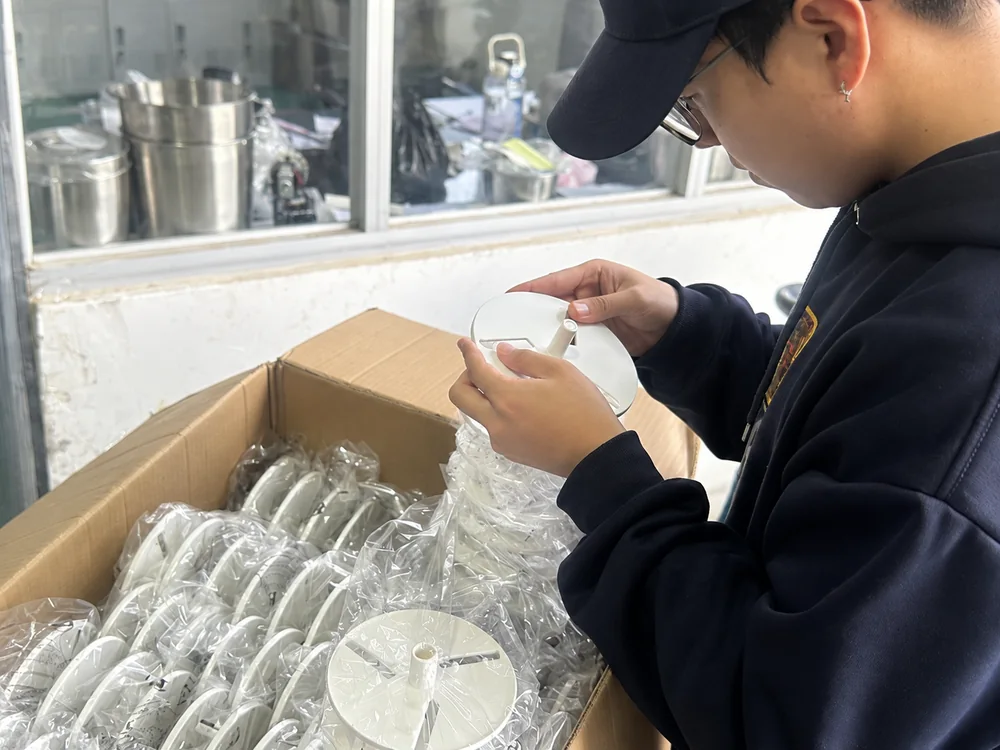
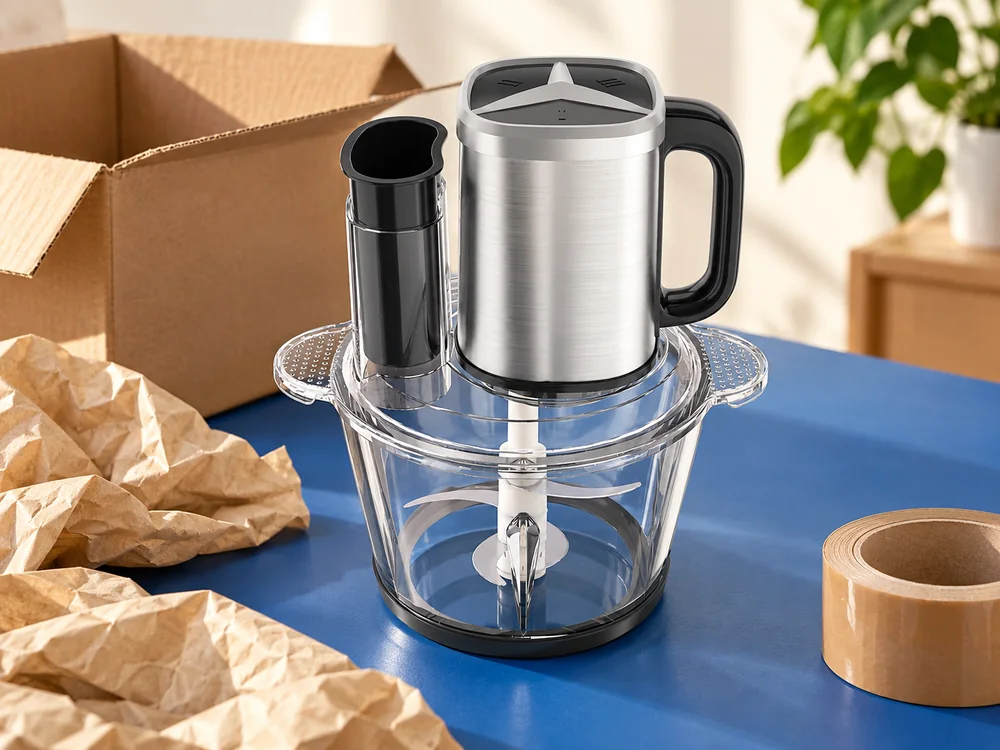
Ask the supplier how the identified complete unit and its actual contents will be protected for the proposed movement. Glass vessels, matched lids and blade assemblies need an appropriate arrangement. This article does not specify a tested packaging design or promise that a particular material prevents damage.
Keep removable items identifiable and protected through the supplier’s appropriate packing method. A loose item arriving without a clear relationship to the sample can confuse the review. Do not request improvised disassembly of the motor unit to reduce parcel size.
Obtain a pre-dispatch record of the actual sample and included contents where useful. It can help distinguish a missing item from an expectation that was never part of the shipment. Photographs show what was visible; they do not certify concealed condition or functional performance.
For a packaging-approval task, specify whether the parcel should include the relevant retail presentation. Protective sample transit packing can be sufficient for product evaluation while leaving retail packaging unresolved. If the physical box is itself being reviewed, preserve its identity and state what additional transit protection is used.
The JINJIE OEM and ODM discussion can help define whether branding or physical presentation belongs in this sample stage. Avoid paying to ship a finished printed box before its underlying product and wording have been settled, unless that deliverable serves a specific current decision.
Arrange receipt before the parcel arrives
Give reception or warehouse staff the shipment reference and contact for the sample review. Specify where the parcel should be held. A sample intended for evaluation should not disappear into ordinary retail inventory or be opened by an unassigned colleague without a handoff record.
On receipt, record the parcel’s visible condition and compare the actual unit and contents with the agreed description. Preserve appropriate photographs and relevant packing where a discrepancy needs investigation. Follow the carrier’s and supplier’s actual reporting arrangements; do not assume a universal claim deadline or automatic remedy.
If there is visible damage or a concern affecting safe handling, do not power the appliance to prove what happened. Use the qualified reporting route. A broken vessel does not establish when the damage occurred, and an intact outer box does not establish that the whole appliance is suitable to operate.
The JINJIE quality and testing discussion can help scope an appropriate product question for the received version. Shipping completion, visible receipt and product approval remain different events. None should be used as a substitute for the other.
Let the reviewer know when the sample is available and what information accompanies it. A practical review requires the applicable instructions and known sample differences, not merely a tracking message marked delivered. If required information is missing, request it and hold the affected activity.
Resolve a problem against the review it interrupts
Identify whether the issue is transport timing, received contents or sample suitability. A missing tool may need an appropriate replacement discussion. A wrong market version may still permit a limited appearance review while leaving another task open. A failed delivery needs the provider’s route response.
Ask what corrective action would restore the purchasing decision. Sending another identical incomplete unit does not resolve missing product information. Sending the correct identified sample can be useful when the received unit cannot answer the assigned question.
| Receiving result | Action to assess | Review boundary |
|---|---|---|
| Intended unit arrives with expected contents | Hand over to the assigned reviewer | Receipt is not product approval |
| A supplied item is missing | Reconcile the description and correction proposal | Do not assume an excluded accessory was purchased |
| Actual version differs | Identify what can still be assessed | Hold questions the substitute cannot answer |
| Visible damage or safety concern | Stop affected handling and report appropriately | Do not run a damaged unit for evidence |
| Parcel arrives after the useful meeting | Reset the decision plan | Faster onward movement may no longer add value |
Compare the cost and timing of the offered correction with the remaining need. The relevant agreement determines commercial responsibility; this guide does not assign a free replacement or a freight refund. Keep any supplier resolution separate from a carrier claim so the parties know which issue each response concerns.
Once the useful sample has arrived and the material receiving issues are settled, proceed to the planned evaluation. Do not reopen shipping approval for optional presentation preferences that do not affect that decision. Keep a changed sample or newly reported concern identifiable rather than blending it into the settled record.
Send JINJIE a complete sample-shipment inquiry with the selected model, actual review purpose, market version, agreed contents, recipient and useful arrival window. Request the preparation and shipping scope together, then book the route that can responsibly support the review.
FAQ
Can a carrier account supplied by the buyer be used?
Ask the supplier and provider whether that arrangement is available for the actual route. Establish the account authorization, collection, charges and recipient responsibilities. Providing an account number alone does not settle the service or customs scope.
Is the fastest transport always the best sample route?
No. Compare the preparation date, supported transport proposal and usable review date. Paying more for a movement that cannot preserve the review may add cost without changing the purchasing decision.
Should we forward the sample to a retailer immediately after receipt?
First identify the actual unit, contents and visible condition. Then follow the planned handoff with the information the retailer needs. If another review alters the unit, assess whether it still represents the presentation the retailer is meant to see.
Can a free sample be declared without any customs value?
Do not infer customs valuation from the amount paid. Ask the responsible qualified adviser or provider for the correct destination basis and truthful paperwork. Sample status and free supply do not automatically remove documentation, tax or other applicable requirements.