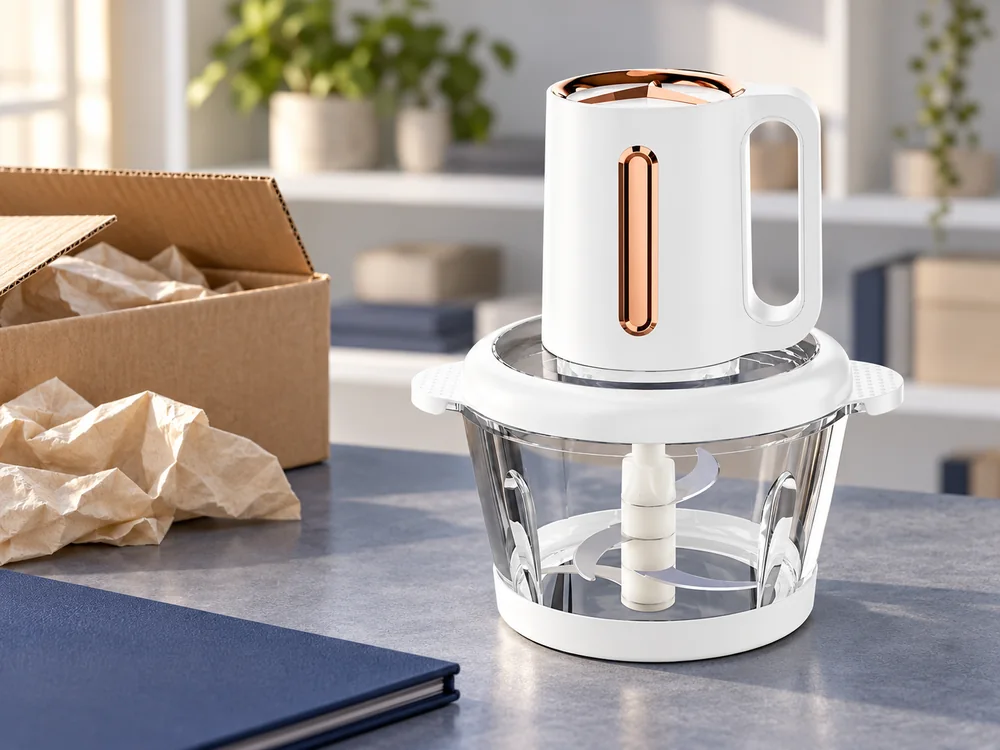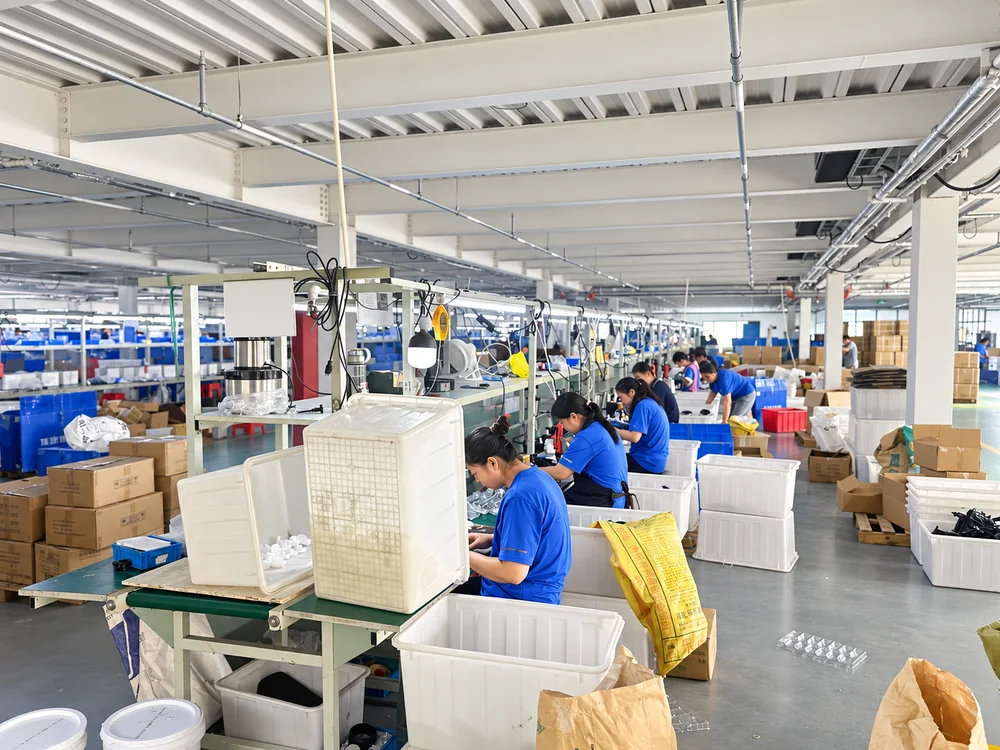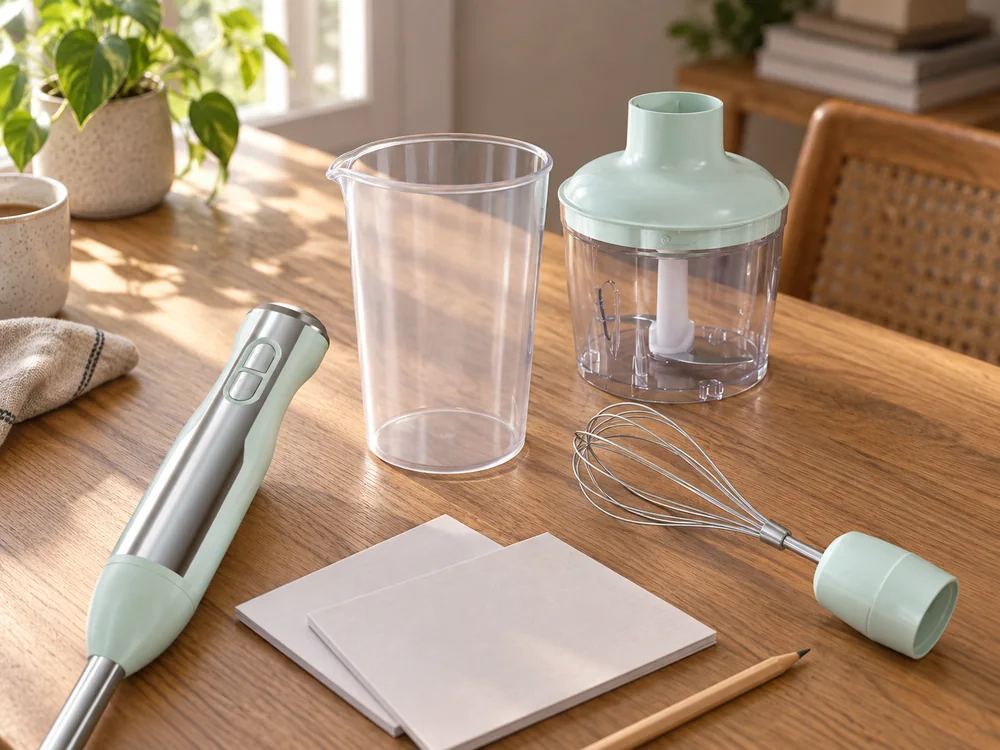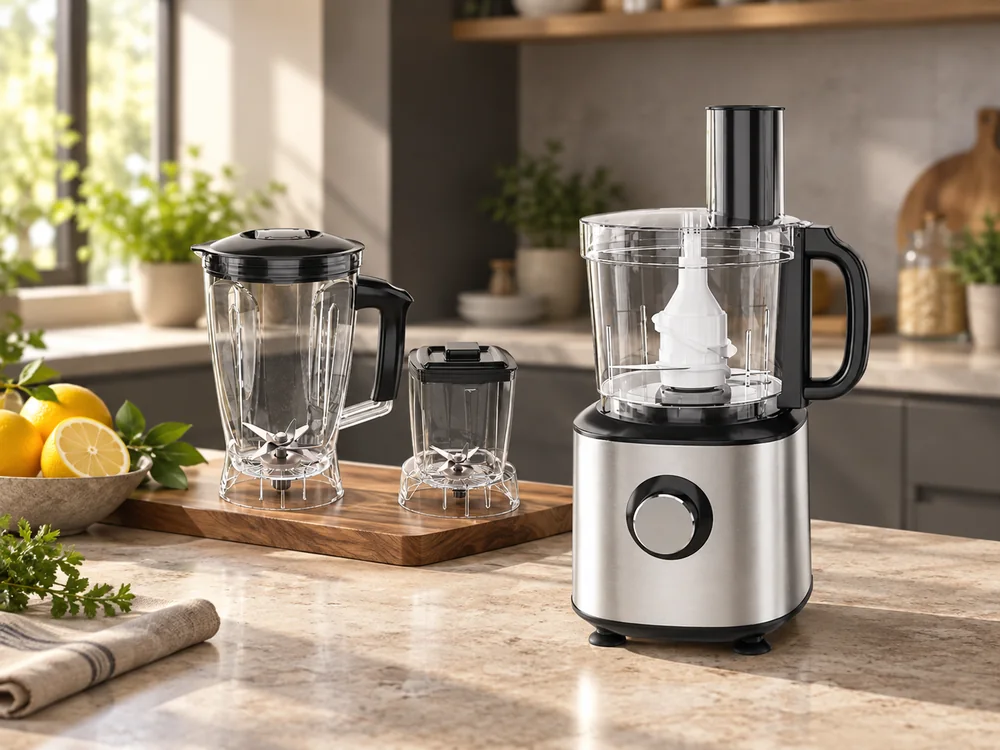
A multifunction food processor can earn a place in a retail range when its extra working arrangements solve customer tasks that a simpler appliance cannot. The wholesale decision is harder than choosing the machine in a photograph. A buyer has to sell one understandable product, receive every required component together and commit to a quantity that the channel can absorb.
This guide is for importers and retailers considering a household processor-and-blender set for resale. JINJIE lists MFP-01, MFP-A1 and MFP-C1 as current quotation references. The article uses those products to explain the opening-order decision. It does not treat the listed functions as proof that every accessory is supplied in every proposed pack, or that the appliances suit continuous foodservice work. A buyer should finish with a defined sellable unit, a contribution limit and an order quantity that remains sensible if demand is slower than expected.
Decide what the customer is buying
“Food processor” covers several products in wholesale search results. Some are bowl choppers, some are feed-through slicers, and others combine a processing bowl with a blender jar on a common base. If a retailer intends to sell the last format, a generic processor quotation does not identify the product well enough to plan a launch.
Write a short customer proposition before requesting prices. Which two or three preparation tasks genuinely justify a combination appliance in this channel? What does the customer gain over buying a simpler blender or chopper? The answer might be fewer separate motor bases or a particular included working assembly. It cannot be a list of every function that appears in an unrelated catalog photograph.
The JINJIE blender and multifunction range shows the MFP family alongside ordinary jug blenders. That distinction matters at shelf level. A buyer looking for a single drinks appliance may not pay for a processing bowl; a household that wants both formats may value the complete set. These are propositions to test with the intended customers, not performance claims established by the category name.
Name the version customers will receive. The current quotation records MFP-01, MFP-A1 and MFP-C1 at 1000 W with a 2.5 L capacity field and PC+PET material field. It does not establish that every container has a 2.5 L usable volume. The buyer needs the proposed contents and operating instructions for the chosen version before describing the functions publicly. Product photography is useful for identifying visible parts, but the confirmed packing list defines the saleable offer.
If the range already contains a blender, decide whether the multifunction set replaces it, sits above it or serves a different household. A product may be a credible upgrade even without a higher motor rating when it adds a genuinely useful working arrangement. Equally, a long accessory list can make the box expensive and difficult to explain without creating enough customer demand. Let the customer task, not the number of photographed components, drive the decision.
Compare the complete MFP offer, not isolated attachments
The MFP references give a product family to investigate, but they should not be converted into an invented good-better-best ranking. Ask for the complete current proposal for each version you might stock: main unit, containers, lids, blades or working tools, instructions, electrical version and packed presentation. Then identify any real customer-facing difference between the options.
An item that operates on a shared base depends on matched parts. The purchaser cannot remove a lid, substitute a similar jar or combine tools from another reference merely to reach a target unit cost. If the proposed set changes, the supplier should confirm the resulting working assembly and the sample should represent the revised offer.
Use a compact comparison to prevent three model numbers from becoming three unnecessary SKUs.
| Possible retail offer | What the buyer must establish | Opening-order consequence |
|---|---|---|
| One identified MFP set | The exact complete contents and the tasks supported by that configuration | One clear listing and one inventory commitment |
| Two MFP versions | A verified difference in controls, included working arrangements or presentation that customers can understand | Carry both only if the second role is worth separate stock and content |
| MFP set plus a simpler blender | Distinct customers and price positions, with the MFP’s added value stated accurately | Avoid making the simpler blender look like an incomplete version of the same offer |
| Custom-branded MFP | Product scope plus the artwork, market version and packaging to be approved | Include preparation costs and dependencies before calling the first order viable |
Ask whether an additional stock-keeping unit answers a separate customer question. If your sales team cannot explain the second version without reading a component list, start with one. A later second SKU can follow actual demand, provided its availability is confirmed at that time.
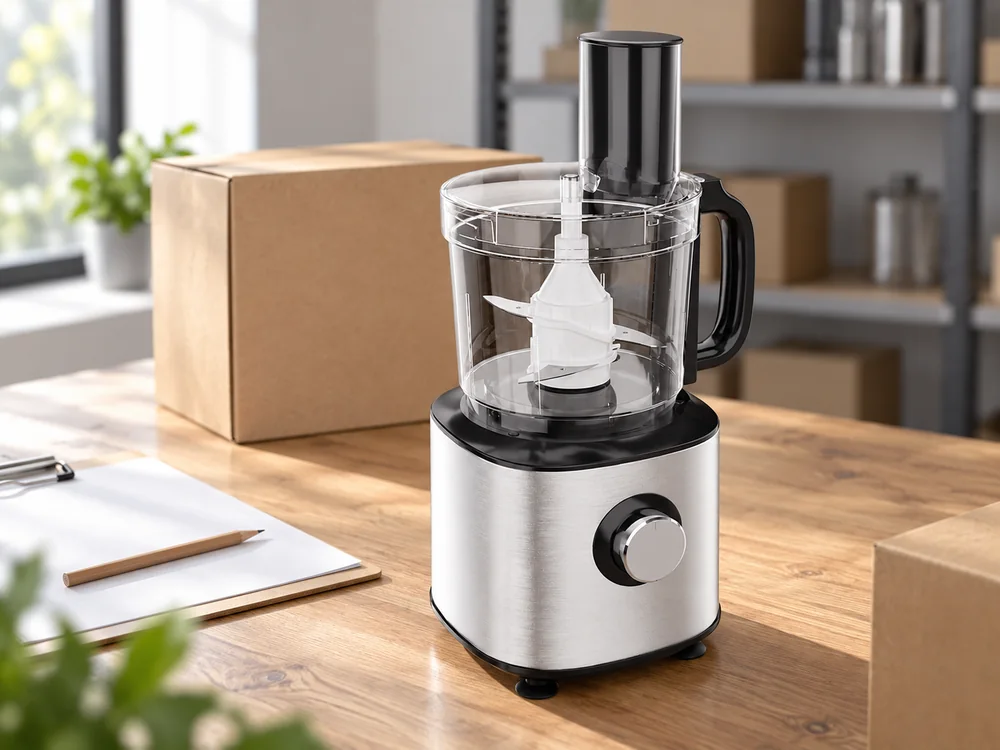
Work through the customer’s use sequence on a sample. Is the chosen container the one the product page depicts? Can the customer identify which lid and working tool belong to each task? Are assembly, disassembly and permitted cleaning understandable from the instructions? Those observations can change which complete set is appropriate for a channel even when the headline specification is the same. Do not claim a particular ingredient result from the visible blade count or nominal power.
Work backward from the sellable price
A wholesale unit price is only one part of the decision. Start with unit net receipts after channel fees and applicable sales taxes. Subtract delivery and fulfillment costs incurred after arrival at the designated warehouse, expected variable after-sales spending not already counted elsewhere, and the buyer’s planned contribution. The balance is the maximum available for landed product cost and this order’s allocated project charges. International freight, customs clearance and transport to that warehouse belong within the landed-cost allowance; do not deduct them again as post-warehouse fulfillment. The planned contribution must still cover other operating costs and profit, so it is not net profit.
For example, suppose the buyer expects 90 currency units of unit net receipts after channel fees and applicable sales taxes. It allocates 12 to delivery and fulfillment after arrival at the designated warehouse, excluding international freight, customs clearance and transport to that warehouse. It sets aside 8 for expected variable after-sales spending not included in any other item and plans to retain 20 as contribution toward other operating costs and profit. The ceiling for landed product cost plus this order’s allocated project charges is therefore 90 − 12 − 8 − 20 = 50. All figures are hypothetical; they are neither a JINJIE quotation nor industry averages. If a complete MFP offer exceeds the buyer’s ceiling, a lower-quality comparison cannot repair the business case. The buyer must change the price position, reduce a genuinely optional request or decline that offer.
Use the actual complete pack for the freight estimate. A processor bowl, blender jar and smaller container may need more volume and protection than an ordinary jug blender. Nominal processing capacity is not the size of a retail carton. Request the packed dimensions and weight for the intended set; if the presentation is not final, treat freight as provisional rather than import another model’s carton data.
One-time work belongs in the same calculation. New artwork, a special panel or another requested change may create costs that are not in the ordinary unit price. Divide a confirmed one-time charge by the quantity you are genuinely prepared to sell, not an optimistic multi-year forecast. If the project only works after an implausibly large volume, consider a current configuration with a simpler presentation or delay the custom version.
Also price the work on the buyer’s side. A multifunction set can require more product photographs, a clearer contents page and more service instructions than a single-jar blender. Those tasks may be worthwhile, but they should be budgeted before the retailer accepts a narrow margin. A better product page cannot rescue a poor product economics decision, and a cheap quote cannot make confusing contents easy to sell.
Set the first-order quantity around demand and completion risk
The first order should test a product role that the retailer can actually measure. Start with the likely number of saleable units needed for the initial channels, then add a justified reserve for demonstration, early returns or channel allocation. Do not turn an aspirational annual forecast into the opening purchase without a reason.
Before placing that order, define the review point for a repeat purchase. For example, decide how many units must sell through the initial channels, over what period, before you reserve another shipment of the same set. Track why customers buy or reject the multifunction format, not just the number of units moved. If most buyers use only the blender jar, the retailer may have overestimated the value of the larger set. If demand is promising but customers struggle to identify included tools, improve the listing and instructions before increasing the order. A reorder trigger is useful only when the supplier can confirm the same complete configuration and a timing basis compatible with the channel. This turns the first quantity into a controlled market test rather than an accidental annual commitment.
Ask how the minimum quantity applies to the exact version and presentation. A standard product, a custom box and a second market-language pack may carry different conditions. JINJIE states that quantities depend on the model and customization; the quotation for the project must settle the actual basis. If the seller’s minimum exceeds the buyer’s credible launch demand, a shorter range or less customized version may be the right first step. The opposite response—ordering more stock merely to reach a lower quoted unit price—can increase total exposure.

Receive and allocate the order as complete saleable units. A shared-base set becomes unsaleable if a mandatory container, lid or instruction pack is missing, even if the motor bases have arrived. The buyer’s receiving plan should identify the counted retail unit, the included pieces and how shortages will be handled. A carton count alone is not a finished-goods count.
Put these five inputs on one order sheet before committing to a quantity.
| Buyer input or observation | Record before commitment | Decision it changes |
|---|---|---|
| Initial channel demand | Units supported by retailer commitments or a limited launch forecast | Maximum sensible opening order |
| Full packed-set cost | Unit quotation, packing basis and provisional freight | Whether the expected selling price supports the set |
| Quantity condition | Minimum by model, branding and package version | Whether one SKU or several versions are feasible |
| Complete-unit definition | Approved list of main unit, containers, tools, instructions and packing | Receiving count and shortage response |
| Next-order route | Lead-time basis and which configuration may be reordered | Whether the channel can promise continuity |
If a mandatory input is unknown, hold only the decision that depends on it. Missing packed dimensions should keep the landed-cost estimate provisional; it need not stop a sample used to assess the customer’s interest. A confirmed inability to supply the required complete set is different: that would remove the proposed SKU from the current order. Distinguishing a missing answer from a failed requirement keeps the buying decision honest.
Do not assume that all MFP versions can be combined under one quantity threshold, or that a later order will retain the same presentation without review. Ask for the order unit and configuration in writing. A modest first launch can be preferable to an ambitious two-version range when demand evidence is thin, but the actual supplier terms determine which launch is available.
Prepare retail content and service for the set you order
The product page should help the customer identify the main unit and each included working arrangement. Show one image of the complete set and separate views of the components needed for the promised tasks. If a photograph shows optional tools or another version, label the difference or replace the photograph. Do not advertise functions merely because the quotation family includes them somewhere.
The manual, control wording and labels should correspond to the selected market version. JINJIE’s OEM and ODM page describes branding and printed-material options for existing products, while more substantial product changes require their own review. A private-label box should not make the appliance look as though every accessory from the product family is included. Get the packed sample and artwork aligned before buying printed materials.
Think through the questions a customer will raise after opening the box. Which container goes on the base? Where are the loose tools stored? What must be cleaned separately? Those answers belong in the actual product instructions. The retailer should also decide what it will do if a customer reports a missing item or a damaged container. Agree the commercial response with the supplier rather than advertising standalone replacement parts that have not been offered.
For quality discussions, use the JINJIE quality and testing overview as an entry point, then request information for the selected complete version. A general inspection photograph does not show that a particular packed set has passed a test. The purchasing question is whether the proposed checks and references are sufficient for the product promise you intend to make, and what happens when a difference is found before shipment.
More components create more opportunities for a mismatch between product, packaging and online description. That does not make the multifunction format a poor choice; it makes set-level accuracy part of the cost of selling it. A retailer prepared to manage those details may gain a credible higher-value household offer. A retailer looking for the simplest possible first appliance may prefer to start with one clearer format.
Decide whether to order, narrow or wait
Order the MFP set when three things line up: the complete version has a customer-facing role, the landed economics work at a defensible launch quantity, and the buyer can describe and support the actual contents. The decision may be a standard set with restrained branding, a defined private-label version or a smaller first allocation if the commercial terms allow it.
Narrow the proposal when the product is promising but a second version, special artwork or an optional component makes the first commitment too large. Keep the essential customer task intact. Ask for a revised complete offer rather than stripping parts from an existing matched assembly on paper.
Wait when a required function, market version or complete-set supply remains unconfirmed. Request the specific answer or sample that would change the decision. If the confirmed product cannot meet a mandatory requirement, choose another format or source. An unresolved question is a reason to hold a dependent approval, not a reason to declare a supplier incapable before the evidence arrives.
Send JINJIE the product and order brief with the preferred MFP reference, intended household tasks, target market, proposed quantity and desired presentation. Ask for the complete saleable-unit contents, packed details and the terms that apply to that exact version. The useful outcome is a proposal your retail team can price and explain, not merely a lower number beside a larger list of functions.
FAQ
Can the MFP family’s listed functions all appear on one retail box?
Only if the chosen packed version, instructions and approved wording support each function. The quotation family is a starting point. Confirm the actual included tools and permitted tasks before the box and online listing are approved.
Should the first order carry MFP-01, MFP-A1 and MFP-C1?
Not automatically. Compare their actual offered contents and customer roles. If the differences are unclear or demand is untested, one well-defined version can produce a cleaner launch and a more interpretable sales result.
What if the supplier cannot yet provide final carton dimensions?
Keep the freight and landed-cost calculation provisional, and request the packed-set specification before the purchase decision that depends on it. You can still use an identified product sample to examine handling or customer interest, provided the sample’s packing status is clear.
Can we promise individual replacement containers with the set?
Only after the matching component, standalone availability and commercial terms are agreed. A photograph of a separate container or a shared product family does not establish a replacement-parts service. Until then, choose an after-sales response the retailer can actually perform.