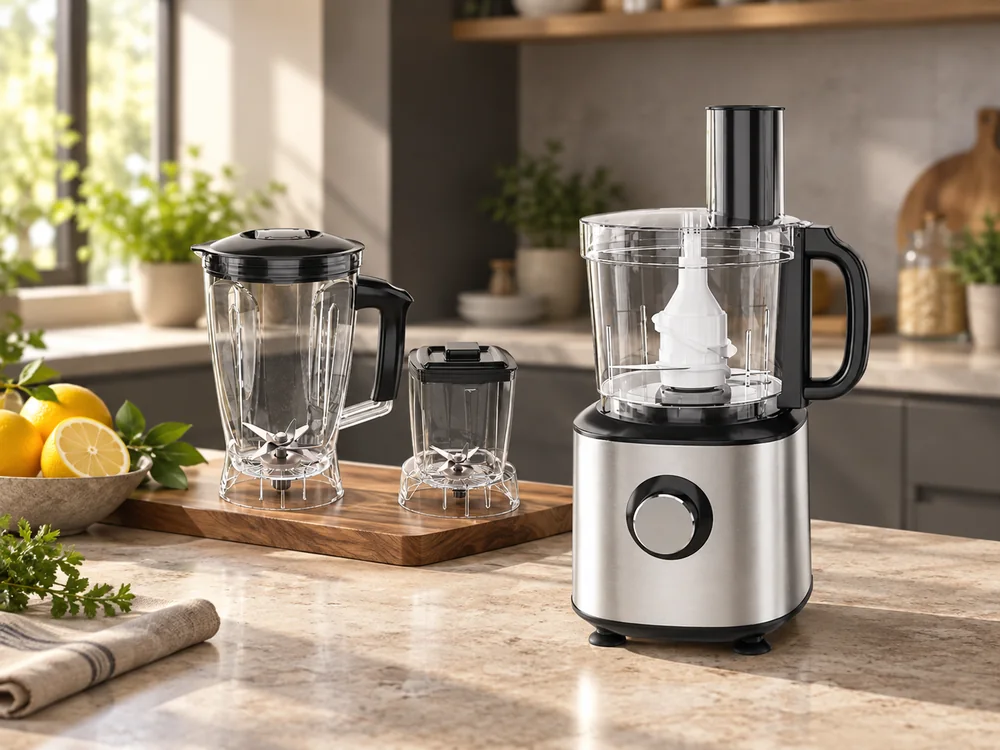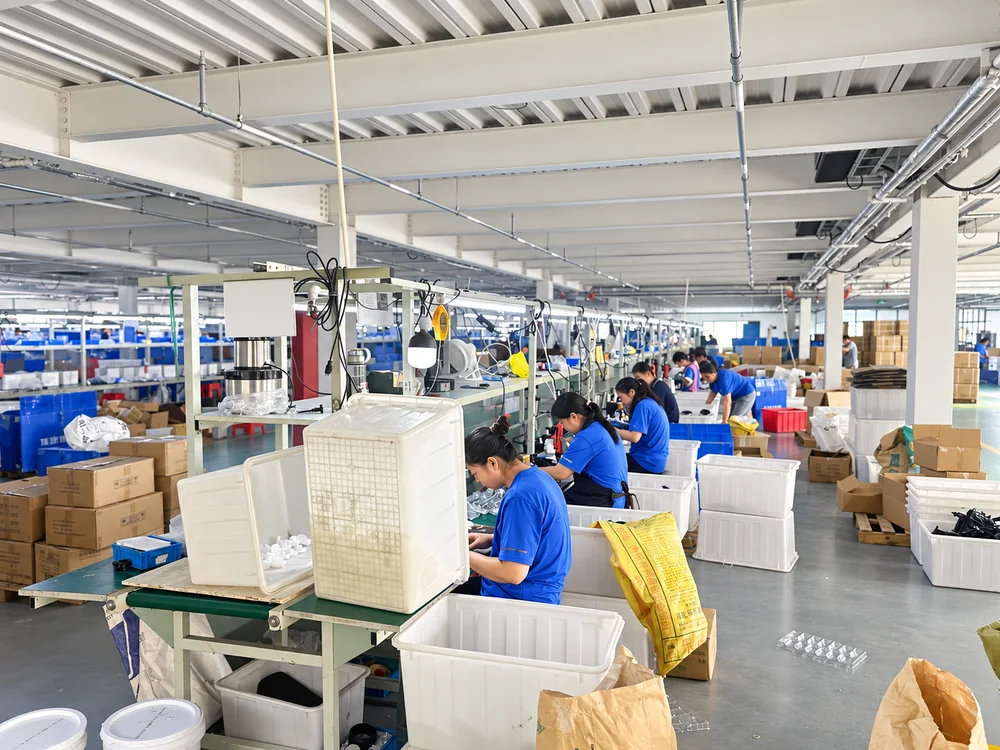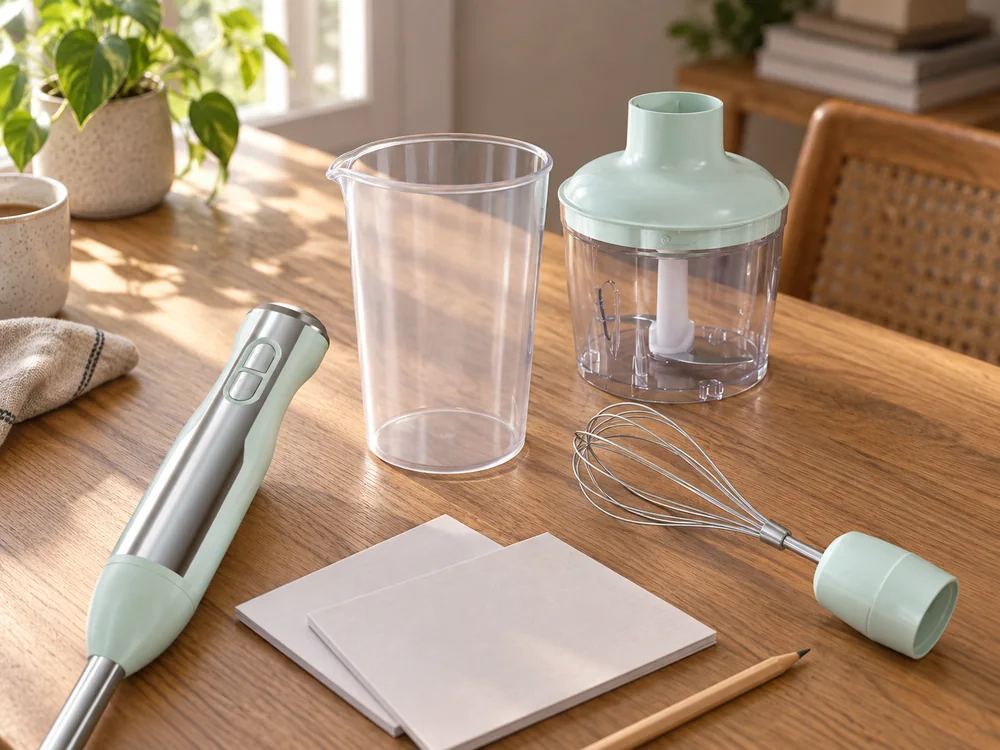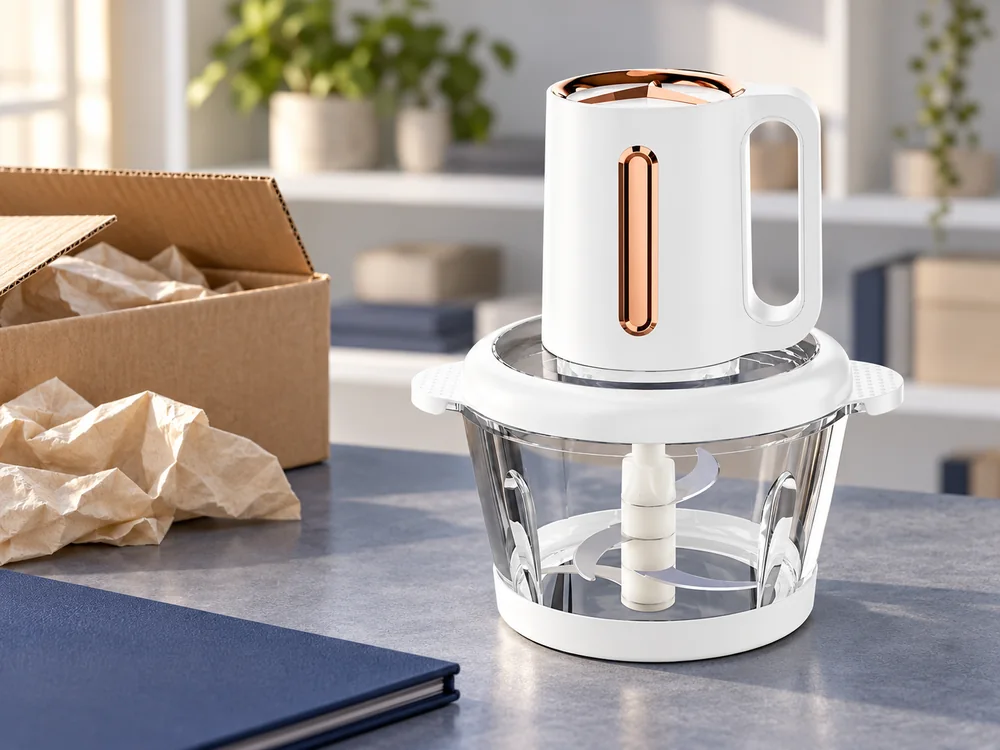
A customer who finds a missing blender lid contacts the brand on the box. The brand may then contact its manufacturer. If neither business has agreed how to identify the product, record the issue and settle a remedy, a small missing part becomes a slow dispute. That is the buying problem behind small appliance OEM after-sales support.
This guide is for importers and private-label retailers buying household food-preparation appliances. It is not a statement of JINJIE’s standard warranty, spare-parts stock or response time. Those terms have to be confirmed for the chosen product and commercial arrangement. The aim is to leave an OEM discussion with a service route the retail team can actually carry out, and with enough information to decide whether the proposed supplier arrangement is workable.
Begin with the customer promise, then trace it back to the supplier
Retail service and factory support are different jobs. A customer expects a clear local contact and a remedy under the terms offered in the sales market. The importer or brand normally controls that customer relationship. Its agreement with the manufacturer must make the promised response possible without assuming that the manufacturer will speak directly to every consumer.
Write down the customer-facing promise your channel intends to make. Which parts of a complaint can the retailer settle itself? When does it need the manufacturer’s technical answer, product identification or commercial approval? A one-line assurance of “after-sales service” cannot answer those questions. The useful supplier response identifies a contact, the information that contact needs and the decisions the contact is allowed to make.
Use the actual retail unit as the starting point. JINJIE’s electric meat chopper range contains different bowl, control and size formats. A complaint about an SD-series bowl must be tied to the model and complete assembly sold, not routed as a generic “food chopper problem.” The same applies to a countertop blender jar or a hand-blender attachment. Similar appearance does not establish interchangeable parts.
The buyer should also decide whether its channel accepts a whole-unit replacement, an approved component, a refund or another remedy in each relevant situation. These are commercial choices to negotiate, not a list of remedies JINJIE has offered. A retailer promising a replacement container needs an agreed compatible item and a route for obtaining it. Otherwise, it may have to hold complete replacement units or choose a different customer promise.
Think about the first month after delivery. Where will a customer report a problem? Who records the order reference and visible product identity? What can the retail team decide immediately? Which cases need the manufacturer’s review before anyone promises a replacement? If the answers are unclear while buying, they will not become clearer when several customers report similar faults at once.
Separate issues that need different evidence and remedies
The phrase “defective product” is too broad for a service agreement. A missing included tool, damaged outer carton, complaint about an operating result and electrical concern require different questions. Combining them into one returns percentage hides both cost and cause. Set up a small number of categories that the people receiving claims can use consistently.
| Reported situation | First information to retain | Question for the supplier arrangement |
|---|---|---|
| Missing item in the box | Product model, purchase and pack identity, photograph of received contents | How will the agreed contents be verified and an omission resolved? |
| Arrival damage | Carton and product photographs, delivery condition and affected quantity | Who handles transport evidence and which delivery term applies? |
| Appliance or attachment not working as described | Exact configuration, customer’s account of use and safe observations | Who reviews the product question and what response can the retailer give meanwhile? |
| Incorrect version or printed information | Model, market version, label or manual and order reference | How will affected units be identified and corrected? |
| Possible safety concern | Product identity and a factual report, with no further customer testing requested | Who receives urgent escalation and coordinates the appropriate response? |
These intake details do not diagnose a fault. Customers should not be asked to open a motor unit or repeat a potentially unsafe failure to create better evidence. The retailer can capture what the customer already has and escalate a safety-related report promptly under its applicable obligations. Product-specific technical and legal decisions belong with the responsible parties.
A damage claim is especially easy to misroute. If the carton was crushed after collection, a factory production record alone will not explain the event. If several units arrive with the same internal packing failure while outer cartons are sound, the packaging proposal deserves review. Keep the condition at each handover visible before assigning cost. The buying team should settle the information route before the first shipment, including who holds transport documents.
For a complaint about a preparation result, first identify the promised use and the selected product instructions. A nominal wattage or container capacity does not prove that a particular ingredient and load are supported. If the listing promised a task outside the approved scope, correcting the public claim may be the immediate action, even if the physical appliance matches the sample. If the task is in scope and the product behaves differently from the approved sample, the manufacturer needs the model and batch context to investigate.
Make the product identifiable after the retail box is opened
At sample approval, buyers carefully distinguish versions. Months later, a customer may send one photograph of a base and say it stopped working. If the service team cannot identify the supplied version, it may offer the wrong instruction, lid or replacement unit. Decide which visible identifiers and order records will connect that consumer unit to the approved product.
Ask how model, electrical version and production or shipment batch can be traced in the actual commercial documents and on the product or packaging. The answer must match the selected market version. Do not invent a serial number system because another manufacturer uses one; establish the identifiers actually available for the chosen JINJIE proposal. If the product itself has limited marking, the buyer may need to retain the carton or purchase information at intake. Check the practical route before promising effortless claims.
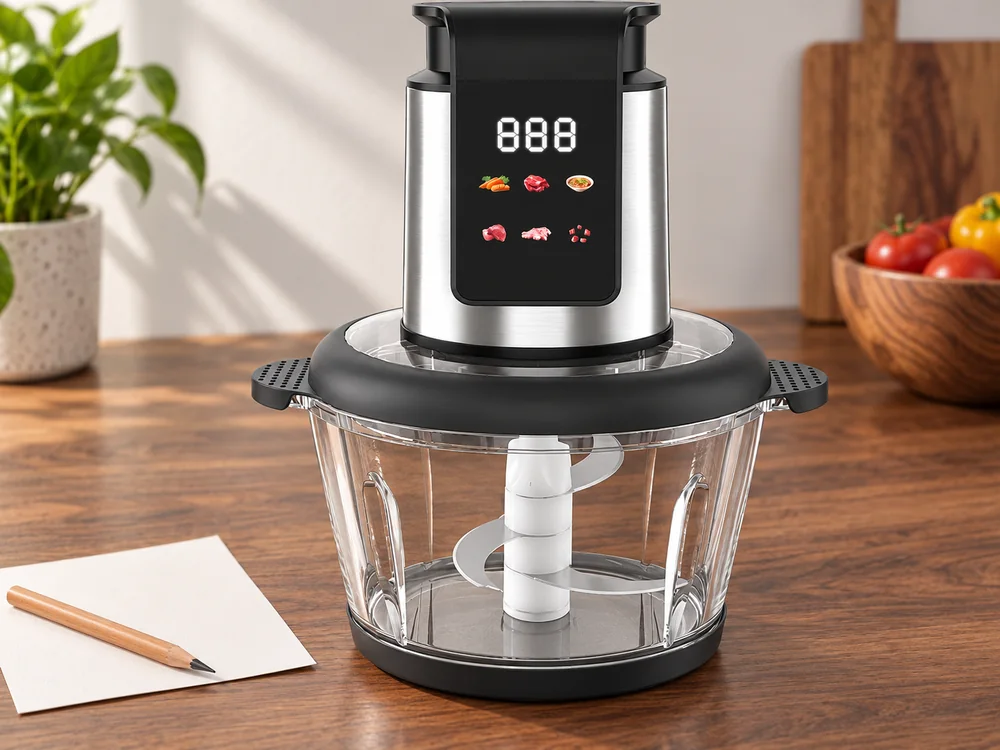
Keep the approved complete-set description with the service record. An SD-01 steel-bowl chopper and an SD-03 glass-bowl proposal are separate quotation references, not a license to send a similar-looking bowl without compatibility confirmation. The buyer’s support team needs a current list of what came in each saleable unit, plus a way to recognize optional items shown in marketing photographs.
JINJIE’s OEM and ODM options can include branding and printed-material discussion. That makes version control a service issue as well as an artwork issue. If a branded box, manual or label changes between orders, retain which approved file went with which product lot. A complaint about confusing instructions is hard to investigate when the retail team cannot identify the version the customer received.
Build one short case record rather than demanding a pile of documents from the consumer. Record the date, channel, model reference, identifying mark or order information, what the customer reports, any existing photograph, immediate action and unresolved question. The manufacturer can then request a relevant next detail. A long mandatory form that blocks every claim may save the supplier time while losing the retailer’s customer.
Cost the remedy, not only the warranty period
A promised duration is one part of a service arrangement. The cost of a remedy also depends on local handling, shipping, product value, component availability and who bears the work. A longer written period with no usable route may be less valuable to the retailer than a shorter, clearly defined process that fits its sales market. The parties must still meet applicable consumer obligations; this article does not set those obligations.
Calculate several plausible cases before agreeing a margin. A complete replacement uses a second saleable appliance and two transport movements in some channels. Sending one approved component may cost less in product value but still require identification, packing and international or local delivery. A credit may be simple to account for but leave the retailer responsible for serving the customer. These are buyer-side scenarios, not JINJIE’s fixed terms.
For example, suppose a private-label retailer plans to hold a small reserve of the exact approved blender version for immediate customer replacements. It needs to know whether that reserve is included in the opening purchase and how replenishment will work if reports rise. If the replacement unit comes from a later shipment with a changed jar interface or manual, the service team cannot assume it is interchangeable with the earlier sale. Record the cost and identity of the reserve as part of the retail launch.
Do not set an arbitrary percentage of “free spares” as though every product and complaint had the same failure pattern. Ask which remedy types are available for the specific model, how a verified claim is assessed and what each party will pay. A supplied part needs its own confirmed compatibility and supply terms. A photograph of loose accessories is not a parts-service agreement.
Before placing the order, record the unresolved service terms beside the selected model and market version.
| Term to settle | Buyer-side decision | Supplier answer needed before relying on it |
|---|---|---|
| Coverage and starting event | What the retail brand will tell customers in each market | Exact commercial coverage for the identified version, with exclusions stated |
| First response | Who receives and records customer reports | Named route for technical or commercial escalation |
| Evidence and review | What the retailer can collect without burdening or endangering customers | Minimum information for a case and how disputed findings are handled |
| Available remedy | Whether the channel can use complete replacement, approved part or another agreed route | Product-specific availability, authorization and cost allocation |
| Transport and holding stock | Local reserve, return handling and who pays relevant movements | Shipment route and conditions for replacement goods or credits |
| Repeated pattern | When the buyer pauses sales or requests a broader review | How affected versions or batches will be identified and investigated |
The agreed document should use the same model and market description as the purchase order. A general assurance in a company brochure does not tell a retailer who pays to move one replacement appliance across a border. If a term remains open, mark the dependent retail promise as open too. Do not fill the gap with a statement copied from a different supplier’s policy.
Treat repeated reports as product information, not isolated tickets
One complaint can be unusual. Several reports involving the same version, printed instruction or part deserve a different response. Keep a count that allows cases to be grouped by identifiable product and sales period. The buyer can then ask whether the pattern changed after an artwork revision, component change or new order. Raw total returns without sales volume or version identity are a poor basis for comparing production lots.
The investigation should distinguish an actual product difference from a description problem. Suppose customers repeatedly believe a small cup is included because the hero photograph shows it beside the base, but the approved retail set does not include that cup. The first remedy is to correct the offer and help affected customers, not to ask the factory to “improve quality” without identifying an assembly defect. In another case, a lid that no longer fits an otherwise unchanged bowl may require a version-specific product review. The response follows the cause.
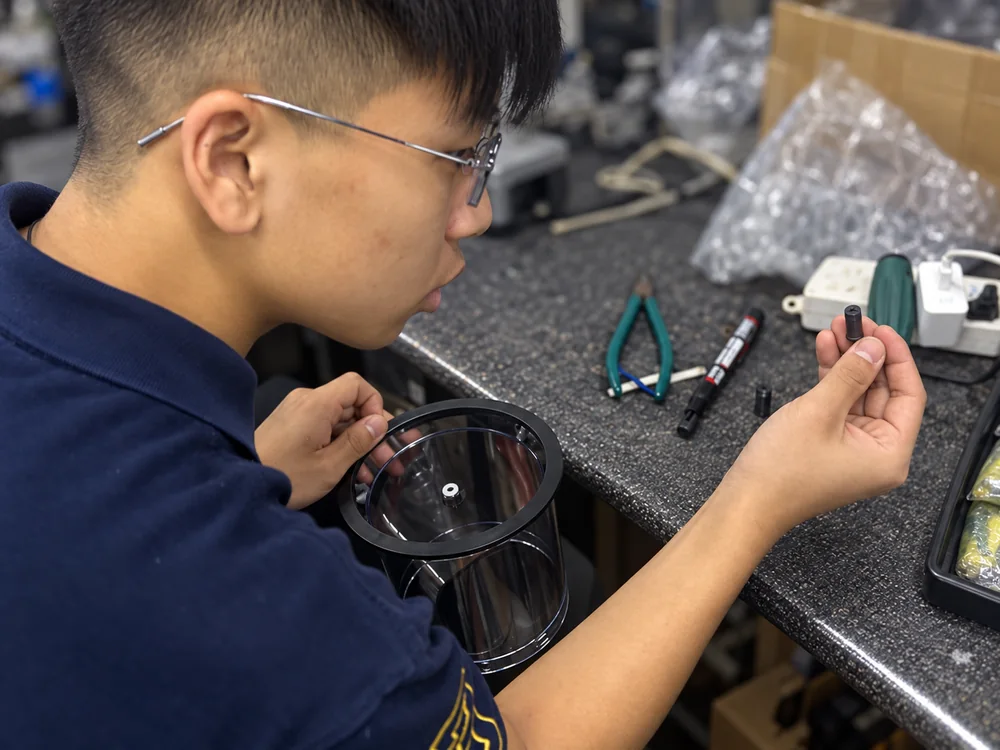
Ask how the manufacturer will examine a recurring issue against the approved specification or sample, who returns the findings, and whether a proposed change needs a new approval. The JINJIE quality and testing overview is a starting point for discussing product checks. It is not evidence that any particular customer claim has been investigated or that all possible issues are covered. Request the relevant answer for the identified version and reported condition.
If the brand changes a component, container, label or instruction after complaints, keep the old and new scope apart. Existing customer units remain in the market. Service staff may need to recognize both versions, and any proposed replacement part must match the customer’s actual unit. A change that fixes later production does not automatically settle earlier cases.
Not every complaint justifies stopping sales. A safety concern, a repeated mismatch with the public offer and an isolated handling question have different consequences. Decide who can pause listings or shipments while a question is investigated, and what answer releases that hold. The buyer needs an escalation route with authority, not just an email address.
Decide if the support arrangement fits the purchase
An OEM supplier is workable for a retail program when the brand can identify the sold version, serve the customer under its market obligations and obtain the agreed manufacturer response when needed. The supplier need not perform the retailer’s front-line job. It does need to give the buyer enough model-specific information and a commercial route for issues the buyer cannot settle alone.
Before ordering, test the arrangement with two realistic cases based on the chosen product: a missing included item and a repeated complaint about one function or component. Ask the proposed contacts to explain the information path and available remedy. The exercise is a discussion, not a claim that those failures have occurred. It exposes gaps in responsibility more quickly than a broad question such as “Do you offer good after-sales service?”
Proceed when the supplier’s answer, the retailer’s own capacity and the public promise are consistent. Narrow the retail promise or hold a dependent approval if a specific remedy remains unconfirmed. If the only acceptable remedy for the channel is a replacement part that the proposed arrangement cannot supply, select another service design or another offer. Missing information calls for clarification; a confirmed inability to meet a mandatory service requirement calls for a different decision.
Send JINJIE the selected product and service questions with the model, target market, expected order, proposed customer promise and two cases you need the arrangement to handle. Ask for the available response route and terms for that exact proposal. The result should be a service plan your retail team can operate after the cartons leave the factory.
FAQ
Should the OEM manufacturer speak directly to our customers?
Only if both parties have agreed that role and it fits the market arrangement. Most private-label buyers should first decide who owns the local customer contact, then specify when a manufacturer answer is needed. A supplier technical contact is not automatically a consumer help desk.
Can we announce a warranty period before agreeing the claim process?
The retail brand must meet its applicable obligations, but it should not rely on an unconfirmed supplier reimbursement or replacement route. Set the customer promise with appropriate local advice, then agree the product-specific business process and costs that let the brand fulfill it.
What if an older customer unit has a different container interface?
Identify the sold version before selecting a remedy. A newer component is suitable only if compatibility is confirmed for that earlier unit. If it is not, discuss another agreed response rather than forcing a near-fit part into a customer’s appliance.
When should several complaints become one supplier investigation?
Group reports by the same identifiable version and reported issue, then compare them with sales volume and timing. Escalate sooner for a possible safety concern. The threshold and responsible decision-maker should be agreed for the actual retail program; a generic percentage cannot replace that judgment.