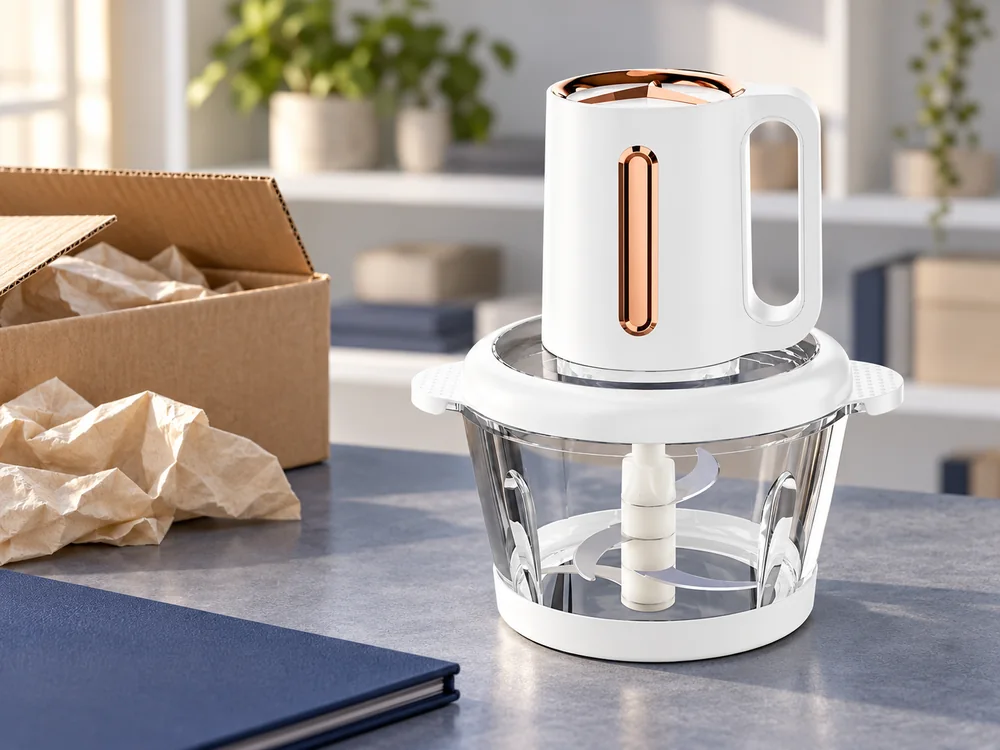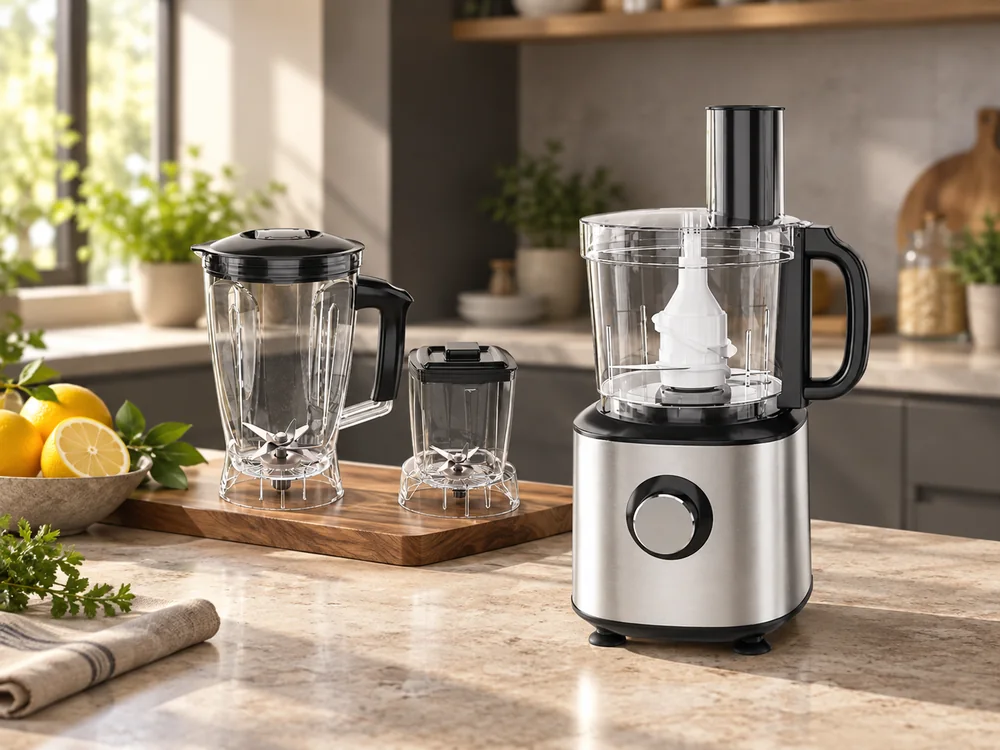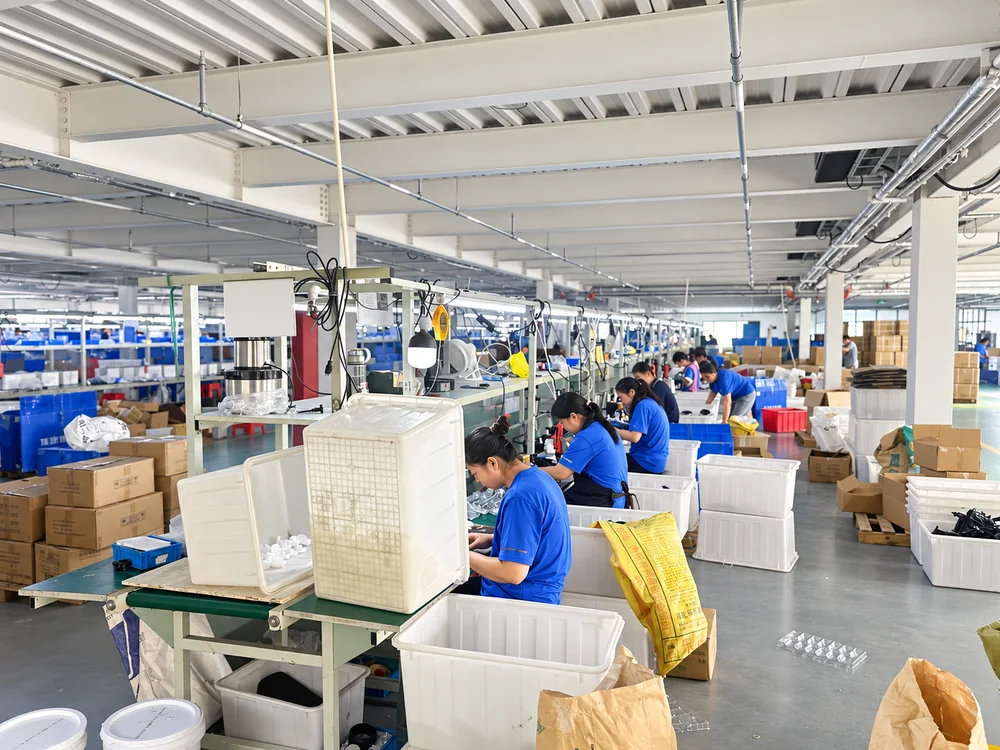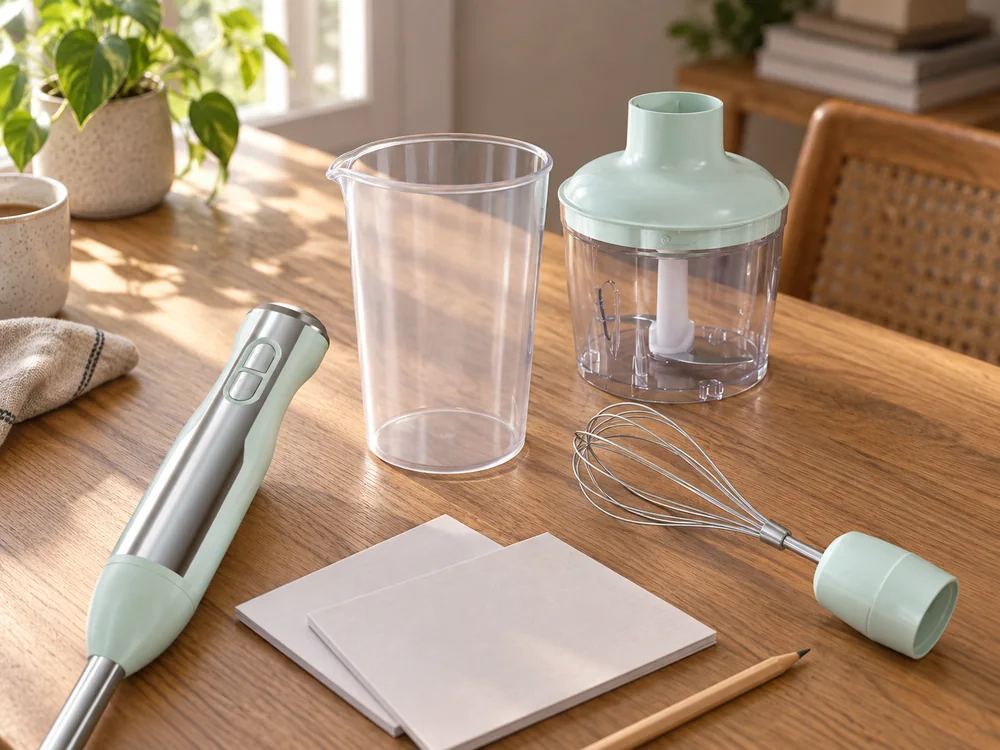
An appliance can be ready for a sample review while its instruction manual still describes a different attachment. Translating that document accurately would reproduce the wrong information in another language. For a private-label buyer, the starting question is therefore which product the source manual actually describes, before deciding who should translate it or how many booklets to print.
Private-label appliance manuals connect the supplier’s product information with the brand’s customer support and destination-market preparation. Purchasing needs to know who supplies the source, who reviews technical meaning, who checks the language and who releases the final files. Those responsibilities can sit with different people, but their work must converge on the same appliance version.
This guide concerns household choppers, blenders, hand blenders and salad makers ordered under a buyer’s brand. It addresses the procurement and document handover, not instructions for operating an unspecified appliance. Required languages, warnings and other market obligations need qualified review for the actual destination. No generic booklet or translation service should be treated as automatic evidence that every requirement has been met.
Establish the source manual before commissioning translation
Ask for the document associated with the selected model and configuration. Record its revision and identify which product it accompanies. A folder containing several family manuals can be useful background, but one file must be nominated as the source for the order. Otherwise, design and translation may begin from different versions without either team realizing it.
Compare the source illustrations with the actual sample. Look at the control layout, supplied container, attachment connection and included accessories. The purpose is to identify mismatches for the responsible product team, not to rewrite operating instructions from photographs. Where the document and sample disagree, ask which is current and request the corresponding correction.
For an attachment set, establish whether the source covers every included item. A booklet that describes only the main hand-blender shaft may not explain another attachment in the agreed retail offer. Conversely, instructions for an optional item can confuse a customer who receives a simpler set. The document needs to identify the actual scope clearly.
JINJIE’s immersion blender range provides a starting point for identifying the supplied configuration. Use the selected product reference when requesting the associated instruction material. A shared appearance or similar model name is not sufficient reason to reuse another set’s booklet without comparison.
Separate unresolved source content from translation questions. If the buyer does not know whether an accessory is included, a translator cannot settle that purchasing decision. If the operation described is unclear, the technical contact should resolve it before the wording is carried into several languages. Label the open point so other work can proceed without concealing the dependency.
Keep the source editable where the working arrangement permits. Ask what files can be provided and what deliverables are included in the document service. A flattened file may be usable for reading but inconvenient for corrections or new language layouts. Do not assume access to every original file; establish the needed handover in the proposal.
Avoid borrowing another brand’s instructions to fill a gap. Similar-looking products can have different controls, accessories or permitted use. The source should be connected to the actual appliance and supplied through an appropriate channel. A convenient online manual is not evidence that its directions apply to your order.
Assign content, language and release responsibilities
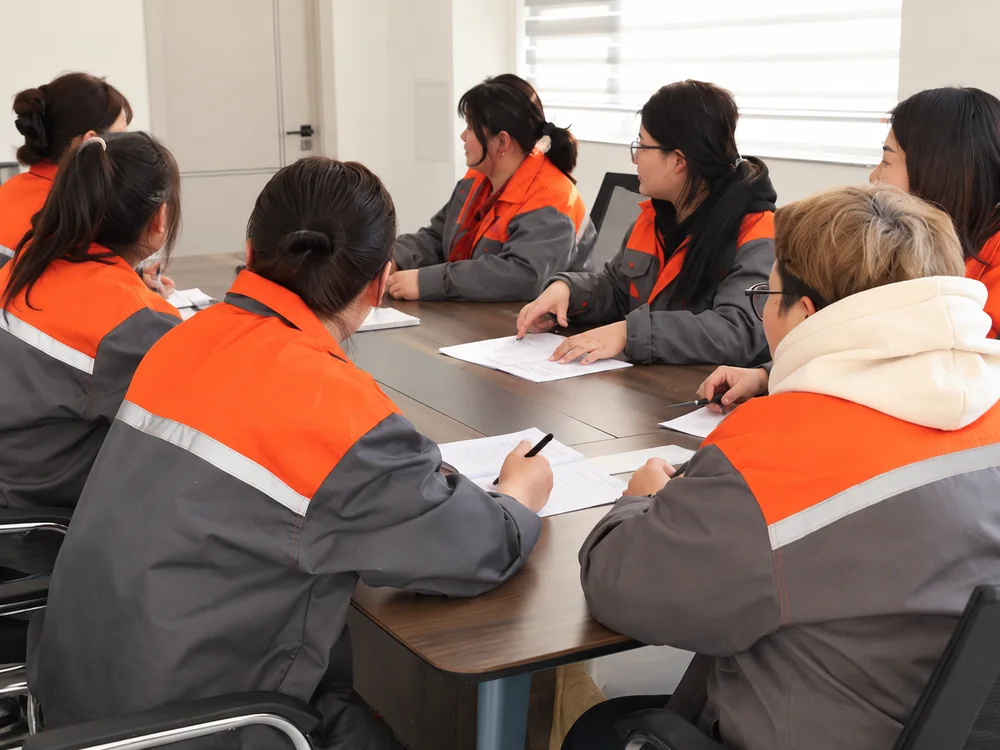
Name a technical reviewer for the product information. That person or team needs access to the correct appliance details and authority to resolve meaning. A fluent editor can improve a sentence without knowing whether it describes the selected control correctly. Technical acceptance should not be inferred from a successful language review.
Name a language reviewer who can judge the intended customer’s understanding. The task includes terminology, grammar and the relationship between text and illustrations. A bilingual sales contact may help coordinate questions, but purchasing should establish the actual review service instead of assuming language ability automatically includes technical-document expertise.
Define who supplies the buyer-specific information. This can include the retail product name, support contact and any applicable service wording approved by the business. Keep those inputs distinct from the manufacturer’s technical source. The factory should not invent the buyer’s customer-service promise to complete an empty page.
Use the OEM and ODM project discussion to allocate the work. Ask whether the proposal includes source preparation, translation coordination, layout, printing or only placement of buyer-supplied booklets in the package. A statement that a manual is included does not reveal which of those activities has been priced.
| Work item | Input needed | Responsibility to name |
|---|---|---|
| Product source review | Current model, contents and approved operating information | Person resolving technical meaning |
| Translation | Agreed source and target language list | Provider producing the language version |
| Language review | Translation in context with illustrations | Reviewer assessing clarity and consistency |
| Buyer information | Brand, support route and approved commercial wording | Owner of the customer-facing promise |
| Final release | Correct content, layout and revision together | Person authorizing the identified files for the order |
Agree how questions move between these roles. A translator may need to know whether two source terms describe the same part. Send that question to the technical owner, retain the answer and apply it consistently. Do not let several reviewers independently choose plausible meanings and leave the layout team to reconcile them later.
Keep a final decision owner without making that person the author of every answer. Purchasing can coordinate release while relying on technical and language approval from qualified reviewers. The release record should show which work is complete and which remains open. A general positive comment about readability should not approve an unresolved product instruction.
For several destination markets, avoid assuming that one regional colleague can approve every local requirement. Establish the required review for each destination with the appropriate people. This article does not prescribe a universal language list or claim that a particular translation alone makes an appliance ready for sale.
Build a language package the customer can navigate
Choose between a multilingual booklet and separate language documents using the actual channel and packaging needs. One combined booklet can simplify the physical item count. Separate documents can allow market-specific preparation. Compare their implications for layout, packing, updates and unused printed stock rather than choosing solely by the number of pages.
Make the relevant language easy to find. A customer should not need to inspect every page to locate the beginning of the appropriate instructions. Discuss a clear contents or section arrangement with the document team. The layout should support navigation without omitting material to make a shorter booklet appear more convenient.
Preserve the connection between a direction and its illustration. If a paragraph refers to a numbered component, the corresponding picture and number must remain correct after layout. Review the exported document, not only the translated text in a separate spreadsheet. A correct translation can still be placed beside the wrong drawing.
Maintain a terminology list for parts that recur. A bowl, beaker, lid, shaft or cutting tool should have a consistent intended name within the relevant language. The terminology needs to follow the actual product. Do not apply a fashionable retail term if it suggests an attachment or function different from the one supplied.
Keep units and model references under explicit review. The layout team should not casually convert a product value, simplify an identifier or replace a symbol without the responsible review. If a value needs presentation in another form, obtain the correct approved expression. The task is accurate communication, not an opportunity to infer missing specifications.
Allow the final language version to occupy the space it needs. A translation may not fit the original text box neatly. Ask the designer to resolve the layout while preserving readability and the necessary content. Reducing the type until the page count matches the original is not a sound default purchasing decision.
Check the printed-size view. Text that is comfortable on a large monitor can become difficult to read in a small booklet. Review the relevant proof at its intended dimensions and inspect detailed illustrations as well as paragraphs. If the format is too small for the content, discuss a different arrangement before committing to print.
Where a digital copy is also planned, establish how the customer will reach the correct version. A link or code needs an owner and a maintained destination. Do not assume a digital document can replace a physical one in every market or circumstance. Decide the required delivery format through the applicable product and market review.
Quote the complete document service and printed supply
Ask the provider to describe the work included in its price. Translation alone differs from translation plus technical review, layout and final proof correction. Compare proposals on the same source length, language set and deliverable basis. A lower headline rate may simply exclude work another provider has included.
Identify how revisions are handled. The source may change after the first translation if the selected set is revised. Ask what is included in the agreed correction rounds and what creates additional work. Keep an actual change record so the discussion concerns the affected material, not an assumption that the entire manual must always be recreated.
Request printing information separately where useful. The booklet’s size, page count, paper and quantity belong to the physical proposal. Let the responsible supplier recommend a practical format, then compare it with the readability and packing requirements. Do not specify a cheaper format without understanding whether it changes the final presentation.
Account for language quantities by destination. If separate booklets are used, map them to the orders that need them. A total appliance quantity is not enough to determine the correct print quantities when the shipment serves several markets. Show the intended split and ask how spare printed stock will be identified and retained, if that is part of the arrangement.
Treat excess printed stock as a versioned asset, not a permanent saving. It can support a later order only while the content remains correct for that product. A low unit print price is less useful if a foreseeable product or support-information change leaves many booklets unusable. Compare the commitment with the stability of the current specification.
If the buyer supplies printed manuals, confirm delivery timing, quantity and the packing team’s acceptance process. The appliance order may depend on receiving those materials in usable condition. Ask how shortages or incorrect versions will be reported. Do not assume the factory will substitute an available booklet without a decision from the buyer.
For an early launch, distinguish a sample booklet from the intended production document. It can be useful to review an assembled proof before ordering the full print run. State what that proof represents and which details still await approval. This keeps a convenient sample from becoming the production reference by accident.
Check the manual inside the actual retail set
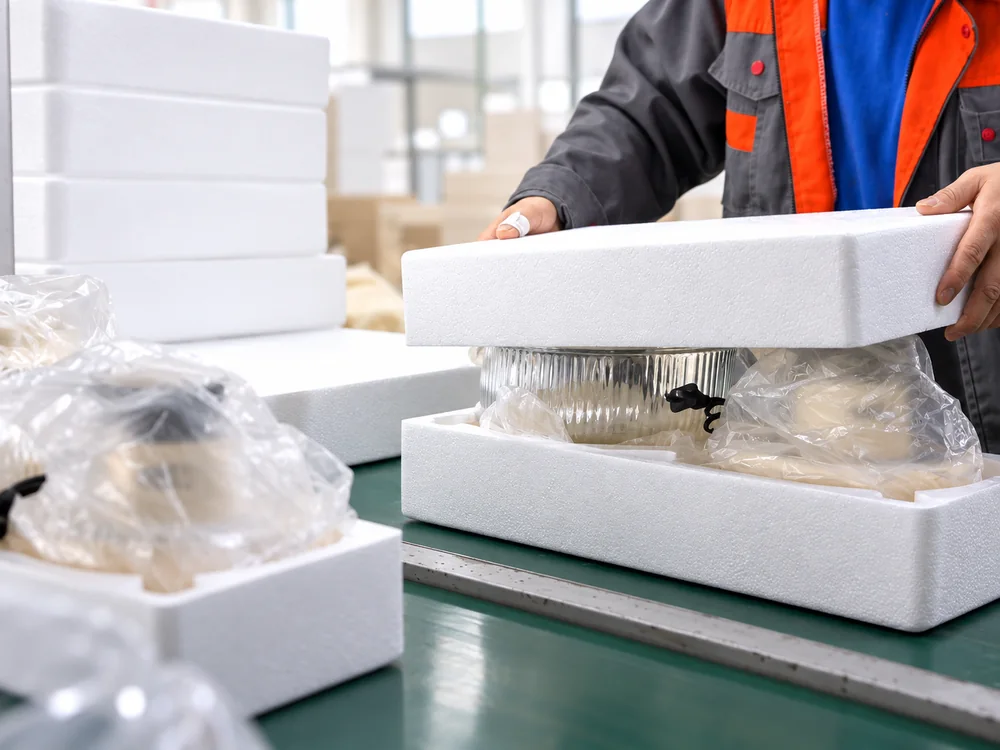
Review a representative packed set with the identified document included. Confirm that the booklet belongs to the appliance and that the customer can find it during the intended opening sequence. A correct file stored in the project folder does not demonstrate that the correct printed item has been packed.
Use the contents reference to distinguish the manual from optional promotional material. If another leaflet is included, make its purpose and version clear. A packing operator should be able to account for the required documents without interpreting their subject matter or guessing which language goes with the carton.
Check instructions against the final product, especially where a change occurred after the source was prepared. A revised control, accessory or supplied part may affect text and illustrations. Ask the responsible product team whether the document still applies. Do not decide that a change is too small to matter solely because the retail model name stayed the same.
| Finding during review | What to compare | Action before release |
|---|---|---|
| Illustration shows another attachment | Final contents and document source | Obtain the correct product illustration and related text |
| Language section uses a different part name | Agreed terminology and physical component | Resolve meaning, then correct affected references |
| Printed type is difficult to read | Actual-size proof and required content | Revise the layout or format without deleting necessary material |
| Wrong language booklet is in the box | Destination allocation and packing reference | Correct the document identity and affected sets |
| Support details point to an old service route | Buyer’s current approved information | Update the source, printed supply and digital copy together |
Discuss applicable document checks through JINJIE’s quality and testing coordination. Keep the scope specific: identity, version and relevant content checks need to be named for the order. A photograph of an open box cannot show that every language has been reviewed or that every instruction is technically correct.
When an error is found, identify its scope before deciding the remedy. An incorrect language allocation differs from an ambiguous operating instruction. Both need attention, but they may involve different teams and affected material. Escalate potentially safety-relevant content to the responsible reviewers rather than treating it as a routine cosmetic correction.
After correction, review the changed file and the delivered format. A revised paragraph can alter pagination or separate an illustration from its reference. Verify the intended result in the final export or proof. Recording that a correction was requested is not the same as confirming that it reached the document being supplied.
Keep updates connected to products already in stock
Maintain a link between the appliance version, manual revision and order. This lets the team identify which document accompanies a particular batch. It also supports customer-service questions when two versions are in circulation. A folder of undated PDFs is difficult to use after the original project contact has moved on.
For a product change, ask which language versions and images are affected. Some edits may apply to the entire document set; others may concern only a particular configuration. Have the responsible reviewers determine that scope. Avoid either extreme of changing nothing or rewriting every language without assessing the actual difference.
Coordinate physical and digital updates. Replacing a file online does not change booklets already packed in stock. Identify what remains in production, in transit and in the warehouse, then decide the appropriate action with the relevant teams. Keep that decision tied to the significance of the change rather than convenience alone.
Customer-support observations can reveal where wording is unclear. Record the question, the product and the manual version before proposing an edit. A misunderstanding may come from an incorrect illustration, an unfamiliar term or a missing explanation in the approved source. Resolve the cause instead of adding more text indiscriminately.
Preserve previous versions for internal traceability while directing new work to the current one. The archive helps answer what a customer received; it should not compete with the active production file. Use clear status labels and a controlled handover so an old but familiar document does not reappear on a repeat order.
Request the document package with the appliance offer
Send JINJIE your manual and language requirements with the selected model, included set, destinations and proposed language quantities. Identify any buyer-appointed translation or review provider and the files you expect to receive. Ask which source document applies and what remains open before pricing the complete printed package.
FAQ
Can translation begin while the accessory set is still being chosen?
Preparatory work can begin if the uncertain sections are clearly identified. Keep the final translation and release dependent on the confirmed set. Otherwise, changing the contents later may require corrections across text, illustrations and several language layouts.
What if the translation provider flags an unclear source sentence?
Return it to the person responsible for the product meaning. Ask for a clarified source and retain the answer for every affected language. Choosing the most fluent translation without resolving the underlying ambiguity can reproduce the same uncertainty throughout the document package.
Can one manual cover several related models?
It may be possible if the relevant differences are explained accurately and the format meets the applicable requirements. Have the product and document reviewers assess the proposed coverage. A shared housing alone does not establish that controls, accessories and operating information are identical.
Should an urgent correction be sent only as an updated PDF?
Assess which products and customers are affected and what the correction means. The responsible teams should determine how it needs to be communicated and supplied. Updating a digital file is one action; it does not automatically resolve printed stock or information already delivered with an appliance.