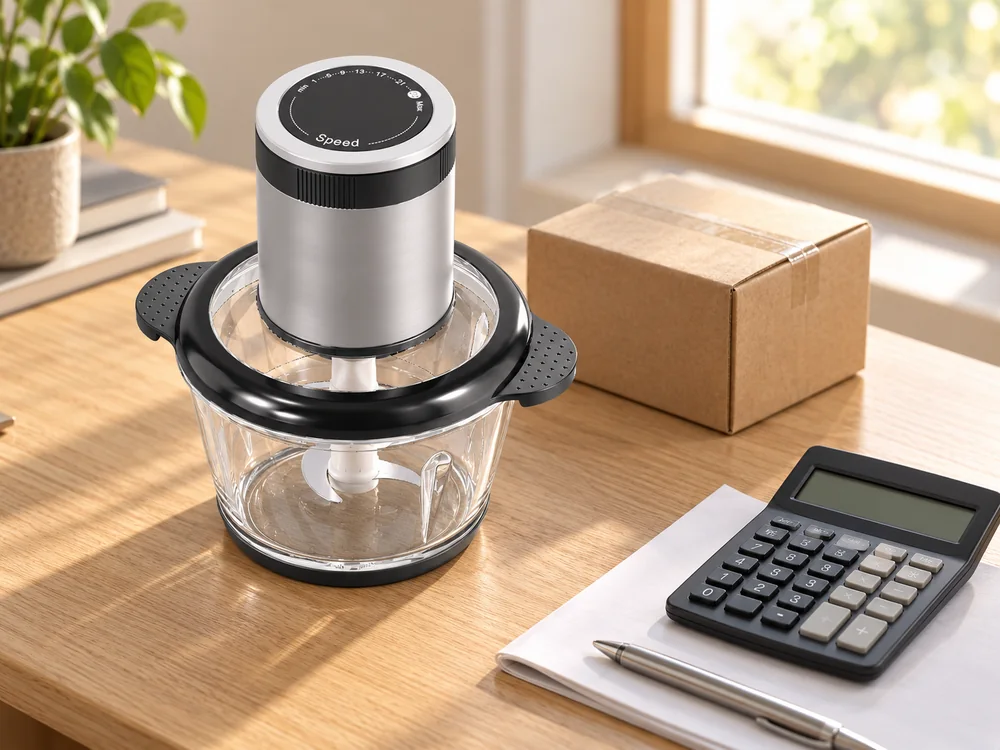
Two manufacturers can quote the same appliance price and require very different amounts of cash before shipment. The difference matters most when a private-label buyer must also fund packaging, transport and a retail launch. Compare small appliance OEM payment terms by the amount due, the event that makes it due and the information available at that event. A percentage split alone cannot explain the commitment.
The purchasing decision is whether your business can fund the proposed order on clearly understood terms, or needs a different arrangement before accepting it. That includes the supplier’s need to commit materials and production resources. A request to pay later should identify a workable alternative, not merely shift an unresolved launch forecast onto the manufacturer.
This guide concerns commercial purchasing of household food-preparation appliances. It does not publish JINJIE’s payment policy, recommend a banking product or provide legal advice. Actual terms need agreement for the identified offer, with bank or professional advice where the payment instrument or contract requires it.
Identify the purchase before negotiating its payment
Start with the complete order being funded. State the model, market version, supplied contents, quantity and presentation. A price for an unbranded existing appliance is not automatically the price of a finished private-label set. Without an agreed scope, a smaller deposit percentage can conceal additional charges or later work outside the stated balance.
For a bowl chopper selected from the JINJIE food chopper range, identify the actual quotation reference, such as SD-01. Keep optional changes separate from the selected offer. If the buyer is still choosing the product, fund the necessary evaluation first rather than treating a production deposit as a way to reserve every possible configuration.
Separate appliances from separately charged work. Branding preparation, dedicated printed material or product development may have different payment events. Ask whether they are included in the order value used to calculate a percentage. A term such as “30% deposit” is incomplete if the buyer does not know what total the percentage applies to.
Check quantity units too. Complete retail sets, individual appliances and shipping cartons are not interchangeable. A staged shipment may leave the buyer committed to a larger total purchase than the goods arriving first. Put the entire obligation in the funding plan, with the current shipment shown separately.
Identify the parties on the proposal and the entity receiving payment. Where a sales contact, contracting entity or payment beneficiary differs, obtain an explanation through a verified route before transferring money. The purpose is to understand the actual transaction, not to reject a legitimate arrangement simply because its commercial names differ.
Keep currency, quotation validity and applicable charges alongside the selected scope. If your internal approval takes longer than the offer remains valid, obtain the current proposal before issuing the purchase. Negotiating a payment split against an expired quotation can leave the buyer comparing conditions the supplier is no longer offering.
Separate the payment method from the due event
A bank transfer describes how money moves. “Balance before shipment” describes when payment is due. Neither phrase tells you what product checks occur first, how disputes are handled or what evidence belongs with the request. Write the method, event and related record as separate items so each party can identify what it has agreed.
Payment in advance places funds with the supplier before the goods are shipped. The US International Trade Administration explains that this reduces the exporter’s risk of buyer nonpayment, while being less attractive to the importer. For a buyer, the practical question is what commitment is being funded and what basis supports taking that exposure. Paying early is not automatically inappropriate, but it should be a conscious choice.
A letter of credit is a different arrangement, involving a bank payment commitment against its stated requirements. Documentary collections use banks to handle documents and payment instructions but do not provide the same payment guarantee. If either is proposed, ask the bank to explain the instrument, costs and document obligations for the actual transaction. Neither should be treated as a general promise that the appliances will satisfy every product expectation.
Those instruments may be useful in particular transactions, but this article does not assume JINJIE offers them. A buyer should not add “L/C accepted” to its sourcing record because the term appeared in a generic supplier guide. Request the available proposal, then consider the appropriate arrangement with the supplier and relevant provider.
| Item in the proposal | What it answers | What remains to specify |
|---|---|---|
| Transfer method | How payment is sent | Currency, verified beneficiary, fees and processing arrangements |
| Deposit percentage | Share of the defined value due initially | Calculation base, due event and separately payable items |
| Balance before shipment | Timing relative to dispatch | The event, records and approval steps agreed before payment |
| Document-based arrangement | Payment or document handling under specified conditions | Bank review, required documents and applicable costs |
| Staged delivery | Goods moving in separate releases | Total commitment and the payment basis for each release |
Do not assume a familiar percentage makes different proposals equivalent. One supplier might calculate it on appliances alone while another includes printed material. A balance can be due on different events even if both offers use the same split. Compare the wording and full amounts, not the shorthand.
The manufacturer’s OEM and ODM process can help identify work that needs a separate commercial proposal. If a product change has not been priced or approved, name that open item before agreeing a payment schedule for the supposed finished offer. A clearly bounded current order is easier to fund than a mixture of confirmed goods and unspecified development.
Connect the due event to an agreed decision process
Define payment milestones before accepting the order. The buyer and supplier should be able to recognize the same event without relying on a phrase such as “when ready.” Ask what marks readiness, who supplies the relevant information and who gives the buyer’s response. Keep the process practical enough to execute within the proposed schedule.
Product approval and payment authorization need different owners inside the buyer’s business where appropriate. A technical reviewer may decide whether a configuration matches the requirement. Finance needs the current amount, invoice and payment instruction. Passing one decision does not automatically complete the other. Decide how the accepted product record reaches the person authorized to pay.
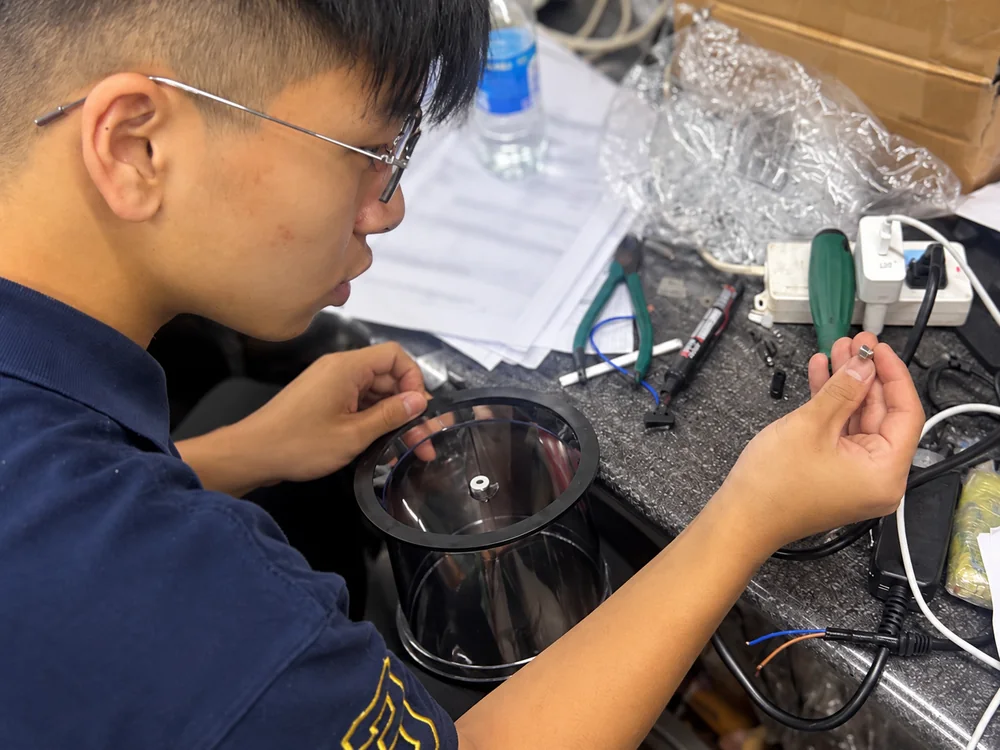
Agree any inspection or review that must occur before a particular payment becomes due. Specify its scope and responsible party, rather than treating a generic “QC passed” message as universal acceptance. The JINJIE quality and testing overview is a starting point for discussing checks. The relevant order arrangement needs to identify what result or record is expected for the selected goods.
Plan what happens when an agreed review finds a discrepancy. Identify the response route, how the finding is assessed and how the next approval is documented. A correction may require another check. Do not invent a unilateral right to withhold any amount: the payment and dispute arrangement must be agreed and, when necessary, reviewed professionally.
Distinguish missing information from an established failure. If a required report or explanation has not arrived, obtain it and hold the internal approval that depends on it. If the configuration is confirmed unable to meet a mandatory requirement, change the proposal. Once a binding order exists, deal with payment obligations under its agreed terms rather than assuming an internal approval delay cancels them.
Give the buyer’s review a workable turnaround. If an inspection result arrives when the decision-maker is unavailable, a preventable internal delay can affect dispatch. Arrange an authorized backup, consolidate comments and communicate unresolved findings through one route. This is an operational requirement, not a reason to rush an unresolved safety or conformity issue.
Calculate cash exposure under small appliance OEM payment terms
Build a funding calendar from the quoted amounts and events. Include separately payable preparation, goods, transport and receiving costs relevant to the purchase. Obtain logistics and destination estimates from the responsible providers. A factory balance is not the last cash requirement simply because it is the last amount on the appliance invoice.
Use the same scope for each comparison. The following invented example concerns an appliance order worth USD 20,000 and a separate USD 600 preparation charge payable at order confirmation. It compares two hypothetical payment proposals, not JINJIE terms or industry norms. Transport, bank charges and other costs are excluded here to keep the calculation visible.
| Illustrative proposal | At order confirmation | Later goods balance |
|---|---|---|
| A: 30% of goods initially, 70% before agreed dispatch | USD 6,000 plus USD 600 preparation = USD 6,600 | USD 14,000 |
| B: 50% of goods initially, 50% before agreed dispatch | USD 10,000 plus USD 600 preparation = USD 10,600 | USD 10,000 |
| Difference in initial funding | B requires USD 4,000 more at confirmation | B requires USD 4,000 less at the later event |
The lower initial amount does not reduce the total USD 20,600 in this example. It changes when USD 4,000 must be available. A buyer choosing A still needs a credible way to fund USD 14,000 at the balance event. Expected customer receipts should be shown by their actual agreed timing, not the optimistic date on a launch forecast.
Map uncertainty separately from the base case. If a retailer has not committed to purchasing the stock, its expected payment is not a confirmed funding source. Ask whether your business could meet the supplier’s payment schedule if the launch or sale moves later. The answer may support a smaller first order, a staged arrangement or another funded plan.
Check how bank and transfer charges affect the amounts expected by each party. Agree responsibility for relevant fees and ask the provider about the actual transfer process. Do not assume that the amount debited from the buyer’s account is necessarily the amount credited to the supplier. Reconcile any difference through the agreed commercial route.
Where the order and the buyer’s budgeting currency differ, obtain current conversion and payment information from the responsible provider. This guide does not predict currency movements or advise hedging. The purchasing record should make the quoted currency and the buyer’s funding assumption visible so a changed conversion amount is not mistaken for a changed product price.
Compare proposals against more than one cash date. A buyer may afford a deposit but lack the balance and transport funds when they coincide. Conversely, paying a larger initial amount could fit an already funded project while creating an unnecessary strain on another launch. Use your actual funding constraints; the smallest deposit is not automatically the best purchase.
Handle changes and partial releases before they create a surprise
An order change can affect both total value and payment events. Ask for the commercial effect when changing quantity, presentation or configuration. Keep the authorized revision beside the current payment calculation. A buyer should not pay the old balance on the assumption that a recently requested change is included free of charge.
Identify what happens to money already paid when a revised proposal is accepted. It may be applied to the current purchase under agreed conditions, but that treatment needs to be clear. Separate an order revision from cancelling an order and proposing another. The rights, charges and refund treatment depend on the actual agreement, not on how informally the change was requested.
For staged delivery, establish whether balances are calculated by the full order or by specified releases. If a buyer commits to 1,000 units but receives 300 first, the shipment size does not by itself establish a 300-unit payment obligation. Ask what has been produced, what remains committed and the amounts due at each release.
Dedicated packaging or materials can remain relevant after an order is reduced. Ask how the accepted revision treats unused quantities and related charges. A lower finished-unit count does not automatically remove earlier authorized work. This is especially important when the buyer changes a logo, language version or retail set after preparation has begun.
Resolve a delay without silently changing payment terms. Ask which event has moved and why, then obtain the agreed updated schedule or commercial response. A revised shipping estimate is not necessarily a new balance condition. Likewise, transferring money does not establish that a missed product approval has been completed.
When a proposal cannot fit the buyer’s funding limit, request a bounded alternative. That might be a smaller confirmed offer, fewer optional variants or a specifically negotiated release arrangement. Explain which constraint the alternative must solve. Whether the supplier accepts it remains a commercial decision; no general guide can promise credit or extended terms.
Verify the payment route and close the handoff
Before transfer, finance should have the current commercial record, amount, currency and verified beneficiary information. Preserve the product approval separately so the payment request can be traced to the right offer. Do not circulate bank details in public product material or routine article review files.
Treat a request to change payment details as a separate verification event. The FBI’s guidance on business email compromise recommends verifying account changes and payment requests through direct contact, using independently obtained contact details. Use an established contact route rather than relying on the phone number inside a suspicious message. An urgent shipping request is not a substitute for this check.
Once a payment is sent, record the transfer reference and seek acknowledgement through the agreed route. If the amount received or allocation differs from the expectation, resolve that discrepancy before treating the relevant commercial step as closed. A payment screenshot alone does not establish that the supplier has received and matched the funds.

Keep dispatch coordination connected to the commercial handoff. Know who receives the release information, who arranges transport and which documents the responsible parties need. The supplier and logistics provider should not have to guess whether an internal payment approval means the buyer is ready to collect the goods.
For a new proposal, send JINJIE the identified order inquiry with the selected product, destination, complete contents and proposed quantity. Ask for the current payment method, amounts, due events, separate charges and release arrangement. Compare that proposal with the funding calendar before committing. Where bank instruments or contract rights are involved, have the relevant professional review those parts of the transaction.
FAQ
Does paying a deposit mean production has automatically started?
Not necessarily. The start may also depend on identified approvals, materials or other agreed inputs. Ask what work the deposit authorizes and what still prevents the next stage. Keep the production readiness decision distinct from confirmation that payment has been received.
What if the balance request arrives before our appointed inspection?
Compare the request with the agreed payment and review sequence, then contact the supplier promptly to resolve the difference. Do not assume either message changes the contract. Arrange the relevant review and commercial response with the authorized parties; seek professional advice if the obligation is disputed.
Can one payment cover two models in the same purchase?
It may if the supplier agrees and the commercial record allocates it clearly. Identify the amounts and versions covered, including any separate charges. A combined transfer should not leave one product’s balance unclear or be treated as approval of another configuration still under review.
Should repeat orders use the same payment schedule as the first order?
Use the current accepted proposal. A supplier may review another arrangement based on the actual relationship and order, but earlier terms do not automatically carry forward. Check changed quantities, prices, preparation work and release events before reusing the previous funding calendar.