A free appliance sample can still be the more expensive evaluation. It may arrive in the wrong electrical version, need a second shipment or leave your retail team unable to assess the intended set. A paid sample that answers the outstanding purchase question can be better value. Compare small appliance OEM sample cost against the decision the sample enables, including the work and delivery needed to reach that decision.
For an importer or private-label brand, the immediate task is to authorize a bounded sample purchase. You need to know which units to receive, what they represent, who will review them and what another round would cost. A production-order credit is useful only under agreed conditions. It should not persuade you to sample a product your channel does not need.
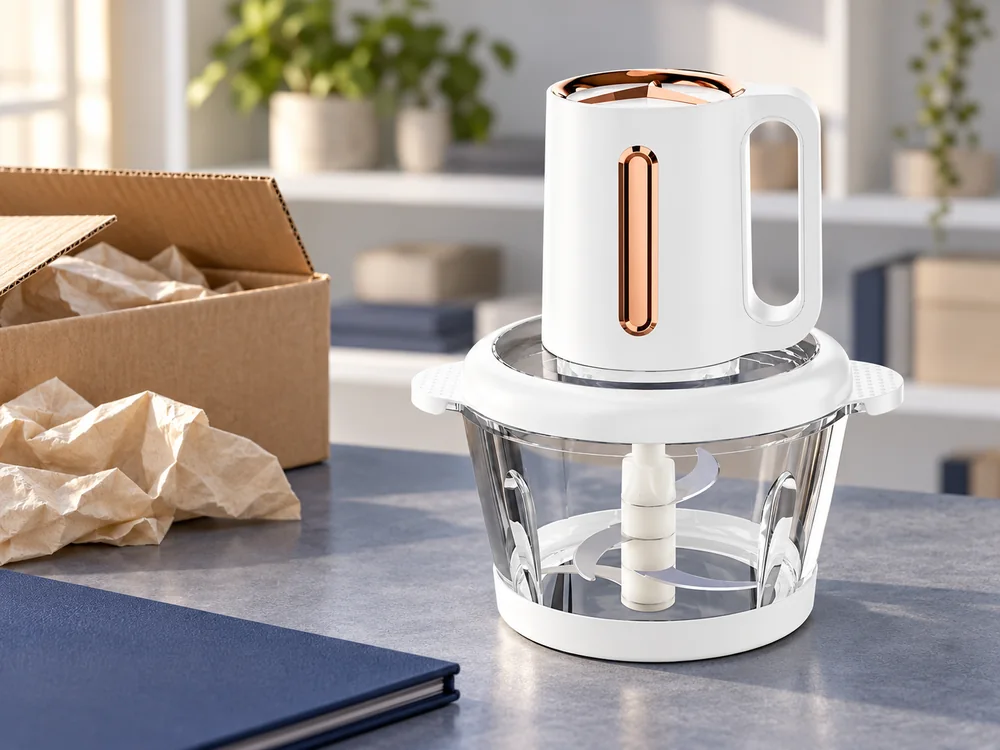
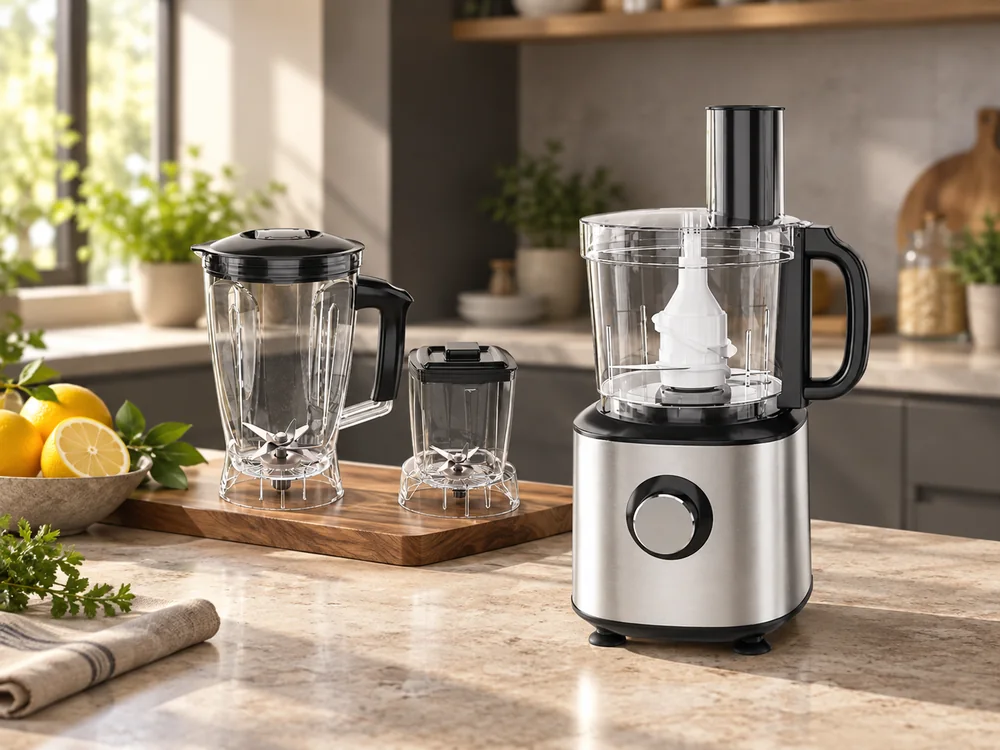
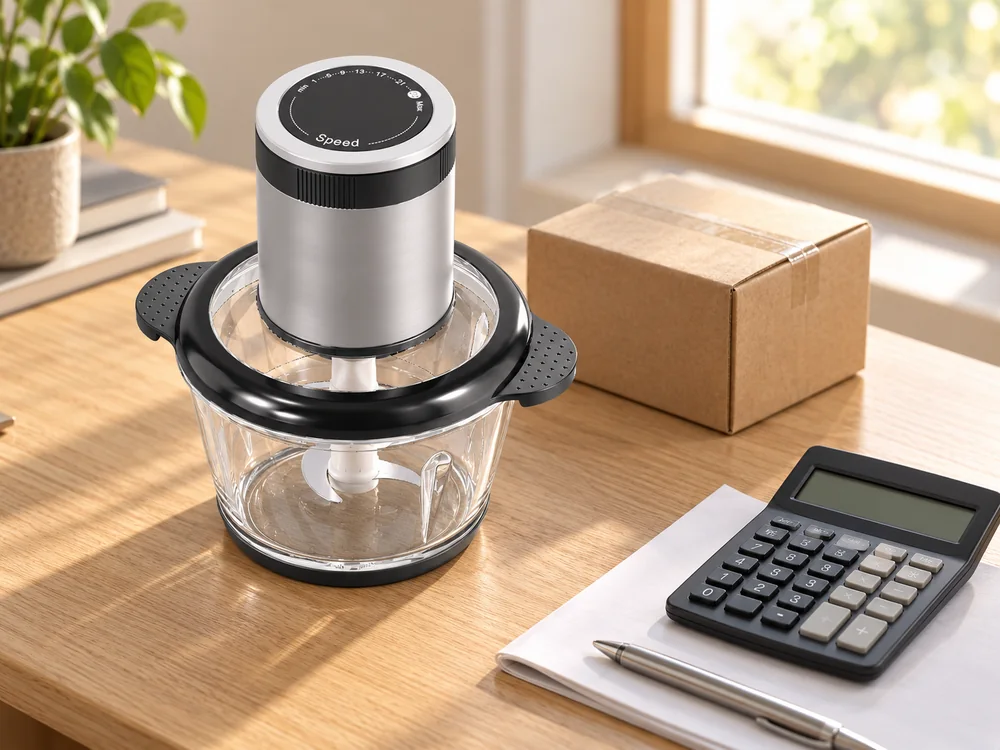
This guide concerns household food-preparation appliances such as JINJIE bowl choppers. It explains how to structure a sample budget, not a published JINJIE price list. Sample charges, customization, shipping and credit arrangements require a current proposal for the identified product.
Buy the sample that answers the current question
Begin with the uncertainty that is holding the purchase back. If the question is whether a steel-bowl chopper suits your customer proposition, an identified existing configuration may be enough for an initial evaluation. If the product has already been selected and the remaining question is the finished logo or retail package, another unbranded unit may add little. Match the paid deliverable to the unresolved work.
Separate evaluation samples from approval samples. Evaluation samples help the buyer choose between products or configurations. Approval samples may still be needed after selection to confirm the agreed production configuration, appearance or packaging. Their value does not depend on switching to another model. A budget should allow for the actual approval work without paying for every possible finish at the first stage.
Use the JINJIE electric food chopper range to identify the product family before requesting units. SD-01 and SD-03 are separate quotation references. Receiving one does not automatically resolve a decision about the other. At the same time, selecting both merely because they appear together in a catalog is not a reason to buy both. State which difference your team needs to evaluate.
Write a brief outcome for each sample. For example, “decide whether the proposed bowl format is suitable for our opening retail offer” is more useful than “check quality.” Identify who makes that decision and what information they need alongside the physical unit. This helps the supplier quote the right scope and helps your team avoid treating a missing document as a reason to order another appliance.
Some questions can be resolved before shipment. A current contents list, photographs of the proposed configuration or an explanation of the offered electrical version can narrow the shortlist. They do not replace physical evaluation where handling or permitted use matters. They do help prevent freight spending on a clearly unsuitable candidate.
Give each remaining uncertainty a route. Product handling belongs to an appropriate evaluation unit. Printed wording may first need a file review. An unresolved requirement for a destination market needs the relevant technical or compliance review. A sample cannot settle every purchasing question simply because it is tangible.
Read the sample quotation as a set of deliverables
A quotation headed “sample fee” may combine the appliance, preparation and transport. Another may separate them. Ask for enough detail to compare what you will receive without prescribing how the manufacturer must organize its internal costs. The useful distinction is between an included deliverable, a separate charge and work that has not been offered.
Identify the model, complete contents and quantity. State the intended market version and any requested branding. If the quoted sample differs from the proposed production set, list the differences and the questions it can still answer. A clearly described substitute can be useful for limited evaluation. An unexplained substitute leaves the buyer uncertain about both the result and the next payment.
| Budget item | What the quotation should identify | Purchasing consequence |
|---|---|---|
| Physical sample units | Model, version, contents, quantity and stated differences | Whether the units answer the assigned evaluation question |
| Branding or preparation | Specific deliverable and revision scope | Whether approval work is included or requires another stage |
| Sample packaging | Protection for delivery versus proposed retail presentation | Whether packaging can be evaluated from this shipment |
| Transport and receiving | Payer, quoted route, destination and excluded charges | Cash required to put the sample in the reviewer’s hands |
| External review | Buyer-arranged work, provider and separate quotation | Evidence still needed beyond a sample demonstration |
| Possible order credit | Eligible amount, conditions and application point | What may reduce a later invoice rather than today’s spend |

Distinguish protective transit packaging from retail packaging. A sample sent safely in a plain parcel may be suitable for evaluating the appliance, but it does not show the final shelf offer. Conversely, paying for a finished printed package before selecting the product can create avoidable revision costs. Ask what level of packaging belongs in the current stage.
For branding, specify the work being bought. A digital placement preview, a physical marked sample and a production-intent approval unit are different deliverables. If appearance is the only open question, discuss the least expensive suitable review route. If the method or surface itself needs evaluation, a digital image may not answer it. The supplier’s OEM and ODM discussion is a useful starting point for separating these requests.
Keep freight separate when comparing quotes with different delivery bases. A low unit charge collected at the factory is not comparable with a delivered sample price until the missing costs are added. Obtain transport and any destination charges from the responsible provider. This article does not set customs treatment or a universal shipping rate for samples.
Request a written list of exclusions that matter to your next decision. It might identify final artwork, a particular electrical version or a separate review. “Not included” is useful when it defines the next stage. It is a problem when the buyer thought that stage had already been purchased.
Control small appliance OEM sample cost across the whole review
The first invoice is only one part of the sample budget. Your business may need onward delivery to a retail team, staff review time, a separate provider’s work and another identified unit for an activity that changes or consumes the sample. Decide who needs physical access before choosing quantity. A sample touring several offices may save unit cost but make the review impractical.
Share one unit when reviewers can use it sequentially without compromising their tasks. Request additional units when there is a concrete reason, such as simultaneous evaluation at two locations or a separate examination that will alter the product. The reason should determine the count. This is a review-planning method, not a statistical sampling plan for accepting a production lot.
Avoid multiplying units across every variation too early. Several colors may share the same product-selection question, while different electrical or functional configurations may not. Ask which sample can represent which aspect of the proposal. Record those limits. This can reduce redundant purchases without hiding a difference that matters to the order.
Consider this hypothetical budget. A buyer requests two evaluation units at USD 45 each. Packing and freight are quoted at USD 75, onward delivery at USD 25 and a separately quoted external review at USD 180. The planned initial cash requirement is USD 370. All figures are invented for the calculation and are not JINJIE fees or market benchmarks.
If the supplier separately agrees to credit the USD 90 unit charge against a qualifying production order, the buyer still funds USD 370 before that order. If the credit is earned and applied, the sample-stage amount remaining unrecovered is USD 280, assuming none of the other costs are credited. The amount changes if the agreement covers different items. Keep present cash and conditional recovery in separate columns of your working budget.
Do the same calculation for a second round. Suppose another sample unit and its delivery would require USD 100 in this invented example. Ask what decision that extra USD 100 will enable. If the first review identified a necessary configuration correction, another round may be justified. If the team has not yet reviewed the first shipment, another unit of the same offer may simply add expense.
Set a reserve for a plausible next step rather than an arbitrary percentage. A project awaiting physical branding approval may need a later quote for that unit. A project using an existing unbranded model may not. Price the identifiable work when possible; leave genuinely unknown costs marked as provisional. A reserve is not permission to order more samples without deciding their purpose.
Treat credits and repeat rounds as commercial terms
“Refundable” needs an explanation. It could mean a cash refund, a deduction from a later invoice or only an eligible portion credited after an agreed order. Ask which treatment is offered. Identify the qualifying model, order conditions, applicable period and invoice stage. Do not import a different manufacturer’s policy into your own quotation.
An order credit should fit the purchase you might actually make. If it requires a quantity beyond your defensible opening order, its practical value may be limited. The credit does not erase the extra inventory commitment. Compare the complete order on its own merits rather than enlarging it to recover a small sample charge.
Keep each credited item recognizable. Record the sample invoice reference, eligible amount and agreed deduction. When the production proposal is issued, check that the same treatment appears in the commercial record. A sales message about a possible credit is not a substitute for understanding the conditions that apply to your selected offer.
Repeat rounds need a reason and an owner. A change requested by the buyer, a sample delivered outside the agreed description and a newly discovered technical question are different situations. Establish what happened before discussing payment. Responsibility for a replacement or correction depends on the agreed scope and circumstances; this guide does not assign an automatic free replacement policy.
Describe the revision precisely enough to avoid buying the same unresolved work twice. “Improve the sample” gives little control over cost or acceptance. A request to review the proposed logo on the identified surface, with an agreed placement file, is more bounded. After receiving a revised quote, decide whether the change is necessary now or belongs to a later product version.
Pause a dependent approval when required information is missing. That is different from rejecting the product as incapable. If the manufacturer confirms that a mandatory requirement cannot be met, consider another product or supplier. If the answer is still outstanding, request it and hold the decision that relies on it. Spending on additional sample units should not conceal that unresolved question.
Turn the sample review into a spending decision
Book the review before ordering. Decide who receives the shipment, who records its identity and who consolidates feedback. A delivered parcel does not create purchasing progress if nobody can evaluate it. The review plan should be proportionate: a short existing-model evaluation needs less coordination than several market versions and a branded presentation.
On receipt, compare the actual unit and contents with the paid description before using it. Report any discrepancy through the agreed contact and ask how it affects the assigned review. Photographs can establish what arrived. They cannot, by themselves, establish that a functional issue has a particular cause.
Use the permitted operating conditions and instructions for the supplied product. Where specialist checks are needed, agree their scope with the competent provider. The JINJIE quality and testing overview can help start that discussion. A general capability page does not mean an evaluation sample has already received every check your market or project needs.
Keep findings tied to a purchasing consequence. “The contents differ from the quoted set” calls for clarification or correction. “The product suits the intended offer, but final branding remains open” supports moving to a branding-approval stage. A preference with no effect on the retail proposition does not necessarily justify another paid round.
| Result of the current review | Decision to make | Next sample spending |
|---|---|---|
| Product selection question is resolved | Select or remove the candidate using the result | No repeat evaluation solely to reconfirm the same answer |
| Selected product still needs agreed presentation approval | Define the remaining physical or file deliverable | Quote the specific approval stage |
| Delivered unit differs from the purchased description | Resolve the discrepancy and its effect on the review | Agree correction scope and responsibility first |
| Relevant evidence or explanation is missing | Hold the approval that depends on it | Buy another unit only if it can supply that missing evidence |
| Mandatory requirement is confirmed unmet | Change the proposed product or supply route | Stop spending on an unsuitable configuration |
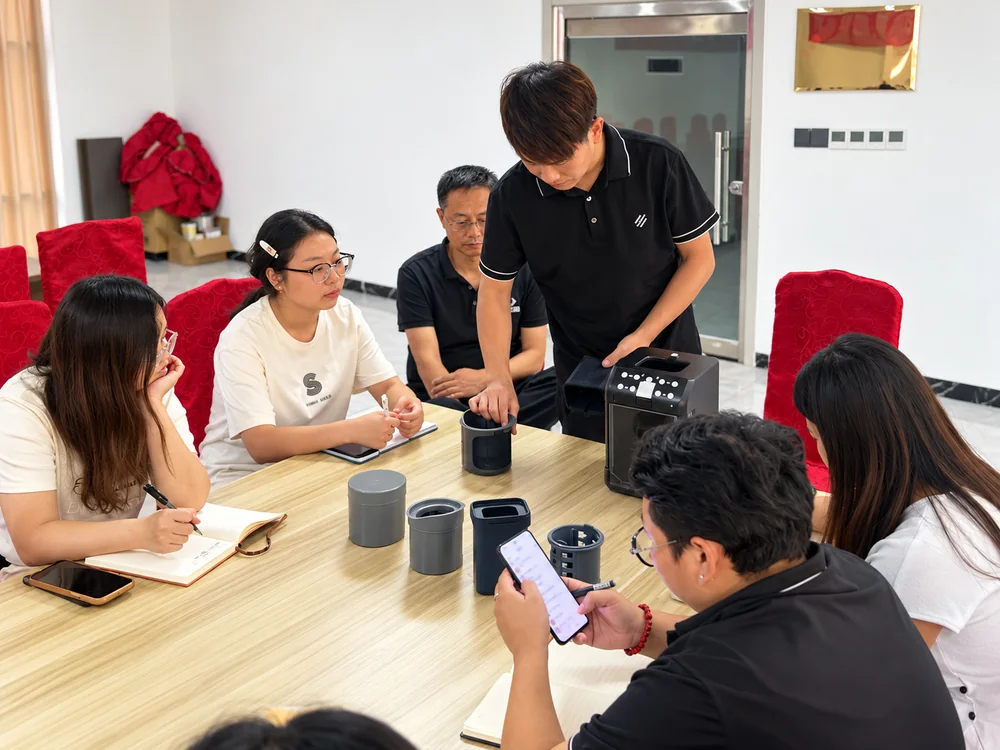
Consolidate buyer feedback before sending a revision request. One reviewer may want a different appearance while another needs the existing product for a retailer presentation. Identify which requirement governs the next stage. A series of separate messages can create conflicting changes and several avoidable rounds of preparation.
Keep approval scope explicit when the review finishes. Accepting an evaluation unit for product selection does not approve an unfinished package or authorize production. Record what has been decided, what remains open and the next proposal required. This lets a useful sample result lead to a narrower commercial inquiry rather than another broad request to “send everything.”
Request a sample proposal you can approve
Send JINJIE your sample inquiry with the model references, target market, intended complete set and the decision your team needs to make. State the requested units and delivery destination. Ask the quotation to separate the physical samples, preparation, transport, exclusions and any conditional order credit. Authorize the bounded evaluation first, then use its result to decide the next commitment.
FAQ
Can one sample be shared between our office and a retailer?
Yes, if the actual review tasks and timing allow it. Decide the sequence and condition in which the unit must be passed on. If one activity changes the sample or leaves it unsuitable for the next reviewer, budget a separate unit or agree another route. Sharing is a logistics choice, not a reason to skip a necessary review.
What if the quotation offers a different market version for immediate shipment?
Ask which questions that version can answer and which remain unresolved. It may support a limited appearance review, but the intended market configuration still needs its own basis for approval. Do not arrange improvised electrical operation merely to save on a sample. Compare the benefit of receiving the substitute with the cost of the remaining review.
Should we request final branded packaging with the first product sample?
Include it when presentation is already defined and its physical review is needed now. If the product choice remains open, discuss a staged approach. Early files or available packaging information may resolve part of the task before physical production. The appropriate route depends on the actual proposed package and channel requirements.
How should we close a sample project that will not become an order?
Confirm that no additional preparation or sample shipment remains authorized, settle the agreed charges and record the findings against the identified product. Follow any agreed return or disposal instructions for loaned or supplied items. Retain useful evaluation notes, but do not record a conditional production-order credit as money already recovered.