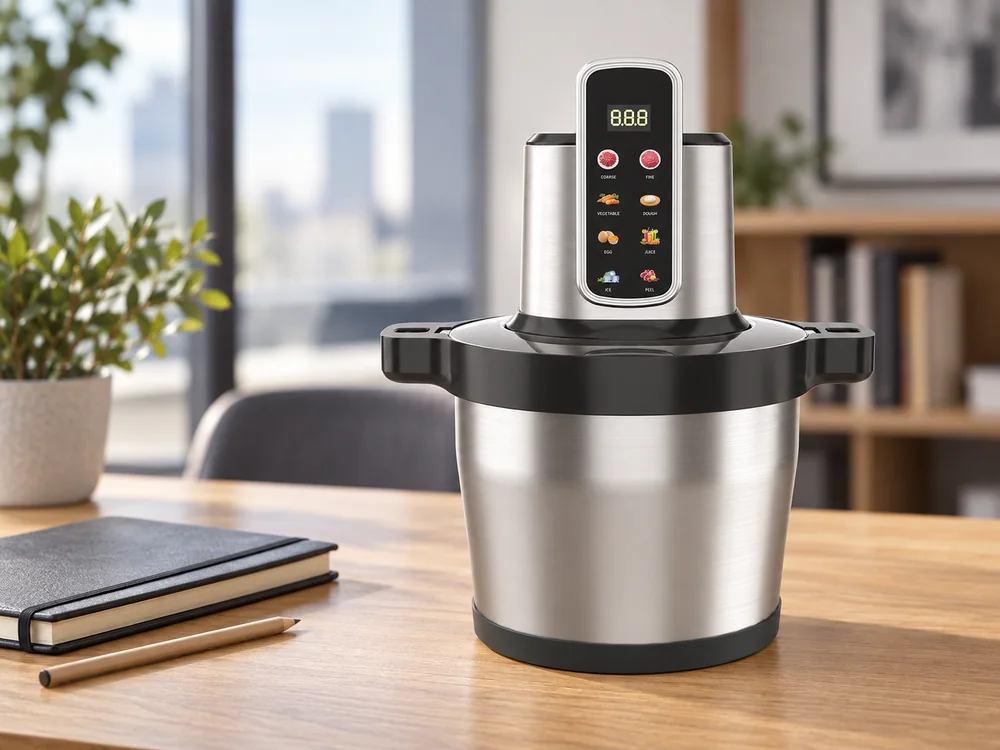
A logo can look clear on a large presentation slide and become difficult to read on the curved housing of a hand blender. It can also look correct on the appliance while the carton carries an older version. Buying custom logo kitchen appliances therefore involves more than sending a brand file and choosing a position. The buyer is purchasing a complete, identifiable branded offer.
For importers and private-label retailers, the useful first decision is where the brand needs to appear and what each mark is meant to accomplish. A visible brand mark, a model identifier and operating information serve different purposes. Combining them into one artwork request can hide important differences in who supplies the information and who can approve it.
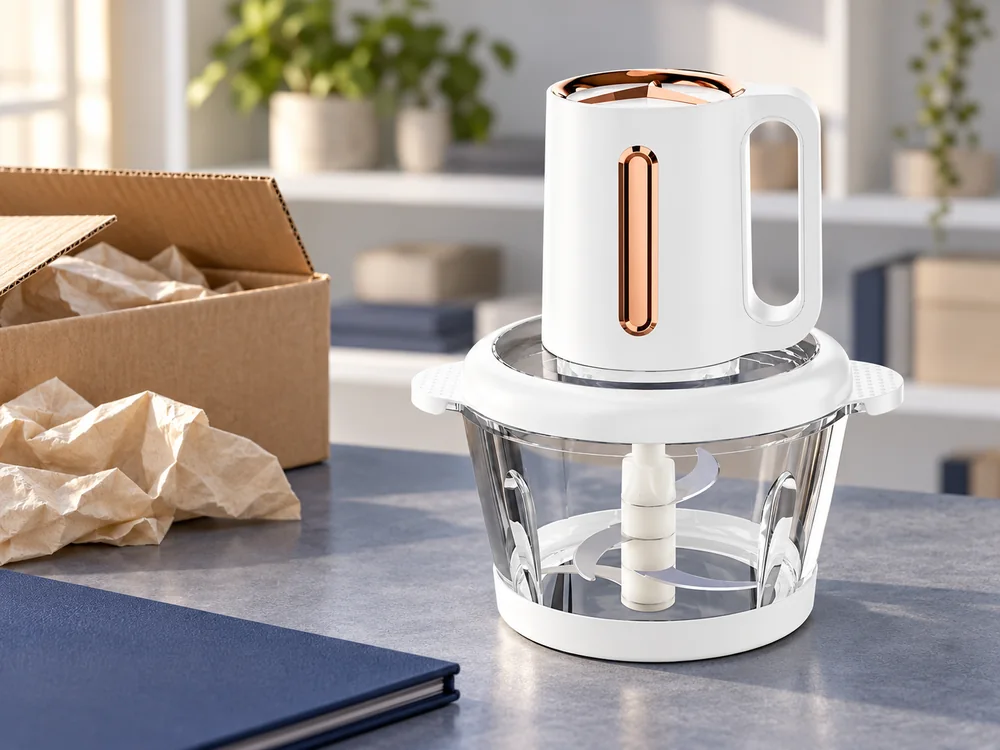
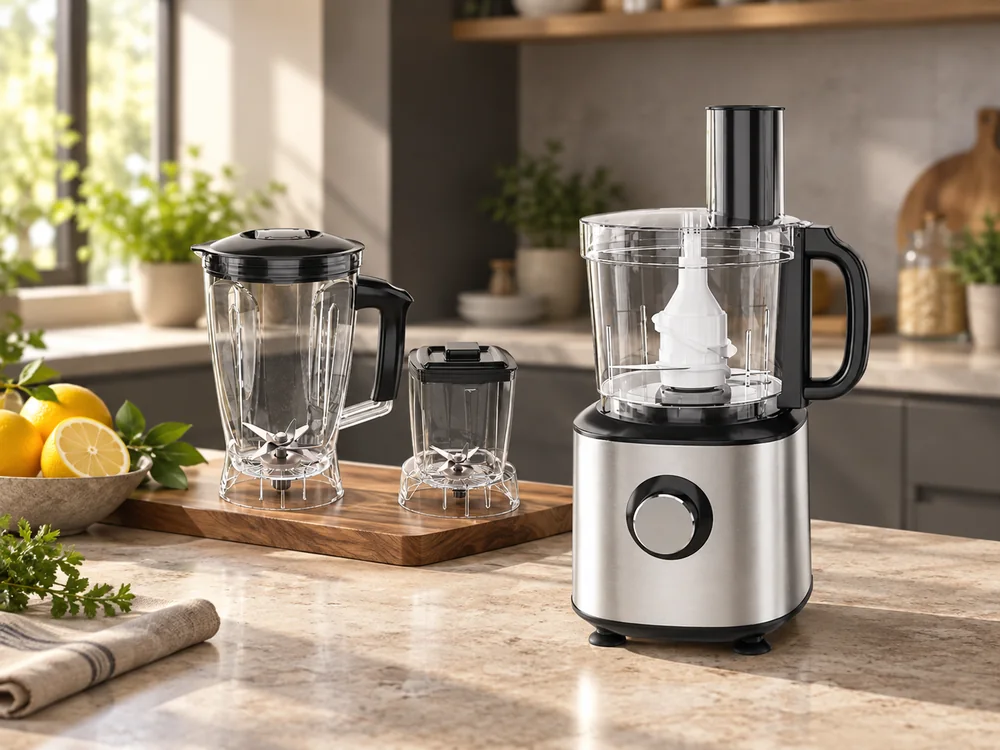
This guide covers branding current household food-preparation appliances, including choppers, countertop blenders and hand-blender sets. JINJIE discusses logo customization against an identified product and order. The available application method, printable area, quantity and preparation cost need a specific proposal; an image showing an unbranded housing is not a promise that every surface can accept any design.
Decide what the logo must do on the actual appliance
Start with the customer view. A countertop appliance is often seen from the front, while a hand blender is picked up and turned during use. Decide where the brand should be recognizable in the ordinary product presentation. A position chosen only because it is easy to fit into a flat drawing may be hidden by the hand, cord or accessory in the finished offer.
Use the selected model as the layout reference. The JINJIE electric chopper range contains different housing and control arrangements. A logo position suitable for one motor head may not transfer to another. Keep the model identity attached to the artwork request rather than treating the brand file as a universal instruction for every appliance.
Distinguish a brand mark from a decorative pattern. A compact wordmark may need only one area. A design intended to wrap around a housing introduces a different visual and manufacturing question. Explain the intended result before asking the supplier to recommend how to apply it. More surface coverage is not automatically more useful branding.
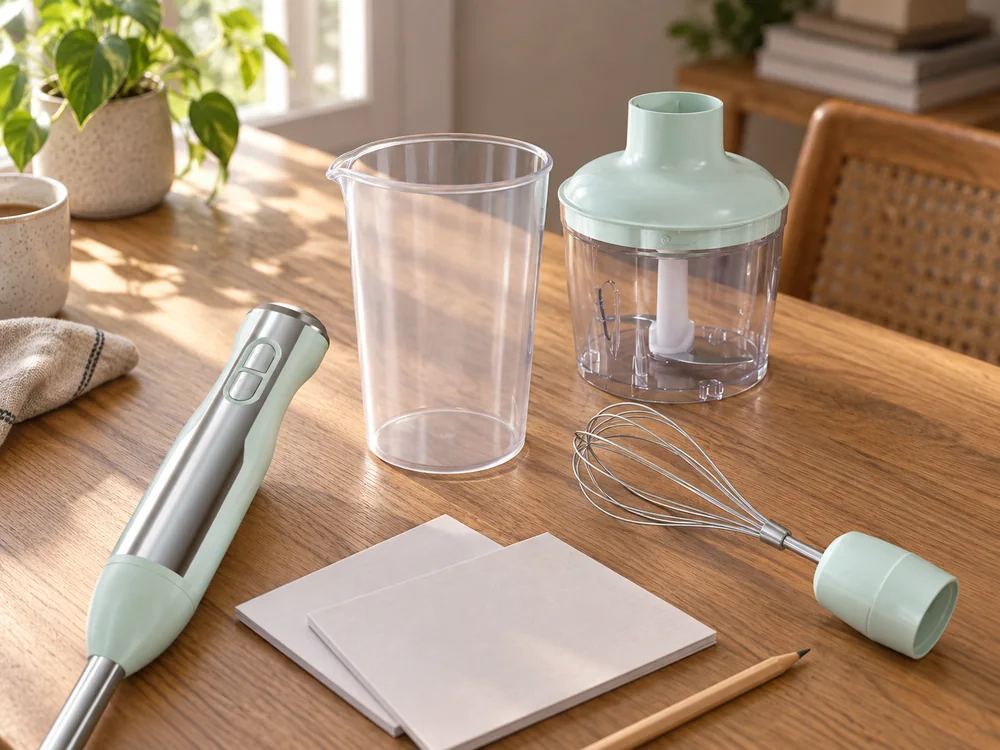
Consider the supplied set, not just the powered unit. A hand-blender offer may include accessories that are displayed separately. Decide whether branding those pieces is essential, optional or unnecessary. Do not imply that every attachment needs another mark if the retail package and main unit already communicate the set clearly.
Preserve space for functional information. A logo should not obscure controls, existing operating marks or information that belongs on the selected market version. If the brand team wants a larger design, assess it on the complete product view. Resolve the conflict before a sample is made rather than asking production to fit two incompatible layouts into one area.
Also decide whether the customer needs to distinguish different brand lines. A retailer selling several appliances under one name may want a consistent visual relationship without identical logo dimensions on every object. The same apparent prominence can require different layouts on a wide blender base and a narrow hand-blender housing.
Keep the commercial objective modest and measurable. The logo should help identify the product and support a coherent presentation. It does not change the appliance’s operating scope or establish exclusive rights to the underlying model. If the project needs a product difference beyond branding, state that separately in the inquiry.
Supply artwork that removes avoidable interpretation
Ask which file format the manufacturer needs for the proposed application. Provide the current master artwork and identify it clearly. A screenshot embedded in a presentation can communicate a direction, but the supplier may require an editable or vector file to prepare production artwork. Do not assume it can recover missing detail from a small web image.
Send a layout showing the mark at its proposed size on the actual product. Include a stated dimension rather than relying on how large the image appears on screen. Identify the reference points used for placement, such as the center of an agreed surface or its relationship to the control panel. The supplier should not have to infer position from a perspective photograph alone.
Specify the intended color treatment. A single-color mark, a reversed mark and a multicolor brand graphic are different requests. Identify whether a particular color is mandatory or whether the manufacturer can propose a suitable available treatment. If the housing color is still open, flag that dependency before approving the logo’s contrast.
Remove obsolete versions from the active handover while retaining them in your own archive. Name one file as the current request and show the revision date. Sending several alternatives in the same message is acceptable during discussion, but the production instruction must identify the selected one. A file called final is not enough when several files share that description.
Check the exact lettering, capitalization and spacing yourself. The factory can assess application, but it should not be expected to decide which version of the buyer’s brand name is correct. If the mark contains a language the supplier does not use, provide a reliable reference and an authorized reviewer rather than assuming a visually similar character is acceptable.
Keep product claims outside the logo file unless they are separately supported and approved. A design containing professional, dishwasher safe or another functional statement introduces more than a branding decision. Review the claim against the actual appliance and its evidence before allowing it to become permanent product artwork.
| Input | What the buyer should identify | What it prevents |
|---|---|---|
| Master brand artwork | Current file, revision and authorized use | An obsolete or unsuitable mark entering preparation |
| Product reference | Exact model and affected component | A layout being applied to a different housing |
| Position and dimensions | Agreed reference points and actual size | Placement being guessed from a perspective image |
| Color treatment | Required colors and permitted alternatives | A supplier choosing an unintended contrast |
| Approval authority | Person responsible for brand content | Conflicting comments becoming competing approvals |
Use JINJIE’s OEM and ODM discussion to connect those inputs with the selected appliance. Ask for an application proposal on that surface. The useful reply identifies what can be prepared and what remains to confirm; it need not promise every printing or marking technique before the product has been reviewed.
Compare the proposed application on the real surface
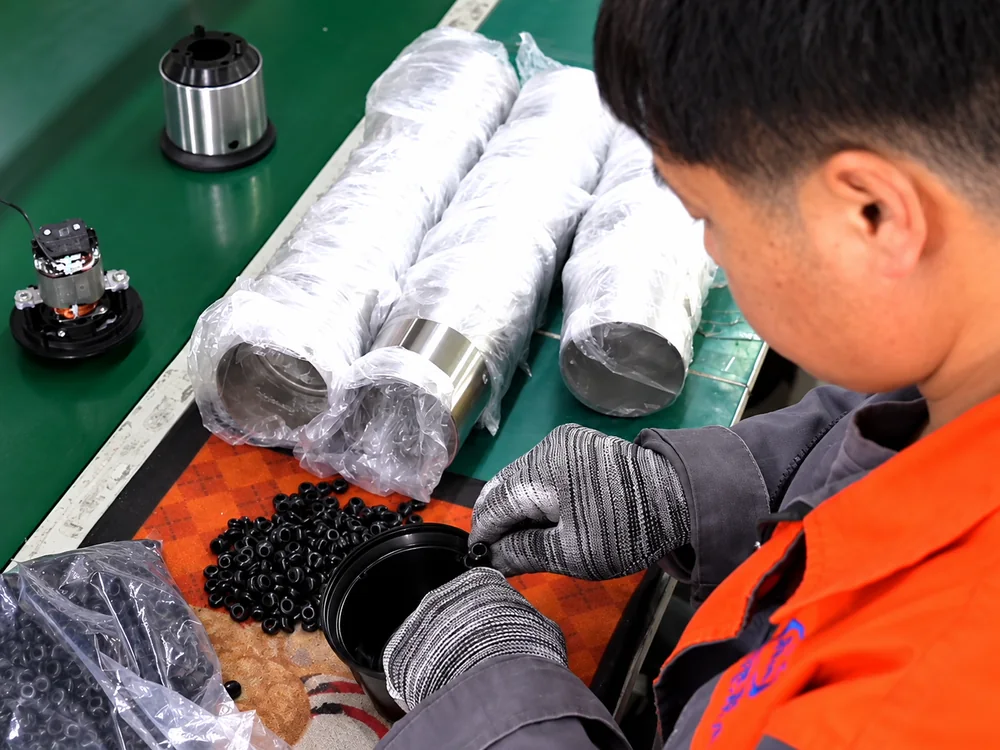
Evaluate the proposed method through the finished result and the requirements of the product. A supplier may discuss printing, a suitable label or another marking approach. Availability depends on the actual surface and proposal. Do not choose a process because its name sounds more premium, or assume a method used on one material will behave identically on another.
Ask what a sample will demonstrate. A flat artwork proof can establish content and basic layout. A marked product part can show the effect on the surface. A complete appliance can show whether the position works with the controls and overall presentation. These stages answer different questions and should not be treated as interchangeable approvals.
Look at the mark at normal viewing distance as well as close up. Tiny details that survive enlargement may not remain useful at the intended size. If important parts of the logo become unclear, ask whether changing the size, simplifying an approved variant or moving the mark is the better response. Any brand alteration should return to the buyer for approval.
Assess contrast on the actual housing color. A dark graphic on a dark curved panel can be difficult to distinguish even if its edges are clean. A reflective surface may look different as the appliance is turned. Review the relevant views instead of choosing the most flattering photograph as the only reference.
Inspect the relationship to edges and neighboring features. A mark can be correctly centered within its own file but appear misplaced beside an asymmetric panel. Define the visual reference the team intends to use. Where a dimension is important, agree it explicitly; do not substitute a general request to make it look balanced for a required position.
Discuss the expected handling and cleaning conditions with the supplier. Ask how the proposed marking will be assessed for the agreed product requirements. Do not introduce a homemade test using an unapproved chemical and then treat the result as a universal durability judgment. The assessment should relate to the appliance’s actual instructions and agreed acceptance basis.
Separate appearance approval from performance conclusions. A clean sample proves what that sample looks like. It does not by itself establish a lifetime of resistance to abrasion or cleaning. If a particular durability claim is essential to the offer, obtain the appropriate evidence before using it in retail copy.
Keep an accepted reference that includes the relevant product surface, not only the artwork file. Record what was approved and any remaining limitations. This gives the buyer and supplier a common object for later discussions while allowing the source artwork to remain the authority for the brand’s spelling and design.
Quote the branding work without obscuring the appliance offer
Request a quotation for the complete branded configuration. Identify the underlying appliance, electrical version and included contents alongside the logo request. Otherwise, a favorable branding charge may be attached to a different product offer from the one the team intended to buy.
Ask which costs are one-time preparation and which recur with the order. Keep sample preparation, artwork work and any quoted setup separate where the supplier’s proposal allows it. The purpose is to understand the actual offer, not to assume that every supplier uses the same charging structure or must waive preparation on a later order.
Clarify the quantity to which the branding proposal applies. If the total purchase contains several models or brand versions, ask whether those quantities can be considered together. Do not assume a common logo creates one shared minimum when the products require different preparation. Equally, let the supplier explain any genuine opportunity to coordinate the work.
For multiple logos, maintain separate order identities. A distributor serving two retail brands may use the same physical platform, but the marked goods are not interchangeable stock. Discuss quantities and identification for each version so the warehouse does not have to infer the customer from a nearly identical carton.
If the artwork changes after quotation, ask whether the preparation or schedule changes. A small visual revision can still require another proof or sample. Decide whether the improvement matters enough to reopen the work. Do not keep refining an optional detail while treating the previous timing as unaffected.
Compare an existing acceptable logo treatment with the requested alternative on the same product basis. The useful trade-off might concern visibility, consistency with the range or preparation effort. Avoid evaluating the extra charge in isolation from the commercial reason for the change. A more elaborate mark is not necessarily a better buying decision.
Keep future reorders outside the initial promise unless their conditions are actually included. Ask what records will remain available and what needs reconfirmation later. Reusing artwork can simplify discussion, but it does not establish a permanent price, guaranteed component availability or automatic approval of a changed surface.
Release one branded version across product and packaging
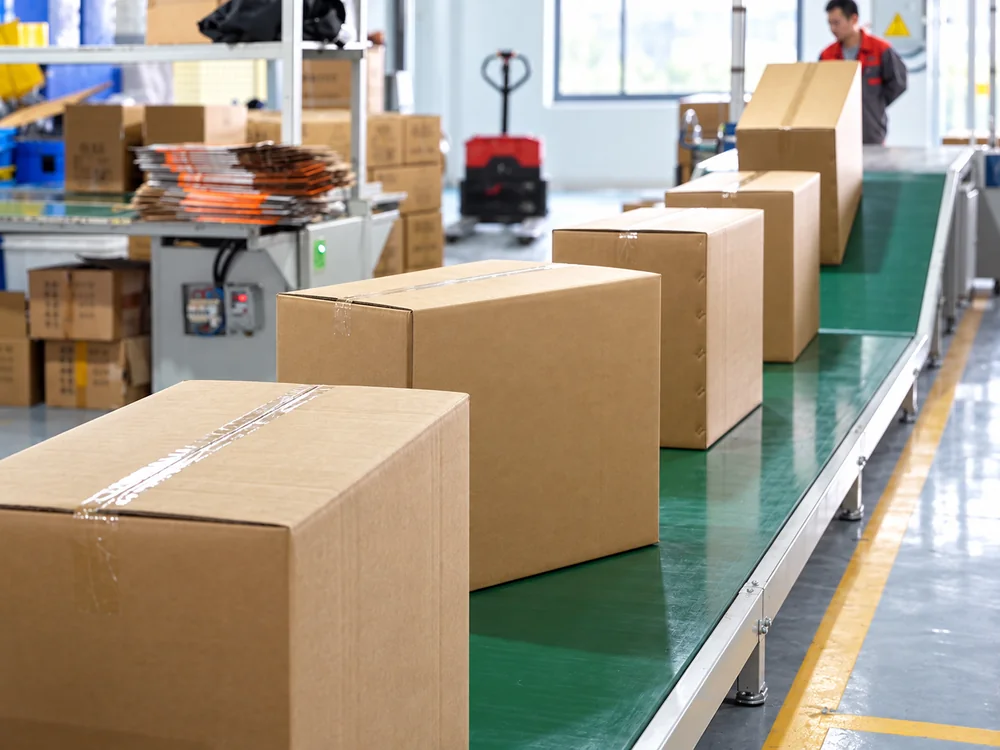
Bring product marking, retail packaging and the product information together before release. The customer should encounter the same brand identity throughout the offer. This does not require the logo to have the same physical size everywhere, but spelling, selected artwork and the intended brand variant should agree.
Review the carton proof against the accepted product reference. Packaging may have been prepared while the appliance artwork was still changing. Check any product image printed on the box as well as the standalone logo. An old rendering can show the wrong position or an earlier brand version even when the main package heading is correct.
Identify the person who consolidates comments from design, purchasing and the channel. Different reviewers may have valid concerns, but the supplier needs one current decision. State which comments change the request and which are observations that do not prevent acceptance. This reduces uncertainty without bypassing the relevant reviewer.
| Difference found | Immediate clarification | Release decision |
|---|---|---|
| Product has an older logo | Identify the artwork used on the sample | Correct the marked version before accepting it |
| Carton image shows another layout | Compare the image with the accepted appliance | Update the image or resolve the product difference |
| Two brands share one order description | Map each marked version to its quantity | Separate identities before packing instructions |
| Logo is clear but misplaced | Compare with the agreed position reference | Decide whether correction or an explicit concession is appropriate |
| Retail copy adds a performance claim | Locate the supporting product evidence | Remove or substantiate the claim independently of logo approval |
Connect the accepted version with the order’s checking arrangements. JINJIE’s quality and testing information is a starting point for discussing applicable product checks. Ask how the relevant artwork, position and version will be identified for the order rather than assuming a general inspection automatically covers your brand requirements.
If a discrepancy is accepted, record the scope of that decision. A one-order concession should not silently replace the master artwork or become the reference for every later purchase. State whether the accepted difference applies to specified goods only or changes the intended standard going forward.
Keep unused or superseded marked materials visible in the discussion. If a logo revision occurs after some packaging or parts have been prepared, ask what quantities are affected and what options exist. Resolve the commercial handling explicitly. Do not assume old and new branding can be mixed merely because the underlying appliance works the same way.
Maintain the identity through retail and repeat orders
Use photographs of the accepted branded appliance for the final customer presentation. An early unbranded image with a digitally added logo can communicate a concept, but it may not show the final position, scale or surface effect. Check thumbnails and secondary images as well as the main product view before launch.
Keep the retail product name connected to the manufacturer model and branded version. Customer-service staff need to recognize what was supplied without interpreting a design file. A simple internal mapping allows them to distinguish products that share a platform but differ in brand, package or included contents.
For a reorder, send the accepted reference and identify whether the request is unchanged. If the housing color, material or artwork has changed, reopen the relevant assessment. The same brand name does not mean the same manufacturing instruction when the surface beneath the mark is different.
Review branding complaints precisely. A customer reporting an unclear mark, the wrong brand or a scratched surface is describing different issues. Preserve the product identity and useful images, then ask the supplier to assess the specific concern. Avoid turning one report into a broad conclusion about every unit without checking the affected scope.
If your business rebrands, plan the remaining inventory before releasing the new artwork. Decide which channels receive each version and update the corresponding images and support records. Do not make the warehouse solve a brand-transition policy through carton selection on the day of shipment.
Request a model-specific logo proposal
Send JINJIE your appliance branding brief with the selected model, current artwork, desired position and size, target market and quantity by version. Include the packaging relationship and any appearance requirement that is essential to the brand. Ask for the proposed application, sample reference and commercial scope before approving the complete offer.
FAQ
Can we start with a logo screenshot while the designer prepares the file?
It can support an initial discussion if clearly marked as a reference. Ask what production artwork is required and keep preparation dependent on receiving the correct file. Do not approve manufacturing from an image that cannot establish the intended detail or size.
Can the same appliance carry different retailer brands in one purchase?
Request a proposal for the actual versions and quantities. Keep each identity separate in the order, packing instructions and receiving record. A shared platform does not mean the branded units can be substituted between retailers without agreement.
What if our logo changes after the sample is accepted?
Identify every affected item, including the product mark, package images and files already prepared. Ask for the consequences before issuing the new approval. Retain the earlier reference for traceability, but clearly distinguish it from the version now requested.
Does a custom logo make the appliance an exclusive product?
Do not infer exclusivity from the mark. Discuss any required commercial arrangement separately and obtain appropriate review of its terms. Branding establishes the intended identity of your order; it does not by itself settle rights to the underlying design or the supplier’s other sales.