Choose the parts that need to carry your brand color before asking a manufacturer to match it. A blender can combine a colored housing, a black control panel, a transparent jar and metallic details. Sending one color reference with an instruction to make the product match leaves several decisions unanswered, including which surfaces should change and which should remain as supplied.
Small kitchen appliance OEM color customization works best when the buyer separates three questions: the appearance it wants, the physical reference used to assess it and the commercial value of adding that version. A pleasing computer image answers only part of the first question. It does not establish the appearance of the delivered appliance or the order conditions for producing it.
This guide is for importers and private-label brands choosing colors for household food-preparation products. It covers existing-model customization and its purchasing decisions, rather than a formula for coloring plastics or a promise that every finish is available. JINJIE can discuss product color and finish against the selected model; the actual proposal needs confirmation for the surfaces and quantities requested.
Define the color by product area and customer purpose
Begin with the reason for the proposed color. Is it a recognizable brand accent, a retailer-exclusive appearance or one option in a consumer assortment? The answer determines how much of the appliance needs to change. A small coordinated accent may achieve the intended identity without requiring every component to use the same hue.
Prepare a marked product image that identifies the requested areas. Use the actual model as the starting point, with a plain description beside each area: main housing, button, handle insert or other visible part. Keep unchanged areas equally clear. A designer should not have to guess whether black controls are part of the requested change.
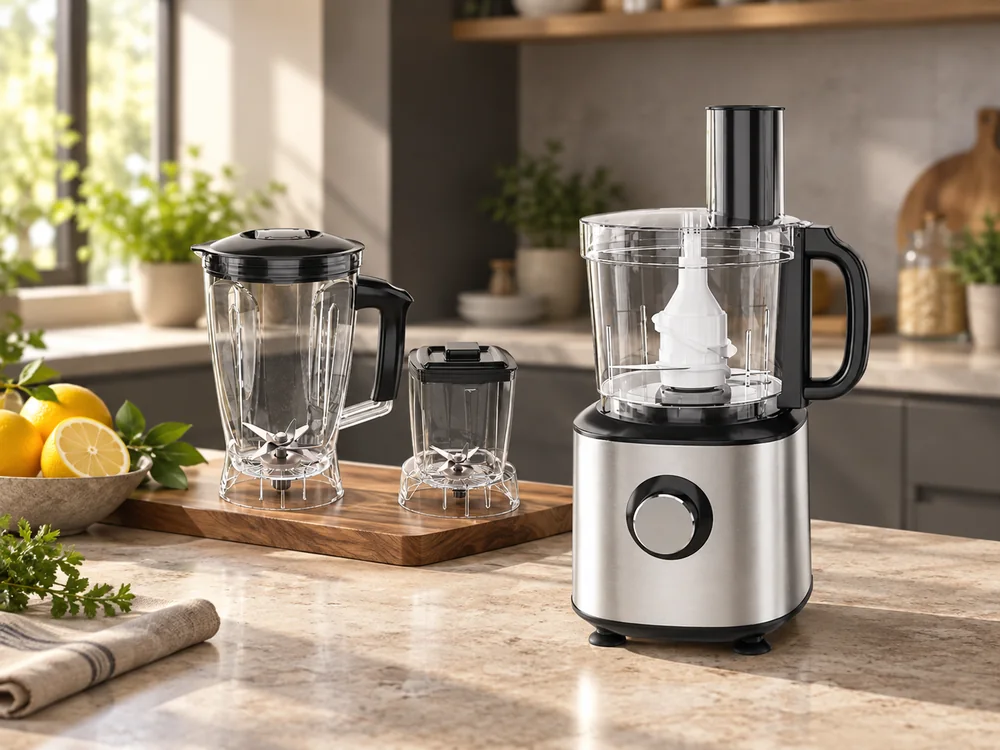
For a countertop blender, assess the colored base alongside the jar, handle, lid and panel. For an immersion blender, consider the motor housing beside the shaft and any supplied attachments. A color that works well on one visible area may not make the complete set look coherent if the other parts are ignored.
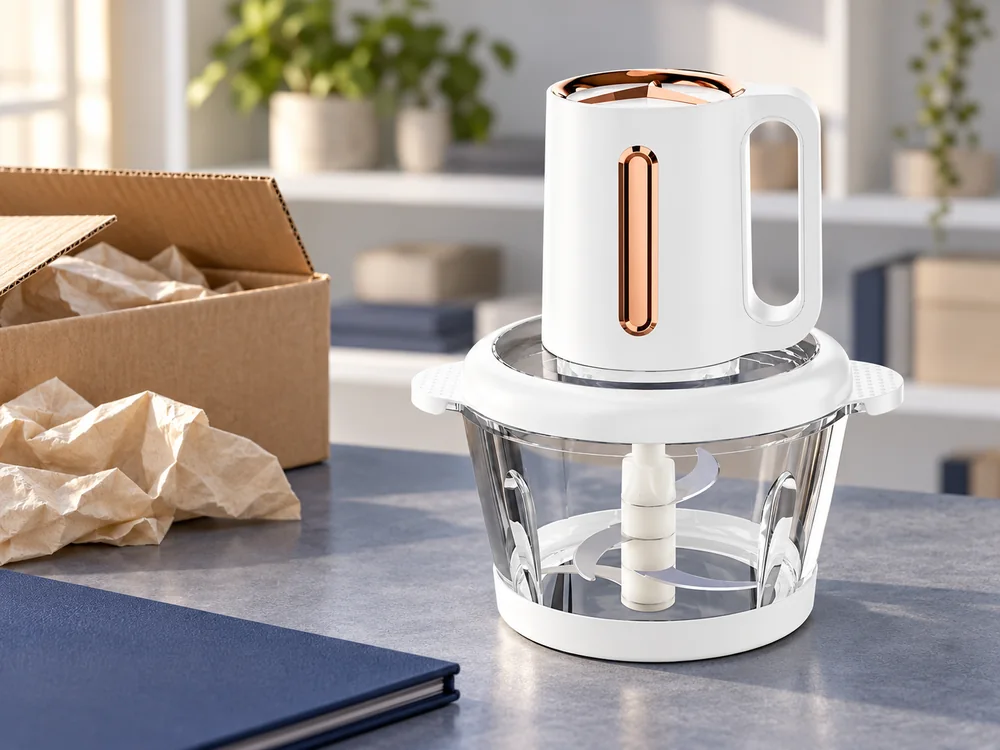
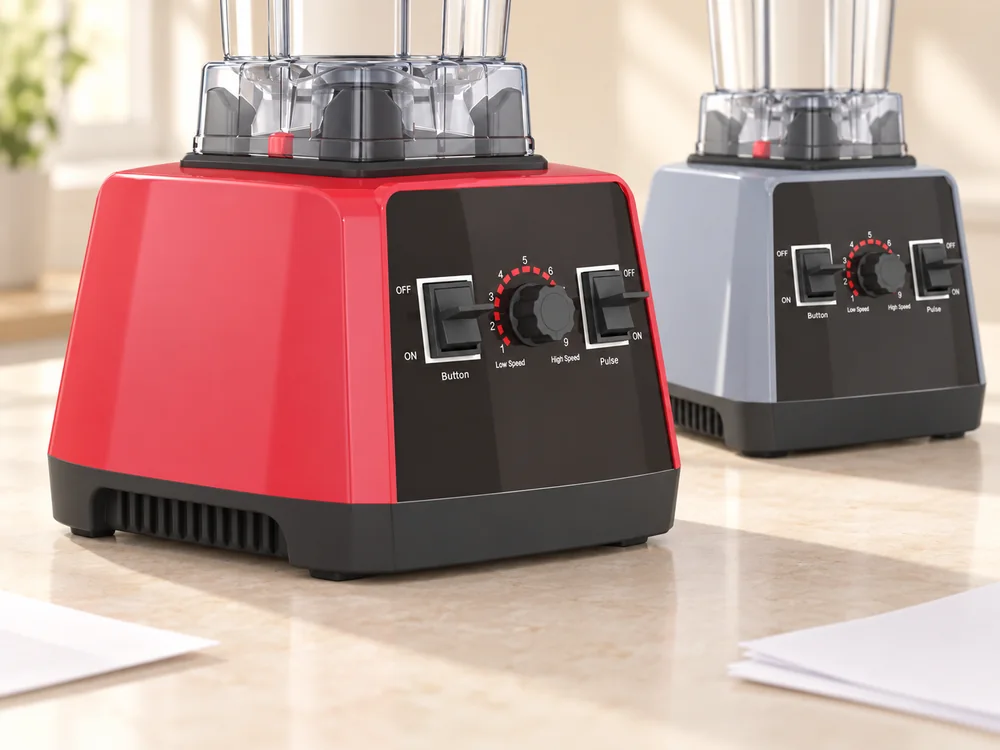
The JINJIE blender range includes current designs with different appearances and controls. PBJ-01 is one existing reference shown in multiple colors. Those images help identify an appearance direction; they do not establish that every imaginable hue or finish is a standard option at the same quantity and price.
State whether the request is an exact-match requirement or a preference for a general color family. A retailer may need consistency with an established product line. Another buyer may be satisfied with an available neutral finish that fits its packaging. Let the supplier respond to the real requirement rather than price unnecessary precision into an informal preference.
Also name the intended comparison. Matching two adjacent parts of the same appliance differs from coordinating a blender and chopper displayed several feet apart. Define where customers will see the surfaces together. That helps the supplier and design team understand which relationships deserve the closest attention.
| Appearance objective | Brief to send | Buying decision |
|---|---|---|
| Recognizable brand accent | Named part and physical color reference | Is limited customization enough to create the identity? |
| A coordinated complete set | All visible parts and the desired relationship | Which parts must match and which may contrast? |
| Retailer-specific color | Selected model, market and quantity for that version | Does the separate stock commitment justify the distinction? |
| Family resemblance across products | Products viewed together and priority surfaces | Is visual coordination sufficient or is exact matching essential? |
| Existing available finish | Supplier reference and representative sample | Can the current option meet the brief without new color work? |
Choose a reference that survives the move off screen
A digital mockup is useful for choosing an overall direction. It allows the buyer to consider where color belongs and how the product will appear in a planned range. Treat it as a design communication tool, not the sole acceptance reference for production. Screens, photographs and physical surfaces are different ways of presenting color.
Send the complete identity of any standardized color reference you use, including the relevant system and version where applicable. A number without its reference system can be ambiguous. If you provide a physical object as inspiration, explain which surface represents the target and whether its gloss or texture is part of the requirement.
Agree which physical sample will govern the accepted result. It may begin with a suitable color sample and then move to a representative product part or complete appliance. Ask the manufacturer what each stage can establish. A preliminary sample can be useful without being a finished-product approval.
Appearance includes more than hue. Surface texture, gloss and the material itself can affect the perceived result, while colors that appear similar under one light can differ under another. This is why the buyer should assess the actual surface and agree relevant viewing conditions instead of judging separate phone photographs taken in unrelated rooms.
Keep that assessment practical. Define the lighting or viewing arrangement appropriate to the requirement with the supplier or responsible color specialist. If the project requires measured tolerances, agree the method and acceptance basis with qualified people. Do not add an arbitrary numerical tolerance to the purchase order simply because another company’s specification uses it.
For ordinary visual discussions, view the reference and proposed sample together where possible. Describe any difference relative to that reference and identify the part concerned. Statements such as too dull, too warm or too glossy are more useful when the parties are looking at the same object under comparable conditions.
Avoid collecting many competing references without a priority. A printed brand book, a photographed appliance and a digital color value may not all describe the same final appearance. Decide which one governs the request and which are background inspiration. Otherwise, every review can reopen a different interpretation of the target.
Retain the accepted reference after approval. Record its identity, date and the product areas it governs. Protect it from damage and unsuitable storage, and discuss replacement if its condition becomes questionable. A worn sample should not silently become a new target for a repeat order.
Review the complete appliance before accepting a finish
Ask to see the proposed color on a representative product assembly before making the final appearance decision. A loose sample can help narrow the choice, but the complete appliance reveals relationships between panels, controls, metallic areas and accessories. Those relationships are what the retail customer will actually see.
Check adjacent surfaces together. The main housing and a small insert may be visually coordinated without appearing identical. Decide whether that is acceptable for the design. Do not ask the factory to solve an unstated expectation after production by saying that every visible part was supposed to match perfectly.
Review controls and printed information on the chosen background. A dark logo on a darker housing may lose the contrast your design team expected from the mockup. A new panel color may change how easy the markings are to see. Discuss the actual artwork and product arrangement instead of approving the color and printing in isolation.
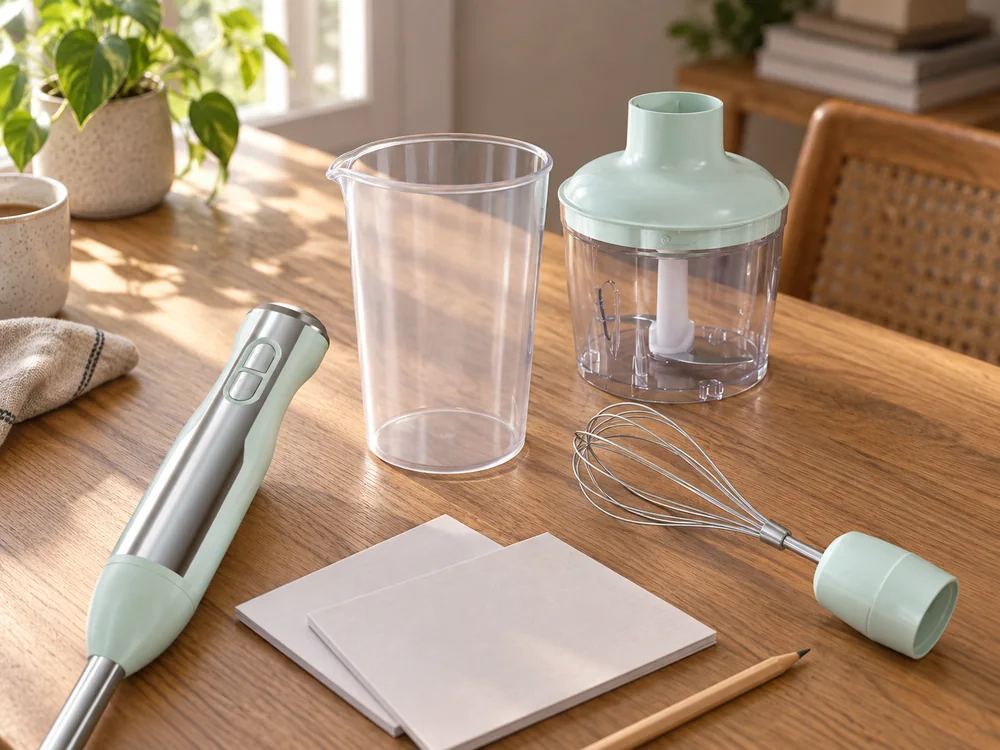
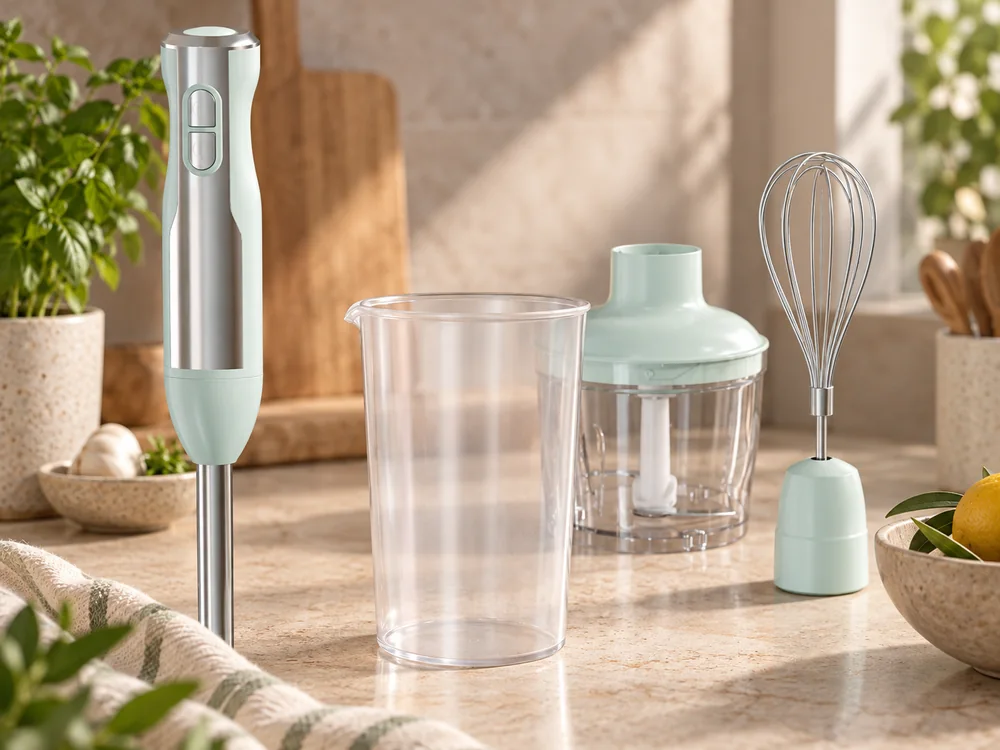
For a set, place the included attachments beside the motor unit in the intended presentation. An immersion-blender package may contain a shaft, whisk, beaker and chopper bowl, depending on the selected offer. The visual task is to make the supplied set understandable and coherent, not to imply that every part can be recolored or exchanged freely.
Ask whether the appearance request changes anything beyond presentation. A different material, coating or part arrangement may need a wider product review. JINJIE’s OEM and ODM process distinguishes current-product branding from changes affecting materials, structure or electrical components. Let the technical proposal establish the scope rather than assuming every color request is cosmetic only.
Keep the review focused on visible appearance and the confirmed product requirements. A matte finish should not automatically become an anti-scratch claim. A metallic appearance does not prove metal construction. A color associated with another household product does not establish the same cleaning or durability properties.
Consider how the appliance will be photographed and displayed, but do not make the photograph the manufacturing target. Strong studio reflections can exaggerate gloss, while heavy retouching can conceal the actual surface. Approve the physical result first, then produce images that represent it honestly.
If the proposal is acceptable with a specific qualification, state that qualification clearly. For example, the team may accept a contrasting button while keeping the main housing match mandatory. Record the accepted combination as one defined appearance so the supplier is not left interpreting separate messages from design and purchasing.
Price color variations as separate stock decisions
Ask how the proposed color affects minimum quantities and preparation. The answer may depend on the model, parts and customization scope. Do not divide a total order quantity among several colors unless the manufacturer confirms that the resulting split is workable on the quoted terms.
Request the commercial effect of each proposed version separately. A current finish, a new housing color and a change involving several visible parts may involve different preparation. Keep sample work and any one-time charges distinct from the recurring product price. That allows the buyer to compare the actual alternatives without treating every extra cost as a unit-price increase.
Use the expected customer value to decide how many colors to launch. A retailer that can support one well-chosen appearance may gain little from several nearly identical neutral options. Another channel may have a clear reason for two contrasting choices. The supplier’s available palette does not determine the size of your assortment.
Include downstream work in the decision. A separate color can require its own photographs, product-page variant, packaging identification and warehouse location or code. These are buyer-side tasks even if the physical appliance is otherwise unchanged. Estimate the work using your real systems rather than assuming an additional color is free after the factory quotation is accepted.
If a retailer requests an exclusive appearance, clarify the actual commercial arrangement separately. A different color name or housing hue does not itself establish exclusivity. Purchasing should understand the intended scope and obtain the relevant agreement before making a promise to the channel.
Consider an available finish as an explicit alternative, not a quiet substitution. If a custom match introduces work the launch cannot support, ask whether a current option still satisfies the brand objective. The design team can accept that compromise deliberately, or retain the original requirement and adjust the plan.
For a later expansion, preserve the first version’s identity. A second color may be added after the initial product gains a clear place in the range, but its order conditions and preparation still need a current proposal. Do not assume an earlier quote reserves every future color at the same price.

Give production and receiving the same appearance reference
Connect the approved color record to the product specification and order line. Identify the model, affected parts, accepted reference and any agreed limits of the approval. A message saying the blue one is approved can become unclear when several samples or photographed versions have circulated.
Ask how the agreed appearance will be checked for the order. JINJIE’s quality and testing information provides a route to discuss product-specific checks. The requirement should state the applicable reference and assessment, without inventing a measurement system or tolerance that has not been agreed.
Keep appearance concerns separate from identity errors. Receiving the wrong color version is a different issue from receiving the correct version with a disputed finish. Both need attention, but the records and next actions differ. A precise description allows purchasing and the supplier to discuss the same problem.
| Concern | Evidence to retain | Next decision |
|---|---|---|
| Wrong color version supplied | Order line, carton or product identity and received version | Resolve the allocation before normal sale |
| Adjacent parts appear inconsistent | Comparable images and the accepted complete sample | Assess the combination against the agreed reference |
| Finish differs from the accepted surface | Affected part and viewing conditions | Obtain the supplier’s assessment of the stated difference |
| Product and retail image disagree | Actual unit and current image version | Correct the image or investigate the supplied version |
| Reorder differs from earlier stock | Both batch identities and retained references | Establish whether a change was approved and how to handle stock |
Photographs should help locate and explain a concern. Take them in a consistent way and include the reference where practical. Do not use a strongly filtered image to prove a subtle color difference. If the issue cannot be settled remotely, agree the appropriate physical comparison or specialist assessment.
Identify the affected scope accurately. Record which units or cartons were examined and which remain unchecked under the agreed receiving process. Avoid generalizing from one photograph to an entire shipment. Equally, a few acceptable units do not automatically resolve the rest of the stock.
Keep questionable stock identifiable while the issue is assessed. If a remedy is agreed, update the handling record so corrected units can be distinguished from those awaiting action. Do not allow a commercial discussion about a concession to become an undocumented change in the product description.
For repeat orders, ask about any proposed change that could affect appearance. The same retail color name is not a complete version record. Retain the accepted reference and ask how it relates to the current proposal before assuming a later batch will match an older display sample.
Keep retail images and color names faithful to the product
Use color names that help customers choose between actual versions. A poetic name can be part of the brand, but warehouse and support records need a clear connection to the supplied product. Keep the retail name, SKU and manufacturer reference linked so a customer describing a color can be matched to the correct appliance.
Photograph the final accepted version when possible. Earlier mockups may show a hue, panel or accessory that changed during review. Check the complete image set before launch, including thumbnails and variant selectors. One outdated image can make the offer appear to contain another color or set even when the main photograph is correct.
Use scene lighting for an attractive article or product image without deliberately changing the housing color. A kitchen setting can make the product easier to imagine in use, but it should not turn a gray-blue appliance into a bright blue one. Retain a clear product view elsewhere in the customer’s decision path.
When several colors share one product description, make the difference visible without implying a functional upgrade. If performance or included contents also differ, explain those changes separately. A premium-sounding color label should not carry a hidden claim about power, material or service life.
Keep replacement and support information tied to the original version. If a visible component is available as a replacement, confirm both compatibility and the appearance being supplied. A part that fits may still differ from an older batch, so describe the actual proposal before promising an exact visual match.
Review customer feedback before adding another color. Questions about which version is shown may indicate inconsistent images rather than missing assortment breadth. A request for a genuinely different appearance is another matter. Improve the information first when the current product is simply being presented unclearly.
Request a color proposal for an identified model
Send JINJIE your color customization brief with the selected appliance, marked product areas, preferred physical reference and estimated quantity for each version. State whether matching is mandatory or whether current finishes can be considered. Ask for the sample stages and commercial conditions needed to decide on the complete appearance, rather than approving a screen color alone.
FAQ
Can we use our packaging color code for the appliance housing?
It can communicate a starting direction, but identify the exact reference and ask how it will be assessed on the product surface. A printed box and an appliance housing are different materials. Approve the relevant physical result instead of assuming that the same code produces an identical appearance everywhere.
What if design and purchasing prefer different samples?
Return to the requirement: which appearance is mandatory, what each proposal costs and what the channel can support. Name one final decision owner after the relevant teams have reviewed the trade-off. Do not send the manufacturer two conflicting approvals and expect it to choose the brand’s priority.
Can we approve the color before the complete sample is ready?
You can give a limited approval for what the available sample actually shows. State what remains open, such as adjacent-part appearance, printing or the assembled set. Keep that limited decision separate from final product approval so unfinished relationships are not accidentally treated as settled.
Should old and new color batches share one retail listing?
Assess the actual difference and the promise made by that listing. Keep batch identity available and avoid showing a version customers will not receive. If a proposed change affects the customer’s choice, decide how to distinguish the stock and update the presentation before combining it under one offer.