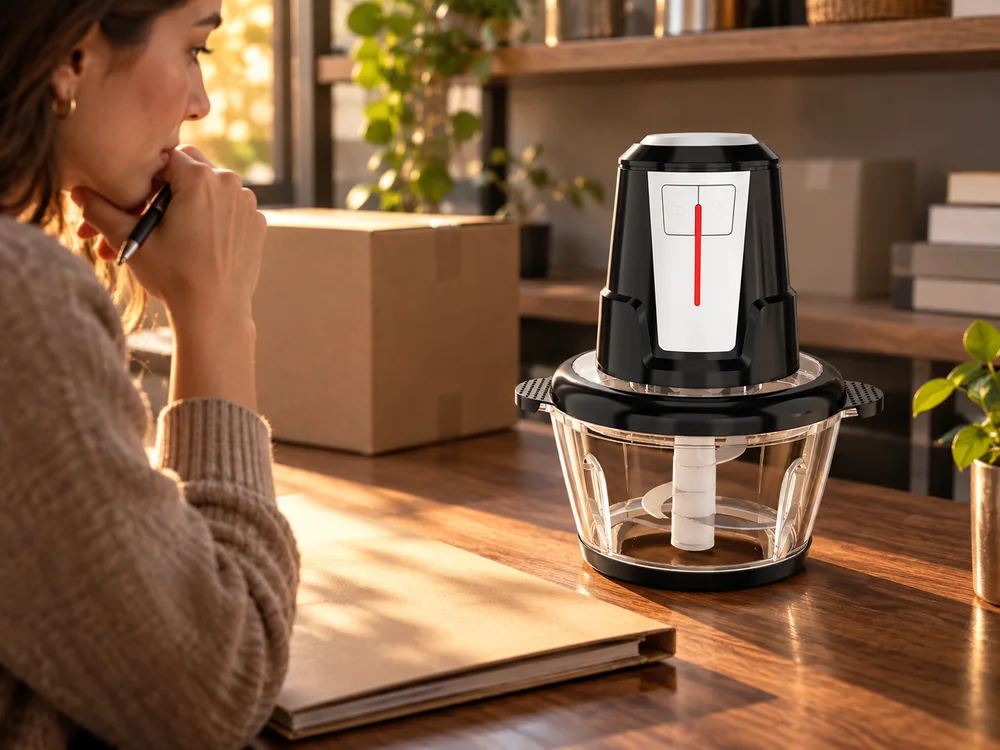
A supplier says the appliance your brand has sold for two years will no longer be offered in its present form. Buying a final quantity may preserve sales, but it can also leave the business holding stock after customers have moved to a new product. The decision is about the last useful commitment, not simply obtaining as many units as possible before supply ends.
Small appliance product discontinuation requires several separate decisions: whether another purchase is available, how much continuing demand it could serve, what happens to already accepted orders and how customers with the earlier appliance will be supported. Introducing a new model does not settle all four.
This guide concerns household appliance importers and private-label retailers managing a hypothetical end-of-supply situation. It does not announce the discontinuation of any current JINJIE model, promise a notice period or offer clearance inventory. Obtain the current status and terms for the actual product before acting.
Establish what is ending before treating the message as a final-order offer
Ask which complete product or version the message concerns. A discontinued color, a replaced component and withdrawal of the finished appliance have different purchasing effects. Identify the bowl or jar combination, controls, electrical version and presentation involved. A family name alone may cover products whose current status differs.
Separate the last opportunity to order from the last possible shipment and the end of any separately agreed support. Those events need not occur on the same date. If the supplier has not provided a final purchase offer, do not convert a general warning into one internally.
Clarify whether existing accepted orders remain available as agreed. The parties may need to resolve a proposed change or outstanding materials under their actual arrangement. This article does not determine cancellation rights or force a supplier to keep producing. It helps identify which commercial question needs an authorized answer.
Ask about available alternatives separately. Another model may meet the customer’s preparation need without reproducing the earlier product. A similar housing does not establish matching parts, identical use or unchanged retailer approval. Keep the original product status and the alternative proposal as two records.
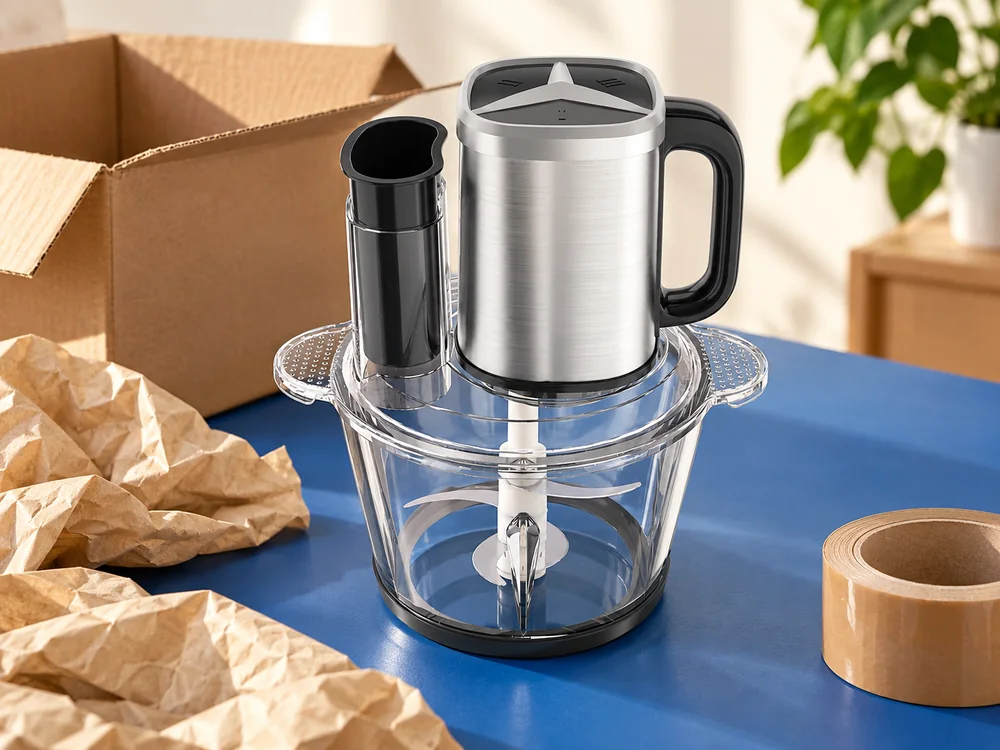
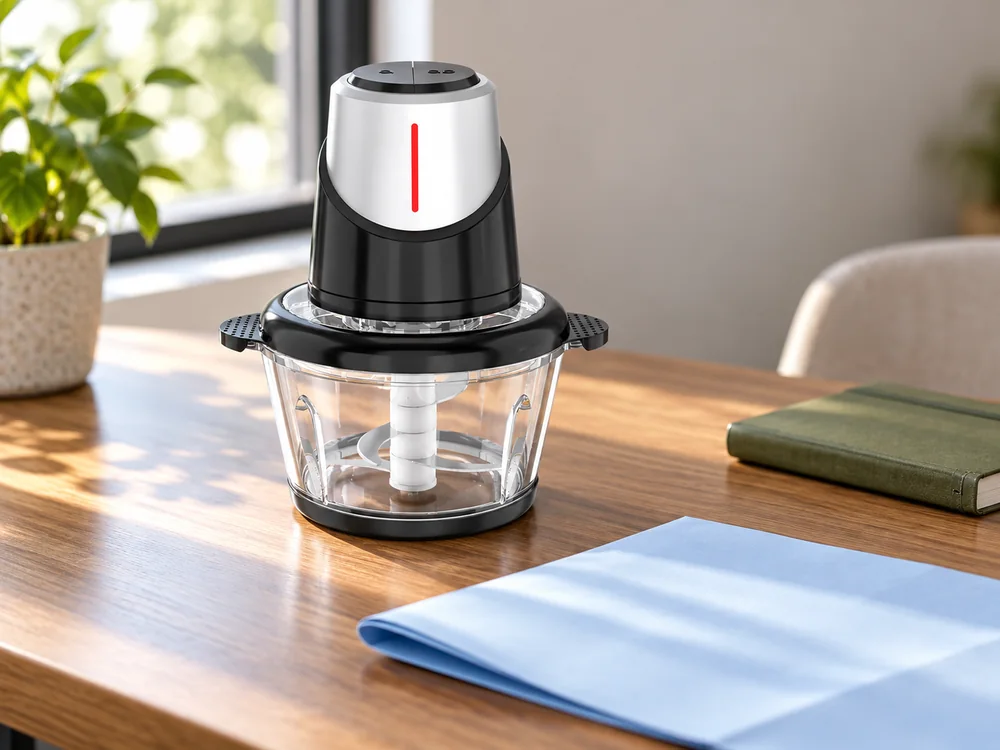
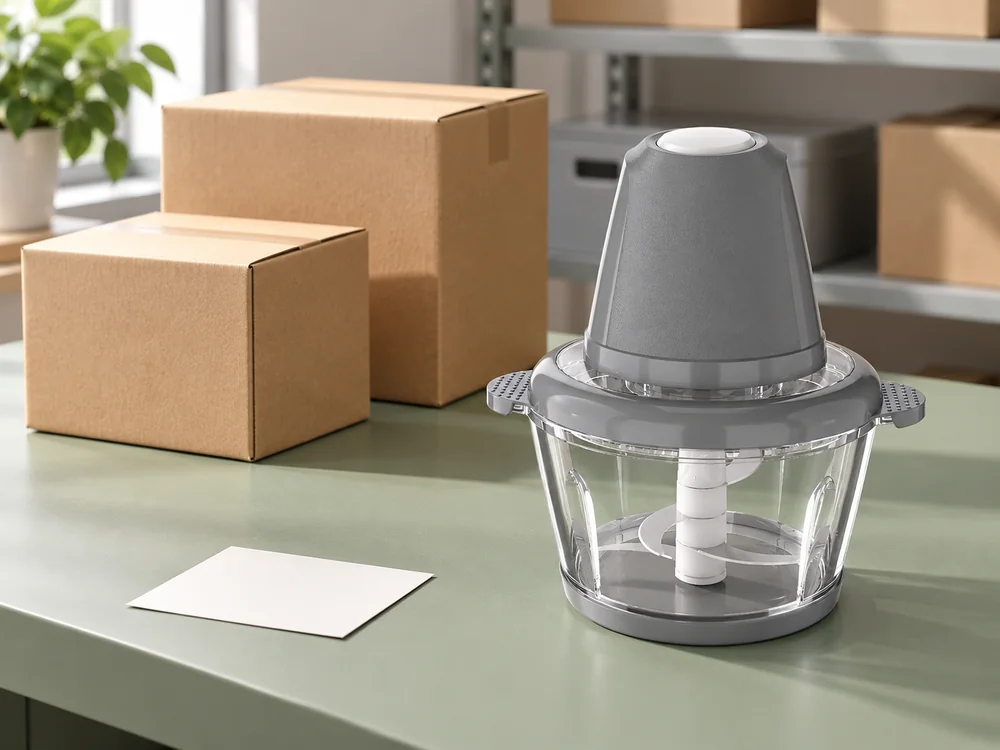
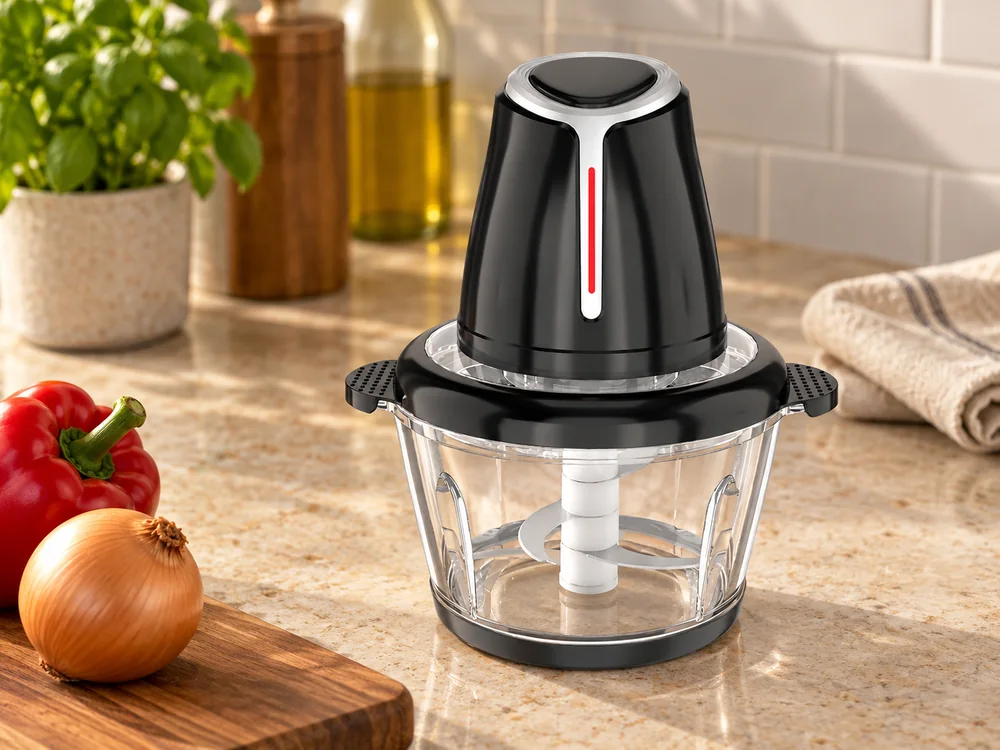
The JINJIE electric chopper range can provide a starting point for an alternative inquiry. For example, SD-03 is quoted with a nominal 3 L glass bowl, 500 W and digital controls. This identifies one configuration; it does not establish that it replaces another maker’s appliance or that any particular current model is ending.
Choose the commercial end point of the existing retail offer
Decide how long the brand needs to keep selling the earlier product. A retailer’s accepted campaign may require a defined quantity, while an open online listing can be closed when stock runs out. Continuing every channel indefinitely creates a demand assumption rather than a purchasing requirement.
List firm customer commitments separately from a sales forecast. Allocate existing usable stock and confirmed receipts against those commitments first. Then examine demand that the business may choose to serve. Avoid counting the same retailer allocation again inside a general forecast.
Consider whether customers would prefer the new offer once it becomes available. If both products serve the same role, earlier sales cannot automatically predict demand for the old one after the new launch. A final purchase should have a credible selling route through that change.
Define who can accept additional orders for the earlier version. Sales teams need a current stock and promise boundary, not merely a note that purchasing is investigating a last buy. An unbounded sales promise can expand the exposure after the final quantity has been decided.
Keep support for goods already sold outside the new-sales horizon. Ending a listing does not erase existing customer obligations. The relevant technical, service and market requirements need their own appropriate assessment. A final commercial buy should not be justified by assuming those obligations disappear with production.
Calculate a final purchase from demand and usable supply
Build the calculation using quantities that can actually serve the intended purpose. Separate saleable stock, accepted incoming goods, stock held for unresolved review and units reserved for a distinct support arrangement. A warehouse total may contain all four.
Consider an invented example. A business has 160 saleable units and 80 under a confirmed incoming arrangement. It intends to serve 360 further retail sales before closing the old listing. With no other allocations, the simple unmet sales quantity is 360 minus 240, or 120 units. The example is not a JINJIE stock, minimum order or demand forecast.
If 30 of the saleable units have already been allocated to a firm customer order excluded from that 360-sales forecast, only 210 units remain available for the forecast. The illustrative gap becomes 150. If that customer order is already included in the 360, subtracting the 30 again would overstate the gap. State the demand basis before adding a reserve.
Compare a lower-demand case. If the business can credibly serve only 220 sales and all 240 available units become saleable in time, another purchase is not required for that case. An offered final quantity of 300 would not become reasonable simply because the supplier will not accept another order later.
Support quantities require separate justification. If a qualified, agreed service plan identifies a need for complete replacement units, preserve that quantity and its purpose. Do not invent a fixed failure percentage or assume spare parts can be bought separately. Ask what support route is actually available for the earlier configuration.
| Quantity in a final-buy review | Treatment in the calculation | Question still to resolve |
|---|---|---|
| Saleable stock | Available for the named sales allocation | Is it the required version and presentation? |
| Confirmed incoming goods | Include with their actual availability date | Can they arrive within the useful period? |
| Goods under unresolved hold | Keep outside usable supply until decided | What review supports their use? |
| Firm customer allocations | Deduct or include once, on a stated basis | Are they already in the demand forecast? |
| Planned support provision | Separate from new-sales inventory | Which appropriate support arrangement justifies it? |
| Final proposed purchase | Compare with the resulting useful gap | Are quantity, timing and cost acceptable? |
Price the final quantity against leftover-stock exposure
A final purchase can have a different quantity or preparation basis from an ordinary reorder. Obtain an actual scoped proposal. An earlier unit quotation is not a promise that a smaller final run, different presentation or stored-goods arrangement is available on the same terms.
CIPS includes inventory and obsolescence risk in its total-cost-of-ownership discussion. That is relevant here: lower unit cost can be outweighed by goods the business cannot use or sell. Keep the final quantity and the intended exit from the listing visible beside the price.
For an invented comparison, buying 150 units at USD 19 requires USD 2,850 for goods. Buying an offered 300 at USD 18 requires USD 5,400. The lower unit price reduces the price of 150 units by USD 150, but doubles the quantity and requires USD 2,550 more for goods. Those are hypothetical alternatives, not supplier conditions.
If only 150 of the larger quantity serve the defined sales need, the remaining 150 require a separate commercial rationale. They might have another confirmed use, but a hope of discount selling is not a cash recovery already achieved. Include storage, handling, support and any other relevant costs on their actual bases.
Separate known costs from possible recoveries. An unagreed supplier buyback or an estimated clearance price should not reduce the committed purchase budget as though it were certain. Use scenarios to see how sensitive the decision is, and keep the original goods cost intact.
Check whether final-order terms reduce flexibility. A proposal may have particular cancellation, shipment or material conditions. Review the actual agreement through the authorized route and obtain professional advice where needed. Do not assume every final order is noncancelable, or that normal reorder flexibility remains available.
Keep dedicated packaging and components within their real use

Count buyer-specific boxes, leaflets, labels or other agreed materials that remain with the program. Establish ownership, location, usable revision and the actual treatment offered. Their presence can affect the final proposal, but it does not require buying appliances solely to consume obsolete print.
Compare the material with the product that would be supplied. A box describing the earlier controls may not accurately describe a proposed alternative. A leaflet for one electrical version may not fit another. Shared branding does not make those combinations correct.
Use the JINJIE OEM and ODM discussion when evaluating presentation for an available new platform. Ask which buyer-controlled assets can be used and which details need revision. Do not forward another supplier’s restricted technical material without the right to disclose it.
Avoid treating loose components as interchangeable continuity stock. An earlier bowl, lid or blade assembly needs its matched appliance identity and appropriate compatibility answer. If independent service supply is not confirmed, do not promise it to customers because similar items appear in a catalog.
Agree the treatment of unused material separately from the purchase of new goods. Revision, authorized collection or another appropriate route may be worth discussing. Resolve actual ownership and obligations before instructing use or disposal. A supplier’s ending notice does not establish the buyer’s rights over every remaining item.
Evaluate the replacement as a new offer, not a silent substitution

Define which customer need must continue and which visible details can change. The new product may preserve the preparation role with a different vessel or control format. That can be a suitable range decision if the channel describes it honestly.
Give a selection sample an unresolved product question. After choosing the platform, final configuration and packaging approvals may still be needed. Do not skip those decisions because customers already recognize your brand, and do not repeat settled sampling without a new reason.
Ask the responsible reviewer which product and market evidence applies to the alternative. The JINJIE quality and testing overview can start a scoped discussion. A previous model’s file, or a general factory capability page, does not automatically approve the changed appliance.
Prepare a customer-facing distinction before both versions enter stock. Product pages, shelf descriptions, receiving records and support contacts should identify the actual offer. A changed unit should not quietly fulfill an earlier listing that promises different contents or controls.
Retain the previous instructions and configuration references for customers who own the earlier product. A new manual should not replace the history needed to answer an old-version question. Keep customer support informed about what remains available and what requires another response.
Make the timing plan fit the last useful sale
An additional final shipment is useful only if it can serve the intended commitment. Compare current preparation, transport, receiving and retail readiness with the selling window. A date for completing assembly does not establish when the retailer can sell the goods.
If the final shipment overlaps with the new launch, decide how each quantity will be allocated. The earlier product may serve already accepted commitments while the new version enters a different channel. Preserve the actual product distinction rather than blending the quantities into one listing.
Consider the consequence of a late final shipment. It may leave the business buying stock for a selling period that has already ended. Obtain the current readiness answer and compare an alternative or a revised sales plan before increasing the commitment to compensate for uncertainty.
Missing timing information calls for a hold on the promise that depends on it. Confirmed inability to meet the required window can make that final purchase unsuitable. Neither state means the supplier’s entire manufacturing capability has failed; the decision concerns this particular offer and purpose.
Authorize a bounded last purchase or close new sales
The final review should name the product, useful quantity, timing, support treatment and remaining obligations. One outcome may be a bounded last purchase. Another may be to sell the available stock, stop accepting new commitments and introduce a separately approved offer. A third may require a focused clarification before either choice is possible.
| Condition after review | Purchasing choice to assess | Next step |
|---|---|---|
| Existing usable supply covers the planned exit | No further new-sales purchase | Control customer promises and existing allocation |
| A defined shortfall has a timely final offer | Bounded final purchase | Agree quantity, version and commercial conditions |
| Offered quantity greatly exceeds useful demand | Smaller proposal or another sales plan | Recalculate funding and leftover exposure |
| New product serves the customer role | Introduce the assessed alternative | Prepare its own approval and retail identity |
| Earlier customer support remains unresolved | Separate support decision | Obtain the available version-specific route |
| Status or necessary evidence is missing | Hold the dependent commitment | Request clarification; reject only confirmed unsuitable offers |
Preserve the agreed ending record and the final order reference. Give purchasing, sales, receiving and support one usable account of what remains available. Do not reopen the last-buy decision for optional cosmetic preferences after its material conditions have been settled, unless new information changes the business exposure.
Discuss a current replacement-product inquiry with JINJIE. State the continuing customer task, destination, complete-set requirement and useful purchasing window. Ask for an available platform and current proposal; do not assume that a historical photo represents stock, continuing supply or compatible parts.
FAQ
Does discontinued mean the existing stock is defective?
No such conclusion follows from the supply status alone. Establish the actual reason and condition of the goods. A product issue needs its own qualified handling, while an ordinary end-of-offer notice concerns availability. Do not use one label to settle the other question.
What if we receive only an informal warning?
Ask for the identified version, current order possibilities and relevant dates. Keep the warning as a planning signal, not a firm final-order commitment. Preserve existing accepted orders separately while the status is clarified.
Can we reserve remaining units without buying them immediately?
Only through an actual accepted arrangement. Ask about quantity, ownership, payment, storage and collection conditions. A forecast or request to hold stock is not proof that goods have been reserved.
Should a final buy include appliances for every possible future customer claim?
Do not invent an unlimited quantity from that fear. Establish the appropriate support obligation, available remedies and identifiable versions, then obtain a qualified planning basis. Keep support provision separate from new retail sales and from unconfirmed standalone parts supply.