An importer has placed several appliance orders with the same manufacturer. Most arrived as expected, one needed a packing correction and another moved after the buyer changed its artwork. A general rating of good or unreliable loses the distinctions needed for the next purchase. A useful review connects those events with the order the business now wants to place.
A small appliance supplier scorecard can support an ongoing purchasing decision: maintain the present scope, increase a defined allocation, require a focused improvement or investigate an alternative. It should make the reasoning visible, not replace it with a total out of 100.
This guide concerns household food-preparation appliances and an established buying relationship. It is not a supplier ranking, a universal scoring formula or a statement of JINJIE performance results. A new manufacturer’s suitability still requires its own product and commercial assessment; it cannot inherit another supplier’s score.
Start with the future purchase the scorecard must inform
Describe the next commitment before choosing measures. Continuing one unchanged SKU presents a different decision from increasing volume, adding electrical versions or introducing private-label packaging. Review the evidence relevant to that change instead of treating the past relationship as approval for every new proposal.
Identify the scope of the existing experience. A supplier may have delivered one appliance successfully without having supplied another in your range. Keep each product and market version distinguishable. An overall relationship view can sit beside those product-specific records, but it should not erase them.
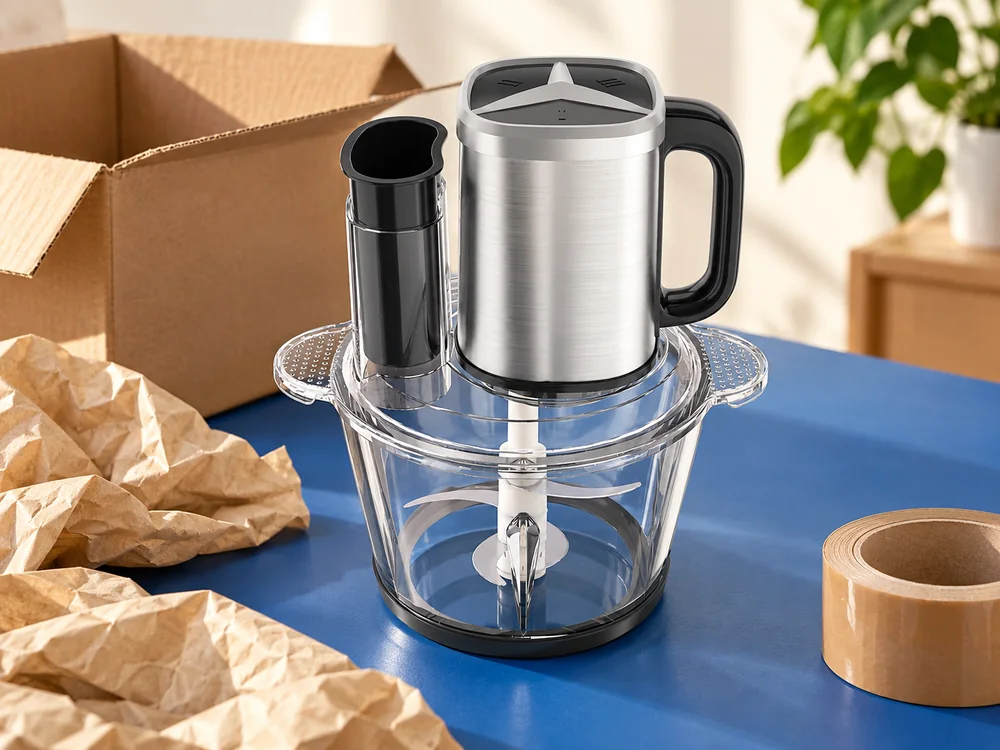
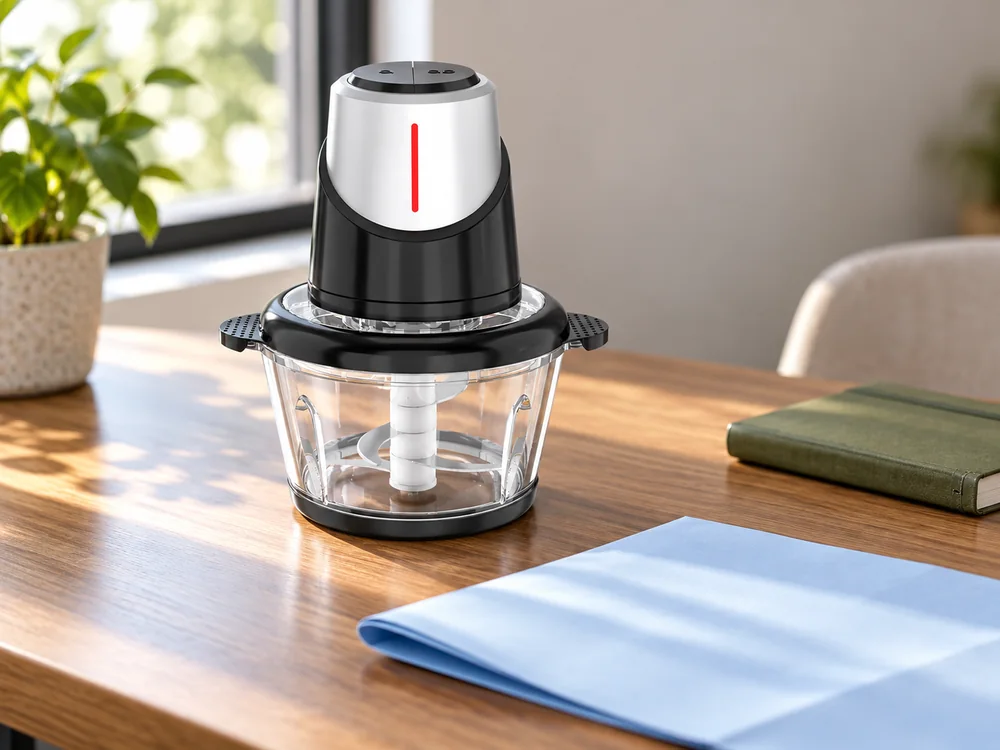
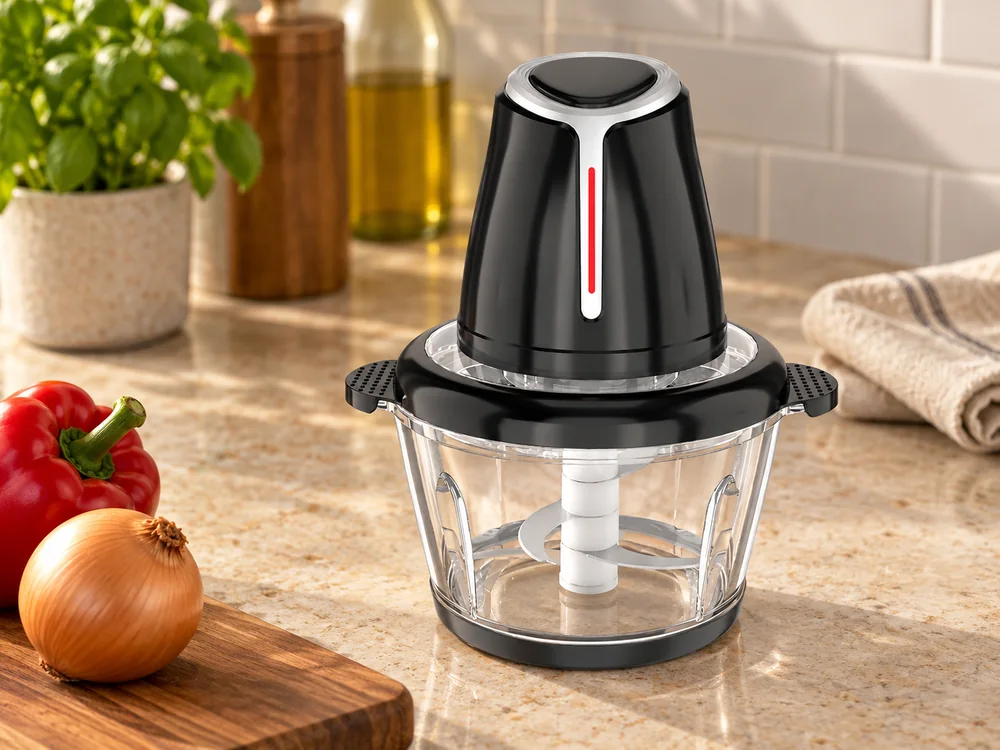
The JINJIE electric meat chopper range provides identifiable product starting points. The quotation lists SD-02 with a nominal 2 L stainless-steel bowl, 400 W and digital controls. Experience with that offered configuration would not, by itself, approve a glass-bowl version, a different included set or another manufacturer’s appliance.
Choose a review period that contains useful purchasing events. Three orders over a period may tell more about the present question than a calendar month without any shipment. Record both the period and the number of relevant events. A percentage with no purchases behind it is not a performance result.
Agree definitions before measuring the supplier
A measure needs a named event, denominator and information source. For timing, specify whether the event is sample availability, packed-goods readiness, collection or warehouse receipt. Those milestones have different owners and dependencies. Do not score a factory against warehouse arrival while recording only its packing date.
Keep the original agreed date and any later accepted change. If the buyer revises artwork and both parties accept a new readiness date, the review should preserve that history. It may show a buyer-created schedule change and a supplier’s performance against the revised commitment. Replacing the original date silently can conceal delay; ignoring a valid change can unfairly create one.
Define the quantity basis as well. Measuring complete purchase orders, delivery lines and units can give different answers. Select the basis appropriate to the decision and use it consistently. Include the counts beside the result so another buyer can understand what was measured.
CIPS recommends objective supplier-performance information and consideration of obstacles created by the buying organization. Its KPI guidance also emphasizes relevant, manageable measures. Apply those principles to the actual relationship rather than importing an unexplained target from another industry.
Make material definitions available to both parties. The supplier should be able to challenge an incorrect date or product identity before the finding affects future business. Agreement on the data does not require agreement on every commercial conclusion, but it gives that discussion a coherent starting point.
Select a few measures that change purchasing choices
Begin with the recurring requirements of your program: complete offered goods, dependable readiness information, usable response to product questions and an accurate commercial basis. Include a measure only when its movement could change a buying action or prompt a worthwhile investigation.
For configuration accuracy, compare the received offer with the agreed version. Distinguish a missing manual from an unresolved functional report. Both may matter, but combining every finding into one undifferentiated quality percentage can obscure the action needed.
For communication, measure whether an update resolved the question or identified a useful next action. A rapid acknowledgment is not the same as a technical answer. Avoid rewarding message volume or penalizing a complex question merely because a responsible assessment takes longer than a routine shipping update.
For commercial accuracy, compare the actual agreed scope and invoiced basis. A requested change can legitimately alter price or preparation work. An unexplained discrepancy needs reconciliation. Keep an accepted revision separate from a failure to honor the existing offer.
For follow-up, evaluate whether the agreed action reached its defined review point. Do not count a file marked closed as proof that a recurring finding was prevented. Conversely, do not leave an issue permanently open after the material question has been resolved simply because more optional paperwork could be requested.
| Measure for an established appliance program | Define before using it | Decision it can support |
|---|---|---|
| Readiness against agreement | Product scope, milestone, baseline and accepted date changes | Whether the next timing commitment is dependable |
| Complete-set conformity | Reference and actual examined or received basis | Which version or packing question needs attention |
| Useful issue response | Named question, responsible route and agreed next event | Whether future orders need different coordination |
| Commercial consistency | Accepted price, scope, currency and revision | Whether the proposed order basis is understood |
| Improvement follow-through | Action, implementation evidence and review basis | Whether a temporary purchasing restriction can change |
Read delivery performance on more than one level
Consider an invented example with 10 agreed delivery lines. Eight meet the defined readiness date, so the line-based result is 80%. Suppose those eight contain 950 units and the two later lines contain 50. A unit-based timing result would be 95%. Both calculations describe the same events, but neither should be relabeled as the other.
The smaller lines may still be commercially important. One could contain the market version needed by a retailer on a fixed launch date. A unit-weighted result can hide that consequence. Retain the affected product and customer commitment beside the headline measure.
If all 1,000 units were eventually received, eventual quantity completeness would be 100%. That does not make timing completeness 100%. State the milestone and date for each result rather than combining eventual receipt with on-time performance into a reassuring number.
Distinguish the factory’s readiness from later movement. A forwarder that collected late after goods were ready presents a different purchasing question from a late packing completion. Examine the actual handover information before allocating responsibility. The buyer may need to change its logistics coordination rather than its appliance source.
Do not let repeated date revisions produce an artificially perfect score. Preserve why each change was accepted and what customer consequence remained. A supplier can meet the latest date while the overall program still misses the buyer’s original retail need. That history belongs in the decision even where the revised commitment was honored.
Keep quality observations connected to their scope

Record what was received, what was examined and what was found. If 100 units were examined from a shipment of 800 and two had an identified discrepancy, the observed result is two among the examined 100. The scorecard should not assume exactly 16 affected units in the entire shipment or claim that the other 700 were clear.
Use the applicable inspection or review basis, determined by appropriate personnel, for wider conclusions. This article does not set acceptance sampling, engineering tests or release authority. The purchasing scorecard summarizes the relevant result; it does not create technical acceptance from a percentage.
Separate reported customer concerns from established findings. A retailer may settle a remedy before the cause is understood. Preserve the unresolved investigation alongside the financial cost. Treat a potentially serious safety concern through the responsible route promptly rather than waiting for the overall score to fall below a threshold.
The JINJIE quality and testing overview can help start a scoped discussion about the selected appliance. It is not a published score for your order. Ask what actual check addresses the requirement and what response follows an identified difference.
Avoid comparing unlike products as though the percentages establish a factory-wide ranking. A simple unchanged configuration and a multi-version first order can involve different preparation. Compare the relevant context without using complexity as an excuse for a confirmed unmet requirement.
Include the buyer’s contribution to the result
A useful relationship review identifies where your own process made delivery or communication harder. Late artwork, conflicting approvals and an unprepared receiving route can affect an otherwise workable proposal. Record those events separately from supplier responsibility so the next action reaches the correct owner.

Ask the supplier for its account of important exceptions. It may identify a missed buyer decision or a different product reference in circulation. Compare the explanation with the records. Do not accept it merely because it shifts blame, and do not dismiss it because your scorecard was prepared first.
For an OEM program, use the JINJIE OEM and ODM discussion to clarify the preparation behind the next version. A buyer asking for several new pack formats should assess the additional work instead of demanding the historical timing of an unchanged product.
Keep corrective action proportionate. If the recurring problem is unclear approval authority on your side, appointing a single authorized route may be more useful than requesting another factory report. If the supplier cannot preserve the agreed version, a different action is needed. The review should identify the actual failure path rather than the most familiar remedy.
Use any numerical total without allowing trade-offs that cannot be made
A weighted score can make several observations easier to read, but its arithmetic reflects the weights you chose. It does not establish an objective industry ranking. Explain what each score represents and keep the evidence available behind it.
For an invented illustration, timing at 80 with a 40% weight contributes 32 points; configuration at 95 with a 40% weight contributes 38; response at 90 with a 20% weight contributes 18. The total is 88. That calculation is exact for the hypothetical inputs, but it does not mean the supplier is approved for 88% of your future purchases.
A mandatory product requirement cannot be compensated for by friendly communication or a low price. Keep its status outside the average. If evidence is missing, hold the approval that depends on it and request clarification. If inability is confirmed, choose another supported offer for that requirement.
Likewise, a single serious event can require a scoped action even while the aggregate improves. The scorecard should preserve exceptions with material consequences. Do not let a favorable total erase the decision the buyer actually needs to make.
Consider whether a total adds enough value to justify maintaining it. A short dashboard of defined measures and open actions may work better for a small importing business. Use the simplest form that supports repeatable decisions; software sophistication cannot repair uncertain product identity or inconsistent dates.
Translate the review into a future allocation and improvement plan
Bring the findings back to the intended order. Decide whether the evidence supports the present product and commitment, only a narrower scope or a proposed increase after a named question is resolved. Past orders provide relevant experience, not a reservation of future factory capacity.
Discuss an increased allocation against the current product, quantities and readiness proposal. If historical performance supports confidence but the new order adds substantial version complexity, ask about that new work. Keep established strengths useful without extending them beyond their evidence.
| Review result | Future purchase response | Next action |
|---|---|---|
| Defined measures support the existing scope | Continue the identified program | Obtain the current complete proposal |
| Buyer-controlled delays dominate | Improve the approval or receiving route | Assign the buyer action before demanding a different supplier result |
| One version has repeated unresolved differences | Limit the dependent commitment | Request a focused product or packing response |
| Improved follow-through supports a former restriction | Reconsider that restriction | Preserve the evidence and current requirement |
| New volume or variants exceed past experience | Evaluate the additional scope | Obtain current preparation and readiness answers |
| Mandatory requirement remains unanswered | Hold its dependent approval | Clarify evidence; reject that offer only if inability is established |
Name the owner and next review event for any improvement. “Improve communication” is hard to evaluate. “Identify who gives a version-specific answer before the next order is accepted” can resolve an actual buying gap. Keep the action tied to the result rather than multiplying reporting obligations.
Preserve existing order obligations separately from future allocation. A disappointing review does not automatically authorize cancellation, price deductions or penalties. Resolve actual terms through the authorized commercial route and appropriate advice where necessary.
Maintain the scorecard without creating a second purchasing bureaucracy
Use information already generated by accepted orders, receiving and relevant follow-up where it answers the question. Avoid asking staff to maintain several copies of the same date. Name the authoritative record and how corrections enter the review.
Retire measures that no longer influence decisions. If a temporary packing question is resolved, retain its history but reconsider whether it needs a separate permanent metric. Add a measure when a new program introduces a meaningful requirement, not simply because a template contains another empty field.
Keep trend interpretation honest. Two good orders after a correction are useful observations, but they may not cover every future version or work event. Record what changed and what was actually seen. Finish the material review when the purchasing question is settled; optional refinements should not keep an approved order indefinitely in discussion.
Discuss your next appliance purchasing scope with JINJIE. Provide the identified product, intended quantity, market version and any relevant earlier-order observations. Ask for the current proposal and the specific response your next commitment depends on, rather than an unexplained supplier score.
FAQ
What if we have placed only one order?
Use a first-order review with counts and context rather than presenting a stable performance trend. It can still identify a useful next action. Keep the limited experience visible when evaluating a larger or more complex purchase.
Can we compare two suppliers with different delivery responsibilities?
Only on a clearly aligned basis. Compare common milestones where available and keep additional services distinct. A supplier arranging warehouse delivery and one offering factory collection do not own the same events.
What if the supplier disputes one recorded result?
Retain the disputed item and its supporting records, establish the exact difference and correct factual errors. If the interpretation remains unresolved, mark it separately. Do not silently delete the result or treat disagreement alone as proof of poor performance.
Should a better score always earn a larger order?
No. Demand, available funding, current product suitability and the actual supply proposal still control the purchase. Strong performance can support a larger allocation, but it cannot create sales or confirm capacity for an order that has not been assessed.