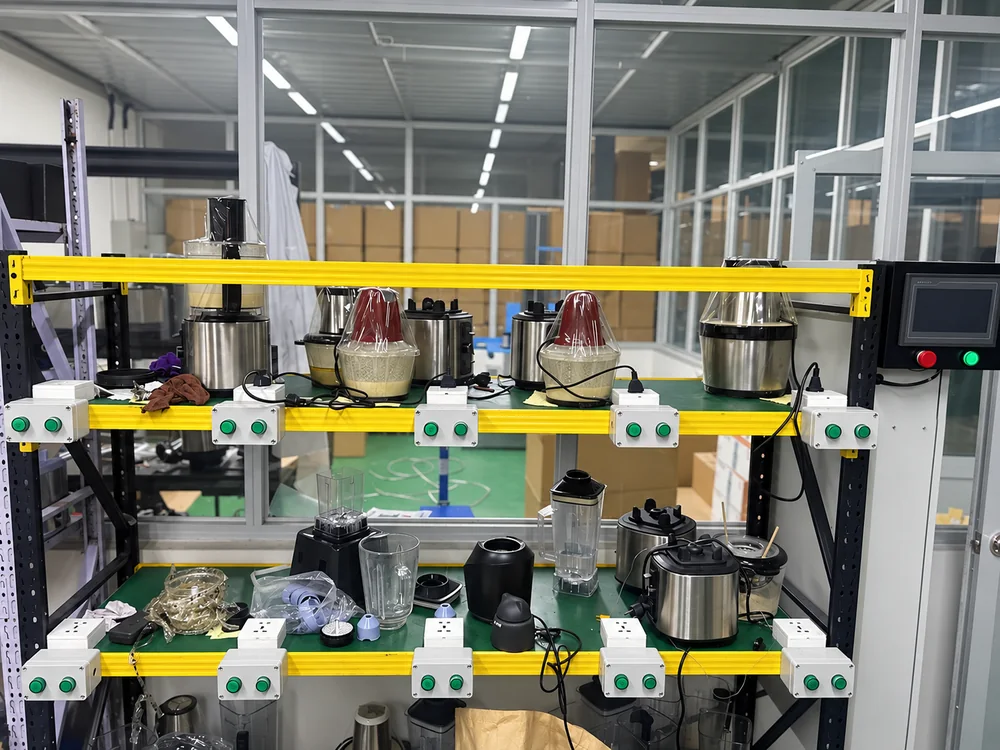
A blender inspection report helps a buyer decide whether the inspected goods meet the agreed requirements and what remains unresolved before shipment. Start with the product and order identity, then read the scope, findings and follow-up evidence. The summary result is useful only in that context.
For an importer or private-label brand, the immediate question is practical: can this order proceed, does it need correction, or is important information still missing? A report should support that decision without requiring the purchasing team to guess which model was checked or what a blank result means.
This guide explains how to review shipment-related reports for a selected blender configuration. It does not provide universal acceptance limits, replace qualified safety assessment or claim that a particular JINJIE shipment has passed inspection. The examples below illustrate report-reading decisions, not actual customer findings.
Match the report to the goods you are buying
Check the model, order reference, configuration and inspection date before reading the result. The product photographs and identification should agree with the purchase specification. A report for a related model or a previous order may explain a process, but it does not automatically describe the current goods.
Look beyond the motor base. The supplied jar, lid, seal, blade assembly and any ordered accessories form the set being purchased. If the inspection reference describes a different jar or accessory combination, ask which version was physically examined and whether the difference affects the reported checks.
Use the selected product from JINJIE's blender range as the starting point, with the exact order specification beside it. Product-family descriptions help identify options; the shipment review needs the actual supplied configuration, including the agreed electrical version and packaging.
Compare the order quantity with the quantities reported as available, finished and packed. These fields answer different questions. Goods that were not available at the inspection cannot be silently included in a conclusion about what was observed, even if they belong to the same purchase order.
For a mixed order, look for a breakdown by SKU or configuration. A total inspected quantity can conceal the fact that one version received no relevant check. Ask how the coverage was allocated, especially where the models use different containers, controls or supplied accessories.
The date matters in relation to changes. If the report predates a component substitution, artwork correction or packing revision, establish what happened afterward. Keep the report connected to its inspected version and request the relevant follow-up instead of treating a recent-looking date as proof of current applicability.
Confirm who issued the report and how questions or revisions should be handled. When authenticity or document completeness is uncertain, use the issuer's established contact or verification channel. An unexplained edited screenshot is a poor basis for a purchasing decision that depends on the original findings.
Read the scope of a blender inspection report before its summary
Distinguish a pre-shipment inspection from a production check, a sample evaluation and a laboratory test report. Each can contain useful evidence, but the questions they answer differ. Read the stated purpose and methods rather than assigning a meaning based only on the document title.
For example, a report documenting appearance and packing does not establish performance with a buyer's recipe unless that check was included. A laboratory result for specified samples does not confirm that the current shipment contains the right manuals or quantities. Use the documents together where their scopes complement one another.
The comparison below is a reading aid. Actual coverage is determined by the work commissioned and recorded, not by the category name alone.
|
Document type |
Question it can help answer |
Detail to verify |
|---|---|---|
|
Shipment inspection |
What was found in the goods available for this order? |
Lot identity, coverage, criteria and findings |
|
Production check |
What was observed at a particular production stage? |
Stage, available goods and unresolved actions |
|
Sample evaluation |
How did identified samples perform in agreed checks? |
Sample version, method and conditions |
|
Laboratory report |
What were the results under the stated test methods? |
Tested configuration, scope and applicability |
|
Corrective follow-up |
What evidence closes a previously identified issue? |
Original finding, affected scope and verification |
JINJIE's quality and testing information describes checks at different stages. Use it to discuss the evidence required for your order. A list of available activities is not a substitute for a report recording the particular checks performed and their outcomes.
Compare the completed scope with the inspection instructions you agreed beforehand. Mark requirements that were omitted or changed. This separates a disagreement about the product from a gap in the inspection itself, which may require additional work rather than immediate product rework.
Read qualifications next to the summary. A result may depend on stated limitations, missing references or checks awaiting confirmation. Do not forward the first page alone if later pages contain information that changes the release decision. The purchasing team needs the complete relevant record.
If a buyer requirement was never communicated, identify that openly. Adding a new expectation after inspection is different from finding nonconformity against an agreed criterion. Discuss whether the requirement is essential to the intended product and arrange the appropriate assessment without rewriting what the original inspection covered.
Understand coverage without turning a sample into a guarantee
Find the quantity examined and the selection method for each relevant check. A report can use different coverage for appearance, dimensions, function and other activities. The number on the cover should not be assumed to apply to every test in the document.
Where a sampling plan is used, ask for the agreed plan and decision criteria. The report should make its conclusion traceable to those settings. Do not invent an acceptance threshold from a defect percentage or borrow a value from another product category simply because it appears in a familiar template.
Keep observed defects separate from assumptions about unexamined units. If a report records a problem in selected items, that is evidence requiring interpretation under the agreed method. It is not an exact count of how many units in the entire shipment have the same problem.
Also distinguish the number of defects from the number of defective units. One unit can have more than one recorded issue. If the report's totals seem inconsistent, clarify what each column counts before deciding that the inspection result or arithmetic must be wrong.
A hypothetical report might contain a complete appearance review but show a requested operating check as not performed. Passing the appearance section does not fill that gap. Ask why the operating check was omitted and what evidence or additional inspection is needed for the intended decision.
Treat 'not applicable' differently from 'not performed.' The former needs a reason linked to the product or agreed scope; the latter records missing work. A blank field needs clarification because it does not reliably communicate either status. These distinctions can prevent an incomplete report from being read as a clean one.
For any split shipment, connect the inspection coverage with the goods proposed for release. The buyer should know whether the report covers that identified portion, another portion, or a combined lot. Do not use a partial release to avoid addressing an issue that may affect the remaining goods as well.
Interpret blender performance results in their recorded conditions
For a performance check, read the method beside the outcome. Relevant details can include the identified product, ingredients or test load, preparation, quantity, operating setting, run time and any repeated cycles. A short statement that the blender 'worked normally' may not answer the buyer's specific application question.
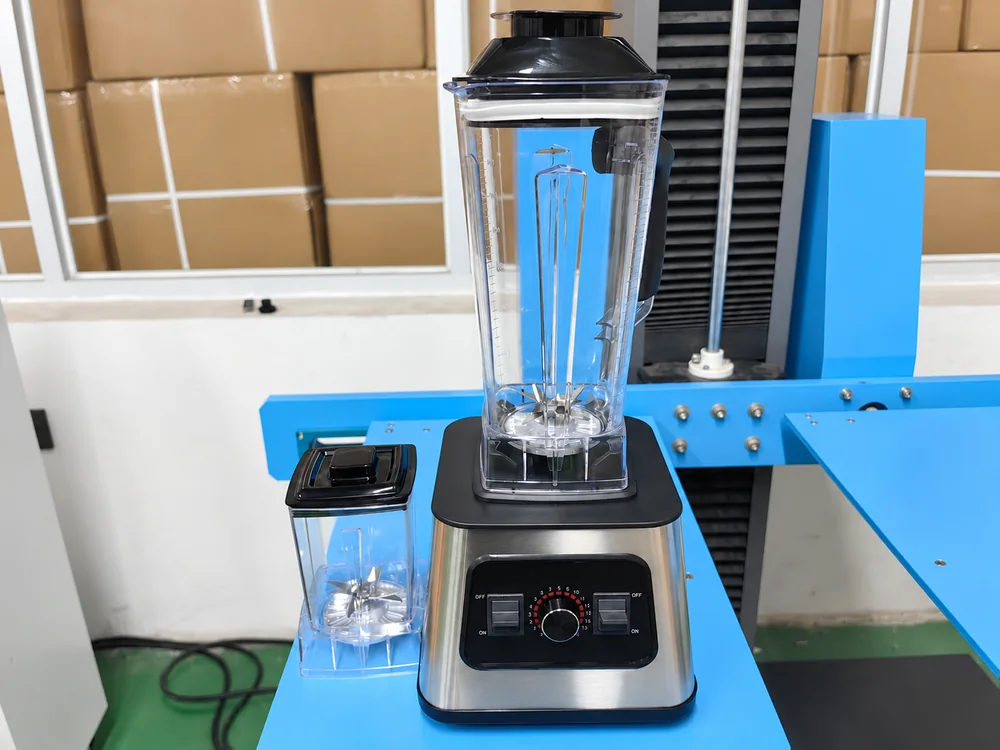
Compare the method with the intended use and the product's instructions. If the buyer wants evidence for a particular recipe, the recorded check should address that recipe under agreed conditions. A result from a different load can still be useful, but its limits should remain clear.
Avoid inferring demanding uses from the product's appearance or motor rating alone. A test with one load does not establish suitability for hot liquids, continuous operation or every ingredient. Those applications require the relevant product instructions, specifications and supporting evidence for the selected configuration.
When comparing two reports, first compare their methods. Different ingredient preparation, quantity or running conditions can explain different outcomes. Ask for a common relevant basis if the purchasing decision genuinely requires a comparison; otherwise describe the separate observations without ranking them as equivalent tests.
For measured results, keep units and the acceptance criterion visible. Ask whether the result refers to the product, a component or the testing conditions. A bare number copied into a summary can lose the context needed to understand whether it answers the requested question.
Technical safety results should be interpreted by appropriately qualified personnel. Purchasing can check that the report identifies the correct product and scope, but should not translate an unfamiliar test value into a broad safety or market-access claim. Escalate uncertainty rather than replacing it with a reassuring adjective.
JINJIE's compliance documentation support separates document types and applicability. Request the relevant files for the selected model and destination. A shipment inspection and product compliance documentation serve different purposes; neither should be described as covering everything simply because it includes a pass result.
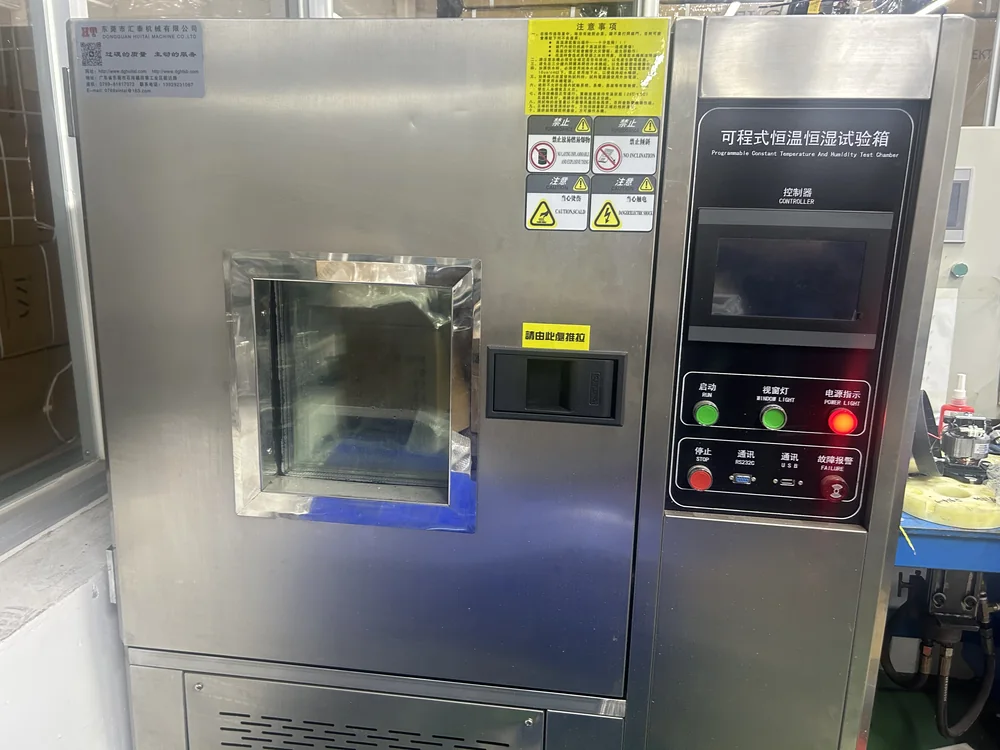
The same discipline applies to photographs of testing equipment. An environmental chamber or bench shows a setting in which work can be performed. To assess a particular outcome, the buyer still needs the test identity, conditions and results. Do not turn the equipment image into an unstated certification claim.
Read findings as specific problems with specific consequences
Open the detailed findings rather than relying solely on the total. Match each description with the relevant photograph, item identity and stated criterion. The useful question is what differs from the requirement and how that difference affects the supplied product or retail set.
Descriptions should distinguish visible appearance issues from configuration errors, missing contents and functional findings. 'Poor quality' gives the supplier little basis for correction. A clear location, observed condition and reference make it easier to determine the next action without arguing over general impressions.
For a suspected mismatch, compare the report with the approved specification or sample reference. A different control graphic, lid or manual might reflect an unapproved change, but it might also indicate that the inspector received an old reference. Resolve which version was authorized before deciding what must be corrected.
Review how findings are classified under the agreed criteria. Do not downgrade a concern merely because there are few photographs, or assume a cosmetic-looking issue has no other consequence. Where a safety implication is possible, obtain the appropriate technical assessment and keep that concern visible in the decision.
Photographs need to be clear enough for their purpose. A close-up can show a defect while a wider view establishes the affected product and location. If a critical detail is blurred, request a better view or other suitable evidence. More photographs of unrelated products do not resolve the uncertainty.
Protect confidential information without losing the details needed for review. Another customer's identity can be removed from an example, but the actual order report still needs enough product, lot and method information to support the decision. Request an appropriately shared original rather than circulating private files unnecessarily.
Keep commercial timing separate from the finding. A shipment deadline may affect the options for rework or another visit, but it does not change what the inspector observed. Present the quality issue and timing consequence together so the responsible buyer can decide with both visible.
Close corrective actions with evidence tied to the affected goods
A supplier's proposed correction is the beginning of follow-up. Ask which goods are affected, what action is planned, who is responsible and what evidence will demonstrate completion. Keep that information attached to the original finding so the response can be reviewed without reconstructing several message threads.
For a hypothetical wrong-manual finding, a photograph of the correct booklet shows what replacement is intended. It does not establish that the affected retail boxes have been corrected. The follow-up needs to address the relevant goods and the agreed verification of the replacement work.
The table below separates several common report situations. It helps a buyer ask for the next piece of evidence without treating every uncertainty as the same problem.
|
Report situation |
What remains unresolved |
Appropriate follow-up question |
|---|---|---|
|
Required check omitted |
Evidence for that requirement is missing |
How will the agreed check be completed? |
|
Finding confirmed |
Goods differ from the criterion |
What is the affected scope and correction? |
|
Corrected sample shown |
Bulk correction is not yet demonstrated |
How were the affected goods corrected and verified? |
|
Reference version disputed |
Acceptance basis may be wrong |
Which approved revision governed the order? |
|
Technical result unclear |
Meaning or applicability needs expertise |
Who can interpret it for this configuration? |
|
Follow-up completed |
Release authority still needs a decision |
Do the recorded results meet the agreed conditions? |
Use the nature and scope of the issue to agree the follow-up method. Some matters need document clarification; others require physical correction and further inspection. Avoid a blanket rule that a new photograph always closes a finding or that every minor clarification requires an identical full repeat visit.
If rework changes a component, label or packaging arrangement, consider which other checks it affects. Replacing one part can alter the configuration described in the original report. The follow-up should preserve a clear record of the final supplied version and any relevant reassessment.
JINJIE's manufacturing workflow provides context for discussing where a correction belongs in production or packing. Agree how corrected and uncorrected goods will remain distinguishable until verification is complete. A response about future production does not by itself close an issue in the current order.
Retain the original report and the linked follow-up. A revised summary without the underlying action history can make it difficult to explain why the conclusion changed. The final record should show the original concern, the completed response and the evidence used for the decision.
Record the release decision and unresolved conditions clearly
Bring identity, scope, findings and follow-up together before authorizing the next step. A report result is one input to the buyer's release process. The responsible person needs to decide whether the agreed conditions have been met and record any remaining limitation explicitly.
Use clear decision language: release the identified goods, hold for correction, request missing evidence, or refer the issue for qualified assessment. Avoid an ambiguous 'looks fine' message when different people must arrange dispatch, payment or additional inspection based on it.
If release is conditional, identify the condition, responsible person and evidence required before it takes effect. Do not let a planned action be mistaken for permission to dispatch immediately. The logistics team should receive the actual status of the identified goods, not an optimistic summary of the supplier's intention.
After the order, retain useful findings for the next inspection brief. Repeated concerns may justify a clearer specification or a check earlier in production. Carry forward the specific lesson, such as a missing reference or recurring packing mismatch, without assuming that one report predicts every future shipment.
Conclusion
For a JINJIE blender order, provide the exact model, configuration, purchase reference and agreed inspection priorities when requesting evidence. Review the complete report, identify any unperformed checks and connect corrective actions to the goods proposed for shipment.
The final purchasing record should explain why the order can proceed or what still prevents release. That explanation is more useful to purchasing, logistics and the supplier than a detached pass label with no identifiable scope or follow-up.
FAQ
Does a pass result mean every blender was inspected?
Not necessarily. Read the recorded coverage and selection method for each check. A sampled inspection reports observations and a decision under its stated plan; it should not be described as an individual examination of every unit. Ask for clarification if the report does not make that distinction clear.
Can an older report support a new order?
It may provide background, but first establish its purpose and applicability. A previous shipment inspection does not describe the condition of a new lot. A technical report may remain relevant to an unchanged configuration within its scope, which requires appropriate review rather than a decision based on date alone.
What should I do when the summary passes but a check is missing?
Determine whether the omitted check was required for your order and why it was not completed. Request the missing evidence or an appropriate assessment before treating that requirement as satisfied. Preserve the distinction between the report's existing conclusion and the additional information needed for your release decision.
Is a corrected product photograph enough to close a defect?
It can show a corrected example, but the necessary evidence depends on the finding and affected scope. For bulk rework, ask how the relevant goods were corrected and how completion was verified. Keep the original finding, response and follow-up together so the final decision remains traceable.