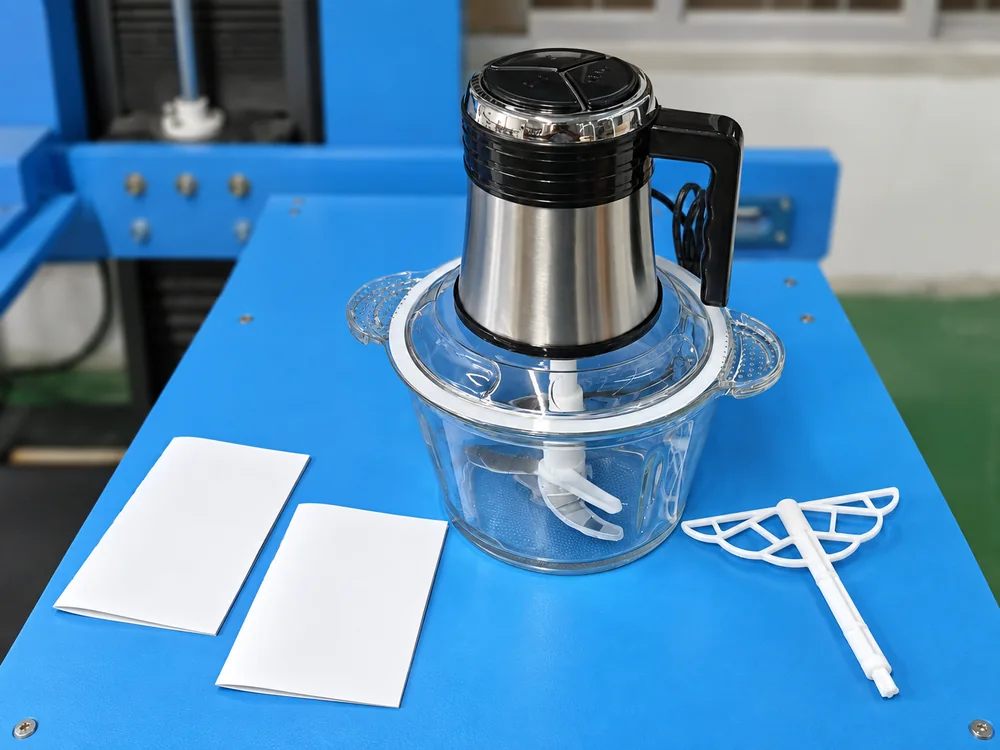
A meat chopper packing checklist should describe the complete set a customer will open, including the appliance, ordered accessories, protection and instructions. A neat closed box can still contain the wrong lid or omit a small item. Start with the contents, then follow them through packing and opening.
For importers and private-label buyers, the useful reference is a packed sample that can be opened, compared with the order and repacked consistently. It connects the purchasing specification with the work at the packing station and the checks at the receiving warehouse.
This guide covers household electric bowl choppers. It focuses on completeness, protection and presentation, rather than freight-volume calculations. The proposed checks are purchasing tools to adapt to the selected product; they do not describe a universal packing method or a test result for every JINJIE model.
Define the sellable set before designing its package
Choose the exact model and configuration before approving a contents list. A family photograph may show several bowls or accessories together, although the order includes only one combination. The packing reference should identify what belongs in a single sellable unit and the quantity of each item.
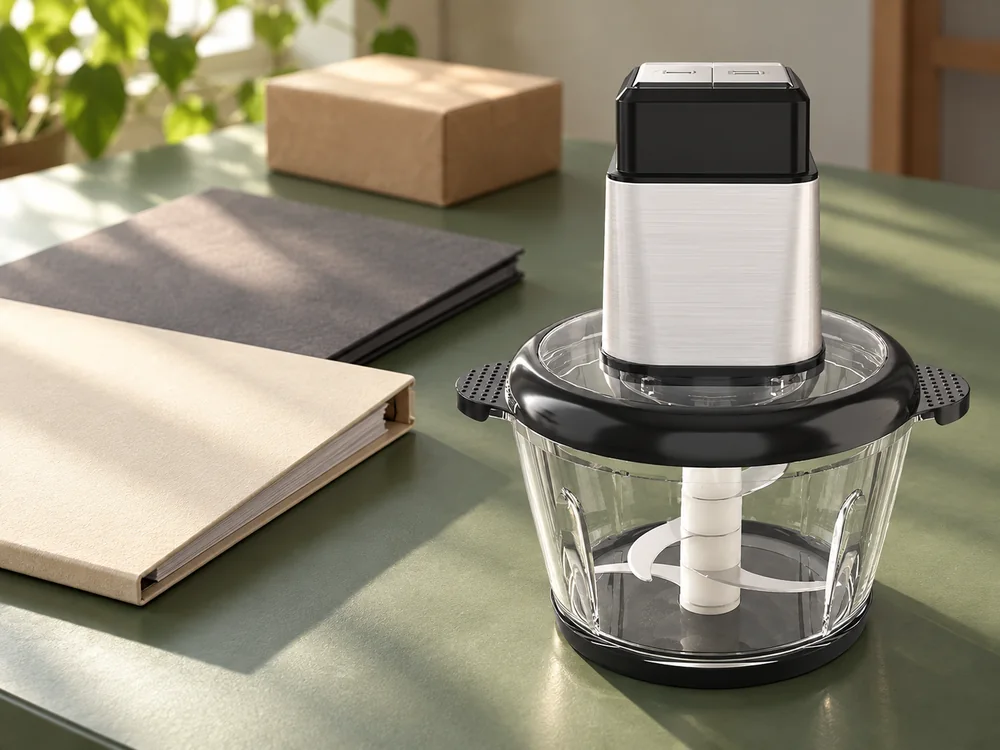
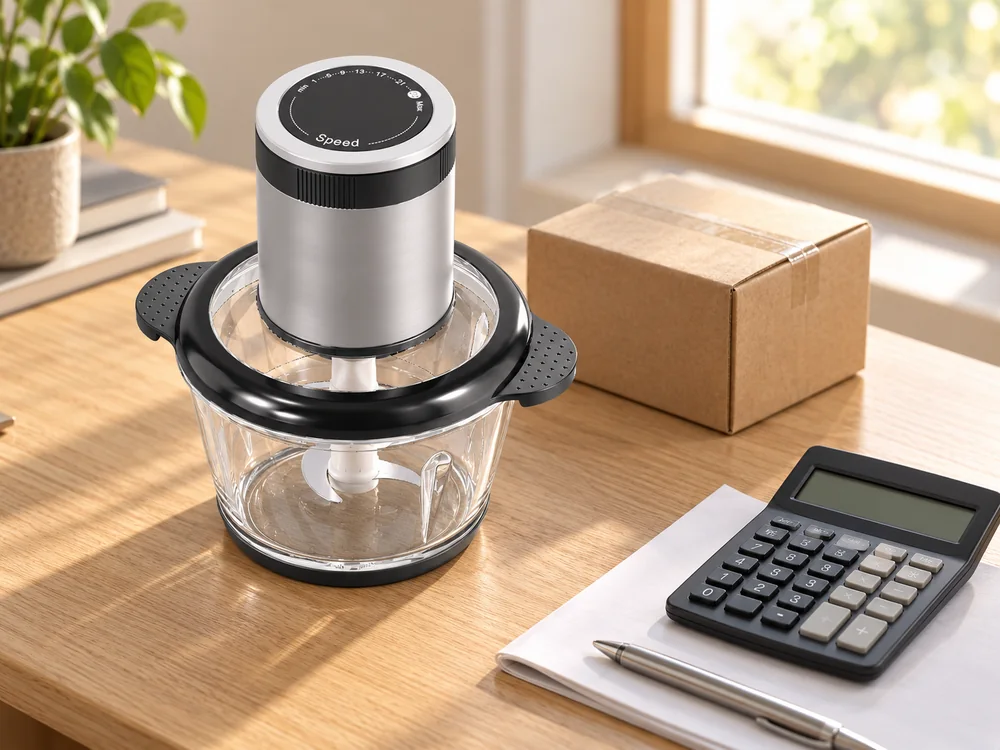
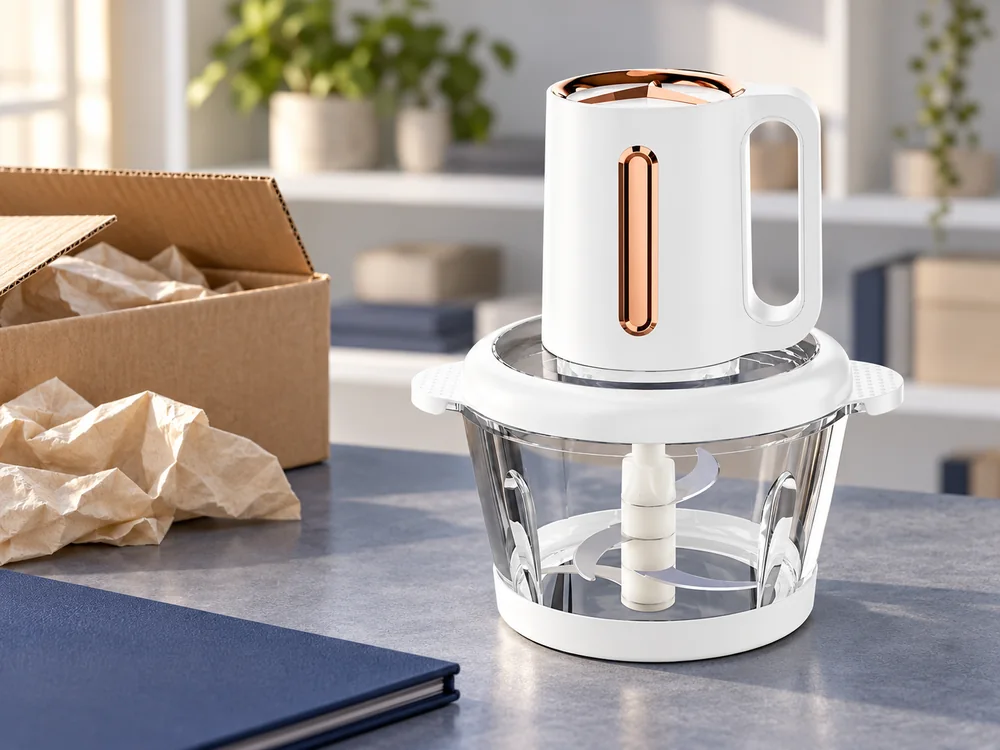
For a bowl chopper, establish the motor unit, matching bowl, lid and blade assembly. Include any additional accessory only when it is part of the agreed order. Similar-looking parts should have enough identifying detail to distinguish them at the packing station without relying on memory.
JINJIE's electric meat chopper range includes different bowl and control configurations. Select the supplied set first, then prepare its package. A packing arrangement from another bowl version is a starting point for discussion, not automatic approval for the new combination.
Separate included items from optional purchases in the product information. If a photograph shows an optional accessory, the retail presentation must not imply that it is inside every box. Otherwise the factory can pack exactly what was ordered while the customer still believes an item is missing.
Assign a packing reference to each SKU, even when most components are shared. Record the product version, contents list, printed-material versions and protective arrangement together. A changed manual or added accessory can create a new packing requirement without changing the appearance of the motor housing.
For a hypothetical two-SKU range, one set might contain the agreed basic components while a second includes an additional ordered item. Keep two explicit lists. A single combined list with an informal instruction to remember which item to omit invites uncertainty during changeovers and later warehouse checks.
Decide how the completed reference will be stored and shared. Purchasing, the supplier and the receiving team need the same version. Keep photographs alongside the written list so a later discussion can distinguish a missing item from an item placed in a less obvious compartment.
Build a meat chopper packing checklist around observable checks
The checklist should let someone make a decision while looking at the set. Replace broad entries such as 'accessories correct' with the actual accessory identity, quantity and location. Use a signed reference or controlled photograph where a written description would be ambiguous.
The following table organizes a complete-set inspection. It does not prescribe a particular insert design, material or blade-handling procedure. Those details belong to the selected product and its approved packing instructions.
|
Check area |
What to establish |
Useful acceptance reference |
|---|---|---|
|
Appliance identity |
Correct model, appearance and ordered configuration |
Product reference and current SKU |
|
Bowl and lid |
Correct matching versions, without visible damage |
Identified parts and approved set |
|
Blade assembly |
Correct ordered assembly and protective arrangement |
Product-specific handling and packing instruction |
|
Additional items |
Identity and quantity of each included accessory |
SKU contents list, not a family photograph |
|
Printed materials |
Correct language, version and service information |
Approved manual and artwork files |
|
Closed package |
Contents retained, closure normal, identification readable |
Packed sample and agreed presentation |
Inspect the contents in a repeatable order. One practical approach is to account for the appliance and each separate component before closing the package, then confirm the outside identification. Adapt the sequence to the approved packing design so the inspection does not introduce unnecessary handling of sharp parts.
Include the condition of the items, not just their presence. A correct bowl with visible damage is not a complete acceptable set. Record where the damage was observed and whether it was present before packing or found after opening, where that distinction can be established.
Photograph the complete reference set and the successive packing layers. Each photograph should answer a specific question: which item belongs here, which way does it sit, and what separates it from neighboring parts? Several clear reference views are more useful than a large collection of almost identical closed-box images.
Keep the checklist short enough to use at the station, with the detailed references available beside it. Purchasing can maintain a longer specification, but the operator should not have to search a quotation history to determine whether the current SKU includes an extra item.
Protect components through the entire opening sequence
Review the package as an arrangement of parts that can move or contact one another. Look at the bowl, motor unit, lid and accessories in their intended positions. Ask the packaging team to explain what retains each part and prevents damaging contact during the intended handling.
Do not select protection by appearance alone. A thicker-looking insert or a tighter box does not demonstrate better performance. The proposed arrangement needs to fit the actual set, close as intended and be assessed using the agreed package checks appropriate to the distribution route.
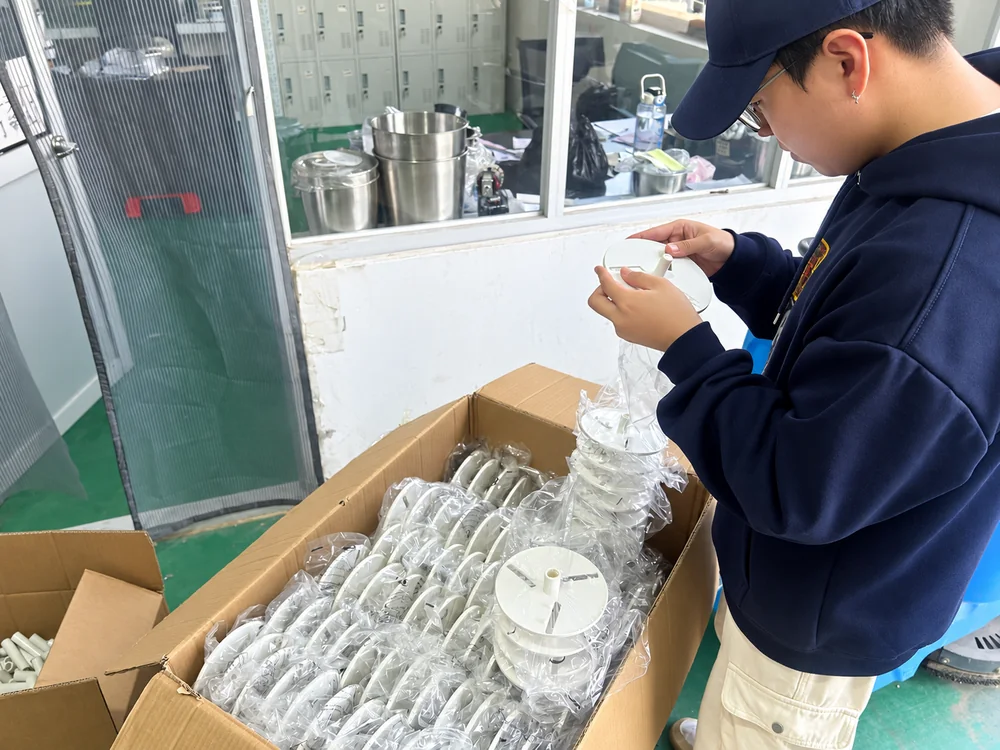
Blade protection requires product-specific instructions. A photograph of a bagged assembly can show its presentation, but it does not establish that the material or arrangement is adequate for every blade design. The packing and opening method should be reviewed by the responsible product and packaging personnel.
Consider what the customer encounters first when opening the box. An accessory hidden beneath protective material may be discarded before it is noticed. Ask whether the contents list and opening sequence make included items easy to find without encouraging unsafe handling or removal of protection in the wrong order.
Check whether the package can be reclosed without forcing the product into place. Difficulty during a supervised packing trial is a reason to investigate fit, orientation or material variation. Compressing a misaligned arrangement until the lid shuts can conceal the underlying problem rather than resolve it.
For a glass-bowl configuration, use the actual bowl and supplied components in the packing assessment. Do not transfer conclusions from a lighter or differently shaped set without review. The same outer box size can contain a different internal arrangement and a different distribution of weight.
Also consider normal warehouse opening for a sample check. The receiving team needs enough reference information to restore the agreed arrangement after inspection. If the package cannot be restored with the original materials, establish an appropriate repacking method before those opened units return to saleable stock.
A protection change can affect more than the insert. It may alter the packing sequence, outside dimensions, gross weight or space available for instructions. Review those consequences together, and retain the updated packed sample rather than approving the material change in isolation.
Make the manual, labels and artwork agree with the product
Compare the manual with the supplied controls and accessories. The illustrations should help the customer identify the actual parts and follow the product's approved instructions. A booklet from a visually similar model can create confusion even when the brand and language are correct.
Specify the required language versions and how they will be included. One multilingual booklet and several separate leaflets create different packing tasks. Agree the intended arrangement before printing and include each required document in the SKU contents list.
Check the box's contents statement against the order. Look for an accessory shown in artwork but excluded from the set, a bowl description carried over from another version, or a product image with different controls. These are content mismatches, not merely cosmetic proofreading issues.
JINJIE's OEM and packaging coordination covers the relationship between product configuration and custom presentation. Share the complete artwork package with its version references. Approving a logo placement alone does not settle the manual, retail box, labels and outer-carton information.
Review brand contact and after-sales information with the party responsible for serving the customer. Do not leave another customer's details in a reused layout or invent a warranty promise to fill an empty panel. Any market-specific wording needs the appropriate review for the actual product and destination.
Where the buyer provides a barcode, compare the supplied data with the printed result and the intended SKU. A successful scan is only one check; the returned identity must also be correct. Agree how the printed code will be checked in its final size and position.
Keep approval attached to the actual file revision. A message saying 'box approved' becomes unclear when several drafts are circulating. Record the filename or revision and the scope of approval so a later correction to one label does not accidentally reopen or replace unrelated artwork.
Arrange the packing sequence to expose omissions early
Ask for a trial using the intended product, protection and printed materials. Follow the set from the first item placed in the package to final closure. At each step, identify what can still be seen and where a missing or incorrect item would become concealed.
Use that trial to place checks before concealment. For example, if an included leaflet becomes hidden beneath a component, account for it at that stage. This is more direct than reopening completed boxes because the final exterior check cannot establish whether the leaflet is present.
For several similar SKUs, plan the changeover explicitly. Remove or identify the previous version's remaining parts and printed materials, introduce the next reference, and check the first completed set. The aim is to prevent two correct component groups from being combined into one incorrect retail set.
JINJIE's manufacturing and packing workflow provides a basis for discussing where configuration checks belong. Ask how the selected SKU and approved packing reference will be communicated to the people preparing the order, including any change made after the initial trial.
Weight checks can support a packing process when the method has been evaluated for the actual set and variation. They do not identify every wrong component. Two different leaflets or accessories may not create a distinguishable weight difference, so identity checks still have a separate role.
Record omissions and packing difficulties in terms that lead to a correction. 'Packing poor' does not say whether an item was missing, protection was misplaced, or the closure would not fit. The response should address the observed problem and identify which completed or unfinished sets may be affected.
Keep reworked sets identifiable until their relevant checks are complete. Reopening a box to add a missing manual can disturb the protection or closure. Check the affected packing steps again before the set is treated as ready, rather than recording only that the missing item was supplied.
Evaluate package changes and test evidence together
Agree the purpose and scope of any handling assessment before it starts. The tested package should represent the intended set and packing arrangement. Record the relevant product and packaging references so the result can be connected to what will actually be shipped.
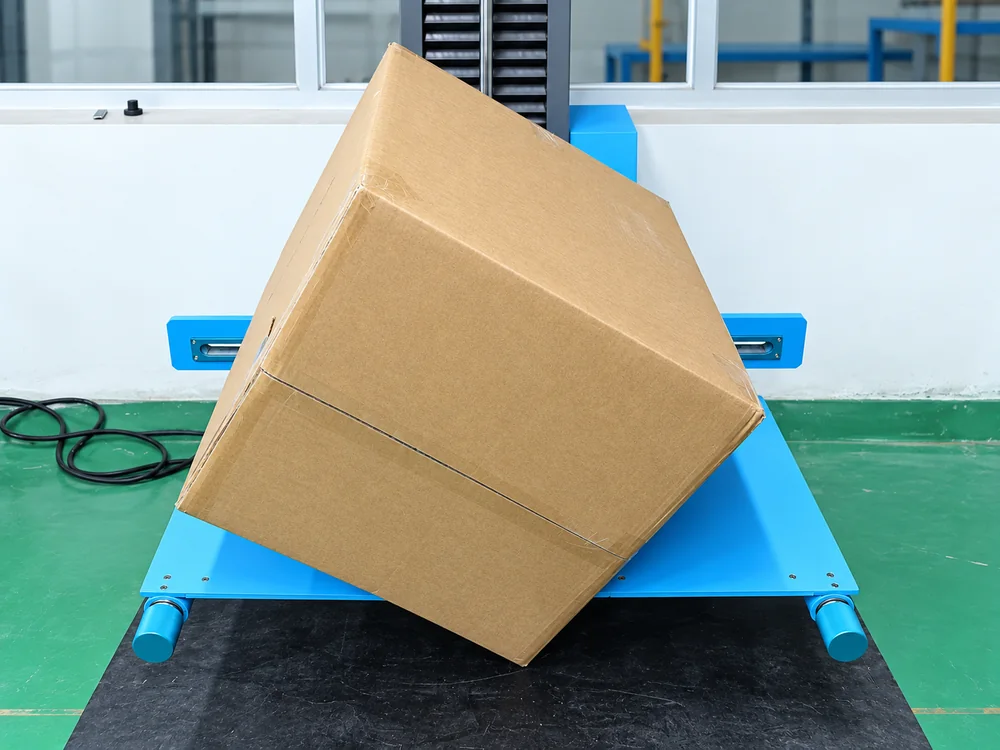
A photograph of a carton at a test station demonstrates a setup, not the result. To assess the outcome, request the agreed method, conditions, acceptance criteria and recorded findings. The review needs to consider the product inside as well as the visible condition of the box.
JINJIE's quality and packing checks describe areas to discuss for the selected order. They should not be read as evidence that every configuration has passed an identical procedure. Choose the assessment appropriate to the product, package and intended distribution requirements.
When protection, components or the packing process changes, ask the responsible packaging specialist whether the existing evidence remains applicable and what retesting is needed. Do not approve a cost reduction using results for a materially different packed configuration.
The decision table below helps separate common findings. The suggested responses are starting points for agreement, not a universal defect classification or an instruction to accept a particular shipment.
|
Observed finding |
Purchasing consequence |
Next decision |
|---|---|---|
|
Included item missing |
Retail set is incomplete |
Identify affected sets, correct and verify contents |
|
Wrong manual revision |
Customer receives mismatched instructions |
Replace the version and check related artwork |
|
Component moves out of position |
Protection may not perform as intended |
Review retention and relevant package assessment |
|
Box closes only with force |
Fit or packing sequence needs investigation |
Correct the cause before approving the reference |
|
Revised insert proposed |
Previous package evidence may not apply |
Assess the change and required retesting |
|
Minor presentation concern |
Effect depends on agreed retail standard |
Compare with the approved reference and agree action |
Separate presentation preferences from functional or safety concerns without dismissing either. A retail buyer may reject visible box damage under an agreed appearance standard even when the appliance remains intact. Write the relevant criteria before the assessment so the discussion is not reduced to differing opinions afterward.
Hand over a reference the warehouse can actually use
The receiving package should contain the current contents list, identification views, packing-layer photographs and any instructions for restoring opened sets. Include the SKU and revision on the reference. A warehouse colleague should be able to identify the correct version without contacting the original buyer.
Distinguish checks of an individual retail set from checks of the shipping carton. The first confirms contents and presentation; the second addresses carton identity, quantity and condition. Both matter, but a correct outer-carton count does not demonstrate that every internal set contains the right accessory.
Agree how an issue found at receiving will be recorded. Photos should show the affected item, its package and its identity clearly enough to support a useful discussion. Retain the relevant packing materials when appropriate so the supplier can assess the arrangement rather than seeing only the damaged part.
For the next order, carry forward confirmed corrections into the packing reference. Leaving them in a separate email risks repeating the same problem when a different person prepares the reorder. Keep the superseded version identifiable, but direct production and receiving to the current one.
Conclusion
Before approving a JINJIE packed set, send the selected model, included accessories, language requirements and intended distribution arrangement. Build the checklist around that configuration, then use the packed sample to confirm contents, protection, presentation and the opening sequence.
Resolve missing items and packing changes at the reference stage where possible. The final handover should give the packing team and receiving warehouse the same practical answer to one question: what must be inside this SKU, and how should it arrive?
FAQ
Can one packing checklist cover several bowl versions?
It can share common checks, but each SKU needs its own contents and packing references. Differences in bowl shape, components or protection must remain visible. Use a shared template with clearly identified variations rather than asking the packing team to infer the set from a product-family image.
Is a closed-box photograph enough for approval?
No. It shows exterior presentation, not the complete contents or protective arrangement. Request the contents list and views of the packed layers, then compare a representative packed set with the order. Keep the closed-box view as one part of the reference, particularly for artwork and identification.
Should a missing manual be treated as a simple paperwork issue?
The manual is part of the supplied set and communicates product instructions. Identify the affected scope, supply the correct version and verify the reworked packing. The appropriate shipment decision depends on the agreed requirements and responsible review; an intention to add the booklet later is not completed correction.
Can a smaller insert be approved to save freight space?
Consider it as a package change, with a defined revised arrangement and an assessment of protection, fit and any required retesting. Recalculate dimensions only after that arrangement is established. A space saving is useful when the complete revised package remains suitable for its intended handling and retail presentation.