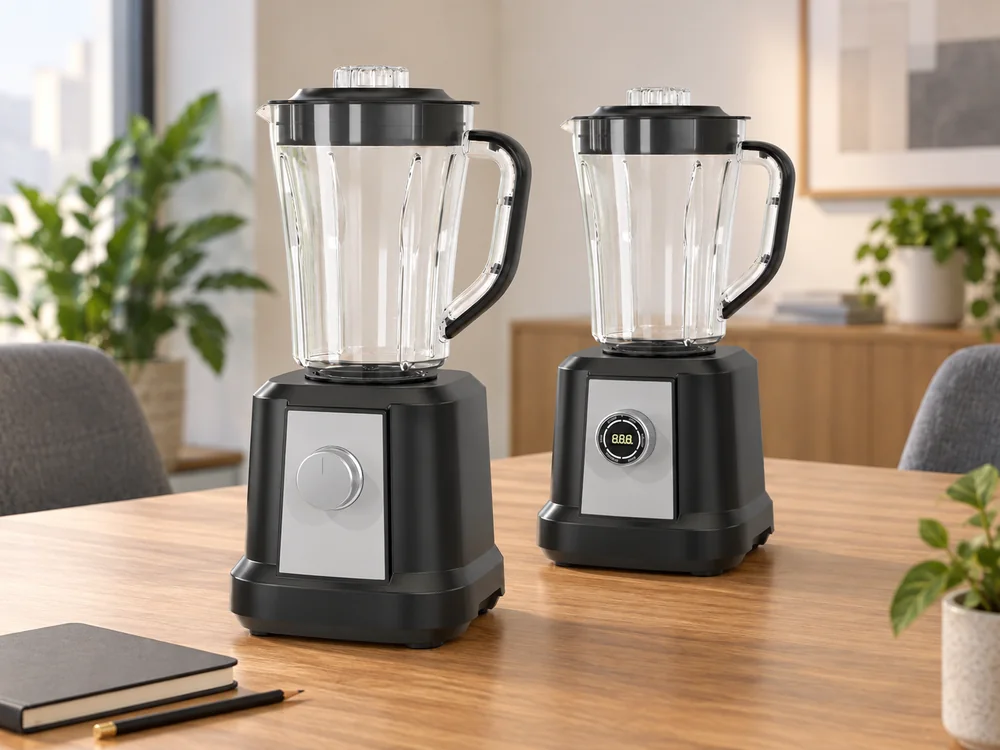
Blender sample approval is only useful if the purchase order identifies the same product. A changed jar, control panel or electrical version can leave the buyer with an appliance that looks close to the sample while no longer matching the approval file.
When reviewing blender sample approval with a manufacturer, ask how the configuration will be recorded and how later changes will be reviewed. Keep foodservice suitability and operating limits in the model-specific technical review.
Define the base configuration before adding branding
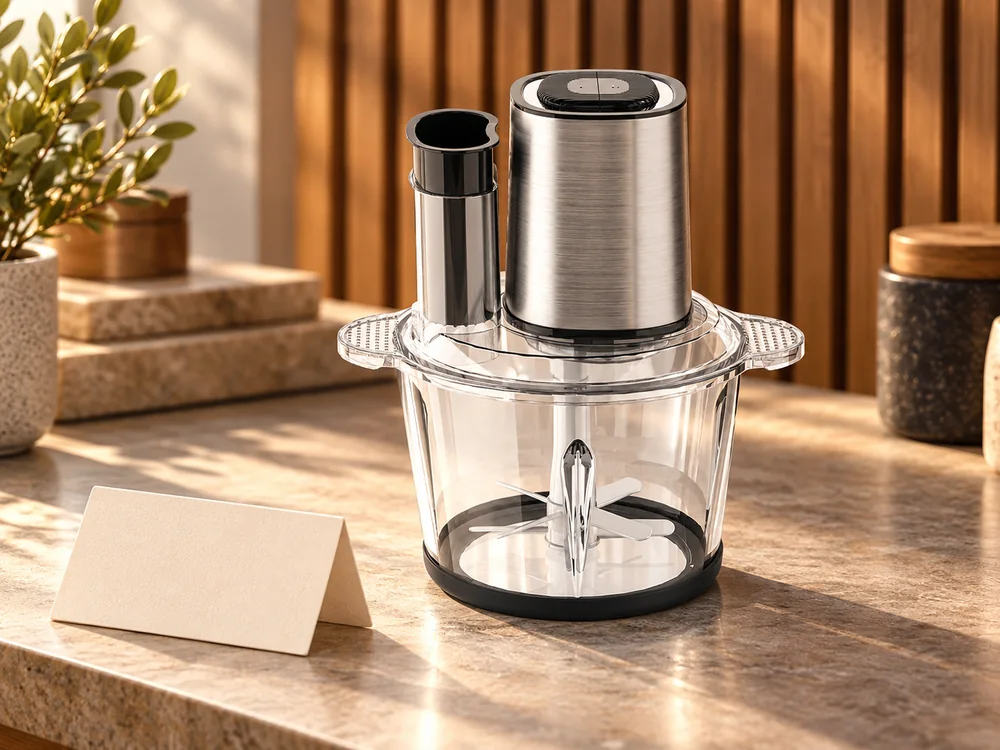
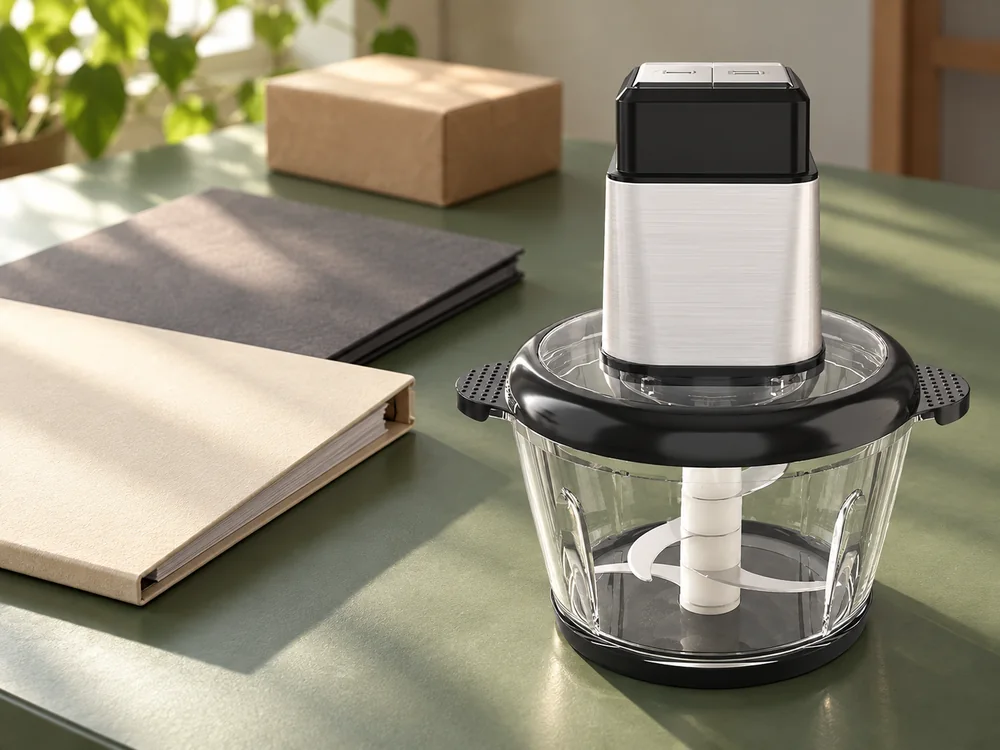
Begin with a current model and the components supplied with it. Record the jar, lid, blade assembly, drive connection and motor base. Add the control format and electrical version before approving artwork.
A logo is easy to see in a sample photograph. A different coupling or control arrangement is easier to overlook. That is why the written specification needs to describe the assembly beneath the branding.
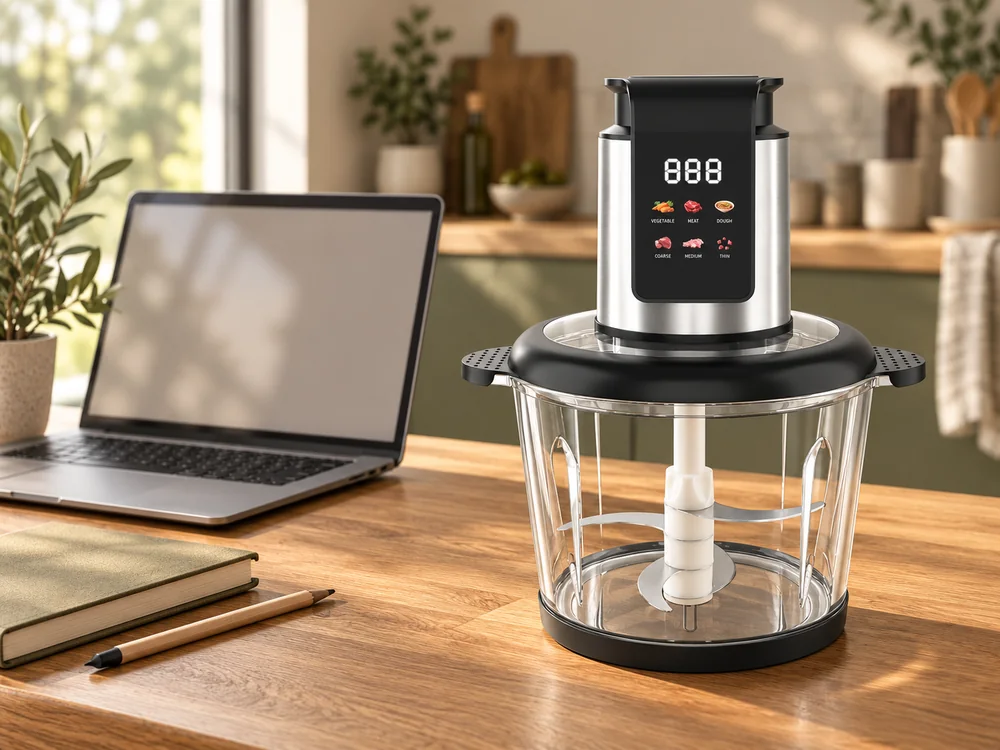
JINJIE's current reference lists BL1161 and BL1261 with the same nominal 1.5 L AS capacity and material entries and the same 600 W power entry. BL1161 is described with adjustable speed, while BL1261 is described with intelligent control. Those shared headline numbers do not make the two configuration records identical.
The control description still needs a model-specific explanation. Do not translate “intelligent control” into a list of automatic programs that the source does not name. Ask for the actual operating positions, panel wording and corresponding instructions.
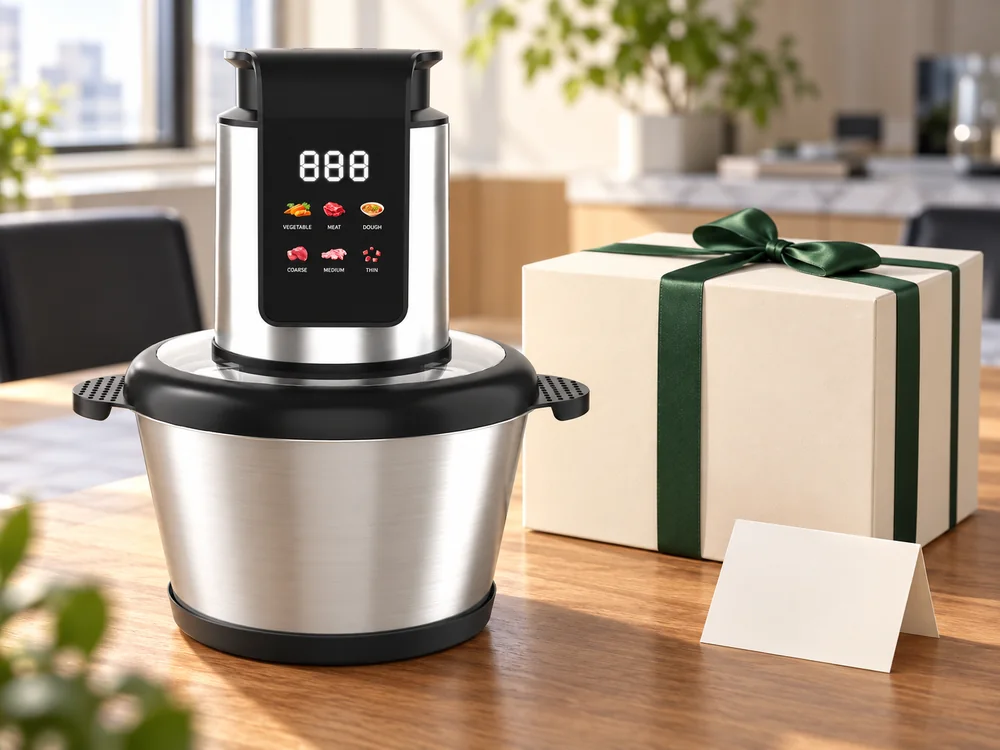
Photograph the selected sample's complete front panel and retain a close view of the markings with the approval file. Ask the person preparing the instructions to match each named control to that view. If two market versions use different panel wording, keep separate approved images so a shared product photograph cannot conceal the difference.
State what the sample represents before anyone signs it. It may show an accepted product configuration while using a temporary label or unprinted protective box. Those exceptions should be visible in the approval record so a signature on the appliance is not treated as approval of every item delivered with it.
If the sample combines a final feature with a temporary one, identify both. For example, a confirmed control layout can be assessed separately from a provisional logo position. The buyer and supplier should agree whether a corrected proof is sufficient for the remaining item or whether another physical reference is needed.
Make the blender sample approval file usable
The approval file should point everyone to one current reference. Keep old versions for traceability, but mark them clearly so they cannot be mistaken for the production instruction.
|
Approval item |
What to record |
|---|---|
|
Physical sample |
Sample identifier, date and configuration |
|
Specification |
Model, jar assembly, base, controls and electrical details |
|
Supplied parts |
Each included component and its quantity |
|
Appearance |
Approved finish, color reference and logo placement |
|
Printed materials |
Nameplate, instructions, labels and retail artwork revisions |
|
Pack-out |
Protection, arrangement, retail box and master-carton reference |
|
Changes |
Requested difference, affected records and approval status |
Ask the supplier to confirm which file the production team will use. A photograph attached to a messaging thread is helpful context, but it should not be the only place a configuration decision exists.
Separate product acceptance from production release. If the product is accepted but artwork is still open, record exactly which work may proceed and which must wait. Agree that release point with the supplier before the order starts.
Give the current reference an owner on each side. The purpose is not to create another approval layer; it is to identify who can confirm which revision is active. When two files disagree, the production team should have a clear route to resolve the conflict instead of choosing whichever attachment is easiest to find.
Use an index that points to the actual files rather than copying every specification into several documents. Repeated copies create opportunities for one number or image to be updated in one place and left unchanged elsewhere. Keep the purchase order's configuration reference connected to the controlled specification and its accepted revisions.
Retain the reason for any exception. If a sample color is accepted for evaluation only, say that. If a supplied accessory is excluded from the production order, name it. An exception written as “to be confirmed” without a responsible person or next action can survive into production unnoticed.
Approval should also have a defined scope in time. A later order may reuse the reference only after confirming that the configuration and applicable requirements remain the same. An old signature is useful history, but it is not permission for unrecorded substitutions in a new order.
Review component changes as connected changes
JINJIE's blender category page treats the jar, lid, seal, blade, drive coupling and base interface as a matched assembly. Use the same approach when a supplier proposes a substitution.
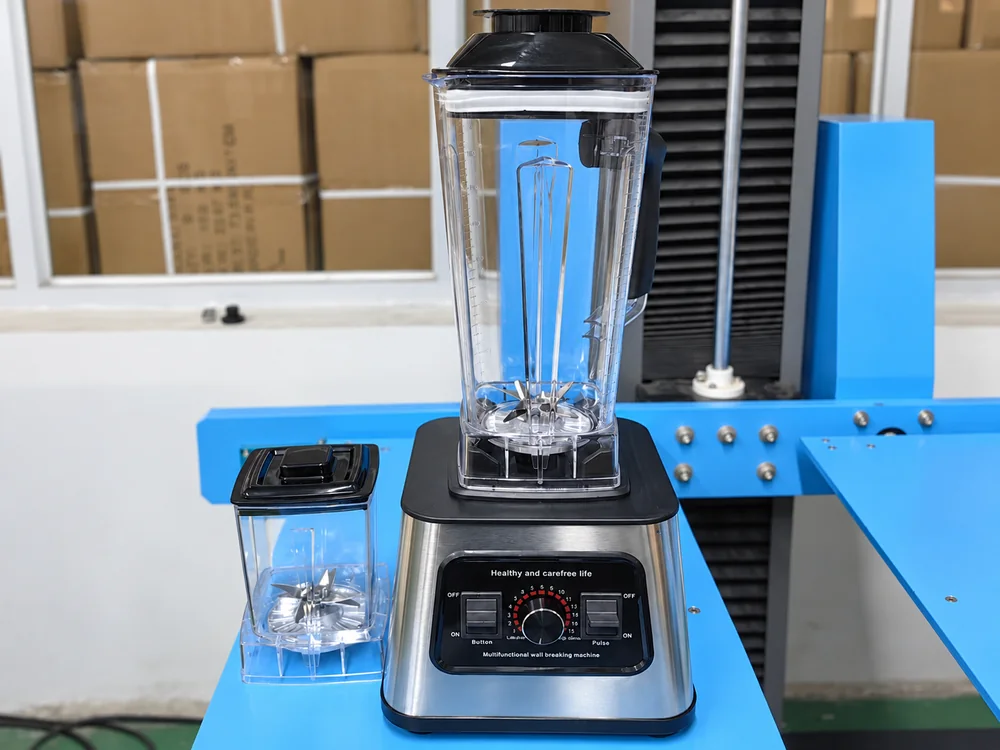
A new jar shape may affect lid fit, packing and the image used on the box. A different control version may affect panel wording, instructions and the applicable product records. The exact impact requires review of the proposed change. It should not be assumed from the name of the component alone.
Ask four questions when a replacement is proposed: what changes physically, why it is proposed, which approved records it affects and what must be rechecked. The answer should identify the proposed version, not merely promise “same quality.”
For a wording-only correction, review the affected proof. For a changed jar, coupling or control, ask the technical team which fit, operating and document checks are needed and whether a revised physical sample is required. Record the decision against that specific change.
Separate the supplier's reason from the buyer's acceptance. A component may be proposed because of availability, cost or a design update. That explanation helps the buyer understand the request, but it does not establish that the replacement is equivalent for the intended use.
Ask for the affected scope, including stock or work already prepared. If the proposed change applies only to a later order, the current production reference can remain separate. If it affects the present order, identify which units or materials are involved before deciding how to proceed.
The following examples show how the approval response can vary with the change. They are a review guide, not a universal test schedule or a description of an actual JINJIE production issue.
|
Proposed change |
Records likely to need review |
Release question |
|---|---|---|
|
Correction to an approved text proof |
Revised proof and the meaning of the corrected statement |
Does the corrected wording preserve the approved claim? |
|
Different jar shape or handle |
Assembly reference, fit, product image and packing |
What physical and packaging checks are required? |
|
Different control panel or operating version |
Controls, instructions, specification and applicable documents |
Does the revised configuration need a new sample? |
|
Another electrical market version |
Electrical details, nameplate, plug and covered records |
Has the intended version been separately identified? |
|
Added or removed supplied item |
Set list, box contents, instructions and packing |
Does the retail offer still match the order? |
Choose the evidence needed for the actual change. Requiring a complete new sample for every typographical correction may waste time, while accepting a changed drive connection from a photograph may leave a technical issue unresolved. The responsible team should define the checks, and purchasing should retain the resulting decision.
Close the change by updating the current reference, not merely by adding an approval message. The old version should remain traceable but clearly superseded where appropriate. This is the point at which a discussion becomes an instruction the next person can use.
Consider the commercial consequence before authorizing the change. Ask whether it affects quoted cost, available components, prepared packaging or the agreed schedule. A technically acceptable alternative may still be unsuitable if it arrives too late for the buyer's project. Conversely, a simpler available option may be worth reviewing when it preserves the actual requirement.
Keep that commercial decision separate from the technical finding. The technical team can explain whether the revised configuration meets the relevant requirements. The buyer still needs to decide whether the price, timing and retail presentation are acceptable. Neither answer should be implied by the other.
If a change is declined, state which reference remains active and what should happen to the proposed alternative. This avoids an unresolved offer being mistaken for approval when the project moves to another contact. A clear rejection with the retained version identified is as useful to production as a clear acceptance.
For later orders, bring forward accepted changes deliberately. Do not assume that a change approved for one defined order automatically revises every future configuration in the range.
Keep the electrical version visible
Voltage, frequency and plug belong in the configuration record. They should agree with the nameplate and the version described by the relevant product documents. A plug photograph alone does not specify the electrical appliance.
If a buyer plans to sell in more than one destination, give each approved market version its own identifiable line. Do not let a shared housing or carton design hide a difference in the electrical configuration.
JINJIE's compliance documentation review is organized around the covered model, electrical version, report scope and destination market. Discuss proposed changes through that review rather than assuming a document applies because its model name looks similar.
Keep each market version linked to its applicable documents. Release of the production configuration remains separate from approval to sell in the destination market.
Where several versions share artwork, identify the fields that change and the fields that stay common. The product image may remain the same while rating information, language or supplied plug differs. A common layout should not make those variable fields invisible during approval.
Check the sample's actual rating information against the requested version. If the sample was supplied only to assess appearance, record that limitation before anyone uses it as the reference for electrical approval. The same physical object can be useful for one decision and insufficient for another.
Do not resolve an electrical mismatch by editing a label alone. Ask the responsible technical team what configuration was supplied and what must change. Purchasing can then decide which work is authorized based on the confirmed version, rather than assuming the corrected text describes the hardware.
Approve the retail pack around the frozen product
A pack-out review should identify what is in the box and how the customer will recognize it. Compare the physical product, included-parts list, control illustrations and capacity wording with the approved specification.
Separate nominal jar capacity from any usable loading instruction. If the carton uses an application image, confirm that the depicted task is within the product's documented scope. Ice, steam or a restaurant counter can imply claims that are stronger than the approved text.
Ask for the packing arrangement for the selected version. A change to a handle, lid or supplied accessory may require a different insert or carton arrangement. Request the appropriate packaging review instead of assuming that a similar-looking unit fits the old pack.
The sample approval should identify whether the packaging is final or illustrative. An unprinted sample box is not evidence that a branded retail pack has already been approved.
Compare the pack with the customer's first use. Can the supplied parts be identified from the contents list? Does the control illustration match the unit the customer will hold? Are any props in the product photograph absent from the box? These are practical checks that connect the approved object to the retail promise.
Keep packaging approval focused on the frozen product. If an artwork review reveals that a different jar or accessory would look better, treat that as a product-change request rather than quietly changing the photograph. The image, physical contents and buying record need to move together.
Ask which packing details are still provisional before agreeing a production schedule. A final product sample with an unfinished insert is a different readiness state from a complete approved retail pack. That distinction can affect what the supplier can prepare without risking rework.
Use the first production check to close the handover
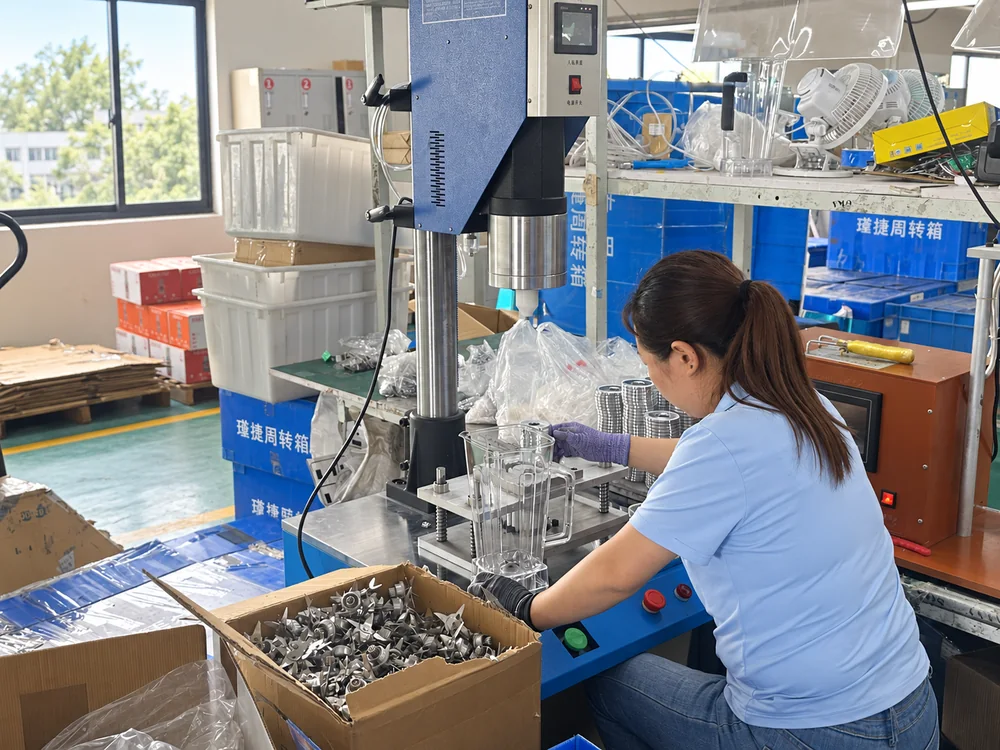
Before the order proceeds beyond the agreed release point, compare the first production reference with the approved file. Ask for the agreed checks on product identity, appearance, controls, supplied parts and pack-out. Any performance or safety checks must follow the project-specific plan and the responsibilities assigned to qualified personnel.
If the production reference differs from the signed sample, identify the affected lot and decide whether to correct it, approve a documented change or hold it. Agree who authorizes that decision before dispatch; changing a photograph alone does not resolve a physical mismatch.
Use the first production check to answer a narrow handover question: did the approved information reach the people preparing this order? Compare the identified version with the reference rather than conducting an informal redesign review at the line. New preferences raised at that stage should be treated as changes with their own consequences.
When a discrepancy appears, preserve the evidence before replacing the reference. Record the observed difference and the version against which it was checked. This helps distinguish a production error from a document that was never updated after an accepted change.
Agree what will demonstrate closure. A corrected first unit, a revised proof or another relevant check may be needed depending on the issue. A message saying “fixed” is not enough if it does not identify what was corrected and which reference now applies.
The buyer should also understand the boundary of the check. Matching the first production reference does not prove that every later unit is identical or replace the agreed in-process and finished-product controls. It confirms the handover at the stage reviewed, while the order's quality plan addresses the wider production work.
JINJIE's OEM and ODM page describes approval as a combination of sample, specification, artwork and pack-out. Use that combined reference to structure the order discussion.
Conclusion
Send JINJIE the sample reference and the configuration you want to preserve. Ask for the remaining approval items and the change-review route before turning that sample into a production order.
The useful approval is a connected set of references: the physical product, its specification and the files needed to make and pack that version. Keep the current revision easy to identify and require later changes to return to the appropriate decision-maker. That gives the supplier a workable production instruction and the buyer a clear basis for checking the handover.
FAQ
Is a signed sample enough on its own?
It confirms the identified physical reference, but it cannot contain every electrical, packaging or document detail. Keep it connected to a written specification and the current approval files.
Must every color change require a new technical test?
The effect depends on what actually changes. A project review should identify the affected material, finish, markings or components and decide which checks are necessary. Do not assume either that every change is trivial or that every change needs the same evaluation.
What should happen when a supplier proposes a substitute part?
Request an identified change record and its impact on fit, function, instructions, packaging and applicable documents. Approve the revised version only after the necessary review is complete.
Can part of the order proceed while artwork is unfinished?
Only under an explicit agreement about the work being released and the work being held. Ask the supplier which preparation depends on the unfinished files and what a later change could affect. Record the agreed boundary so product acceptance is not mistaken for unrestricted permission to print or pack.
If the parties cannot separate those activities reliably, wait for the missing approval rather than rely on a vague conditional acceptance. The schedule should reflect the actual readiness of the order.