When buying blenders from China, the importer has to bring several pieces of work together: the chosen appliance, its retail presentation, the supplier's commercial offer and the buyer's own receiving and sales preparation. A suitable sample can still leave the order unfinished if the quoted set and the planned retail product are different.
Start by identifying what your business will receive and what it must prepare itself. That makes the quotation easier to compare and prevents work such as translated instructions, product photography or service-part identification from appearing only after the order is underway.
This guide covers household countertop jar blenders. It does not cover industrial mixing machines, assume continuous café use or rank Chinese manufacturers. The focus is the importer's work between choosing a promising platform and placing a complete, clearly defined order.
Turn the selected blender into an importable product offer
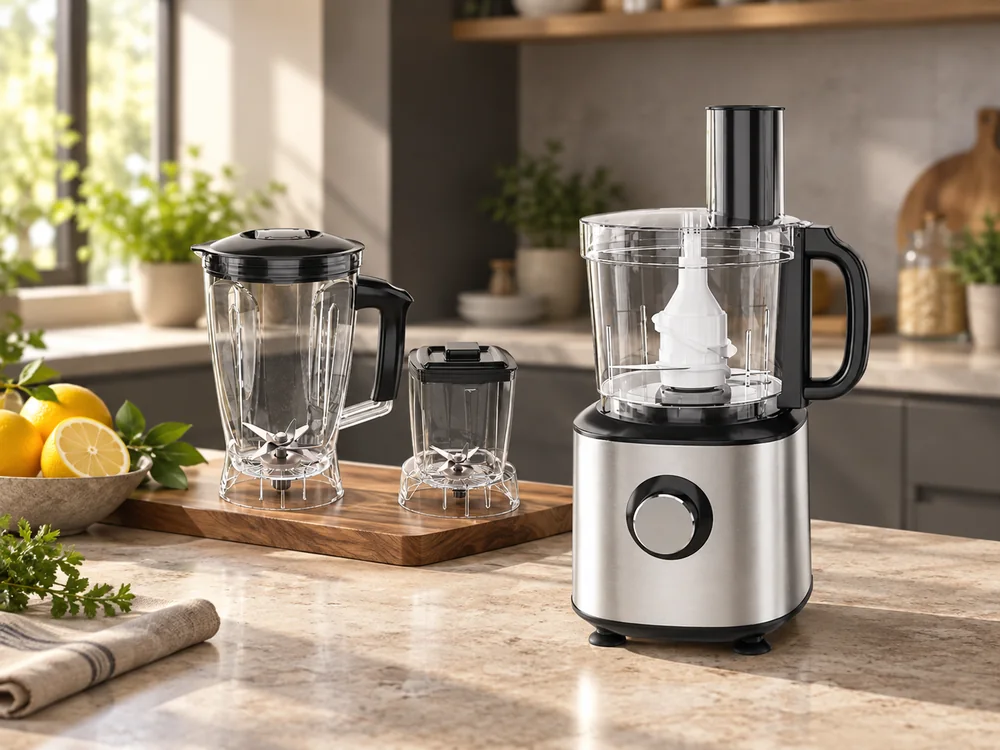
Write down the complete appliance you intend to purchase. Identify the model, jar assembly, controls, electrical version and retail contents. Keep optional items outside the confirmed set until they have been included in the proposal. A photograph showing several vessels does not establish that all of them are supplied.
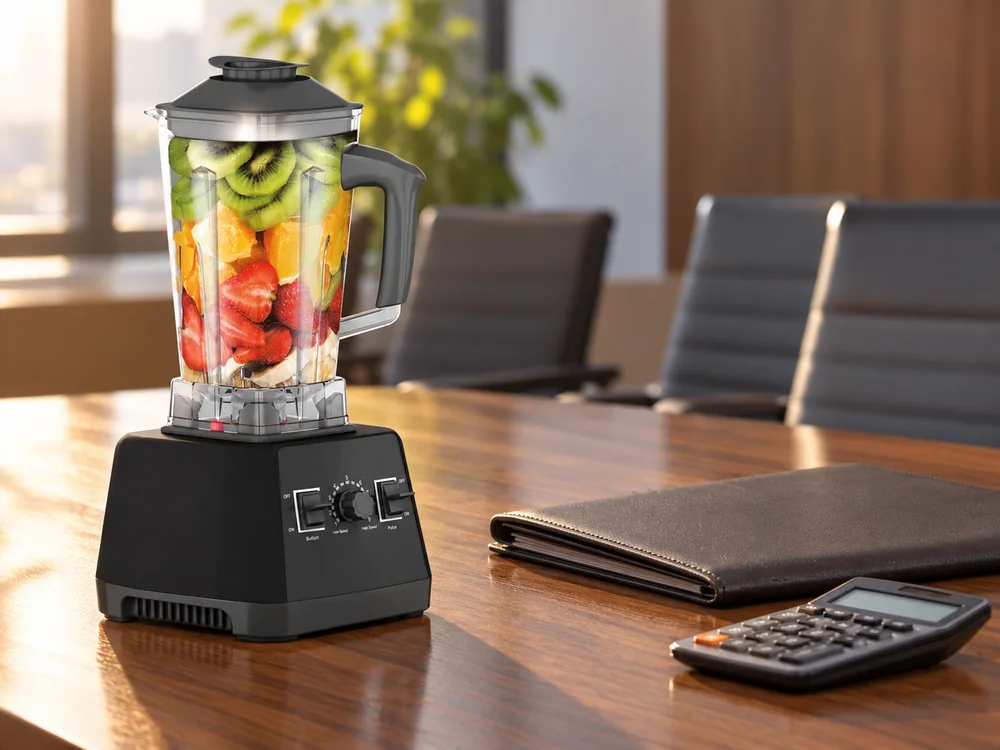
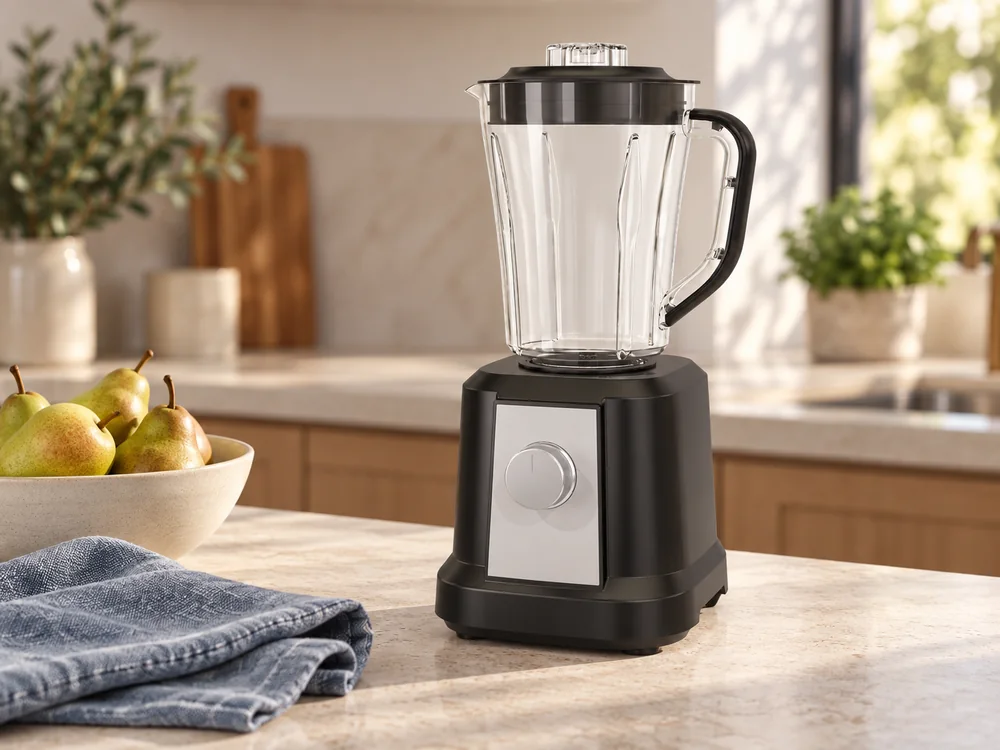
The JINJIE blender range is a starting point for this discussion. Its products should be considered as complete configurations, not a collection of parts that the buyer can exchange freely. The jar, lid, blade arrangement and base need to remain connected to the selected version.
In the quotation reference, BL1161 and BL1261 both have nominal 1.5 L AS jars and 600 W entries. The listed control descriptions differ: adjustable speed for BL1161 and intelligent control for BL1261. PBJ-01 is listed separately with a nominal 2 L PC jar and 1200 W. These entries identify different proposals; they do not prove comparative blending performance.
For importing purposes, that difference reaches beyond the specification table. A different control version may need different instructions and product-page photographs. A different complete jar platform may change the packing information. Ask for the details of the actual proposal before using one model's supporting files for another.
State the supported customer task in the buying brief. If a planned sales claim depends on ice processing, hot liquids or repeated operation, obtain the relevant model-specific answer before retaining it. Do not turn a large wattage entry into a claim about an application that has not been confirmed.
Identify the market and the sales channel along with the model. A retailer's receiving instructions or a distributor's language requirement can affect the deliverable. Give the supplier the relevant requirements early enough to answer them, while keeping unrelated channel paperwork out of the product specification.
Finish this stage with one description that purchasing, artwork and receiving can all use. Each team may need different detail, but they should be referring to the same blender. A concise shared description is more useful than several polished files that disagree about the jar or control panel.
Compare the complete offer for blenders from China
Request a price for the complete proposed retail unit, with its quantity and delivery basis. Ask which preparation tasks are included and which are separate. The buyer needs to understand the purchasing commitment before comparing it with another supplier's offer or setting an internal budget.
Keep confirmed supplier amounts distinct from estimates supplied by other parties. Transport, destination handling and any specialist review depend on their own scope and current quotations. This article does not provide a landed-cost calculator or assume charges for a particular destination.
Request packed measurements at the level the logistics discussion needs: the retail unit and the proposed shipping carton are not the same object. Keep the quantity per carton with the measurements. If a jar or included vessel changes, ask whether those figures remain applicable. A nominal 1.5 L or 2 L capacity describes the product container, not its shipping volume, and cannot replace the packing information used by a transport provider.
The following division helps an importer assign work without assuming that every item belongs to the factory. The actual allocation should be agreed for the order.
|
Work area |
Clarification for the proposed order |
Importer's planning consequence |
|---|---|---|
|
Supplied retail unit |
Appliance, jar assembly and included items |
Establish what one saleable unit contains |
|
Printed presentation |
Who supplies and approves each file |
Assign artwork and language decisions before they delay preparation |
|
Packing information |
Dimensions and quantities for the selected set |
Give logistics providers the basis for their own quotations |
|
Product evidence |
Files and questions relevant to the version and destination |
Arrange an appropriate review of unresolved requirements |
|
Delivery scope |
Agreed handover point and included transport work |
Identify the remaining logistics activities and responsible parties |
|
Sales preparation |
Accurate photographs, specifications and contents description |
Budget for the buyer's own listing and retailer setup |
Confirm the currency and unit basis of the quote. If pricing or packing information is stated per carton, identify the number of complete units represented. Retain the original quotation alongside your comparison so another team member can trace the calculation back to its source.
Ask whether a separate charge applies to the initial project or to later orders as well. Printed materials, development work and other agreed services may have different commercial arrangements. Do not spread an opening expense across an assumed lifetime quantity simply to make a proposal appear cheaper.
Compare revised quotations against the previous scope. A lower price that removes a vessel, changes the jar or excludes presentation work is a different offer. The importing decision may still favor it, but the reason should be visible rather than hidden inside the updated total.
Keep a short list of amounts that remain open. An unknown is not a zero, and an estimate is not a confirmed supplier commitment. The team can continue gathering information while making clear which purchasing decision still depends on it.
Run product, presentation and destination preparation together
Once a platform is selected, several tasks can move at the same time. The buyer can develop its retail description, gather destination requirements and ask for the proposed packing information. The work should share a product reference so that progress in one area does not quietly redefine another.
For branding, distinguish a current appliance with agreed presentation from a changed product. JINJIE's OEM and ODM options provide a basis for separating those routes. A new logo does not necessarily require a new control system, and a requested operating change should not be treated as artwork alone.
Have the person preparing the instructions work from the confirmed control description. Intelligent control is a quotation term, not a complete list of functions. Obtain the actual meanings of the controls and keep the product-page wording consistent with them. Avoid creating automatic programs from an image of a display.
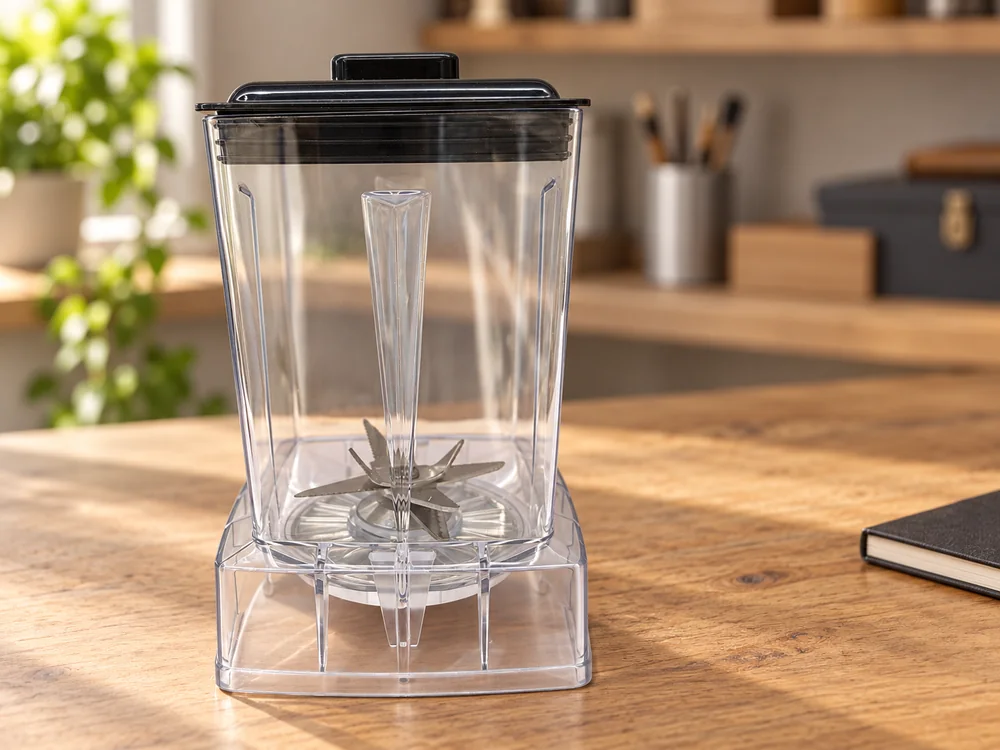
The same discipline applies to jar material. Use the material recorded for the selected proposal, and obtain evidence for any additional claim that matters to your channel. Do not substitute a familiar material name or infer a specific property from the appearance of a transparent container.
Ask for destination-related files using the actual model and electrical version. The compliance documentation process begins with that product context. Have the appropriate reviewer identify what applies and what remains unresolved; this guide does not certify a model for a market.
Plan photography around the final supplied offer. A hero image can create an attractive kitchen setting while preserving the real appliance. A contents view must not imply extra vessels or accessories that are absent from the order. If the photographed sample differs in finish, identify whether that difference matters to the intended use of the image.
Agree which file becomes the accepted presentation reference. A revised control label may require an instruction update, while a new retail color may require replacement photographs. Keep the relationship visible instead of treating all assets as independent tasks that can be approved in any order.
Give each open item an owner and an effect on the purchase. A question that affects only an optional box finish should not have the same status as an unanswered requirement central to the product. This allows useful preparation to continue without concealing a condition that must be resolved before commitment.
Match the first order to the way you will replenish it
Ask for quantity conditions on the selected blender and each proposed variation. If the opening order contains two controls or several printed versions, the total quantity alone may not describe the commitment. Request an answer for the actual split rather than assuming the models can be pooled.
Consider the inventory your team will have to identify. Two similar-looking blenders with different controls need distinct receiving and retail records. If both are ordered, explain which reference belongs to each version before goods enter the warehouse. The distinction should remain understandable without opening every retail box.
Include display or photography units in the plan where needed. They are not automatically part of the supplier's standard offer. Ask how they can be prepared and supplied, and keep them separate from quantities promised to retailers as saleable stock.
Discuss replenishment before describing the product as continuously available. Ask what a new order would require and how the supplier would communicate a proposed change. A successful first delivery does not establish standing stock or a fixed future lead time.
For the buyer, the practical question is whether the next purchasing cycle fits its channel. A business supplying regular store orders needs to understand preparation and decision points before it promises replenishment. The supplier's current response should inform that plan rather than a general expectation about sourcing from China.
If the range needs service jars or lids, raise the commercial request separately. Confirm identification, compatibility and any supply conditions for the selected version. Do not advertise replacement availability based only on the fact that a similar jar appears elsewhere in the catalog.
Keep service items outside the saleable-unit count. Receiving staff need to recognize whether a carton contains complete retail appliances or separately ordered parts. A clear distinction prevents stock records from overstating the number of blenders ready for sale.
Revisit optional variations if they create a commitment your business cannot support. A single well-defined version may be a workable opening purchase, with another option considered later. This is an inventory decision, not a claim that the alternative product is inferior or permanently unavailable.
Assess what a proposed change affects before accepting it
An import project often receives revisions after the first quotation. The useful response is to identify what changed and which work depends on it. A new description should not automatically replace the previous one across every file before the buyer understands the effect.
The table below applies that question to common blender proposal changes. It describes areas to review, not claims that these changes are available for every JINJIE model.
|
Proposed difference |
Related information to revisit |
Decision to keep explicit |
|---|---|---|
|
Another control version |
Functions, markings, instructions and photographs |
Whether it still fits the intended customer use |
|
Another complete jar assembly |
Model match, supplied contents, dimensions and packing |
Whether the revised complete appliance is acceptable |
|
A different finish |
Approved appearance and retail images |
Whether the current presentation still describes the product |
|
A changed electrical version |
Product description and relevant destination review |
Which market-specific proposal is actually being ordered |
|
Fewer included items |
Retail contents, price basis and product-page claims |
Whether the smaller offer still meets the buying brief |
|
A revised quantity split |
Commercial conditions and preparation schedule |
Whether the opening commitment remains workable |
Ask the supplier to explain the revised offer using the affected configuration. A message saying equivalent does not tell the importer which fields changed. The buyer can accept an alternative, but needs enough information to make that choice knowingly.
Do not transfer a sample conclusion to a changed part without considering its relevance. An appearance review may remain useful for an unchanged surface, while a jar-handling observation concerns the actual jar reviewed. Identify the question that the earlier sample answered and whether the new proposal leaves that answer applicable.
Keep any agreed revision connected to the order it affects. Earlier goods should retain their own records. Updating the current product page or internal reference does not change what was supplied in a previous shipment, which may still generate customer-service questions.
Where the effect is technical, use the responsible product specialist rather than deciding from appearance. Purchasing can describe the concern and its commercial importance. It should not invent a test or approve an unfamiliar assembly merely because the new component seems to fit in a photograph.
If the change is optional and adds work that conflicts with the launch, ask whether the confirmed current version remains available. If the change is necessary to meet the core need, retain it as a requirement and revise the plan accordingly. The reason for the product choice should survive the negotiation.

Prepare the handover to your receiving and sales teams
Before arranging the next logistics activity, clarify what the supplier means by ready. An appliance assembled without its accepted retail materials is at a different stage from a packed order ready for the agreed handover. Give the logistics provider the relevant status, not an informal estimate detached from its milestone.
Confirm who will supply the shipment information and how it will identify the order lines. The buyer's receiving team needs to recognize the expected models, versions and quantities. That information should agree with the latest accepted order, including any changes made before dispatch.
Ask receiving staff to record actual discrepancies precisely. A missing carton, a different control panel and a visibly damaged jar are different observations. Retain the relevant product and shipment references so the supplier and other responsible parties can investigate the specific issue.
Keep the retail launch dependent on the information your business actually has. The sales team may prepare a page in advance, but the final listing should match the supplied appliance and confirmed scope. A supplier's dispatch estimate is not, by itself, a promise that the buyer can fulfill retail orders on that date.
Create a usable handover note rather than forwarding the entire sourcing conversation. Include the accepted product reference, contents, relevant images and unresolved receiving questions. This gives colleagues the information needed to act without asking them to interpret every earlier proposal.
After the opening shipment, collect feedback under the supplied version. Distinguish a product issue from a request for a different future offer. If customers want another control format or jar size, that may support a new purchasing proposal; it does not establish that the earlier appliance failed its agreed purpose.
Ask for the complete blender proposal
Contact JINJIE about your blender import requirements with the preferred model, intended household use, destination and quantity split. Include the retail contents and any branding work you expect in the quotation.
Ask the supplier to identify what it can confirm now and which specific decisions remain. Your import team can then assign the remaining work, compare the actual commitment and choose the next step without turning a preliminary product selection into an assumed finished order.
FAQ
Can I use one instruction manual for two similar blender models?
Only after the relevant content has been checked against both proposed versions. Similar appearance or equal power does not establish identical controls and operating guidance. Identify the models covered and resolve any differences with the responsible product and language reviewers before treating one file as shared.
What if the supplier can provide the appliance before the branded box?
Clarify the state of the complete order and the effect on the agreed handover. Do not assume an unpacked appliance is ready for your retail channel. Ask whether a supported alternative arrangement exists, with its cost and responsibilities stated, or adjust the plan around the confirmed packing readiness.
Should replacement jars be included in the first shipment?
That depends on the service arrangement your business intends to offer and the supplier's confirmed proposal. Ask about compatible parts, quantities and packing separately. If you order them, identify them as service items rather than complete retail blenders, and avoid promising future availability that has not been agreed.
Can I keep the same retail SKU when the control panel changes?
Review whether that SKU still describes the product accurately under your own product-management rules. The customer-facing functions, images and instructions may need updates. Keep the old and new supplied versions traceable even if the retail naming decision permits a shared commercial name.