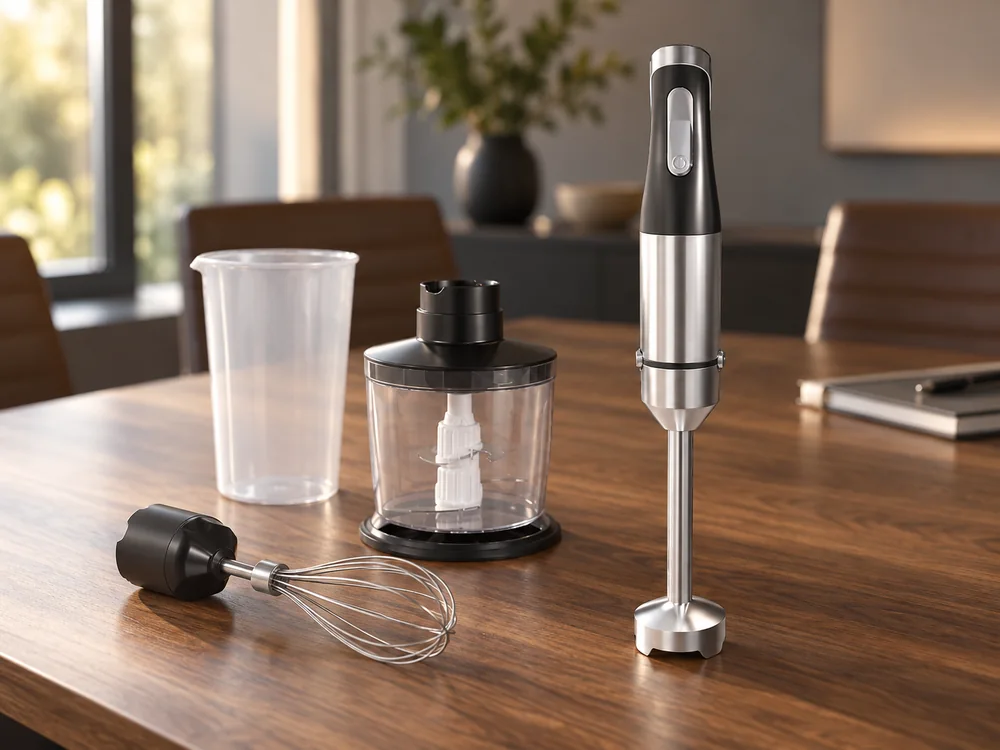
An immersion blender manufacturer needs to offer more than an attractive handheld unit. For a private-label order, the buyer needs a complete appliance proposal, clear responsibility for the supplied attachments and an explanation of how the agreed product will be prepared and supported. A recognizable housing does not answer those questions.
The purchasing decision is whether the manufacturer's proposed product and working arrangement fit your project. That includes the household use, required set, degree of customization and order conditions. A manufacturer can be suitable for a current branded configuration without being confirmed for a new attachment or a different operating design.
This article concerns household immersion blenders and their identified accessory sets. It does not evaluate long-shaft foodservice equipment, rank consumer brands or assume continuous professional operation. It helps importers and private-label buyers compare manufacturing proposals after the initial product inquiry has established a plausible match.
Define your project before choosing an immersion blender manufacturer
Start with the intended consumer task and the complete product you want made. State whether the project needs a blending unit alone or a retail set with additional supported attachments. Give the destination market, expected quantity and any required presentation. The manufacturer needs those details to explain the relevant work.
Use the JINJIE immersion blender range to identify a current starting point. Keep the motor unit, blending attachment and optional assemblies together in the proposal. Do not assume that a family photograph defines one universal configuration available in every electrical version.
The quotation provides a concrete example. HB-02 is listed at 300 W, while HB-01 is listed at 400 W with a 0.8 L capacity field and a four-in-one description. Both rows also carry the secondary reference HB1141. The primary model and complete configuration are therefore more useful than the shared secondary code alone.
Those entries do not establish that the motor units or accessories can be exchanged. Ask for the actual proposed combination. The capacity field belongs to an identified container, not the handheld motor, and the four-in-one wording needs a physical contents description before it becomes an order.
Tell the manufacturer which requirements are fixed. A destination version or a necessary attachment may define the project. A particular decorative finish may be optional. This allows a current workable proposal to remain visible without treating every preference as a mandatory development request.
Keep the intended use within the product's confirmed scope. If a sales concept depends on a particular ingredient, temperature or operating pattern, request a relevant answer for the chosen version. A power entry or stainless-steel exterior does not settle that application.
Ask the manufacturer to identify the route it proposes: an existing configuration, that configuration with specified presentation changes, or further product work. You can then compare the proposal with the actual project instead of treating all factory inquiries as the same kind of purchase.
Identify who is responsible for the complete appliance
A handheld product can involve a motor assembly, controls, shaft, connection and several accessory assemblies. The purchasing question is how those inputs become one defined appliance or set. It is not whether the factory claims to make every component itself.
Ask which relevant operations the manufacturer performs and how externally supplied inputs are specified and accepted. A bought-in part can still be part of a controlled manufacturing proposal. Conversely, an in-house operation does not remove the need to explain how its output matches the rest of the product.
For an accessory set, establish who answers questions about the complete connection. A whisk may depend on an adapter, while a chopping assembly includes more than its visible container. The manufacturer should be able to identify the proposed combination and the person responsible for a technical difference.
|
Manufacturing interface |
Question for the proposed version |
What the answer should establish |
|---|---|---|
|
Motor unit and controls |
Who defines and checks the selected operating version? |
A responsible source for the complete handheld unit |
|
Blending attachment |
How is the matching shaft and connection identified? |
The attachment belongs to the proposed appliance |
|
Whisk assembly |
Does the proposal include its required adapter? |
A complete usable assembly rather than a loose visible tool |
|
Chopping accessory |
Who specifies the container, lid and drive relationship? |
Responsibility for the whole proposed accessory |
|
External inputs |
Who accepts incoming parts against the agreed version? |
Outsourcing does not leave an unowned interface |
|
Retail set |
How are the accepted assemblies connected to packing information? |
Manufacturing and the supplied customer offer remain aligned |
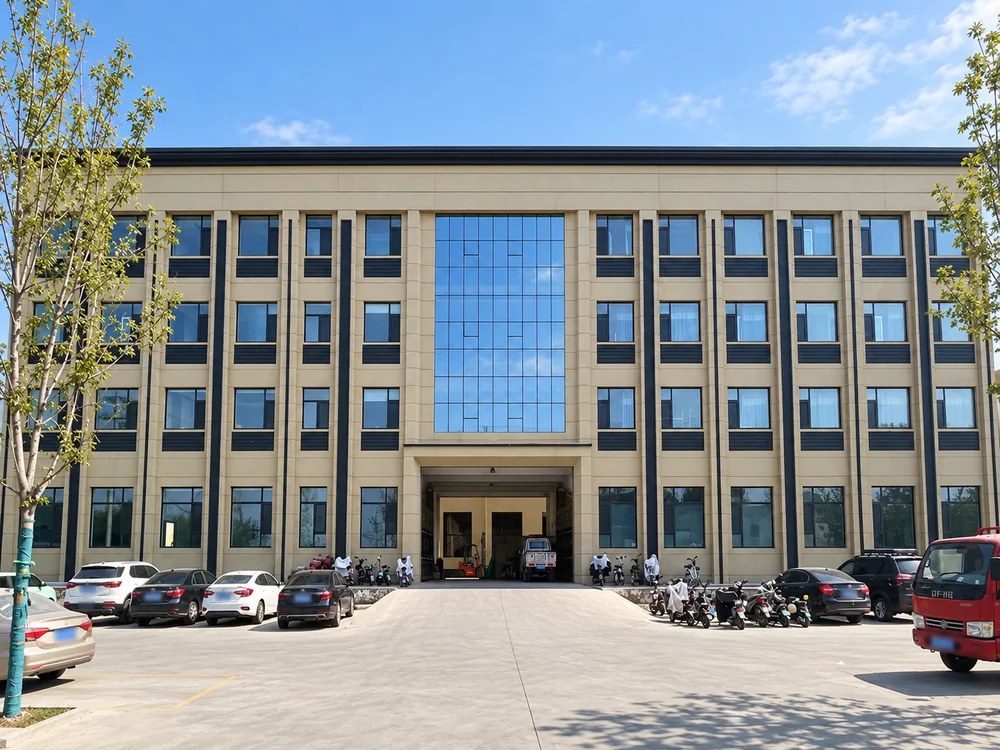
Use JINJIE's manufacturing information to discuss component preparation, assembly, checks and packing for the selected product. Ask which stages apply to the proposal. A general workflow is context; the useful reply connects it to the appliance under consideration.
Do not demand another customer's records to answer this question. A relevant explanation, appropriately identified reference or agreed review can clarify the work without disclosing unrelated commercial information. Keep the request tied to your own product and decision.
Where different businesses have roles in manufacturing or supply, have those roles explained. The buyer needs a clear contact for the order and for technical questions. It should not have to discover during a discrepancy that nobody in the sales conversation can authorize a product response.
An unresolved interface should remain visible in the proposal. The manufacturer may need to confirm a particular attachment or provide a current reference. That is different from a complete proposal that simply lacks a photograph of every production step.
Also distinguish the party assembling a product from the party handling your purchase. If the quotation, manufacturing explanation and project correspondence identify different entities, request a clear account of their roles. The buyer should know who returns technical decisions and who issues the commercial response. This is about making the proposed relationship usable; a difference in names is not by itself evidence of a problem.
Compare an existing platform with additional development
Private label can mean putting an agreed identity on an existing product, but it can also involve changes that need further technical work. Clarify which meaning applies before comparing prices or readiness. Two outwardly similar proposals may contain very different amounts of unfinished work.
JINJIE's OEM and ODM routes distinguish current-product branding from design changes and new development. Start with the closest suitable platform and describe the requested departure. The response should identify what changes, what remains unchanged and what still requires evaluation.
If the need is a visible retail identity, compare available branding and presentation first. A different logo position or printed box does not automatically justify a new housing. If the customer need depends on a new function, however, an appearance change alone will not answer it.
An attachment request deserves a whole-product response. Another whisk or chopping lid may look simple in isolation, but the buyer needs to know its relationship to the selected motor unit and intended operation. Do not treat an attractive accessory photograph as confirmation that development is complete.
Ask which sample would answer the remaining development question. A sample in a new color may be useful for appearance, but not for an unresolved connection. A current standard unit can help with handling while leaving a proposed structural change unapproved. The evaluation should match the decision rather than the order in which samples happen to arrive.
Separate development charges from the commercial price of the final retail unit. Obtain the proposed work, expected outputs and relevant conditions before authorizing it. This article does not assume a fixed fee, ownership arrangement or development timetable for JINJIE products.
Consider the buyer's capacity to make decisions during the work. Someone must return consolidated feedback on the product, artwork and intended market. If several departments issue conflicting changes, the manufacturer cannot work from a stable target. Give the project a responsible buyer contact and an accepted reference.
The choice is whether extra work contributes enough to the customer offer to justify its actual commitment. A current platform may fit the present launch, with a more ambitious version considered separately. Keep an essential new function in the requirement if the existing product cannot meet the core need.
Ask for manufacturing evidence that answers a real uncertainty
Look at the uncertainty in the proposal before requesting evidence. If the concern is attachment completeness, ask about the relevant assembly and packing reference. If it is the operating version, seek the applicable product information and review. More factory photographs do not necessarily answer either question.
A real assembly image can show an activity taking place. It does not establish the capacity available for your order, the origin of every part or the performance of the finished product. Use it as context for a specific manufacturing discussion, rather than treating the image as a broad guarantee.
The quality and testing information provides a starting point for identifying checks at relevant stages. Ask how the proposed configuration is recognized during those checks and what happens if a difference is found. The answer should explain a response, not merely name equipment.
Keep product performance questions attached to the appropriate conditions. A short demonstration can inform the task it actually shows, but does not establish every intended use. Where technical assessment is needed, involve the responsible product specialist and follow the model's permitted operation.
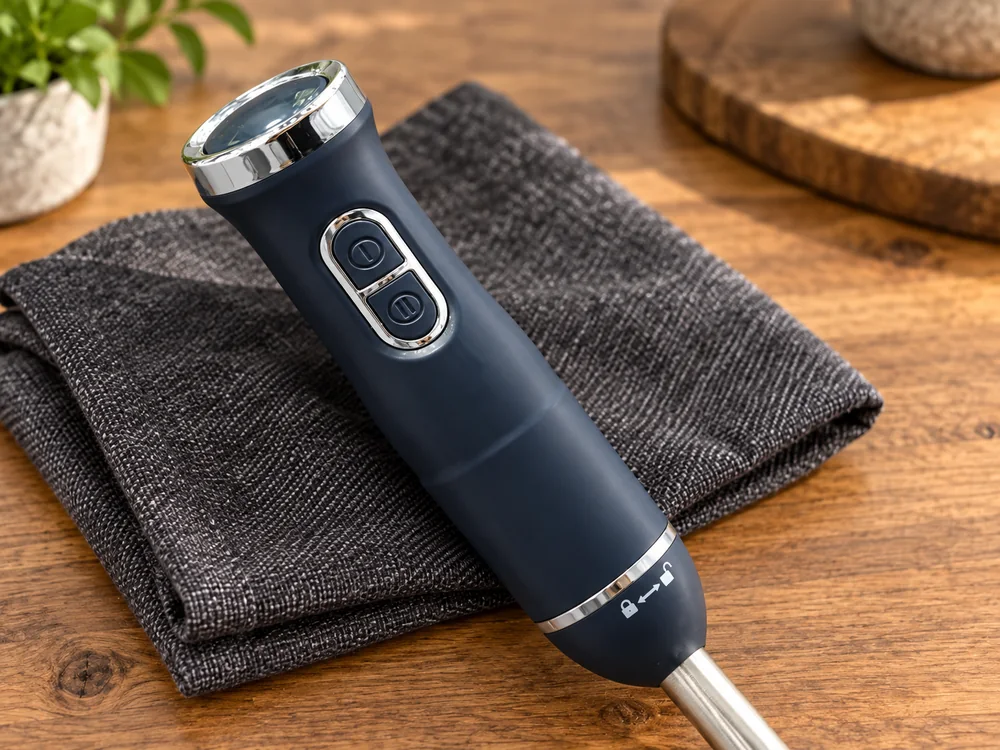
For a private-label order, the consistency of the physical set and printed presentation also matters. The instructions should describe the supplied controls and assemblies. A correct motor unit with the wrong attachment illustration can still leave the customer uncertain about what was purchased.
Ask how the manufacturer distinguishes correcting a production difference from changing the agreed product. Restoring the accepted configuration is one response. Proposing another component or assembly may create a new buyer decision. Both should be communicated clearly, with the affected product identified.
Do not turn every minor preference into a manufacturing failure. An acceptable cosmetic alternative and a missing essential function have different consequences. Compare the actual discrepancy with the agreed requirement, then decide whether clarification, correction or another proposal is needed.
The evidence should make the choice easier. Once the important question is answered, use the result rather than requesting another general company introduction. Where a required answer remains missing, identify it precisely so the next response has a clear purpose.
Compare the commercial arrangement for the proposed product
Manufacturing suitability needs a workable purchasing arrangement. Ask for the complete set price, applicable quantities, preparation conditions and quoted delivery scope. Keep optional changes separate so the buyer can see the commitment attached to the current proposal.
Quantity conditions should describe the real order mix. A motor platform offered with different attachments, finishes or electrical versions may create distinct preparation requirements. Ask how the proposed minimums apply rather than assuming the total can be divided freely among every version in the catalog.
Read readiness in terms of the remaining work. A current product with settled artwork differs from a proposal awaiting a new assembly or destination-related review. A factory's size does not convert those dependencies into a reliable date for your specific order.
|
Proposal condition |
Buyer question |
Effect on the manufacturing choice |
|---|---|---|
|
Current product meets the brief |
What presentation and order preparation remains? |
Compare the complete current offer without adding unnecessary development |
|
A required attachment is unresolved |
What work is needed to confirm the complete combination? |
Keep the essential product decision open |
|
Many small variations are requested |
What quantity and preparation conditions apply to each? |
Reconsider the split if it exceeds the channel's commitment |
|
An optional change delays readiness |
Does the current version still meet the core need? |
Consider deferring the preference while preserving the product purpose |
|
Replacement support matters |
Which identified items can be supplied, on what terms? |
Choose an arrangement the buyer can support after sale |
|
A later order may use a revision |
How will differences be identified before commitment? |
Preserve continuity without assuming permanent unchanged availability |
Discuss after-sales handling as an agreement, not an automatic benefit of buying from a manufacturer. Ask how reported discrepancies will be raised and which records help identify the affected product. The actual remedy and commercial conditions need to be settled between the parties.
For replacement items, confirm both compatibility and supply terms. The manufacturer may identify a part accurately without offering it as a separately stocked item. A similar-looking adapter from another set is not a substitute for that confirmation.
Keep the retail promise within the agreed support arrangement. If your business wants to offer replacement shafts or containers, establish the relevant proposal before advertising the service. Avoid turning an initial discussion into an indefinite availability commitment.
Ask what a repeat order will need. Retain the accepted version and require proposed differences to be identified before the next commitment. That gives the buyer a practical way to assess a successor or revision without assuming that the name alone guarantees the same product.
If a retailer requests its own exclusive appearance, define what exclusivity would mean before including it in the proposal. A particular color, a printed identity and exclusive access to an entire platform are different requests. State the channel and scope you want discussed, then obtain the manufacturer's actual response. Do not assume that funding a small presentation change prevents the underlying model from being offered elsewhere.
Choose the manufacturing proposal, not the broadest claim
Bring the comparison back to the product and project you described. A suitable proposal identifies the complete appliance, the relevant manufacturing responsibility and the commercial conditions under which it can proceed. Optional breadth elsewhere in the catalog should not distract from an unanswered essential question.
If two manufacturers remain suitable, compare the work your team would still need to coordinate with each. One may offer a current complete set, while another may depend on a requested change. The choice can reflect the launch and available resources without inventing a performance advantage unsupported by the evidence.
Record the reason for the selection and the accepted trade-off. For example, retaining an existing finish may preserve timing without changing the intended function. That is a different decision from accepting an unresolved attachment merely because other parts of the proposal are attractive.
Leave conditions visible when proceeding to the next stage. A product can be selected for a defined follow-up without being treated as ready for every market or order. The buying record should state what has been accepted and which commitment still depends on another answer.
Once the proposal is sufficiently defined, give the manufacturer one consolidated response. Identify the selected version, the next requested action and any remaining specific question. This is more useful than continuing separate discussions that each describe a slightly different appliance.
Discuss your private-label hand blender project
Send JINJIE the preferred product reference, intended household task, destination market and proposed retail contents through its project inquiry page. Explain whether you want branding on a current model or a particular product change, and include the quantity you are considering.
Ask for a complete manufacturing proposal with unresolved items identified. Your team can then judge the actual product, preparation and support arrangement, instead of selecting a partner from appearance or a broad capability statement alone.
FAQ
Must a manufacturer make every attachment in-house?
No such assumption is needed to evaluate the proposal. Ask who specifies, accepts and coordinates the attachments for the selected product. If in-house manufacture of a particular component is essential to your project, state that requirement and verify the relevant activity rather than inferring it from the company description.
Can the manufacturer use a current motor unit for a new accessory idea?
That needs a product-specific response. Describe the intended task and proposed accessory, then ask what technical work is required. Do not assume compatibility from a shared appearance or reference code. Keep the new combination outside the confirmed order until the relevant questions are resolved.
What if one factory offers more customization but a less complete current proposal?
Compare the work and commitment still required to meet your core need. More possible options do not necessarily help the present launch. A complete current configuration may be the stronger choice, while a development route can remain a separate proposal if its additional value justifies the work.
Does a successful first order settle the terms of later orders?
No. Retain the first accepted configuration as a reference and request a current proposal for the next quantity. Confirm availability, commercial terms and any product differences. Use the earlier experience to ask better questions, not as proof that every future version or arrangement is unchanged.