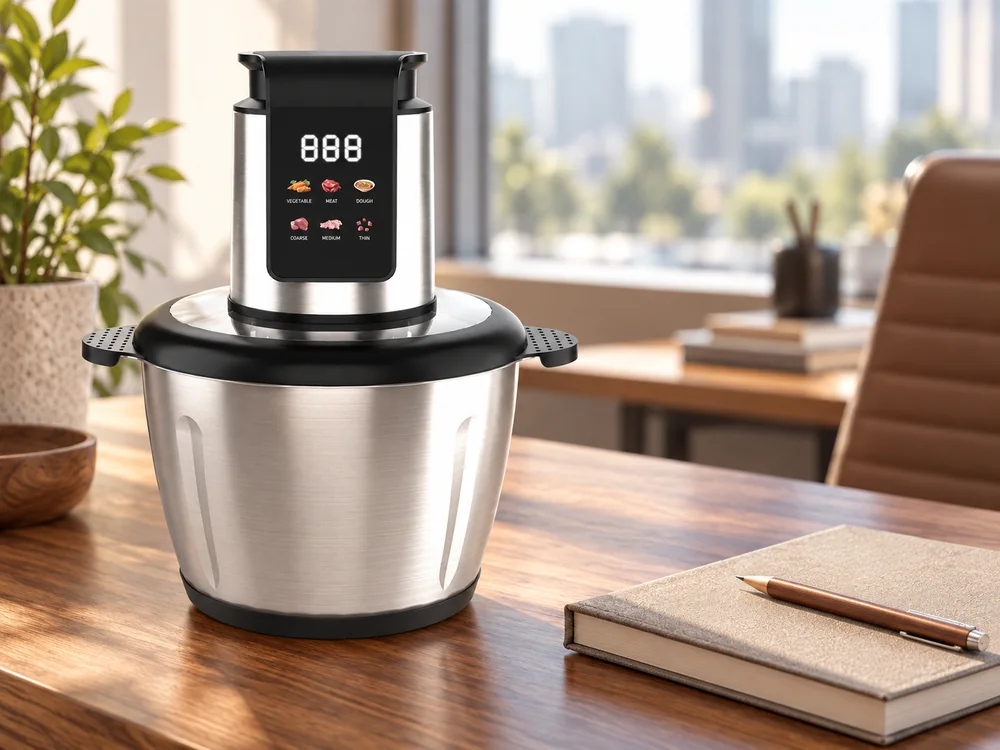
Buying electric meat choppers from China involves more than selecting a bowl size and receiving a unit price. The importer needs an offer that connects the chosen appliance to the supplied retail set, order quantities, delivery boundary and work still required before the product can enter its intended sales channel.
A low quoted price can describe a narrower offer. Another quotation may include different packing or a different handover point. Neither is directly comparable until the buyer understands what the price covers and which remaining tasks belong to its own team.
This guide concerns household electric bowl choppers with a motor unit above the container. It does not cover screw-fed grinders or industrial meat-processing equipment. Its purpose is to help importers turn a suitable product proposal into a practical cross-border purchase, without assuming a particular order minimum, shipping arrangement or destination approval.
Define the complete product you want to import
Begin with the appliance format and the intended retail customer. A household bowl chopper should be evaluated against the consumer preparation tasks it is intended to perform. Describing it as a commercial meat machine changes the implied requirement and can lead the sourcing discussion toward unsuitable products.
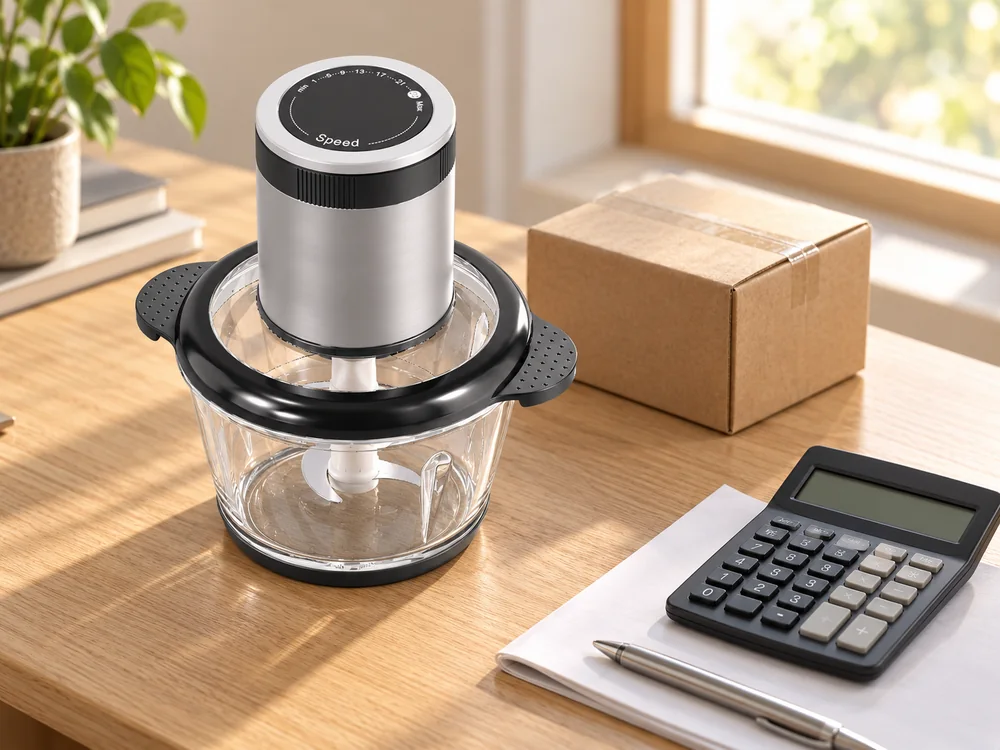
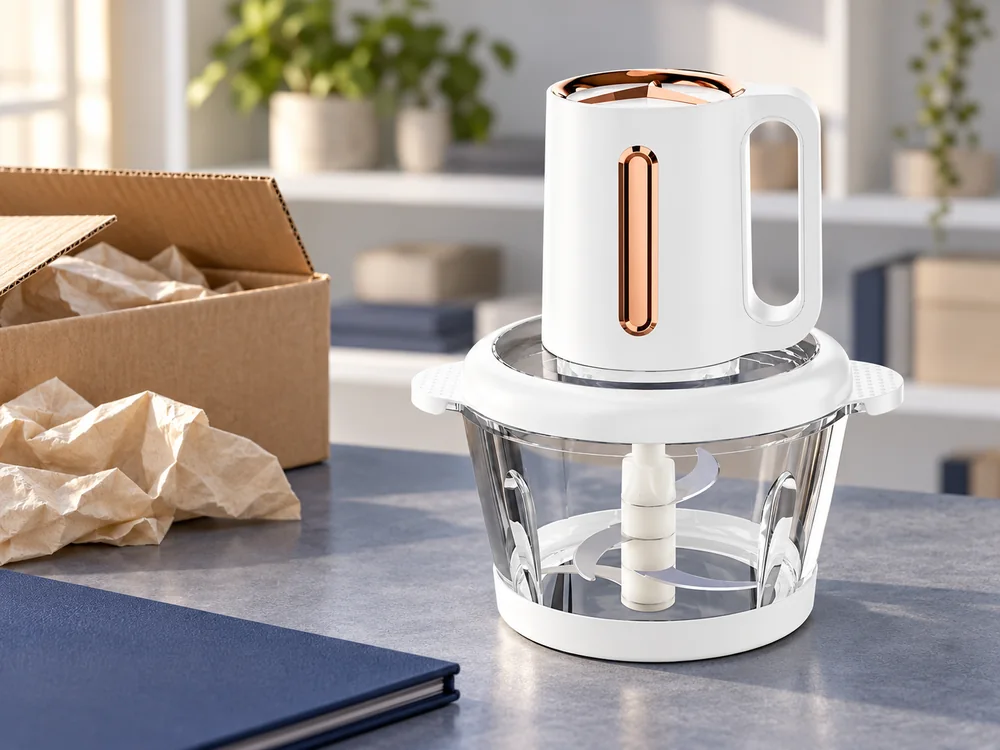
Use the JINJIE electric meat chopper range to identify a starting configuration. State the preferred bowl material, nominal capacity, controls and supplied parts. Keep the operating scope separate from those specification fields. A capacity entry does not establish the permitted load for every ingredient, and listed wattage is not a throughput promise.
For example, the quotation lists SD-01 with a 3 L stainless-steel bowl and 500 W, while SD-02 is listed with a 2 L stainless-steel bowl and 400 W. These are different proposed appliances. A price comparison should not quietly exchange one for the other while retaining the same retail description.
Give each selected configuration a separate order line. Include the destination-market version and the retail set expected in the box. An attractive photograph may show the product clearly without establishing every supplied item. Ask the supplier to connect the commercial offer to a written contents description.
Decide which attributes are essential and which are preferences. A required electrical version needs a clear answer. An optional finish may be negotiable if a current alternative meets the retail need. This distinction lets the supplier propose a workable scope without making every unanswered detail equally important.
Name the sales destination and channel early. A distributor supplying stores may need different presentation information from a brand preparing its own product page. Explain the practical requirement rather than sending an unexplained collection of artwork files and asking the supplier to interpret the intended offer.
The result should be a short definition of the imported item: one identified appliance, one supplied set and a clear destination. Detailed model-code mapping can remain in the supporting product record. The purchase discussion can then concentrate on the offer rather than repeatedly rediscovering which machine the buyer meant.
Compare offers for electric meat choppers from China
Ask what is included in the price and where the supplier's quoted delivery commitment ends. Keep that answer beside the model, quantity and quotation date. A number without a defined boundary is insufficient for comparing the proposed purchases.
Separate the appliance price from other quoted work. Branding, printed materials, additional packing or a requested change may affect the proposal. Some costs may be included, some separately quoted and some not yet determined. Do not convert an unanswered line into an assumed zero.
Use a common comparison basis for all suppliers. If one offer ends at a different handover point, ask the relevant service provider to identify the remaining transport work before comparing totals. Keep estimated items visibly separate from confirmed quotations and avoid presenting the result internally as a final landed cost before the inputs are settled.
|
Part of the offer |
What the buyer needs to identify |
Why it affects comparison |
|---|---|---|
|
Complete appliance |
Exact configuration and included parts |
Similar appearance can conceal a different supplied product |
|
Retail presentation |
Box, instructions, labels and agreed branding |
A bare product price may leave presentation work outside the offer |
|
Order split |
Quantity for each configuration and version |
A total quantity alone does not describe the proposed mix |
|
Delivery boundary |
Agreed handover point and included transport work |
Remaining logistics costs may sit with a different party |
|
Separate preparation |
Any quoted artwork, development or other agreed work |
An opening order may contain costs that do not describe the unit alone |
|
Open amounts |
Items still awaiting a supplier or service quotation |
Unresolved costs should not disappear inside a provisional total |
Review quantity conditions against the actual mix you intend to buy. A quoted condition for one model does not necessarily apply to several colors, electrical versions or retail packs combined. Ask for a response to the split rather than dividing a headline quantity yourself.
Keep the commercial validity period and payment proposal with the offer. If your approval process takes time, confirm whether the proposal remains current before releasing an order. A quotation received earlier is a reference, not an assurance that every commercial condition remains unchanged.
Check the currency and the unit used on each price line. A price per appliance, per retail set or per carton describes a different comparison base. If the offer contains a carton quantity, confirm the number of complete retail units represented before calculating an order total. Your internal worksheet should retain the supplier's quoted basis alongside any conversion used for comparison.
When a revised offer is cheaper, identify the reason. It may reflect a changed quantity, a different delivery scope or a product change. Those alternatives have different implications for the retail plan. Record the difference before treating the revision as a simple saving.
The useful outcome is a comparable purchasing proposal, not merely the lowest appliance price. Your team should be able to see what arrives, what remains to be arranged and which amounts still require confirmation. That clarity also makes the next supplier response shorter and more specific.
Organize destination requirements before committing to presentation
Put one person on the buying side in charge of collecting the destination requirements. That person can coordinate with the supplier, the intended sales channel and appropriate technical or import specialists. Without an owner, a translated manual, a label request and a retailer's specification may arrive as unrelated instructions.
Describe the destination and selected configuration when requesting documents. A file associated with another version may not answer the question about the proposed appliance. JINJIE's compliance documentation information provides a starting point for discussing the product and market together.
Ask the responsible specialist which evidence applies to the actual proposal. This article does not establish a universal document list or destination approval. Avoid accepting a familiar logo, report title or sample shipment as a substitute for a review of the product that will be ordered.
Coordinate the electrical description, operating instructions and retail claims. If the selected version changes, ask which related documents or presentation items need to be reviewed. Do not let the marketing team continue using an earlier description while purchasing discusses a different appliance.
For private-label work, use JINJIE's OEM and ODM process to distinguish branding on an existing product from a requested design change. A new printed appearance and a changed functional part are different proposals. Their preparation should not be combined under an undefined request for customization.
Agree who supplies translations and who checks their suitability for the intended use. The buyer's own retail language should remain consistent with the confirmed product scope. A translation is not an opportunity to add performance promises that were absent from the original specification.
Resolve essential questions before approving dependent artwork. Other tasks may continue if they are genuinely independent. For example, the team can discuss layout while a particular wording remains open, but should identify the file as unfinished rather than allow it to become the production reference through repeated circulation.
Keep the final response usable for the people handling the order. They need to know the accepted version and any remaining conditions. A large folder of undifferentiated documents can obscure that answer just as easily as having too little information.

Balance the order mix with the import plan
An opening range does not need every available bowl size and finish. Select the configurations that answer a defined customer need, then ask for commercial conditions for that mix. More variations can create more separate purchasing decisions even when the total number of appliances is unchanged.
Consider the complete retail pack when planning the shipment. Ask for packing information for the selected product and presentation, rather than using dimensions from an unrelated model. The logistics provider needs the proposed shipment information to assess its own work; the product photograph alone cannot supply it.
Treat mixed-model shipping as a question to resolve, not an assumed service. Ask whether the proposed goods can be prepared together and what would happen if one line has a different readiness date. The answer may influence whether the buyer prefers a combined shipment or a specifically agreed split.
Compare that choice with the sales plan. Holding ready goods for another variant may delay the whole launch. Separating shipments may introduce additional work or costs that need quotations. Neither approach is automatically better; the decision depends on the importance of each line and the actual offers available.
Avoid using an unconfirmed future reorder to justify an oversized first commitment. Begin with the quantity and range your channel can support. Discuss replenishment separately so the buyer understands what information will be needed when the next order is considered.
Keep the supplier's product reference connected to your own retail SKU. This allows the warehouse and sales team to recognize what they are receiving without replacing the manufacturer's identification. Where several versions look similar, the receiving information needs to preserve their distinction.
Ask how the order will be identified in the packing information. The description should let your receiving team reconcile the shipment with its expected lines. Do not rely on a general description such as kitchen appliances when the purchasing decision depends on distinct configurations.
Before finalizing the mix, revisit any optional variation that creates disproportionate preparation. Remove it only if the customer offer remains intact. A simpler order can be useful, but simplification should not discard the very feature that made the product suitable for the channel.
Connect production readiness to shipping and receiving
A production date is not the same as a date on which your warehouse can begin selling the goods. Build the plan around the stated milestones and ask each party which stage its proposed date describes. This avoids presenting an assembly estimate to the sales team as an arrival commitment.
Start with the supplier's preparation conditions. The schedule may depend on the selected model, quantity, components and packing decisions. Ask which buyer approvals are still needed and how a late response would affect the proposal. Do not assume a delivery estimate absorbs unresolved artwork or product changes.
|
Milestone |
Question to close |
Buyer-side coordination |
|---|---|---|
|
Product and presentation settled |
Which accepted version can proceed? |
Align purchasing, artwork and the intended retail description |
|
Goods being prepared |
Are any agreed inputs still outstanding? |
Return required decisions through the named contact |
|
Ready for the agreed handover |
What remains before collection or dispatch? |
Coordinate the relevant logistics provider against that stage |
|
Shipment information available |
Does it match the expected order lines? |
Give receiving staff the configuration and quantity references |
|
Goods received |
What differs from the expected shipment? |
Record the affected items and contact the responsible party |
Agree how readiness information will be communicated. A general message that production is nearly finished may not be enough for arranging the next activity. Ask for the specific status needed by the party responsible for collection or the subsequent transport stage.
Give the supplier one current buyer contact for decisions that affect dispatch, with a backup for an absence. Consolidate questions from purchasing, artwork and logistics before returning instructions. Conflicting messages can leave the supplier unsure which instruction governs the order. When a decision is made, circulate the same accepted response to the teams that depend on it rather than forwarding fragments of separate conversations.
Keep shipment descriptions aligned with the commercial order. If a quantity or configuration changes before dispatch, update the affected records through an agreed revision. The receiving team should not have to choose between a current packing description and an obsolete internal purchase summary.
Plan receiving before the goods arrive. Identify who will compare the delivered lines with the order and how visible differences will be recorded. This is a practical handover task, not a substitute for an appropriate product inspection or destination review.
If there is a discrepancy, describe what is observed and which items are affected. Retain the relevant shipment and product references. A specific record helps distinguish a quantity issue, a different configuration and transport damage without deciding responsibility from a single photograph.
Leave time for your own downstream work in the launch plan. Product-page preparation, warehouse setup and retailer coordination belong to the buyer's process. Their dates should follow the confirmed information available rather than an optimistic interpretation of the supplier's earliest estimate.
Decide on the complete import proposal
Bring the proposal back to the original retail need. The selected product should still have a clear customer role, and the commercial terms should describe the same configuration. If the most recent negotiation changed the set or presentation, reassess the offer rather than relying on the reasons for an earlier choice.
Separate confirmed commitments from assumptions in the internal approval. A decision-maker should be able to identify the product, quantity, quoted delivery scope and outstanding work. This is especially important when several people have gathered different parts of the proposal.
An unresolved optional finish may allow a decision on a current alternative. An unanswered requirement central to the product's intended destination needs a different response. Define the affected decision and obtain the relevant answer instead of treating every open item as either harmless or a reason to abandon sourcing.
Choose a next step proportionate to what remains. It might be a targeted sample request, a revised complete quotation or confirmation of the proposed shipment arrangement. Avoid paying for an undefined sample merely because the commercial conversation has reached a pause.
After the first order, use receiving and sales feedback to improve the next inquiry. Keep observations tied to the supplied version. If the buyer wants a changed retail set or presentation, describe it as a new request rather than assume it is included in a repeat of the earlier purchase.
Request a quotation that your import team can use
Send JINJIE your electric chopper sourcing requirements, including the selected configuration, destination, quantity split and expected retail set. State the delivery scope you want quoted and identify any presentation work still under discussion.
Ask for open commercial or product questions to be returned explicitly. A useful response lets your team compare the complete offer, organize the remaining specialist input and choose the next purchasing action without filling gaps with assumptions.
FAQ
What should I do if the quotation changes after the sample is sent?
Ask which fields changed and whether the sample still represents the proposed product. A commercial revision and a configuration change need different decisions. Keep the sample reference linked to the version it actually represents, then resolve any affected buying question before relying on it.
Can I combine different chopper models in one shipment?
Ask for confirmation against the actual quantities, versions and readiness dates. Do not assume a mixed shipment is available because the products share a category. Compare the confirmed combined arrangement with any separately quoted alternative and the needs of your receiving team.
Does the sample shipping arrangement establish the bulk delivery terms?
No. A sample and a commercial order may have different shipping arrangements. Request the delivery scope for the bulk proposal separately. Keep sample charges and transport details with that sample record instead of using them as a substitute for the order quotation.
Can retail artwork be changed after goods have been dispatched?
Do not assume the shipped product can reflect a later file. Identify which version was packed and discuss the proposed change with the responsible parties. Keep the current shipment's record intact, and agree how any accepted revision applies to future goods or other specifically reviewed work.