Compare blender manufacturers by the product they can supply for your intended use and the evidence they provide for that product. A longer feature list is not a substitute for a suitable jar, understandable controls and a repeatable supply arrangement.
For importers and private-label brands, the selection involves two connected decisions: which product belongs in the range, and which manufacturer can support the agreed version through sampling, production and later orders. Evaluate those decisions together. A promising sample is less useful if its configuration cannot be identified in the quotation or reproduced in the production order.
This article concerns countertop kitchen blenders and relevant multi-container kitchen sets. It does not treat a household appliance as suitable for continuous café service without model-specific evidence. The aim is a defensible shortlist, not a ranking of manufacturers or an unsupported claim that one brand is best.
Define the use before comparing catalogs
Describe the main ingredients, typical batch, desired consistency and expected operating pattern. These details give manufacturers a common problem to answer. “High performance” or “premium blender” can mean very different products to different suppliers, which makes the resulting quotations difficult to compare.
Separate essential tasks from optional applications. If the main retail proposition is preparing household drinks, an additional processing bowl should earn its place through a relevant customer need. An accessory that looks generous in a catalog can also add instructions, storage requirements and packaging volume.
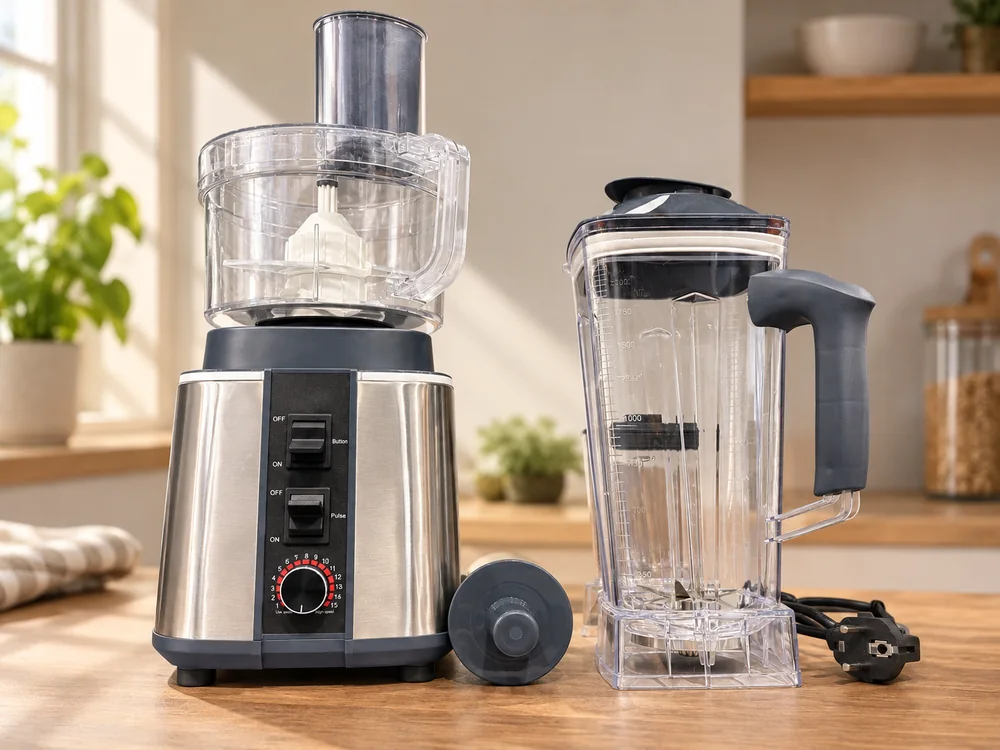
JINJIE's blender range is organized around models with different jar formats, controls and supplied components. Start with the configurations closest to your use brief. Ask the manufacturer to explain why it proposes a particular combination, rather than simply requesting its highest advertised power figure.
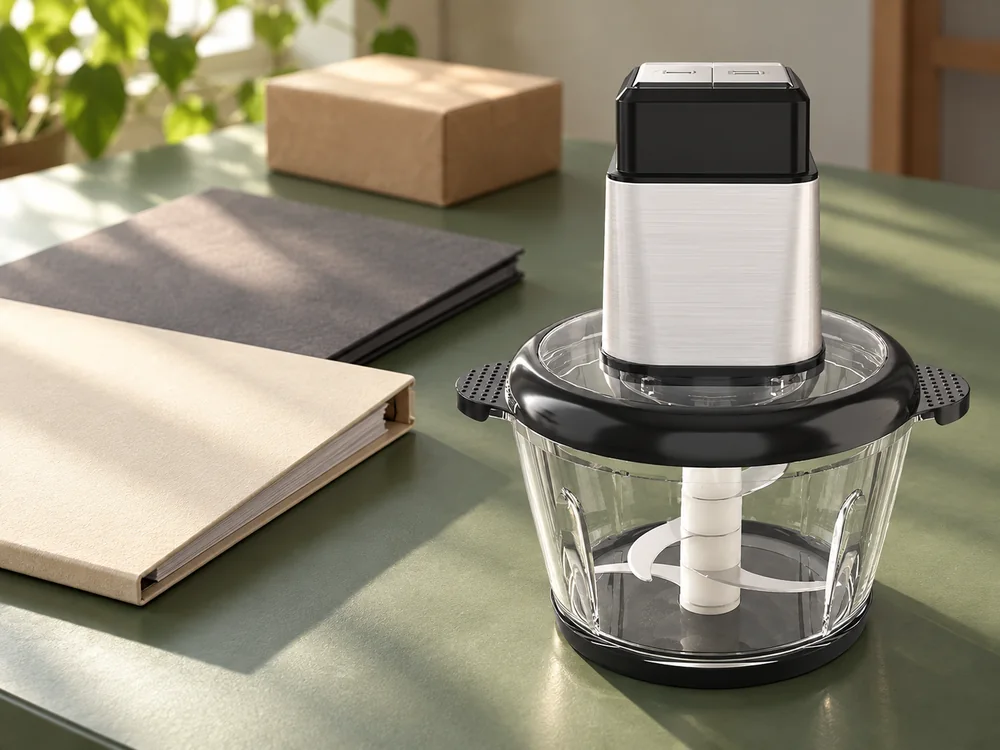
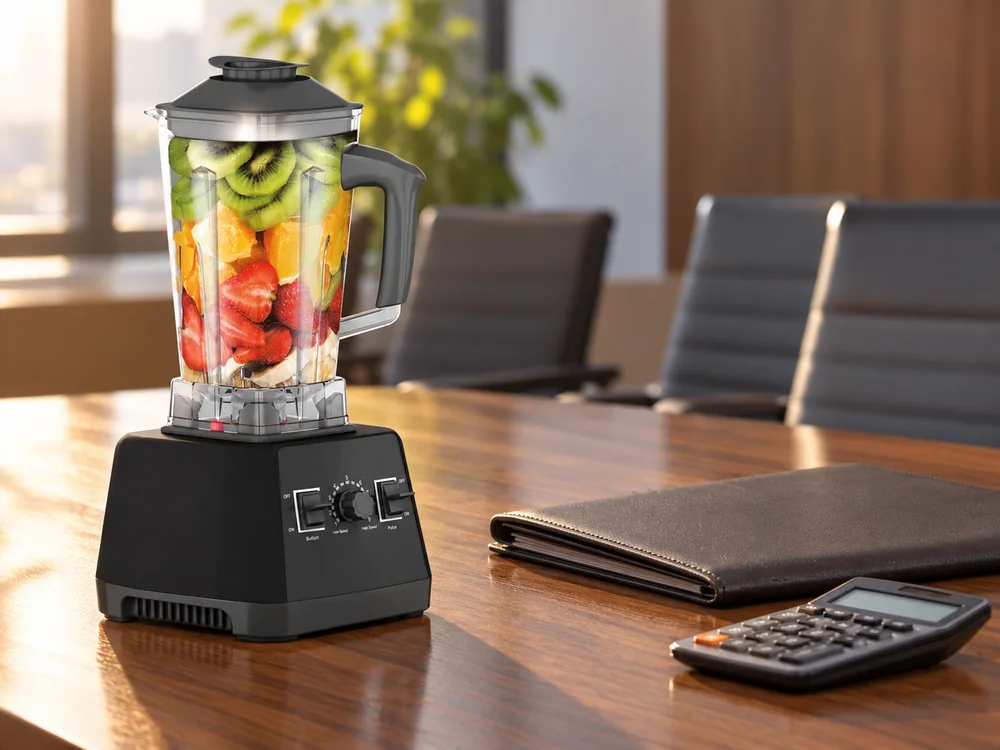
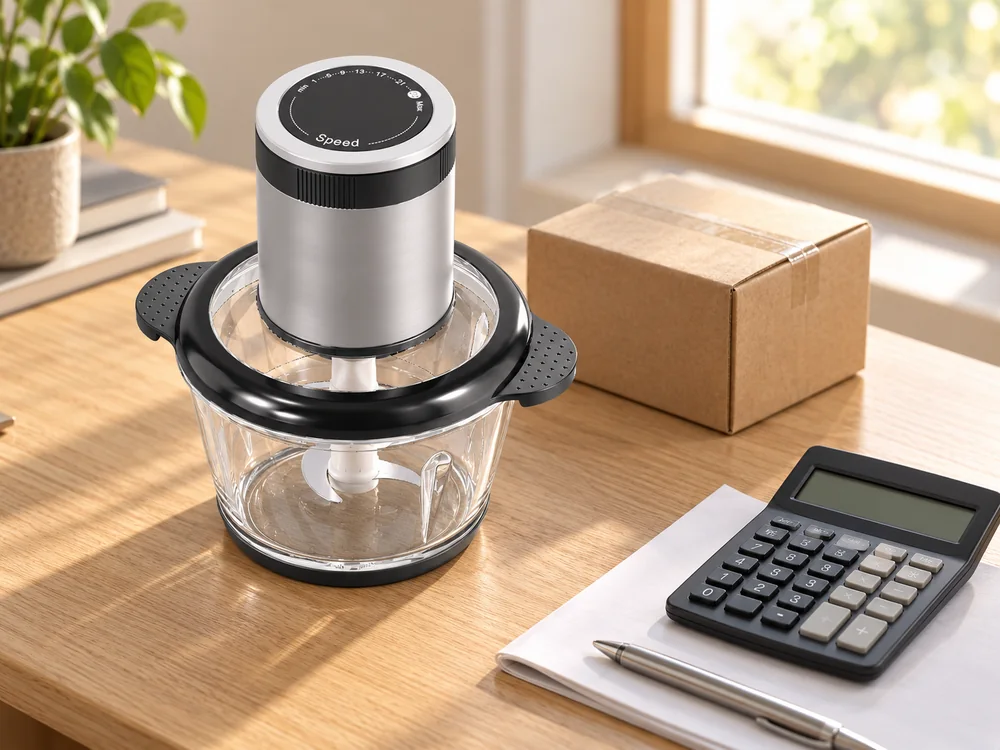
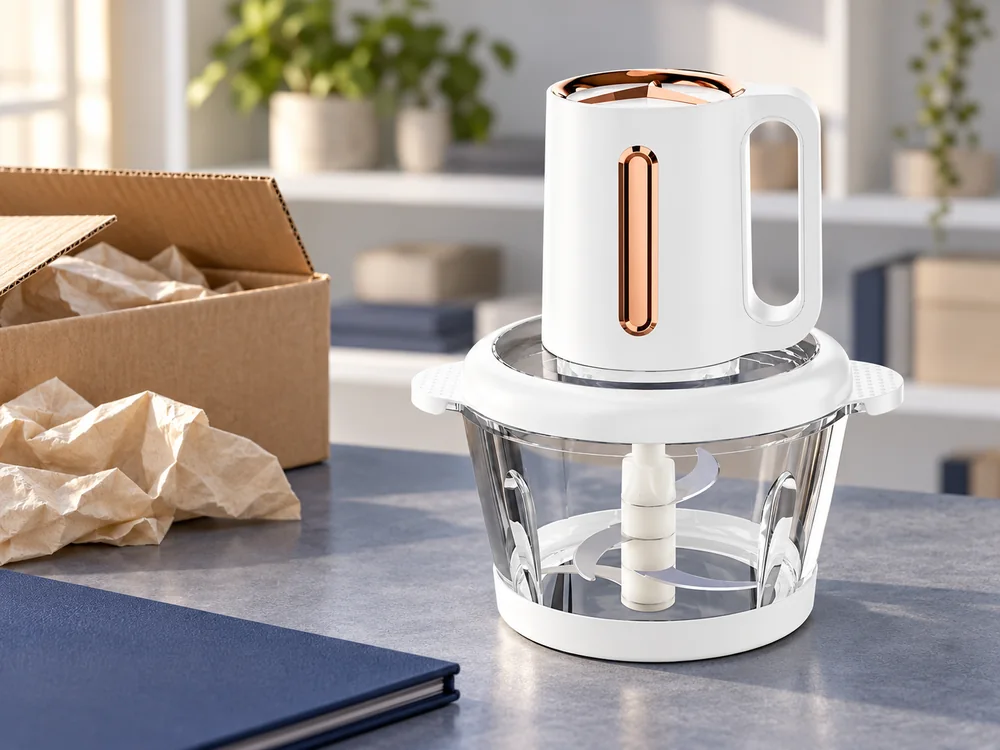
The container deserves attention before the control panel. Stated capacity, usable filling guidance, lid arrangement and handling affect how a customer uses the product. A tall jug and a processing bowl should be compared by their intended tasks, not only by the capacity number beside a photograph.
For any task involving ice, hot liquids or thick mixtures, establish that the proposed model is intended for that application before including it in a sample trial. Keep the operating sequence within its instructions. The supplier's response should identify suitable use and limits without relying on an improvised demonstration.
The sales channel also shapes the brief. A retailer expecting a compact entry product has a different assortment problem from one seeking a broader kitchen set. Include the intended positioning and any receiving or packaging constraints. That helps exclude unsuitable platforms before the team spends money testing them.
Compare blender manufacturers on a common product basis
Ask each manufacturer to return a named model, electrical version, jar assembly, control format and inclusion list. Keep alternatives on separate lines. If one supplier quotes a basic jug blender and another quotes a multi-container set, the price difference does not describe manufacturing efficiency alone.
Use the same mandatory requirements for all candidates. A missing required use, unresolved compatibility issue or unsuitable market version should be addressed before a supplier receives credit for attractive optional features. Otherwise, a scoring exercise can allow several small advantages to hide one requirement the product does not meet.
The following table helps compare the proposed platforms. It describes selection conditions, not universal performance differences between formats.
|
Product choice |
A reason to consider it |
Question that decides the comparison |
|---|---|---|
|
Single-jar set |
The main task is clear and extra vessels are unnecessary |
Does the complete jar and base meet the agreed use? |
|
Multi-container set |
Distinct supported tasks justify separate containers |
Can customers understand each use, and is every part compatible? |
|
Manual controls |
Direct control suits the intended customer |
Are settings readable and the required result repeatable? |
|
Electronic controls |
Specific programs support the retail proposition |
Do program names match demonstrated functions and instructions? |
|
Sound enclosure |
Sound is an important selection concern |
What evidence supports the claimed effect for the complete model? |
A sound cover or digital display may be a useful feature, but its presence alone does not quantify performance. Ask for evidence matched to the claim that will appear in your product presentation. Keep an unverified advantage out of the comparison until it can be evaluated fairly.
Review controls on the physical sample. The markings should remain readable in the intended finish, and the manual should use the same names as the appliance. If a preset button has a task name, the sample discussion should address that task rather than merely showing that the button lights up.
Record deviations from the brief alongside the supplier response. An alternative may be commercially sensible, but it should remain visible as an alternative. Quietly adjusting the requirements for one candidate prevents a fair final comparison.
Examine the manufacturer's production responsibility
Find out who will assemble the selected appliance, who manages its components and who is responsible for the product records. A sourcing arrangement can involve more than one business. What matters to your order is a clear account of responsibilities and a way to investigate a problem with the supplied configuration.
Ask the candidate to describe the relevant production route using the model under discussion. General factory photographs provide context, while model-specific explanations connect preparation, assembly and checks to the product you may buy. Concentrate on the order's actual needs instead of requesting every factory statistic available.
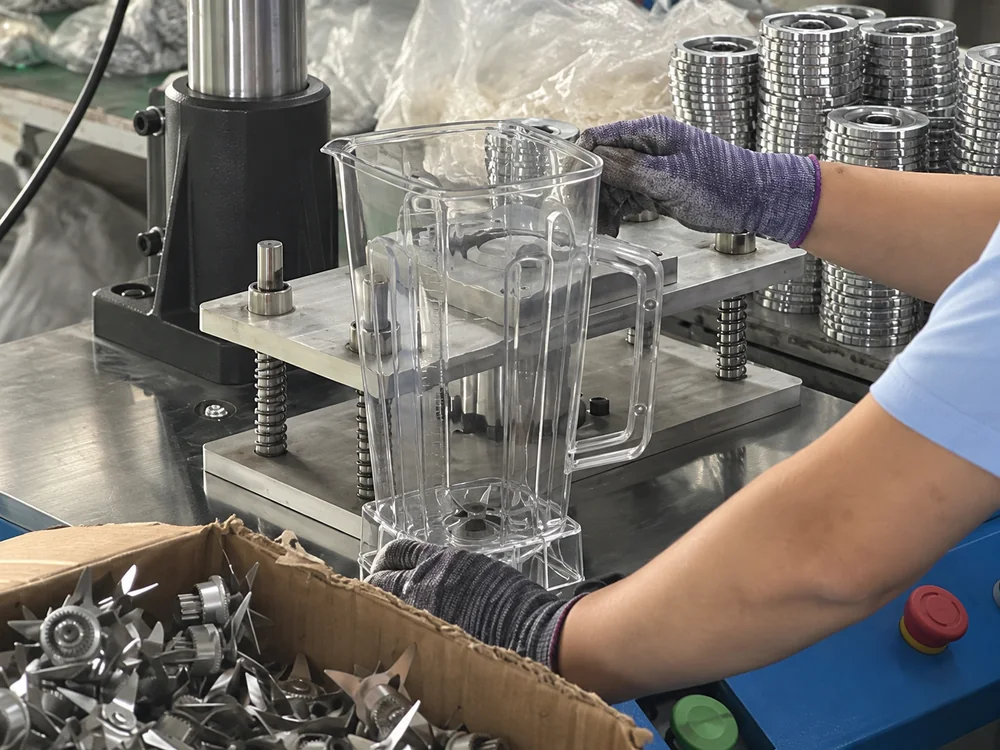
JINJIE's manufacturing workflow describes component preparation, assembly, checks and packing against agreed product details. Use that sequence to ask how the proposed blender version would be prepared and identified. A response should distinguish an established configuration from development work that has not yet been completed.
The quality conversation should explain where the relevant checks occur and how findings are handled. For a jar or drive concern, ask which stage evaluates that relationship. For a wrong manual or included part, the packing review matters. A single statement that quality is checked does not reveal whether the important issue is covered.
Ask how a component substitution would be communicated. Similar-looking parts can belong to different versions, so the purchasing team needs a defined response if the proposed configuration changes. This is especially relevant to reorders, when buyers may assume they are receiving the same product as before.
Keep capacity questions tied to quantity and timing. A manufacturer's broad output claim does not tell you when one customized order will be ready. Ask which component, artwork or approval dependencies apply to your proposed order and who will report changes to the schedule.
A clear answer can include an unresolved point. A supplier that identifies the missing information and proposes a way to resolve it gives the buyer something usable. Treat unsupported certainty more cautiously than a specific limitation with a defined next step.
Use samples to resolve the shortlist's largest unknowns
Give each sample a purpose. One may answer whether the jar is convenient to handle, another whether the agreed recipe reaches the desired result, and another whether the finished set fits the retail packaging concept. The sample request should identify the question and the version being evaluated.
For a blending comparison, keep ingredients, preparation, quantity and assessment method consistent where the models' supported uses allow it. Record the actual operating settings and the result. A supplier video showing only the blade starting is not enough to compare the finished mixture or the steps required to achieve it.
Avoid forcing different products into an unsafe identical procedure. If their instructions differ, have the responsible personnel define a fair assessment within those limits. The useful outcome is whether each product can meet the intended requirement, including any difference in customer effort or operating sequence.
Use JINJIE's quality and testing process to discuss the checks and records needed for the selected sample. Results should identify the product and relevant conditions. This lets your team connect a successful assessment to the configuration later requested in the order.
A short successful run answers a short-run question. If repeated operation matters to the product concept, discuss the operating and rest pattern with qualified personnel and obtain evidence appropriate to that use. Do not turn an attractive household demonstration into a commercial-duty claim.
Before ordering another round of samples, identify what the first round left unresolved. A new color sample will not answer a jar-fit concern unless it also represents the relevant structural version. Focus follow-up spending on evidence that could actually change the shortlist.
Document the buyer's observations as well as the supplier's response. Note the sample identity, task, result and unresolved question. Avoid vague scores such as “good quality” when a more specific description, such as a difficult-to-read control marking, would help the manufacturer respond. If several team members evaluate samples, keep their observations attached to the same sample reference and separate preferences from failures against agreed requirements. This makes conflicting feedback easier to resolve.
Compare the cost of the complete retail offer
Bring the candidates onto the same inclusion and delivery basis before choosing the lower price. Identify the appliance, jar assembly, optional containers, instructions, retail packing and any separate project work. A base unit price may omit work another supplier included in its offer.
For a broader set, ask whether each additional container supports a task the target customer values. Compare that benefit with the extra purchase cost, packing space and service responsibility. The most complete bundle is not automatically the most useful entry product.
Minimum quantities need the same attention. Ask how they apply to the model, finish, electrical version and printed materials. If the proposed assortment includes several combinations, request conditions for each. A general minimum for the factory does not explain the commitment required by a particular custom set.
JINJIE's private-label customization routes provide a basis for separating branding from a design change. Keep requests for a logo or box distinct from requests for another drive arrangement or new control function. The latter may create sample, evaluation or development work beyond the initial platform offer.
Ask for packed dimensions for the selected set, not a related model with fewer parts. This helps the logistics team compare the proposed shipment on the same basis. Keep transport estimates separate from supplier prices and state which packing information is preliminary.
Consider the effect of timing on the choice. A model that meets the product brief but needs additional development may fit a later range extension rather than the current launch. Compare the readiness of the complete sellable set, including artwork and required evidence, instead of only the appliance's assembly date.
The final comparison should expose trade-offs rather than hide them in one score. If one candidate has a simpler set and another offers a useful additional task, identify which proposition your channel needs. Price negotiation becomes more meaningful after that choice is clear.
Check whether the product can be supported after sale
Ask how replacement jars, lids or other agreed service parts would be identified and supplied. A product nickname is a weak reference when a similar exterior appears with another connector or revision. Keep the part reference connected to the actual model and version sold.
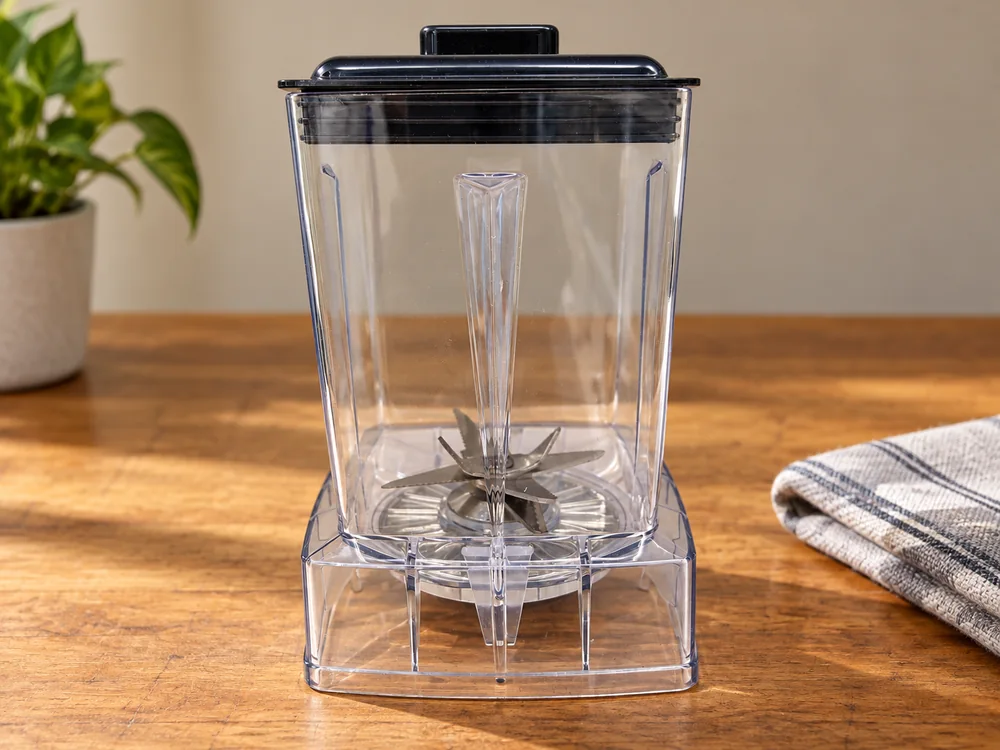
Agree the support arrangement rather than assuming indefinite availability. Discuss the parts your business expects to hold, their ordering basis and how changes or discontinuations would be communicated. The answer may affect the first-order service stock or the number of platforms you choose to launch.
Think through the information a customer-service team will need. A clear model label and accurate illustrations can help identify a missing lid or damaged jug. If a multi-container set contains similar-looking assemblies, make the distinction understandable before the first support inquiry arrives.
When spare parts are proposed, keep them separate from the retail-set contents. Record their quantities and packing so the warehouse does not count them as extra sellable units. Also distinguish parts intended for the selected version from general sample components sent for discussion.
Product documentation needs a defined review route for the target market and sales channel. JINJIE's compliance documentation support starts with the model and electrical configuration. Ask the appropriate reviewer to assess applicability rather than collecting unrelated files as evidence of a supplier's overall quality.
This support discussion can change the shortlist. A slightly simpler platform with identifiable parts and a clear reorder process may suit a growing range better than a complicated set your team cannot explain or maintain. Make that judgment from the actual responses, not from an assumed relationship between price and support.
Send one final request before choosing the manufacturer
Consolidate the remaining questions instead of continuing separate conversations about price, samples and packaging. The manufacturer should be able to see which decisions prevent the buyer from proceeding. Use the table to prepare a final response request for each shortlisted candidate.
|
Decision area |
Evidence or response to request |
Buyer action |
|---|---|---|
|
Product fit |
Model, inclusion list and sample findings |
Retain only configurations meeting mandatory use requirements |
|
Production responsibility |
Relevant workflow and change-handling contact |
Establish who is accountable for the agreed version |
|
Commercial basis |
Complete-set offer, minimums and separate work |
Compare the actual purchasing commitment |
|
Readiness |
Outstanding approvals and realistic timing |
Match the proposal to the launch requirement |
|
Market evidence |
Applicable files and unresolved review scope |
Obtain the required qualified assessment |
|
Ongoing support |
Agreed part references and reorder arrangements |
Decide how the range will be maintained |
The table is a closing checklist, not a substitute for judgment. A missing mandatory result should remain unresolved even if the candidate performs well elsewhere. A small cosmetic preference can be negotiated or deferred if the core product and supply requirements are met.
Write a short selection note explaining why the chosen manufacturer and configuration fit the brief. Identify any accepted trade-off and the reference version. This makes the decision understandable to the team placing the order and prevents a later price discussion from unintentionally changing the product.
Conclusion
A useful manufacturer shortlist connects a real use requirement with a named product, relevant evidence and a workable supply arrangement. Compare complete configurations, investigate the uncertainties that could change the decision and keep mandatory requirements separate from optional features.
To discuss a JINJIE blender platform, send the intended ingredients, batch size, market, sales channel and required set contents. Add quantity, timing and any retailer requirements. Ask for a proposed model and the specific sample or document work still needed before selecting the final private-label set.
FAQ
Should I choose the blender with the highest stated wattage?
No. Compare the complete model against the intended task and ask what the stated rating means. Jar, blade, controls and operating limits belong in the discussion. A larger number alone does not show that the appliance produces the desired result or fits the customer experience your range requires.
Can I shortlist a manufacturer before every file is complete?
Yes, if unresolved items remain clearly identified and the shortlist is not treated as final approval. Ask who will resolve each requirement and what information is needed. The purchase decision should reflect the evidence required for the actual version and channel, not merely the existence of a preliminary supplier list.
Is a multi-container set always better for private label?
No. It is useful when the additional supported tasks matter to customers and justify the cost, storage and instructions. A single-purpose offer can be easier to explain. Compare each included part's role and verify compatibility before using the number of accessories as a reason to choose a supplier.
What if two manufacturers propose almost identical products?
Compare the identified versions, sample results, complete-set costs and supply responsibilities. Similar appearance does not establish identical components or support arrangements. Ask each candidate to close the same remaining questions, then document the trade-off behind your choice. Avoid inventing a performance difference when the evidence does not show one.