Meat chopper carton dimensions are useful for freight planning when they describe the final packed set and the correct packaging level. Use the outside dimensions of the shipping carton, its gross weight and its actual contents together. Product size or retail-box size alone cannot describe a multi-unit shipment.
For importers and purchasing teams, the objective is a worksheet that a freight provider can use without guessing the units or packing arrangement. Build it by SKU, calculate the carton volume, then add pallet or other handling information where the chosen route requires it.
This guide explains that calculation and the decisions behind it for household electric bowl choppers. All numerical examples are hypothetical. They show how to check a shipment estimate, not JINJIE carton specifications, freight rates or a guaranteed container-loading quantity.
Identify which dimensions belong in the shipping worksheet
A product dimension describes the appliance. A retail-box dimension describes one individually packed set. A master-carton dimension describes the outer shipping carton containing one or more sets. Label these fields separately so a correct measurement is not used for the wrong purpose.
For the shipping calculation, request the closed master carton's outside length, width and height with its intended contents and protection. Leave the measurement unit beside the numbers. A value of 50 means very different things in millimeters, centimeters and inches.
The packed configuration matters. Another bowl material, an added accessory or revised internal protection can change the package even if the motor housing stays the same. Use the current set reference beside the packing data, rather than retrieving a familiar model-family carton line from an older quotation.
Start with the selected model from the JINJIE meat chopper range, then identify the exact supplied set. The factory can discuss packing for that configuration. A family photograph showing several bowl options is not a packing specification for all of them.
Distinguish a preliminary proposal from a measured packed sample. Both can be useful, but they support different decisions. An estimate may be enough for an early budget comparison; a transport booking needs the confirmed information required by the freight provider.
Keep the source and revision date with every data line. If a buyer forwards dimensions to a logistics colleague, that colleague should know which packing version they describe and whether they have been measured. This avoids a later dispute in which both people have accurate figures for different versions.
If repeated measurements differ, record the range and investigate the reason with the packing team. A carton that has not been fully closed or contains a different set should not be averaged into the final figures. Establish the intended package first, then measure it consistently.
Ask what quantity is included in the carton. The volume calculation and the carton-count calculation need different inputs: dimensions describe space, while units per carton translate the purchase quantity into shipping pieces. Neither number should be inferred from the other.
Calculate volume from meat chopper carton dimensions
For a rectangular carton measured in centimeters, volume in cubic meters is length multiplied by width multiplied by height, divided by 1,000,000. If all three dimensions are already in meters, multiply them directly. Keep one unit system throughout the calculation.
For example, a carton measuring 50 x 40 x 40 cm occupies 0.080 cubic meters, often written as 0.080 m³ or CBM. Twenty such cartons total 1.600 m³. This is the sum of their outside carton volumes before any pallet arrangement or other shipping allowance.
For a mixed order, calculate each line separately, then add the results. The following example uses two imaginary configurations. The units and weights are assumptions for arithmetic only.
|
Example line |
Cartons and outside size |
Volume calculation |
Line result |
|---|---|---|---|
|
A |
20 cartons, 50 x 40 x 40 cm |
20 x 0.080 m³ |
1.600 m³ |
|
B |
12 cartons, 50 x 40 x 30 cm |
12 x 0.060 m³ |
0.720 m³ |
|
Combined |
32 cartons |
1.600 + 0.720 m³ |
2.320 m³ |
If A contains six units per carton and B contains four, the same shipment contains 120 units of A and 48 of B, or 168 units altogether. The carton-volume total and unit total are separate checks. Keeping both makes it easier to detect an accidental use of product quantity where carton quantity belongs.
Retain enough decimal places in the worksheet to avoid rounding every carton before multiplication. Round the final presentation as appropriate for the freight provider, while keeping the original measurements and calculation available. Early rounding can accumulate across a large carton count.
The formula assumes the rectangular outside envelope given by the measurements. If cartons bulge or the shipment includes an irregular package, provide the actual external dimensions required by the carrier. An idealized box drawing should not replace the dimensions of the packed goods.
Treat a calculator result as a checkable output. Recalculate one line manually and compare the combined result with the individual lines. If the answer differs by a factor of a thousand or a million, inspect the measurement units and conversion before questioning the physical packing.
Carry the correct weight beside the volume
Request gross weight per shipping carton and make its scope explicit. It should describe the packed carton being transported. A net-weight figure may describe the goods without certain packaging, so establish what it includes before using it in a logistics worksheet.
Small labels prevent large mistakes. Write kilograms per carton, kilograms per retail set or kilograms per loaded pallet rather than a bare weight value. A colleague should be able to multiply the figure by the correct count without asking the original author what the field meant.
Continue the hypothetical two-line example. If A weighs 12.5 kg per carton and B weighs 10 kg per carton, their line gross weights are 250 kg and 120 kg. The loose-carton total is 370 kg. These assumed weights are not derived from bowl capacity or from the product images.
If palletized, the final shipping weight also needs the pallet and other materials used outside those cartons. Avoid calling the loose-carton sum the loaded-pallet weight. Record which measurement level the provider will quote and whether the actual loaded unit has been weighed.
Different bowl configurations can have different weight and protection requirements. Ask for the actual packed version rather than assigning a standard weight difference based on appearance. The combination of product, accessories and packing is what the carrier receives.
For a partial carton, report its actual contents and gross weight. It may still occupy the full outside dimensions of a normal carton. Counting half the standard units does not justify halving both weight and volume in the worksheet.
The practical check is consistency: unit quantities should agree with carton contents, carton counts should agree with the packing list, and line weights should use the same packaging level. Investigate mismatches before forwarding the totals for a quotation.
Decide whether the shipment will travel on pallets
Pallet requirements should be discussed before the final packing arrangement is fixed. Ask the receiving warehouse and freight provider about the pallet format, loaded height, handling limits and any restrictions relevant to the chosen route. Do not assume that one arrangement suits every warehouse or service.
Request the pallet footprint, total loaded height, cartons per pallet and gross loaded weight. The overall height includes the pallet itself. If a supplier provides only the carton-stack height, the shipping dimensions remain incomplete.

For an illustrative calculation, a loaded pallet measuring 1.20 x 1.00 x 1.30 meters has an outside envelope of 1.56 m³. That number describes the loaded shipping unit. It does not establish a safe stack arrangement or tell you how many of the example cartons can be placed on it.
Keep loose-carton volume and loaded-pallet volume in separate fields. They can be compared to understand the packing consequence, but they should not be added together as though the cartons occupy space outside the pallet load. That would count the same goods twice.
Ask whether the proposed load is stackable and what conditions apply. The freight provider needs that information to plan transport and pricing. Do not choose a lower shipping figure by assuming that another load can safely be placed above yours.
A photograph of loaded goods can help explain the arrangement, but it is not a complete packing instruction. The plan still needs carton orientation, quantity, load dimensions and the relevant handling requirements. Use photographs alongside those records rather than counting visible boxes to estimate capacity.
JINJIE's manufacturing and shipment preparation connects packing with quantities and delivery details. Share receiving requirements during that discussion so the proposed arrangement can be evaluated for the actual order, not corrected after all cartons are ready.
Compare packing changes by their effect on the shipment
A small dimensional change can matter when multiplied across many cartons. In a hypothetical example, changing a carton from 50 x 40 x 40 cm to 52 x 40 x 40 cm increases volume from 0.0800 to 0.0832 m³. That is 4 percent more per carton.
Across 200 cartons, the total changes from 16.00 to 16.64 m³, a difference of 0.64 m³. This calculation helps explain why the logistics budget should be refreshed after a packing revision. It does not mean the freight invoice will rise by exactly 4 percent, because the applicable charging basis may differ.
Compare volume per sellable unit when the number of units per carton also changes. A smaller carton can have a higher volume per unit if it holds fewer products. Divide carton volume by the units it contains, then use the proposed order quantity and actual carton arrangement for the shipment estimate.
For example, 0.080 m³ divided among six units is about 0.01333 m³ per unit. A 0.060 m³ carton holding four units is 0.015 m³ per unit. The second carton is smaller, but its volume allocation per unit is larger. These examples compare space only, not handling quality or total cost.
Protection remains part of the decision. Removing material or changing the internal arrangement to reduce volume requires a review of the complete package. Discuss the relevant packing checks and testing before treating a more compact proposal as an approved improvement.
For a custom set, JINJIE's OEM packaging scope includes the appliance, accessories, inner protection, retail box and outer carton. Identify which of those items changed, then update the affected measurements. A new retail-box drawing alone may not yet provide the final master-carton data.
Keep preliminary and revised figures side by side with dates until the decision is closed. Your team can then explain the reason for a budget change and identify which version was sent to the forwarder. Overwriting the old figures without a record makes that conversation harder.
Distinguish shipment volume from the freight charge
CBM is a physical volume calculation. A freight quotation depends on the provider's service and charging rules as well as the shipment's size and weight. Ask the provider which basis applies to the proposed route rather than applying one online formula to every transport mode.
For some services, the comparison between actual and volumetric weight affects the charge. The conversion factor and other conditions belong to that service. Request them from the provider if you need to reproduce the estimate, and avoid presenting a generic divisor as a universal rule.
The same caution applies to container capacity. Dividing a published internal container volume by carton volume gives only an idealized volume ratio. Carton dimensions, orientation, available loading space, weight and handling constraints still affect the loading plan. A calculated ratio is not a confirmed loading quantity.
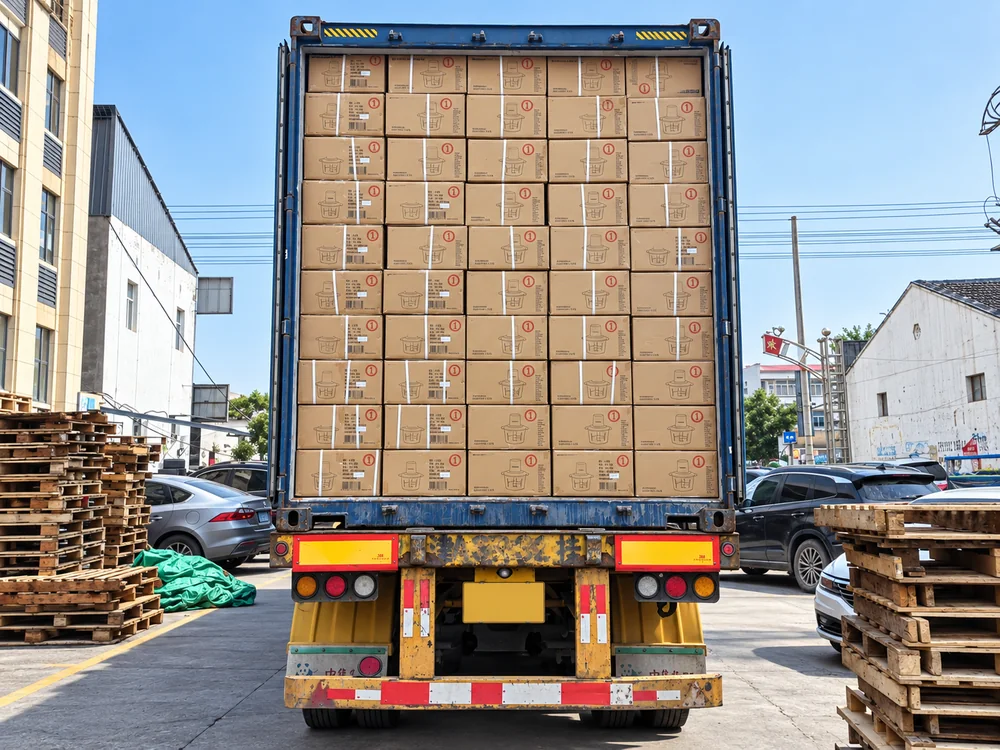
If the estimate is close to a transport limit, ask for a loading or handling review before making the booking assumption. A small change in carton height or a pallet requirement may change the practical arrangement. Keep the plan tied to the confirmed packing revision.
Give the freight provider the collection and delivery locations, requested timing and handling requirements with the packing data. These details allow the provider to quote the intended service rather than guess the route from a CBM total. Keep any excluded services visible in the comparison.
Record the quotation's validity and the date of the packing data used. If either changes before booking, request an update. Accurate dimensions can still produce an obsolete budget when the service assumptions or commercial quotation have changed.
Send a complete data request and reconcile it before dispatch
Use the checklist below to collect the information once and hand it to both purchasing and logistics. Check whether the input data and shipping assumptions are complete.
|
Data item |
Required detail |
Final check |
|---|---|---|
|
Product and set |
Model, SKU and included configuration |
Matches the order and packing revision |
|
Carton contents |
Units per full carton and any partial cartons |
Reconciles to the ordered units |
|
Outside size |
Length, width, height and measurement units |
Describes the closed shipping carton |
|
Weight |
Gross weight and its packaging level |
Multiplied by the correct carton or pallet count |
|
Pallet arrangement |
Loaded dimensions, count, weight and handling needs |
Included only where used in the actual shipment |
|
Measurement status |
Preliminary or measured, with source and date |
Latest approved packing basis sent to the provider |
Before dispatch, compare the final carton count with the units per carton and actual quantities. List partial cartons separately. If the order contains several SKUs, preserve the individual lines instead of replacing them with one average carton size.
When the provider returns a different volume, compare the underlying measurements and packaging level first. One estimate may describe loose cartons and the other palletized units. Ask which dimensions were measured and how they were rounded before assuming that the calculation itself is wrong.
Conclusion
For a JINJIE meat chopper order, request outside master-carton dimensions, units per carton, gross weight and the packing revision for each selected set. Add pallet and receiving requirements where applicable, and distinguish estimated data from measurements of the approved package.
Calculate the line volumes, reconcile quantities and send the current data to the freight provider. The provider can then assess the appropriate service, charge and loading arrangement. Preserve that version with the quotation so a later packing change has a clear reason to trigger an update.
FAQ
Can I calculate shipping volume from the retail box?
Only if that box is the actual shipping unit for the arrangement being quoted. If retail boxes are packed inside a master carton, use the master carton's outside dimensions and count. Record the packaging level explicitly so the calculation does not omit the space occupied by the outer packing.
Does a lighter carton always cost less to ship?
No. The charge depends on the service's rules and may consider volume as well as actual weight. Provide both measurements and ask the freight provider to explain the applicable basis. A lighter product in a larger package can produce a different result from a simple weight-only comparison.
Should I round the order up to full cartons?
Compare the extra units with your demand and the supplier's permitted packing arrangements. Full cartons may simplify handling, but ordering unnecessary stock also has a cost. If a partial carton is accepted, record its actual contents, dimensions and weight rather than applying a fractional standard-carton volume.
What if the final carton is larger than the quotation assumed?
Ask what changed and obtain the new measured dimensions, weight and packing revision. Recalculate the shipment and request an updated freight assessment before booking. If reducing the size is proposed, review protection and any required checks first. Keep the earlier estimate so the commercial difference remains explainable.