Food chopper wholesale purchasing starts with a retail offer your business can actually sell. Choose the complete household appliance, the supply arrangement and the responsibilities behind the price before committing to stock. A low factory price is useful only when the resulting product fits your channel and leaves enough room for the costs you will carry.
For an importer or private-label buyer, that decision sits between finding an attractive model and placing the first order. You need a reason for the selected bowl and controls, a realistic route to customers, and a clear view of the money committed before customers pay you. An existing-brand distributor may make a different choice because brand ownership and product development are not the main purpose of its purchase.
This guide covers household electric bowl choppers, including JINJIE's SD series. Manual vegetable cutters, screw-fed meat grinders and industrial bowl cutters are different purchases. The figures below identify product configurations; they are not processing-capacity or continuous-use claims.
Choose a food chopper wholesale route that fits your channel
A retailer looking to replenish a known brand and a business launching its own label may both search for wholesale choppers. Their acceptable supply arrangements differ. The retailer may need an existing retail pack and a confirmed replenishment route. The private-label buyer may need control over the product presentation, electrical version and instructions, with enough time to approve them before delivery.
Start by deciding which business you intend to operate. Buying an existing branded offer can reduce the work of developing a new presentation, where a suitable authorized source is available. It also means accepting the actual distribution terms and the supplier's available range. A factory project gives you a route to discuss the product and branding, but your team must make the decisions that a finished branded offer has already made.
Neither route automatically has the lower total cost. An apparently higher purchase price may include work or local handling that your own organization would otherwise provide. Conversely, a familiar retail pack may offer little value when its language, electrical version or positioning does not suit the intended market.
Use your sales commitment to choose the route. A fixed retailer intake date requires a confirmed schedule for the actual offer. A flexible launch can accommodate more development decisions, provided the cash requirement is acceptable. Do not promise a delivery date to the channel from a general statement about factory capacity.
These questions help distinguish the arrangements before requesting prices.
|
Purchasing route |
Suitable starting requirement |
Responsibility to settle |
|---|---|---|
|
Existing branded supply |
A defined retail product that your channel can resell |
Authorized supply, available versions, replenishment and service terms |
|
Current factory model with buyer branding |
A supported appliance platform with a new retail identity |
Artwork, electrical version, packaging approval and order conditions |
|
Modified product project |
A customer requirement the current offer cannot meet |
Engineering scope, development work, testing and commercial commitment |
|
Initial sample evaluation |
A product choice still depends on handling or permitted use |
Which uncertainty the sample must resolve before an order |
JINJIE's OEM and ODM options include discussion of branding an existing appliance and separately evaluating design changes. That is a starting point for a private-label inquiry, not a promise of local ready stock. If immediate replenishment is essential, make availability at the required location an explicit question.
For an opening range, use the current platform unless a real customer requirement justifies changing it. A preference for a different appearance can often be discussed without requesting a new product structure. Keep that distinction visible when comparing the work, timing and money attached to the proposal.
Select a product position from the actual configurations
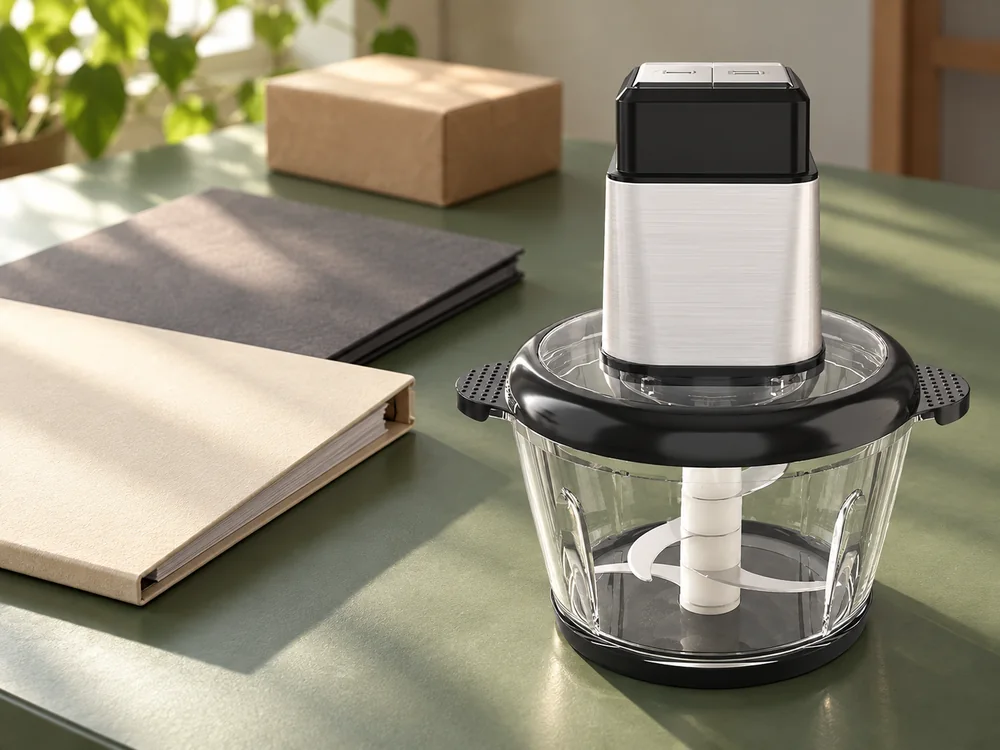
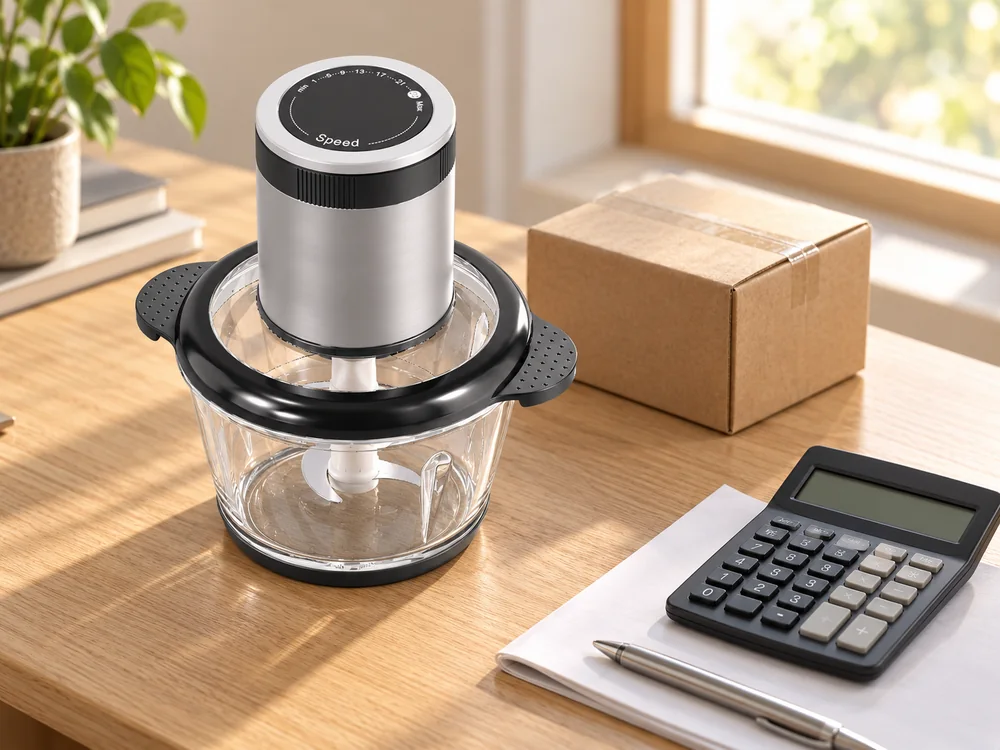
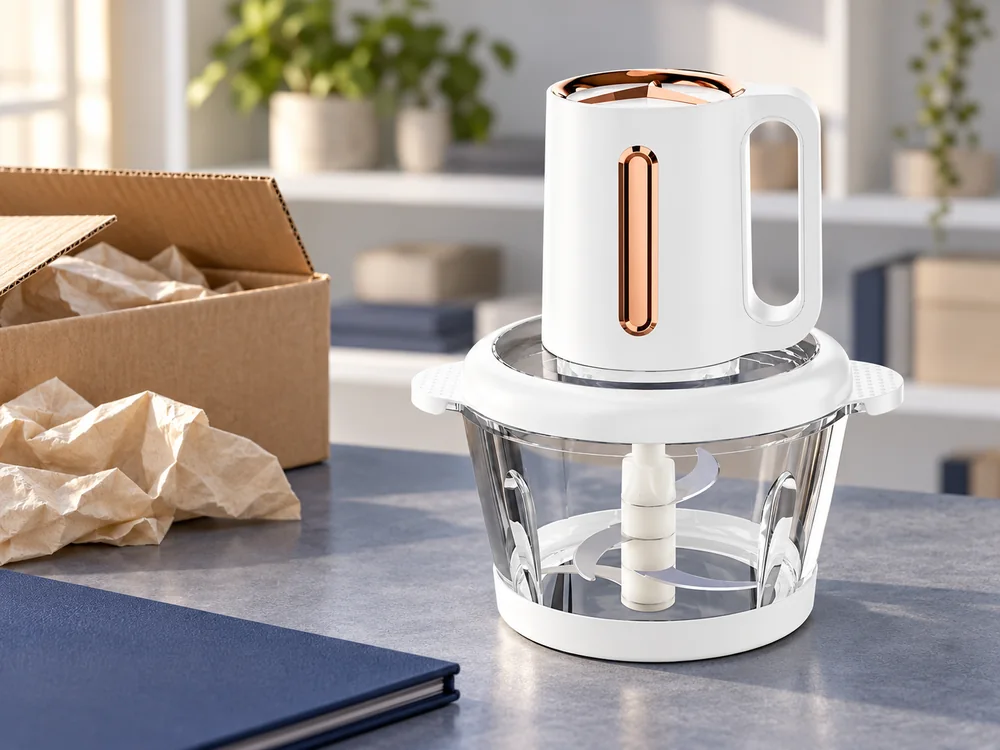
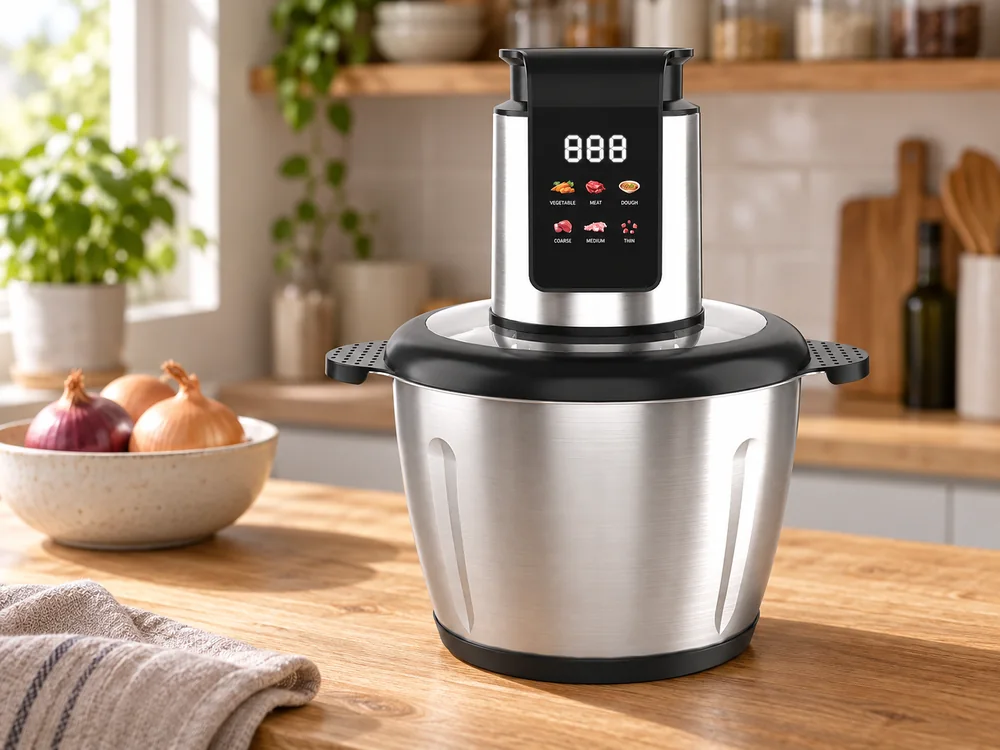
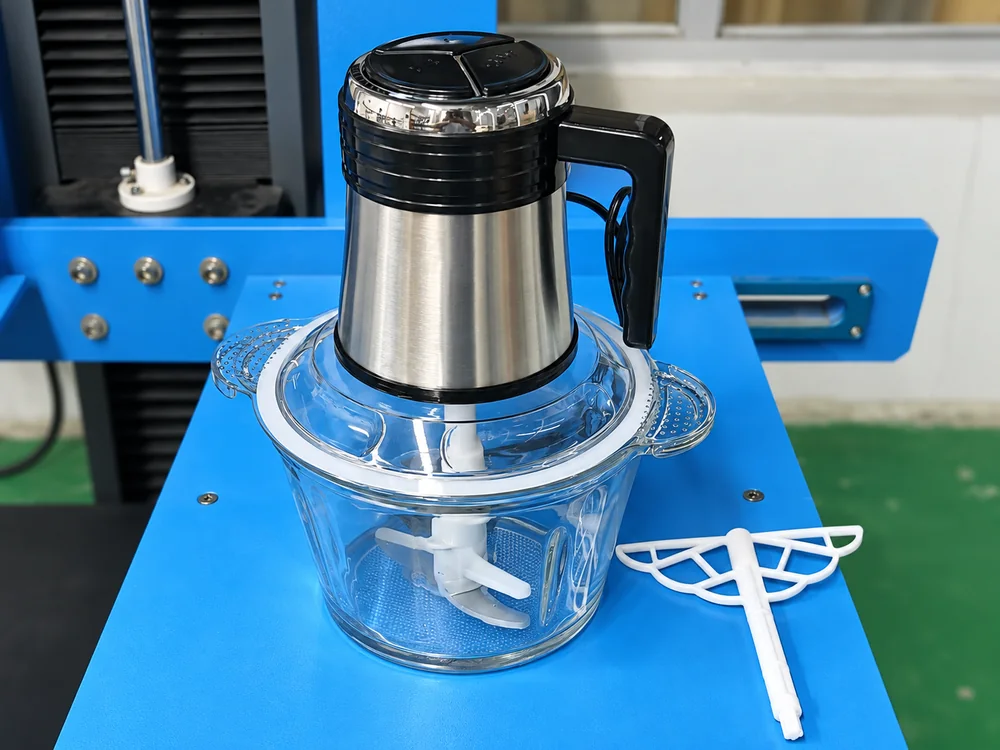
The SD series offers a focused starting comparison. JINJIE's current configuration reference lists SD-01 with a nominal 3 L bowl in 201 stainless steel and 500 W power. SD-02 lists a nominal 2 L bowl in the same material and 400 W. SD-03 is the nominal 3 L glass-bowl entry at 500 W; SD-04 is the nominal 2 L glass-bowl entry at 400 W. The entries describe digital controls.
That gives a buyer two questions to separate: which bowl format belongs in the range, and which nominal size deserves the opening commitment. Do not turn the four entries into four mandatory retail SKUs. A single version with a clear role can be a better starting purchase than an assortment whose differences require constant explanation.
A glass bowl supports a visible product distinction because the contents can be seen. The steel-bowl version offers a different appearance and handling experience. Those are useful reasons to shortlist, but the buyer still needs to handle the complete sample and compare its packed information. Neither material name establishes a freight advantage or a universal quality ranking.
Choose nominal size from the proposed customer job and storage conditions. The 3 L figure does not mean a permitted three-liter food load, and the 500 W entry does not establish a better finished result than a 400 W version. Ask for the selected model's loading and operating instructions when the intended preparation task determines the choice.
An importer supplying a price-sensitive retailer might begin with one smaller-format proposal, while another channel might prioritize the appearance of a particular bowl. These are possible purchasing approaches, not predictions of which model will sell more. Bring the channel's own brief into the decision: target shelf position, expected preparation task, available space and the product difference the salesperson must explain.
The electric meat chopper range is the place to explore current formats before narrowing the inquiry. Identify the preferred SD reference rather than asking for a generic digital chopper. If a different model is proposed, compare it with the reason you chose the original, not only with its headline watts and liters.
Keep the complete assembly in the purchase. A bowl choice includes its matched lid, blade and motor-unit connection. Do not seek a cheaper combination by borrowing parts from a visually similar model. If an extra bowl is commercially useful, ask for a compatible quoted option instead of treating every bowl shown in a catalog as an included accessory.
Work backward from what the channel will pay
The shelf price is not the amount available to buy the appliance. Your business may sell to a retailer below that shelf price, or sell directly while paying channel fees and fulfillment costs. Start with the revenue your company reasonably expects to retain from one sale, on a clearly stated accounting basis. Use the same basis across the comparison.
Then identify the costs outside the supplier's product price. These may include the agreed transport route, destination handling, storage, delivery to the customer, selling costs and the service provision your business has chosen. Obtain the applicable figures from the responsible provider. Avoid a generic percentage that makes an incomplete calculation look precise.
For an illustrative planning example only, suppose a buyer expects to retain USD 30 from a sale after the channel deductions already included in that figure. Suppose its other costs are USD 7 per unit and it requires USD 5 per unit to contribute toward overhead and profit. The remaining allowance for the supplied product on the chosen delivery basis is USD 18. These are hypothetical buyer inputs, not JINJIE prices or recommended margins.
The value of that calculation is the boundary it gives the negotiation. If the complete offer exceeds the allowance, the team must change a genuine variable: the retail proposition, an optional feature, the supply arrangement or the planned commitment. Asking for a discount without identifying which requirement may change can produce an offer that no longer fits the channel.
Avoid counting the same cost twice. If transport to a named point is included in the supplier's price, the outside-cost allowance should not add that identical service again. If the buyer's retained revenue already deducts a channel fee, do not subtract it a second time. Keep the source and basis beside each amount so the calculation can be reviewed.
Packaging deserves attention at this stage because it is part of the sellable offer. A retail box, protective packing and instructions can be necessary even when the buyer would prefer to spend nothing on presentation. Decide which elements are required for sale and which are optional enhancements. Removing an unnecessary finish is different from omitting the agreed protection or the correct instructions.
For the selected configuration, ask whether the proposed packaging is already defined or still an estimate. An attractive product price with unresolved packed dimensions is not yet a reliable delivered-cost comparison. Glass and steel versions should each carry the relevant packing information; do not assume one set of figures describes both.

Limit the opening commitment without weakening the product
The opening order should fit the amount of stock and work your business can carry before the launch is proven. Separate the quantity you want to purchase from the quantity the supplier can offer on the requested terms. The conversation is useful when both numbers are visible.
JINJIE states that minimum quantities depend on the model and customization. Ask about the actual SD version, electrical requirements and packaging, rather than applying a quantity from another product. If the proposal exceeds your available commitment, examine the optional variations first. Fewer colors or a simpler available presentation may be worth discussing while preserving the selected appliance and market requirements.
Do not treat a lower per-unit price as a reason to buy beyond the sales plan. The additional units require payment and somewhere to be stored, even if the discount is genuine. Compare the whole commitment with the cash needed for photography, channel setup, stock handling and the service arrangement. Money committed to extra units is unavailable for those tasks.
Timing also changes the commitment. A purchase can show an acceptable unit contribution while leaving the business short of cash before sales begin. List the actual payment events and the dates when your channel is expected to pay. Where either side remains provisional, show the uncertainty rather than replacing it with a convenient date.
For a new channel, distinguish a confirmed customer allocation from an expression of interest. A retailer's request for a sample does not carry the same certainty as an accepted order. Use the opening purchase to answer a specific commercial question, such as whether one identified glass-bowl offer can earn repeat orders, rather than trying every possible combination at once.
Bring the chosen product and order basis together before committing.
|
Decision to close |
Information for the selected offer |
What changes the purchase |
|---|---|---|
|
Product role |
SD reference, bowl, nominal size and reason to stock it |
A different configuration changes the retail proposition |
|
Complete price |
Included product, packing and delivery basis |
Missing required items reduce the apparent price advantage |
|
Opening quantity |
Applicable minimums and buyer's stock limit |
Excess commitment may justify fewer optional variants |
|
Cash timing |
Agreed payment events and expected customer receipts |
A funding gap can make an otherwise acceptable offer premature |
|
Launch readiness |
Product, artwork, packing and dispatch dependencies |
An unresolved prerequisite can affect the channel date |
|
Service arrangement |
Agreed handling of damage, missing items and later faults |
Unallocated work can become a buyer cost after sale |
Resolve the item that can overturn the purchase first. There is little value negotiating a minor presentation detail while the required electrical version or delivery arrangement remains unanswered. Equally, a missing optional color need not stop an otherwise suitable standard proposal if the channel accepts it.
Decide who handles problems after the sale
A wholesale offer continues beyond the shipment. Your customer will contact someone if a package arrives with damage, a supplied item is missing or a product develops a problem. Decide how your business will respond and what support the supplier has actually agreed to provide.
Keep different situations separate. Transport damage, a packing omission and an operating fault may require different information and different remedies. A photograph of the outside carton can help with one question but cannot explain every product complaint. Agree the useful identification and evidence for each situation without asking customers to perform unsafe tests.
Discuss whether the practical remedy would be a complete-unit replacement, an approved part, a credit arrangement or another agreed response. These are options to negotiate, not default JINJIE service terms. Standalone parts availability and compatibility must be established before your team promises a customer that a particular component can be sent later.
The cost consequence can be substantial for a small retail appliance. A low-cost part may still require identification, packing and transport. A complete replacement can be simpler for the customer but consumes another sellable unit. Compare the proposed handling method with the channel's expectations and your actual support resources.
Ask who answers the first customer question. A private-label brand may own the customer relationship even when the factory investigates the underlying issue. Your team needs clear product identification and usable instructions so it can distinguish a misunderstanding from a reported defect. Do not describe every complaint as user error or every return as a manufacturing fault before reviewing it.
JINJIE's quality and testing information provides a basis for discussing the checks and records relevant to an order. Agree the selected product and inspection scope. A general quality page cannot replace the commercial agreement about what happens when an issue is reported after delivery.
Include responsibility for public product information. Establish which images and approved descriptions the channel may use, who prepares the final listing and how corrections will reach resellers. A photograph of an alternative bowl can create a customer expectation even when the purchase specification was correct. Give the retail team the actual offer it is selling, with optional items clearly separated.
Make a purchase decision rather than collecting another catalog
At the end of the discussion, the buyer should have one proposal to accept, adjust or defer. It should name a complete configuration and explain why the supply terms work for the intended channel. Keep unresolved alternatives out of the selected line so they are not accidentally carried into artwork or ordering.
If the product fits but the commitment is too large, request a defined alternative. State what can change and what must remain. If the economics depend on a retail price the channel will not support, reconsider the offer before paying for custom packaging. If the central uncertainty is handling or a permitted preparation task, arrange the relevant sample review before production approval.
Preserve the decision for replenishment. Record the configuration, commercial basis and the conditions that made the first order acceptable. A later inquiry can then ask whether the same offer remains available and whether any terms have changed. This is more useful than treating an old product photograph as a standing supply agreement.
Next step
Send JINJIE your wholesale project requirements, including the preferred model, target market, intended retail role, estimated quantity and required packaging. Identify any mandatory launch date and the questions that determine whether you can proceed. Ask for the complete offer on that basis, then compare it with your channel and commitment limits before approving the order.
FAQ
How can I set an opening limit without sales history?
Start with what your business can finance and distribute while testing one clear proposition. Separate confirmed customer allocations from forecasts, and allow for the costs outside the product purchase. Ask for the supplier's actual quantity conditions before deciding whether that test is affordable. A first order should create useful evidence without relying on every unit selling immediately.
What if the retailer reduces its proposed selling price?
Recalculate using the amount your company will actually receive, not the old shelf price. Check whether the change also affects fees or promotional support. If the offer no longer meets your commercial requirement, revisit optional scope or defer the purchase. Do not silently reduce product requirements to preserve a margin calculation.
Must I stock both glass and steel versions?
No. Carry both when the channel can explain a useful difference and has a reason to hold each version. Otherwise, select the version that best answers the opening brief. Keep the alternative available for a later inquiry without describing it as inferior or assuming its future terms will be unchanged.
Can I discuss an order before replacement-parts terms are settled?
Yes, but keep the service arrangement open in the proposal. Decide whether your channel can work with another agreed remedy if standalone parts are unavailable. Do not advertise a specific parts service before it is confirmed. Close the responsibility that affects your customer promise and cost before making the final commitment.