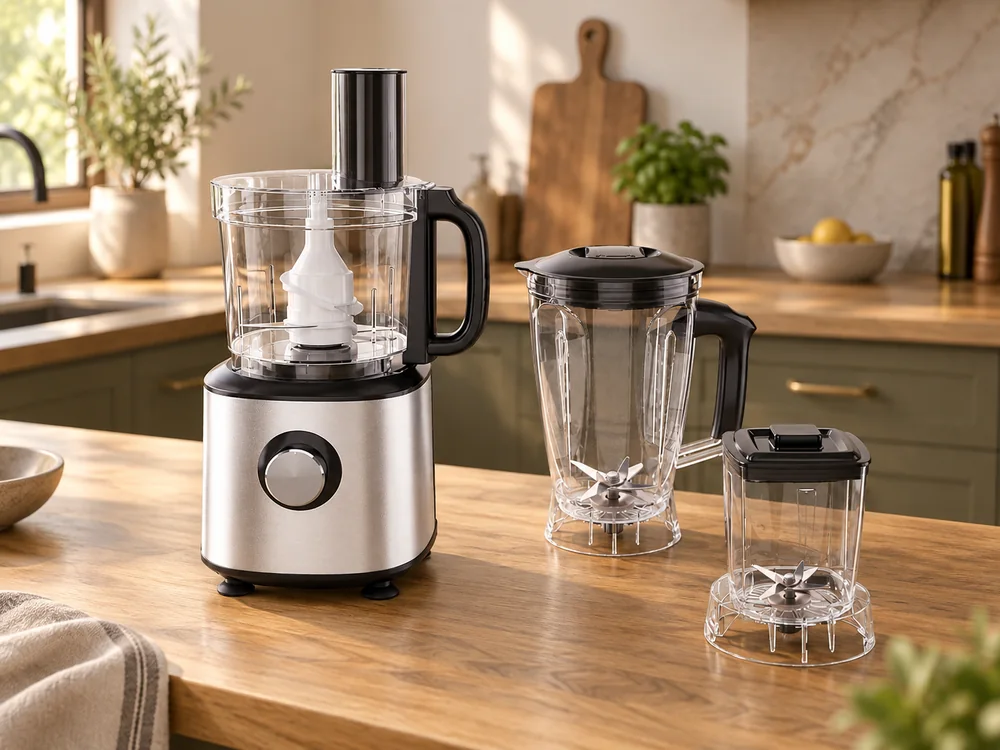
A food processor and blender manufacturer needs to supply more than a motor base with several containers beside it. For a combined retail product, the buyer needs an identified working set, clear responsibility for its matched assemblies and a production offer that includes everything the customer is meant to receive.
This is a useful sourcing route when your retail brief already calls for both processing and blending. The remaining decision is which manufacturer can deliver that combination as one coherent product. A supplier offering separate appliances may also serve your business, but it is answering a different request from a shared-base kitchen set.
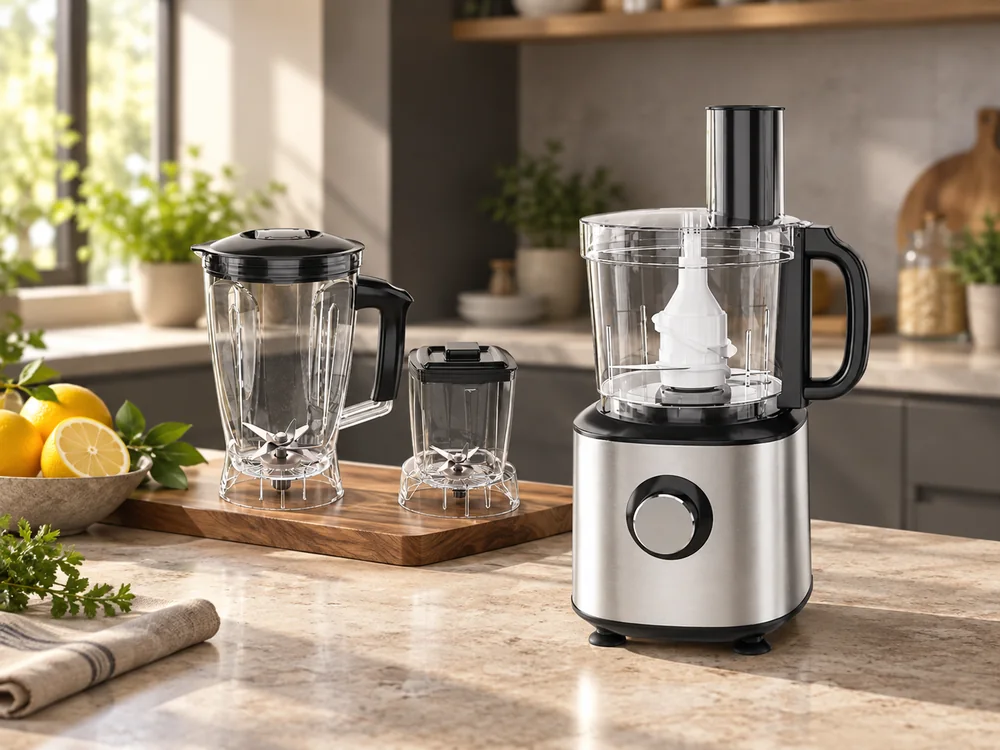
JINJIE's MFP range provides a concrete starting point. Product materials show a processor-bowl assembly, a blender jar and a smaller container associated with a common motor unit. This article concerns sourcing that kind of household combination. It does not assume professional foodservice operation, unrestricted attachment interchangeability or every function implied by a broad kitchen-system label.
Give the food processor and blender manufacturer a set-level brief
Begin with what the customer will buy as one item. Identify the motor unit and each working assembly required in that retail package. A processor bowl includes more than an empty vessel; the relevant lid, fitted tool and other required components belong in its description. Apply the same logic to the blending assembly.
The JINJIE blender and multifunction range includes MFP-01, MFP-A1 and MFP-C1 references. The current quotation lists these at 1000 W and identifies different product versions. Use the model associated with your intended offer rather than treating all MFP photographs as one interchangeable collection.
Describe the principal household tasks, but do not make a function count the purchasing specification. If the commercial proposal says processing and blending, ask which supplied assembly performs each task. Another attachment may be useful, but its role and inclusion should be visible rather than hidden inside a claim such as multifunction.
Distinguish a shared-base set from a bundle of independent appliances. A bundle may contain two complete motor units. A shared-base proposal has different component relationships and cannot be assessed by adding together two unrelated catalog prices. State which arrangement the channel needs before manufacturers prepare their offers.
Put mandatory assemblies ahead of optional tools. If the blender jar is central to the product's identity, it cannot disappear from the lower-priced proposal without changing the offer. If a smaller container is optional, obtain its actual inclusion and commercial conditions separately. This keeps negotiation focused on a sellable configuration.
Specify the market and intended customer along with the physical set. A retailer may want a compact household system, while a food business may be seeking equipment for sustained preparation. Large order quantities do not turn the first product into the second. The manufacturer should respond to the intended use, not infer it from the number of cartons.
Ask for one reference image or drawing that corresponds to the written proposal. It need not be the final marketing photograph. Its job is to make the chosen combination recognizable to purchasing, product staff and the team assembling samples. Any item shown only as an option should be identified as such.
Assess the manufacturer as the source of the complete combination
Ask who takes responsibility for the relationship between the motor unit and each supplied assembly. The answer may involve internally produced and externally sourced components. That arrangement is not inherently a problem. What matters is who selects the matching parts, evaluates the assembled product and answers the buyer when a combination differs from the agreed version.
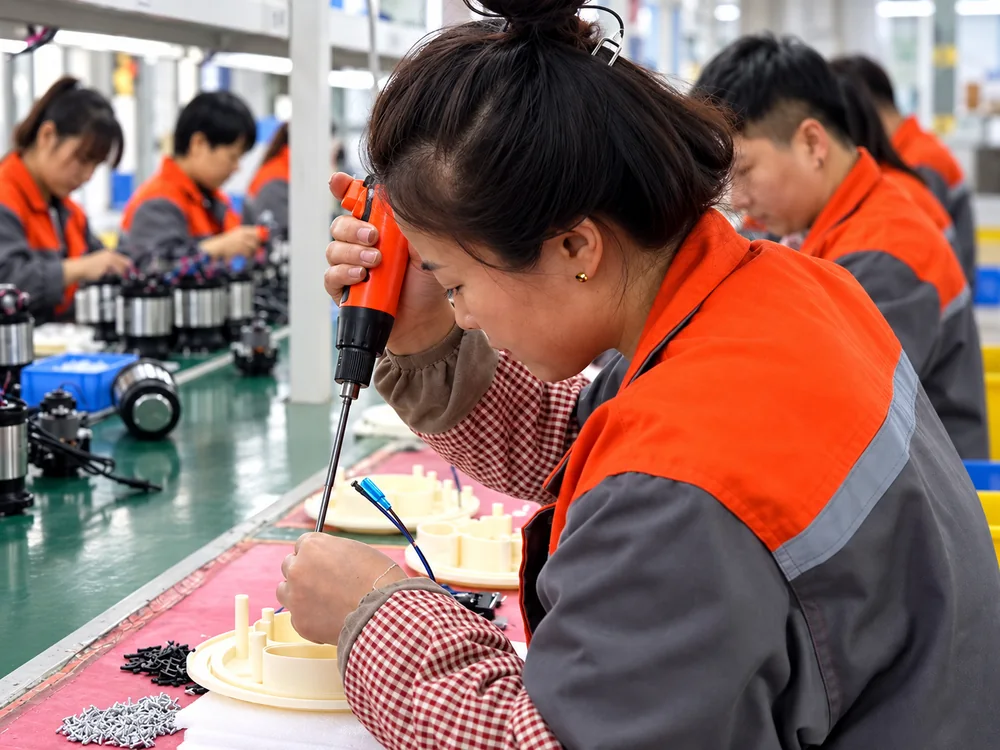
A factory introduction showing a blender base is not enough to explain a multi-container offer. Request an account of how the processor bowl, blending jar and any other included assembly join the relevant production route. Keep the inquiry specific to the proposed model so a broad catalog does not substitute for an explanation.
Use JINJIE's manufacturing information to frame questions about preparation, assembly and packing. For a combined set, ask how the factory brings the different assemblies together. A finished motor unit can still be waiting for one component before the complete retail product is ready.
Look for a clear technical contact when the question concerns fit or operation. Sales can coordinate the response, but the reply should identify the proposed assembly and the work needed to confirm it. A statement that two jars look alike does not answer whether both belong with your selected motor unit.
|
Manufacturing question |
A useful response identifies |
What the buyer can decide |
|---|---|---|
|
Who supplies the complete combination? |
The responsible party and included assemblies |
Whether this is a finished-set source or only a component offer |
|
How are assemblies matched? |
Model references and the relevant fit or operating checks |
Whether the proposed set has an identifiable product basis |
|
How do separate assemblies reach packing? |
The selected contents reference and preparation route |
Whether all required items are part of one retail unit |
|
What happens if a component changes? |
Affected configurations and the review needed |
Which earlier decisions must be reconsidered |
|
Who answers a set-level problem? |
A contact able to resolve the complete offer |
Whether support can address more than the motor base |
Do not turn this discussion into a demand that the manufacturer make every component itself. That would miss the actual purchasing risk. A source can describe a controlled matching arrangement without claiming universal in-house production. Conversely, making the motor housing internally does not establish responsibility for every attachment pictured beside it.
Ask which parts of the proposal are current and which require further preparation. An established combination with different printed material is not the same project as a newly requested container connection. Keep the distinction visible in the sample request and quotation. It explains why two visually similar proposals may involve different work before an order.
Review every working assembly without treating them as separate products
Request a sample representing the selected set. If only one assembly is supplied initially, identify what that sample can settle and what remains unreviewed. A successful blender demonstration does not complete the processor-bowl discussion simply because both use the same base.
Have the responsible product team explain the allowed tasks and operating method for each assembly. The buyer can then request relevant observations without improvising conditions. Keep the selected model's instructions as the basis for any powered work, including the fitting and removal sequence.
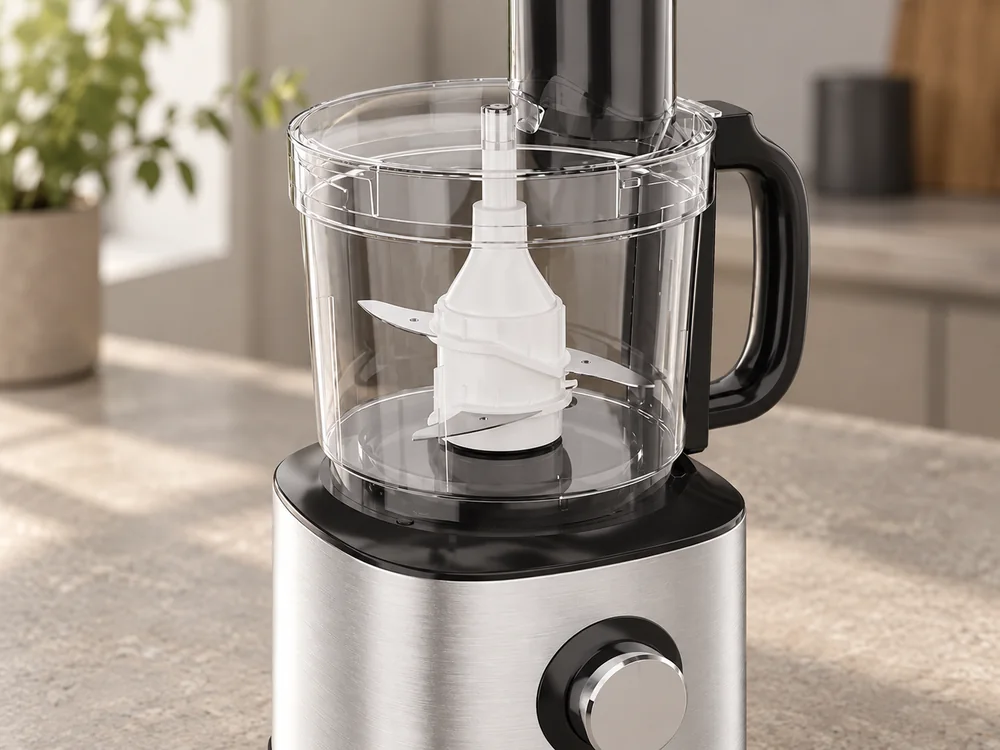
For the processor assembly, review the bowl, tool and lid together. For the blender assembly, review the jar, lid and matched base connection together. The purpose is to understand the supplied working arrangements, not to dismantle parts that users are not intended to remove or invent compatibility tests from appearance alone.
Keep capacity information attached to the correct vessel. The quotation's 2.5 L entry should not be reproduced beside every container in a combined photograph. Ask for each relevant container's specification and permitted filling guidance before writing a complete retail description. A single capacity figure does not define the whole system's usable output.
Review how control information changes, if at all, between the supported tasks. The customer may use one interface with several assemblies, so the instructions need to explain the relevant operation clearly. Do not assume that a familiar control position carries the same meaning for every attached container.
Include the transition between the principal tasks in the sample discussion. Where does the removed assembly go? Which parts must be cleaned or prepared before another task? These questions reveal whether the proposed instructions describe a usable routine. They do not justify running an unsupported recipe to demonstrate versatility.
Use JINJIE's quality and testing information to request checks tied to the complete sample. Distinguish a visible component review, a fit check and an operating assessment. Each answers a different question, and none should be described more broadly than the actual evidence allows.
Record findings by assembly as well as by model. If the processor bowl is acceptable but the jar reference is unresolved, keep that distinction. The manufacturer can address the missing connection without repeating every completed observation. At the same time, the incomplete jar decision must remain visible before the combined product is treated as ready.
An optional function may be removed from the retail promise if it is not needed and its inclusion is revised with the supplier. An essential function needs an adequate answer. This prevents a successful result on one assembly from hiding the unresolved task that originally justified buying the combination.
Compare quotations in complete sellable sets
Define the unit of purchase explicitly. One motor base, one processor assembly and one blending assembly may form one retail set. Three physical assemblies do not mean three sellable appliances. Use the agreed contents to make the quotation quantity, packing quantity and receiving expectation consistent.
Ask for the complete-set price before evaluating optional additions. A quotation for the motor unit alone can be useful in a component discussion, but it cannot be compared with another manufacturer's fully packed system. Keep the price basis visible when requesting a smaller or larger combination.
Separate the standard offer from the version you actually intend to buy. If an optional container is removed, ask for the revised set, instructions and packing proposal. Do not assume the supplier can simply subtract an accessory price while every other commercial condition remains unchanged.
For a mixed assortment, record quantities by complete configuration. Two variants may share a motor unit while using different containers or printed materials. The total number of common bases does not tell the supplier how many of each retail set to prepare. A short configuration list prevents that ambiguity.
Consider a simple planning example: a shipment intended to contain 100 complete sets needs every required assembly for those 100 sets. If only 90 of one mandatory assembly are available, 100 finished motor bases do not create 100 complete sellable products. These quantities illustrate the counting issue; they are not JINJIE supply conditions.
Ask how the manufacturer proposes to handle such a shortfall if it occurs. Waiting for the missing item, revising the shipment or supplying a different agreed configuration are commercially different responses. The buyer should make the choice from an explicit proposal, not discover at receiving that the package contents were changed to match available stock.
Review packaging around the selected combination. Multiple vessels need a defined placement and protection arrangement, and the outer dimensions should describe that actual pack. A box measurement from a single-jar version is not a reliable shipping input for the broader set. Obtain current packed details before comparing transport assumptions.
Discuss the opening commitment at the configuration level. Ask whether the proposed minimums and timing apply to the complete set, a finish, an electrical version or printed materials. This is especially important when a retailer wants several combinations with similar appearances but different contents.
The lower complete-set price may still require a larger stock commitment. Assess that trade-off using the channel's actual demand and the supplier's current conditions. Additional assemblies should earn their place through the supported customer offer; an attractive apparent discount is not a reason to buy components the channel cannot explain or use.
Make one branded product from several working arrangements
A combined appliance needs a clear retail identity. Start with the two or three tasks that justify the selected set, then show the supplied assemblies that perform them. A broad function headline should not make an optional tool appear included or imply a use that the model has not been confirmed to support.
Use JINJIE's OEM and ODM options to separate branding changes from changes to the working combination. A logo, color or retail box can be discussed around an existing product. A different jar interface or processing attachment changes the product question and needs its own supplier response.
Review all assembly illustrations against the chosen configuration. Designers sometimes have attractive images from several versions, but those images should not be combined into a fictional set. Keep the product reference beside the supplied visual files so the person preparing the box knows which parts belong together.
Avoid making the customer decode several capacity figures without explanation. Label each vessel clearly where its size matters. The main product presentation can remain simple while the detailed specification identifies the relevant container. Clarity is more useful than attaching the largest number to the entire assortment.
The instructions should connect a task to the required assembly and the permitted method. When several parts have similar names, use consistent terms and recognizable illustrations. A customer looking for the processor lid should not have to guess which of two differently shaped covers the translation calls the top.
Review the first unboxing as a complete experience. Can the customer identify the supplied containers and find the instructions for the intended first task? If parts are protected or separated inside the pack, the contents information should help the customer account for them. Keep this practical rather than adding unnecessary promotional material.
Decide how optional future accessories will be described. If separate supply and compatibility have not been agreed, do not advertise an open-ended expandable system. The current complete set can have a useful proposition without promising that any later attachment will fit or remain available indefinitely.
Agree how changes and support affect the whole set
Ask how a change to one assembly will be communicated for later orders. A revised lid may concern one configuration, while a motor-unit change may affect several. The useful response identifies the affected sets and the review required rather than describing everything as a minor update.
|
Proposed difference |
Set-level question |
Buyer response |
|---|---|---|
|
Another jar or lid |
Does it change the approved working assembly or description? |
Review the affected combination before accepting the substitution |
|
A revised motor unit |
Which supplied assemblies remain part of the current proposal? |
Obtain the complete updated set reference |
|
One optional tool is removed |
Which customer promise and printed material change? |
Agree the revised retail offer and packing |
|
A component is missing after delivery |
Which set and component are involved? |
Request the agreed corrective arrangement using identifiable references |
|
A later order has different contents |
Can old and new retail versions be distinguished? |
Keep separate receiving and customer-support descriptions |
For service planning, ask which assemblies or components can actually be supplied separately. Their presence in the original set is not a promise of independent parts sales. If separate supply is unavailable, discuss an alternative support arrangement before your channel promises individual replacements.
Keep any agreed service stock separate from sellable-set quantities. A spare jar should not be counted as another complete product, and removing an item from a retail box creates an incomplete set. Warehouse instructions should make that distinction clear when staff are resolving an urgent customer request.
Retain the supplier model alongside your retail name. Customer-facing names can change between channels, while the service question still concerns a physical assembly. The link between the retail SKU and manufacturer configuration helps the supplier identify the right response without relying on a broad product photograph.
On a repeat order, compare the current proposal with the earlier complete-set reference. Do not approve by model name alone if the contents have changed. Ask which differences affect the customer explanation, packing or support stock, then decide whether the revised offer still serves the channel.
Request a complete combination proposal
Send JINJIE your processor and blender set requirements with the intended household tasks, preferred MFP reference, destination market and expected quantity. Identify the mandatory working assemblies, any optional additions and the retail presentation needed. Request one complete proposal with unresolved product questions clearly separated from optional design preferences.
FAQ
Can the first sample include only the blender assembly?
It can answer the questions assigned to that assembly, provided the supplier identifies the sample and its limits. It does not approve the processor part of a combined offer. Request the remaining assembly before treating the complete retail set as evaluated.
What if the manufacturer uses a different name for the small container?
Use the product reference, picture and supplier's description of its permitted task together. Agree one customer-facing term after its role is clear. Do not infer dry grinding, wet blending or another function from a generic name alone.
Can we sell the same motor base in two different packages?
Discuss the exact configurations and quantities with the manufacturer. Obtain separate contents and packing references, even if the base is common. Keep the commercial conditions and retail descriptions attached to each set rather than assuming unrestricted mixing under one model name.
Should we keep incomplete sets available for spare parts?
Only under an agreed internal and supplier-supported arrangement. Identify what has been removed and prevent the remaining package from returning to sellable stock as a complete unit. Confirm the compatibility of any part used for support instead of relying on its similar appearance.