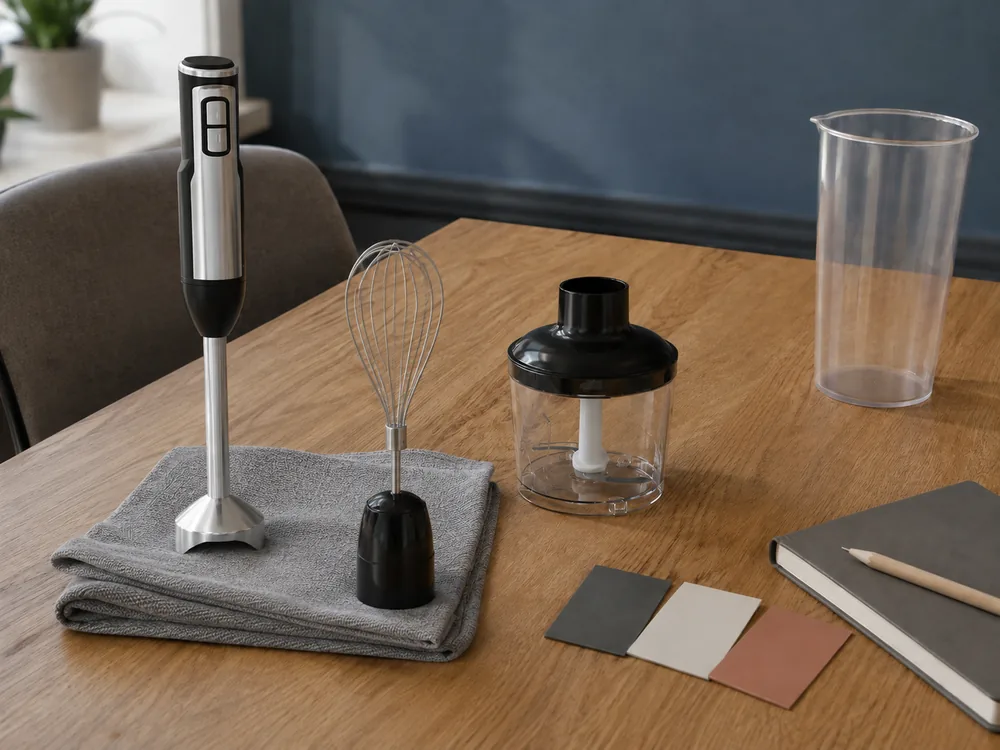
The first reply from a hand blender company should make the product easier to identify. It should connect your reference image to a model, explain what the proposed set includes and tell you which details still need a decision. A long catalog with no configuration answers leaves the purchasing work unfinished.
Before paying for samples, send shortlisted companies the same brief and request the sample charge, freight arrangement and dispatch date. Ask separately for production MOQ, branding options and the basis of the production lead time. These are project terms to obtain, not assumptions to make from a catalog.
Identify the hand blender company behind the proposal
Record the company name on the quotation, the contact handling the project and the entity expected to supply the order. Where manufacturing, export or document-holder names differ, ask the contact to explain the relationship. A difference can have an ordinary commercial explanation, but the buyer should not have to infer it.
Check the company's own published contact information against the quotation. JINJIE's published company information identifies Langfang Jinjie Household Products Co., Ltd. in Langfang, Hebei, China. That is a starting point for matching the project correspondence. A website statement alone does not replace the business records required by your company's vendor-approval process.
Ask who will answer configuration questions and who will coordinate the sample. The same person may handle both. What matters is that questions about attachments, electrical versions or instructions reach someone who can confirm them rather than simply repeat a catalog headline.
Keep this inquiry focused on the product. There is no need to collect unrelated personal information about staff or ask a supplier to disclose other customers' orders as proof of credibility.
Decide which role you need the company to perform. A buyer seeking an existing private-label product needs a clear route to configuration, samples and order coordination. A project involving a new attachment or substantial design change raises additional questions about development responsibility. Do not use the same first-contact test for both projects without stating the difference.
Ask the contact to describe how an unresolved technical question will be handled. You do not need a full organization chart. You need to know whether the answer will come from the responsible product or technical team and how it will be returned to the buying record. A sales reply can be useful when it clearly distinguishes a confirmed answer from a point still under review.
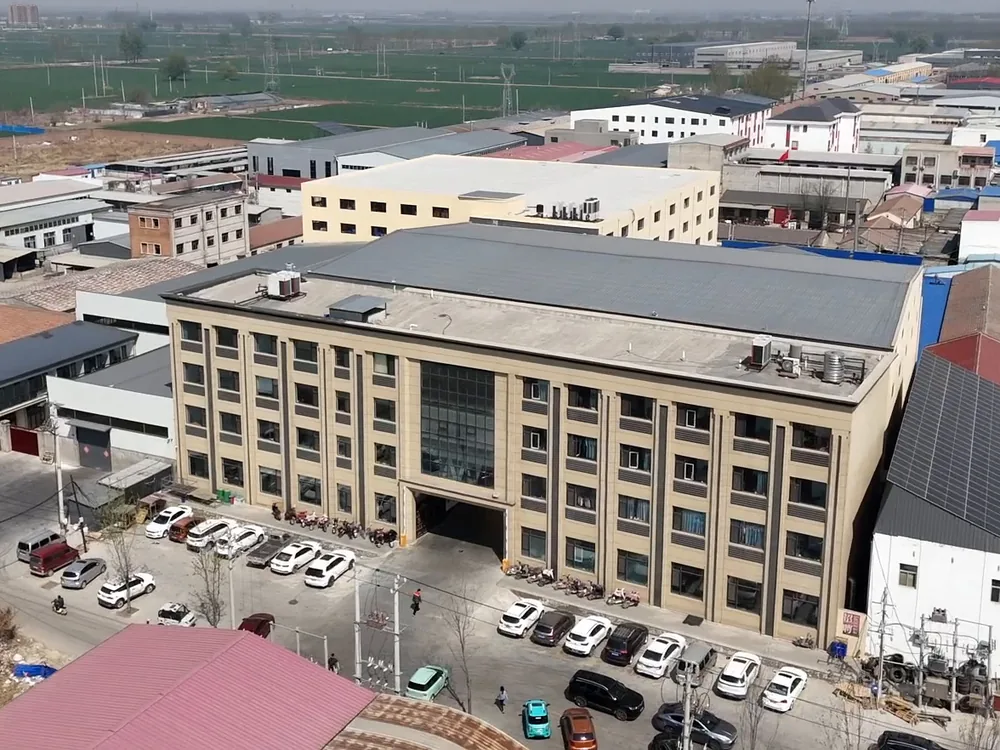
Treat factory photographs as context, not proof of the exact proposed supply arrangement. If a manufacturing step matters to your vendor selection, ask about that step and the relevant product. A broad factory image cannot establish which version will be made, where a particular component comes from or what your sample includes.
Test the clarity of one product response
Select one reference image and ask the company to identify its closest current model. Then request the actual specification and set contents for that proposal. This reveals more than asking whether the company sells immersion blenders in general.
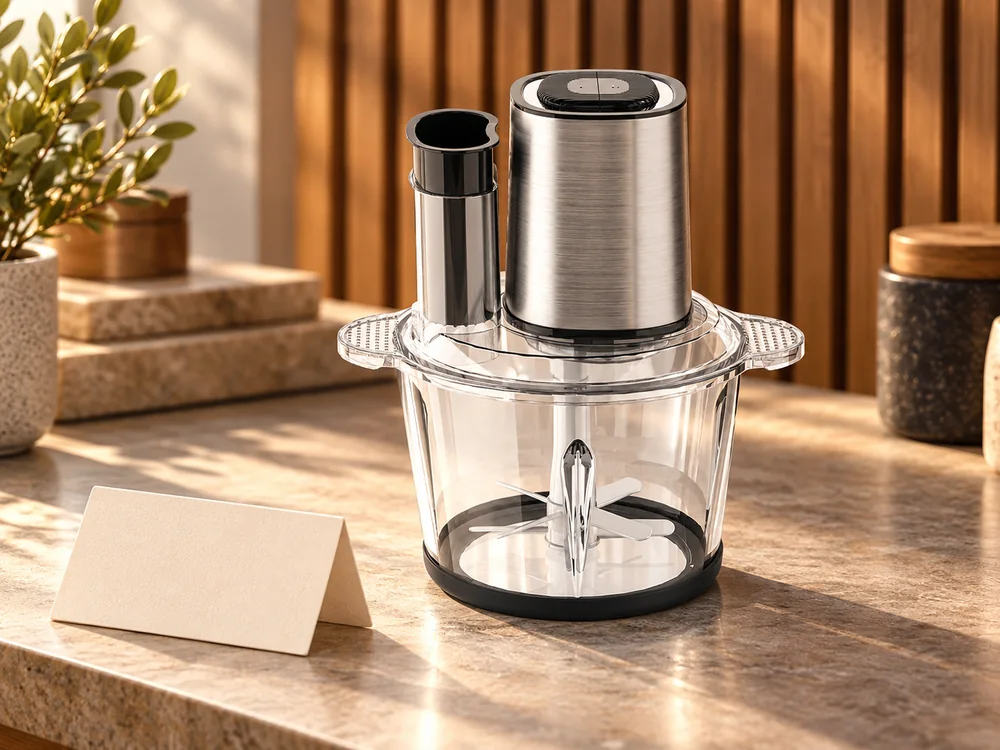
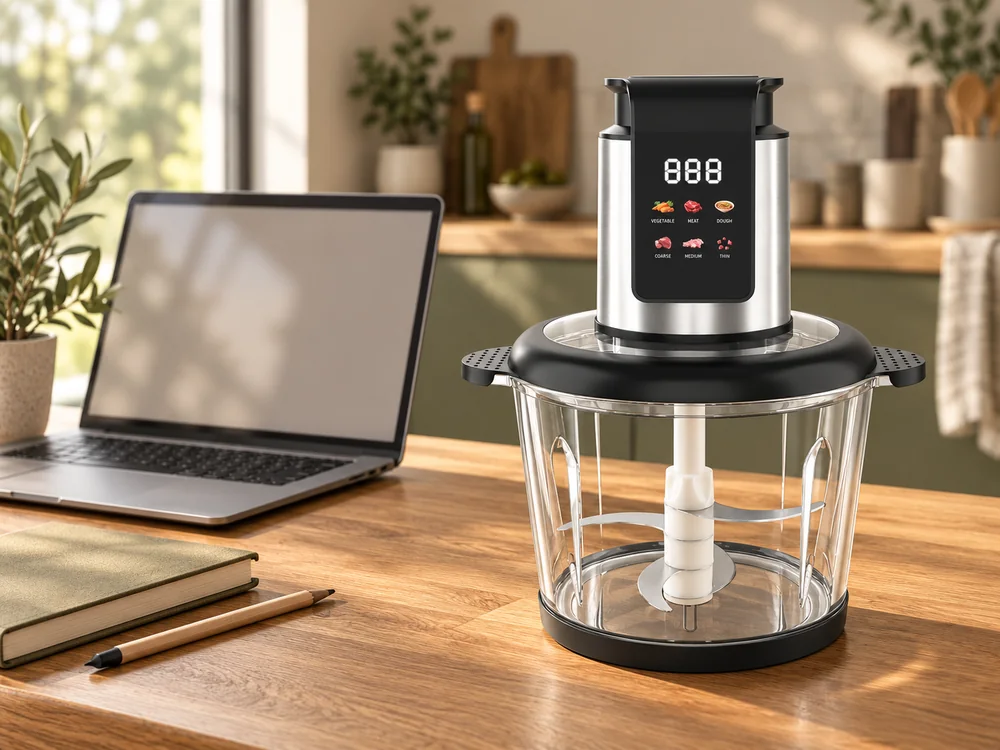
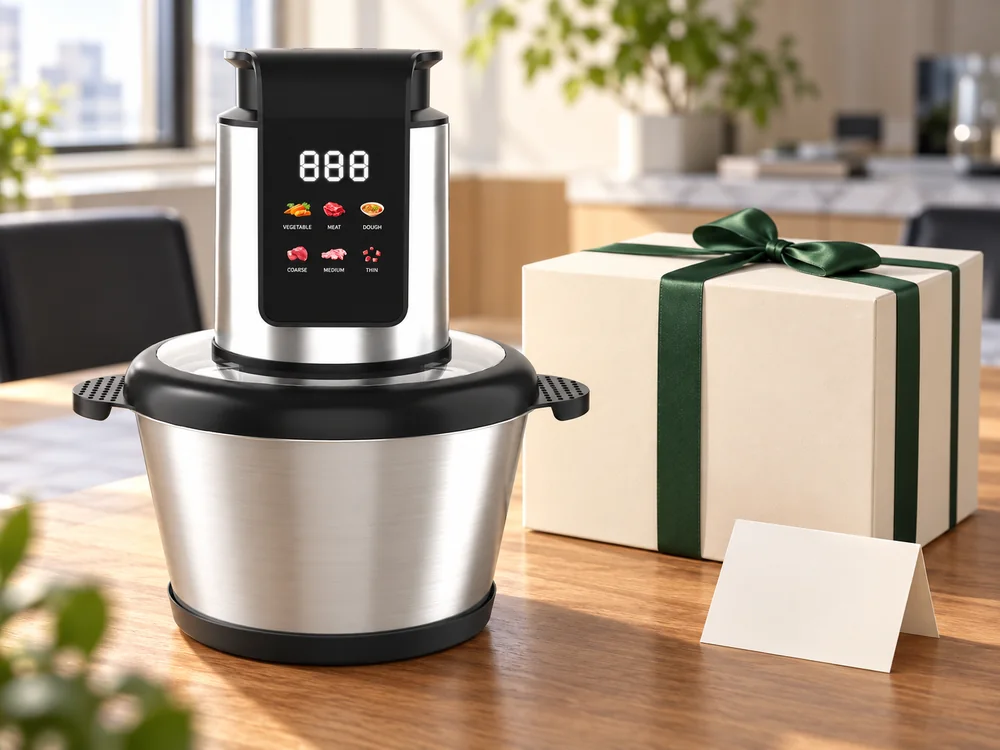
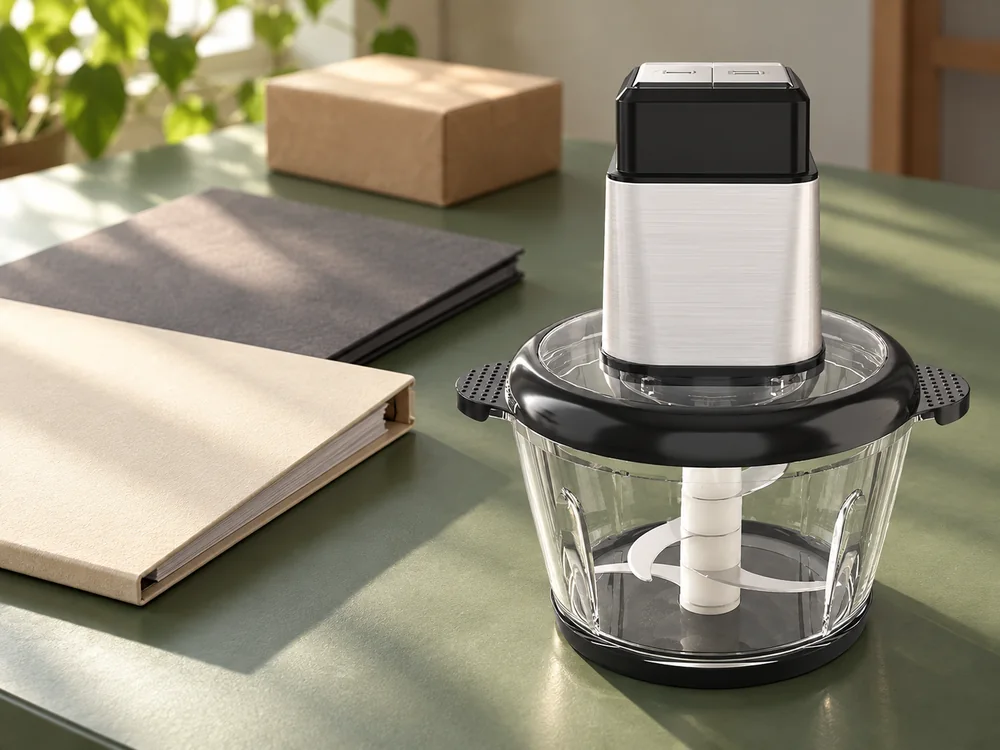
A useful reply distinguishes the core motor unit from the detachable blending attachment and any optional whisk, chopping container or beaker. It should also identify the control format and electrical version. If a photograph shows several assembled configurations, ask whether it illustrates alternative uses of one motor unit or multiple appliances included in the box.
JINJIE's reference provides a practical reason to ask. The secondary reference HB1141 appears in both an HB-02 entry listed at 300 W and an HB-01 four-in-one entry listed at 400 W with a 0.8 L capacity field. The secondary reference alone does not resolve which sample should be dispatched.
When an answer is missing, identify the decision it holds up. An unresolved motor or attachment version prevents a like-for-like sample comparison. A final logo position can wait if the first order is explicitly for an unbranded evaluation sample.
Use one manageable question to assess the response process. For example, ask whether the proposed whisk is included or optional and request the corresponding set photograph. A reply that answers the question and updates the offer is easier to use than several messages containing different accessory images with no explanation.
Watch how corrections are handled. If the first answer contains an error, a clear corrected specification with an explanation can restore a usable basis for comparison. The more concerning pattern is a changed answer that leaves the previous version circulating without identifying which one is current.
Do not turn this exercise into a hidden test that the supplier cannot reasonably pass. Give the destination market, intended use and reference image before judging whether the answer is complete. A supplier cannot identify the electrical version or suitable retail set from a vague request for its most popular model.
Request evidence suited to the decision
At this stage, the buyer needs enough information to choose and identify a sample. That usually means a current product sheet, a set list, photographs of the proposed configuration and the relevant operating instructions. Add document requirements for the destination market without assuming that a company-level certificate covers every product.
Ask the supplier to identify the model, electrical version and attachments covered by any document it submits. If the commercial reference and the document identifier are different, request a written mapping. A file with a familiar logo or a recent date is not automatically relevant to the order.
Limit the first request to files needed to select and use the sample. Record when the remaining market documents will be available, so the cost of sampling is not confused with approval to sell the product.
Separate missing evidence from a missing answer. The supplier may know which configuration is proposed but need time to retrieve a relevant file. In that case, ask for the file identity and expected availability. If the configuration itself is undecided, collecting more documents first may create a folder that does not match the eventual sample.
Make the decision threshold explicit inside your own team. Some information is needed before paying for a sample, some before operating it and some before a production commitment. This does not reduce the final requirements; it prevents a preliminary inquiry from becoming an indiscriminate request for every company document.
Where a requirement is mandatory for your project, state it early. If the company cannot support it, finding that out before customization saves both sides work. An unsupported requirement should not be hidden behind a promise that it can be discussed after the order.
JINJIE's compliance documentation page describes this model-and-market approach. Request the records covering the selected model, electrical version and destination market.

Send a sample request the dispatch team can use
The request should be detailed enough that someone who did not attend the sales conversation can prepare the correct parcel. Give every included item a name and quantity. Connect the specification to an identifiable revision rather than “the latest model.”
|
Sample-request field |
What the buyer should specify |
|---|---|
|
Product identity |
Current model, other reference code and dated image |
|
Sales format |
Core unit only or the exact accessory set |
|
Electrical version |
Required voltage, frequency and plug for review |
|
Appearance |
Agreed color, finish and whether branding is required |
|
Intended evaluation |
Preparation tasks and questions to be resolved within the instructions |
|
Documents |
Product sheet, instructions, set list and relevant file references |
|
Packaging |
Sample protection or a requested retail-pack mock-up |
|
Open items |
Anything the supplier must confirm before dispatch |
Compare the total cost of receiving the requested sample, including the quoted customization and freight. A stock-color sample can settle handling questions before a branded version is commissioned. Use a branded sample first when logo application or the retail finish is itself the question being evaluated. Confirm charges and timing with the supplier.
If a retail pack is part of the evaluation, say so explicitly. A protected engineering sample and an approved shelf-ready pack are different deliverables.
Ask what the quoted dispatch date depends on. An existing unbranded sample may follow a different preparation path from a sample requiring a particular electrical version or printed box. Obtain the proposed date for your actual request rather than treating a general availability statement as a commitment.
Keep the sample invoice or offer aligned with the brief. If the seller uses a shorter description, ask for the agreed specification reference to be included in the correspondence. The person preparing the parcel should not need to reconstruct its contents from several separate chat messages.
Agree how a proposed substitution will be raised before dispatch. The buyer may accept a stock color for an early handling review, but a different attachment or electrical version can change the evaluation. Give the supplier a way to request approval without assuming that any similar-looking unit is acceptable.
Read the reply for unresolved decisions
Compare replies on the same configuration and delivery basis. If one price excludes the whisk or retail box, ask for the missing item to be priced separately before ranking the offers. Keep MOQ and production timing beside the sample terms so a low sample charge does not hide an unsuitable order requirement.
For example, a supplier might identify the proposed motor unit and whisk but leave the chopping-container capacity unspecified. The useful next question is which container will be supplied and which capacity the supplier is quoting. Asking again whether it is a “good four-in-one set” will not close the gap.
If the reply substitutes another model, ask what changed. Keep the original reference and the replacement side by side in the project file. Do not approve the substitution by silence or allow an updated picture to overwrite the sample identity.
A supplier that requests the missing destination market or attachment list is doing necessary definition work. Speed of reply matters commercially, but a quick unqualified yes is not a substitute for a coherent specification.
Compare the replies by the decisions they enable. The following matrix is useful for a shortlist discussion; it is not a ranking of JINJIE or any competing company.
|
Reply pattern |
What it tells the buyer |
Proportionate next step |
|---|---|---|
|
Identified model, complete sample contents and clear terms |
The proposed sample can be compared with the brief |
Resolve any remaining mandatory items and consider sampling |
|
Broad catalog and a low starting price |
Product fit and price basis remain unclear |
Request one defined configuration |
|
Relevant questions about the market and attachments |
The company is defining the missing scope |
Supply the information and review its revised proposal |
|
Unexplained change in model or accessories |
The sample identity is unstable |
Hold dispatch until the version is agreed |
|
Clear alternative that meets the main use but changes a preference |
There may be a workable narrower option |
Compare the tradeoff with the retail brief |
|
Repeated blanket approval without applicable information |
Important questions remain unanswered |
Pause that option rather than assume the missing details |
Do not average an essential failure into a general supplier score. A company can communicate pleasantly and still propose an unsuitable order quantity. Another can provide a good sample offer while leaving a mandatory project requirement unresolved. Record those differences explicitly so the shortlist does not hide the reason a candidate cannot proceed.
Conversely, avoid rejecting a useful reply just because it contains qualifications. A supplier that says a requested accessory is not included has given the buyer actionable information. Ask whether the actual set still fits the plan or whether an approved alternative is available.
Keep the commercial comparison on the same basis. Sample price, dispatch timing and production terms answer different questions. A favorable sample price does not compensate for an order quantity the buyer cannot use, and a suitable production proposal does not make an undefined sample worth buying.
If two proposals remain suitable, choose the next question that could change the selection. It might concern whether the intended attachment is available, whether the proposed quantity fits the project or whether a sample can be prepared in the required version. Asking both companies for another general introduction is unlikely to resolve that choice.
Record your own response as clearly as you expect the supplier to respond. When accepting a revised set, identify the revision and the change accepted. When declining an alternative, explain the requirement it misses. This keeps the exchange focused and prevents a supplier from spending time on options that the buying team has already ruled out internally.
The quality of the comparison depends on a stable brief from the buyer as well as a clear answer from the company.
Decide whether the company is ready for a sample order
Place the sample order when the product is identifiable, the evaluation is within its written scope and the sample cost and dispatch terms are acceptable. Keep a supplier on hold if a required configuration or production MOQ remains unresolved. A clear proposal for a simpler set can still be useful when it meets the intended retail brief.
Review financial standing, factory ownership and historical quality records separately through your vendor-approval process.
Use a simple outcome for each shortlisted company: proceed with a defined sample, request one specific clarification, or set the proposal aside because it does not fit. This is more useful than leaving every conversation open indefinitely. The reason should be understandable to a colleague who has not read the full message history.
For a private-label project, review JINJIE's OEM and ODM scope once the basic product fit is clear. State whether the next step concerns branding on an existing configuration or a more substantial product change. That distinction helps align the sample request with the work actually being proposed.
Before paying, check that the team agrees on what the sample is expected to decide. If purchasing wants to assess handling while marketing expects a finished branded retail pack, one parcel may not satisfy both. Either combine those requirements explicitly or sequence the work so the first sample has a clear purpose.
After receipt, compare the response with the delivered sample. A coherent pre-sample exchange is valuable because it creates a reference for that comparison. It does not guarantee future performance, but it makes a discrepancy easier to identify and resolve.
Conclusion
Review the JINJIE immersion blender formats, choose the nearest reference and send one complete sample brief. Include the target market and distinguish mandatory requirements from preferences.
Choose a company for the next sampling step when its proposal is identifiable, commercially workable and responsive to the actual project. Keep formal vendor approval separate. The immediate deliverable is a sample order that both sides understand, not a broad judgment based on a catalog or a fast reply.
FAQ
Should I request the complete set first?
Request the configuration you intend to evaluate. If the retail plan depends on a whisk or chopping accessory, a core-unit-only sample cannot settle those attachment questions. A simpler sample is reasonable when the core product itself is still being selected.
Is a shared secondary reference enough to match two quotations?
No. Check the power entry, electrical version, included accessories and the primary model code. The HB1141 example shows why configuration-level identification is necessary.
What if some files are unavailable before sampling?
Record which decision each missing file affects. A minor artwork detail can remain open during an early product review. A missing operating instruction or unresolved intended-use question should be settled before the corresponding evaluation.
Should I ask every shortlisted company for a custom-branded sample?
Only if branding is part of the decision you need to make now. An identified standard sample can be useful for an initial product review, while a branded sample addresses additional appearance and application questions. Ask for the separate costs and timing so the first round of sampling answers a defined question.