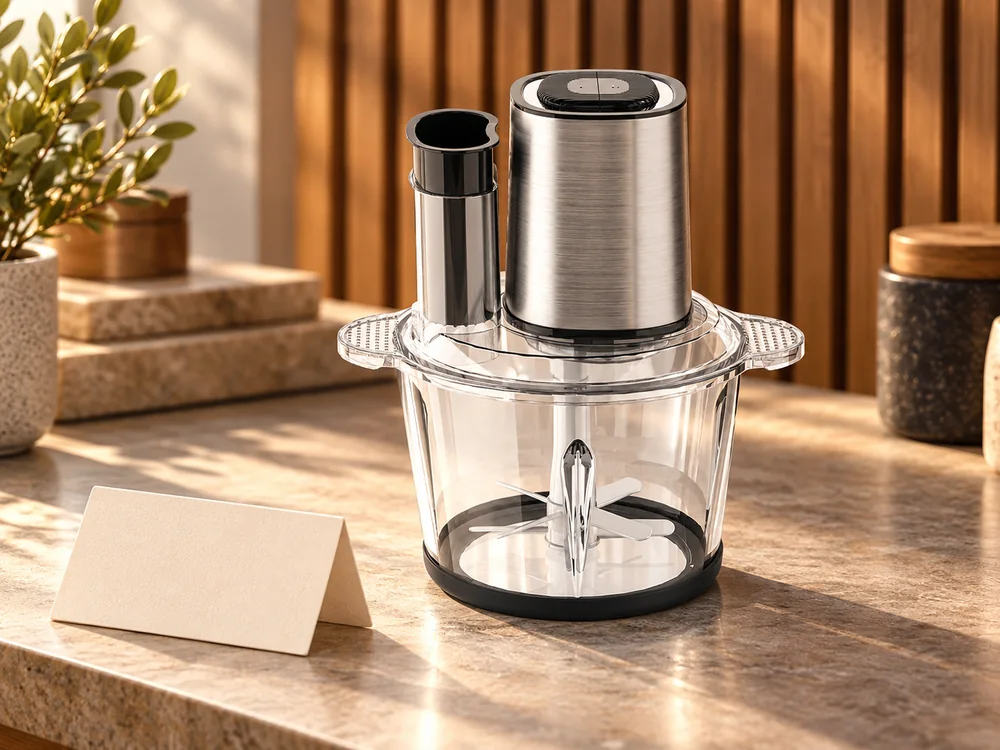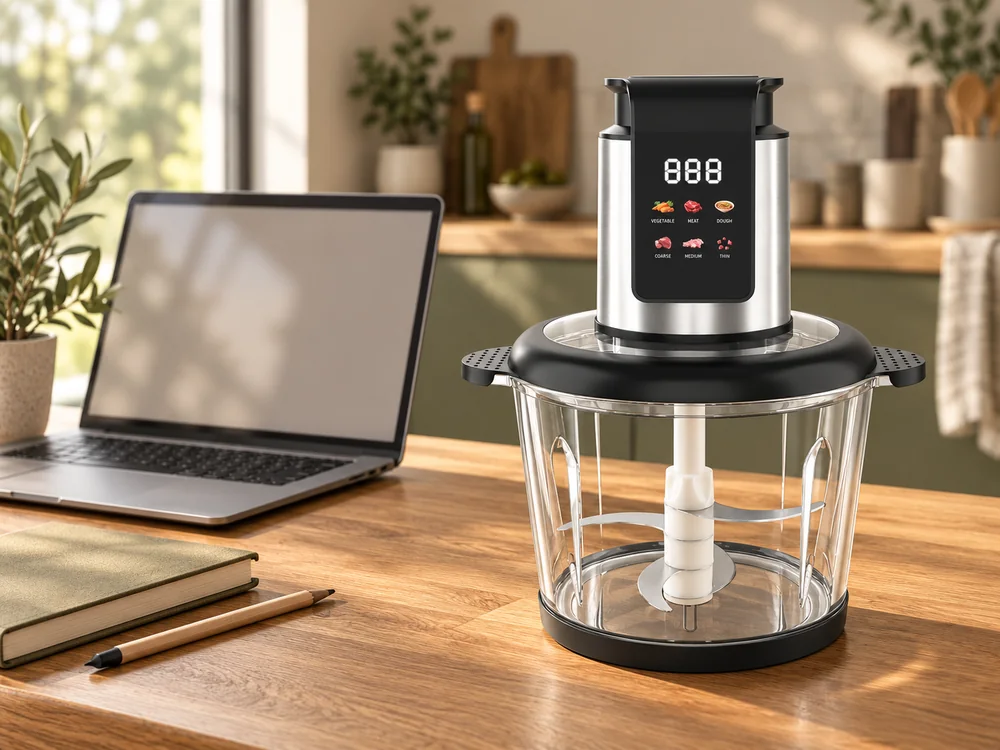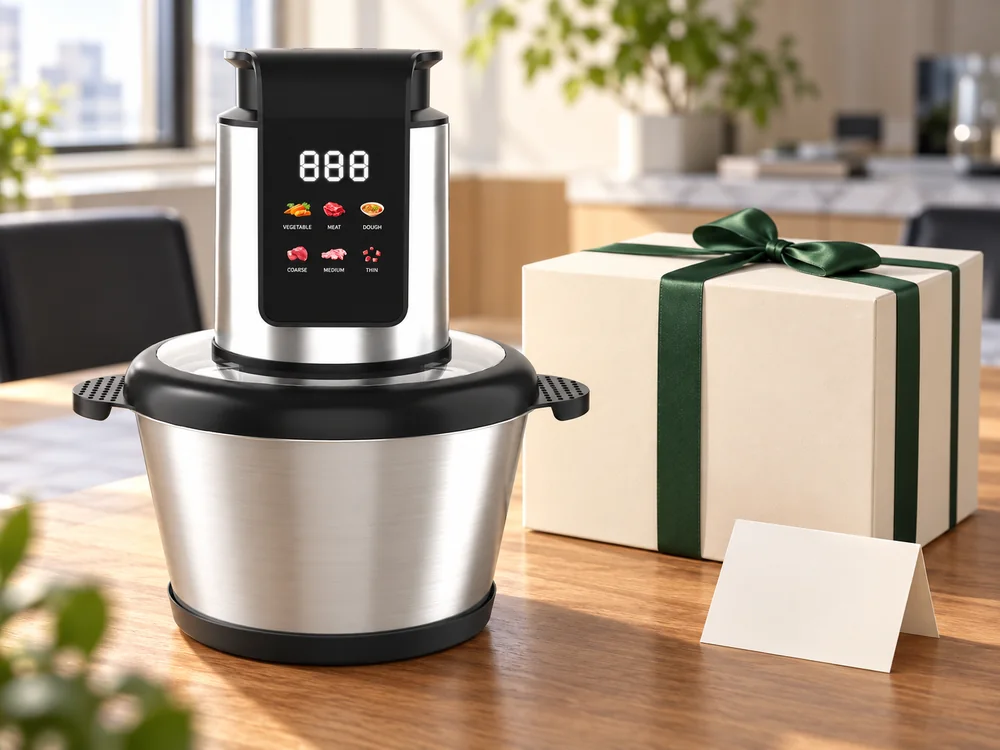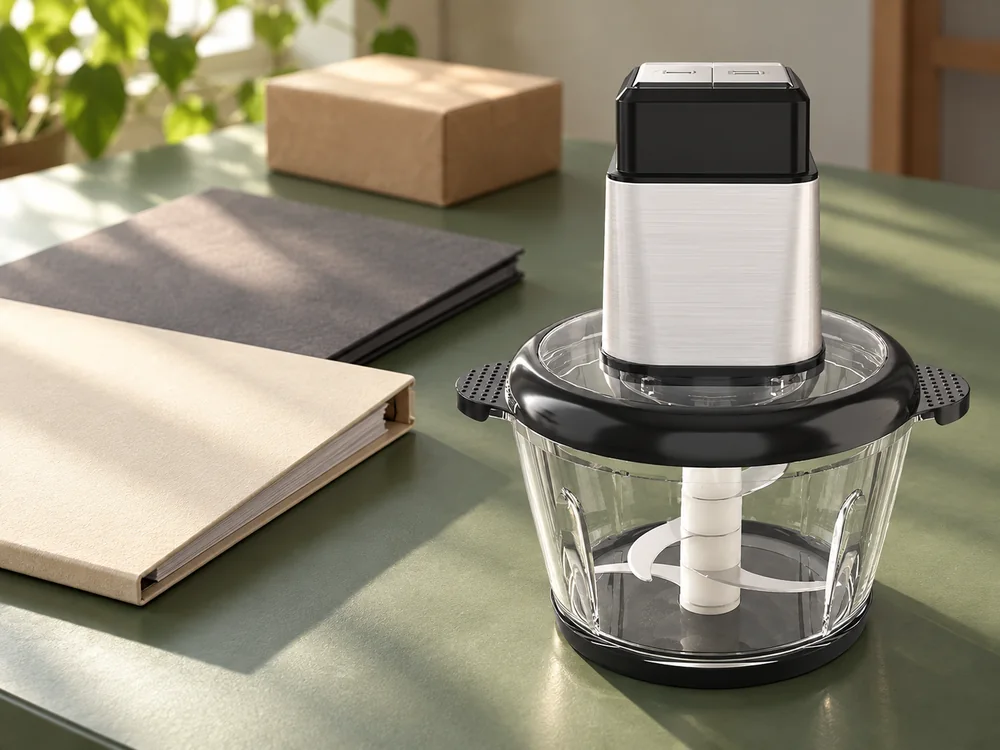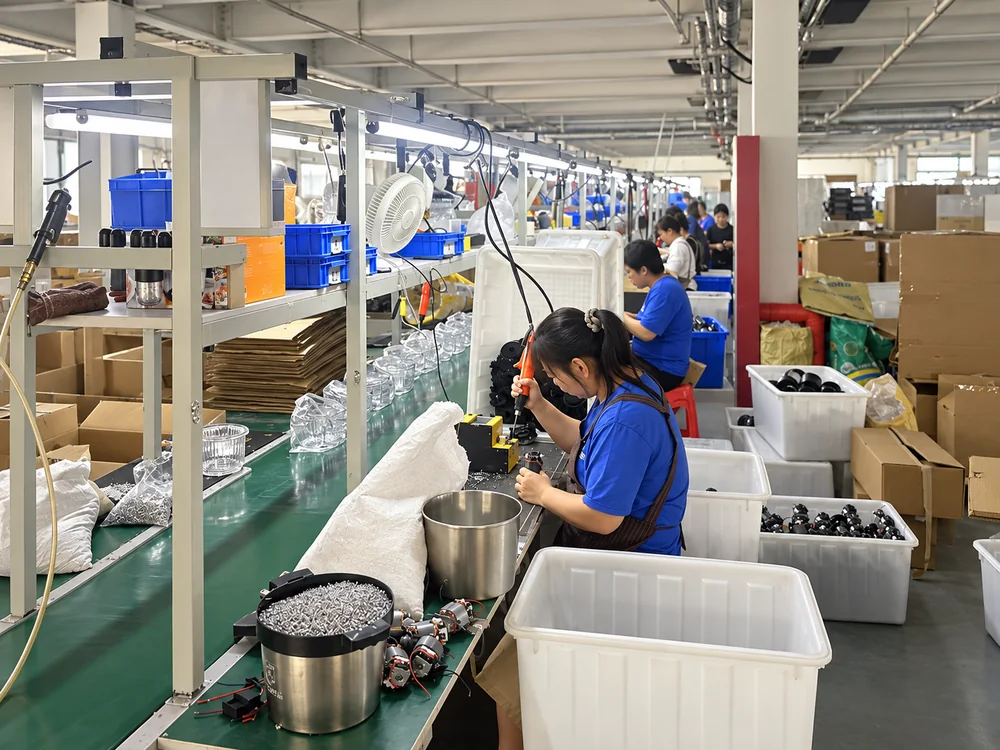
A remote meat chopper factory audit is most useful when it follows the appliance you intend to buy. Start with a named electric bowl chopper model, follow its components through assembly and packing, and record what the supplier can support for that configuration. A general factory tour helps you understand the site, but it leaves the buying decision unfinished.
For importers and private-label sourcing teams, the immediate decision is usually whether to order samples, request specific missing evidence, or arrange a closer on-site assessment. Each outcome needs a different level of detail. A first discussion about a standard model does not require the same review as transferring an established range to a new supplier.
This guide concerns household electric bowl choppers with a motor head above the bowl. It does not cover industrial bowl cutters or screw-fed meat grinders. The aim is to organize a focused remote review, interpret what you see, and turn the follow-up into a purchasing decision. You can use the two tables below to choose the review scope and record the evidence still needed.
Set the scope of your meat chopper factory audit
Give the factory a product-specific brief before arranging the call. Include the model reference, target market, intended sales channel, likely order size and the changes being considered. Attach a photograph if different names have been used during discussions. The person conducting the tour then has a practical reference for choosing which operations to show.
Describe the decision you need to make. If you are comparing two possible suppliers for a standard chopper, the review should establish whether each can explain and control the proposed product. If you already have a sample and are preparing an order, spend more time on how that version reaches production. For a changed motor housing or control system, the discussion also needs the person responsible for evaluating the modification.
JINJIE's electric meat chopper range includes different bowls and control formats. Choose a reference from the relevant product family before treating a factory demonstration as evidence for your inquiry. A similar-looking appliance can be useful for explaining a shared operation, provided the host identifies what is shared and what differs.
The following comparison helps separate review options by the purchasing question they can answer. It is a planning guide, not a formal audit standard or a scoring system for declaring a factory approved.
|
Review option |
Best used when |
Evidence to seek |
Purchasing consequence |
|---|---|---|---|
|
Introductory remote review |
You are deciding whether a supplier merits sample work |
Relevant product route, named technical contact and explained production stages |
Proceed to a defined sample inquiry if the route fits your product |
|
Order-specific remote review |
The sample is selected but production details need alignment |
Approved version, preparation records and examples of how changes reach the line |
Resolve version gaps before releasing the affected work |
|
Focused on-site assessment |
Important operations or records remain unclear remotely |
Direct observation of the disputed activity and access to relevant records |
Use the findings to decide whether additional controls or another supplier are needed |
|
Shipment inspection |
You need evidence about finished goods in a particular order |
Identified lot, agreed checks and recorded results |
Make a shipment decision for that lot rather than a general factory judgment |
A remote review can lead to any of the other options. Choose the next step around the unresolved question. Paying for a broad on-site visit adds little if the actual problem is simply that nobody has agreed which sample version will be quoted.
Prepare a call that can produce usable evidence
Send a short agenda with the brief. Ask the host which relevant operations are running, which can be shown safely, and which records can be discussed without exposing another customer's information. Agree who will answer commercial questions and who can explain assembly or inspection. A sales contact can coordinate the discussion, but a technical question should reach someone able to answer it.
Keep the agenda shorter than a complete supplier questionnaire. For an initial review, you might ask to see component preparation, one relevant assembly station, an inspection example and finished-goods staging. Leave time for follow-up questions. A camera that moves continuously across the building produces footage without giving the buyer time to understand what each station does.
Agree the recording arrangement in advance. If the host does not permit recording, assign a note-taker and ask for selected still images afterward. Record the date, site and product reference with each item. Separate footage taken during the call from older photographs supplied for background. Both may be useful, but they answer different questions about the current production situation.
Confidential information can often be removed while preserving the meaning of a record. A customer name, price or address may be irrelevant to your review. The product identity, type of check and relationship between a finding and its follow-up are usually more useful. Request a redacted example rather than insisting on unrestricted access to another buyer's files.
Before the tour begins, check that the sound and close-up view are usable. Ask the host to pause when you need to read an identifier or see how two parts connect. Where the connection is weak, agree to receive an identified photograph later. Avoid treating an unreadable screen as either positive evidence or a supplier failure.
Write observations in plain terms. “The host showed labeled containers beside the assembly station” describes something seen. “The factory has complete traceability” is a much wider conclusion. The useful follow-up is to ask how one container is connected to a part reference and how that reference reaches the production record.
Follow one product route through assembly and storage
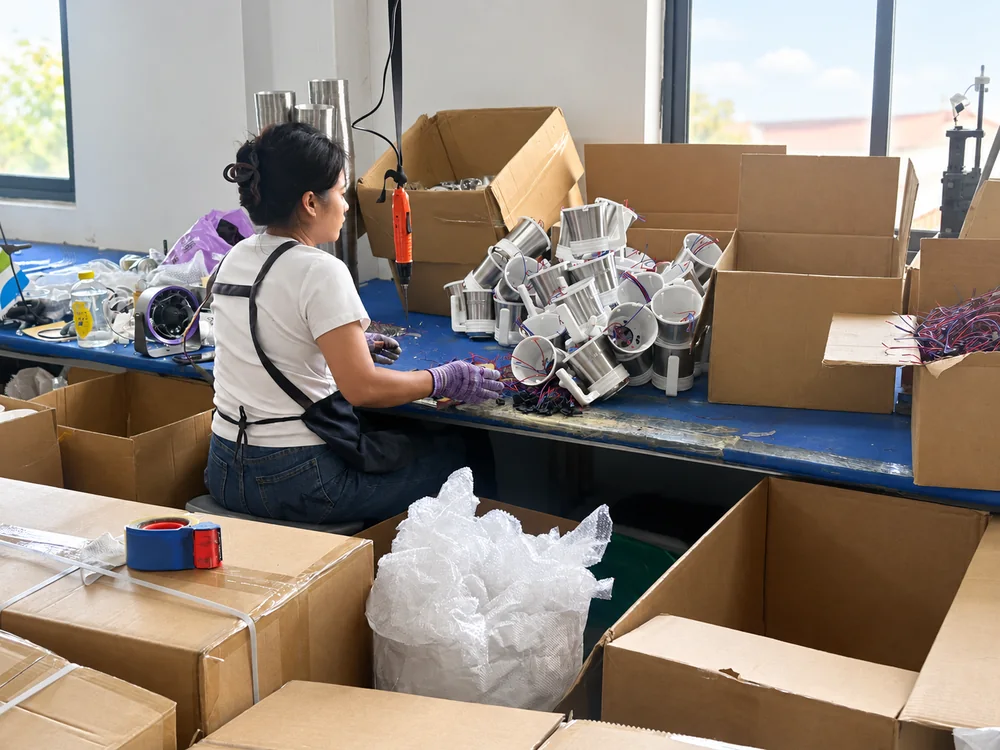
Begin with component preparation and stay with one relevant product route. At an assembly bench, look for the relationship between the parts waiting beside the operator and the unit being assembled. For a bowl chopper, that might include the motor housing, control parts, lid and matching bowl. Ask how the operator knows which version to build and where an approved change appears.
JINJIE's manufacturing process describes component preparation, assembly, inspection and packing. Use those stages to organize the discussion, then ask for the details relevant to your chosen appliance. A process description gives the route. The tour should help you understand how the selected version follows it.
At the first-unit check, ask what the team compares and what happens when a difference is found. A buyer can reasonably ask to see how appearance, controls or accessory fit are checked against the agreed reference. Leave powered demonstrations and safety procedures to qualified staff. The review should never require an operator to bypass a guard or interlock for a clearer camera view.
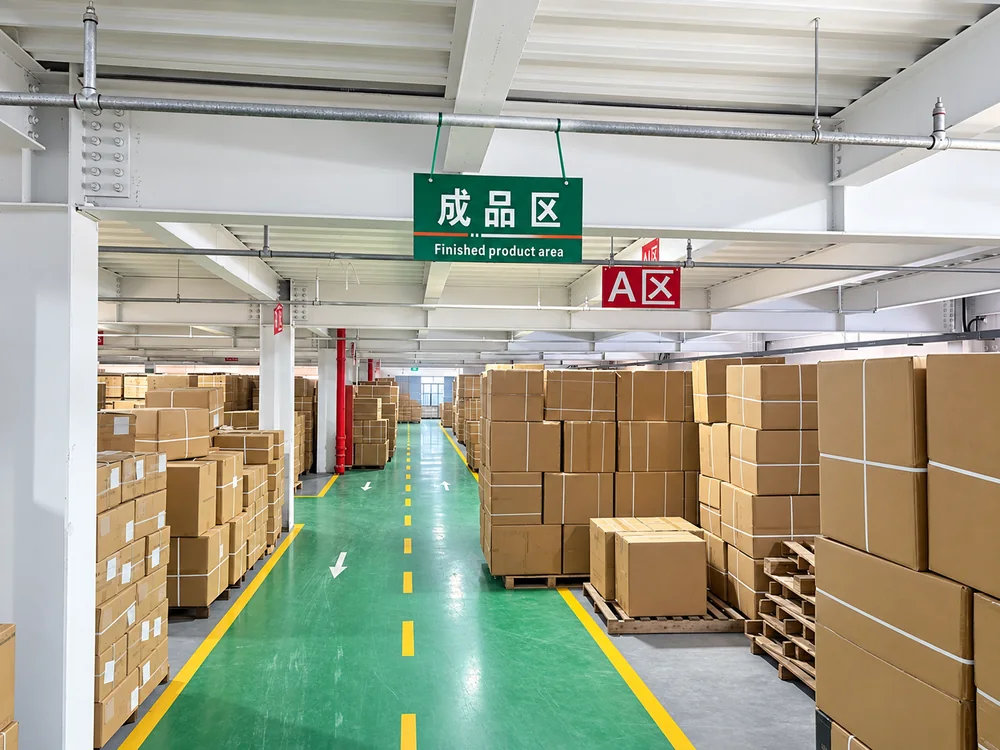
Continue into storage. A warehouse view can show physical space and how goods are grouped. To understand order control, follow up on how parts, work in progress and completed goods are identified. Similar-looking bowls or lids need a distinction that remains useful after an outer delivery carton has been opened.
For a mixed-version order, ask how two versions are kept apart when they share a housing color. A part reference, container label or designated storage location may provide the answer. You need to see how the chosen method works at the point where an operator takes a component, rather than insisting that the factory use a particular software system.
Packing provides another useful cross-check. Ask how the packer receives the contents list and how printed materials are matched to the version. If a manual or accessory changes, who withdraws the earlier item from the work area? This discussion is about preventing version mix-ups. A detailed evaluation of protective packaging belongs in the packing approval for the actual set.
Finally, ask how completed cartons are connected to the order and prepared for loading. The quantity visible on the day is background information, not a forecast of available capacity. For scheduling, request the proposed timing for your model and quantity, including the product and packaging approvals on which that timing depends.
Judge the evidence without overreading the tour
A useful piece of evidence answers a defined question. A machine photograph shows that equipment was visible at a location. A record may show what was checked, on which product and under which conditions. A demonstration helps explain an operation. Decide what you need to learn before deciding whether the evidence is enough.
For example, if your concern is a wrong accessory reaching the retail box, a general durability test provides little help. Ask to see the contents reference, the packing operation and the response to an omitted item. If the concern is repeated operation under a particular load, discuss the relevant test method and record with qualified personnel. Different concerns need different evidence.
JINJIE's quality and testing information describes checks through production and records that identify the product, conditions and follow-up. During a remote review, choose one check relevant to the purchasing risk. Ask how the result is recorded and who deals with a deviation. This is more useful than collecting photographs of every instrument in the room.
Look for continuity between an observation and the explanation. If the host describes a part-separation method, the labels or locations shown should make that method understandable. If a record concerns another model, ask why it is relevant and what would change for yours. Similarity can support a process discussion, but model-specific performance still needs evidence for the appropriate version.
Use the following record to turn questions into follow-up work. Fill it with actual observations from the call. Do not prefill the outcome as satisfactory just because the supplier agreed to the agenda.
|
Question to resolve |
Useful evidence |
Record after the call |
Next action if unclear |
|---|---|---|---|
|
Which version will be built? |
Identified sample or specification connected to a work instruction |
Product reference, revision and the instruction shown |
Request the missing connection before approving preparation |
|
How are similar parts separated? |
Part labels or storage locations used at the relevant station |
How the operator identifies the required component |
Ask for a close-up example or a focused follow-up |
|
What happens after a failed check? |
A redacted finding and its follow-up record |
Affected product, action and evidence of review |
Clarify responsibility and closure before relying on the process |
|
How does a change reach packing? |
Updated contents or artwork reference at the packing stage |
Which earlier items are removed and who controls the update |
Resolve the version change before packing starts |
|
What determines order timing? |
A proposed schedule linked to approvals and material readiness |
Dependencies, outstanding decisions and responsible contacts |
Request dates tied to the actual order scope |
The last column prevents the audit from becoming a collection exercise. Each unresolved point gets a specific next action. If several questions depend on the same missing product reference, resolve that reference first instead of sending five overlapping requests to different people.
Connect findings to sample, cost and timing decisions
The review should change what happens next. When a supplier has shown a relevant route and explained how the proposed version is controlled, a defined sample order may be a proportionate next step. State what the sample must establish and which details remain open. A sample selected only by appearance leaves the earlier configuration questions unanswered.
For a private-label project, distinguish a ready platform from requested changes. JINJIE's OEM and ODM options separate existing-product customization, design changes and new-product development. Use that distinction when discussing the follow-up: artwork approval, a functional modification and a new housing can involve different people, samples and dependencies.
Consider the purchasing impact of an unresolved finding. An unclear carton mark may be corrected before packing if the product identity is settled. An uncertain component substitution can affect assembly, testing or the quotation itself. Ask the supplier to describe the affected work and propose the next verification step. Do not assume every finding deserves either immediate rejection or unconditional acceptance.
Cost comparisons should include the work still required to reach an approved configuration. A lower initial quotation can lose its advantage if it excludes requested sample changes or a separate inspection that your team needs. Ask for those items explicitly. Keep any internal estimate separate from the supplier's actual charges, especially when development scope has not yet been agreed.
Timing should be discussed as a set of dependencies. Which product decisions must be closed before components are prepared? Which artwork files must be approved before packaging can be ordered? Can any work proceed while another issue is resolved? The answers help the buyer prioritize decisions without inventing a fixed lead time from a general factory tour.
Where remote evidence remains inadequate, narrow the next assessment. A targeted visit to observe the relevant operation may be more useful than repeating the same video agenda. Explain the open question in advance so the visit, document review or sample exercise has a clear purpose and a result the buying team can use.
Close the review with a short decision record
Write the follow-up against the original brief. Include the product reviewed, the operations observed, the open questions and the purchasing decision. Assign an owner and a due date to each requested item. A concise record is easier for the supplier to answer than a long transcript containing several versions of the same request.
Separate three categories in the record: information received, information still needed and decisions already made. If the team has approved only the next sample step, say so. Avoid language that could be read as approval of mass production, a changed component or a shipment. Commercial commitments should remain clear even when the relationship is progressing well.
Keep the record with the corresponding quotation and sample reference. On a repeat order, review the changes since that reference: product version, factory route, packaging or the people responsible for an unresolved action. You do not need to repeat an introductory tour simply because time has passed. Revisit the parts of the assessment that the change affects.
Conclusion
A productive remote factory review ends with a decision and a manageable list of evidence requests. Use the call to understand how the proposed chopper moves through preparation, assembly, inspection and packing. Then choose the next step around the remaining purchasing risk: a sample, a focused technical response or an on-site assessment.
To prepare a discussion with JINJIE, send the selected model or product image, target market, expected quantity and the operational question you want to resolve. If a sample already exists, identify its version and any changes requested since it was supplied. That information gives the host a useful route through the factory and gives your team a clear basis for reviewing the response.
FAQ
Can a remote audit replace an on-site visit?
It depends on the decision and the evidence available. A remote review can support supplier shortlisting and focused follow-up. If a purchasing decision depends on an operation that cannot be observed clearly, or on records that need closer examination, arrange a targeted on-site assessment. Decide what remains unresolved before choosing the format.
What if my selected model is not running during the call?
Ask which operations can be shown on a related product and which details differ. Use that footage to understand shared processes, then request an identified example for your model where the distinction matters. If the missing operation determines your decision, schedule a focused follow-up when it can be observed.
Should a buyer reject a supplier that will not share customer records?
Not automatically. Request a redacted record or another example that preserves the product reference, check performed and follow-up logic without revealing customer information. Assess whether the supplier provides a workable way to answer the question. Confidentiality and a complete refusal to explain a process are different situations.
How should two suppliers be compared after separate video tours?
Use the same purchasing questions and distinguish observed evidence from promised follow-up. Compare the relevance of the product route, the clarity of version control and the remaining work before samples or production. A longer tour or a more polished presentation should not outweigh an unanswered question affecting the intended order.