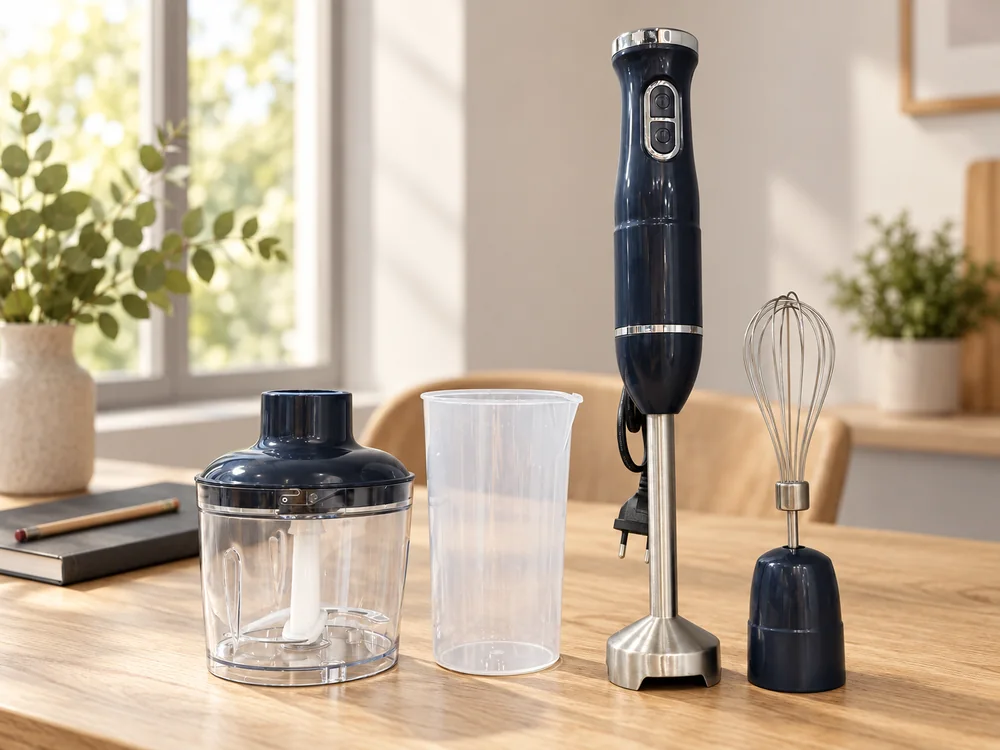
Buying hand blenders from China means buying a defined retail product across a supply chain. The motor, attachments, destination version and commercial delivery scope need to describe the same offer. A low price beside a photograph leaves too much unresolved if the buyer cannot tell what will arrive or who handles the remaining work.
For a household appliance importer, the useful comparison is the cost and readiness of the complete purchase. That includes decisions made by the supplier, your own product team and the people arranging transport and receiving. These responsibilities should meet at one identified configuration, rather than depend on separate conversations about similar-looking products.
This guide concerns household hand blenders and their confirmed accessory sets for resale. It does not cover industrial mixing equipment, long-shaft foodservice units or a universal import procedure. Destination requirements and shipment conditions need current, order-specific review by the responsible specialists.
Start with a source that can answer the whole purchase
Choose a contact who can identify the offered appliance and explain the commercial arrangement. A marketplace listing may introduce a product, a trading business may coordinate an order, and a manufacturer may discuss production directly. None of those routes removes the need to know which party is making the proposal and what it includes.
Ask who will issue the quotation, confirm product differences and coordinate the shipment information. If different entities have different roles, have that relationship explained. A company name on a product image is not enough to establish who can authorize a change or answer a discrepancy after arrival.
Begin with the JINJIE immersion blender range when identifying a possible product. Send the reference with a short description of the retail format you want. State whether you need a standalone appliance or a set, your intended destination and the quantity under consideration. That gives the supplier an offer to prepare.
Keep the customer's intended task visible in the inquiry. A hand blender sold for one household preparation task should not quietly become a professional-use purchase because a search result uses the word commercial. Ask about a required application for the actual version; do not transfer another seller's claims to the chosen product.
The source should also be able to explain what remains unconfirmed. A clear answer that one optional finish needs review can still support a useful quotation. An unresolved answer about the essential appliance or complete set is more consequential. Distinguish those situations before deciding that an offer is ready to compare.
If your company uses a sourcing intermediary, agree which questions it will resolve and which require direct technical clarification. Avoid asking several parties for different configurations under one internal item name. Consolidate the answers so the final purchase reflects one product, not a collection of individually attractive replies.
Identify the complete offer for hand blenders from China
For a set, ask what one quoted unit physically contains. The handheld motor, blending attachment, whisk assembly, container and chopping assembly are not interchangeable counting units. A reference to four functions may describe a marketing format without naming every part required for the supplied product.
Use the preferred product model and a complete description together. JINJIE's quotation lists HB-02 at 300 W and HB-01 at 400 W with a 0.8 L capacity field and a four-in-one description. Both entries also carry HB1141 as a secondary reference. The shared secondary code does not identify one universal configuration.
Keep HB-02 and HB-01 visible when discussing those entries. Have the supplier identify the container associated with the capacity field and the actual assemblies in the set. Do not assign a container capacity to the handheld motor or infer that a repeated secondary reference means attachments can be exchanged.
Ask for the proposed voltage, frequency and plug alongside the configuration. The photographed sample may help identify appearance while the offered destination version needs separate confirmation. Keep that distinction clear when the retail team begins preparing images and descriptions from the available reference.
A useful offer identifies the product, the retail contents and the packing basis without forcing the buyer to reconstruct them from several files. If an accessory is optional, keep its price and effect on the complete set visible. The lowest line price is not comparable when one proposal omits something the customer expects to receive.
|
Quotation item |
Clarification needed |
Why it affects the import purchase |
|---|---|---|
|
Main model and version |
Primary model, electrical version and selected format |
Identifies the appliance behind the commercial line |
|
Included assemblies |
Actual components supplied in one retail unit |
Prevents an incomplete set from appearing cheaper |
|
Optional items |
Whether they are included, separate or still unconfirmed |
Keeps additions outside the accepted base price |
|
Retail packing |
Supplied presentation and protection |
Connects the product cost to the unit the customer receives |
|
Outer packing |
Confirmed units per carton, dimensions and weight |
Gives logistics a basis for its own quotation |
|
Delivery scope |
Named arrangement, location and included work |
Shows which costs and tasks remain with the buyer |
For an initial comparison, align the mandatory requirements first. Optional colors or extra printed materials can remain separate alternatives. This avoids rejecting a suitable source because its proposal includes more than you need, while preserving the ability to compare the fully selected offer later.
Build the purchase cost from an identified packing basis
The product quotation is one part of the buying cost. Ask your logistics provider to price the intended shipment using the actual quantity and packing information. Identify the named delivery arrangement and location in the supplier's offer. An unexplained total cannot show whether two proposals include the same work.
Keep costs supplied by different parties separate until their scope is understood. Product preparation, transport, destination handling and your own receiving work should not disappear into a single estimated unit figure with unknown assumptions. Where a cost is not yet available, show it as unresolved rather than treating it as zero.
Do not estimate carton volume from a photograph of the handheld unit. The beaker, whisk and chopping assembly may influence the packed arrangement, but only the proposed packing can establish the dimensions. A shorter appliance or fewer accessories does not automatically mean a smaller outer carton.
Ask whether a change in the retail set changes packing information. Removing an optional assembly might leave the same box arrangement, or it might require different packing. Request the revised proposal before using an assumed freight saving to justify the change. The customer's required contents still come first.
Currency, quotation validity and quantity basis belong beside the commercial figures. A price for one proposed volume or an earlier preparation state may not remain applicable after the order changes. Obtain a current response for the version you actually intend to buy instead of treating an old quotation as a standing offer.
Consider cash commitment as well as unit cost. A larger quantity may appear attractive at the product-price level while committing more inventory than the channel needs. Compare the complete order value and the business's ability to sell the selected version. Do not use an assumed discount to justify an unsupported opening quantity.
If part of the order is intended for one retailer's exclusive presentation, identify that stock separately in your decision. Unsold units may be harder to move through another channel without additional work. Ask about broadly usable presentation where it fits the business, rather than assuming every customized box improves the purchase.
Coordinate destination information before artwork is fixed
The importer should name the intended destination and involve the responsible product or compliance reviewer early enough to influence the proposed version. A general product description is not a determination that every configuration is suitable for every market. The review needs to concern the appliance and intended sales arrangement being purchased.
JINJIE's compliance and documentation information is a starting point for a specific request. Ask which materials are available for the selected model and version and what further clarification is required. Have the appropriate specialist assess their relevance; a file name or logo is not a complete answer.
Align the retail instructions with the physical product. Controls, attachment names and included assemblies should correspond to what will be packed. A generic booklet shared with a different set can leave the buyer correcting customer-facing information even when the appliance itself matches the quotation.
For branding or printed presentation, use the OEM and ODM discussion to distinguish an existing product with agreed artwork from a proposed product change. A revised logo position does not settle a different electrical requirement or attachment interface. Keep the technical and presentation decisions connected without confusing their approval status.
Nominate one person to return consolidated artwork comments. Purchasing, marketing and the destination reviewer may each notice different issues. Resolve their comments internally before giving conflicting revisions to the supplier. The accepted file should be identifiable, with any remaining restriction visible to the people who will use it.
Translate from the confirmed product description, not a competitor's listing. If a use claim has not been established for the proposed appliance, do not make it stronger in another language. Ask for clarification where the retail proposition depends on it. An attractive translation cannot repair an unsupported product promise.
When a destination-related question remains open, identify its effect on the order. Some questions may prevent commitment to that version. Others may concern a particular optional claim that can be omitted. Have the responsible reviewer make that distinction so a manageable wording issue does not become an unexplained hold on every purchase decision.
Plan the handoffs between order, dispatch and receiving
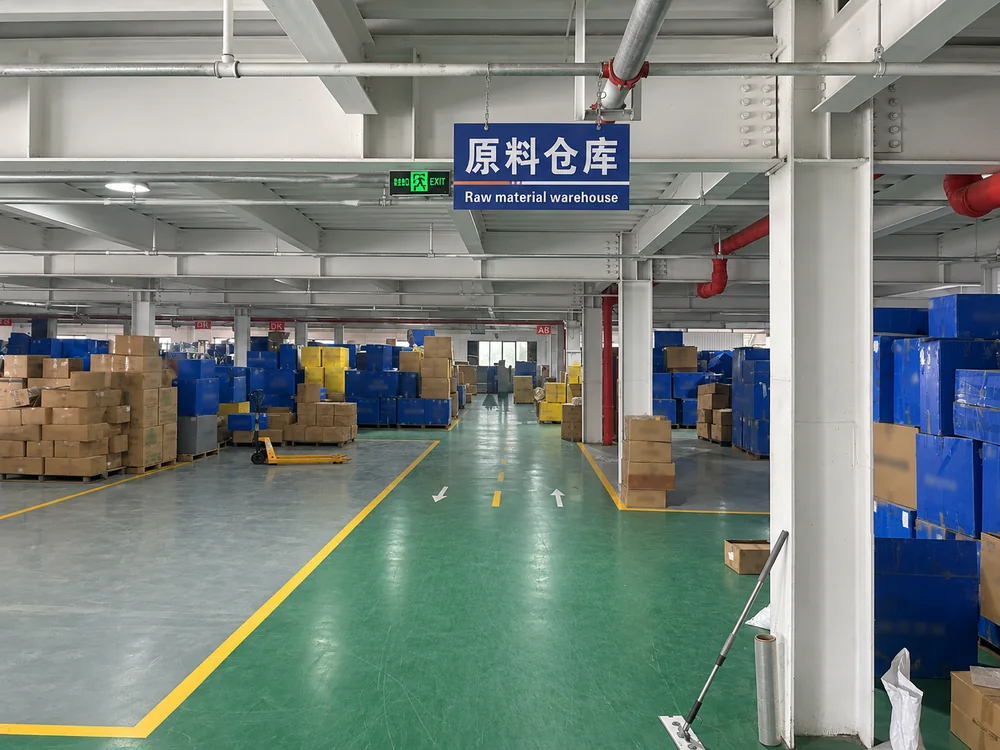
Ask for readiness in terms of the agreed configuration and work still required. Component preparation, the final retail contents and approved printed materials can affect the proposal. A general statement that a factory is busy or has stock does not establish a date for your specific purchase.
The supplier's preparation timetable and the transport provider's movement plan answer different questions. Give each party the information it needs and identify the handoff between them. Do not convert an estimated production completion into a promised warehouse arrival without confirming the remaining arrangements.
Before dispatch, provide your receiving team with the accepted item description and packing information. It should know which carton identifiers belong to which retail version, especially if the shipment contains more than one set or destination configuration. Receiving cannot reliably distinguish similar appliances from a shortened internal name alone.
For a consolidated shipment, distinguish the hand blender cartons from other purchased appliances in the receiving instructions. Ask how the relevant quantities and references will be identified in the shipment information. A combined movement does not make the products interchangeable or remove the need to reconcile each ordered line separately.
If units will be allocated to several destinations after arrival, establish how those versions can be kept apart before stock is distributed. Similar outer appearance is not a reliable picking instruction. The warehouse needs the agreed item distinction, and the sales team needs to know which version it can allocate to each channel. Resolve that operational question with the actual packing proposal rather than planning to sort unknown variants later.
|
Handoff |
Information to connect |
Decision before the next step |
|---|---|---|
|
Buying to supplier |
Accepted model, set and commercial proposal |
Both parties mean the same purchase |
|
Product team to artwork team |
Confirmed controls, contents and permitted description |
Retail information matches the chosen appliance |
|
Supplier to logistics |
Readiness and actual shipment packing basis |
Transport planning uses the current proposal |
|
Purchasing to warehouse |
Item references, expected quantities and version distinctions |
Receiving can identify what has arrived |
|
Warehouse to support |
Identified discrepancy and affected units |
The right party can assess the reported difference |
|
First order to reorder |
Accepted version and actual channel feedback |
A later offer is compared with the product already sold |
Agree how a discrepancy will be communicated. A photograph of an unidentified loose part may not tell the supplier which order, set or retail unit is affected. Preserve the item reference and describe what differs from the accepted contents. Keep the information proportionate to the issue rather than sending an unstructured collection of images.
Avoid mixing unreviewed units with accepted stock when the difference could affect what the customer receives. Ask the responsible people to determine the appropriate response. This is particularly important where a set is physically complete but appears to contain a different adapter, control version or instruction reference.
Distinguish a shortage of an agreed assembly from a request for an additional accessory. The first concerns the accepted purchase; the second may be a new supply request. Clear identification helps the parties discuss the actual response without accidentally changing the retail offer during issue handling.

Keep replacement items and repeat orders commercially separate
Ask how the agreed product can be supported after arrival. Separate accessory availability is not established by a catalog photograph. A supplier may be able to identify an assembly without offering it as a separately stocked item on terms suitable for your business.
If local replacement stock is proposed, obtain its own identified offer. Keep service items separate from saleable complete sets in the buying record. Their quantity, packing and intended use differ, and your warehouse should not need to guess whether a loose whisk belongs to a customer remedy or an incomplete retail unit.
For a later order, send the earlier accepted reference and request a current proposal. Ask whether the supplied version, included assemblies or presentation would differ. A repeated model name alone cannot settle continuity, particularly when a secondary code appears on more than one quotation entry.
Consider remaining local inventory before accepting a revision. If the new offer changes a customer-visible feature, decide how the old and new stock will be distinguished. The retail page and support record need to describe the version actually supplied, rather than overwrite the history of units already sold.
Use first-order feedback to improve the next purchase selectively. A receiving-label problem may need clearer shipment identification. Customer confusion about a whisk adapter may need a better contents explanation. Neither automatically justifies changing the motor or adding a larger accessory bundle.
Ask for revised commercial terms when the order mix changes. An earlier standalone purchase does not establish the price or preparation conditions of a later set. Keep the purchasing history useful as a reference without treating it as a promise of unchanged terms or permanent availability.
Send one complete sourcing request
Contact JINJIE about sourcing hand blenders from China with the preferred model, intended retail format, destination and proposed quantity. Include the required assemblies and any branding needs, then ask for a complete offer with the delivery scope and unresolved items identified.
Give the response to the people responsible for product review, logistics and receiving before committing to the final arrangement. The purchase is easier to manage when their questions concern the same appliance and packing basis. Select the offer your business can receive, explain and support, with remaining conditions explicitly settled.
FAQ
Can a sample be sent to one country while the bulk order goes elsewhere?
Explain both destinations and the purpose of the sample. A sample used for appearance review may not establish the electrical or documentation suitability of the eventual order. Identify which questions it can answer and obtain confirmation for the actual bulk destination before relying on it as the complete reference.
What if the logistics quote was prepared before the accessory set changed?
Ask whether the revised set changes the packed dimensions, weight or carton quantity. Give the confirmed information to the logistics provider for review. Keep the earlier estimate clearly tied to its original basis; do not assume that an accessory change leaves shipment cost unchanged or necessarily reduces it.
Should replacement assemblies travel with the first order?
Only when their identity, supply terms and intended handling have been agreed. Decide whether your business can store and use them effectively. If separate assemblies are unavailable, discuss another support arrangement instead of creating an unsupported promise that every part will be stocked locally.
Can the same product photos be used after a reorder changes the set?
Review them against what customers will now receive. A photograph showing an omitted attachment or a different control arrangement can misdescribe the new offer. Keep historical references for earlier stock while updating the current presentation. Do not silently use one image to represent materially different retail contents.