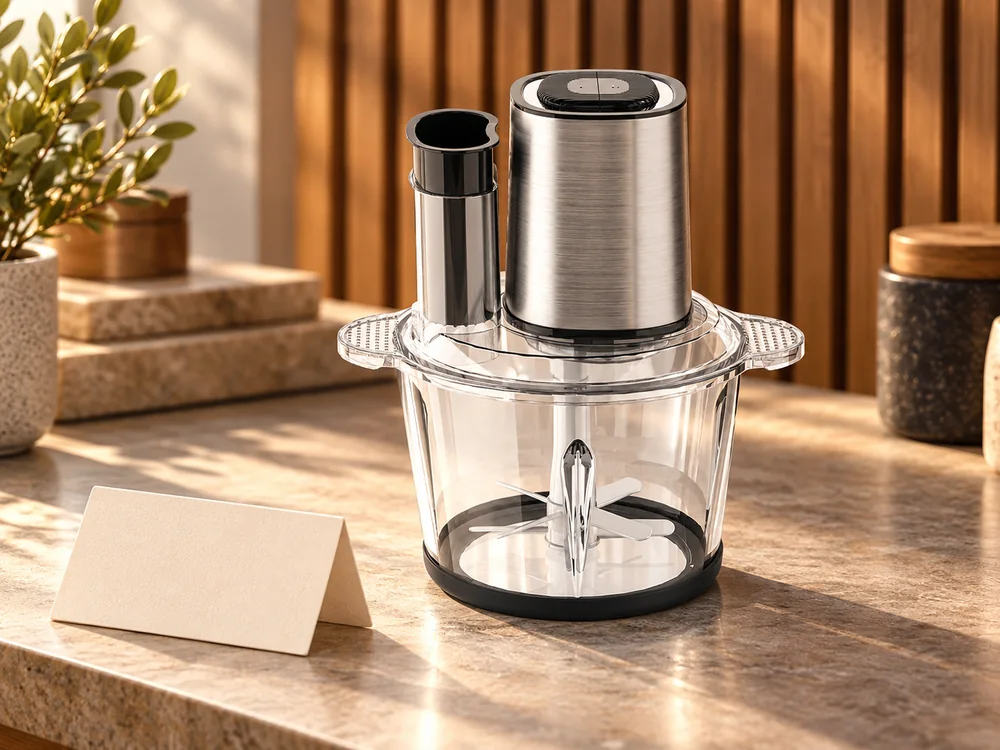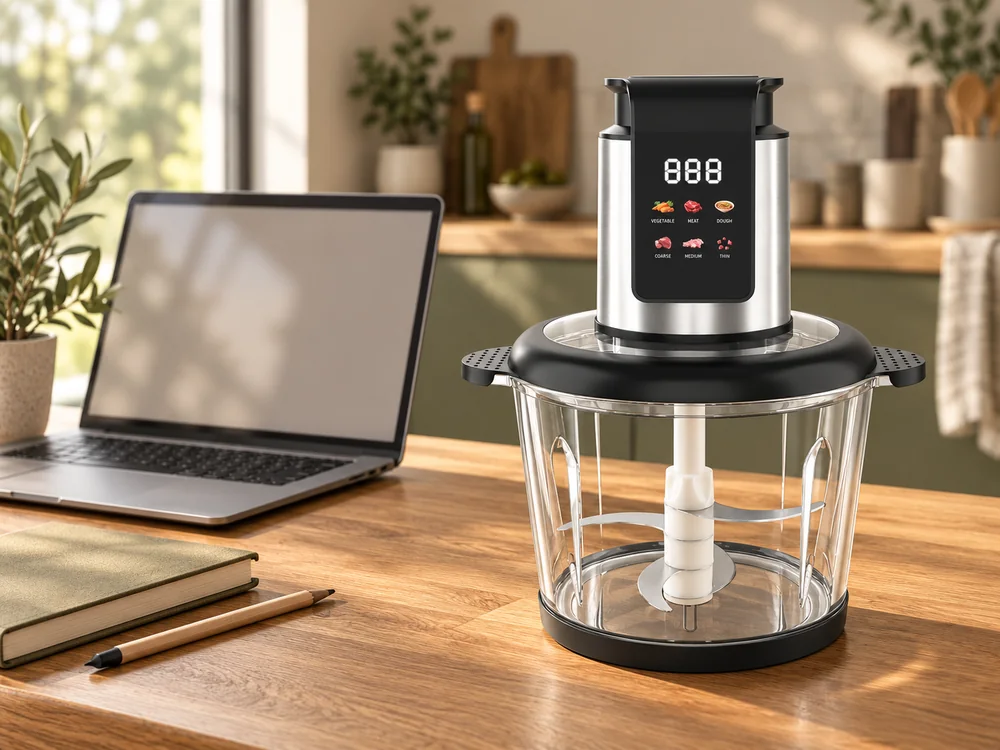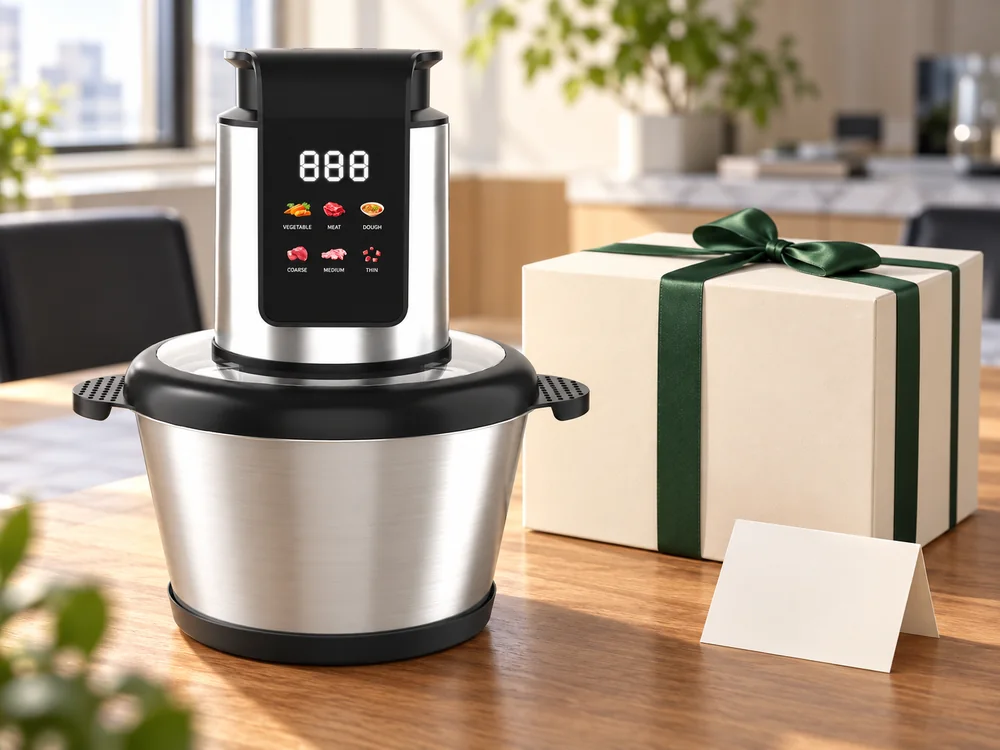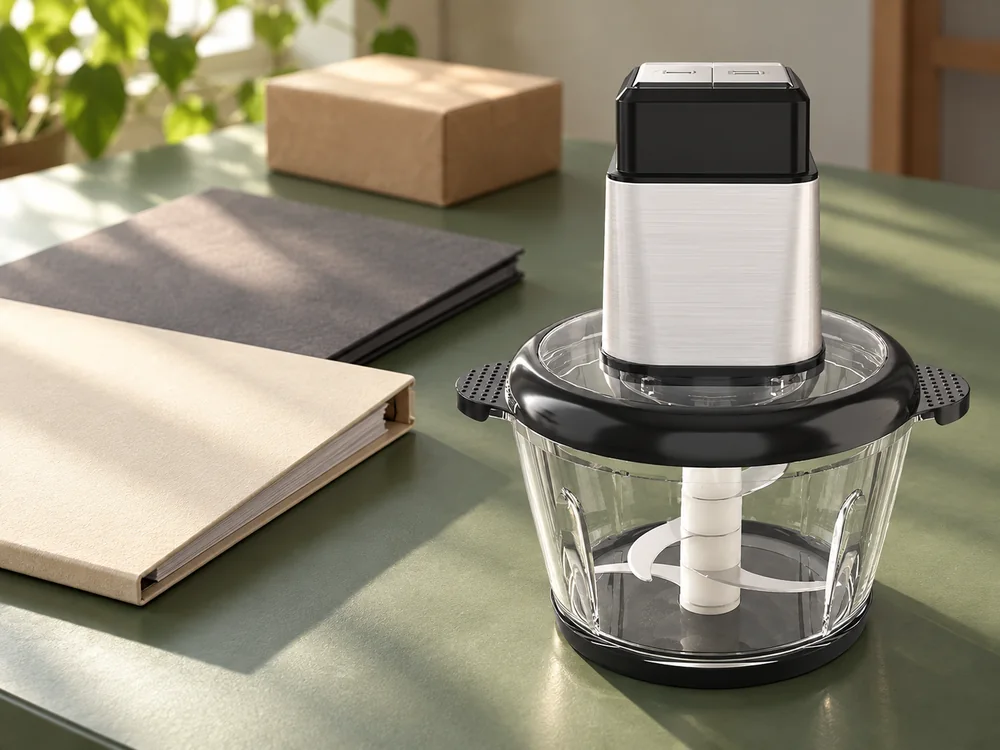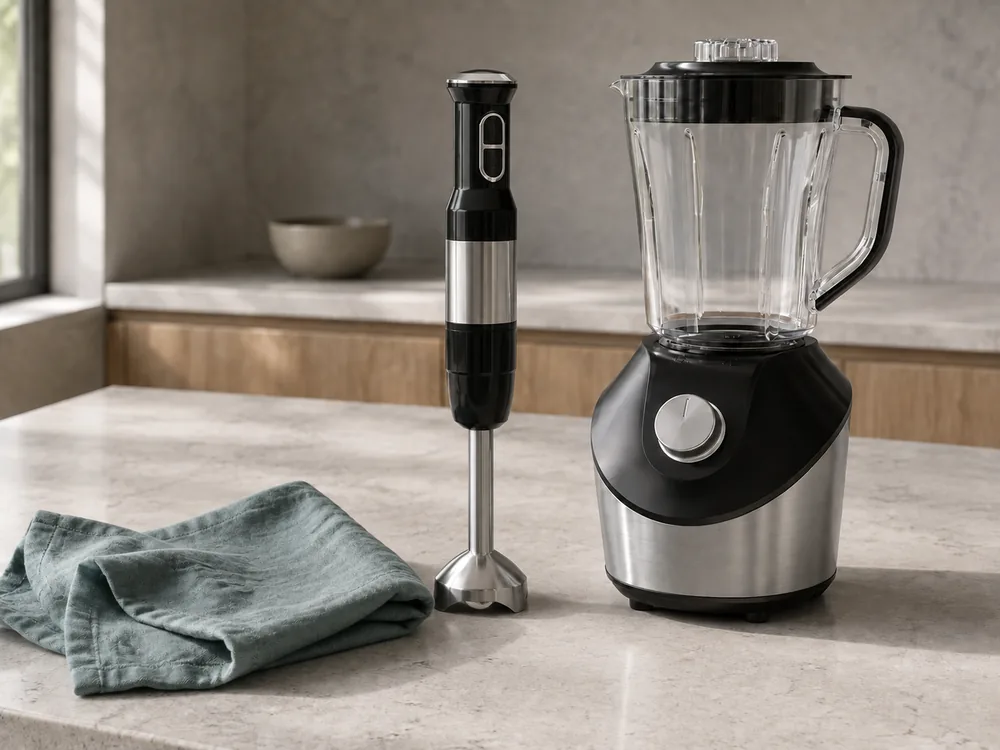
The immersion blender vs blender decision starts with where the processing happens. An immersion blender brings a handheld blending attachment into a suitable container. A countertop blender places a matched jar above its motor base. Here, “blender” means that countertop format, not every appliance sold under the broader category name.
For a retail range, choose the handheld format when the intended task benefits from working in a permitted separate container and the user is willing to hold the appliance. Choose a countertop format when the dedicated jar-and-base setup better fits the task and available space. Carry both only when those differences give customers a useful choice.
Immersion blender vs blender: start with the working setup
Ask where the customer expects the food to be prepared. A handheld format lets the product work with containers permitted by its instructions. A countertop format gives the customer a dedicated jar and base assembly. Both still have limits on ingredients, loading and operation.
Do not describe an immersion blender as having unlimited capacity because it can enter a separate container. Reach, permitted immersion depth and the model's operating limits still matter. Likewise, the nominal volume printed for a countertop jar does not mean the user can fill it to that volume for every task.
For a JINJIE project, the selected model's instructions must define the usable scope.
|
Product-line question |
Immersion format |
Countertop format |
|---|---|---|
|
Where does the food sit? |
In a suitable permitted container or matched accessory |
In the supplied, matched jar |
|
What does the customer hold? |
The handheld motor unit during blending |
The product is based on a countertop assembly, used as instructed |
|
What defines the supplied package? |
Core unit, blending attachment and any selected accessories |
Motor base, jar assembly, lid and any selected accessories |
|
What needs compatibility review? |
Attachment connection and complete accessory assembly |
Jar, blade, seal, coupling and base interface |
|
What should the sample plan settle? |
Intended tasks, handling and accessory usefulness |
Intended tasks, jar handling and the matched assembly |
Use the working setup to identify the customer's reason to choose. Someone who wants a dedicated jar-and-base appliance is expressing a different preference from someone who wants to move a handheld attachment between permitted containers. The range should make that distinction understandable before introducing power numbers or accessory counts.
Consider the full task rather than only the moment the motor runs. Where are ingredients placed, how is the product handled and what must be put away afterward? A product can look compact when shown alone but require additional space for its working container or accessories. Compare that complete arrangement with the customer brief.
Avoid declaring one format more convenient for everyone. Convenience depends on the task, the permitted method and the user's storage and handling preferences. A sample comparison can establish which arrangement better fits your proposed customer, but it does not create a universal winner between the categories.
Use the actual configurations to set the comparison
JINJIE's HB1361 reference includes a 300 W entry and a separate 400 W four-in-one entry with a 0.8 L capacity field. The set must be identified before that capacity is assigned to a particular container or included in a retail description.
The same reference lists BL1161 as a countertop configuration with a nominal 1.5 L AS jar and 600 W power. Comparing “0.8 L, 400 W” with “1.5 L, 600 W” as if they measured the same complete product would miss the structural difference between the two formats.
Compare the two formats against the same intended preparation task, using each model within its instructions. Include the complete set price and storage requirement. The listed watts and liters identify the configurations; they do not measure texture quality, operating duration or permitted food load.
Start with one identified candidate in each relevant format. Asking for every available model makes the comparison difficult before the basic range role is settled. If the first candidate cannot support the intended use, ask for another suitable version rather than conclude that the whole format is unsuitable from one unmatched example.
Keep the price basis visible. A handheld core unit, a multi-accessory handheld set and a countertop blender are different retail offers. Their prices can still be compared as purchasing alternatives, but the buyer should explain what each includes and which customer need it serves.
Use the model examples as configuration references, not a performance contest. A 600 W entry does not prove that the countertop option will produce a preferred result, and a smaller capacity field in a handheld set may describe an accessory rather than the main blending setup. Resolve those meanings before presenting a specification comparison to the retail team.
Decide whether attachments earn their place
A hand blender set can include a whisk, chopping container and beaker, depending on the confirmed configuration. Each changes what the buyer must approve and what the customer must store. The added pieces should support a recognizable task rather than merely increase the function count on the box.
A whisk attachment does not make the appliance identical to a separate twin-beater hand mixer. A chopping accessory does not automatically provide the same usable batch, blade arrangement or operation as a standalone food chopper. Describe the attachment as supplied and limit its claims to the documented use.
For a countertop blender, identify any extra jar or processing accessory individually. Confirm that it belongs to the same product platform. A second container in a catalog image may be an optional version, not an included item.
Start with the fewest SKUs that cover distinct needs. A basic handheld version can have a clear role beside a countertop blender. Add a fuller handheld set only if its attachments cover an additional task that customers in the channel need, rather than duplicating an appliance already in the range.
Map an attachment to the task it adds. If the proposed customer has no need for that task, the extra component still has to be stored, explained and included in the price. A fuller box can be a weaker offer when the added parts obscure the main reason for buying the product.
There can also be a useful reason to choose the fuller set. A customer brief may genuinely call for several supported preparation methods in one supplied package. In that case, evaluate the complete set and its handling rather than compare the base motor alone with a countertop product.
Keep overlap with existing products visible. If the range already contains a standalone chopper, ask whether the handheld chopping accessory serves a different customer or simply repeats the same retail message. The answer depends on the actual products and their permitted use; it should not be decided by the accessory name alone.
Once the role is chosen, JINJIE's OEM and ODM options can help define the selected set's branding and packaging. Customization should make the chosen offer clearer. It does not need to add another attachment or product variant merely to distinguish the box.
Evaluate handling and storage on a real sample
Ask the reviewer to assemble and put away the disconnected product according to its instructions. Record whether the intended user can identify the parts, understand the controls and store the complete set. Check the space needed for the supplied container and any permitted working container.
For the handheld product, look at the grip and the attachment-changing process. For the countertop product, consider the jar handle, lid and space needed to place or remove the container. Avoid deriving those measurements from photographs. Use the actual sample and the applicable instructions.
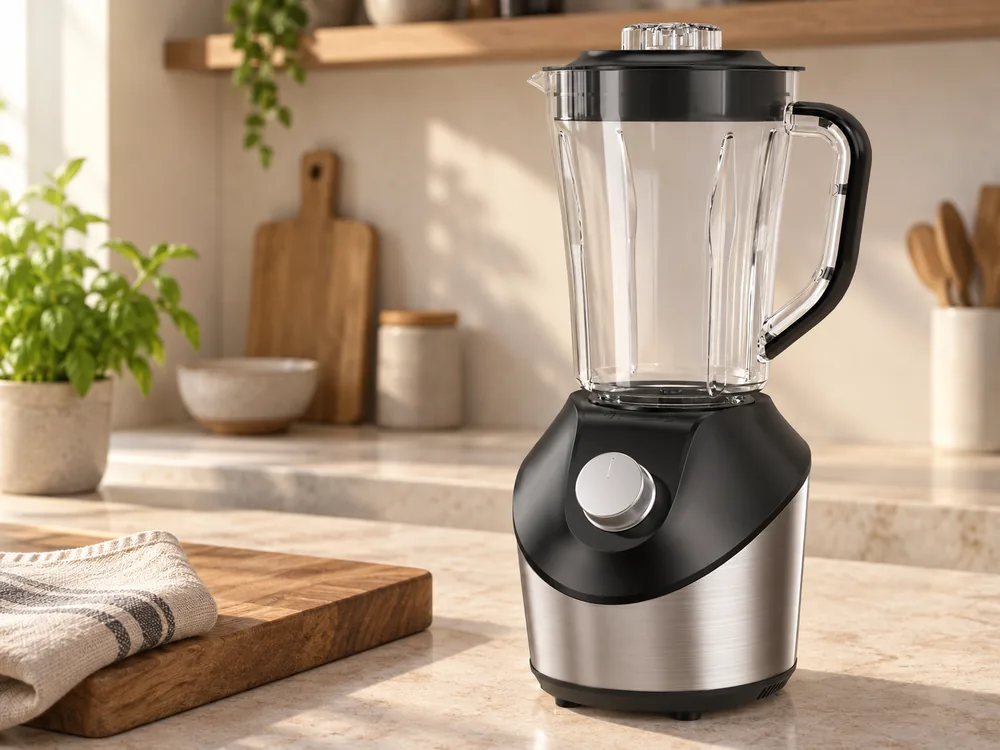
Cleaning deserves its own review. Identify which parts can be removed and what cleaning method each allows. Neither a stainless steel finish nor a detachable part automatically authorizes immersion or dishwasher use.
Do not improvise heated-food or ice-crushing trials to make the comparison more dramatic. Request the model's written scope first. Where the proposed task is not supported, record that limit and select a different product brief.
Use the same intended customer scenario for both samples, while respecting each product's own method. The preparation sequence may differ, and that difference is part of the comparison. Forcing both formats into an identical handling sequence can hide the very reason a customer would prefer one over the other.
Record what the reviewer actually observes. Difficulty identifying an attachment, an awkward storage arrangement or an unclear control instruction can affect the retail offer. Those observations should be described specifically rather than reduced to a general score for ease of use.
Separate a format issue from a model issue. If one handheld grip is uncomfortable for the intended reviewer, another handheld model may deserve consideration. If the customer does not want to hold a motor unit during the task at all, that points to a broader format preference. The next sample should respond to the right problem.
The same distinction applies to a countertop product. An inconvenient jar handle may be a model-selection issue, while lack of space for a dedicated base may make the format less suitable for that customer. Ask which finding would change the range decision before commissioning more samples.
Build a range decision from tasks, space and total offer
A product-line comparison should end with a clear role for each proposed SKU. It does not need a winner in every specification column. Identify the main task, the working setup and the complete offer, then decide whether the differences justify one format, both formats or a staged introduction.
Use the following action table after the initial sample review. These are planning situations rather than claims about measured demand in a particular market.
|
Finding from the brief and sample |
Range decision to consider |
What to resolve next |
|---|---|---|
|
One format clearly fits the main task and available space |
Start with that format |
Identify the final configuration and complete price |
|
Both formats support distinct customer preferences |
Give each a separate retail role |
Write the difference in customer-facing language |
|
Added handheld accessories duplicate an existing offer |
Consider a simpler available handheld set |
Compare the actual contents and pricing |
|
Neither candidate supports a required task |
Revisit the model shortlist or product brief |
Ask for documented scope before another trial |
|
The second format adds no clear customer benefit yet |
Defer the additional SKU |
Gather relevant customer or channel evidence before expanding |
For a hypothetical opening order, both formats may pass the task review while the available budget supports only one complete launch. Compare the commitment for each quoted configuration separately: units to order, supplied contents, packaging work and any quoted setup charge. Do not assume that quantities across the two formats can be combined to meet an order requirement; ask the supplier.
Include inventory consequences in the decision without inventing a sales forecast. Ask for the order terms of the actual configurations and consider how many distinct versions your opening plan can support. A second format adds another product to explain, photograph and replenish. That can be worthwhile, but it should answer a customer need rather than a desire for a longer catalog.
A staged introduction is also a valid choice. Select the format that best answers the current brief and keep the second as a defined future option. Record what evidence would justify adding it, such as a different task or a customer preference your existing offer does not address.
Compare the complete purchasing commitment when the two options remain close. Ask for the actual supplied set, order quantity basis and packed information for each candidate. A lower unit price for a bare handheld product cannot be treated as the cost of a fuller accessory set, just as a countertop photograph with an optional container cannot define the quoted contents.
Keep any launch-cost estimate separate from the product specification. Use current supplier and logistics quotations for the costs you include, and identify costs that remain unknown. Do not fill the comparison with assumed freight savings because one product looks smaller in a photograph.
This can reveal a practical reason to start with one format even when both fit the customer brief. The deferred format can remain a credible second step without being described as technically inferior. Commercial sequencing and product suitability are related decisions, but they are not the same conclusion.
Define a distinct retail role for each selected SKU
Translate the approved task worksheet into a brief for each selected SKU. Give the retail team the intended customer, main preparation job, supplied items and permitted working setup. Keep unresolved uses out of the public description until the model-specific review is complete.
If both descriptions reduce to “a powerful kitchen blender,” replace that shared headline with the actual difference. For a handheld product, show the permitted container-based setup and identify the attachment used. For a countertop product, show its matched jar and base. The images and opening copy should explain the reason for choosing that SKU without relying on wattage alone.
For either format, reject a proposed task that falls outside the model's documented use. A household configuration does not become a repeated-service beverage appliance because it has a larger jar or a countertop base.
Write a short retail explanation for each selected SKU for the merchandising team. If the difference is hard to express without a long technical disclaimer, review whether the two offers are genuinely distinct. The customer should understand the main choice from the product format and supplied set.
Keep the explanation consistent across the shelf description, product page and sample request. A handheld product selected for a particular container-based task should not later be photographed as if it replaces every countertop use. A countertop model should not acquire unsupported service or capacity claims when its marketing copy is shortened.
Check the retailer's comparison fields as well as the main copy. A single “capacity” column can imply that a handheld accessory vessel and a countertop jar describe equivalent working setups. Name the container beside the value and keep nominal size separate from permitted loading. If the listing template cannot preserve that distinction, use a short explanatory line rather than force a misleading like-for-like number.

Conclusion
Compare JINJIE's immersion blender sets and countertop blender platforms. Then send the intended retail tasks and proposed set contents for a configuration review. The next decision should identify a sample for each genuine product-line role.
Choose the format around the working setup and the customer need it serves. Use the sample to test that fit, and let the complete offer determine whether a second format deserves a place beside the first.
FAQ
Can a hand blender replace every countertop blender task?
No. The formats differ, and permission depends on the specific model and attachments. Compare the intended tasks against their instructions rather than treating the product names as interchangeable.
Is the larger capacity always the better retail choice?
No. First establish what the stated capacity refers to, then consider the intended batch, working setup and storage. A larger nominal container is not automatically a better match for a small-batch task.
Can the two formats be sold together as a retail bundle?
Only after defining the bundle as a complete offer. Specify both products and their supplied parts, then request the appropriate packaging and quotation. Keep each appliance's operating instructions and scope distinct. Selling them together does not make their jars or attachments interchangeable, or turn separate approved uses into a new combined function.
Should both formats be compared at the same wattage?
Not as the starting rule. Select candidates that can be reviewed for the intended task, then compare their permitted methods, handling and complete supplied sets. Matching a power number across structurally different products does not establish an equivalent result or customer experience.