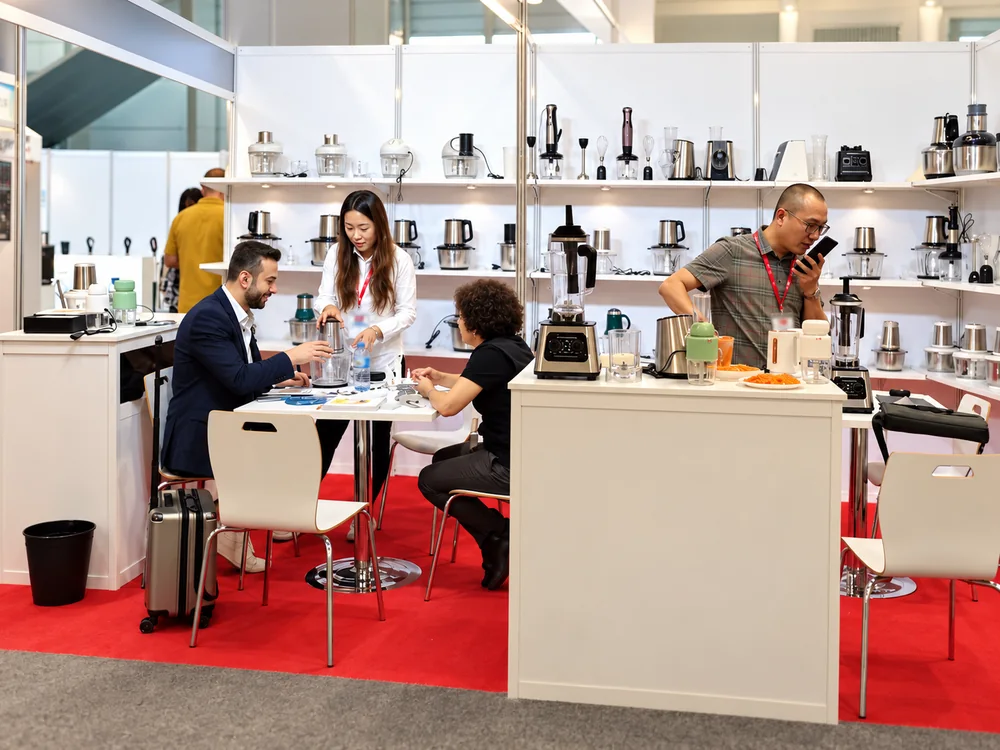
You leave an appliance fair with product photographs, business cards and several encouraging prices. A week later, the buying team cannot tell which quoted version belongs to which photograph or why one supplier deserves the next sample payment. The event produced contacts, but the purchasing work still needs a usable shortlist.
Kitchen appliance trade show sourcing should end with defined next steps for the products worth pursuing. An importer or private-label buyer needs to connect the exhibited appliance to an available offer, identify the remaining purchase question and choose whether to request clarification, a quotation, an evaluation sample or a deeper supplier review.
This guide focuses on household food-preparation products relevant to JINJIE, including bowl choppers and countertop blenders. It is not an announcement of JINJIE’s attendance at a particular event. Current dates, admission arrangements and exhibitor locations belong to the organizer’s current information and a confirmed supplier response. Archive exhibition or showroom photographs provide context, not a current booth booking or a complete availability list.
Take a buying question to the event
Define what the visit should advance. You might need an opening chopper for a private-label retail range, an alternative bowl format or a supplier able to discuss an identified product change. A specific task lets you recognize a relevant stand and end a conversation that belongs to a different category.
Describe the intended customer role, household use scope, destination and opening quantity basis. Separate essential requirements from preferences. A required bowl material needs a direct answer; a tentative color direction can remain open while the buyer compares supported platforms. The meeting should not spend its limited time negotiating an optional finish before establishing product fit.
Prepare a short product basket when several categories matter. Mark the opening priority and later possibilities. A chopper, blender and salad maker do not become one approved offer because they appear on the same stand. Give each a customer purpose and its own product discussion.
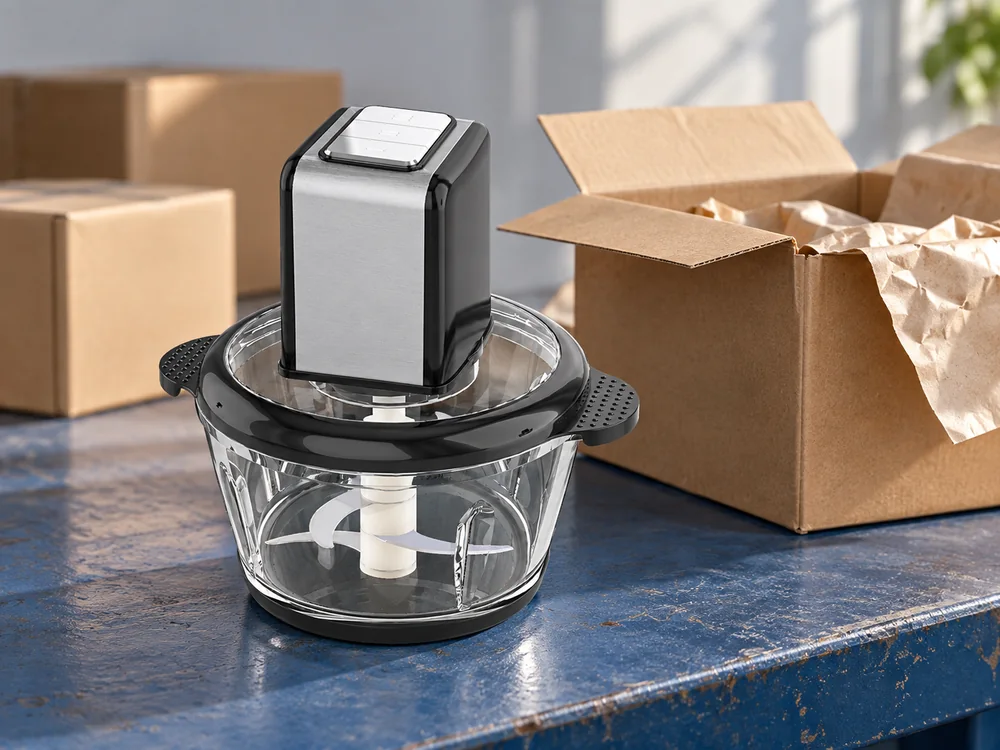
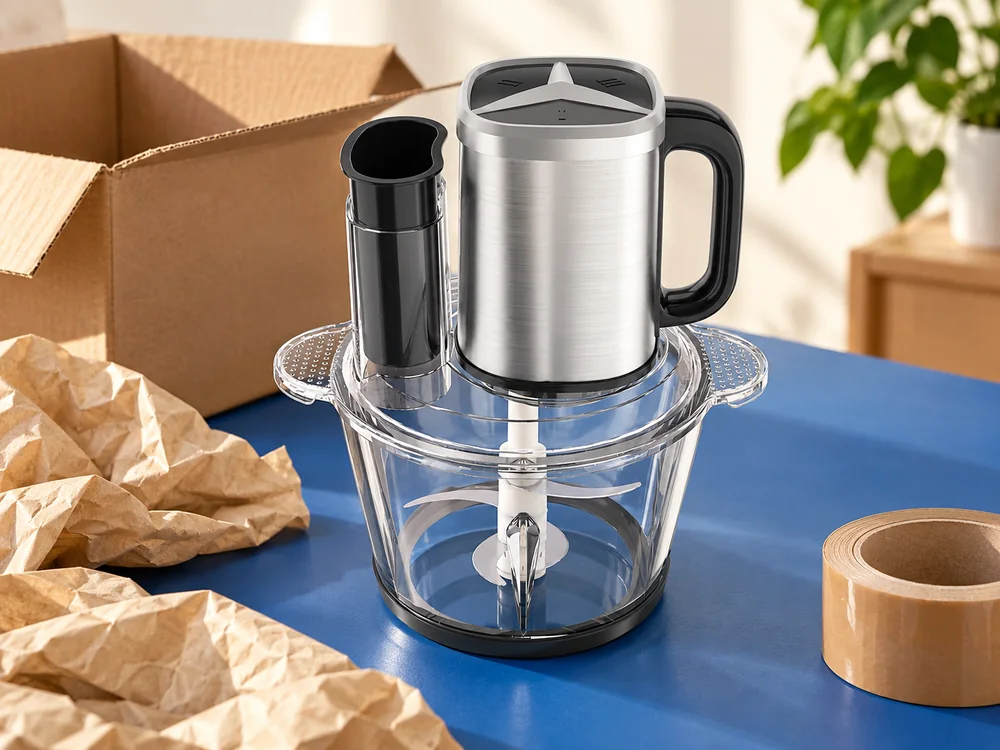
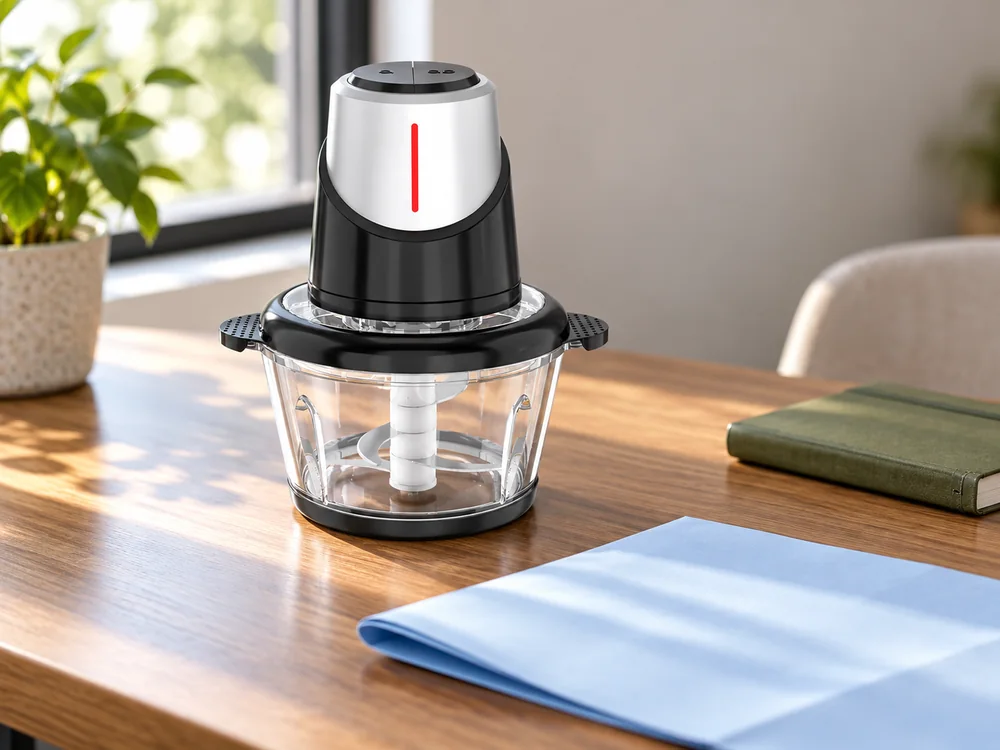
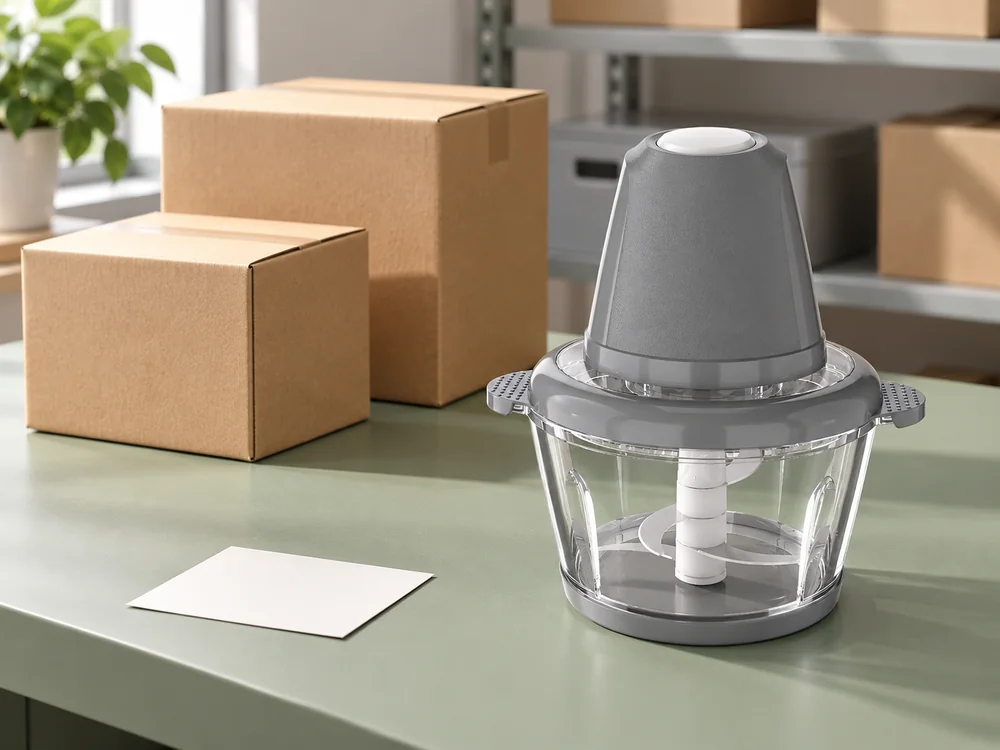
Browse the JINJIE electric chopper category before a supplier conversation to identify the household bowl format. Knowing the format makes questions more precise. A screw-fed grinder, industrial cutter or manually operated tool should not enter the shortlist merely because a display uses a related product name.
Choose the few unresolved points that justify face-to-face time. Handling an actual product can help assess the visible assembly and controls. A conversation can clarify who takes manufacturing responsibility or what change is available. File details that can be returned later need an owner and reference, not necessarily an extended stand meeting.
Prepare meetings around relevant products
Use the organizer’s current directory and supplier information to locate plausible matches. Check the company and category, then ask the supplier which relevant product can be discussed. A directory entry is a contact lead; your purchasing brief still determines whether the offered appliance is suitable.
Some organizers provide sourcing support. CDATF’s public sourcing-service page describes requirement matching, shortlists and coordinated meetings. Where such a service is relevant, submit the actual product, quantity and market needs. Evaluate the resulting supplier proposals on their own merits rather than treating a matching service as product approval.
Ask the supplier whether the selected reference will be available to examine and who can answer the important questions. An appointment with a general contact can still be useful, but identify how technical or commercial answers will be returned. The buyer does not need every specialist present if the follow-up route is clear.
Build a realistic meeting budget. In an invented plan, four fifteen-minute discussions use sixty minutes. If movement and waiting require another thirty, the plan already consumes ninety minutes before an extended evaluation. These are illustrative planning assumptions, not a suggested fair timetable. Use the venue and your actual objectives to decide how many meetings fit.
Keep some time for useful discoveries without allowing them to displace the priority task. If a new format looks interesting, record why it might serve a different customer need and route it for later consideration. A product that attracts attention need not become another first-order SKU before the team has evaluated its role.
Identify the exact appliance in front of you
Start the discussion with the complete product, not the display’s headline wattage. Obtain the model reference and identify the motor unit, matched vessel, lid, blade or tool set, controls and supplied contents. Record which parts are being shown as the proposed offer and which are optional display material.
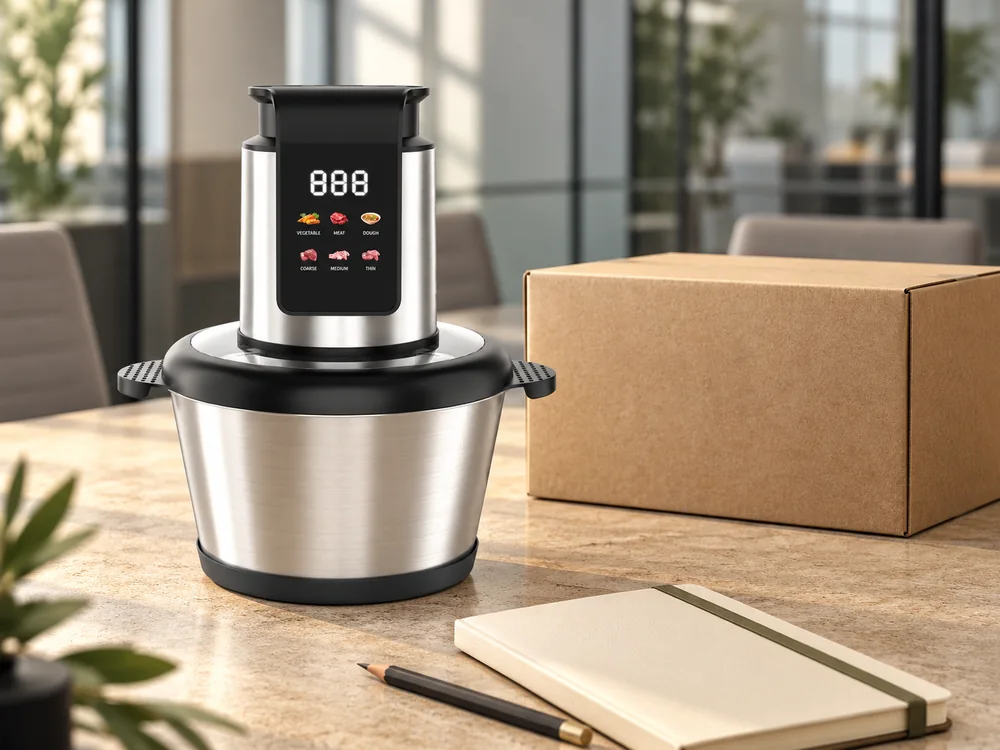
JINJIE’s quotation, for example, identifies SD-02 as a nominal 2 L stainless-steel bowl chopper at 400 W with digital controls. That gives the buyer a defined starting reference. Permitted load, operating instructions and the meaning of specific controls need the information for the actual offered version. A brief exhibition demonstration cannot supply every answer.
Ask whether the exhibited unit represents the current product, a particular variant or development work. A special finish can be useful for judging appearance while still differing from the priced proposal. Write down the difference before it disappears into a photograph headed “selected sample.”
Where the stand shows several similar appliances, connect a photograph to the model while permission and context are available. Include the complete assembly in one reference image and an important visible difference in another. A folder of unlabelled motor close-ups is difficult to use when the buyer later compares complete retail units.
Record the destination version being discussed. If the exhibited unit is different, identify what it can help you assess and what remains for the intended version. Do not improvise electrical operation to make the stand sample match your market. Arrange any necessary functional demonstration through the supplier under suitable conditions.
Ask for a current contents list or a defined follow-up where the exhibit leaves the set unclear. The buyer needs the actual offer it might purchase, including the level of retail presentation. A tool displayed alongside the machine should not appear as an included item on your launch brief until that inclusion is established.
Ask questions that separate the candidates
Begin with the product’s fit to the buying task. A supplier that offers a suitable platform merits a conversation about its complete proposal. If the central requirement is confirmed outside the product’s scope, move to another supported offer rather than spending the meeting on a price for an unsuitable appliance.
Then ask how the company takes responsibility for the selected product. Which work does it coordinate, who returns the final configuration answer, and how would a relevant difference be handled? An explanation connected to your proposed appliance is more useful at this stage than a long tour of unrelated capabilities.
Use one realistic question to test the handoff. If your shortlist changes from a steel bowl to glass, who identifies the matching lid, blade assembly and packed set? If the brand requests another control format, is that a current variant or work requiring further evaluation? The answer helps determine the next proposal without commissioning a full factory audit during the meeting.
Discuss the available quantity basis and complete quotation scope. Ask what your proposed model, presentation and destination require. Record a headline price with its assumptions if it is preliminary. An exhibition price for an ordinary unit cannot silently become the accepted price for a finished branded set.
Use the JINJIE OEM and ODM discussion to distinguish branding on an available platform from a proposed product change. A practical stand discussion should establish which route the supplier is offering and what information it needs to continue. It need not settle development cost before the change itself is defined.
| Question during the meeting | Useful answer or next record | Purchasing consequence |
|---|---|---|
| Which complete model fits our task? | Named platform, supplied set and relevant version | Keep a product-specific candidate rather than a company alone |
| Does the exhibit match the proposed offer? | Identified differences and current availability | Limit what the observation can support |
| Who coordinates the proposed build? | Responsible route and relevant manufacturing explanation | Decide whether a deeper review is worthwhile |
| What does the preliminary price cover? | Quantity basis, complete contents and separate work | Request a comparable written offer |
| What remains unresolved? | Question, owner and next deliverable | Spend the next round on an actual decision |
Use demonstrations for the questions they can answer
A permitted demonstration can help the team understand operation and the result shown under its stated conditions. Record the product identity, ingredient preparation, load and sequence where relevant. A short clip with no conditions is hard to compare with a later evaluation.
Watch the full customer routine when it matters. Visible assembly, control access, handling and the instructed removal of parts can reveal a question worth testing later. Time at a stand is limited, so concentrate on the aspect affecting product selection rather than demanding a demonstration of every conceivable task.
Keep a supplier’s demonstration and your own later evaluation distinct. The event may not provide the facilities, destination version or review conditions needed for your approval. A useful observation can justify an evaluation sample without becoming production acceptance.
When an answer is missing, name it accurately. An unavailable demonstration or outstanding technical reply is not the same as a confirmed inability to meet the requirement. Request clarification and leave the dependent approval open. If the reply establishes that the mandatory requirement cannot be met, remove that offer from this buying task.
Choose deeper verification by the remaining risk and commitment. A product-specific check, document review or visit can resolve different questions. The JINJIE quality and testing overview can frame the relevant inquiry. An active stand and an attractive exhibit do not substitute for evidence tied to the proposed version.
Preserve the meeting without collecting unnecessary data
Keep a concise record of the company, product, complete offer, observed differences and next request. Attach authorized photographs and current documents to the same reference. Separate what you personally observed from what the supplier said and what remains unanswered.
Ask permission before photographing people, documents or restricted product details. Obtain the contact route you need for business follow-up without treating every visible badge, screen or paper as material to copy. Keep private commercial information out of public product pages and article imagery.
If several colleagues attend, assign the responsibility for the final meeting record. One may focus on the product while another discusses quantities. Reconcile their notes before issuing a request that combines assumptions from different offers.
Avoid a scoring system that hides an essential gap inside an average. A candidate can have a strong presentation and still lack a required product answer. State that open decision alongside the strengths. This lets the team choose useful follow-up rather than rank a company first because it collected many easy points.
Keep unrelated new products in a discovery list with their intended customer task. They may become later candidates. They should not inflate the current shortlist or count as supply alternatives before the product and commercial requirements are established.
Convert each contact into one next action
Sort contacts by the work they actually deserve. A plausible platform without a complete price needs a written offer. A comparable offer with an unresolved handling question may justify an evaluation sample. A candidate whose manufacturing responsibility remains material to a larger commitment may need deeper review.
Use a consistent inquiry for products addressing the same task. Include the model, destination, complete contents, opening quantity basis, brand work and the question still open. This makes returned quotations comparable without requiring different suppliers to organize their internal production identically.
Budget samples around the remaining decision. A standard unit may settle product selection; final production configuration and presentation may still need a subsequent approval stage. Ask which unit is being offered and what it represents. Do not purchase another copy solely because every visited stand offered to send one.
| Finding after the event | Suitable next action | Decision to keep open |
|---|---|---|
| Product category does not match the brief | End this inquiry or keep it for a separate real task | Approval for the current purchase |
| Plausible product, incomplete commercial scope | Request the written complete offer | Whether its commitment fits the business |
| Defined offer, open physical selection question | Request a bounded evaluation sample | Product selection until the question is answered |
| Suitable offer, material responsibility or evidence question | Arrange targeted review with the responsible party | Commitment depending on that review |
| Mandatory requirement confirmed unmet | Seek another supported offer | Do not retain this configuration through unrelated strengths |
For an invented funnel, twelve recorded contacts might produce eight product matches, five sufficiently defined offers and three justified sample requests. The counts are not performance targets. Their purpose is to show that useful sourcing progress can reduce the list while improving the basis for each next expense.
Choose a follow-up deadline appropriate to your buying plan and agree when the responsible contact can respond. Where a reply is late, ask what is missing and whether the requested task was clear. One delayed answer should not automatically become a claim about the supplier’s entire production capability.
Take a supplier visit only when it answers the next question
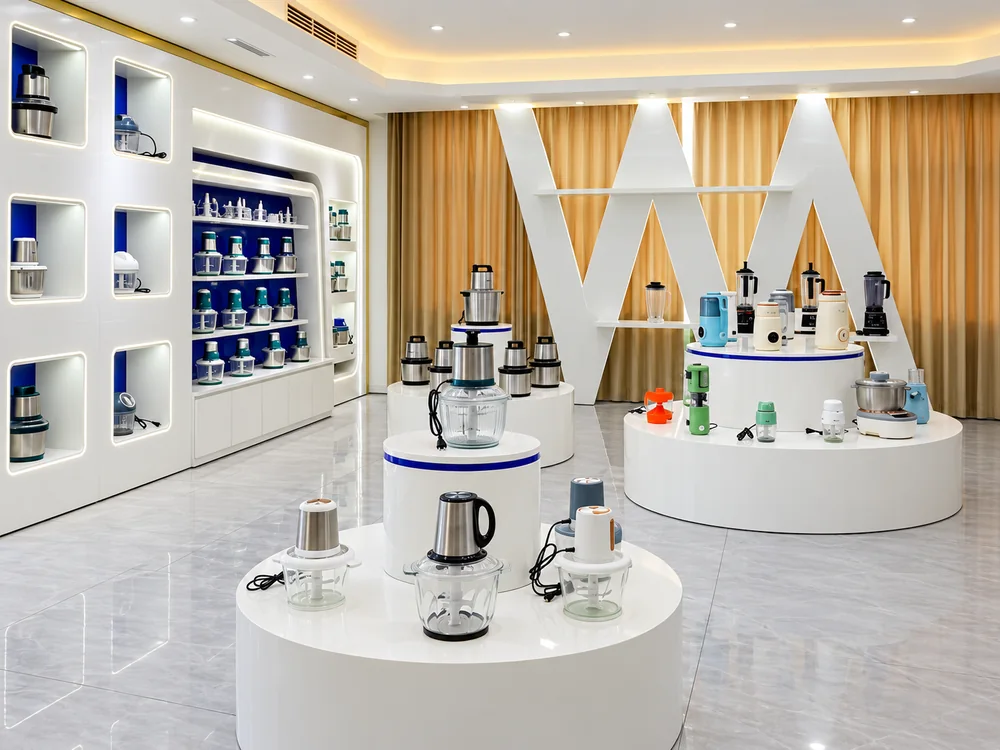
A showroom can help compare actual product formats and presentation. A manufacturing visit can address operations relevant to a proposed build. Neither needs to occur merely because it was offered at a stand. Identify the unresolved purchasing question first, then arrange a visit capable of answering it.
Ask which products, activities and responsible people can be available. The meeting plan should reflect what you need to understand, not a promise that every process will be running on the visit date. A visit to an existing sample room is useful context but does not confirm that every historical displayed model remains available.
Keep order timing separate from travel timing. A meeting during an event does not reserve production or resolve the later product, artwork and market decisions. Obtain a schedule for the actual proposed purchase once its scope is sufficiently defined. An early launch wish can guide discussion without being described as a manufacturer commitment.
End the sourcing round when the team can authorize the next bounded step. Preserve the shortlist rationale and the remaining owner. More catalog downloads do not improve a decision already ready for a specific quotation or evaluation.
Follow up with a defined JINJIE inquiry
Send JINJIE the product sourcing brief with the household category, selected reference, destination and quantity basis. Include any relevant photograph or earlier discussion reference and the difference still unresolved. Ask for the available complete offer and the next sample or review deliverable. If you want to meet at an event or visit a facility, request current availability separately rather than relying on an archive picture.
FAQ
Should we buy the appliance shown at the stand immediately?
First establish whether that unit is offered for sale, what version it represents and how it will be delivered or used in your evaluation. A display unit may have a different purpose or condition from the requested sample. Obtain an identified proposal instead of treating physical availability as a complete purchase.
What if two suppliers show a very similar appliance?
Keep separate references and compare the actual complete offers and responsibility. Similar appearance does not settle supplied contents, version, rights or commercial scope. Spend the next review on the difference relevant to your purchase rather than assuming the products or sources are interchangeable.
Can we ask for a quote before all brand details are final?
Yes, with open inputs stated. Request an identified standard or provisional offer and distinguish separately proposed work. Use it to narrow the product discussion, then obtain the current final scope before committing to the finished private-label version.
What if our preferred contact is not exhibiting at the event?
Ask for another current route to review the product, such as a separately arranged meeting, sample proposal or visit. An event is one way to progress the purchase, not a condition that every suitable supplier must satisfy. Evaluate the actual offer and remaining questions through the available route.