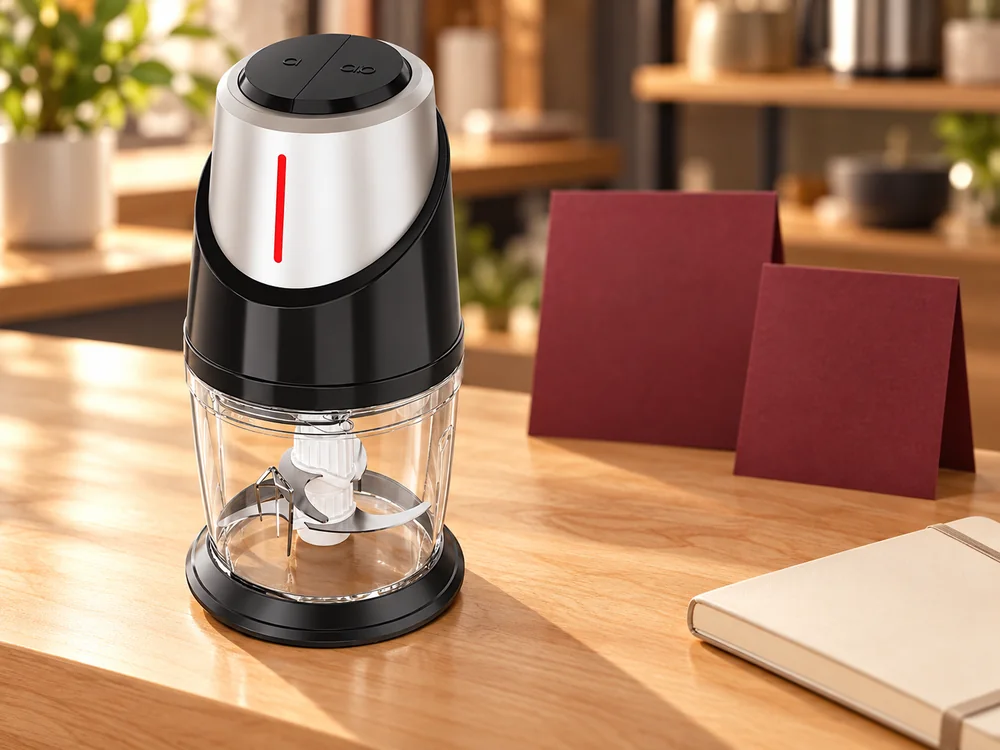
A promotional price can make a food chopper easier to sell and harder to buy profitably. The buyer commits to stock before knowing how much extra demand the campaign will create. If goods arrive after the useful selling window, or the offer leaves little contribution after promotion costs, a low factory price has not protected the purchase.
Small appliance wholesale for seasonal promotions needs an order limit tied to incremental demand, usable arrival and the value of stock left afterward. Start with a household product your channel can explain. Then compare a campaign order with the ordinary sales it might replace, the cash it ties up and the alternative of running a smaller promotion.
This guide is for retailers, distributors and private-label buyers planning a defined sales event. It does not assume that JINJIE’s choppers are seasonal products or promise that a particular holiday will increase demand. Use your own channel evidence and request current product, quantity and timing terms for the proposed purchase.
Define what the promotion is meant to change
Decide whether the campaign introduces a new product, brings new customers to an existing line or accelerates stock you already own. Those tasks produce different purchasing requirements. A promotion to clear slow stock may need no new factory order. A new-product event needs a supported launch offer before its buying quantity makes sense.
Name the customer-facing reason to choose the appliance. A household bowl chopper might belong in a practical food-preparation offer, but the promised tasks must match its actual instructions. A discount cannot compensate for a product presented for an unsupported use. Keep cooking demonstrations and advertising within the accepted product scope.

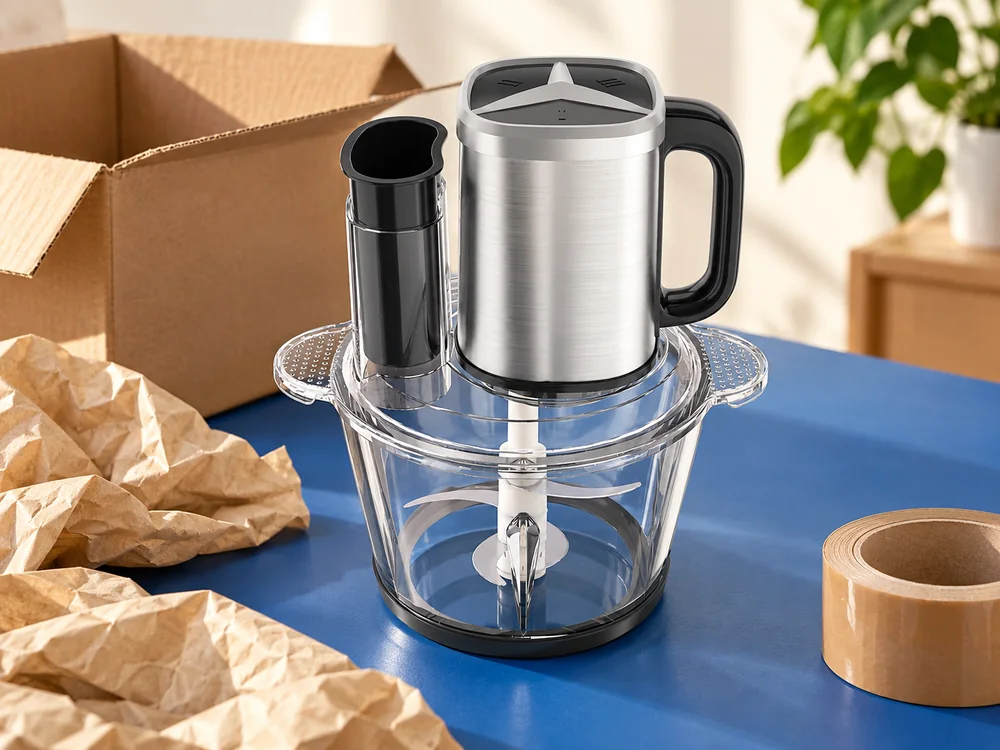
Choose one identifiable campaign offer. JINJIE’s quotation lists BG-05 as a nominal 1.2 L AS-bowl chopper at 400 W with two speeds. That is a starting configuration, not evidence of its permitted load or every result a campaign might show. Discuss the complete appliance, intended electrical version and included contents before using it as the advertised item.
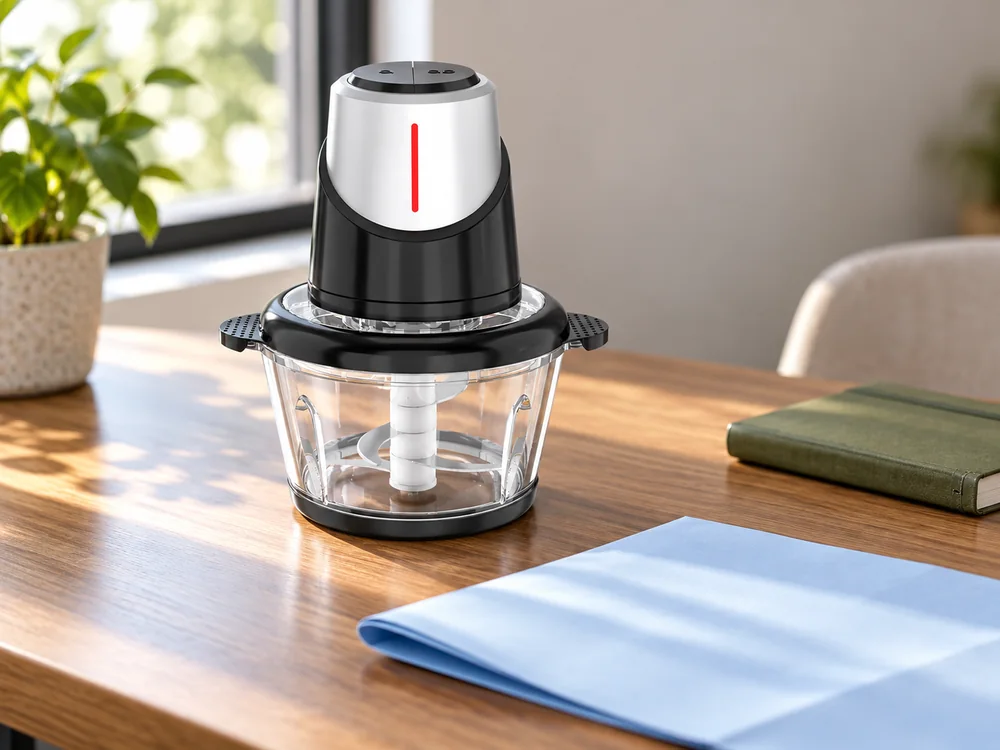
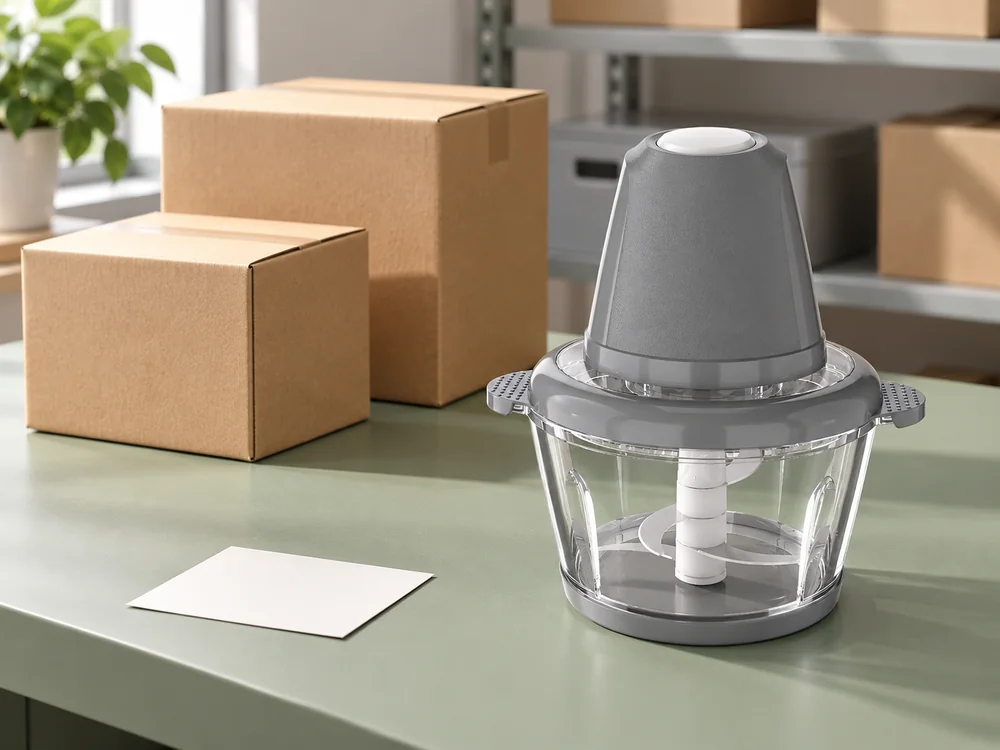
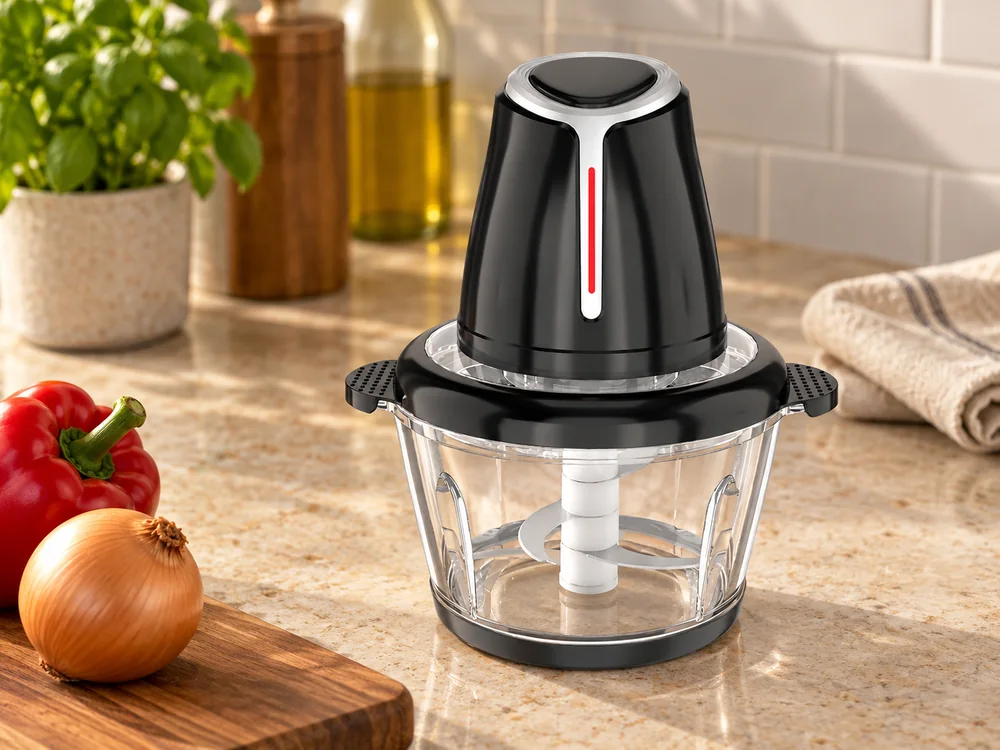
Use the JINJIE household electric chopper category to frame that selection. Similar-looking models can have different vessels, controls and complete offers. A retail promotion should not move silently between them as buyers negotiate quantity or marketing teams prepare images.
Write the campaign’s intended outcome in business terms: an additional number of saleable units, a customer acquisition test or a specified stock reduction. Record how you will recognize the outcome. A large number of visitors is not enough to justify a repeat purchase if the item earns too little after the campaign’s actual costs.
Separate normal demand from the campaign increment
Begin with expected ordinary sales during the same period. Then estimate the additional units attributable to the promotion. If the campaign draws purchases forward from the following month, include that effect in the wider stock plan. The sales event can look successful while leaving the next period with weaker demand and excess replenishment.
Use evidence close to the proposed offer. Previous sales of the same configuration and channel are more informative than traffic to an unrelated product. Identify differences in price, placement, selling period and audience. A new color or another bowl format may change the comparison enough that the previous event becomes a scenario rather than a forecast.
For a first promotion, work with a lower and higher demand case. Neither is a guaranteed outcome. The purpose is to see whether the order remains tolerable when the response is weaker than hoped and whether a stronger response can be served without an unconfirmed rush reorder.
Consider this invented planning example. A retailer expects 180 ordinary sales in the campaign period and another 120 from the promotion. It has 140 usable units not allocated elsewhere and expects 80 confirmed incoming units before the useful date. The simplified shortfall is 180 + 120 – 140 – 80 = 80 units, before any separately justified reserve. Ordering all 300 forecast sales again would double-count stock already available.
Now lower the incremental estimate to 40. Expected sales become 220, equal to the assumed available stock. Under that case, the campaign needs no additional units in this simplified calculation. A supplier’s proposed minimum may still be higher than the shortfall. That is a commercial constraint to compare with the stock risk, not a reason to raise the forecast until it supports the minimum.
Exclude damaged, held or reserved stock from the available quantity. Keep expected receipts separate when their useful arrival is uncertain. Count a unit once across stores, online orders and promotion allocation; transferring the same stock to a new location does not create another unit available to sell.
| Demand input | What belongs in the calculation | What can distort the order |
|---|---|---|
| Ordinary period sales | Expected demand without this campaign | Counting all campaign sales as additional |
| Incremental campaign sales | Extra demand supported by the offer and audience assumptions | Treating an optimistic scenario as accepted demand |
| Usable stock already owned | Saleable units free for this allocation | Including held goods or stock promised elsewhere |
| Incoming stock | Identified receipts expected before the useful date | Including an unconfirmed late shipment |
| Campaign reserve | A stated business reason and separate quantity | Adding a percentage merely because the forecast is uncertain |
Calculate contribution at the promotional selling price
Use the net revenue your business receives, not the advertised shelf price. A distributor selling to a dealer has a different revenue figure from a retailer selling directly to the consumer. Allow for the fees, delivery, handling and campaign costs that actually apply to that route.
Compare the whole purchase cost. The relevant unit may be a finished retail set with instructions and presentation, not an appliance before required work. Obtain the actual offer and add buyer-side costs within the chosen calculation boundary. Keep one-time campaign work separate so it can be tested against the event’s expected result.
In another hypothetical example, the promotional net receipt is 28 per unit. Landed product cost is 17 and selling or fulfilment cost is 4, leaving 7 before campaign-specific fixed cost. An assumed 900 of creative and placement work would need about 129 sales at that contribution just to cover that fixed cost. This is an arithmetic example, not a JINJIE price, profit forecast or recommendation to use a particular currency.
Compare the campaign with the relevant alternative. If the same unit would ordinarily produce 10 contribution and the campaign produces 7, a sale transferred from ordinary demand gives up 3. Extra sales contribute 7 each in this example, while sales merely shifted into the discount window do not generate the same improvement. Examine both effects before calling total campaign revenue an incremental benefit.
Include a planned markdown or other recovery route for unsold units. It may earn less than the campaign, require handling or take time. Use a cautious value grounded in a route your business can actually use. Do not count an imagined wholesale clearance at full purchase cost as protection against every leftover outcome.
Some costs remain uncertain at the quotation stage. Show those open inputs and test a reasonable range for your decision; settle the necessary ones before relying on the result. Precision in the spreadsheet cannot compensate for a missing delivery charge or a selling-fee assumption that belongs to another channel.
Choose presentation that survives the selling window
Separate the product’s ordinary retail presentation from temporary promotional material. A dated sleeve, event-specific carton or campaign message may help explain an offer, but it can also limit where remaining stock can be sold. A neutral product pack with separately managed promotion material may preserve options if the proposed arrangement is available and suitable.
Discuss the actual choices through JINJIE’s OEM and ODM route. Ask what standard presentation exists, what brand work is proposed and which quantities apply to each. This is not a promise that removable sleeves, mixed packaging or small printed runs are offered for every product.
Evaluate the customer’s complete purchase. If the promotion includes another item, identify that item’s source, cost, compatibility where relevant and assembly responsibility. A photograph pairing a chopper with kitchen tools does not establish a supported appliance attachment or an included gift set. Keep separately supplied promotional items distinct from the manufacturer-confirmed appliance contents.
Look at the consequences of a date change. Can the product still be sold under ordinary presentation? Would the temporary material need replacement, and who can do that work without covering required information? Obtain an actual feasible route before treating repacking as effortless.
Limit optional changes that do not earn a clear customer benefit. A second finish creates another stock allocation and may require its own quantity commitment. Retain it when it serves a distinguishable customer role or a supported channel need, not simply because another option makes the campaign look larger.
Set the latest useful arrival before accepting the offer
Work backward from when your channel needs saleable stock. Distinguish the campaign start from receiving, preparation and allocation deadlines. A shipment available at the factory on the launch day is different from goods ready for customers in your market.
Ask the responsible parties for the actual proposed sequence and current dependencies. Product selection, buyer artwork, manufacturer preparation and onward transport each need an appropriate response. An earlier order’s duration is a planning reference, not a reservation for this campaign.
Choose the point after which receiving the goods changes the business case. A promotion running for several weeks may still benefit from an identified partial quantity. A one-day event may have little use for a later branded shipment. Define that consequence before the date becomes urgent, while there is still time to change the buying or marketing plan.

An early partial shipment should contain complete saleable units and have a justified allocation. Compare its extra freight and handling with the contribution it protects. The calculation may support a smaller event rather than paying to move every unit early. Obtain a current proposal; do not assume split supply or a faster route is available.
A deadline does not remove a necessary product approval. Use the JINJIE quality and testing discussion for the checks relevant to the offered version. If an essential answer is missing, hold the decision depending on it and seek clarification. Where the requirement is confirmed unmet, choose another supported offer or change the campaign.
Put a cash and leftover limit beside the quantity
The affordable order is constrained by more than forecast sales. Calculate what the business must pay before campaign receipts arrive, including preparation and logistics within its responsibility. Preserve funds for receiving, selling and customer support rather than spending the whole launch budget on units.
Use current payment terms and your channel’s expected receipt timing. Stock sold during the campaign may not produce cash on the sale date. A distributor’s dealer terms, or a retailer’s settlement arrangement, can keep funds committed after goods leave the warehouse. Calculate that interval with your own accepted conditions.
Compare the offered quantity with the lower-demand case and a tolerable leftover amount. If the proposed minimum forces more exposure than the business can carry, request a different supported offer or consider using existing stock. The correct response is not automatically to add a second appliance or another color to absorb the commitment.
Set a decision date for optional repeat supply. If a reorder would arrive after the useful window, it may belong to ordinary replenishment instead of this campaign. Keep it separate from an event-specific purchase. A strong first week is useful evidence, but it does not make late inventory commercially useful by itself.
| Situation before commitment | Purchase decision to consider | Basis needed for the choice |
|---|---|---|
| Existing stock covers the lower-demand case | Run a bounded campaign without extra supply | Usable allocation and a supported customer offer |
| Extra demand justifies a feasible complete order | Buy the identified campaign quantity | Contribution, cash exposure and useful arrival |
| Offered minimum creates excessive leftovers | Request another offer or reduce the campaign scope | Lower-case stock and recovery value |
| Only an early partial quantity has event value | Compare that proposal with a smaller event | Complete units, actual movement cost and allocation |
| Arrival misses the useful window | Reassess as ordinary stock or stop this campaign purchase | A separate selling case rather than the old event forecast |
Judge the result before funding the next event
Compare actual sales with the ordinary-demand estimate, units allocated and money collected. Record leftover stock and campaign-specific costs. A report based only on sell-through can hide a loss caused by discounts, paid placement or a late receipt that reduced the usable window.
Review whether the product explanation reached the intended customers. A supported appliance can still be presented poorly or to an unsuitable audience. Keep product questions distinct from promotion execution so the next purchase addresses the real cause rather than requesting an arbitrary design change.
Use the result to adjust the next commitment. A smaller event with healthy contribution can support a deliberate reorder. A larger sales count with weak recovery may call for another offer, less promotional expense or no extra supply. The useful outcome is an evidence-based buying limit, not a rule that every successful campaign must grow.
Request an offer against the campaign’s actual constraints
Send JINJIE your promotional purchase brief with the household product reference, destination, complete retail offer, quantity scenarios and required availability point. Identify standard and campaign-specific presentation separately. Ask for current terms and timing so the buying team can compare the proposal with its contribution, cash and leftover limits.
FAQ
Can we use a promotion to test a new appliance range?
Yes, if the test has a defined customer task and a quantity your business can afford. Separate product selection from the demand experiment. The promoted appliance still needs the version, contents and permitted-use information required for its sale; the campaign cannot stand in for those decisions.
What if a retailer wants exclusive campaign packaging?
Ask for the actual packaging work, quantity basis and treatment of unused material. Compare its sales value with the restrictions on remaining stock. An exclusive presentation request does not automatically require an exclusive appliance or a permanent territory arrangement.
Should we accept more units to obtain a lower unit price?
Compare the total commitment and lower-demand outcome. A smaller unit cost can still require more cash and leave more units to recover. Use the complete offered quantities and costs, not a percentage discount detached from the volume needed to obtain it.
What should we do if demand exceeds the opening allocation?
Check whether a current complete reorder can arrive while it still has value. If not, choose whether to close the promotion, adjust the allocation or offer a clearly identified later purchase under suitable terms. Do not promise immediate stock from an unconfirmed factory inquiry.