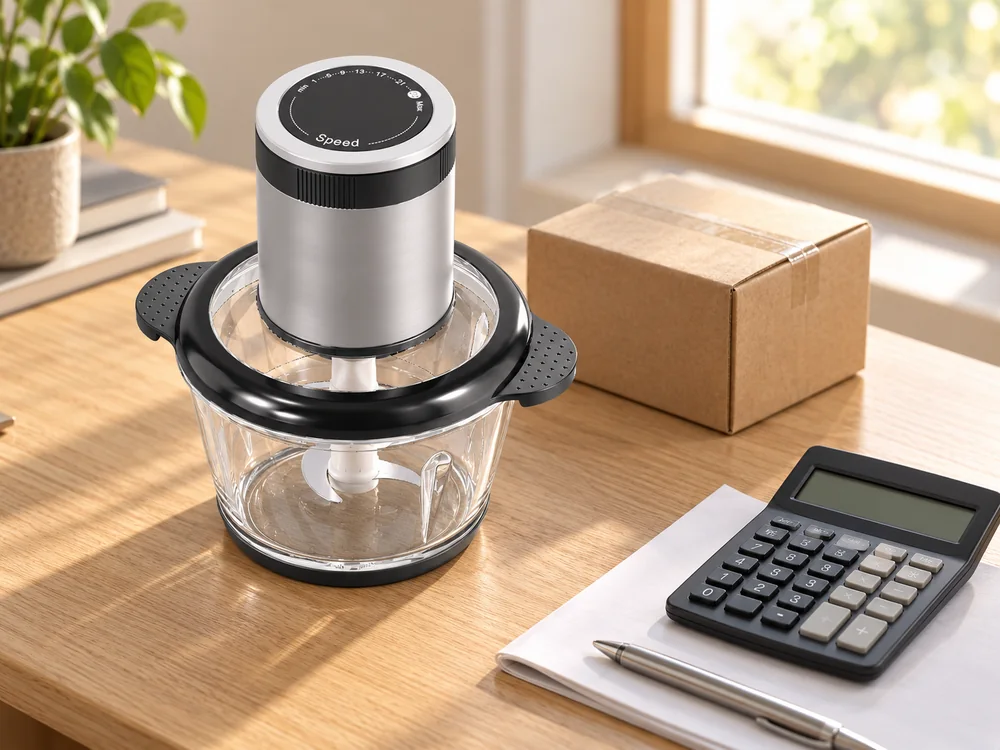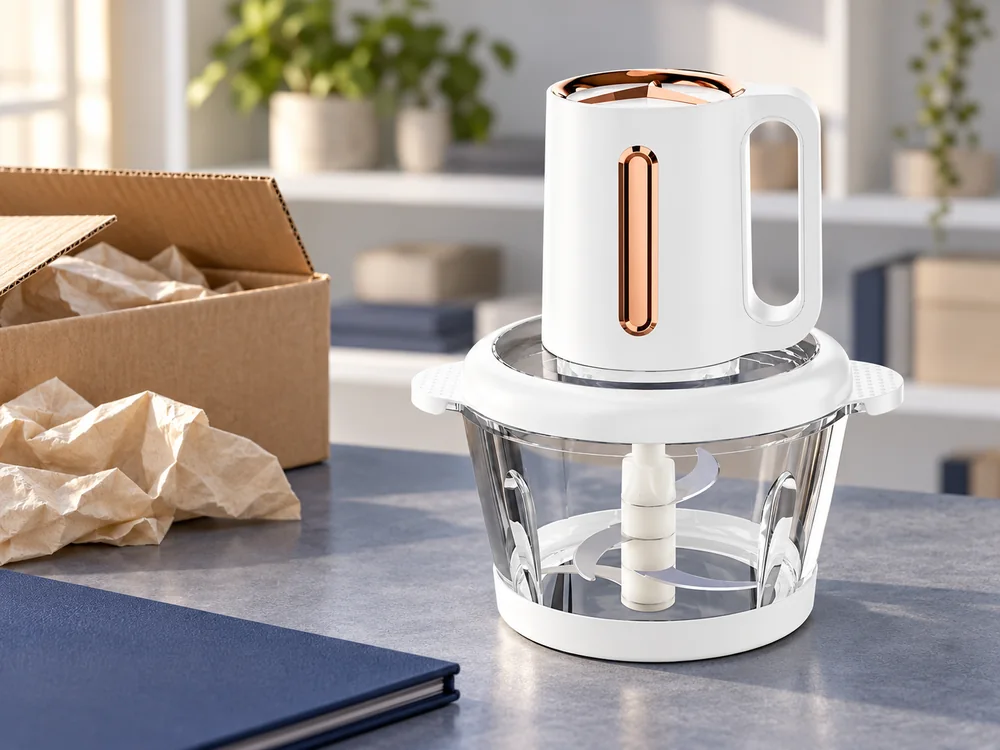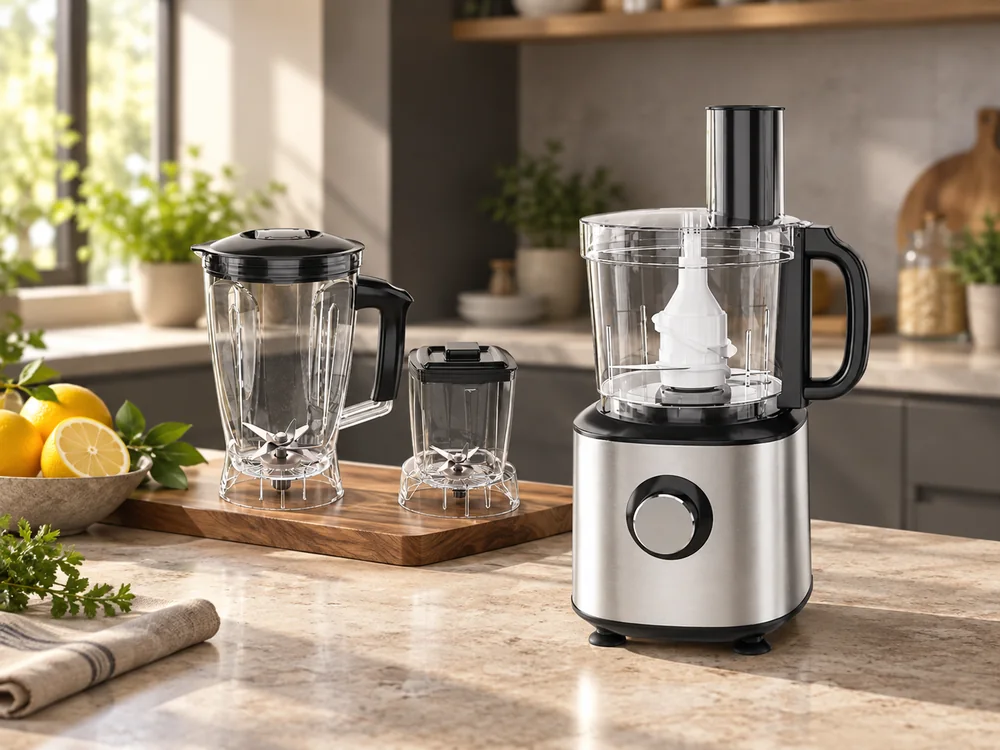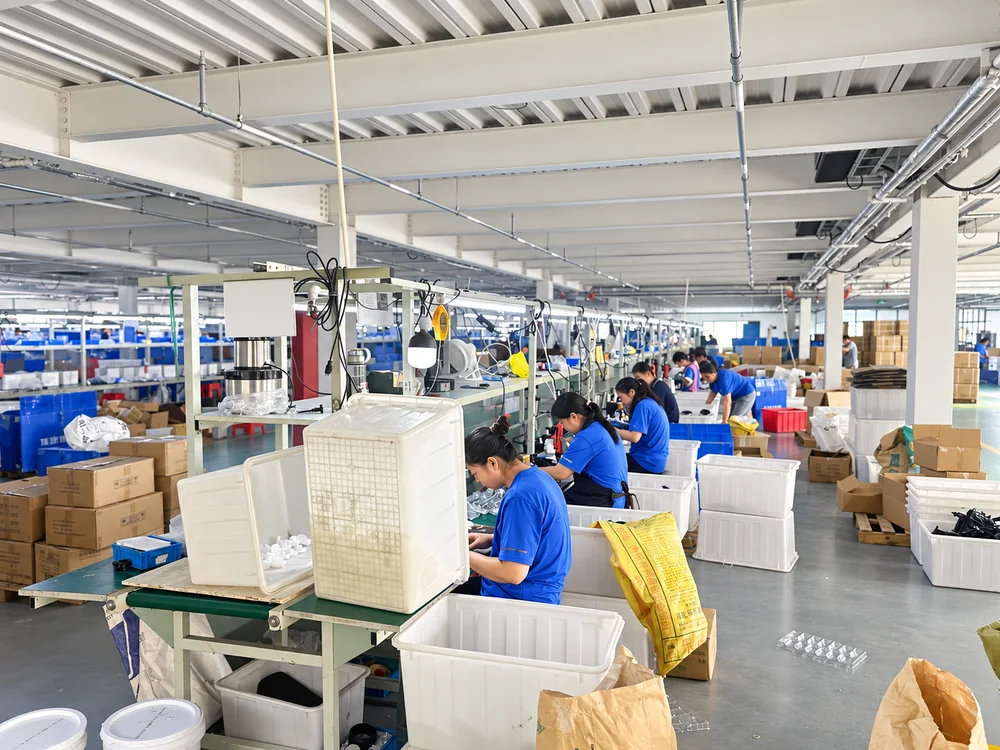
A small first shipment can still leave a brand with a large commitment. The factory may quote a limited number of finished appliances while the proposal also includes printed boxes, materials for later production or a balance to be collected afterward. Before choosing low MOQ small appliances, compare everything your business agrees to buy, not only the quantity arriving first.
For a private-label buyer, the objective is a manageable first commercial order that can support a real market test. It must contain a sellable product, accurate presentation and a workable support arrangement. Reducing the quantity has little value if the remaining offer cannot be sold through the intended channel.
This guide covers purchasing conditions for household food-preparation appliances. JINJIE's relevant range includes bowl choppers, countertop blenders, immersion blenders and electric salad makers. Minimum quantities require a proposal for the selected model and customization; this article does not advertise a fixed minimum, ready stock or a guaranteed low-quantity program.
Define what the first order needs to prove
Decide whether you are evaluating a product or testing a retail proposition. A product sample can help resolve handling, permitted operation or appearance questions. A commercial trial order tests something different: whether the selected product, presentation and sales route work together. Buying more units does not substitute for resolving a product question before sale.
Describe the commercial question narrowly enough to answer. You might want to test one retailer's allocation of a specific steel-bowl chopper, rather than launch several sizes and colors simultaneously. Another buyer may already have a customer order and simply need a quantity the factory can supply on workable terms. Those situations justify different stock commitments.
Use the planned route to customers to set your opening limit. Distinguish units allocated to an actual order, provisional sales expectations and demonstration stock. A request from a retailer to see samples is not the same as its commitment to purchase inventory. Keep that uncertainty visible when deciding what your business can finance.
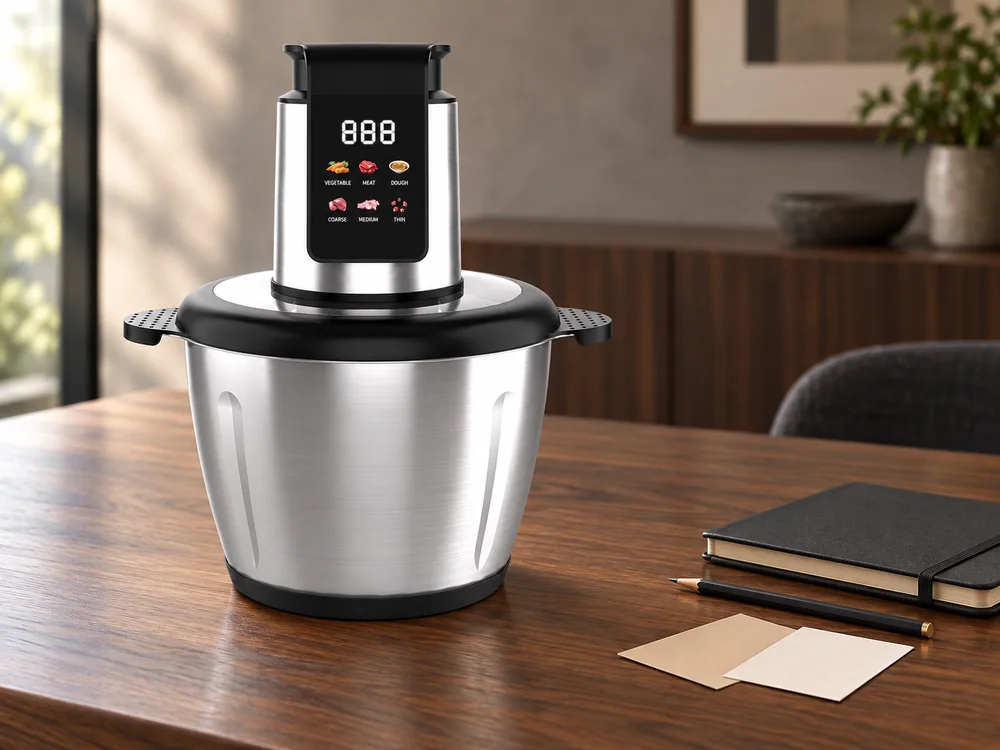
Start with an identified appliance from the JINJIE food chopper range or another confirmed category. For example, SD-01 identifies a particular chopper proposal; it does not establish the minimum for every bowl material, control version or branded package. Give the supplier enough detail to respond to one real purchase.
State which requirements cannot change: destination electrical version, required contents, supported customer task and any mandatory channel presentation. Put optional colors or decorative finishes in a separate part of the inquiry. A lower minimum is not a usable alternative if it depends on removing something essential to the sale.
Then ask for the available supply arrangement. Existing goods, a current model produced for your order and a product requiring development have different starting conditions. Do not assume the phrase private label identifies which one is being offered. Ask what is already available and what must happen specifically for your purchase.
Separate finished-unit minimums from other commitments
Ask what each minimum applies to. The answer might concern a model, an electrical version, a color, a printed item or a complete retail configuration. One total order quantity can conceal several separate conditions. The buyer needs the unit and scope of each condition, not merely the smallest number in the quotation.
For a supplied set, count complete sellable units. An immersion-blender motor, shaft and additional attachments may form one retail offer. A minimum for one component does not define how many complete sets can be purchased. Equally, a quoted number of cartons needs its contents stated before it becomes a product quantity.
|
Quoted condition |
Clarification needed |
Exposure to compare |
|---|---|---|
|
Minimum finished appliances |
Exact model, version and complete contents |
Stock your business is committed to buy |
|
Minimum printed boxes or manuals |
Quantity ordered, amount used and remaining balance |
Dedicated material beyond the first shipment |
|
Minimum per color or configuration |
Which variations can share a condition, if any |
Small lines hidden by a large order total |
|
First shipment quantity |
Whether another quantity is already committed |
Goods arriving now versus the full purchase |
|
Development or setup charge |
Work included and whether another charge applies later |
Upfront spending outside the product price |
Do not assume quantities can be pooled across categories. An order containing choppers and blenders may have an attractive total value while neither line meets its proposed conditions independently. Ask the supplier which condition, if any, the combined order satisfies. A common logo or supplier address does not answer that question.
Printed material deserves particular attention. If the proposal requires more branded boxes than the first order uses, ask whether you purchase the entire quantity, pay only for consumed material or accept another arrangement. Establish where the balance would remain and how it would be identified. None of these arrangements should be assumed from a unit-price line.
Request a distinction between an optional quantity increase and an obligation. The supplier may show a lower price for a larger future order as an alternative. That is different from requiring the buyer to collect the balance of an order already placed. Mark the selected proposal clearly so an attractive comparison does not become an unintended commitment.
The same care applies to samples and setup work. Ask whether sample charges, approved artwork preparation or another identified expense are separate, included or credited under stated conditions. Do not count an expected credit as certain until its conditions are agreed and fit the order you actually intend to place.
Compare the cash commitment, not just the unit discount
Put the full product quantity and any separate charges beside each offer. Then add the relevant transport, receiving and selling costs on a consistent basis. Obtain those figures from the responsible providers. A low factory quantity can be commercially useful, but it does not guarantee the lowest delivered cost per unit.
Consider a hypothetical comparison, using invented figures solely to explain the decision. Offer A is 200 complete units at USD 18 each, with USD 250 of separate setup work. Offer B is 500 units at USD 15 each, with USD 100 of setup work. Before freight and other costs, A commits USD 3,850 and B commits USD 7,600. These are not JINJIE prices or minimums.
|
Illustrative choice |
Product and setup commitment |
Decision exposed |
|---|---|---|
|
A: 200 units at USD 18, plus USD 250 |
USD 3,850; USD 19.25 per ordered unit including this setup |
Higher unit basis, smaller initial commitment |
|
B: 500 units at USD 15, plus USD 100 |
USD 7,600; USD 15.20 per ordered unit including this setup |
Lower unit basis, USD 3,750 more committed |
|
Difference: B rather than A |
300 additional units and USD 3,750 additional spending |
Whether the sales plan and available cash justify the extra stock |
The comparison does not make A automatically preferable. If the buyer has a reliable route for 500 units and enough funding, B may fit its plan. If it only has a credible opening requirement for 200, the lower unit figure does not remove the need to sell, store and support the remaining goods. Use the demand assumption that belongs to the business.
Keep the accounting question separate from the cash question. Allocating a setup charge across more units can make the unit calculation look better, but the charge still has to be paid when agreed. Likewise, stock expected to sell later is not cash available to fund today's freight or channel preparation.
Compare payment events, not only totals. Ask what is due for samples, preparation, production and dispatch under the proposed arrangement. Put those events beside your expected customer receipts. A smaller order with earlier payment requirements may create a different funding problem from a larger order with another agreed schedule; the actual terms determine the result.
Use current freight quotations before choosing a shipment size. More units may spread some costs across a larger quantity, while package size, route and handling can change the comparison. Do not assume a fixed saving or multiply the small-order cost proportionally. Ask for the alternatives that correspond to the supplier's actual packing data.
Finally, reserve capacity for the work needed to sell the product. Photography, listing preparation, retailer samples and customer support may all consume money or staff time. An order that absorbs the entire launch budget can leave the business with stock but no practical way to introduce it to customers.
Reduce optional complexity without weakening the offer
If the first proposal exceeds your commitment limit, ask what creates the separate requirement. The cause may be a particular color, printed presentation or requested product change. A precise answer gives the buyer something useful to reconsider. Asking for “a lower MOQ” without identifying adjustable scope gives the supplier little direction.
Use JINJIE's OEM and ODM discussion to distinguish branding an available platform from modifying its construction. For a first order, a current supported configuration may answer the customer need without a new housing or attachment connection. That possibility needs confirmation for the selected product; it is not a promise that every design request can use existing tooling.
Consider reducing the number of optional variants before reducing the value of the product. One accepted color may be enough to test the channel. Removing an essential attachment from a set changes what the customer buys and may undermine the original proposition. Keep the commercial reason for each requested variation beside its cost and quantity effect.
Ask for a revised complete quotation after a change. A simplified package may alter the unit price, setup charges or preparation schedule. Do not assume the old offer remains valid with one line deleted. The new comparison should identify exactly what is supplied, including accurate instructions and appropriate protection.
Where standard presentation is proposed, check whether it is genuinely usable in the target channel. An available box with unsuitable language or a different electrical version is not a finished solution. Low quantity does not remove destination requirements or make an inaccurate contents image acceptable. Resolve the mandatory presentation before describing the goods as ready for resale.
Keep future enhancements separate. The first order can use one agreed identity while a later proposal considers another, provided the channel accepts that sequence. Do not advertise a later feature as part of the current product. Nor should a possible future order be presented to the supplier as a firm commitment simply to obtain first-order terms.
If no available simplification preserves the essential offer, pause that proposal. The useful outcome may be a different current model or a later launch with a larger confirmed demand. Buying an unsuitable product in a smaller quantity is still buying the wrong product.

Distinguish staged delivery from a smaller purchase
A proposal to ship in stages can reduce the goods arriving at one time without reducing the total purchase. Ask whether the remaining units are already manufactured, scheduled for manufacture or merely a nonbinding future option. Those alternatives have different implications for cash, storage and the ability to change the product later.
For a simple hypothetical example, an order for 600 units with 200 shipped first remains a 600-unit commitment if the agreed purchase covers the full quantity. The first shipment does not make the MOQ 200. By contrast, an accepted order for 200 with a separately quoted future option may leave a different commitment. Use the actual proposal rather than the delivery pattern to identify which applies.
If goods or dedicated materials remain at the supplier, clarify the arrangement before relying on it. Ask about identification, quantities, storage period, applicable charges and the decision required before release. Establish how the balance is reported. Do not assume the factory provides indefinite free storage because it offers to hold something temporarily.
Consider what happens if the retail presentation changes. A later logo, language or contents revision may make previously prepared printed material unsuitable. Ask which balance would be affected and how the parties would address it. Avoid a casual instruction to redesign the box while treating earlier dedicated material as if it had never been ordered.
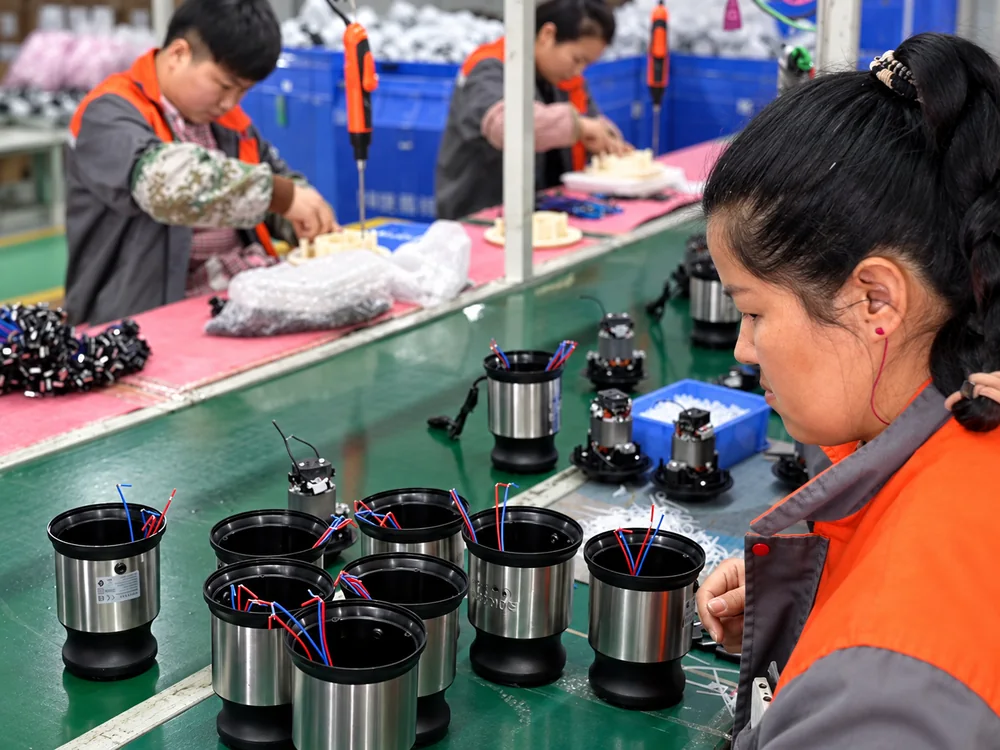
The manufacturing preparation process should be connected to the specific production and release arrangement. Ask what is authorized now and what awaits a later decision. A supplier needs a clear instruction, particularly where a first shipment and a later production balance appear on the same commercial record.
Do not use an optimistic forecast as a substitute for an agreed balance arrangement. If your ability to take later goods depends on selling the first shipment, make that dependency visible during negotiation. The supplier may offer terms that accommodate it or may not. Either answer is more useful before commitment than after the first goods arrive.
Choose a first-order offer you can repeat or exit clearly
The preferred offer should identify a complete product, the full initial commitment and the scope of any later obligation. It should also give your business a practical way to evaluate the first saleable stock. The smallest printed minimum is only one part of that decision.
Define the point at which you will review the trial. Use the evidence relevant to the sales route: retailer acceptance, actual sales, remaining stock and reported product or presentation issues. A slow start caused by an unfinished listing should not be treated as proof that the appliance itself lacks demand. Separate execution problems from the product decision.
Before planning replenishment, ask whether the initial conditions were trial-specific. A one-time arrangement does not establish a permanent price, minimum or delivery schedule. Request the current repeat-order proposal early enough to compare it with the stock remaining and the channel's needs.
Keep the results attached to the configuration that was sold. If the next proposal changes the set or presentation, consider whether the first trial still answers the same commercial question. A favorable response to one complete offer does not automatically validate a cheaper version with fewer included items.
If the trial does not justify another purchase, close the outstanding goods and material balances under the agreed arrangement. Know what remains committed before describing the project internally as finished. This makes the first order a bounded commercial test rather than the start of an unclear accumulation of stock and dedicated materials.
Ask for a complete first-order proposal
Send JINJIE your private-label inquiry with the selected product, market, essential contents, proposed quantity and optional customizations. Ask for finished-unit minimums, separate preparation or material commitments and the conditions for any staged delivery. Compare that complete response with your first-order limit before accepting the offer.
FAQ
Does paying more per unit make a small order a poor choice?
Not necessarily. Compare the total commitment and the route to selling the extra stock in the larger alternative. A higher unit price can be acceptable for a bounded first order. It still needs to leave a workable margin after the actual delivery and channel costs; a smaller quantity is not a reason to ignore those costs.
What if the minimum is quoted only as a total order value?
Ask how that value applies to the selected models and versions. Establish whether each line has an additional quantity condition and what contents the price includes. A total-value threshold does not explain how freely the buyer can divide the order among colors, electrical versions or accessory sets.
Can unused branded boxes be carried into a repeat order?
Discuss that arrangement explicitly, including the remaining quantity, condition and current product identity. Confirm that the retained presentation still matches the next offer before using it. Availability of unused boxes does not guarantee the appliance, commercial terms or printed information remain unchanged.
Should a sample order be described as the first commercial batch?
Only when it is actually agreed and supplied on that basis. An evaluation sample may have a different presentation or purpose from saleable production stock. Keep its identity and limits clear. Use it to resolve its assigned product questions, then obtain the complete commercial proposal before committing to resale quantities.