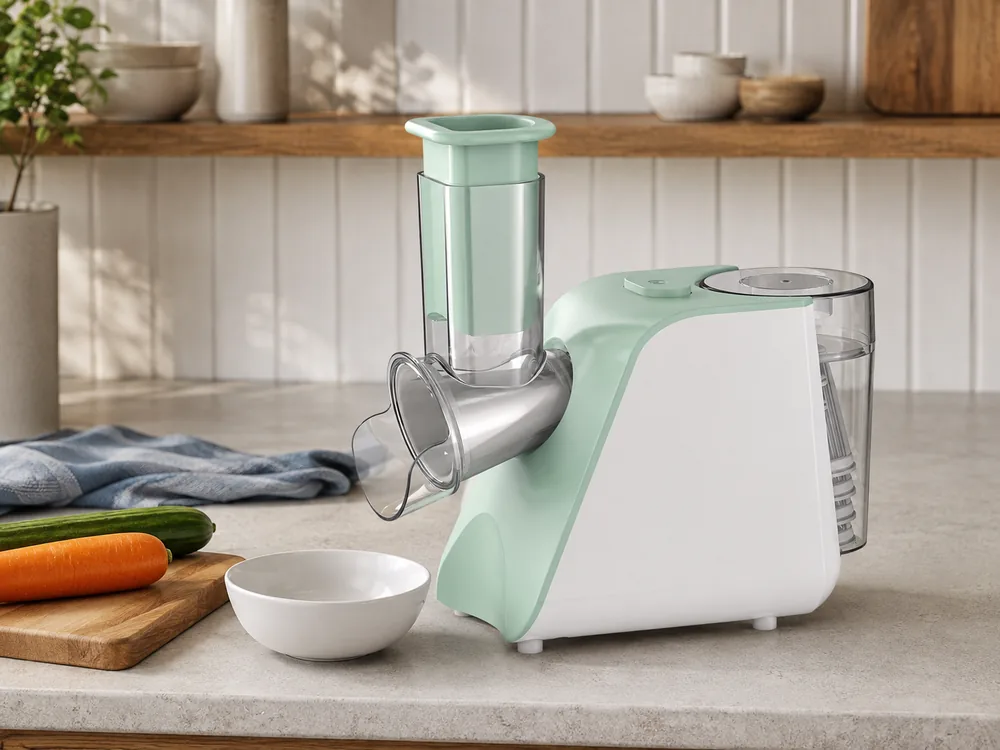
A salad maker can mean a spinner, a manual vegetable cutter or an electric slicer and shredder. These products solve different problems. An importer who starts with the category name alone can receive quotations for appliances that belong on different retail shelves.
Choose the preparation job first. Removing water from washed leaves, making slices, producing shreds and chopping mixed ingredients are separate tasks. Then select a product format, specify the supplied cutting tools and decide how the retail pack will explain the result.
JINJIE's relevant category is the electric feed-through salad maker. It should be compared with other products on the basis of its actual feed structure and cutting set, not treated as a machine that performs every task associated with a salad.
Choose a salad maker format for the preparation job
A spinner holds leaves in a basket and removes water by rotation. It does not replace a slicer. A manual cutter relies on hand force and a particular cutting arrangement. Its output depends on the installed tool and how the food is prepared.
An electric feed-through slicer or shredder moves prepared ingredients through a cutting area and discharges them from an outlet. The receiving bowl is part of the working setup, even when it is not included in the retail box. The buyer needs to consider space for loading as well as space beneath the outlet.
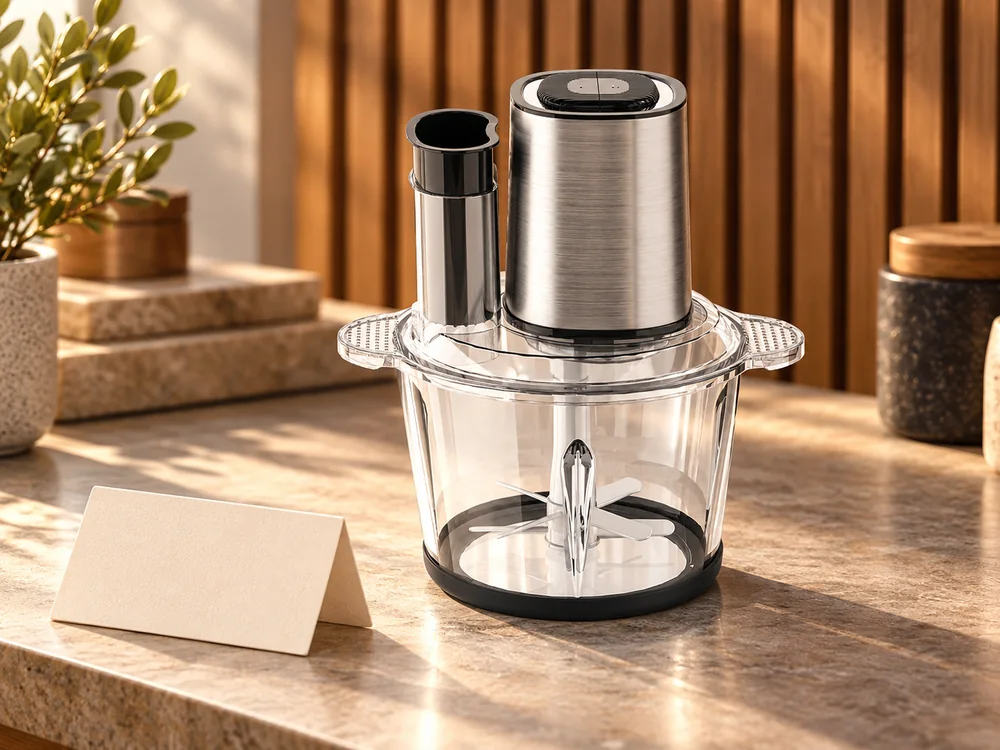
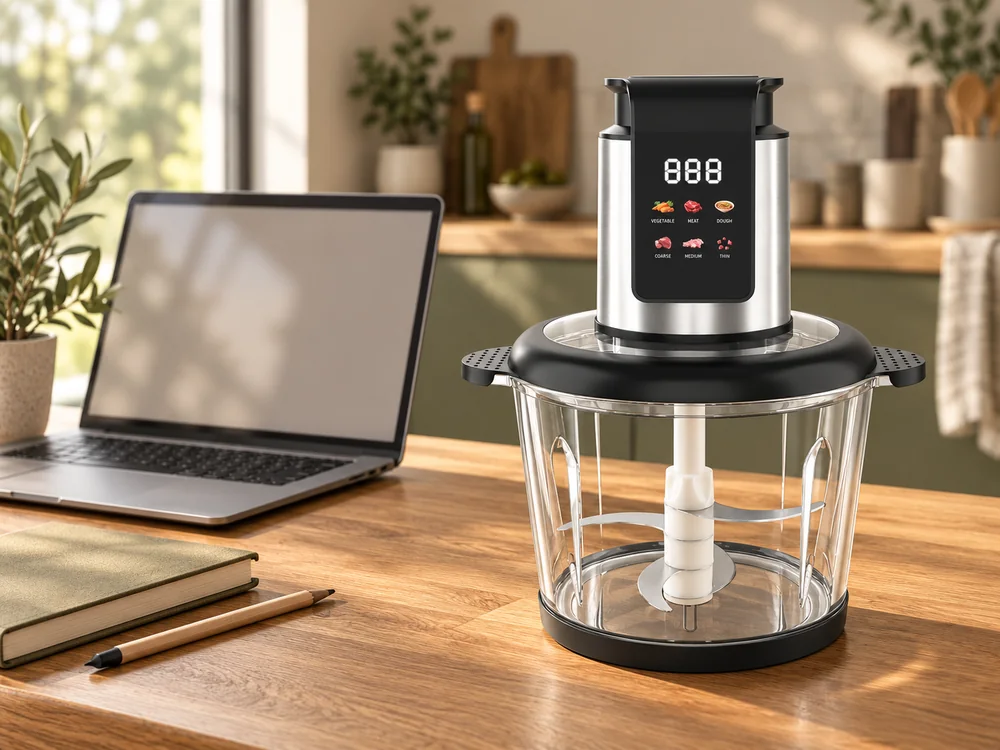
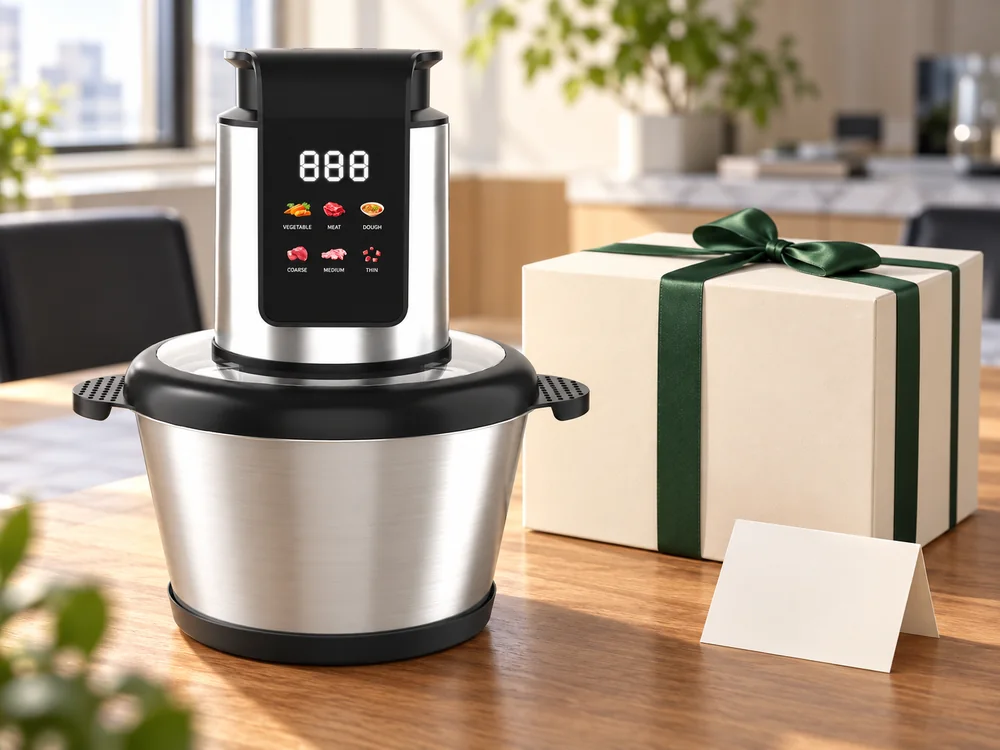
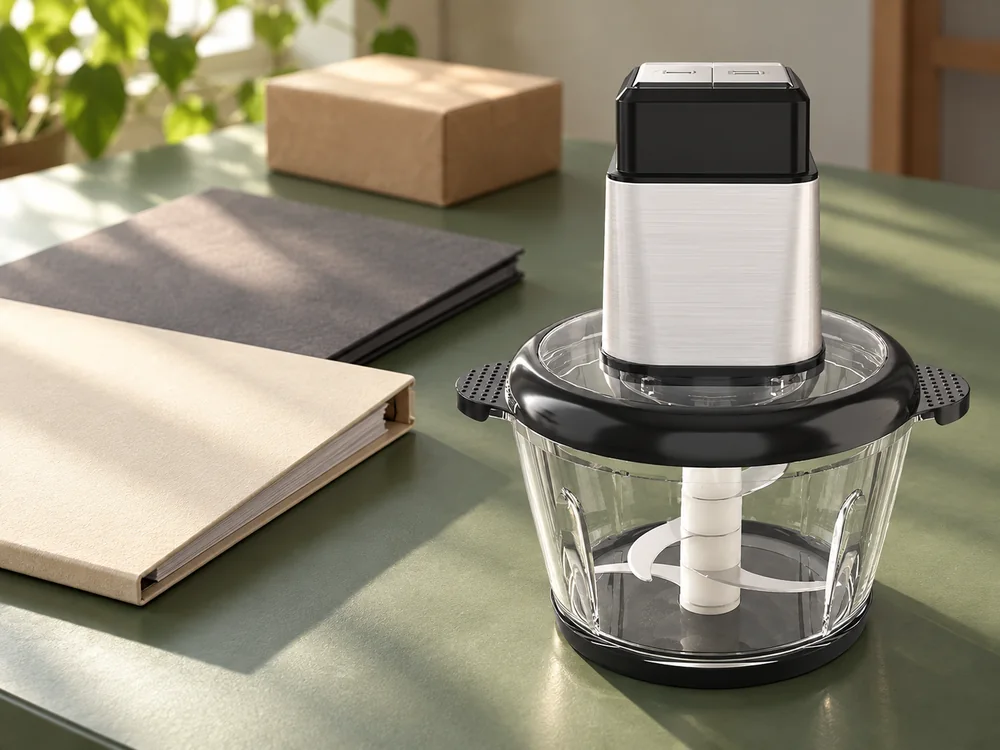
A bowl-type chopper is another format. Ingredients are processed inside a container rather than passing through a drum to a separate bowl. This makes it a different purchasing category even when its marketing photographs include vegetables.
|
Preparation request |
Format to investigate |
What to clarify before quotation |
|---|---|---|
|
Remove water from washed leaves |
Salad spinner |
Basket, bowl and operation method |
|
Prepare slices or shreds into a bowl |
Electric slicer/shredder |
Food, cutting tools, feed path and outlet |
|
Make a particular manual cut |
Manual cutter |
Blade arrangement and permitted ingredients |
|
Chop ingredients within a closed container |
Bowl-type chopper |
Intended batch, blade assembly and operating instructions |
For a brief centered on repeatable slices or shreds, start with the feed-through format. For leaf drying, request a spinner instead. This first choice prevents sample spending on a product whose mechanism cannot deliver the required preparation task.
Write the retail proposition as a short task before choosing a model. “Prepare sliced vegetables for a meal” gives the supplier more direction than “multipurpose salad machine.” Add the foods and expected result, but leave room for the supplier to explain the preparation and tool needed. A broad recipe photograph cannot replace that discussion.
Consider where the product will sit in the existing range. If you already offer a bowl chopper, another device should solve a recognizable additional problem. A feed-through product may be worth investigating for a slicing or shredding brief, while a different color of the existing chopper is still the same basic format. Neither choice is inherently better; they serve different merchandising plans.
The comparison should also reflect the customer's effort outside the powered operation. Food preparation, changing tools, collecting output and cleaning are part of using the product. A short cutting demonstration can look convenient while leaving these steps out. Ask for the complete permitted workflow before building the retail promise around convenience.
Translate “five-in-one” into a cutting list
A function count does not tell the customer what comes in the box. It may count cutting tools, accessories or uses. Replace the count with names during the buying review.
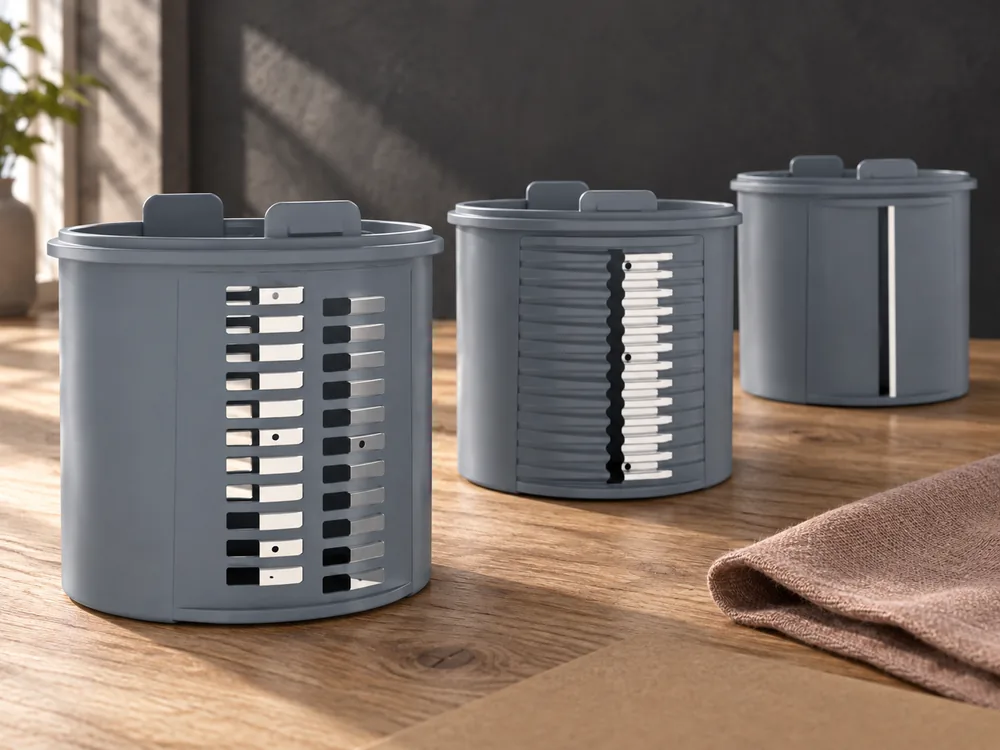
JINJIE's SLJ-01, with secondary reference SM1101, is listed with 150 W power and five cutting tools: thick slicing, thin slicing, thick shredding, thin shredding and grinding. The current reference also lists a knife box. That is a more useful starting description than “five blades,” which could suggest five cutting edges inside a single assembly.
The reference includes other configurations, so do not apply this five-tool list to the whole range. In particular, a separate entry mentioning dicing is not proof that the SLJ-01 set dices. A dicing claim needs a confirmed mechanism, compatible parts and an approved result for the selected product.
Ask the supplier to pair each tool with a photograph and a clear English name. If a term such as grinding can be interpreted differently by the target market, agree on the intended ingredient and output before using it as a carton headline.
Build the assortment around results that customers can distinguish. Thick and thin versions may justify separate tools when the difference is useful for the intended foods. If the distinction is difficult to explain, ask for a side-by-side result under comparable conditions. Do not rename two tools as separate cooking functions just to make the set sound larger.
Check how the tool is installed and removed under the product's instructions. The buyer needs a set that is understandable as supplied, including any required holder or pusher. An attractive cutter photograph is not proof that the accessory can be used with every motor body in the category.
For a starter SKU, choose the smallest confirmed set that answers the actual customer brief. A larger assortment can be considered where its extra results have a clear role. This is a range decision, not a rule that fewer tools are always better. The supplier's available configuration and the customer's intended use should decide the scope.
Compare food results under the same conditions
Start with the foods the retail customer is expected to prepare. Identify their starting condition and any required preparation in the selected product's instructions. A result photograph without those details can create an unrealistic expectation.
Ask the supplier to demonstrate the agreed food using the intended tool. Keep the input preparation and operating method consistent when comparing samples. Record the resulting shape, the consistency of the pieces and any preparation steps the customer would need to repeat.
A buyer should also avoid judging a food result only from its most attractive portion. Ask what was fed into the machine and inspect the complete output from the agreed trial. Where a result is outside the intended use, choose another product or revise the requirement instead of forcing a marketing claim.
Describe the acceptance question in terms a buyer can observe. Are the slices suitable for the planned presentation? Is the shred size distinguishable from the alternative tool? Does the required preparation fit the intended customer? These questions lead to a more useful discussion than asking for a generally “better cutting effect.”
Agree which differences matter before comparing samples. An ingredient's starting shape or preparation may change the result, so keep those conditions with the photographs. If one candidate is shown with carefully prepared input and another with a different starting condition, the images do not provide a fair product comparison.
Ask for unfavorable observations as well as the preferred result. The team should identify any step that is difficult to reproduce within the instructions. A product may suit the main use but not a secondary recipe idea; the buyer can then decide whether to narrow the retail message or investigate another configuration.
Use JINJIE's quality and testing information to discuss the evaluation method for the selected product. Agree the actual food, tool, method and acceptance question rather than requesting a generic pass statement. This is a product-selection exercise; it does not establish unrestricted use with every ingredient.
Look at the working space around the machine
The dimensions of the base alone do not describe the space the customer needs. The feed chute requires access from above. The outlet needs a suitable receiving container and room to remove it. The pusher must remain available during use.
Request a simple setup photograph with the actual product and its approved accessories. Ask for the relevant clearances to be measured on the sample. Do not infer bowl compatibility from a lifestyle image or scale dimensions from an uncalibrated product rendering.
The setup also affects retail communication. A photograph can show where ingredients enter and where the prepared food leaves. If the bowl is only a prop, make that clear in the included-items information. Otherwise, a useful demonstration image can become a source of missing-accessory complaints.
Include the customer's storage situation in the sample review. Ask where the removable tools go after use and whether the supplied storage arrangement fits the retail brief. A storage box can be useful only if the selected offer actually includes it and the intended tools fit as shown.
Do not measure the product's convenience solely by the appliance footprint. Compare the complete setup with the space available for preparation and collection. A compact body may still need room around its outlet. Record the physical sample's dimensions where this affects the buying decision instead of relying on visual scale in a staged image.
Evaluate how clearly the product can be demonstrated in one photograph. The customer should be able to identify the feed direction, cutting area and receiving position without imagining hidden accessories. Keep hands and props consistent with the permitted operating method. A useful article image should explain the format without suggesting an unapproved way to feed food.
Use a short trial to decide what belongs in the first SKU
A sample trial is most useful when it ends in an assortment decision. Choose a small group of relevant preparation tasks and ask which confirmed tools answer them. There is no need to demonstrate every possible food if only a few results define the proposed retail product.
The following record turns the trial into decisions about the offer. Fill it with observations from the identified sample; the entries below describe what to record, not measured JINJIE performance.
|
Trial question |
Record from the sample |
Decision it supports |
|---|---|---|
|
Does the main cutting result meet the retail brief? |
Tool identity, prepared food and full output |
Keep the product format or investigate another option |
|
Do two tools give meaningfully different results? |
Comparable input and side-by-side output |
Retain both or discuss a smaller available set |
|
Is preparation reasonable for the intended customer? |
Permitted preparation and handling sequence |
Adjust the customer promise or reconsider the format |
|
Does the setup fit the expected workspace? |
Measured clearances and receiving-container arrangement |
Confirm the space requirement in the product information |
|
Can the supplied tools be stored clearly? |
Actual storage items and their contents |
Include the storage feature only when it is supplied |
After the trial, separate a product limitation from a presentation problem. If the required output is outside the model's scope, better photography will not solve it. If the product produces the intended result but the tool names are confusing, clearer naming and imagery may be sufficient.
Record an untried tool separately from one that failed the agreed task. If a tool was omitted because the sample arrived incomplete, request the missing item before deciding to remove it from the offer. If two tools were tested but produced no useful distinction for the intended foods, ask which smaller sets the supplier can actually quote.
For each tool, record keep, omit from the requested set, or retest, with the observation behind the decision. Retest only when a specific uncertainty could change the choice, such as inconsistent ingredient preparation. Do not repeat a trial merely to obtain a more attractive photograph.
Send the resulting tool list back with the sample reference. Ask the supplier to identify any unavailable combination and price the nearest workable set before accepting it. A proposed substitute should return to the unresolved trial question rather than be accepted solely because it is in stock.
Build the range around understandable differences
Once the trial shortlist is settled, assign each retail offer a customer role. A slicing-and-shredding set should be described by its confirmed outputs; a storage-led offer should show how its supplied tools are kept. For SLJ-01, keep the five listed tools and knife box visible in the complete-set comparison.
A second SKU needs a difference customers can understand. That could be an independently confirmed cutting set, a different product format or a distinct pack-out. Give each difference a visible place in the range comparison instead of using the same list of benefits for both products.
Compare the complete retail offer: useful cutting tools, preparation effort, measured working space and the price of the supplied set. A lower unit price is worth considering when it still covers the required tasks. Extra tools need a clear use to justify their cost and storage space.
Ask for a comparable quotation after the tool scope is settled. Two offers with the same function count may contain different cutters or storage items. Put the named contents beside the price so the lower figure is not mistakenly treated as a discount on an identical product.
Plan the first product demonstration around the main task, then show the additional tools only where they add information. A photograph of selected cutters is useful for recognizing their shapes, but it is not a complete packing list. Keep the full supplied set identifiable in the purchasing record, and avoid using a partial accessory photograph as the sole evidence for what a customer will receive.
Keep presentation choices separate from the core assortment choice. Color, logo and box design can help the product fit a brand, but they do not add a cutting result. Decide whether the new appearance needs a separate SKU or can remain a color variant within the same clear product description.
Consider what the customer will ask after purchase. Can the required tool be identified from its name and picture? Is the receiving bowl supplied? Where should an unused cutter be stored? Answering those practical questions in the retail offer can be more useful than another broad recipe claim.
When several configurations are available, make the range comparison readable without knowledge of internal model codes. Use the confirmed cutting results and supplied items as the visible differences. Keep the exact codes in the purchasing record so the simple customer description still leads back to the correct order.
JINJIE's electric salad maker page shows the product category and explains the feed path and cutting-set review. The OEM and ODM page is the next reference once the product and retail scope are defined.
Conclusion
Send JINJIE the required foods, cut results and retail-set plan. Ask for a matching product and named tool list before comparing quotations by function count. Include the intended customer and any workspace constraint that could rule out a format.
Choose the first SKU on the preparation task it can clearly explain and deliver within its instructions. Add another version only when its confirmed difference gives the customer a reason to choose it.
FAQ
Is a salad maker the same as a salad spinner?
No. A spinner removes water from leaves. An electric slicer or shredder cuts ingredients with the supplied tools. Use the actual preparation job in the request for quotation.
Does a five-tool salad maker automatically include dicing?
No. Read the tool list for that configuration. Slicing, shredding and grinding entries do not establish a dicing function.
Should a receiving bowl appear on the box?
It can help explain the outlet, but the artwork and included-items list must make clear whether it is supplied. Match the photograph to the approved retail pack.
Can a different cutter be added to an existing set later?
Ask the supplier to confirm compatibility with the exact product and drive arrangement. Similar-looking cutters should not be assumed interchangeable. If an additional tool is approved, update the supplied-items information and relevant instructions for the version that includes it.
Keep that expanded version distinct from stock already packed with the original set. A later accessory decision does not change what earlier customers received, and the product photographs should remain accurate for each offer.