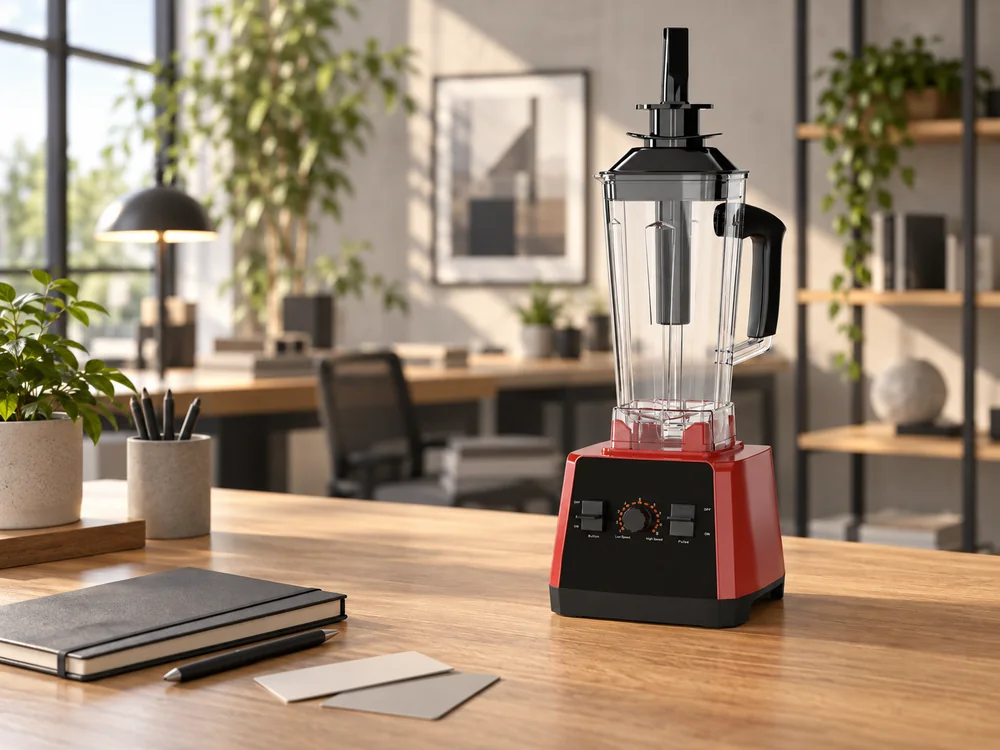
An OEM blender manufacturer needs to understand what your brand wants to change, what should stay as it is, and why the difference matters to the customer. A new logo, another jar and a revised control panel are three different requests. Putting them under one line called customization makes it difficult to compare proposals or decide whether an existing appliance is the right starting point.
For a household retail project, begin with the product you intend to sell. Describe its main use, its place in the range, the complete contents and the intended market. Then separate the changes that create that offer from preferences that could wait. This gives the manufacturer a commercial and technical problem to answer, rather than a collection of attractive reference pictures.
The following approach concerns branded countertop blenders. It does not assume that an available housing supports every jar, control system or operating task, or that a factory offering OEM services has already agreed to a particular development.
Choose the existing product before specifying the changes
Identify the closest current appliance in the JINJIE blender range. Keep the manufacturer's model reference alongside your proposed retail name. Your name can describe the customer offer, but the factory still needs a definite starting product when explaining changes and pricing.
For example, the quotation lists PBJ-01, with BL2001 as a secondary reference, at 2 L, PC and 1200 W. It also lists BL1161 and BL1261 at 1.5 L, AS and 600 W. These are model references for an initial discussion, not interchangeable specifications from which a buyer can assemble a new product without engineering confirmation.
Ask first whether the existing complete appliance can perform the intended household task within its instructions. A new brand treatment cannot resolve an unsuitable operating scope. Equally, a useful product does not need a structural redesign simply because it will carry another brand.
Describe the retail difference in customer terms. Perhaps your channel needs a straightforward control layout, a particular overall appearance or a set that fits an established price position. The manufacturer can then explain which existing option comes closest. A request for a different internal component should follow a demonstrated need, not replace that explanation.
Separate requirements from reference material. A competitor photograph may show an appearance you like, but it does not establish the competitor's construction, performance or ownership rights. Explain the feature you are trying to communicate and provide material your business is entitled to use. Do not ask the supplier to infer an entire specification from a picture.
Also identify what must remain unchanged. If the project depends on an existing jar, control arrangement or packing format, state that early. Otherwise, a supplier may offer an alternative that solves one request while moving the product away from the price, dimensions or customer explanation your team expected.
Use the first response to choose between two routes: an existing appliance with defined branding work, or a project that needs further development. Neither route is inherently better. The useful choice is the one that delivers the customer offer with a level of cost, uncertainty and preparation your business can support.
Treat jar and control changes as product decisions
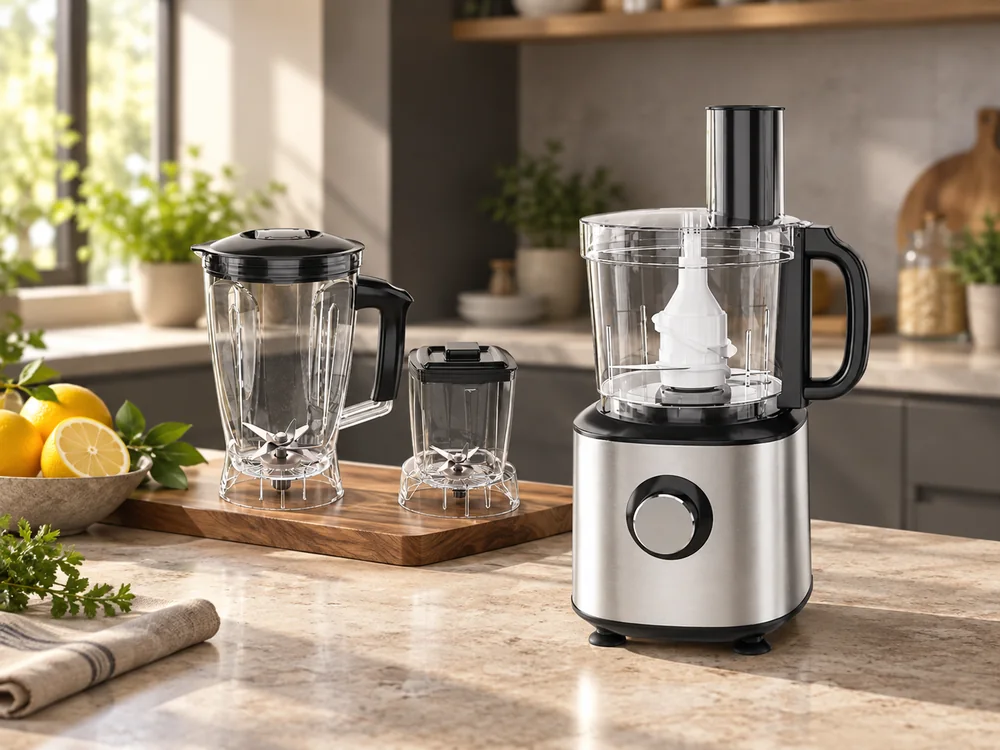
A jar request needs more detail than its nominal volume. Explain whether you want another existing jar option or a newly developed form, and why. The supplier should identify the proposed container, lid and connection arrangement together. Similar appearance is not enough to establish compatibility with the selected base.
Changing the material description also requires a model-specific answer. A material option on another catalog page does not mean that the same jar is offered in that material. Keep the confirmed material tied to the actual proposed component; avoid combining one model's photograph with another model's specification in the retail brief.
A different handle, lid or spout can matter to the buyer's intended customer experience. Explain the difficulty you want to address, such as the presentation or handling of the selected appliance, without prescribing an unsupported solution. Ask what changes the manufacturer recommends and what else would need to be checked before those changes became an orderable product.
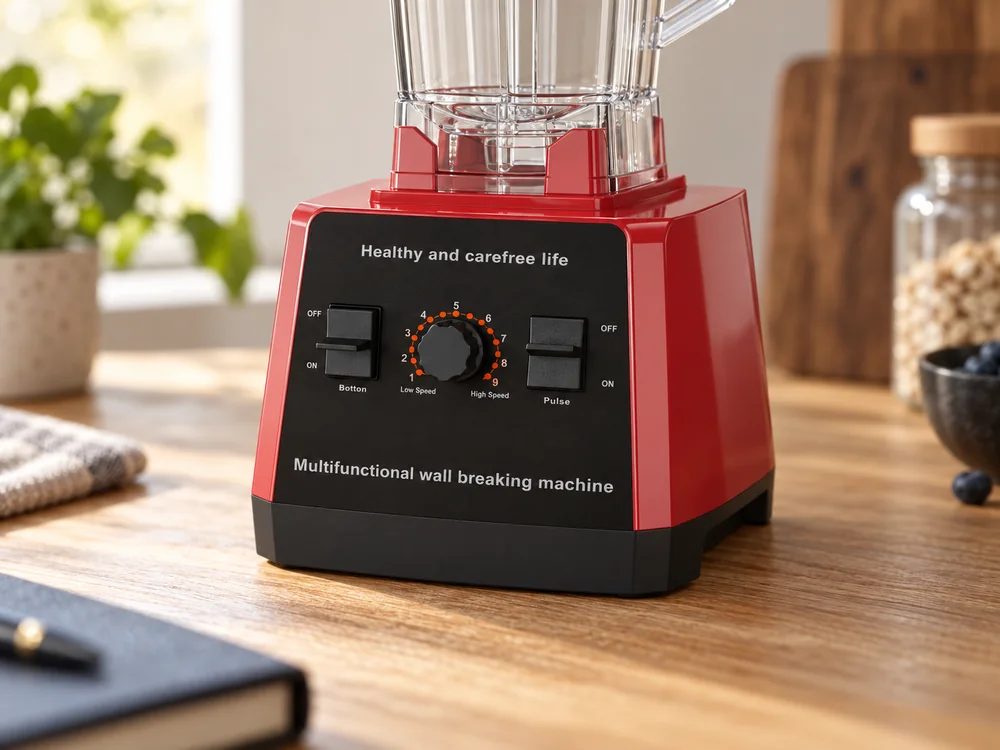
Controls require a similar distinction. Changing visible wording is different from changing the appliance's behavior. A new program name must not imply that a recipe or operating task has been established when only the panel artwork has changed. Describe the intended user action and expected behavior separately from the words you would like printed.
Ask how a proposed control change would be evaluated on the selected electrical version. Do not specify a higher performance claim simply because another panel appears more sophisticated. A display, extra button or different dial can change the customer impression without establishing any improvement in the task that matters.
|
Requested difference |
What the buyer needs to define |
What the manufacturer's proposal must clarify |
|---|---|---|
|
Another existing jar |
Reason for choosing it and complete set required |
Exact compatible model and supplied components |
|
A newly shaped container |
Customer need and essential dimensions or appearance |
Feasibility, development work and evaluation needed |
|
Revised control wording |
Intended customer instruction and language |
Whether the change is artwork only or affects operation |
|
A new operating behavior |
Task, intended user action and expected response |
Proposed implementation and relevant evaluation scope |
|
A different external finish |
Appearance reference and surfaces concerned |
Available method, representative sample and order conditions |
Compare the proposed changes as a complete appliance. If the jar and controls both change, ask which sample will represent them together. Separate demonstrations of two components may help development, but they do not show the final combination. Keep that distinction visible when deciding whether the product is ready for a retail commitment.
Give branding work a precise, visible scope
JINJIE's OEM and ODM information provides a starting point for discussing branding and product development. For an actual project, list the surfaces and materials that need your brand: the appliance, retail box, instructions and any agreed labels. Do not let a general promise of custom packaging stand in for the complete deliverables.
Supply the correct logo artwork and explain its intended placement. Request a representation of its size and position on the actual product. A logo centered on a flat digital page can look different when placed on a curved housing or beside existing controls. The approval should relate to that physical location.
For color, decide which visible parts need to match and which can remain standard. A red housing, black handle and transparent jar are not one continuous surface. If the brand requires a coordinated appearance across different materials, ask how the manufacturer will show the proposed result rather than approving a single color square as the entire appliance.
Review the product and package as the customer will see them. A box image should show the agreed jar, lid, controls and included tools. Decorative scene props must not look like additional supplied accessories. If photography uses an early sample, identify which details need replacing before the final artwork is approved.
Keep commercial names separate from technical claims. Your team may choose a distinctive product name, but accompanying wording about permitted ingredients, capacity or operation must describe the actual supplied version. Attractive copy should not turn an unconfirmed optional task into the reason customers buy the appliance.
Decide who provides the language content and who checks its technical consistency. Translating an old instruction file without checking the selected appliance can leave the wrong control names or cleaning directions in the box. Ask the manufacturer to identify the applicable source information and resolve differences before the retail files are finalized.
When the project includes several markets, show which materials are shared and which are different. A common brand design may coexist with separate electrical versions or language packs. That is useful for planning, but it does not establish that their quantities, preparation or documents can all be combined under one commercial condition.
Ask the OEM blender manufacturer for defined development deliverables
A useful development response explains what is already available, what needs investigation and what the proposed next sample will answer. It should also identify the buyer inputs still needed. A confident delivery date without a defined product and approval sequence does not tell you whether your project is ready to proceed.
Match each sample to a decision. An appearance sample can help settle color and placement. A functional sample may answer questions about a proposed configuration. A complete retail sample brings the agreed appliance and presentation together. These purposes can overlap, but the supplier should make any differences from the intended order clear.
|
Sample or review stage |
Decision it can support |
Question to resolve before relying on it |
|---|---|---|
|
Existing reference appliance |
Whether the starting product is suitable |
Which parts of the future offer are still absent? |
|
Appearance representation |
Whether the proposed visual treatment is acceptable |
Does it represent the actual surface and production method? |
|
Changed functional configuration |
Whether the proposed product change meets its defined task |
What differs from the intended production version? |
|
Complete retail sample |
Whether the agreed appliance and supplied contents form the offer |
Are the files, electrical version and component references current? |
|
Final preparation review |
Whether open items prevent the order from proceeding |
Who must resolve each remaining item, and what is its consequence? |
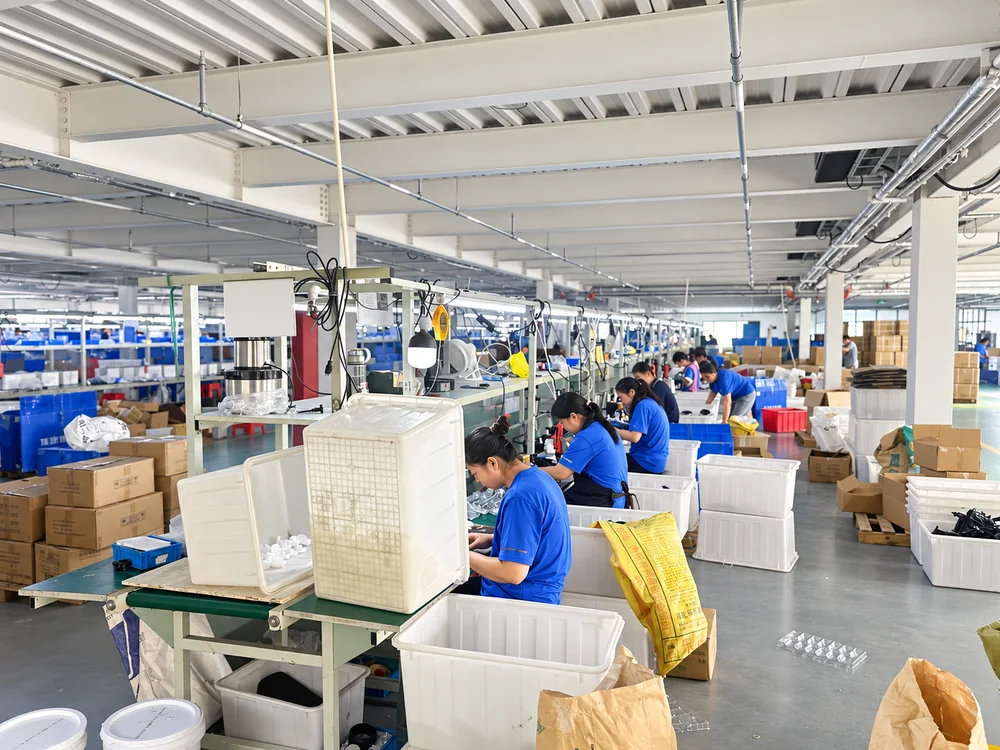
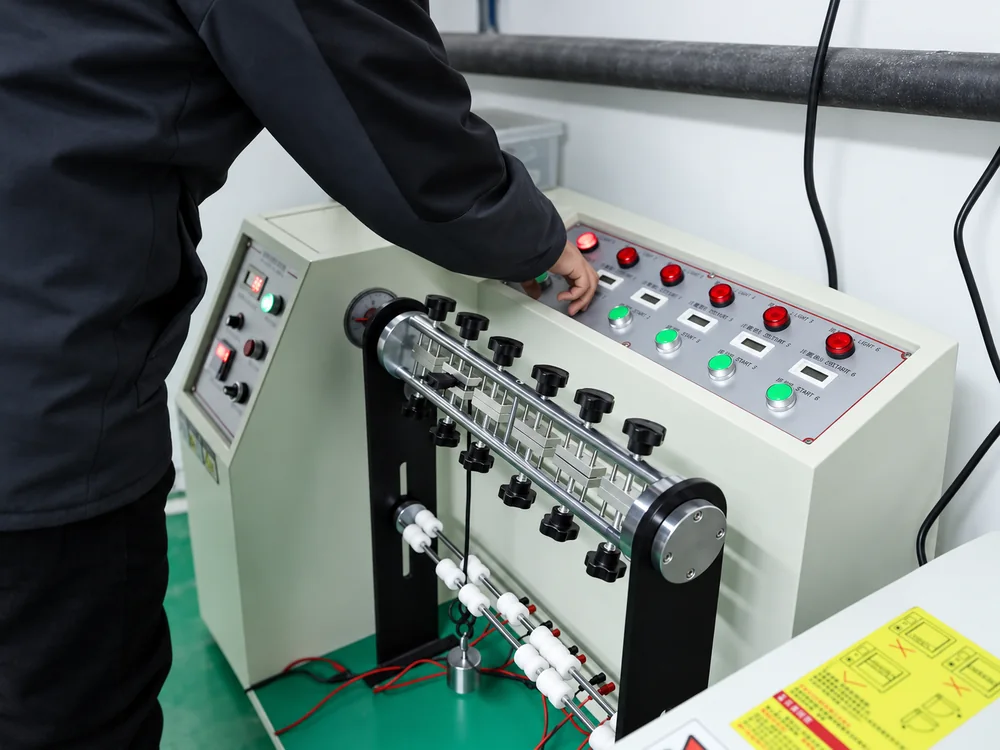
Use JINJIE's quality and testing information to discuss relevant checks, then connect the agreed evaluation to the actual change. A general factory photograph is not a result for your redesigned jar or control arrangement. Ask what evidence will be available for the decision you need to make.
If a sample cannot yet represent one part of the final product, record the limitation and its consequence. A temporary appearance difference may allow useful functional work to continue. An unresolved component central to the promised use may prevent a meaningful final decision. Treat those situations differently rather than marking every sample simply approved or rejected.
Bring market-specific questions into the discussion before approving printed claims. The compliance documentation page is an inquiry starting point, not confirmation that every proposed configuration is covered. Ask which product references and requested changes the available information actually concerns.
Have one buyer-side owner gather the responses from purchasing, product and artwork teams. If each sends a separate final version, the manufacturer must guess which combination to prepare. A concise agreed change list is more useful than a long email history with contradictory attachments.
Compare the complete project cost and the promised rights
Request the price of the complete appliance and retail set separately from identified development or preparation charges. Ask what each charge produces: a sample, artwork preparation, a particular tool or another defined deliverable. An unexplained customization fee is difficult to compare and gives neither party a clear completion point.
Compare quotations against the same scope. One may cover an existing jar with branding, while another assumes a newly developed component. The difference is not simply a more expensive version of the same service. Keep the product, included work, evaluation and outstanding decisions beside the cost comparison.
Ask how quantity conditions apply to each changed element. The total appliance order may not explain the conditions for a special finish, printed package or newly prepared component. Obtain the manufacturer's actual response for the proposed mix instead of assuming that one minimum quantity applies to every part of the project.
Clarify the commercial terms for any paid tooling or design work before committing to it. Payment alone should not be treated as an answer to who owns an asset, who may use it, how it is maintained or what access the buyer has later. Ask for those terms to be stated in the applicable agreement and obtain appropriate advice where needed.
Treat exclusivity as a separate request. A private brand, special color or development payment does not by itself establish an exclusive product or territory. Define what the business needs protected and ask what the manufacturer is actually prepared to offer. Do not build a launch forecast around an assumption that was never accepted.
Compare an existing-product alternative alongside a proposed development when both could serve the customer. The simpler option may permit a useful first launch; the developed option may justify its additional work if it creates a meaningful retail difference. Make that decision using the intended offer and realistic order commitment, not the appeal of having something custom.
Include the buyer's own work in the plan. Preparing usable files, resolving language content and reviewing samples takes time even when the manufacturer performs its agreed tasks promptly. Keep these dependencies separate from the supplier's quoted preparation period so the business does not mistake a factory estimate for a complete launch calendar.
Keep the first launch separate from future changes
Once the product is agreed, freeze a clear reference for the first order: the selected appliance, confirmed changes, electrical version, supplied contents and current presentation files. The purpose is to let purchasing, packing and the retail team refer to the same offer, without reopening settled choices every time another idea appears.
Keep worthwhile future changes in a separate list. A possible new color or control concept can remain under discussion without becoming a condition of the first shipment. If it does become essential, update the product and timing together rather than quietly adding it to an already accepted artwork file.
Check the final retail explanation against the released product. Images, instructions and the product page should not alternate between the original appliance and an earlier development sample. Where a change affects visible controls or included parts, replace the corresponding material instead of expecting customers to interpret the difference.
Retain the relationship between the manufacturer's reference and your own SKU for support and repeat purchasing. A second version may retain the same brand name while using a different approved part or instruction set. Your team needs enough information to ask for the correct supply without relying on the name alone.
Before replacing a component in a later order, consider products already sold and stock still on hand. Ask whether the proposed change affects compatibility, customer instructions or replacement support. Do not assume that a revised jar can serve earlier units merely because the new order uses the same product name.
Review the next project decision using actual customer and sales information. If the launch reveals confusion about the controls, clearer presentation may be the right response. If it reveals a genuine unmet task, another product proposal may be justified. More development is useful when it solves a defined problem, not simply because the first OEM project is complete.
Discuss your branded blender project with JINJIE
Send JINJIE your OEM blender brief with the closest current model, intended household use, destination market, complete set and expected quantities. Separate essential changes from preferences, and identify the artwork or references you can provide. Ask for the proposed product, development deliverables and commercial conditions together before deciding which route to take.
FAQ
Can we start without finished packaging artwork?
Yes, an initial product discussion can begin with the intended market and presentation requirements. Identify when final files are needed for the manufacturer's proposed process. Product exploration and readiness to prepare the final retail pack are different stages; an unfinished box need not prevent every earlier decision.
Can another jar in the catalog be fitted to our chosen base?
Do not assume so. Ask for the exact compatible combination and its applicable instructions. A similar volume or mounting appearance does not establish that two components form an approved appliance. Keep the manufacturer's response attached to the proposed complete model.
Should an optional change delay the first order?
Only if the business decides that the change is necessary to the offer it intends to launch. Compare the confirmed existing option with the revised project, including timing and cost. A preference can be deferred, but a change essential to the promised customer task cannot simply be ignored.
What if the supplier proposes a different component on a repeat order?
Request the reason, exact difference and effect on the complete product. Review current retail material, remaining stock and support needs before accepting it. A supplier-proposed replacement is a new decision, not automatic permission to change the version customers will receive.