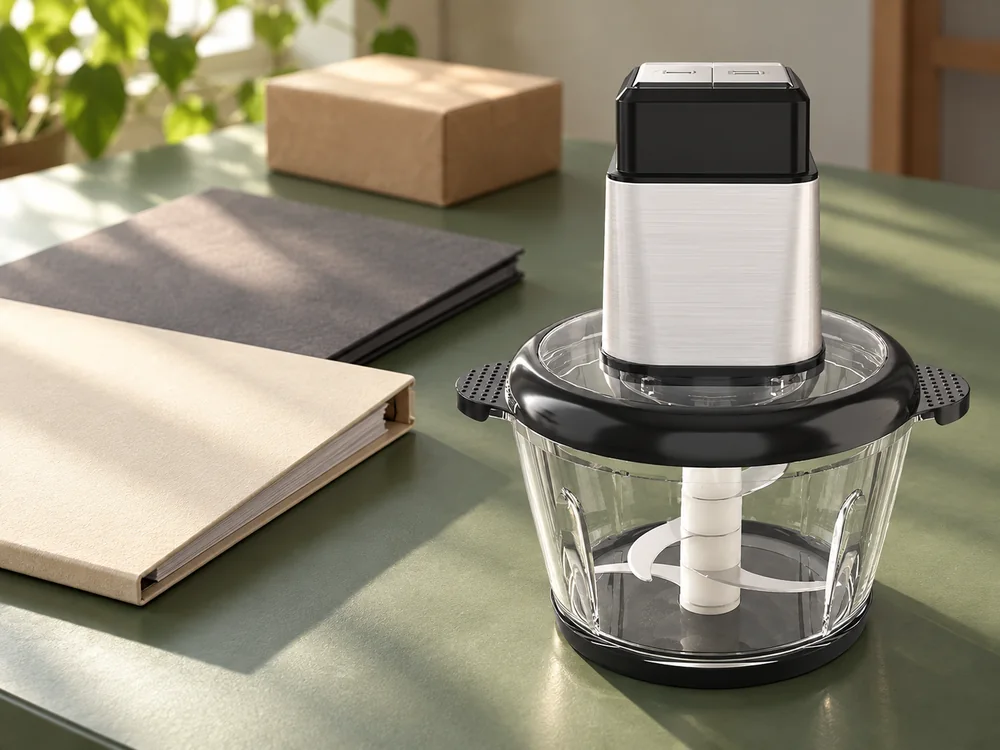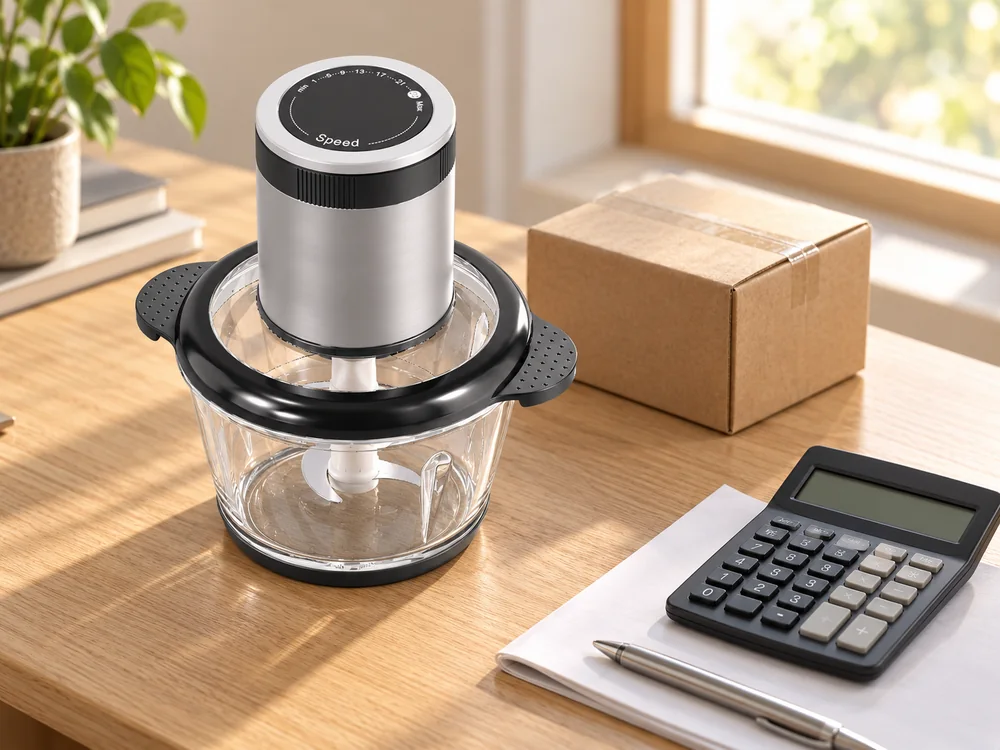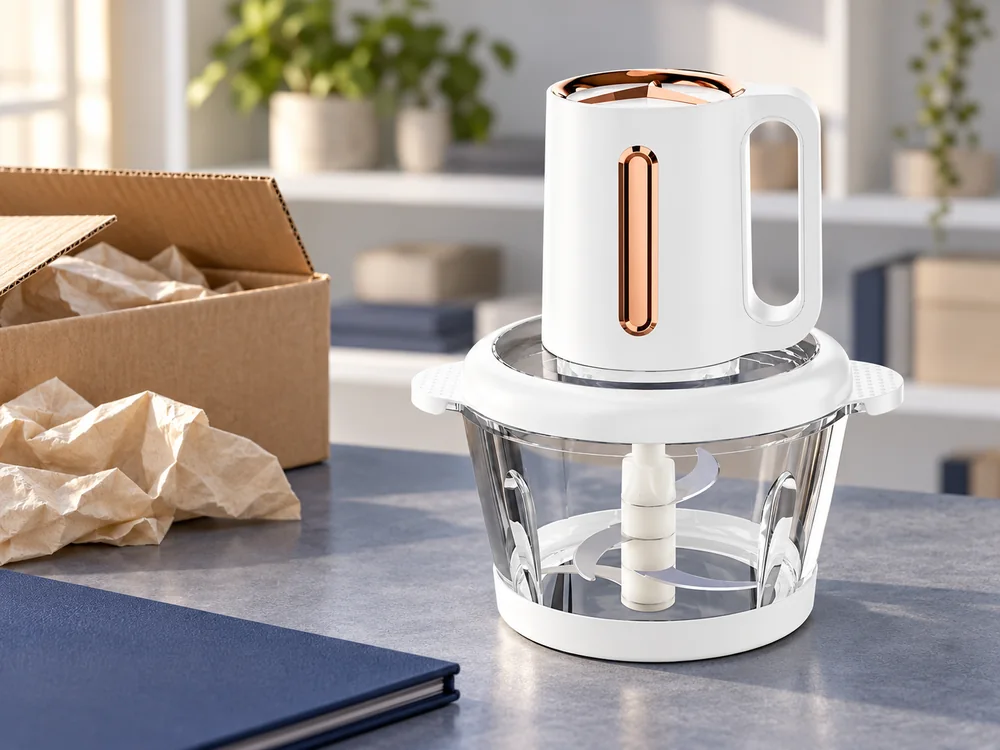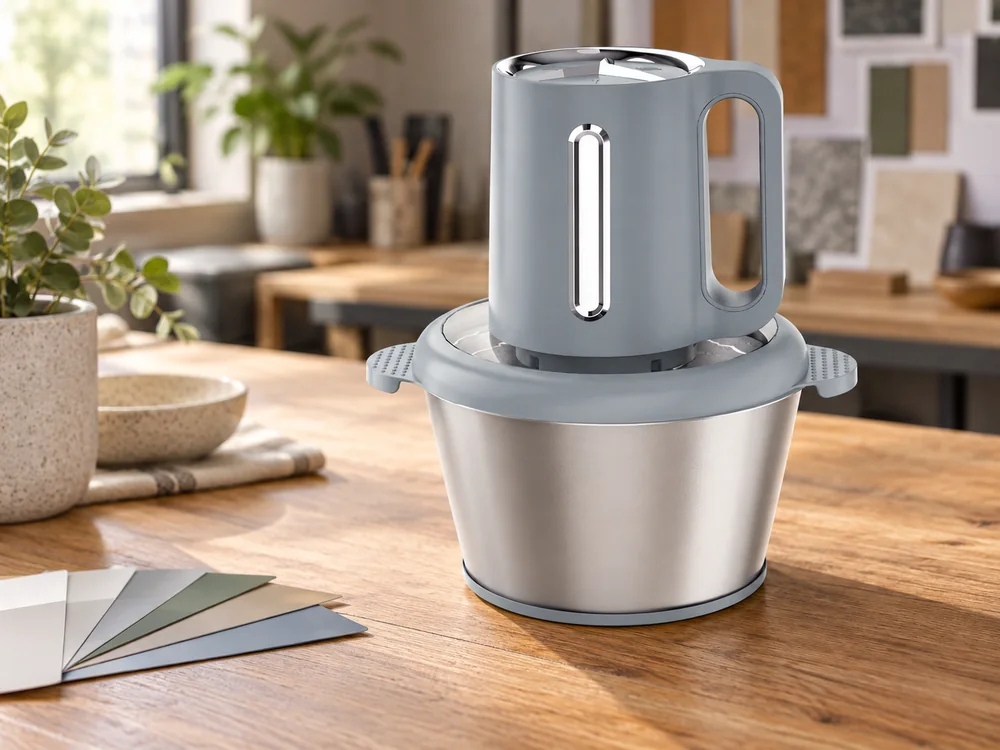
An OEM meat chopper project should start with the customer requirement that an existing model does not yet meet. Choose the smallest set of changes that meets that requirement, then price the engineering, samples and packaging work those changes create.
For a private-label importer, a different logo, a new control layout and a redesigned bowl are very different commitments. A visual mockup can make them look equally simple. The purchasing brief needs to separate them so the supplier can explain what stays on the existing platform and what requires further development.
This guide helps buyers choose a customization scope, compare the commercial consequences and approve the resulting work in a sensible order. It concerns household electric bowl choppers. Examples of proposed changes are discussion scenarios, not a statement that every option is available on every JINJIE model.
Choose an OEM meat chopper starting point
Write down the reason for the project before making a change list. A retailer may need a product that fits an existing color range. Another buyer may need a particular control experience or a different supplied set. The first question is whether a current platform can meet that need with limited changes.
Start with a named model from the JINJIE meat chopper range. Identify the bowl, lid, controls and included parts that should remain. Keeping these items explicit is useful because a sketch of a new exterior can otherwise leave the supplier unsure whether the internal configuration is also changing.
Separate mandatory requirements from preferences. A destination-market requirement belongs in the mandatory group. A decorative accent that does not affect the customer's buying decision may be optional. This gives the team choices if cost or development time exceeds the launch allowance.
JINJIE's OEM and ODM routes distinguish branding an existing product, modifying an existing design and developing a new product. The table below translates those routes into a buyer's scope decision. It does not assign universal prices or lead times.
|
Route |
Suitable starting situation |
Work to define |
Main decision |
|---|---|---|---|
|
Existing-product branding |
The appliance already meets the use requirement |
Finish, logo, electrical version and printed materials |
Whether the proposed presentation supports the retail offer |
|
Existing-design modification |
A specific feature needs changing |
Affected parts, fit, function and verification |
Whether the benefit justifies development and revision work |
|
New-product development |
Available platforms cannot meet the defined need |
Product brief, design, tooling, samples and evaluation |
Whether the business can support the wider development scope |
The route should follow the work, not the terminology in a sales conversation. Buyers and suppliers sometimes use OEM and ODM differently. A written list of deliverables is more useful than debating which label applies to a project that nobody has yet defined.
Make branding and artwork precise enough to quote
For a logo, provide the artwork, proposed location, size and color. Identify the surface receiving it and ask which application method is suitable. The chosen method and production sample determine the actual result; a digital rendering mainly communicates the intended appearance.
Color approval needs a reference and a surface. A shade viewed on a screen may look different on metal, plastic or a textured finish. Agree how the physical sample will be assessed and retain the accepted reference. If several parts should appear coordinated, review them together rather than approving isolated color patches.
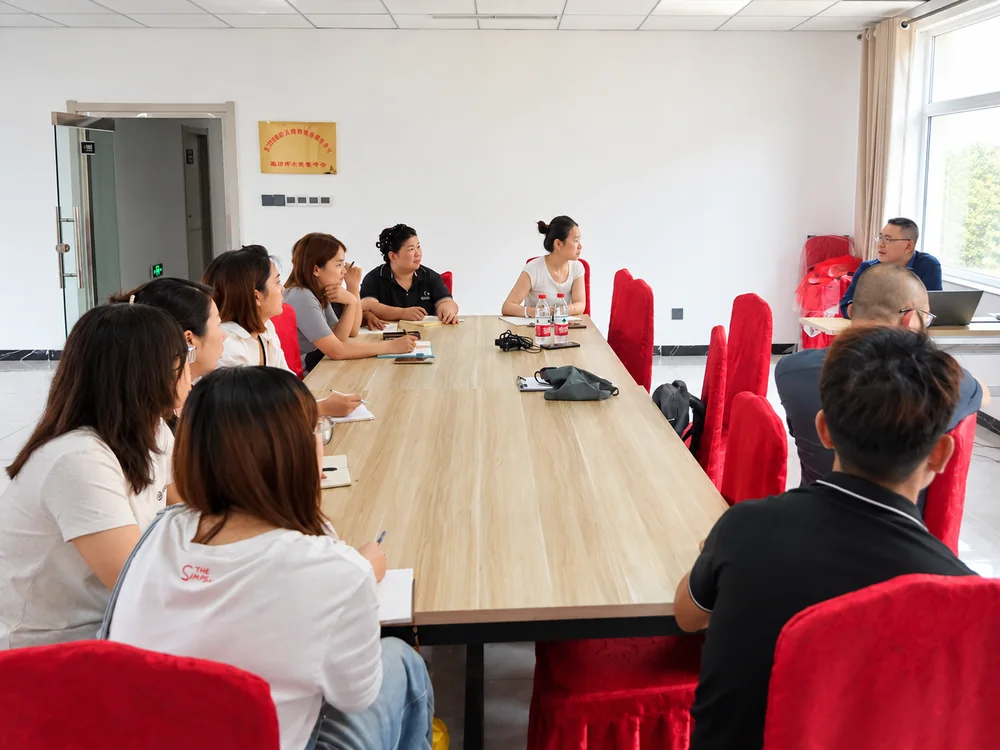
Describe what the supplier should supply and what the buyer will prepare. Packaging design may involve a structural layout, printed artwork, product photographs, text and translations. A request for a “custom box” does not say which of these tasks is included. Allocate responsibilities before the designer begins.
The retail box and manual should describe the selected set. A photograph containing an optional second bowl can create an inclusion promise even if the written parts list excludes it. Keep option photography separate from the artwork being approved for the order.
Treat the manual as part of the product rather than a final decoration. It needs the correct controls, supplied parts and operating limits. The brand's service details and any warranty wording should match the arrangement the buyer intends to offer. Do not retain another customer's contact information from an old file.
Before asking for a final packaging quotation, establish whether the dimensions are preliminary or based on a packed sample. A new accessory can change the internal arrangement and outside box size. Approving artwork before that arrangement is settled can create an avoidable redesign.
An economical first launch may keep the current product structure and concentrate on a well-defined finish, accurate instructions and a clear retail set. That is a complete commercial choice. It does not become less useful because a more extensive redesign is possible.
Identify changes that reach beyond appearance
Changes to a bowl, lid, opening, drive connection or control arrangement need the factory's technical review. The relevant question is what else must change for the proposed result to work. A revised lid may affect several mating parts even when the visible alteration occupies a small part of the drawing.
Supply the intended outcome instead of prescribing an unverified technical solution. For example, explain the handling difficulty you want to address and show the current arrangement. Let the supplier identify feasible approaches and their effect on the existing configuration. That makes the brief useful without turning a buyer's sketch into an approved engineering drawing.
For an additional attachment, define its use, compatible model and quantity in the set. Include the packing space and instructions it requires. An extra part earns its place when the customer can use it for a supported task and the supplier can provide it as an agreed combination.
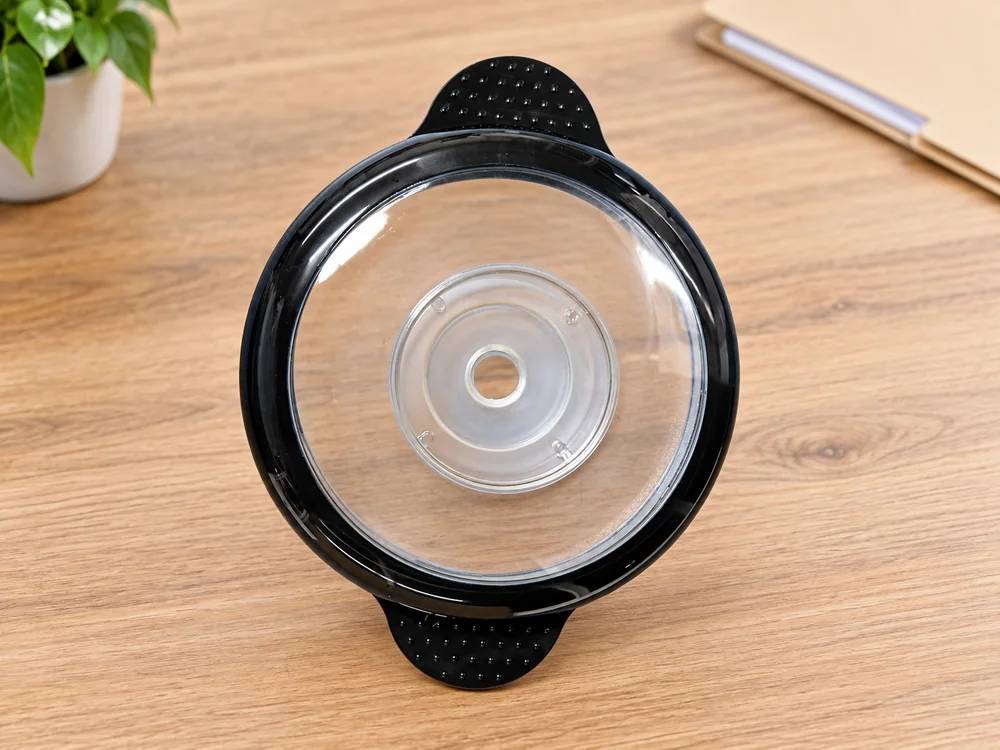
An electrical or control change needs its own version review. Cosmetic approval should not imply approval of a different motor or control system. Keep technical decisions with the people qualified to assess them, and record the resulting configuration for the sample and production team.
Material changes also need a reason. A buyer may be seeking a different appearance, handling experience or cost position. State that objective, then ask which product and evidence updates the proposed material requires. Do not infer a material grade or suitability from a photograph.
Use the quality and testing discussion to identify the checks that answer the actual change. Testing should follow the selected product and intended use. A general request to “test everything” leaves the scope unclear, while repeating an old check may miss the part of the product that has changed.
When an option creates more work than expected, revisit its commercial purpose. Keep it if the buyer need remains strong enough to justify the cost and timing. Otherwise, preserve the existing component and record the idea for a later version. Deferring an optional change is different from overlooking it.
Separate development spending from the production offer
Ask for a quotation that distinguishes the appliance's recurring unit cost from project-specific work. Samples, artwork preparation, tooling and evaluation may have different charging arrangements. Identify what each charge delivers and what remains outside the offer before comparing alternative scopes.
For a hypothetical comparison, suppose an appearance change adds USD 0.30 per unit, while a structural proposal adds USD 0.10 per unit and USD 2,000 of development work. At 2,000 units, the stated additions would be USD 600 and USD 2,200 respectively. At 10,000 units, they would be USD 3,000 and USD 3,000. These numbers illustrate cost structure only, not equivalent performance or actual JINJIE prices.
The arithmetic does not make the structural route preferable at a certain volume unless both routes meet the same requirement. It also excludes any additional charges not stated in the example. First compare what the alternatives deliver, then compare their cost on an explicit quantity basis.
Keep a sales forecast separate from a committed order. Spreading development spending across an optimistic annual forecast may make a project look inexpensive per unit, while the cash still has to be committed earlier. Record the quantity used for the calculation and test a lower-volume case before approving the expenditure.
Minimum quantities may apply to a model, finish, component or printed material. Ask where each minimum applies and whether unused custom materials remain after the first production run. If that creates a purchasing commitment, establish how it will be recorded and handled rather than treating it as free flexibility.
The same clarity is needed for repeat orders. Ask which project charges recur, which approvals remain valid for an unchanged version and what happens if the buyer changes the design. A first-order quotation is a poor basis for future budgeting when these assumptions are invisible.
Keep samples and shipping costs visible as separate items where appropriate. A development comparison should include the work needed to reach the approval decision, not only the price of a unit after every decision has already been made.
Settle tooling deliverables before authorizing work
If tooling is proposed, request a specific description of what will be made or modified. Identify the part, intended production use and the samples or records expected at the next stage. Paying a charge without that description leaves the buyer unable to tell whether the quoted milestone has been delivered.
Discuss ownership, permitted use, storage, maintenance and the treatment of later changes in the written commercial agreement. These terms depend on the project and agreement; a sample payment alone should not be treated as proof of a particular ownership arrangement. Obtain appropriate contract advice where your business needs it.
Ask what happens if the first sample needs correction. The offer should explain the included revision work and how further changes will be assessed. Distinguish correcting a result against the agreed brief from introducing a new requirement after work has begun.
Preserve reference files and versions when giving feedback. “Make it closer to the first picture” is difficult to execute when the team has several pictures and two sample revisions. Mark the feature, describe the desired result and identify the current reference. Keep comments about appearance separate from comments about operation.
Timing should be attached to deliverables. A date for an appearance sample is different from a date for a functional sample or production preparation. Ask what must be approved before the next activity begins, and identify buyer-side work such as artwork or retailer review that could hold it up.
If your launch date is fixed, explain which product differences are mandatory by that date. The supplier can then discuss a feasible sequence, perhaps retaining more of the base model for the first release. Do not describe an unreviewed schedule as guaranteed simply because all desired changes fit on one page.
Approve samples according to what they establish
An appearance model can help settle shape or presentation while leaving fit, operation or production finish unresolved. A functional sample may answer a technical question without containing final artwork. Identify the purpose of each sample so approval means something specific.
Use this approval table to organize the work after a scope has been chosen. It records evidence and dependencies.
|
Approval stage |
What to review |
Record needed before moving on |
|---|---|---|
|
Base configuration |
Selected model and retained parts |
Agreed specification and mandatory changes |
|
Proposed modification |
The feature and its effects |
Technical response and sample purpose |
|
Product sample |
Relevant appearance, fit and operation |
Results, unresolved points and version identity |
|
Branding and instructions |
Actual treatment, wording and illustrations |
Approved files matching the selected product |
|
Packed sample |
Included set, protection and box arrangement |
Final packing reference and affected dimensions |
|
Production preparation |
Accepted changes and outstanding conditions |
One current version released to the factory |
Review a packed sample after the set contents are stable. If an accessory is removed or replaced, revisit the affected packing and illustrations. There is no need to reopen an unrelated color decision, but the changes must reach every document or component they actually affect.
JINJIE's manufacturing preparation process uses approved product and packing details to guide production. The purchasing handover should therefore identify the final sample and specification together. Sending a new artwork file without the associated product decision can leave two versions circulating.
Record exceptions explicitly. If a sample has a temporary finish but is accepted for a fit check, retain that limitation. Later reviewers need to distinguish an approved characteristic from a temporary feature that was never intended for production.
Freeze the first release without losing later ideas
Once the agreed version is ready, separate production corrections from new ideas. A correction addresses a mismatch with the accepted brief. A new feature changes the brief and should receive a fresh cost, timing and verification review. Combining the two under “small adjustments” makes the project difficult to close.
Use a short change record containing the current version, proposed change, reason, affected items and decision. Include which sample, artwork, test or document needs updating. An email can carry the discussion, but the production reference should show the accepted outcome without requiring the factory to interpret the full conversation.
Consider a hypothetical late request to add another bowl. The question reaches beyond the bowl price: compatibility, set contents, protection, box size, illustrations and order quantity may all require attention. Review those effects before promising the extended set to a retailer.
Keep a separate list of deferred ideas for the next release. That allows the first product to proceed on a stable basis while preserving commercially useful proposals. Review those ideas against customer feedback after launch rather than adding them automatically to a reorder.
For an unchanged repeat order, retain the final approval package and ask whether any supplier-side component or process changes affect it. A stable buyer specification still needs a defined response if the proposed product changes. The aim is a repeatable order, not a permanent freeze on every manufacturing detail.
Conclusion
Send JINJIE the nearest existing model, target market and a marked list of mandatory and optional changes. Explain the customer problem behind each mandatory request. Include available artwork or sketches, quantity expectations and the launch timing your business needs to protect.
Ask for a change-by-change response identifying retained parts, development work, samples, charges and timing dependencies. Choose the scope from that response. Approve the resulting product, artwork and packed set as one coherent version before production preparation, with later ideas recorded separately.
FAQ
Does a custom logo require a new product design?
Not necessarily. If the current appliance meets the intended use, the discussion may remain within branding and presentation. The surface, application method and proposed location still need review. Ask for the actual branding sample and scope rather than assuming the digital rendering is the final production result.
Should I request every possible option in the first sample?
Usually it is more useful to test the mandatory requirements first. Too many optional differences can obscure which change caused a problem or earned a benefit. Define the decision each sample should support, then add optional work when the result justifies its cost and effect on the schedule.
Can I use one approved sample for several retail sets?
Only where its approval scope genuinely covers the shared characteristics. Each set still needs a correct contents and packing reference. If a second set adds a container or attachment, identify its compatibility and packaging work separately. A shared motor unit does not describe everything the customer receives.
What should I do if a late feature threatens the launch?
Ask for the specific cost, sample and timing consequences, then compare the feature with the minimum requirement for launch. You can retain it, defer it or keep the existing design. Record the decision and update the affected files. Avoid approving the feature while leaving the original delivery assumption unchanged.