A brand with a finished appliance design needs a different manufacturing proposal from a retailer with a customer idea and no engineering files. Both may send an inquiry headed OEM. Unless the parties establish who will define the product, the replies can describe different amounts of work while appearing to quote the same project.
The useful OEM vs ODM comparison for kitchen appliances starts with the design decisions already made and those still open. Who supplies the starting design? Who resolves a change to the housing or controls? Who can approve the resulting product? The answers determine the relationship more clearly than the letters on a supplier's service page.
For JINJIE, the practical starting routes are branding an existing appliance, reviewing changes to an existing design, or assessing a new product brief. This article helps household food-preparation brands choose among those routes and allocate design responsibility. It does not assume that every requested appliance, feature or development arrangement is available.
Translate OEM and ODM into actual project responsibilities
In a common usage, an original equipment manufacturer builds to a customer's design requirements, while an original design manufacturer contributes the product design as well as manufacturing. Newhaven Display's published explanation uses this distinction. In supplier conversations, however, OEM can also describe branding an existing product. Ask what work the proposed service actually contains.
Private label identifies whose brand appears on the product. It does not, by itself, tell you who developed the appliance. A branded kitchen product might use an existing factory platform, a modified platform or a buyer-led design. Keep the branding choice separate from the design-responsibility choice.
Read JINJIE's OEM and ODM options in those practical terms. The page offers existing-product branding, assessment of requested design changes and discussion of a new product idea. It also states that development costs, timing, tooling and testing are discussed after the idea is reviewed. Those are project-specific matters, not promises attached to an acronym.
|
Starting situation |
Main design work to allocate |
Buyer's central decision |
|---|---|---|
|
Existing appliance meets the intended task |
Branding and the selected market version |
Does this actual platform support the retail offer? |
|
Existing appliance needs a defined change |
The changed parts and their interfaces |
Who resolves the change and its effects on the complete product? |
|
Buyer has a developed design |
Manufacturing review and unresolved implementation details |
Is the design package complete enough for a meaningful proposal? |
|
Buyer has a new product idea |
Product definition, design and development |
Can the business support the decisions and work still required? |
Do not rank those situations from basic to advanced. An existing appliance can be a sound choice when it answers the customer need. A new design can be justified when an important requirement cannot be met otherwise. More original engineering is not automatically a better retail proposition.
Avoid using either term as a quality rating. An ODM label does not show that the selected electrical version has been evaluated for your market. An OEM label does not show that a buyer's design is manufacturable or suitable for its intended use. The product and evidence still need their own assessment.
Likewise, neither label settles exclusivity or rights to technical files. Discuss the intended commercial arrangement separately and obtain appropriate advice on actual agreements. A team should not choose a route because it assumes the name provides rights that have never been specified.
Assess what your team can actually hand over
Take stock of your starting material before asking the manufacturer to quote. A mood board, a working sample and a controlled design package communicate different things. Tell the supplier what each item represents so it does not interpret an appearance reference as an approved construction.
A concept image can explain the preferred form or customer interaction. It does not establish internal dimensions, component compatibility or operating behavior. If that is the main material available, request a development assessment. There is no benefit in calling the design finished while expecting the factory to make all remaining technical decisions.
A physical reference can help communicate size and handling. Identify which aspects you want to preserve and which are merely examples. Use material your business is entitled to provide. A product bought from another brand is not permission to reproduce that company's design or an accurate source of its internal specifications.
For a buyer-developed appliance, ask what files the proposed manufacturer needs to assess it. Depending on the project, this may include identified parts, dimensions, materials, electrical requirements, assembly information and intended performance criteria. Let the relevant engineering teams determine the appropriate package instead of collecting documents with no clear purpose.
Mark the status of those inputs. Which decisions are fixed, which can be changed for manufacturing and which have not been resolved? A supplier can make a more useful proposal when it knows that the exterior outline is mandatory but a hidden fastening arrangement remains open, for example. The brief should explain the constraint, not conceal it.
Name the person who can answer technical questions on the buyer's side. A sourcing manager may own the commercial decision without being able to approve a structural change. If external designers hold the detailed knowledge, agree their involvement before the factory begins asking questions that purchasing cannot settle.
Check whether the team can maintain the design after launch. Someone will need to review later component proposals or product changes. If nobody can interpret the existing files, buyer-led design may carry a continuing responsibility the business has not budgeted for. That does not rule it out; it identifies support that must be arranged.
Keep the inquiry proportionate to this stage. The first discussion can begin with a product reference, market and intended task. A production commitment needs more definition. Ask the supplier to identify the next missing input that would improve its proposal, rather than pretending that an early idea already supports a final manufacturing price.

Choose an existing platform when its limits fit the offer
An existing factory design is useful when the customer's required task is already supported and the brand's main work is presentation, channel execution or an identified configuration. Begin by understanding the actual appliance. Do not choose the nearest-looking shell and assume its operating scope can be changed later without consequence.
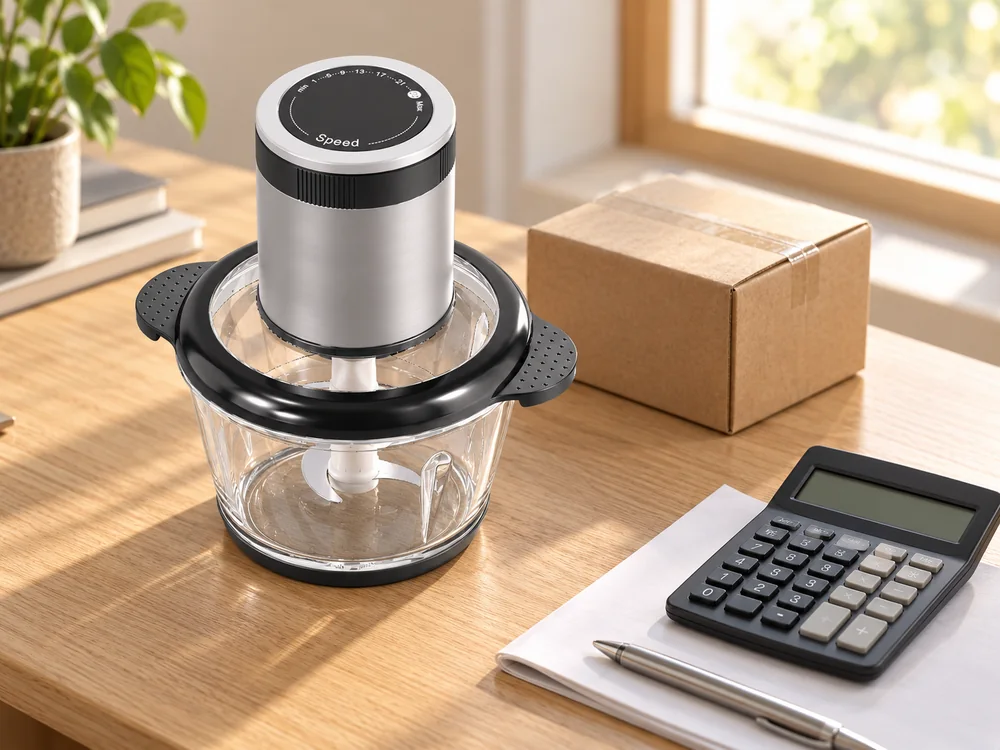
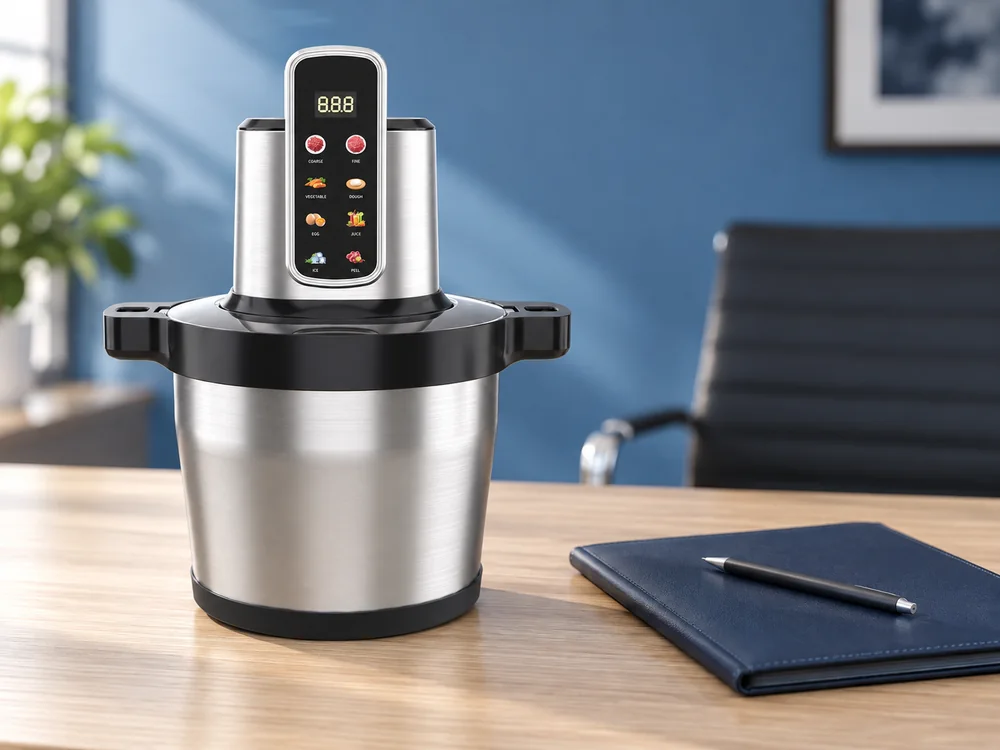
JINJIE's electric chopper range includes different bowl and control arrangements. MC-X1 is an existing digital-control reference in the current quotation. A photograph of its panel can identify the appearance being discussed, but printed icons are not a complete operating specification or evidence for every proposed preparation claim.
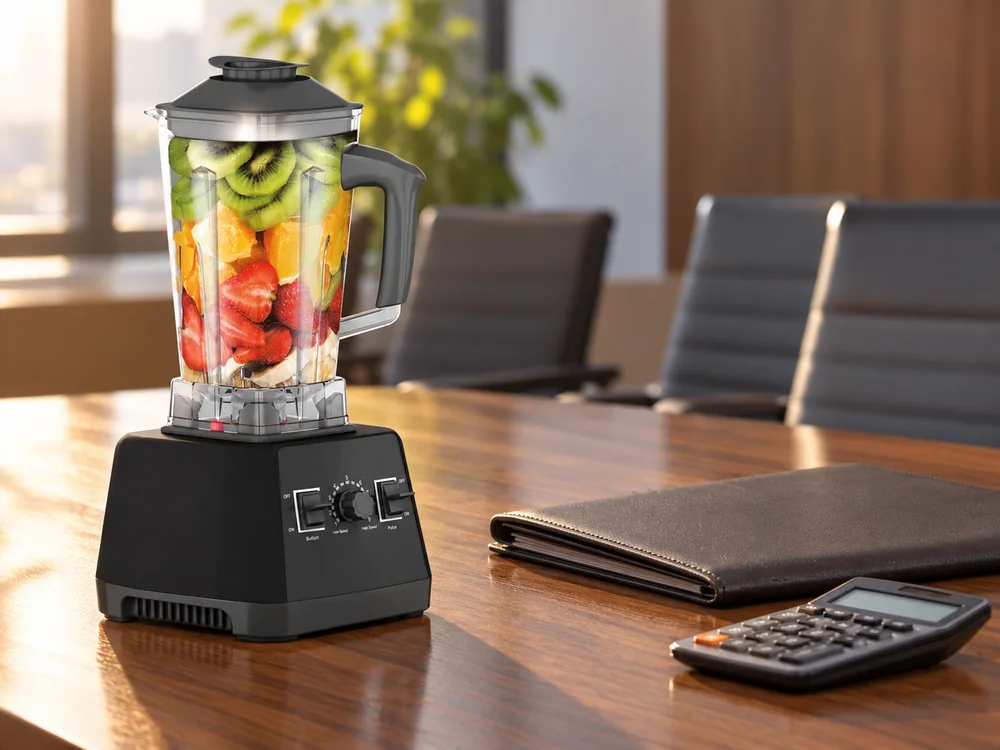
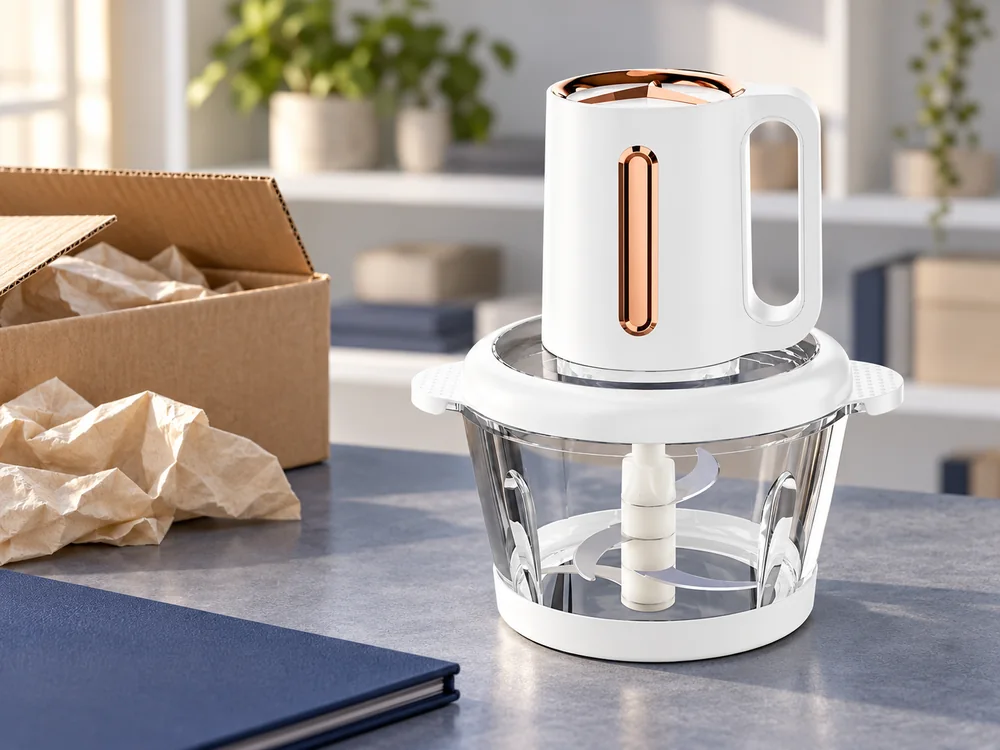
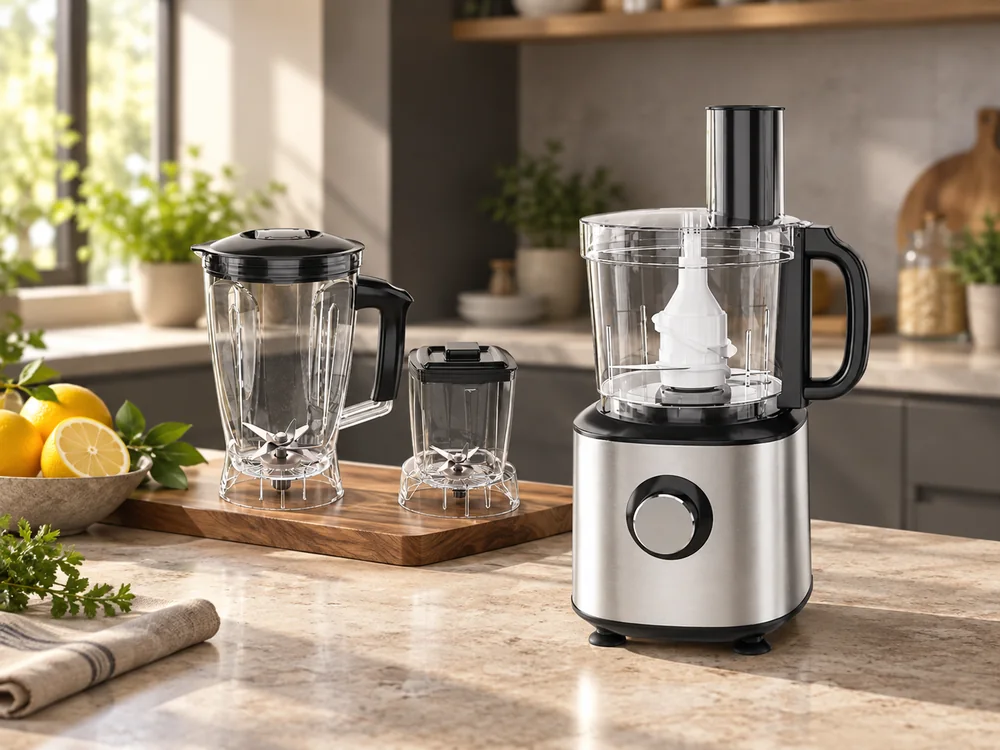
Evaluate the complete platform against the customer brief. For a chopper, the bowl, lid, blade arrangement and controls belong together. For a countertop blender, the jar and base need to be considered as an offered combination. The availability of several attractive components in a catalog does not establish an unrestricted mix-and-match platform.
Ask which options are already defined for the selected product and which are requests for development. This separates a choice within an available proposal from a change that still needs evaluation. The distinction can be more useful than asking whether the factory calls the order OEM or ODM.
Look for differentiation your channel can explain without changing the appliance unnecessarily. A clearly identified set, accurate product information and a suitable presentation may serve the customer well. If the intended selling proposition instead depends on a function the platform does not provide, branding work cannot close that gap.
Do not assume the factory's design removes your role in the market brief. State the destination, intended users, household use and relevant channel requirements. Ask how the proposed version and its documents relate to those requirements. Choosing a current design reduces some open design questions; it does not make every market decision disappear.
Compare the limitations before accepting them. A control layout you would have drawn differently may be acceptable if users can understand the actual operation. An unresolved essential preparation task is a more serious issue. The buyer should know which compromises concern preference and which change the reason the customer would buy.
If the platform is a good fit, keep the scope focused. Request the available branding and configuration proposal rather than starting a new design simply to make the project feel proprietary. Exclusivity, where commercially important, needs its own discussion and cannot be inferred from a different color or retail name.
Use a buyer-led design when the product difference needs it
A buyer-led route is appropriate to assess when a required customer difference is not answered by the available products and your business can define that difference. It also fits a company that already has a developed design and needs a manufacturing partner. The key is the maturity and purpose of that design, not the size of the company.
Explain the requirement in a way that can be evaluated. A statement such as premium quality leaves many decisions open. A defined handling problem, space constraint or required interaction gives engineering a clearer starting point. The proposed solution must still be reviewed for feasibility and the complete appliance's intended use.
Agree where manufacturing feedback can change the buyer's design. A factory may identify an issue with the way parts fit or how an assembly is prepared. The buyer needs a route for evaluating that feedback without silently losing an essential feature. Keep the customer result fixed where necessary while allowing the responsible team to propose a workable implementation.
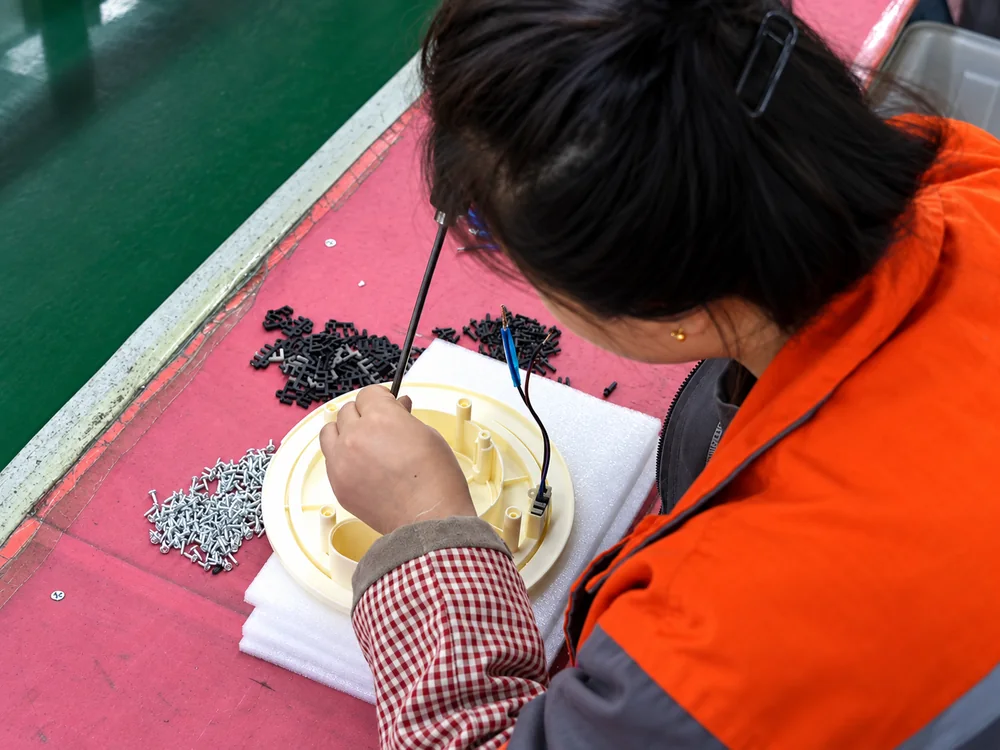
Use the manufacturing process information to discuss the handover from design into production. The question is which accepted files, parts and product details will guide the actual build. A rendering used for a retail presentation is not necessarily that manufacturing reference.
Allocate responsibility for unresolved interfaces. If the buyer specifies a housing and the manufacturer proposes internal components, someone must confirm how the combination works. Two individually acceptable inputs do not automatically produce an acceptable assembly. Identify who returns the complete technical answer and who authorizes the result.
Keep proposed alternatives visible. If a component is difficult to source, the manufacturer may suggest another option. The buyer's decision should address the relevant effect on the product rather than approve a substitution only because its headline rating looks similar. Have qualified people review the consequences and update the agreed reference where required.
Ask what will be delivered back to the buyer as the design develops. Useful outputs depend on the project and agreement: they may include updated product details, samples and the information needed for further decisions. Do not assume unlimited access to every supplier file, or accept a project whose necessary handover has never been discussed.
Avoid promising a retail launch based solely on a completed exterior design. The development proposal should identify what remains to establish the full appliance. Commercial planning can proceed with those dependencies visible, but the design route should not be presented to customers as a finished product before it is one.
Manage mixed projects through clear interfaces
Many appliance projects are neither entirely factory-designed nor entirely buyer-designed. An existing motor and bowl arrangement may remain while the buyer requests another interface or presentation. Describe that combination directly. Calling it hybrid does not solve the responsibility questions, but a clear division of unchanged and changed work can.
Create one current product definition that connects the contributions. It should identify the baseline, the accepted changes and the owner of unresolved decisions. Separate files can still be used by different teams, but they need to describe the same version. Otherwise, one person may approve the exterior while another continues working with a different control arrangement.
|
Interface between teams |
What can go wrong |
Decision owner to identify |
|---|---|---|
|
Buyer appearance and supplier construction |
A visible feature conflicts with the proposed assembly |
Who evaluates a revised implementation against the design brief? |
|
Supplier controls and buyer instructions |
Printed directions describe different behavior |
Who confirms the final operating description? |
|
New accessory and existing appliance |
The proposed combination has not been assessed |
Who is responsible for complete-system compatibility? |
|
Buyer packaging and final product |
The package was prepared around an earlier version |
Who confirms that the final contents and presentation agree? |
|
Engineering approval and purchasing order |
An accepted technical change is missing from the order |
Who releases the matching commercial version? |
Give each team a defined authority. The designer can comment on an appearance issue; the technical team can assess function; purchasing can accept commercial consequences. The final response should combine those decisions where necessary. A short approval email is useful only when everyone understands exactly what it approves.
Keep a requested change from spreading unnoticed. If a different accessory needs another container or a new printed description, include those effects in the decision. A project can begin as limited branding and become product development through several small requests. Recognize that transition before continuing on the old assumptions.
Separate a blocked interface from unrelated completed work. An unresolved control question may not prevent the team from organizing buyer-supplied brand files. It may prevent finalizing instructions. This allows useful preparation without pretending that all parts of the project are equally ready.
Decide how differences will be resolved when teams disagree. Ask for the practical consequence of each proposal and return to the required customer result. If the buyer's preferred appearance cannot be supported in the proposed construction, the choice may be to revise the appearance, choose another platform or fund a different development route.
Keep the outcome understandable to the people who receive and support the product later. A customer-service team does not need every design discussion. It needs the correct identity, contents and product information for the version sold. A mixed development arrangement should still end in one recognizable retail appliance.
Select the route your business can sustain after launch
Make the route decision using the product gap and the resources available to close it. If an existing model meets the brief, assess its defined offer. If a limited change resolves a real gap, assess that change. If the required product does not exist in the available range, decide whether a new development proposal is commercially supportable.
Compare the remaining work on each route, not general claims that one is always faster or cheaper. A current platform still may need market-specific preparation. A buyer-developed design may already have resolved important questions. Ask what is actually unfinished in the proposals in front of you.
Consider your own decision speed. A factory cannot resolve an unanswered brand requirement by taking on design work. If the business has not decided the customer task, delegating engineering may produce a technically plausible product with no clear retail purpose. Settle that commercial direction before asking a supplier to choose on your behalf.
Plan who will assess changes after the first order. Existing platforms can evolve, and buyer-led products can need later revisions. Agree how a proposed change reaches the right decision makers and how the accepted version remains identifiable. The original route does not remove the need to maintain a usable product record.
Treat a later route change as a fresh scope decision. A brand may begin with an existing appliance and later develop a more distinctive product after learning from sales. That sequence can be sensible, but the first purchase does not automatically reserve future design work, pricing or rights. Request the later proposal when its requirements are clear.
Record why the chosen route fits this project. The reason might be an adequate existing platform, a specific unmet customer requirement or a mature buyer design. That explanation helps the team resist unnecessary changes and recognize when new evidence genuinely calls for another route.
Discuss the design responsibility with JINJIE
Send JINJIE your product starting point with the intended household task, destination market, available reference or design files and estimated quantity. Identify what your team has already decided and where you need technical input. Ask for the nearest suitable route and a clear description of each party's work before comparing the proposal.
FAQ
We have an industrial designer but no appliance engineer. Is that a finished design?
Not necessarily. Explain which aspects the designer has resolved and ask what technical work remains for the complete appliance. Appearance files can be valuable inputs without defining internal construction or operating behavior. Arrange the missing responsibility rather than describing every remaining decision as a minor manufacturing detail.
Can a retailer request its own version of a factory-designed product?
Ask which changes are available within the existing offer and which need further assessment. Define the retailer's actual requirement and keep the resulting version identifiable. A separate retail name alone does not establish a different product, an exclusive arrangement or permission to add unsupported claims.
What if the manufacturer uses OEM and ODM differently from our brief?
Compare the written work allocation. If both parties agree on the starting design, deliverables, decisions and commercial scope, the terminology need not obstruct the project. Resolve any actual difference in responsibility before approval rather than assuming that a familiar acronym means the same service to everyone.
Must every product in a branded range use the same route?
No. Different appliances can have different starting points, subject to their actual proposals. One may use an existing platform while another needs development. Keep their responsibilities and accepted versions separate, even when they share brand files or a planned launch, so unfinished design work is not hidden by a range-level approval.