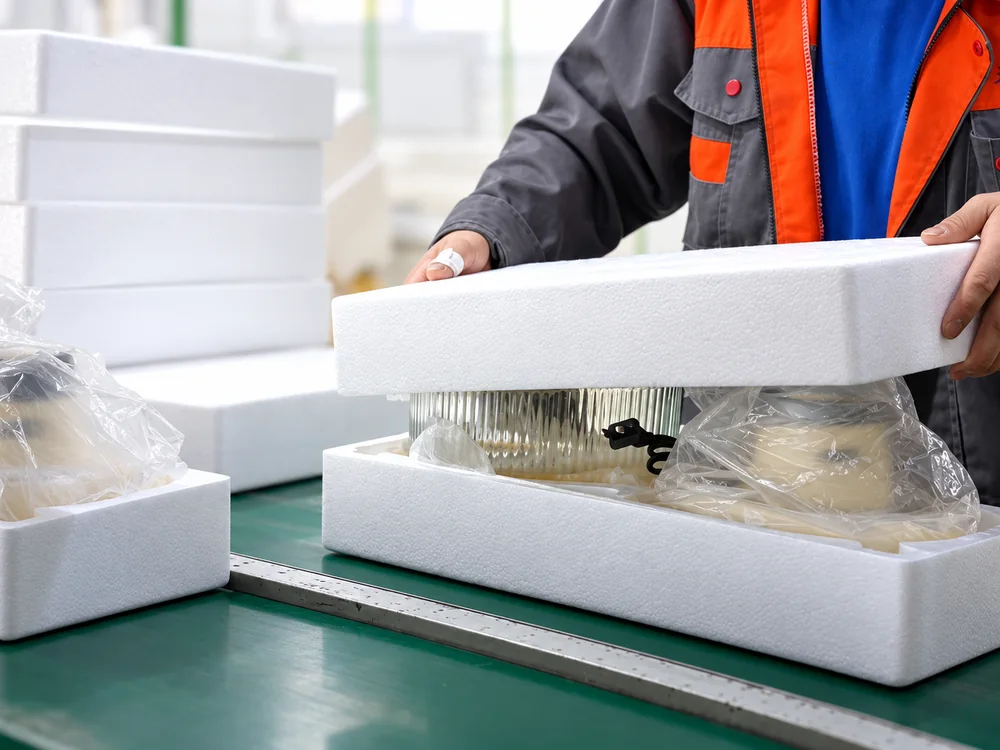
A retail box that arrives safely inside a wholesale carton has not necessarily been prepared for an individual customer delivery. Once a fulfillment center removes that box from the master carton, the packaging around the appliance changes. The buyer must decide what will protect it during the remaining journey, who will provide that protection, and what the customer should receive.
Small appliance ecommerce packaging therefore starts with the fulfillment route, not the artwork. An importer sending choppers to its own warehouse has different decisions from a brand asking a marketplace warehouse to dispatch each unit. Both may buy the same appliance, but they should not assume that the same factory packing arrangement completes both jobs.
JINJIE's OEM packaging review covers the appliance, accessories, inner protection, retail box and master carton. For an online sales project, add the intended single-order shipping arrangement to that discussion. The useful purchasing outcome is an agreed package at every handoff, including any work performed after the goods leave the factory.
Define the package that will reach the customer
Describe the journey in ordinary operational terms. Goods might travel in master cartons to an importer, enter storage as individual retail boxes, receive an outer shipping box when an order arrives, and then pass to a parcel carrier. Alternatively, the factory might pack each sale unit into an individual shipping carton before consolidating the order. Write down which version you intend to buy.
The difference matters because “one unit packed” can mean several things. It may describe the appliance inside its printed retail box, the retail box inside an outer carton, or a completed parcel with the final shipping label attached. A quotation should identify that level explicitly. Otherwise, the buyer may compare a factory price that includes an overbox with another that leaves the warehouse to supply it.
For a first enquiry, give the supplier the destination market, sales channel, fulfillment operator and expected customer order pattern. State whether most orders contain one appliance or a bundle. If these choices are unsettled, request separate packing options rather than presenting an uncertain route as a fixed requirement. That keeps the supplier's proposed scope visible while the commercial plan develops.
Use the JINJIE OEM and ODM service page to frame the enquiry around a complete appliance project. Packaging development attached to an appliance order is different from buying empty boxes from a packaging converter. If you already have a nominated packaging supplier, explain whether JINJIE would receive those materials, pack with them or simply provide product information for the design.
The customer-facing promise also affects the route. A retail box intended for gifting may need to arrive without carrier labels or heavy handling marks. A plain outer carton can separate shipping functions from presentation. For a business that accepts delivery directly in the retail package, the presentation trade-off is different, but protection and channel acceptance still require evaluation.
Do not choose a route solely because it removes one visible box. Removing an overbox may reduce material use but can also change handling exposure, label placement and the appearance of returns. Keeping it may add material and warehouse work. Compare complete alternatives for the actual order, rather than treating either arrangement as automatically more economical or more responsible.
Choose where the single-order parcel is assembled
Factory overboxing can make the sale unit more consistent before export. It can also leave destination-specific decisions locked into the shipment earlier. Warehouse overboxing gives the local operation more flexibility, particularly when customers combine products, but the buyer must define the materials and packing work that occur there. Neither arrangement removes the need for a named owner.
Ask the fulfillment provider what it will actually do. “We pack orders” is not enough to establish whether it will use a specified box, retain factory protection, add loose cushioning or select from its normal carton stock. Obtain its service scope before agreeing a factory configuration that depends on work the warehouse has not accepted.
|
Packing route |
What the buyer needs to define |
Commercial consequence to compare |
|---|---|---|
|
Individual overbox added at the factory |
Exact sale unit, outer package and destination labeling work left open |
Additional packed volume before export versus reduced destination packing work |
|
Retail box overboxed by the fulfillment provider |
Approved local materials, handling instructions and responsibility for substitutions |
Local labor and material charges, storage arrangements and flexibility for mixed orders |
|
Retail package used as the shipping package |
Suitability for the chosen distribution route and acceptance by the sales channel |
Potentially fewer packing steps, balanced against presentation and qualification requirements |
|
Different routes for different channels |
Clear stock identification and which version belongs to each channel |
More operating flexibility, but extra inventory control and change management |
For a mixed-channel business, consider whether a common retail pack can support several outer packing arrangements. The internal appliance presentation might remain consistent while the parcel stage changes by destination. This can be a useful purchasing option, but the common pack still needs to work with each proposed outer arrangement. Compatibility should be checked, not inferred from similar dimensions.
Control substitutions at the point where they happen. If the warehouse runs out of its usual shipping box, who may approve another size or construction? If the factory changes an internal support, who tells the fulfillment provider? The answer should identify a person or role and the information needed to make the decision. A general instruction to “use equivalent packaging” leaves too much unresolved.
The manufacturing overview provides context for the factory side of the project. It does not define an overseas warehouse's services. Keep those responsibilities separate in the purchasing record so that a gap between them does not become an unexpected charge or an improvised packing step after arrival.
Evaluate the completed parcel, not just the factory box
A package assessment should relate to the assembled parcel that will travel through the chosen route. Where the warehouse adds an outer box, the retail package alone is not the entire arrangement. Where the customer receives two appliances together, the single-appliance packing setup does not describe that order. Specify the configuration before asking what supporting evidence exists.
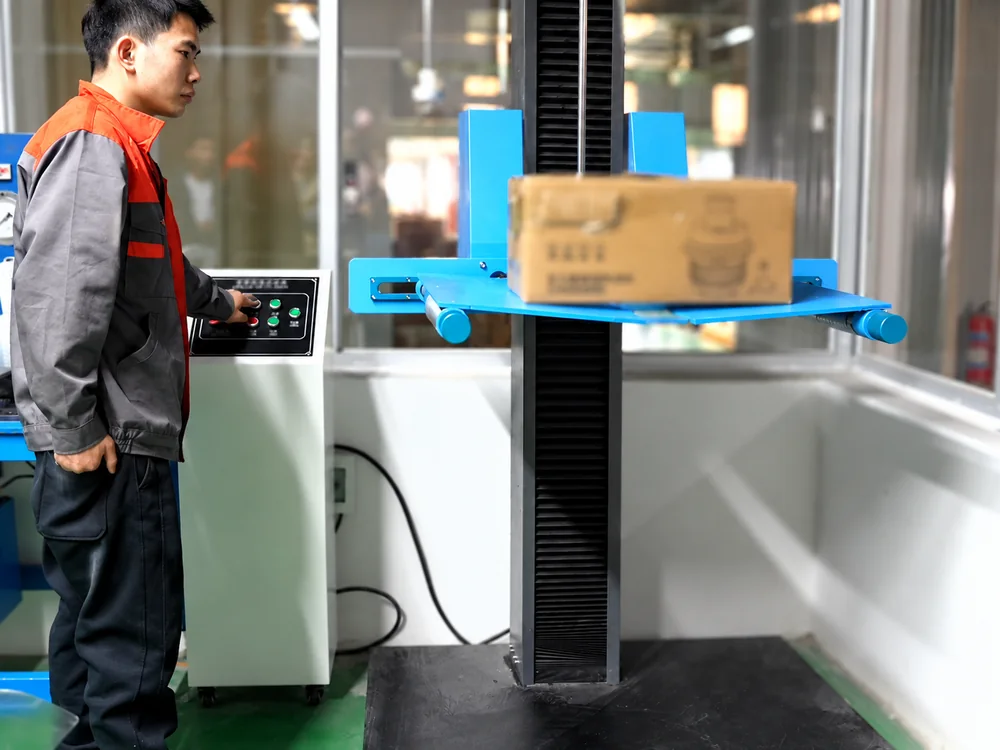
ISTA's packaging design guidance emphasizes understanding the distribution environment and selecting an appropriate evaluation approach for the packaged product. It also discusses representative samples and acceptance criteria. For a buyer, the practical implication is to define the intended journey and acceptable condition before interpreting a test result. A familiar procedure name by itself does not establish that the proposed parcel matches the configuration evaluated.
Ask what was inside the evaluated package, which protective components were used and whether the outer shipping carton matches the one being proposed. The evidence should distinguish the appliance's condition from the appearance of its retail packaging. For example, an intact product and an unacceptable gift box are different commercial outcomes, even though both belong in the review.
Photographs of JINJIE's packing or testing area can help explain the work taking place at the factory. They are not a report for a particular customer's ecommerce package. The quality control page is a starting point for discussing available project evidence, not a reason to assume that every packing option has already been qualified for every delivery channel.
Carrier guidance can also affect the design. FedEx's published European packing guide includes an overboxing approach for original manufacturer packaging. Treat such guidance as information to check against the service you will actually use, not as a universal specification for every country or carrier. Marketplace packaging programs may add their own conditions, which should be checked for the current channel and product.
Agree what happens when the completed arrangement changes. An overbox substitution, a different appliance set or additional promotional item may alter the package under review. The supplier and fulfillment provider should tell the buyer about the change, then determine what further assessment is appropriate. Do not attach an old result to a revised parcel without examining the difference.
Early deliveries can provide useful operational feedback, but they cannot demonstrate performance across every handling condition. Review them alongside the packing specification and available evaluation evidence. A successful first shipment is encouraging; a repeated problem needs investigation. Neither should be converted into a sweeping claim about all future orders.
Compare the cost of a delivered order
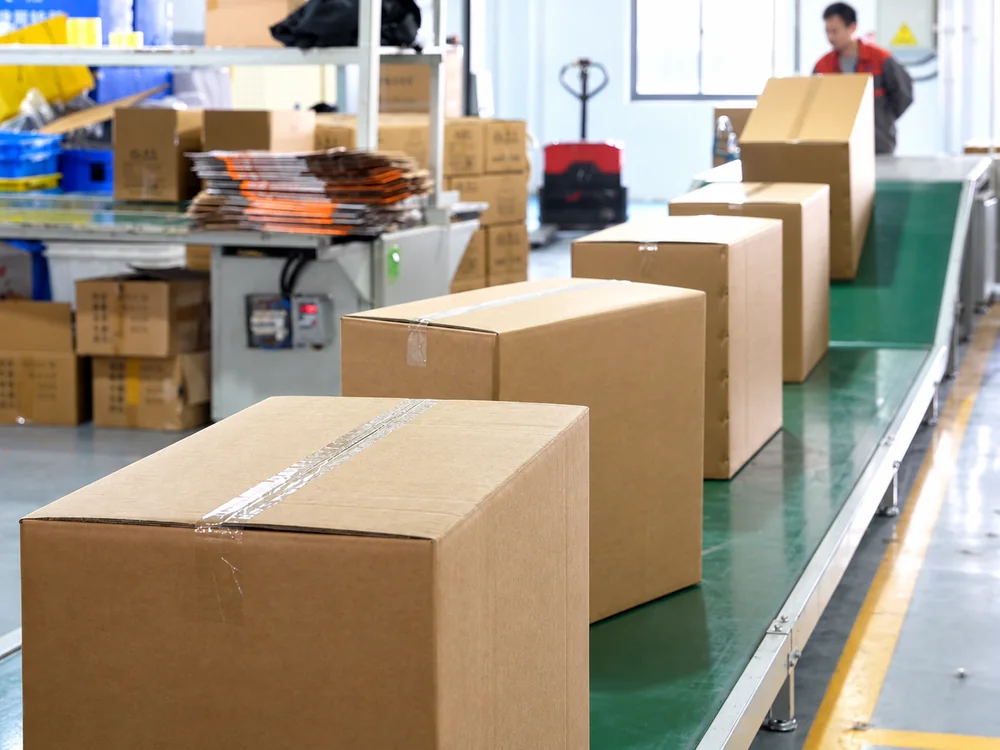
Request costs at the points where work is performed. The factory may quote retail packaging and an optional individual overbox. The fulfillment provider may charge separately for materials, packing labor, special handling and storage. The carrier then prices the parcel under its own service terms. These inputs belong together when selecting a route, even when different businesses invoice them.
Avoid comparing only the price of two empty cartons. One option might require additional packing work at the destination; another might increase the space occupied during import and storage. A lower material price does not tell you which arrangement costs less per completed customer order. Equally, a more expensive box should not be credited with reducing damage unless there is a basis for that expectation.
|
Cost or exposure |
Information to obtain |
Question for the purchase decision |
|---|---|---|
|
Factory packing |
Included materials, assembly work and optional overbox price |
Are the factory offers describing the same finished sale unit? |
|
Destination fulfillment |
Material, labor and nonstandard packing charges |
What work remains after goods arrive, and who has priced it? |
|
Storage and movement |
Packed dimensions at the relevant stage and operator charging basis |
Does the route change space use before or after individual orders are picked? |
|
Final delivery |
Actual completed parcel details and the selected carrier's quotation |
Has the delivery cost been based on the package that will really be dispatched? |
|
Exceptions and returns |
Repacking process, replacement materials and responsibility for investigation |
What additional work follows damage, a rejected package or a customer return? |
Use the same sales scenario when comparing alternatives. If one estimate assumes single-unit orders and the other assumes bundles, their average fulfillment costs will answer different questions. For an early-stage brand without reliable order data, show separate scenarios rather than hiding uncertainty inside one average. This lets the buyer see which decision depends on the eventual order mix.
Do not double-count charges. For example, a fulfillment fee may already include standard outer packaging, while a custom pack could attract a separate charge. Ask whether the standard allowance still applies and what the quoted service includes. The same discipline applies when the factory's unit price already contains retail packaging but an optional packing line appears elsewhere in the quotation.
For a launch, keep the decision reversible where practical. A limited initial commitment to destination packing materials may allow feedback before a larger order, subject to the provider's terms. That is different from assuming an unlimited low-volume service. Ask what minimum material purchases, storage commitments and revision charges apply to the proposed arrangement before choosing it.
Keep fulfillment identity and product identity aligned
The fulfillment operation needs to pick the correct sale unit without confusing shipping information with product information. A parcel label identifies the delivery. A warehouse identifier may distinguish the stock being picked. The appliance and its retail package identify the product and configuration. The buyer should map these functions instead of allowing one new label to obscure another useful identifier.
If two channels use different packing routes, establish how the warehouse will distinguish them. The appliance may be identical, but one stock unit might already include an overbox while another requires packing at dispatch. A clear internal distinction can prevent the wrong work being performed. Whether that distinction needs a separate commercial SKU depends on the buyer's system, not on the appearance of the carton alone.
Bundled offers need particular care. A customer ordering a chopper with an additional item may receive one combined parcel or separate deliveries. Decide this before designing the product-page promise and fulfillment instructions. A warehouse should not have to improvise whether to open the retail box, combine items in an outer carton or send them separately without an agreed order configuration.
Avoid inserting promotional items into spaces that were intended to protect the appliance. If a campaign adds something to the delivered set, review where it belongs and how the completed package changes. The item also needs an owner in the stock and packing process. Otherwise, the offer shown online can differ from what the warehouse consistently ships.
Customer instructions should reflect the actual delivery. If an outer carton hides the branded box, the opening sequence will differ from a retail package shipped directly. If a bundle comes in separate parcels, the customer may need clear delivery information to avoid interpreting the first parcel as an incomplete order. These are practical consequences of the chosen route, not merely design details.
Before ordering the full quantity, walk a representative order through the agreed handoffs: receipt, stock identification, picking, parcel assembly and dispatch preparation. Include the fulfillment operator where its work affects the result. The purpose is to identify missing decisions before they become repeated manual exceptions across a larger stockholding.
Prepare for returns without treating them as new stock
The return journey may start with missing protection, a damaged outer box or a customer who no longer has the original packing materials. Define what customer support should do in those cases. A return instruction based on a perfect original package may be unusable for the actual customer, so the support team needs an approved escalation route.
Separate collection and handling decisions from the decision to resell. Receiving an appliance back in its original box does not establish that it is complete, undamaged or suitable for another customer. Returned goods need the buyer's appropriate inspection and disposition process. Packaging appearance alone should not authorize a product to re-enter saleable stock.
If the customer reports broken components, exposed electrical parts or another potentially unsafe condition, routine instructions to repack and operate the appliance are inappropriate. Customer support should escalate the case under the agreed safety and returns process. Do not ask customers to dismantle the product or carry out improvised functional checks to make a packaging claim easier to process.
Record exceptions in a way that helps locate the failure. Distinguish damage reported on arrival from missing items, an incorrect picked version or dissatisfaction with the retail box's appearance. Where available, retain the order, packing route and relevant photographs. A simple count of “returns” combines different causes and gives the factory or warehouse little direction for corrective work.
Set a review point after the first operating period. If one route produces recurring repacking work, investigate the specified materials and actual warehouse practice together. If the customer complaint concerns presentation rather than protection, the remedy may be different. Keep the purchasing discussion tied to the observed problem rather than immediately requesting a stronger or larger box.
To begin a project discussion, contact JINJIE with the appliance category, market, fulfillment route and the packing work expected at the factory. Include the destination provider's requirements when available. That gives the supplier a defined appliance packing enquiry and leaves the remaining warehouse and delivery responsibilities visible for your own purchasing team.
FAQ
Can one retail package serve both wholesale and ecommerce orders?
Potentially, but the surrounding shipping arrangement may differ. Wholesale units may travel together in a master carton, while individual orders need their own parcel solution. Compare the complete arrangements and the work required for each channel before treating the shared retail package as a finished solution for both.
What if the fulfillment provider will not use our specified outer box?
Ask for its permitted alternatives and the reason for the restriction. Then compare those alternatives with the planned product protection and channel requirements. Resolve the difference before committing to stock that depends on unavailable packing work; do not assume the provider will make an exception after arrival.
Should we print the destination warehouse's shipping information at the factory?
Only after confirming what information is stable and who controls it. Delivery-specific details may belong to the dispatch process rather than factory printing. Separate permanent product identification from information that changes by order, warehouse or carrier, and agree responsibility for applying each part.
Who should pay when damage occurs after the warehouse repacks an order?
Do not assign responsibility from the complaint alone. Establish which package was dispatched, whether the agreed packing process was followed and what evidence is available. Review the relevant supply, fulfillment and carrier terms with the parties involved. Factory packing approval does not settle responsibility for a different package assembled later.