A central buyer approves an appliance and allocates it to several stores. One branch needs a display unit, another receives a carton quantity it cannot sell quickly, and the distribution center cannot reconcile the item record with the received version. The product may be suitable, yet the rollout still creates avoidable stock and handling work.
Buying private label kitchen appliances for retail chains means connecting one agreed customer offer to a repeatable store and distribution plan. The central purchasing decision is whether the complete product, channel preparation and committed quantity can support the intended rollout. Choosing an attractive sample is only part of that decision.
This guide covers household food-preparation appliances in JINJIE’s product scope, such as bowl choppers and countertop blenders. It does not present JINJIE as an approved vendor to any named chain, promise direct delivery to every store or extend household products into restaurant-duty equipment. Retailer admission, market-version evidence and specific supply terms remain project-dependent.
Define one offer that stores can explain consistently
Begin with the customer role, not a list of appliances the chain could buy. Which preparation need will the opening offer serve? Where does it sit beside the range already sold? What difference can a store colleague explain without inventing a performance claim? A central specification needs to translate into that customer-facing explanation.
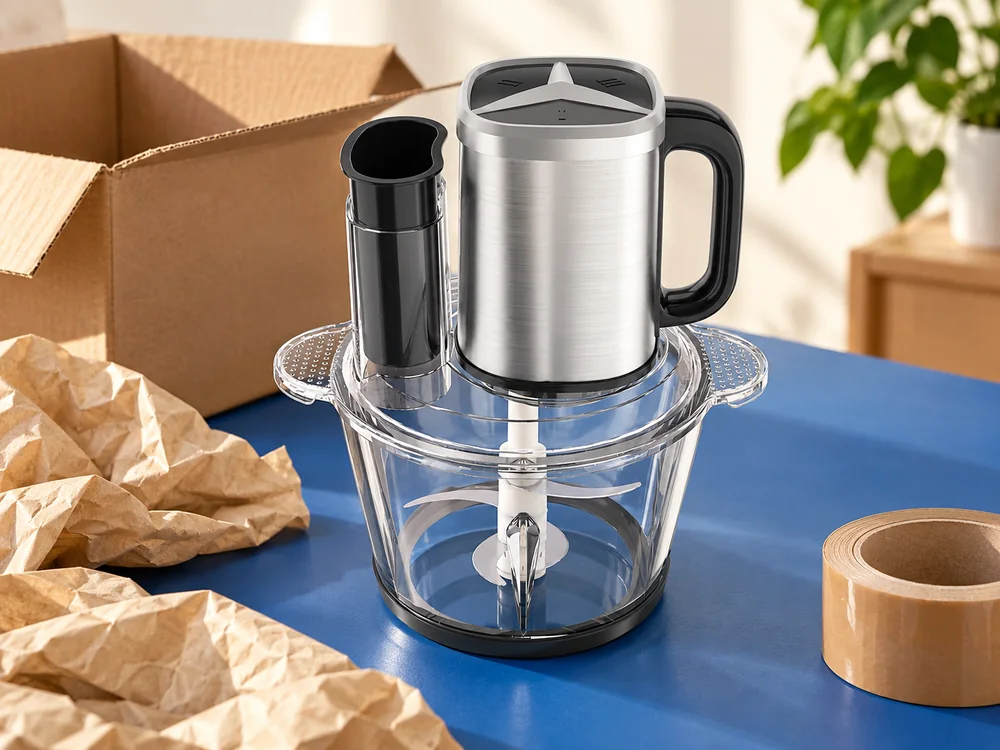
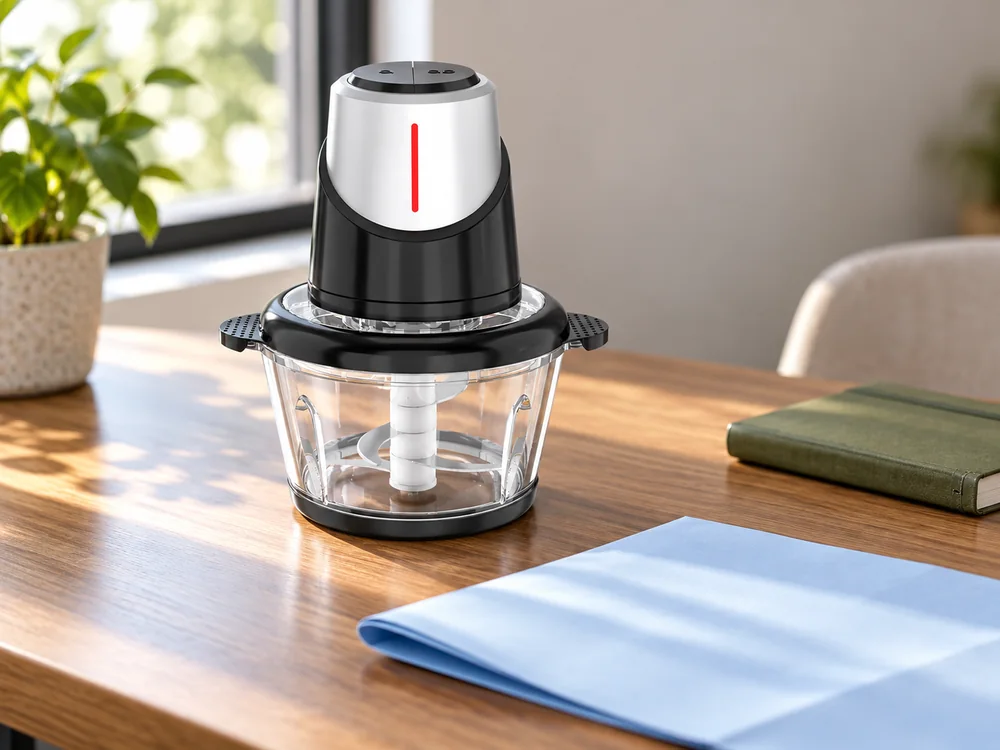
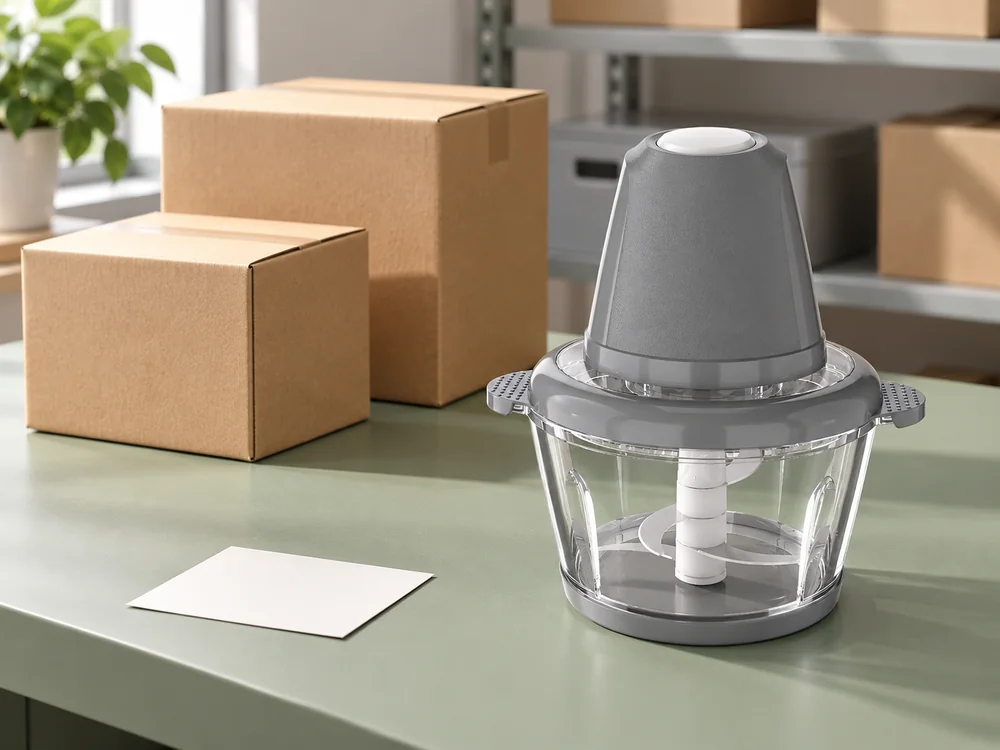
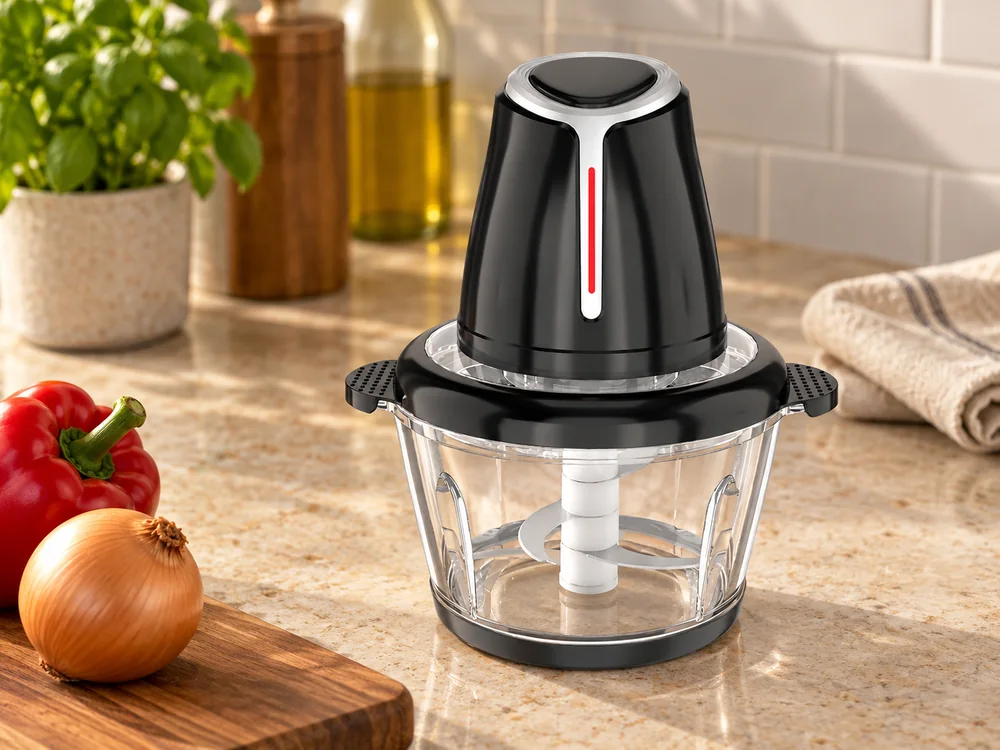
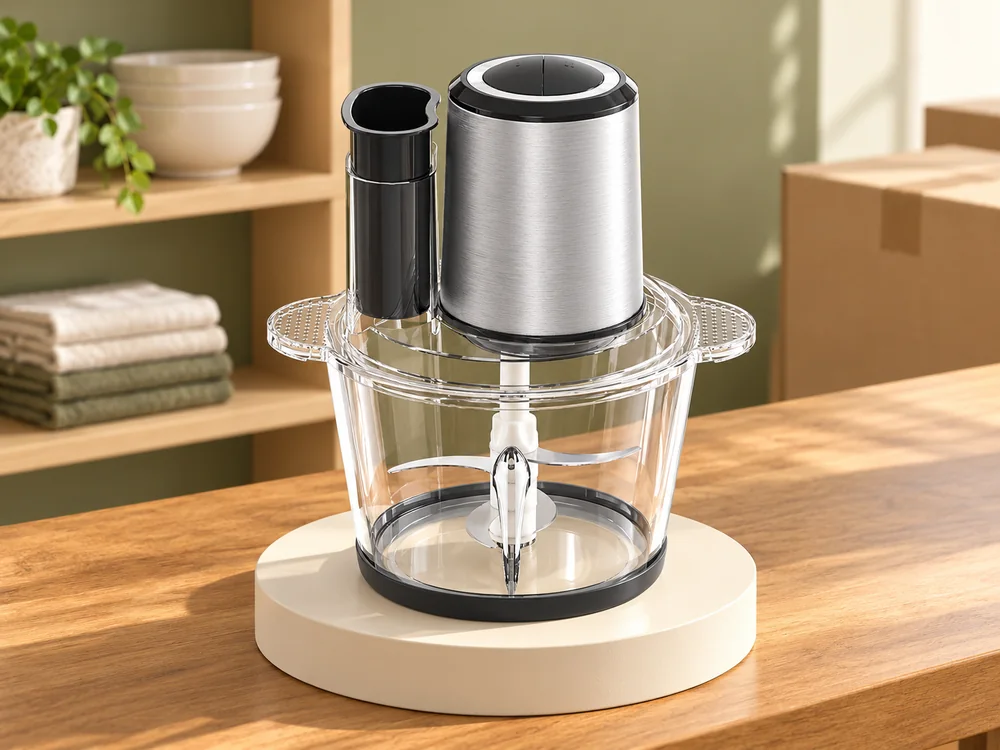
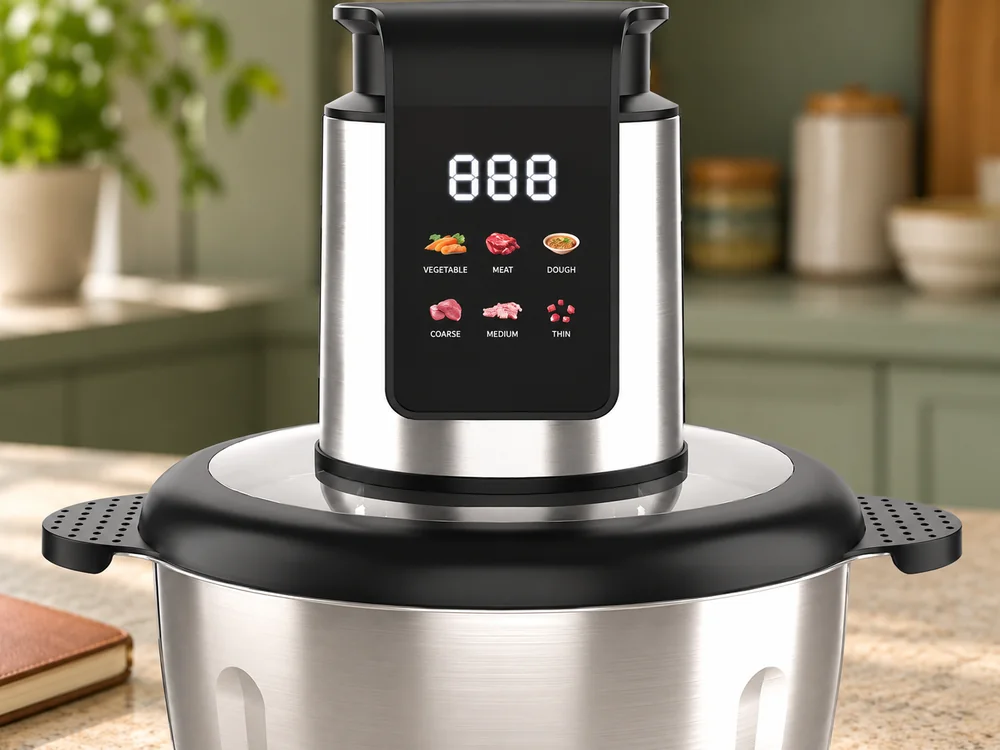
For a bowl chopper, material, nominal size, visible controls and the complete supplied set can inform the shortlist. JINJIE’s current quotation identifies SD-01 as a nominal 3 L stainless-steel bowl model at 500 W and SD-02 as a nominal 2 L stainless-steel bowl model at 400 W, both with digital controls. Those entries distinguish offers; they do not prove permitted food load, throughput or automatic preparation results.
A chain might choose one format for an opening proposition or carry two when each has a distinct customer role. Do not allocate both simply because the catalog contains them. The second version creates another item record, product explanation, stock allocation and support reference. Its extra work needs a reason beyond a different number on the shelf card.
Include the exact motor unit, matched bowl, lid, blade assembly and agreed additional contents in the proposal. Stores should not have to infer the supplied set from a family photograph. An optional item shown in central advertising can become a customer expectation in every branch if the included contents remain unclear.
Use the JINJIE electric chopper category to identify a platform before requesting a chain-specific offer. Where the project also considers blenders or other household preparation products, evaluate each family’s actual scope. A shared brand presentation does not make every appliance suitable for the same task or market version.
Establish who is buying and where the supplier’s work ends
The chain may buy directly, use an importer or obtain goods through a local distributor. These arrangements place different responsibilities between factory shipment and store availability. State who orders from the manufacturer, who imports where relevant, who receives the bulk shipment and who prepares branch allocations.
Do not use “factory direct” to imply the manufacturer handles every local activity. Central receiving, onward transport, store replenishment and consumer support can remain buyer-side work. If a chain needs delivery to several destinations, ask whether that particular arrangement is available and obtain its cost and schedule. Do not build the plan around an unconfirmed service.
Distinguish the supplier relationship from the chain’s own vendor relationship. An importer buying from JINJIE may still need separate approval to supply its retail customer. A suitable factory sample does not establish that the importer, product or shipment meets that customer’s requirements.
Identify the people on the buyer’s side who own product acceptance, commercial approval, item setup, receiving and store communication. One contact can coordinate the work without personally authorizing every part. Resolve conflicting instructions centrally rather than leaving individual branches to negotiate variations with the manufacturer.
Keep the order description on the same basis as the allocation plan. If the purchase is for one accepted version, branches should not expect another finish or control format because a previous presentation showed it. Record alternatives separately until the buyer has decided which ones belong in the actual commitment.
Separate retailer admission from the product purchase
Ask the intended chain for its current supplier and item requirements early enough to assess the project. Requirements can concern the supplying business, factory, product evidence, item data and logistics. Identify which party must provide each response and which prerequisite controls order acceptance.
Walmart’s public supplier requirements, for example, distinguish business setup, audits and testing, and packaging expectations. They illustrate why a retail intake can involve more than a product quote. They are Walmart’s requirements, not a universal checklist or evidence that JINJIE has obtained Walmart approval. Apply the actual requirements for your retailer and supply arrangement.
Turn the relevant requirements into a short readiness record. Use the selected product and destination, the requested evidence, the responsible party and the decision affected. This is more useful than collecting certificates whose scope has not been connected to the offered appliance.
If a necessary response is missing, hold the commitment that depends on it while requesting clarification. If the proposed offer is confirmed unable to meet a mandatory requirement, consider another supported offer or route. Avoid treating every missing file as a failed supplier, while keeping an essential unresolved condition out of an approved launch plan.
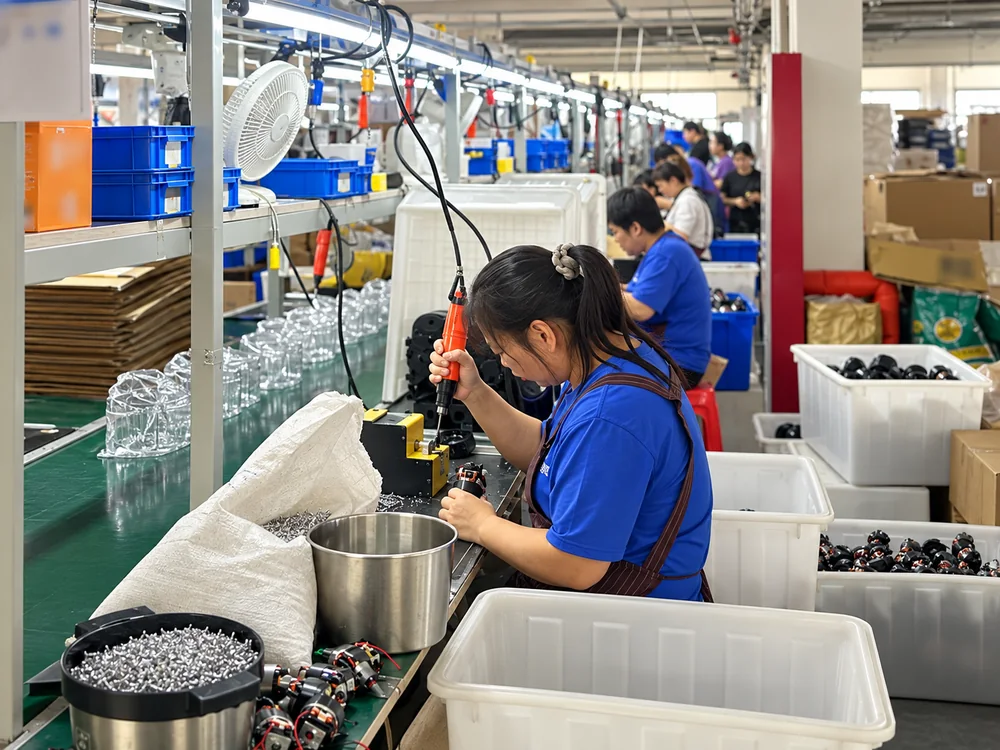
The JINJIE quality and testing discussion can help identify checks and records relevant to the proposed appliance. Retailer-specific assessments and market requirements still need their own applicable scope. A general workshop photograph does not establish admission to a chain or acceptance of a particular shipment.
| Rollout requirement | Responsibility to establish | Decision before relying on it |
|---|---|---|
| Complete household offer | Central buyer and product supplier | Which configuration and customer promise are accepted |
| Retailer and market prerequisites | Actual supplying entity and relevant reviewers | Whether the proposed route can enter the intended channel |
| Item record and identification | Buyer item-data team with supplied product information | Whether stores and receiving identify the same offer |
| Bulk receiving and branch allocation | Named logistics and distribution parties | Where goods become usable for the rollout |
| Store explanation and support | Retail operations with approved product content | Whether branches can sell and serve the actual product |
Build the item record around the supplied version
A factory model, a chain item code and a retail product identifier serve different systems. Maintain their relationship so the buyer can trace a receiving discrepancy or store question back to the actual appliance. Do not replace the factory reference with an internal nickname that nobody at the supplier can recognize.
GS1 explains that a GTIN identifies a product and links it to a brand or company. For a project using that system, obtain the allocation and coding decisions through the responsible brand or retailer process. A readable barcode is not proof that the underlying item record describes the right configuration.
Prepare the fields the chain actually requests. These may include agreed contents, assembled and packed measurements, electrical version, supplied images and approved descriptions. Obtain measurements for the offered version; nominal bowl capacity cannot fill shipping dimensions or every product-capacity field.
Make the images and text agree with the accepted product. A display close-up can show the actual controls but should not imply unconfirmed programs. If a steel-bowl version is ordered, a prominent glass-bowl photograph needs correction rather than a small note asking customers to ignore it.
Control the approved content as one version across central systems and store materials. A correction sent only to purchasing can leave an old shelf card in several branches. Name the route that updates the item record, online page and in-store explanation when the supplied scope changes.
Use the JINJIE OEM and ODM discussion to connect brand presentation with the selected product. A logo approval alone does not finish the chain’s item record, market review or store materials. Determine what the manufacturer prepares and what remains the buyer’s responsibility.
Calculate the opening quantity from actual allocation roles
Separate saleable stock, display units and an agreed reserve. A single total can conceal why units are being purchased and where they will go. The chain needs enough stock for the chosen opening plan, not an identical allocation to every branch by default.
For an invented illustration, suppose a rollout covers 40 stores with 12 saleable units per store. That represents 480 saleable units. If the plan also requires 20 separate display units and a central reserve of 40, the total is 540 units. These numbers are planning assumptions, not JINJIE minimums or a recommended reserve rate.
The difference matters operationally. Twenty display units cannot be quietly deducted from the 480 promised for sale. A reserve held centrally should not appear as stock available on every branch shelf. Give each quantity a destination and role so the purchasing and distribution teams use the same total.
Test whether uniform branch allocations are sensible. Stores can have different space, customer interest or experience with the category. Use the chain’s own evidence to decide the opening pattern. Do not invent branch demand from the number of stores in the network.
A pilot can narrow exposure, but only if the supply proposal supports its commitment. A plan for 10 stores at eight saleable units each is 80 saleable units before other roles. If the actual supplier minimum or custom-material commitment is larger, the buyer still has to finance and place the remainder. Calling the rollout a pilot does not remove that inventory.
Ask for the quantity basis for each selected model, finish and presentation. A total across two appliances may not meet the conditions for either one. Compare the available offer with the funded allocation, then decide whether to narrow optional variants, use another supported presentation or defer the commitment.
Cost the rollout beyond the factory unit price
Use the amount the supplying business actually receives on a consistent accounting basis, rather than the advertised shelf price. Include the responsibilities that sit outside the factory quote: onward handling, branch distribution, launch presentation and the service arrangement where applicable. Obtain actual amounts from the relevant parties.
Separate recurring unit economics from opening work. Display preparation, content, item setup and one-time brand work can consume cash before saleable units generate receipts. Do not divide those costs over the entire network’s hypothetical future purchases to make the opening proposal look cheaper.
Account for commercial conditions the actual retail agreement requires. Promotional contributions, payment events, deductions or returns arrangements can change the supplying business’s result if they apply. Do not copy another chain’s percentages into the plan or assume an attractive unit margin survives all later adjustments.
For a proposed display arrangement, determine whether the units are sold, lent or otherwise handled under agreed terms. A display may be useful while still having its own cost, condition and eventual disposition. The retailer should not treat it as indefinitely saleable stock without considering the actual handling and product information.
Compare alternative rollout scopes on total exposure as well as unit cost. A broader launch may reduce one preparation cost per unit while tying up much more cash. A narrower available proposal may cost more per appliance but let the business learn before committing to a wider network. Neither conclusion follows from price alone.
Work backward from store availability, not factory completion
Define the event the chain actually needs: distribution-center receipt, allocation ready for branches or product available for sale. Those events require different work after factory preparation. A general production estimate cannot promise the final store date.
Map product approval, branded presentation, required reviews, production, dispatch and buyer-side receiving against the intended launch. Use dates supplied for the actual proposal and show unresolved dependencies. Where a prerequisite is still open, agree the next decision point instead of replacing it with an optimistic finished date.
Establish how the distribution center receives and separates versions. A standard bulk shipment can be a useful factory offer while still requiring local branch picking. If store-specific packing, carton quantities or markings are requested, check their feasibility and approval before relying on them.
Review an exception before it happens. What if part of the order is ready but another required element is delayed? A split may be useful, or it may create extra charges and leave stores without complete stock. Request an identified alternative and compare it with the launch objective; do not assume partial shipment is permitted or automatically better.
Keep branch communication attached to the actual accepted scope. If the launch narrows, update store allocations and public materials before goods arrive. A smaller confirmed rollout is easier to operate than a full-network announcement whose product or receiving conditions remain uncertain.
Use branch feedback to decide the next order
Choose a review point that can inform replenishment or expansion. Read sales together with stock availability and the length of time each store actually offered the product. A branch that received stock late should not be judged on the same opportunity as a branch selling throughout the period.
Separate product questions from allocation and presentation problems. Customers repeatedly expecting an excluded accessory point toward the offer explanation. A branch with unsold stock may have a different customer base or weaker category visibility. An identified product discrepancy needs its own relevant supplier review. One total sales figure cannot distinguish these situations.
Give stores a simple escalation route with the actual model and supplied contents. Support should collect useful existing information without asking customers to open the appliance or repeat a potentially unsafe event. The manufacturer response and the retailer’s local customer obligation remain separate roles to agree.
| Rollout finding | Interpretation to examine | Next purchasing decision |
|---|---|---|
| Several stores sell while others hold stock | Availability, customer role and branch presentation | Reallocate where permitted before increasing the total |
| Customers misunderstand the supplied set | Images, shelf explanation and actual contents | Correct the offer before expanding it |
| Item identity causes receiving problems | Relationship between records, labels and version | Repair the handoff before another intake |
| Sales grow but cash or contribution deteriorates | Actual costs, deductions and payment timing | Reassess the commercial scope before replenishment |
| Relevant findings support wider distribution | Product role, current supply conditions and funded allocation | Request a defined expansion proposal |
Use the accepted product as the starting reference for reorder discussion. If a different part, control, manual or packing arrangement is proposed, identify the effect on central records and stores before calling it an unchanged repeat. A supplier proposal can remain useful even when a change requires a new decision.
Request a chain-specific supply proposal
Send JINJIE the retail rollout brief with the product family, preferred model, destination market and the entity buying the goods. Include the opening allocation roles, receiving point, branding needs, relevant retailer requirements and the event behind the launch date. Ask for the available complete offer and unresolved prerequisites, then decide how much of the network that proposal can responsibly support.
FAQ
Can we use one launch quantity for every store?
Only when the chain’s allocation evidence supports it. Review space, customer role and expected selling opportunity by branch. Keep saleable units, displays and central reserve visible so a uniform total does not conceal different local needs.
Does retailer interest mean we can place the factory order?
Interest supports a discussion, not every required approval or an accepted purchasing commitment. Establish the actual buyer agreement, relevant admission conditions and product scope before relying on it to fund stock. A request for a sample is not the same event as an order.
What if the desired pilot is below the available supply commitment?
Compare supported alternatives and the cost of any unallocated remainder. A simpler available presentation or fewer variants may help, if the supplier agrees. Do not assume calling an order a pilot changes the actual quantity conditions.
Can the manufacturer ship directly to all branches?
Treat that as a specific service request. Ask which destinations, packing, documents, timing and cost the proposal can support. If the available route ends at a bulk receiving point, plan branch distribution with the responsible buyer-side provider rather than promising an unconfirmed factory service.