A supplier replaces the missing items from a shipment and says the problem is solved. The retailer can now complete those sets, but it still has a different question: will the next order arrive with the same omission? Settling today’s shortage and making tomorrow’s supply dependable require different answers.
Small appliance supplier corrective action is useful when an identified problem needs more than an immediate remedy. For an importer or private-label brand, the outcome should support a purchasing decision: release a defined group of goods, continue under an agreed temporary control, verify a changed product or process, or hold the commitment that remains unresolved.
This guide concerns household food-preparation appliances and supplier follow-up. Its examples are invented purchasing situations, not JINJIE incidents. It does not prescribe engineering tests, universal response deadlines or a recall procedure. A possible safety concern needs prompt handling through the responsible technical and market-safety route; ordinary commercial closure cannot replace that work.
Write the problem so both parties investigate the same thing
Begin with the observed difference and the agreed requirement. “Quality is poor” leaves the manufacturer to guess whether the complaint concerns performance, appearance, configuration or packing. “The received set contains a different manual revision from the approved reference” gives the review an identifiable starting point.
Connect the observation to the complete product and order. Retain the model, market version, available batch or shipment identity, date found and the reference used. A close-up of one lid without its appliance context may be clear enough to show a mark but insufficient to identify which supplied set needs investigation.
Separate facts from possible causes. A damaged bowl, crushed carton and report that a pallet fell are three distinct pieces of information. They may be related, but the first image alone does not prove where the damage occurred. Record the condition at the known handovers and let the investigation evaluate the explanation.
Keep quantities on named bases. State units received, units examined and units with the particular finding. If several issue types occur, avoid adding them as though each represents a different affected unit. One appliance with a wrong leaflet and a missing item is still one appliance when counting units, although it raises two questions.
For a planning illustration, suppose a warehouse examines 100 units from a receipt of 800 and finds three with the same manual mismatch. The observed result is three in the examined group. It is not proof that exactly 24 of all 800 units have the mismatch, and it is not evidence that the remaining 700 are clear. A responsible review must determine what the selection and findings support before deciding the wider scope.
Use the actual JINJIE electric chopper range when identifying a bowl-chopper proposal. An SD-02 reference and another SD-series product are not interchangeable complaint identities. Preserve the supplied version rather than letting a generic family name obscure the issue.
Keep containment, repair and prevention as separate decisions
The buyer needs an immediate answer about affected goods while the cause is investigated. That answer can identify which stock is held, which quantities remain distinguishable and what work is permitted. It need not pretend the entire investigation is already complete.
Replacing a missing manual corrects that retail set. Keeping potentially affected stock separate limits uncontrolled distribution. Changing the relevant packing handoff may address recurrence, if the cause supports that change. These actions have different purposes and should have different completion evidence.
ASQ’s description of the 8D approach separates problem definition, containment, verified causes, action implementation and effectiveness review. It also distinguishes why the problem happened from why it escaped detection. Buyers can use those distinctions when reading a supplier response without requiring every minor case to become a full eight-discipline report.
Match the response depth to the consequence. A single clearly identified packing omission may be resolved with a concise record and an appropriate next-order check. A recurring functional discrepancy or an issue affecting several versions needs broader qualified review. A report’s length does not establish whether either response is adequate.
| Work under discussion | Evidence the buyer needs | Purchasing decision it supports |
|---|---|---|
| Immediate stock control | Identified scope, status and responsible contact | Which goods may move while review remains open |
| Correction of existing units | What was changed and which units were checked afterward | Whether those particular units can be accepted |
| Cause investigation | Supported explanation tied to the actual finding | Whether the proposed prevention addresses the problem |
| Implementation | Changed reference, operation or other agreed control in use | Whether production is following the new arrangement |
| Effectiveness review | Relevant later observations on a defined basis | Whether the temporary purchasing restriction can be changed |
Challenge the explanation without prescribing an untested cause
A useful response explains how the proposed cause produces the observed difference. “Operator error” alone usually leaves too much open. Which instruction or selection failed? What allowed it? Why did the existing check not reveal it? The buyer’s role is to ask for that connection, not to diagnose an appliance from a photograph.
Consider an invented two-version manual example. Both booklets are correct for their own products. After a changeover, the earlier booklet remains within reach at the station. A final exterior check does not reveal which booklet went inside the closed box. The situation suggests two questions: how the wrong version became available and how the mismatch passed through packing. It does not establish that this is the cause of a real order issue.
Ask what evidence supports the explanation and what would contradict it. If the earlier booklet was never present at the relevant station, that hypothesis needs revision. If a later warehouse repacking operation introduced the difference, a factory-only action may miss the problem. A coherent explanation should survive the available records rather than simply sound plausible.
For a functional question, retain the actual permitted use, instructions and product version. The factory’s qualified review may need the returned item, appropriate records or a controlled assessment. Customers should not be asked to open electrical assemblies or reproduce a potentially unsafe event to improve the evidence.
Avoid forcing certainty before the evidence exists. A response can separate a confirmed cause from a hypothesis still being examined, provided it also gives the buyer a usable stock action and next review point. That is more useful than a confident untested cause written to fill a report field.
Compare the proposed action with the failure path
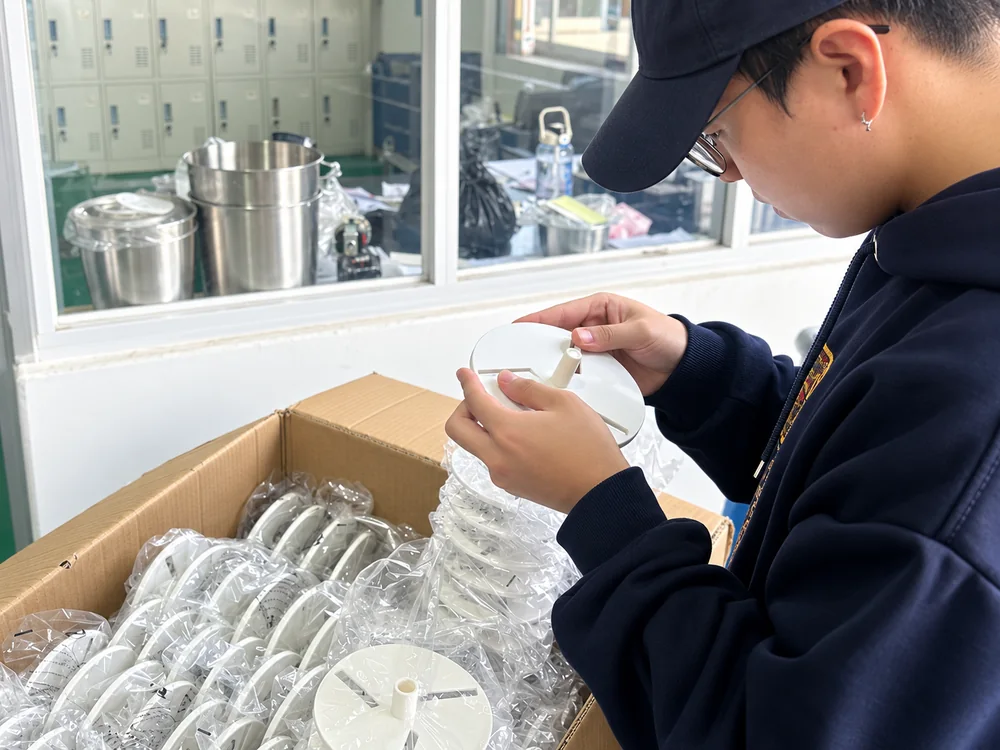
Once the explanation is supported, evaluate whether the action changes the relevant condition. A supplier may propose training, a revised reference, different material handling, additional inspection or a component change. The name of the action matters less than how it addresses this particular finding.
In the manual example, reminding staff to be careful might be appropriate but still leave both versions beside the station. A proposal that distinguishes the versions at changeover and verifies the first complete set answers a more concrete question. The factory should choose a workable control; the buyer should assess whether it interrupts the identified mismatch route.
Extra inspection can protect supply temporarily without resolving the origin of the problem. Ask whether the action is intended as a temporary screen, a permanent prevention measure or both. That distinction affects next-order readiness and whether the buyer should expect an added ongoing cost.
A product change needs a separate acceptance decision. If the proposed action alters a bowl, lid, control, component or supplied item, the old approval may no longer describe the offer. Review what changes and what relevant evaluation is needed. Solving one reported problem must not silently introduce a different configuration under the same retail promise.
Use the JINJIE OEM and ODM discussion when the response becomes a configuration or presentation change. Keep that scope separate from a routine correction restoring the already agreed product. The quotation, customer content and applicable product evidence may need different updates depending on the proposal.
Check implementation at the place it matters
An action list marked complete can mean a document was issued, a tool was prepared or a manager approved a plan. Establish which of those events has happened and whether the control is actually being used for the relevant work. Do not treat a future implementation date as a completed production change.
Ask for a focused example that preserves the product and revision identity. If the issue concerns version selection, the example should show how the relevant reference reaches the person selecting parts or printed materials. A photograph of a general training meeting may show training activity but not that this handoff now works.
Name the responsible roles and the next review event. Purchasing needs someone who can coordinate the supplier response; technical acceptance may require a different reviewer. Avoid leaving release dependent on several people who each assume another person has authority. Establish the actual decision route before the schedule becomes urgent.
Where information is confidential, request a redacted example or controlled review that still answers the question. It may be reasonable not to share another customer’s files. It is still necessary to distinguish relevant evidence from an unrelated success story. If the proposed form cannot answer a mandatory question, discuss another verification route.
The JINJIE quality and testing overview is an entry point for those product-specific discussions. It is not proof that a particular correction has been completed or a reported problem eliminated. Keep the current issue and the required evidence visible in the follow-up.
Define what would show that the action worked
Implementation and effectiveness are not identical. A new instruction may be in use without enough subsequent work to assess its result. Define the question the follow-up needs to answer, the relevant group of goods or work events and who reviews the observations.
Choose observations that can reveal the original problem. For a wrong manual, an exterior carton photograph cannot show the booklet inside. For a mating-part concern, a review using the wrong reference combination may miss the reported difference. The appropriate quality personnel should determine the method and scope rather than copying a universal test or sample size from a buying guide.
Consider the circumstances in which the issue appeared. If it was associated with a version change, evidence from one uninterrupted run may leave the changeover question unanswered. Ask whether the follow-up includes the relevant event. That is a request for meaningful evidence, not permission to create an unsafe or artificial trial.
Record the observation period and denominator beside the finding. “No complaints since the change” can be encouraging, but its meaning differs when only a few units have reached customers or when reporting is delayed. It should not be converted into a guaranteed zero future failure rate.
Agree what happens if the same finding returns. Preserve the new case and its version information, examine whether the action was applied and reconsider the cause if necessary. A recurrence does not automatically prove deliberate noncompliance; it does show that the purchasing decision needs another review.
Separate accepting goods from closing the investigation
A buyer may need to decide about corrected existing stock before long-term effectiveness can be demonstrated. Conversely, a convincing prevention plan does not make unrepaired goods acceptable. Keep the current-stock decision and the future-supply decision explicit.
For an invented scenario, suppose 240 sets require review for a specified leaflet mismatch. The responsible team identifies and corrects 60 sets, then records the relevant recheck. The remaining 180 have not yet received that work. A decision accepting the checked 60 does not automatically cover all 240. The example does not set an inspection method or authorize partial shipment.
Compare any proposed split with the order terms, receiving capacity and actual logistics costs. A smaller cleared group may help a customer commitment but create additional handling or freight. A full-order wait may be simpler but miss a useful delivery window. Ask for the corrected scope and revised proposal before selecting the commercial route.
Keep credits, replacement supply and cost allocation alongside the technical review, not in place of it. A credit can settle an agreed financial consequence while leaving the next-order control unresolved. A disagreement over reimbursement likewise does not prevent the parties from establishing what happened to the product.
| Response received | What remains open | Buyer action |
|---|---|---|
| Replacement or credit offered | Cause and next-order prevention | Settle the current remedy separately from replenishment approval |
| Cause is still a hypothesis | Evidence connecting it to the finding | Retain the relevant hold and request a focused investigation |
| Action is approved but not in use | Implementation | Set a review point before relying on the changed control |
| Change affects the supplied product | Relevant product acceptance and customer scope | Evaluate the changed offer before normal release |
| Defined goods corrected and checked | Wider stock or future effectiveness | Make a decision only for the scope the evidence supports |
| Action implemented with suitable follow-up | Any remaining commercial or support work | Close the resolved question and carry the control into the next order |
Carry the lesson into the next purchasing commitment

Close the investigation with an identifiable result, not a general instruction to improve quality. Preserve what changed, which versions it affects, the approval or review basis and any continuing requirement. Carry the relevant correction into the next order’s references so another buyer or production contact can use it.
Remove temporary controls only through the agreed review. If an added check was needed while the cause was unresolved, determine whether the permanent action now supports a different plan. Keeping every temporary step forever may add work without value; removing it merely because the report is filed may reopen the same exposure.
Use the response to judge the relationship fairly. A supplier that identifies uncertainty, contains a real scope and produces a verifiable change may be more useful than one that denies every finding immediately. Persistent inability to address a mandatory requirement can justify another product or supplier. Missing one answer calls first for a clear follow-up, not an automatic blacklist.
Send JINJIE an identified product question with the actual order reference where applicable, the observed difference, comparison reference, known quantities and the purchasing decision you need to make. Ask for the available review route and next evidence. For a new inquiry, use a hypothetical case to discuss responsibilities without presenting it as a fault that has occurred.
FAQ
Do we need a full 8D report for every minor omission?
Not necessarily. Use the detail required to establish the affected scope, remedy and appropriate prevention. A short traceable answer may be enough for a limited issue. Recurrence, uncertain cause or significant consequence can justify a fuller response through the agreed quality route.
What if the supplier offers only a credit?
Decide whether it settles the current commercial remedy under the actual terms. Then ask separately what supports future supply. A financial adjustment does not demonstrate that the origin of a recurring problem has changed.
Can a new inspection photo close the issue?
Only if its content, identity and scope answer the question being closed. One image might establish a visible correction on one unit, but not every hidden content or future-production question. Ask for the missing relevant evidence rather than a larger folder of similar photographs.
What if the correction works on new stock but older units remain with customers?
Keep the older supplied version and its customer response separate. Determine the appropriate support or other action through the responsible parties. A later production change does not automatically resolve earlier customer units, and a potentially unsafe situation needs its own prompt escalation.