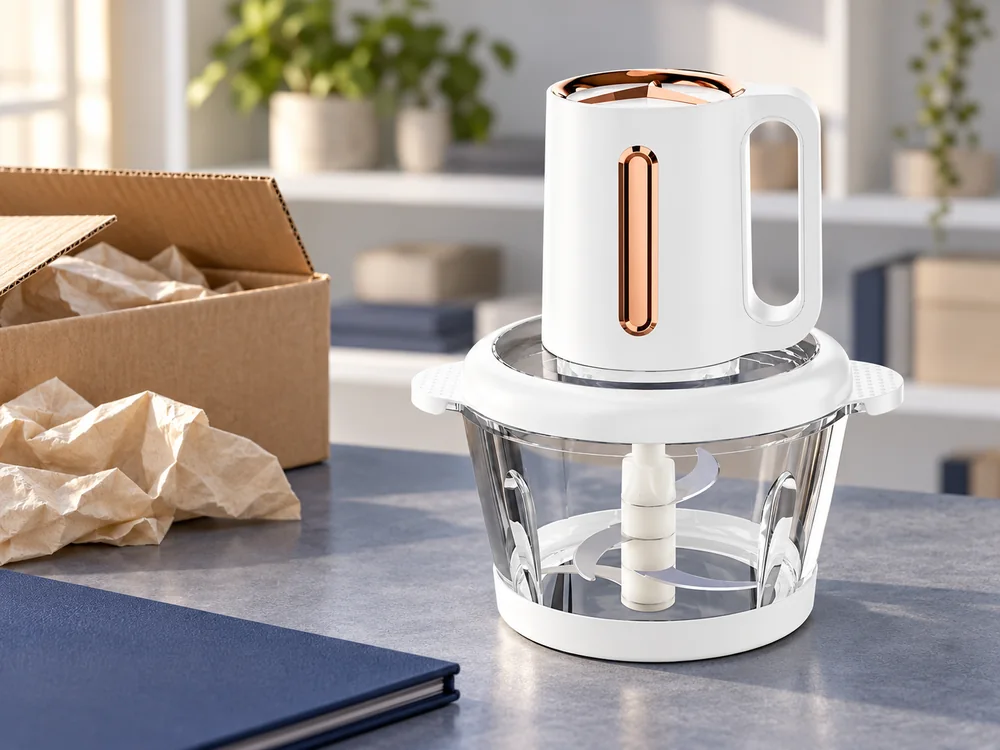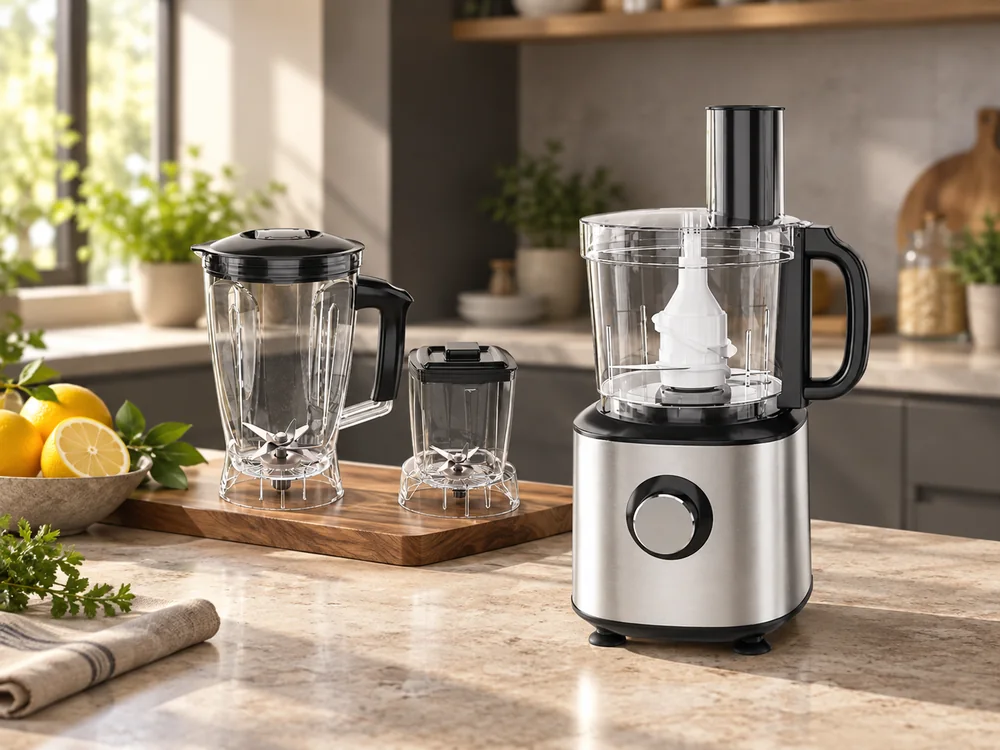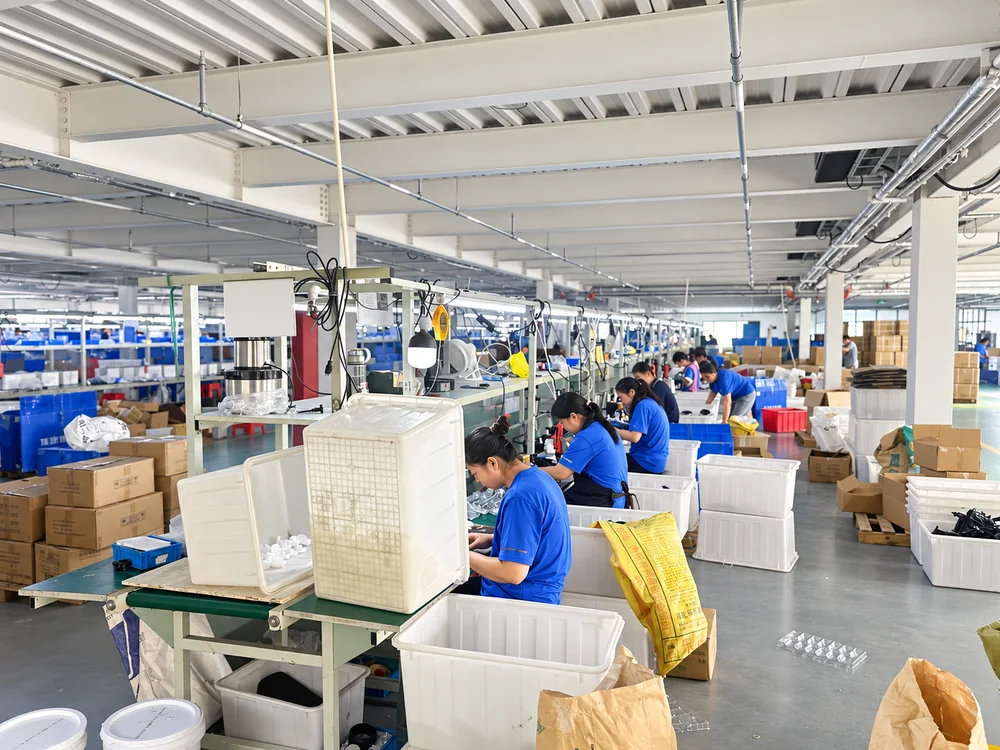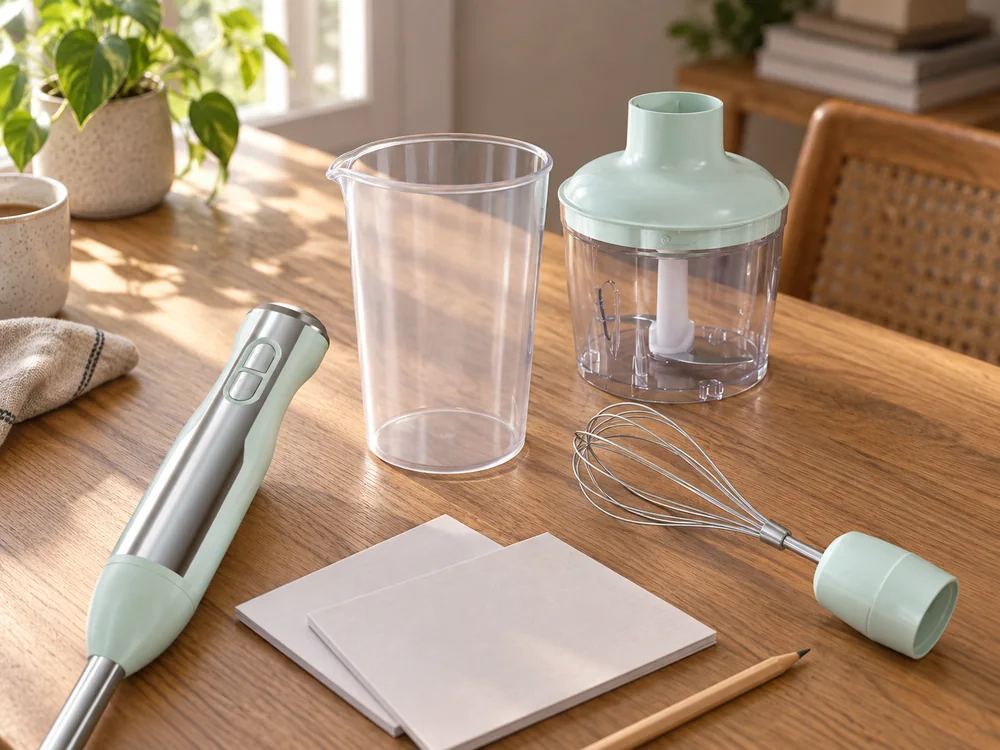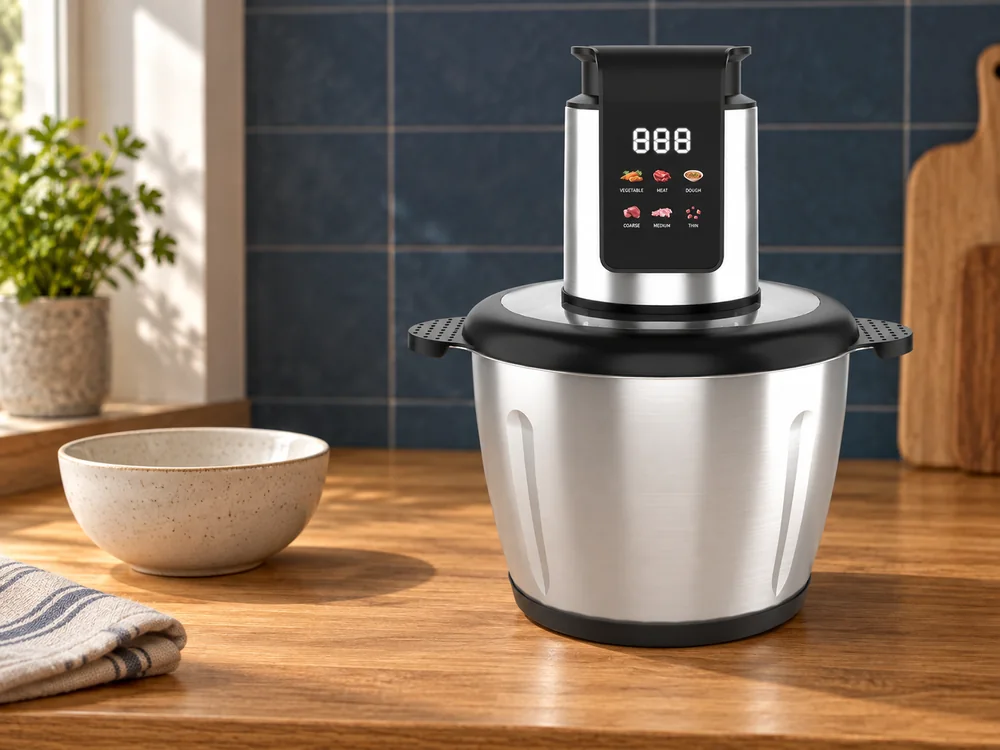
An electric stainless steel food chopper wholesale inquiry should identify a complete household appliance, with the bowl material attached to the correct model and component. A polished bowl, a metal motor cover and stainless steel blades describe different parts of the product. Treating them as one material claim can leave a retail buyer comparing unlike offers or advertising a specification the supplier never quoted.
For importers and private-label brands, the useful decision is which complete steel-bowl configuration belongs in the range and what evidence is needed to support its selling points. That means considering the container’s handling, the controls, the appearance customers will receive and the cost of the finished package. A higher wattage or a larger nominal bowl does not settle that decision.
This guide covers electric bowl choppers for household retail. Manual vegetable dicers and industrial bowl cutters involve different mechanisms and purchasing requirements. Start by separating those products, then compare the steel-bowl appliances that actually match the brief.
Define the stainless steel electric food chopper offer
The material field should name the bowl, not imply an all-metal appliance. JINJIE’s quotation lists SD-01 with a 3 L bowl described as 201 stainless steel and 500 W. SD-02 is listed with a 2 L bowl of the same stated material and 400 W. These are identifiable alternatives within the electric meat chopper range, rather than evidence that the larger appliance is better for every buyer.
Keep the quoted capacity beside its model. Nominal bowl volume describes the container; permitted food load depends on the product’s instructions and the task. A buyer planning a compact kitchen offer may care more about storage and handling than the largest number available. A buyer considering a larger bowl should establish the intended batch and actual product dimensions before making space claims.
Ask what the complete sales unit contains. The motor unit, bowl, matched lid and cutting assembly need to be identified together. Any additional supplied piece should appear explicitly in the offer. If a demonstration photograph shows another bowl or tool, decide whether it is part of the retail set before the image goes into a catalog.
Choose the electrical version at the same stage. Two units with similar steel bowls may belong to different market configurations. The order line should connect the model, electrical specification, finish and included contents so a salesperson cannot unintentionally quote one version while the sample team prepares another.
An initial shortlist should usually be small enough to compare physically. Requesting every steel-bowl design can create a large sample bill without improving the decision. Select candidates that differ in a useful way, such as size, control arrangement or handling, then identify which difference the retail customer would value. Eliminate candidates whose only distinction is an image treatment or an unclear model label.
Record the reason for choosing each shortlisted model. For example, one may be intended as the compact opening price offer, while another may serve customers who want a larger container. These are proposed retail roles, not performance findings. The sample review should test whether the physical products make those roles credible.
Keep the material specification tied to the actual parts
Write the supplier’s stated bowl material accurately. If the quotation says 201 stainless steel, do not replace that with 304 because it is a more familiar retail term. Equally, a stainless steel bowl description says nothing by itself about the grade of the blades, the motor cover or another metal part. Each claim needs its own scope.
Before requesting documents, decide which statement matters to the purchase. A retailer may require a particular bowl grade, a food-contact assessment or specific cleaning language. Those are different requests. Send the requirement in its original form and ask which evidence applies to the selected component and configuration. An undirected request for certificates often produces a large file folder that still leaves the buying question unanswered.
For a proposed material change, ask whether the supplier is offering an existing complete variant or evaluating a new configuration. The answer affects what sample can be supplied and what earlier information remains applicable. A material name should never be changed only in the artwork while the physical specification remains undecided.
Use this comparison when organizing the shortlisted offers. Its purpose is to expose differences before they become product-page promises.
| Buying requirement | Information that makes offers comparable | Decision for the buyer |
|---|---|---|
| Steel bowl for a compact household range | Model, nominal volume, dimensions and matched assembly | Choose the physical format that fits the intended customer |
| A specified stainless steel grade | Exact component and supplier material description | Accept the stated grade or request a different supported proposal |
| A particular surface appearance | Identified finish sample and ordinary viewing conditions | Set an appearance reference before production |
| A larger preparation offer | Permitted loading instructions and complete product dimensions | Check that the use and storage proposition remain practical |
| A specific material-related retail claim | Claim wording, component scope and applicable evidence | Publish only the statement the evidence supports |
Where one offer satisfies a mandatory requirement and another leaves it unresolved, keep that difference visible. Do not average the two proposals into a single price comparison. An unresolved requirement may justify waiting for evidence, choosing the supported alternative or narrowing an optional claim. Those choices have different commercial consequences.
Material identification and product suitability also need separate treatment. Knowing the stated steel grade is useful, but it does not establish every permitted ingredient, cleaning process or service life. Review the product instructions and the buyer’s actual intended use alongside the material information. Avoid making a material adjective carry the entire sales argument.
JINJIE’s compliance and documentation page provides the appropriate starting point for a model-specific document discussion. Give the team the intended market and the exact requirement. Keep any outstanding assessment visible in the purchase decision instead of converting it into an unsupported assurance in the product listing.
Evaluate handling and appearance with a practical sample review
The sample review should answer how the customer will handle the supplied bowl during normal use. Follow the applicable instructions for assembly, opening, emptying and cleaning. Observe the product as supplied, including its lid and base arrangement, rather than evaluating a loose metal bowl in isolation.
Start with the ordinary sequence a customer will follow. Can the supplied components be recognized without guessing which picture in the manual applies? Is the intended assembly clear? Does the selected size make sense for the storage space described in the brief? Record specific observations and the resulting buying decision. A general comment that the sample feels premium does not tell the supplier what to preserve.
An opaque bowl changes how the contents are viewed compared with a transparent one. Plan product demonstrations and instructions around the actual design. Do not imply that the buyer can see the ingredients through the sides, and do not invent a workaround involving opening the appliance during operation. Any observation of the contents must follow the permitted operating procedure.
Surface finish deserves an agreed reference. Compare samples under consistent lighting at an ordinary viewing distance, then identify areas needing closer examination. A highly polished advertising photograph is a poor production standard because reflections, exposure and background change its appearance. The physical sample should carry the decision about the acceptable finish.
Describe a concern by location and appearance. A mark near a rim, a visible difference in finish and an apparent deformation are distinct observations. Ask the supplier to assess the relevant part and its fit. Avoid deciding from a phone photograph that a particular manufacturing process caused the issue, or that a cosmetic observation necessarily affects safety.
If the retailer wants tighter appearance control, explain the commercial reason. A product sold in an open display may receive different visual scrutiny from one sold only in a closed retail box. The acceptance reference should still describe the delivered appliance, rather than create a photographic ideal that normal production cannot be evaluated against consistently.
Keep the chosen sample identifiable after the meeting. Mark its project reference in the review record and preserve the associated photographs. If another finish is accepted later, make clear which one now governs the order. Sending several attractive images without naming the approved physical reference leaves both sides with avoidable uncertainty.
Compare a complete retail offer rather than a bowl upgrade
Steel should contribute to a clear customer proposition. Decide what the buyer will explain about the appliance beyond the material label: its size, controls, supplied contents or place in a coordinated range. If the proposed product overlaps an existing glass-bowl model, identify the customer preference that justifies holding both.
A second material option creates another stock decision even when the motor platform appears familiar. It may need separate photography, packaging details, receiving references and support information. Compare that work with the expected value of offering a choice. A larger assortment is useful only when the retailer can maintain accurate descriptions and enough stock of each version.
Ask for the steel-bowl and any alternative offer on a consistent commercial basis. Keep electrical version, included contents and branding requirements visible. If two quoted products also differ in capacity or power, the entire price difference cannot be assigned to bowl material. Identify all meaningful differences before using the comparison in a margin calculation.
Consider the complete packed product. Obtain the actual retail and master-carton details for the chosen configuration, including units per carton, packed dimensions and gross weight. Do not assume a steel bowl makes the shipment lighter, smaller or cheaper than a particular glass alternative. The motor, protection and carton arrangement also affect the logistics calculation.
For an illustrative purchasing decision, imagine a retailer already sells one glass-bowl chopper and is offered two steel-bowl sizes. The buyer can test demand with one clearly differentiated steel model rather than immediately carrying all three combinations. The decision depends on its customers and stocking capacity; it is not a recommendation that every importer adopt the same assortment.
If branding is required, define the relevant surface and presentation through the OEM and ODM inquiry route. A request for a logo on the motor housing differs from one on the bowl. Ask what is available for the selected model, and review the proposed result on the actual surface before approving public images.
Keep initial development costs separate from recurring unit costs. Sample preparation, artwork and an agreed special requirement may affect the first order differently from a repeat purchase. Request a clear breakdown where applicable. An opening price that looks high may include work omitted from another offer, while an attractive unit price may leave the buyer with unresolved preparation tasks.

Set receiving criteria that distinguish appearance from fit
Receiving staff need the approved configuration and the agreed check, not a broad instruction to inspect the metal quality. Provide the model, electrical version, contents and appearance reference. Explain which observations require segregation and supplier review before goods enter saleable stock.
Keep product identity separate from product condition. A correctly finished bowl in the wrong size is still the wrong order line. Conversely, the correct model with a visible concern needs assessment against the applicable acceptance reference. Recording those categories separately makes the response more useful than reporting every difference as a quality problem.
The following record helps purchasing, receiving and the supplier discuss the same observation without guessing its cause.
| Observation at receiving | Record to retain | Next purchasing action |
|---|---|---|
| Bowl size or model differs from the order | Order line and received identification | Resolve the supplied configuration before normal allocation |
| Surface appearance differs from the reference | Comparable photographs and affected quantity | Ask for assessment against the agreed finish reference |
| Bowl or lid does not appear to fit correctly | Exact component identities and observed mismatch | Hold affected units for the supplier’s defined review |
| Material description differs across documents | Both document versions and component named | Obtain one consistent supported specification |
| Protection differs from the accepted packed sample | Carton identity and actual internal arrangement | Establish whether the change was approved and needs evaluation |
Use the agreed handling process when a part appears damaged. Do not force a lid, straighten a component or run a questionable assembly simply to finish a warehouse check. Purchasing should obtain a defined assessment or remedy from the responsible supplier contact. An improvised repair can obscure the original condition and create another problem.
Keep the affected quantity precise. A concern in one inspected carton is not automatically a conclusion about every carton in the shipment. Equally, clearing a few unaffected units does not resolve the remaining stock. State what was examined, what was observed and what remains outside that observation, using the inspection arrangements agreed for the order.
Ask for a remedy that restores a complete, identifiable sales unit. Where a replacement bowl is proposed, establish compatibility and actual supply before accepting it. A loose part of the same nominal volume is not enough. Any agreed rework should also leave the warehouse able to distinguish corrected units from stock awaiting action.
Keep the product promise usable after the first shipment
The product listing should distinguish the steel bowl from the other components. Use photographs of the actual complete offer and supported wording for its material. Claims such as rustproof, dishwasher safe or suitable for hot ingredients need their own basis. They should not be added simply because the bowl looks like a familiar kitchen container.
Explain care using the applicable instructions for each part. The motor unit must not inherit cleaning directions written for a removable bowl. Where the retail channel requests shorter text, preserve the essential distinctions instead of compressing all components into one broad washing claim. The manual, listing and customer-service response should agree on the permitted process.
Prepare support staff for identification questions. Customers may describe their appliance only as the silver chopper, particularly when the retail range includes several sizes. Keep the retailer SKU linked to the manufacturer model and the actual supplied configuration. That connection is more useful than a folder of unlabeled product photos.
For a later material or finish change, decide what changes in the customer offer and what remains the same. A visual revision may require new photography even when the buying team regards it as minor. A component change may require a different support reference. Preserve the earlier record for units already sold instead of replacing every file with the newest version.
Use actual sales and support observations when planning the next order. Repeated questions about capacity may call for clearer loading information; requests for another size may justify a new SKU; appearance complaints may require a better agreed finish reference. Choose the response that addresses the evidence rather than automatically moving to another material or a larger assortment.
Request a steel-bowl proposal with a clear retail role
Send JINJIE your steel-bowl chopper requirements with the preferred size, intended household use, market, quantity and required material statements. Identify any appearance reference or mandatory channel requirement. Ask for a complete configuration and packed offer so the sample decision, price comparison and retail description all concern the same product.
FAQ
Can a magnetic check identify the bowl grade for our order?
Do not use an informal magnetic check as the purchase record for a specific grade. Ask for the supplier’s material identification and any assessment required for the project. If independent verification is necessary, agree an appropriate method with the responsible specialist and keep the result tied to the actual component.
Should we ask for a different steel grade before choosing a model?
State a mandatory grade requirement at the beginning so unsuitable proposals can be removed early. If it is only a preference, first understand the available complete configurations and the evidence supporting them. A change request should produce an identified alternative offer, including any sample and commercial consequences.
Can replacement bowls be ordered with the next complete-unit shipment?
Ask whether the matched component is available separately and how it would be packed and identified. Complete-appliance supply does not automatically include a spare-bowl program. Keep the component quantities separate from retail appliance quantities, and confirm that the requested parts match the versions already sold.
What if our retailer calls every silver component stainless steel?
Correct the attribute list before publishing it. Identify which component each material statement describes and use the supported wording. A silver-colored housing or blade photograph cannot establish the material of every visible part. Give the retailer a short, consistent product record it can reuse across its listing and support systems.