A blender quotation fits the intended retail price, but the import budget does not yet include the route to your warehouse. The buying decision remains open. Small appliance landed cost brings the purchased goods and the applicable movement costs to one receiving boundary, so an importer can evaluate the order instead of approving only its factory-price portion.
This guide covers household food-preparation appliances bought for resale. It explains how to assemble a checkable estimate, separate first-order work from recurring supply, and test whether the resulting purchase fits the buyer’s cash and channel economics. The calculations are invented examples, not JINJIE prices, freight rates or destination tax advice.
Choose the receiving boundary before adding costs
Define where the calculation ends. An estimate to a port, an agreed delivery point and your own warehouse can leave different work outstanding. State the boundary prominently and use it consistently across the options you compare.
The International Trade Administration describes landed cost as the product price plus freight, insurance, applicable tariffs and taxes, and other fees to the buyer’s destination. Its guidance also emphasizes that estimates can change. For an appliance purchase, collect the actual inputs from the parties responsible for the selected goods and route.
Do not interpret a delivery-term abbreviation as a complete cost worksheet. Retain the accepted term, named place and included responsibilities in the purchase record, then identify which amounts your business must obtain separately. Resolve the particular arrangement with the authorized commercial and logistics contacts.
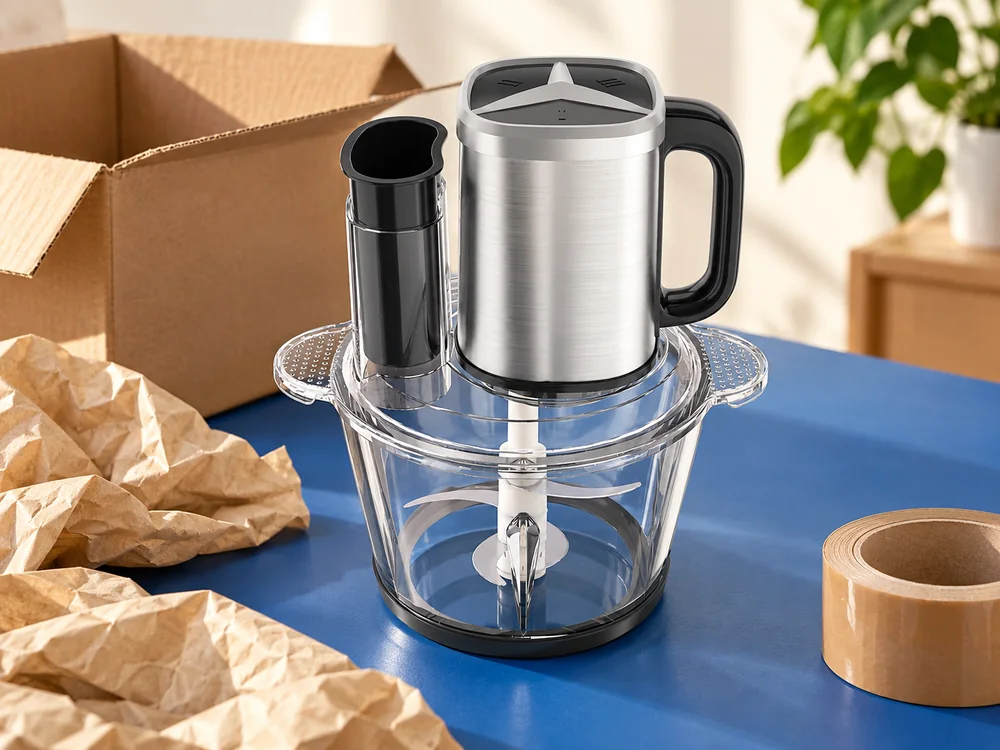
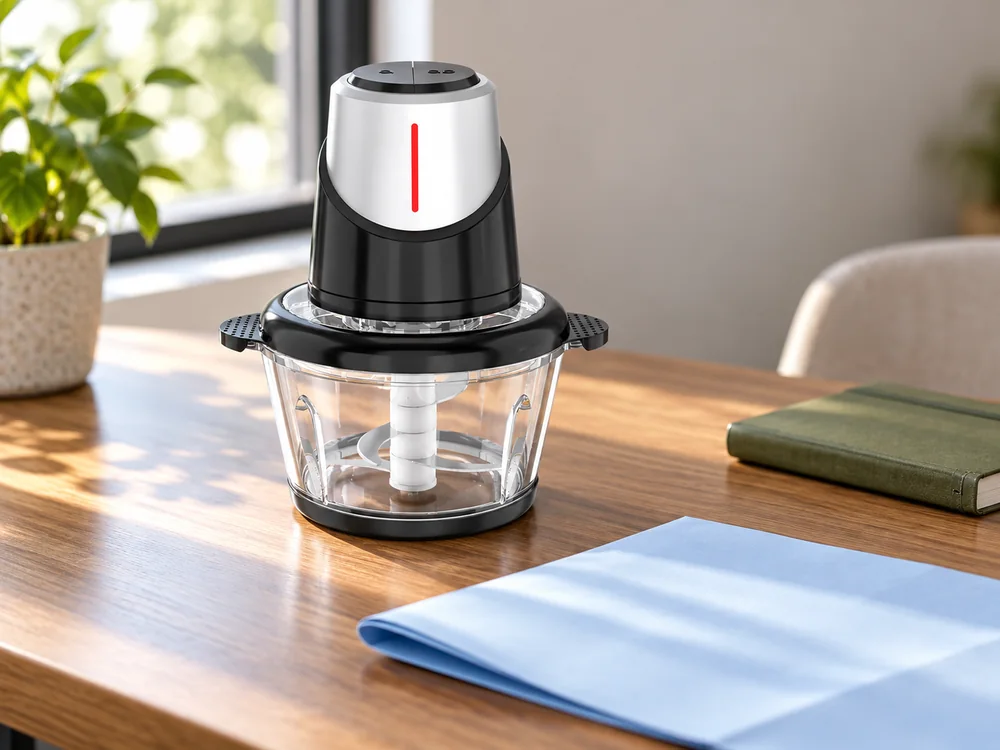
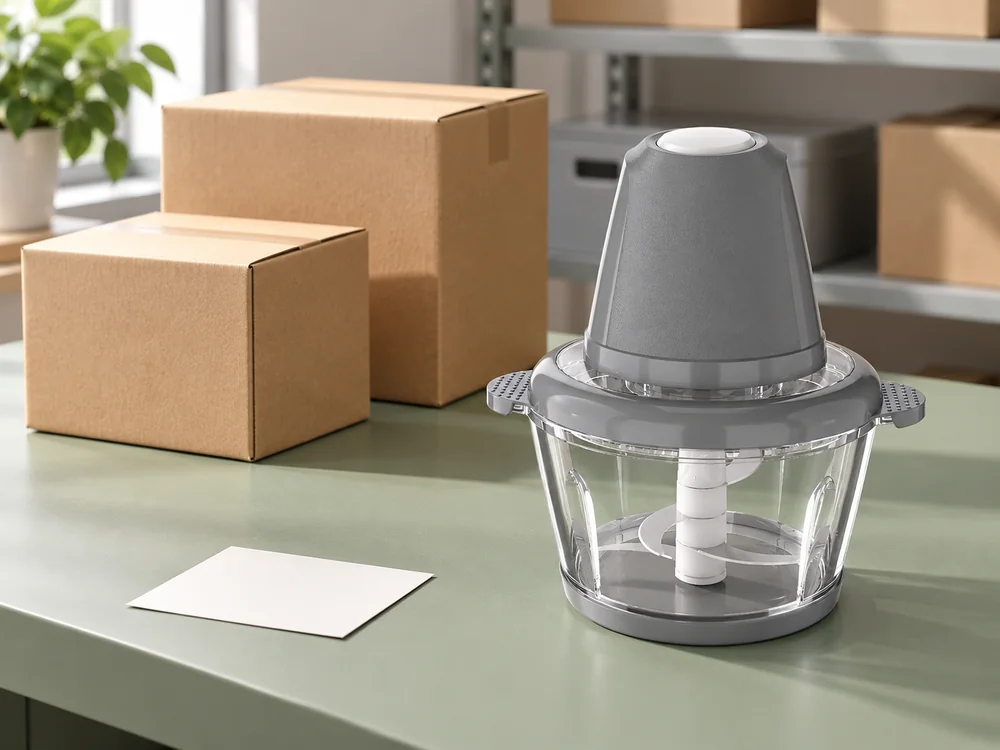
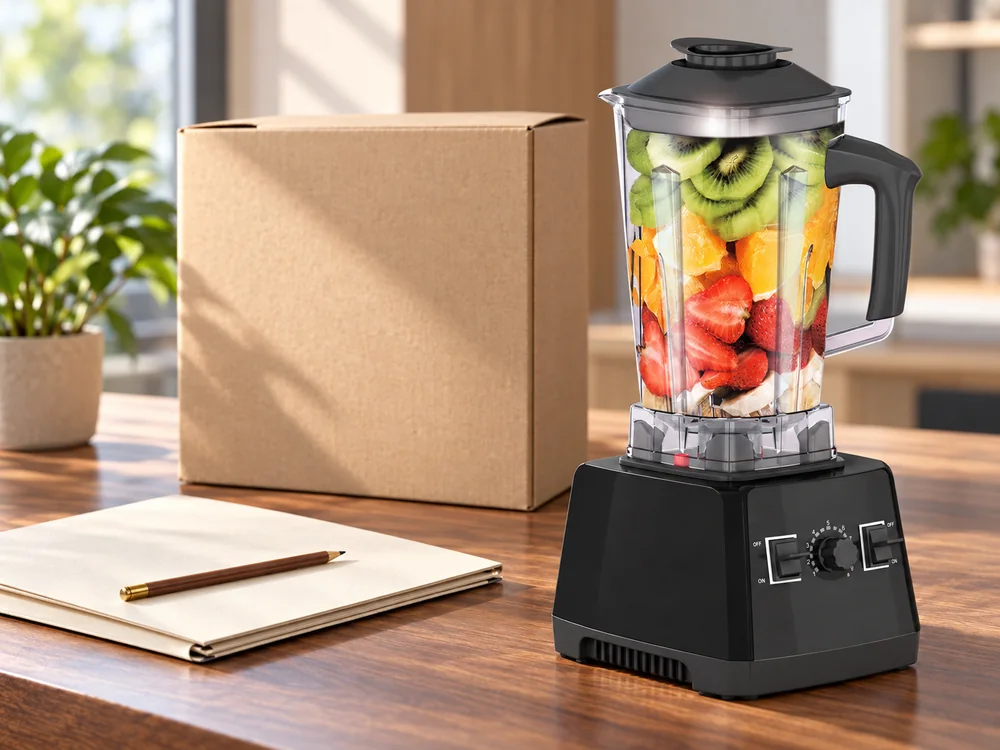
Use one agreed product configuration. The JINJIE countertop blender range includes several platform choices. The quotation lists PBJ-01 with a nominal 2 L PC container and 1,200 W. These fields do not determine shipping dimensions, a tariff classification or the cost of a customized retail set.
Place the accepted version, included contents and quantity beside its quoted price. If another offer changes the jar, controls or presentation, evaluate it as an alternative product scope before using its total in the cost comparison. A lower landed figure can reflect fewer supplied items rather than a more economical route for the same offer.
Collect each amount with its owner and basis
Start with the supplier’s current complete quotation. Identify the currency, price unit, quantity conditions, delivery scope and validity. Preserve separately quoted project charges rather than hiding them inside an internal unit figure that another colleague might mistake for the manufacturer’s price.
For transport, provide the selected packing data to the appointed provider. Obtain the actual carton quantities, outside dimensions, gross weights and any relevant handling arrangement. A photograph or nominal product capacity cannot replace those inputs.
Ask which origin, main-transport and destination services the returned proposal includes. An unanswered charge remains open. Adding a guessed allowance may be acceptable for a visibly provisional scenario, but it should not become a confirmed invoice amount when the worksheet is forwarded.
Have the appropriate customs or import specialist establish the classification and applicable destination amounts for the real goods and current circumstances. This article supplies no universal appliance code, tariff percentage, exemption or tax recovery rule. Use the specialist’s dated response and review any change affecting that response.
Record insurance and other required services on their actual basis. If a service is already included in another quote, show that inclusion instead of adding it again. Conversely, an attractive all-in label needs a defined scope before the buyer can treat omitted lines as covered.
| Cost input | Source and basis to retain | Common error to prevent |
|---|---|---|
| Purchased retail sets | Supplier quote, version, quantity and currency | Multiplying a bare-unit price by complete-set quantities |
| Transport and handling | Provider proposal to the named receiving boundary | Comparing different endpoints or counting an included service twice |
| Applicable destination amounts | Current specialist assessment for the actual goods | Copying a rate from an unrelated product or old shipment |
| Insurance and required services | Identified coverage or service proposal | Treating an open amount as zero |
| Separate preparation | Deliverable, charge and recurrence from the supplier or provider | Carrying first-order work into every reorder without checking |
| Conversion assumption | Original currency, stated rate and date | Erasing the currency in which the amount is actually payable |

Give each open input an owner and a date for resolution. The worksheet can still support early discussion if its uncertainty is visible. What it cannot support is a final approval claim based on blanks silently entered as zeros.
Build a reproducible order total
For a simple illustrative shipment, assume 500 identical retail sets at USD 18 each: goods cost USD 9,000. Suppose the current comparison includes USD 1,200 for the identified transport route, USD 600 in destination amounts supplied solely for the example, and USD 400 in other identified delivery and handling charges. Assume these categories do not overlap. Their total is USD 11,200, or USD 22.40 per ordered set.
These amounts illustrate the calculation only. The USD 600 is not a tax formula, assessment or percentage applicable to a JINJIE product. A real worksheet must use the actual destination response and its calculation basis.
Keep the USD 9,000 goods line visible beside the USD 11,200 route total. The USD 4.40 difference per set explains why a factory price alone cannot determine the importer’s receiving cost. It does not mean the manufacturer increased its price.
Recalculate from the original lines before relying on the unit result. Check that prices refer to complete retail sets and quantities refer to the same sets. Carton counts belong in the transport inputs, not as a substitute denominator for cost per appliance.
Use one consistent currency for the internal comparison while retaining original amounts and currencies. State the conversion assumption and date. If an amount remains payable in another currency, the internal converted figure does not alter that obligation.
For several SKUs, preserve the shipment total and identify the allocation method used internally. An equal allocation per appliance may answer one planning question but obscure differences between bulky and compact lines. Ask the responsible finance team which basis to use for the business’s product comparison and accounting purpose.
Keep line-specific charges attached to the line concerned. A preparation fee for one branded set should not disappear into all appliances merely because they share a shipment. If a common charge is allocated, retain its original amount and the method so the result can be reproduced.
Keep opening-order preparation separate from recurring supply
An opening program may include sample work, artwork preparation or other separately quoted deliverables. Discuss the real scope through JINJIE’s OEM and ODM information. Ask which work the current quote includes and what may recur if the product or presentation changes.

Suppose the earlier invented order also has USD 800 of identified opening preparation. Its first-order funding comparison becomes USD 12,000, or USD 24 per ordered set. The USD 1.60 preparation allocation is the buyer’s way of spreading that charge over 500 units; it is not a newly quoted manufacturer unit price.
Show both figures: the receiving-route estimate and the opening-program total with its defined additional work. This prevents different teams from using the word landed to describe different scopes. Your business may adopt a particular accounting treatment, but the purchasing worksheet should disclose what its total includes.
If that work genuinely does not recur, a later unchanged order can have a different comparison. Obtain a current response before carrying forward the assumption. Another artwork revision, configuration or quantity may introduce new work.
A larger purchase spreads a fixed amount across more units but also commits more money to goods. USD 800 allocated over 1,000 units is USD 0.80 per unit; that arithmetic alone does not justify buying an additional 500 units. Demand, the actual larger-order offer and the resulting total funding still need evaluation.
Keep development work outside a normal replenishment comparison where it belongs outside that scope. The team should be able to explain a difference between first and repeat orders without suggesting that either the supplier’s price or the product changed when the difference was an internal allocation.
Test the inputs that could change the buying decision
Identify the meaningful uncertainties instead of adding an unexplained safety percentage to everything. Transport may still be an estimate, packing may remain provisional, or an essential destination amount may await specialist input. Each has a different route to resolution.
In the invented 500-unit example, another USD 300 in quoted route cost raises the total from USD 11,200 to USD 11,500, or from USD 22.40 to USD 23 per unit. The additional USD 0.60 can matter to a tightly priced channel. It is not a forecast that freight will rise by that amount.
Use scenarios only where the assumptions are useful and identifiable. Show the base case and the changed input beside each other. Keep actual quotes separate from deliberately assumed figures, and avoid inventing a probability for either outcome.
Review final packing when the estimate depends on it. A changed complete set or protection arrangement can require revised transport inputs. Use JINJIE’s quality and packing discussion to determine the appropriate product and packing review; do not remove protection simply to restore the earlier cost figure.
Check timing and validity together. The appliance quote and service proposals may expire on different dates. Before releasing the purchase, identify any input that is no longer current and obtain the relevant update.
One uncertain line does not always stop all work. A provisional optional presentation fee may allow discussion of an available alternative. An unresolved amount or requirement that changes the core feasibility of the purchase needs resolution before the dependent approval. State which decision is on hold.
Compare cost with the channel’s actual sales receipt
Use the receipt your business expects, not a consumer price collected by another party. A distributor selling to dealers and a retailer selling directly can have different comparison bases. Keep those roles clear when deciding whether the selected order supports its intended channel.
Separate further selling costs from the receiving-route estimate. Warehousing after arrival, channel charges, customer delivery and other relevant business costs may belong in the next stage of the buyer’s calculation. Avoid describing the difference between selling receipt and landed cost as net profit while other costs remain outside it.
If the received quantity differs from the quantity currently available for sale, show both counts. For illustration, allocating USD 11,200 over 480 presently available sets gives approximately USD 23.33 per available set, rather than USD 22.40 over 500 ordered sets. This is a sensitivity example, not a prediction of twenty defective units or an accounting rule for rejected stock.
Establish why units are unavailable before changing the purchase judgment. They may be reserved, awaiting review or affected by a discrepancy. Their status and any agreed remedy matter. Do not charge an assumed loss to the supplier or treat unavailable goods as permanently lost without the facts.
Compare feasible offers on the same channel role and complete scope. A product with a lower receiving cost can still fail the retail task. Keep the features customers need and the supported use of the appliance visible while evaluating price.
Turn the estimate into a funded purchase decision
The order total and the timing of payment answer different questions. Put actual due events beside the costs so your business knows when funds are needed. A purchasing plan can have acceptable unit economics and still exceed cash available at a critical stage.
Use the real payment proposal and service conditions. This guide sets no JINJIE deposit ratio, credit term or payment method. Ask the authorized parties to identify the actual amounts, due events and any conditions that affect the schedule.
| Result of the cost review | Purchasing action | Information needed before proceeding |
|---|---|---|
| Complete offer fits the channel and funding | Consider approval on the current basis | Valid product, route and destination inputs |
| Optional presentation makes the opening total too high | Request a separately described leaner alternative | A complete revised offer, not an imagined deduction |
| Larger quantity lowers allocation but exceeds demand | Reconsider the supported order size | Actual quantity conditions and a funded sales rationale |
| Essential destination input is unresolved | Hold the dependent cost or purchase approval | Current response from the responsible specialist |
| Unit result is acceptable but payment timing is not | Review quantity or an actual alternative proposal | Accepted due events and the business’s funding availability |
Preserve the approved estimate with its sources and revision date. When an input changes, identify the difference and which decision it affects. After receiving, reconcile actual charges against the estimate without rewriting the history of the original approval.
Contact JINJIE for a complete proposal for your selected appliance. Include the destination, quantity by version, retail contents and requested delivery boundary. Obtain the factory’s identified scope, then combine it with current logistics and specialist responses to decide whether the purchase fits your business.
FAQ
Can a forwarder’s all-in quote replace the cost worksheet?
It can supply relevant quoted inputs, but retain the included services, receiving boundary, conditions and exclusions. Keep the product purchase and separately requested work identifiable. Ask about any amount the proposal does not resolve before treating the combined total as complete.
What if an import-related amount may later be recovered?
Have the responsible finance or tax adviser determine its treatment for your actual situation. Keep the payment needed at the relevant event visible separately from any later recovery assumption. This article does not establish eligibility, timing or an accounting rule.
Should the first order carry all preparation cost internally?
Use the business’s approved planning and accounting approach. For purchasing, disclose the original charge, the quantity or period used for allocation, and the funding needed now. Spreading a cost over hoped-for future orders does not remove the current payment requirement.
What if actual receiving cost exceeds the approved estimate?
Reconcile the changed inputs first: product scope, quantity, route charges, destination amounts, conversion or additional work. Identify which were provisional and which changed after approval. Use that record to improve the next estimate and discuss specific discrepancies with the responsible party.