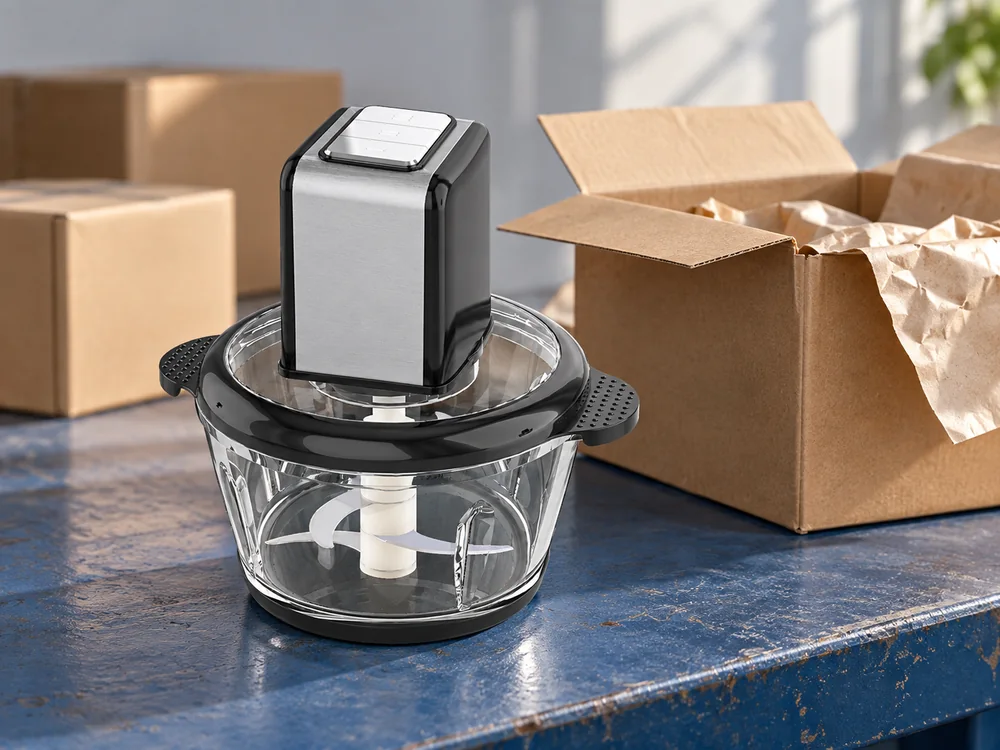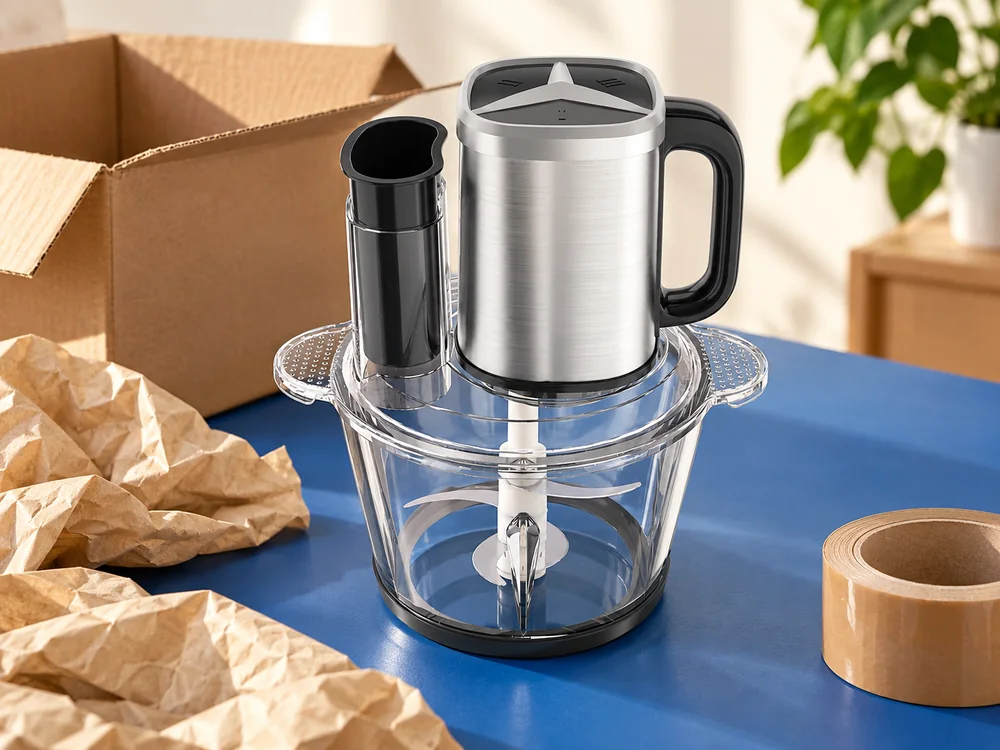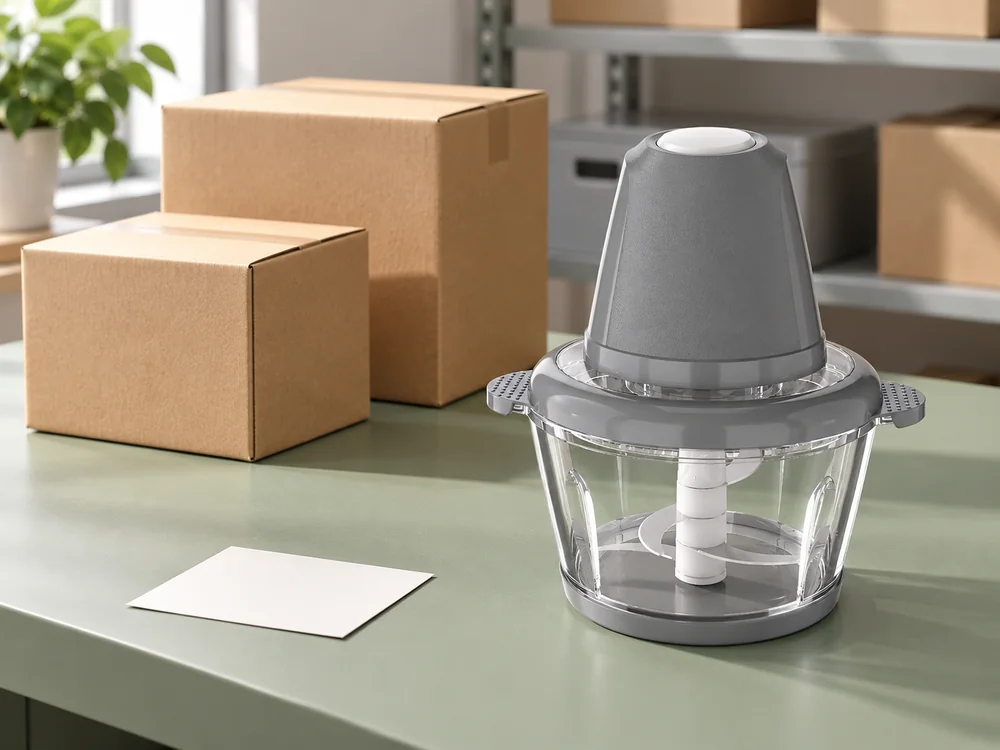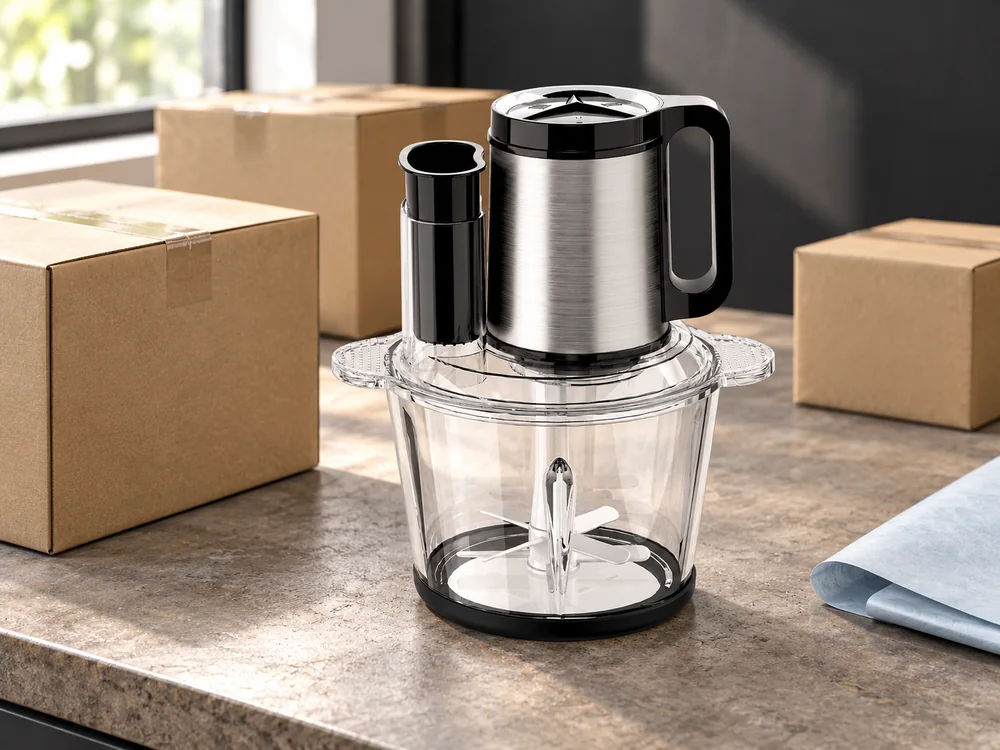
Two suppliers have finished your goods. A third expects to finish later. Combining the orders may reduce duplicated transport work, but the ready appliances could spend the saving period sitting in storage instead of reaching customers. Small appliance shipment consolidation is a purchasing choice about cost, readiness and handover, not simply an instruction to put more cartons together.
This guide is for importers combining household food-preparation appliances with other purchased lines. It explains how to decide whether to combine, wait or dispatch separately, then give the responsible logistics provider usable instructions. It does not claim that JINJIE operates a consolidation warehouse or offers a particular freight service.
Define which orders you are actually combining
Distinguish three arrangements. A manufacturer can prepare several of your product lines for an agreed handover. Your appointed provider may collect your purchases from different manufacturers and combine them. A less-than-container-load service may place your consignment alongside other shippers’ goods. Those arrangements can involve different parties and decisions, even when someone calls all three consolidation.
DHL Global Forwarding describes LCL as combining smaller shipments and separately describes buyers’ consolidation involving orders from multiple manufacturers. Use the distinction when requesting a proposal. State whose goods are being combined, where that occurs and which receiving destination the plan serves.
Start with the accepted product orders rather than a warehouse photograph. Keep the supplier, order line, selected version, quantity and expected packed status for each consignment. Goods already purchased and goods merely under discussion should remain distinguishable. A forwarding plan cannot supply an appliance configuration that the purchase has not settled.
The JINJIE electric meat chopper range provides identifiable product starting points. The quotation lists SD-03 with a nominal 3 L glass bowl, 500 W and digital controls. Those fields identify the offered appliance; they do not establish its carton dimensions, packed weight or the protection appropriate to a particular transport arrangement.
Treat consolidation as a logistics proposal for the accepted goods. Keep quantities and configurations fixed for the comparison, unless changing the purchase is a deliberate alternative. Ordering an extra slow-selling appliance solely to use space creates a stock commitment as well as a transport change.
Name the party authorized to coordinate the combined movement. A factory contact can answer questions about its own goods without accepting responsibility for another supplier’s readiness, documents or packing. The coordinator needs an agreed scope, not an assumption that whoever answers first will manage everything.
Request packing and readiness data by supplier
Obtain carton counts, outside dimensions and gross weights for each actual packed line. Identify any pallet or other handling arrangement proposed. The transport provider can then assess the consignment on its own chargeable basis. Do not turn a nominal bowl capacity into shipping volume or borrow packing data from a similar-looking model.
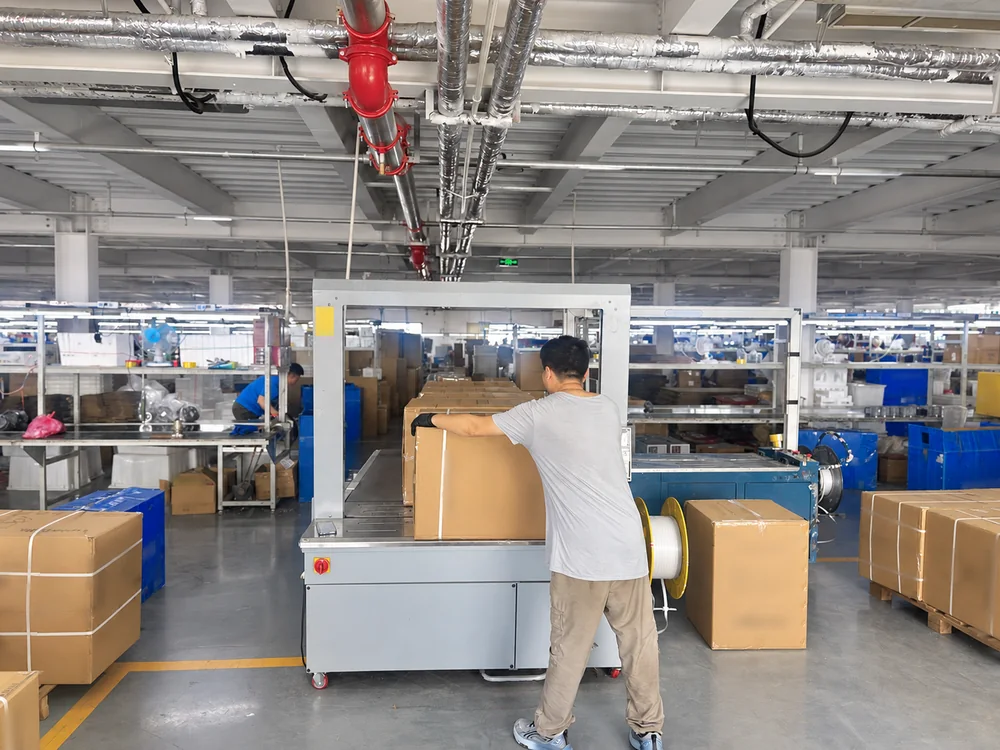
Use consistent measurement units in the request, while preserving the supplier’s original values. If dimensions need conversion, show the converted figures separately. A total that mixes centimeters and meters can look plausible enough to survive a busy approval meeting.
Identify partial cartons and exceptions. They may require different handling or marking even where the overall unit total is correct. Ask for the actual arrangement rather than assuming that a half-filled carton occupies half the normal space.
Readiness needs a named stage. Appliances assembled but awaiting retail materials are different from packed goods available at the agreed collection point. Where custom presentation remains open, discuss it through JINJIE’s OEM and ODM information before treating the line as ready for the combined dispatch.
Give each supplier the intended handover date and obtain its response against that requirement. A general lead-time estimate is not confirmation that the goods can enter the planned movement. Keep unresolved approvals beside the line they affect.
| Input for each consignment | Record to obtain | Decision it supports |
|---|---|---|
| Accepted goods | Supplier, order, version and actual quantity | Which purchase enters this movement |
| Packed size and weight | Carton count, dimensions, gross weights and exceptions | A quote using the real consignment |
| Readiness stage | What is complete and what remains | Whether collection can be arranged |
| Handover arrangement | Named point, contact and agreed collection scope | Who must perform the next movement |
| Required records | Documents requested by the responsible provider or specialist | Whether the route can proceed on its stated basis |
| Receiving destination | Address or agreed receiving boundary and line allocation | Whether combining serves the intended delivery |
Ask the coordinator how late data will be handled. An estimate may help early planning, but the booking decision should identify which figures remain provisional and when actual data must replace them. Updating a shipment total without updating its underlying lines makes the next change harder to explain.
Compare the complete separate and combined routes
Request both proposals to a common receiving boundary. A combined transport quote ending at a different point from the separate routes is not a saving calculation until the omitted work is identified. Include the services needed for collection, origin handling, the main movement and the agreed destination handover as applicable to the proposal.
Keep the provider’s charge categories and conditions visible. Receiving, storage, handling or additional local collection may appear outside a headline freight amount. Obtain the actual quotation and the basis for any time-dependent charge. Do not assume these services are included because the orders share a destination.
Consider an invented comparison. Three separate route proposals total USD 1,400, USD 1,100 and USD 900, or USD 3,400. A combined proposal is USD 2,200 plus USD 450 for the identified collections, USD 200 for receiving and handling, and USD 150 for the assumed storage period. Its compared total is USD 3,000, a USD 400 difference. These are arithmetic examples, not market rates, JINJIE freight offers or a promise that every shipment has those charges.
If another quoted week of storage adds an illustrative USD 120, the difference becomes USD 280 before any commercial consequence of delay. Obtain the actual storage condition instead of inserting a generic daily rate. Different providers and arrangements may use different charging bases.
Keep uncertain estimates visible. A total containing an unresolved destination amount should be presented as provisional, even if all origin charges are confirmed. Your purchasing decision should show the amount still open and who will obtain it.
Do not calculate a reduction against separate services you would never actually purchase. If a direct route is unsuitable for your receiving deadline, it is not a valid baseline merely because its quote is higher. Compare feasible alternatives for the same goods and identify service differences alongside money.
Allocate the selected transport cost internally without pretending that a single average explains every SKU. An importer may choose an accounting allocation basis suited to its business. Preserve the total and the method so product comparisons do not change silently when a bulky line joins the shipment.
Decide how long ready goods may wait
The slowest unresolved order can control the combined departure. Identify the latest acceptable release date from your receiving requirement and the provider’s current route proposal. Do not work backward using an old transit estimate or equate factory dispatch with customer availability.
Ask what waiting changes commercially. Existing replenishment needed by customers may deserve different treatment from an unallocated trial line. A proposed complete launch may need all items together. Explain those roles before choosing a rule for every consignment.
Set a decision date and a named decision-maker. On that date, compare confirmed readiness with the available routes. Waiting indefinitely for a message that goods are almost ready is not a plan; it prevents the team from arranging an alternative while that alternative is still useful.
Evaluate the consequence of delay using your own evidence. Confirmed customer delivery commitments, usable inventory and the actual selling window are stronger inputs than an optimistic forecast. If estimating lost contribution, identify the assumed affected sales and avoid treating every delayed unit as a permanently lost sale.
Consolidation can remain worthwhile even when one line is excluded. Ask for the revised proposal for the goods that are ready and a separate route for the delayed balance. Do not assume the original combined price remains valid after its size or collection pattern changes.
Compare waiting, combining a reduced set and separate dispatch as complete alternatives. The outcome can change when a line becomes ready or a provider’s valid proposal changes. Record the assumptions behind the choice so the team knows what event would justify reconsidering it.
Keep each product identifiable through the handovers
Give the coordinator and receiving team a clear relationship between the supplier order, product version and buyer SKU. The same broad description, kitchen appliances, cannot distinguish electrical versions or complete sets that share a similar appearance.
Agree the identification expected on cartons and accompanying records. Where a provider needs its own consignment reference, retain that alongside the product identity. A logistics reference helps track movement but does not replace the buyer’s need to recognize the purchased line.

At a receiving or combining point, agree what is counted and what exceptions are reported. Carton receipt, visible packaging condition and a product inspection are different activities. Specify any requested opening or product checks separately, including authority, scope and the records returned.
JINJIE’s quality and testing discussion can help define the product-related review needed before its goods are handed over. Do not assume a forwarder’s carton count approves the appliance specification, or that a factory product review establishes the condition after subsequent handling.
Keep the chronology of observations. If a carton arrives visibly damaged at a combining point, preserve its identity, photographs and the receipt exception before further handling. An observation helps investigate where action is needed; one photograph alone does not settle responsibility for every later discrepancy.
Do not permit repacking merely to make the load look tidier. A change to approved retail or transit protection needs appropriate review for the real product and route. Glass-bowl goods, for example, still require the accepted protection; consolidation does not establish that any thinner arrangement is sufficient.
Keep shipment documents distinct where the responsible parties require them. Combining transport does not automatically merge seller invoices, product requirements or import entries. Obtain the applicable document arrangement from the appointed provider and relevant specialist rather than imposing a universal rule from a sourcing article.
Confirm the movement and preserve the remaining commitments
Issue the approved allocation for the selected movement: which supplier lines, how many units or cartons, the agreed handover plan and any exclusions. Ask the coordinator to identify discrepancies before proceeding on a different allocation.
| Situation at the decision date | Route to compare | Commitment to preserve |
|---|---|---|
| All lines ready on the stated basis | Combined movement against feasible separate routes | Accepted goods and current complete quote |
| Optional trial line remains late | Ready core goods combined; trial line separately quoted | The excluded order and its later readiness |
| Complete launch requires all items | Waiting against a revised launch or split proposal | The actual customer delivery requirement |
| One required record remains unresolved | Hold the dependent movement and obtain the specific answer | Unaffected lines may proceed only on an agreed arrangement |
| Combined route loses its cost advantage | Feasible separate dispatch or a revised provider proposal | Same receiving boundary and product protection |
Keep a balance record when an order is partly dispatched. Identify the goods still at the factory or another agreed location, their status and the next decision. A movement containing most of the purchase does not close the outstanding quantity automatically.
Send the receiving team the actual dispatched allocation, not the original planned total. They need to reconcile each line and record exceptions without guessing which supplier’s goods were left behind. Update the expected arrival information when the provider confirms a changed route.
After receiving, compare the actual charges and handover results with the decision assumptions. Keep changes in quantity, storage time and service scope distinct. That record can improve the next consolidation decision without claiming that one successful movement proves every future combined shipment is cheaper.
Contact JINJIE with the selected appliance lines and required handover. State your appointed coordinator, destination, quantities and the readiness information it needs. Request the factory’s product, packing and preparation response for its own goods, then ask the responsible logistics provider to quote the complete route.
FAQ
What if a supplier changes the carton data after collection is arranged?
Give the revised figures to the coordinator promptly and request its effect on the arrangement and quote. Preserve the earlier estimate and the actual values. Do not assume a booking based on different dimensions or weights remains suitable without the provider’s response.
Can samples travel with the bulk goods to avoid another shipment?
Ask whether that arrangement fits their timing, identification and the applicable transport and document requirements. A sample needed to resolve approval before production cannot perform that role if it arrives only with the finished order. Avoid trading away the purpose of the sample for an apparent shipping saving.
Who should authorize opening cartons at the combining point?
Agree that authority and purpose before the activity. Receiving staff may be authorized to count cartons without being authorized to open retail sets or change packing. Specify the requested checks, records and response to discrepancies with the parties responsible for the goods and handling.
What if our internal cost allocation makes one SKU look unprofitable?
Recheck the allocation method and the actual complete cost, then review that SKU’s customer role. An accounting average can obscure differences between lines, but changing the allocation does not reduce the shipment bill. Keep any decision to remove a SKU separate from how costs are recorded.