Small appliance OEM lead time is useful only when the buyer and manufacturer agree on the starting condition and the finished result. A period measured after all materials arrive is different from a period measured after an order is accepted. Neither necessarily ends when the goods reach your warehouse. Comparing the numbers without those boundaries can make a slower proposal appear faster.
For a private-label launch, ask for a schedule connected to the actual product and your required delivery point. Identify the work already complete, the inputs still outstanding and the activities that control the earliest achievable finish. You can then decide whether the proposed date supports the launch, whether a limited first release is worthwhile or whether the retail commitment should move.
There is no single JINJIE lead time stated here. Timing needs confirmation against the model, quantity, materials, customization and shipment requirements of the order. This guide concerns household kitchen-appliance procurement, not delivery estimates for an appliance already in a local retailer's stock.
Define when the quoted clock starts and stops
Put the proposed start condition into a complete sentence. Does the period begin when the purchase order is received, when commercial conditions are fulfilled, when the final version is accepted or when the required materials are ready? Several events may need to happen before the supplier considers the production period to have started.
Ask which conditions are already satisfied. A date calculated from an assumed approval next week is still conditional if the sample has not arrived. Record the assumed event and its current status beside the date. Otherwise, an estimate can gradually become an apparent commitment simply because people copy it into new emails without its original qualification.
Define the end with equal care. Completed assembly, packed goods, goods available for collection and receipt at the destination warehouse are different outcomes. A buyer comparing two offers needs the same endpoint, or a clear explanation of the work and transport still required after each quoted period.
|
Stated milestone |
What it may tell the buyer |
What still needs clarification |
|---|---|---|
|
Order accepted |
Commercial discussion has reached an identified order |
Whether product, artwork and other start conditions are complete |
|
Materials ready |
Required inputs have reached an agreed readiness point |
Whether inspection, allocation or scheduling remains |
|
Assembly complete |
Units have passed through assembly |
Remaining checks, packing and any unresolved units |
|
Ready for collection |
The agreed shipment can be handed over |
Exact quantity, documents, collection arrangements and release conditions |
|
Arrived at destination |
Transport has reached the named place |
Whether receipt, unloading and warehouse availability are included |
Confirm the time unit. Working days and calendar days should not be used interchangeably. Ask which working calendar applies where a quoted period crosses a closure or holiday. You do not need a list of every possible interruption; you need to know whether the agreed calculation includes the dates relevant to your order.
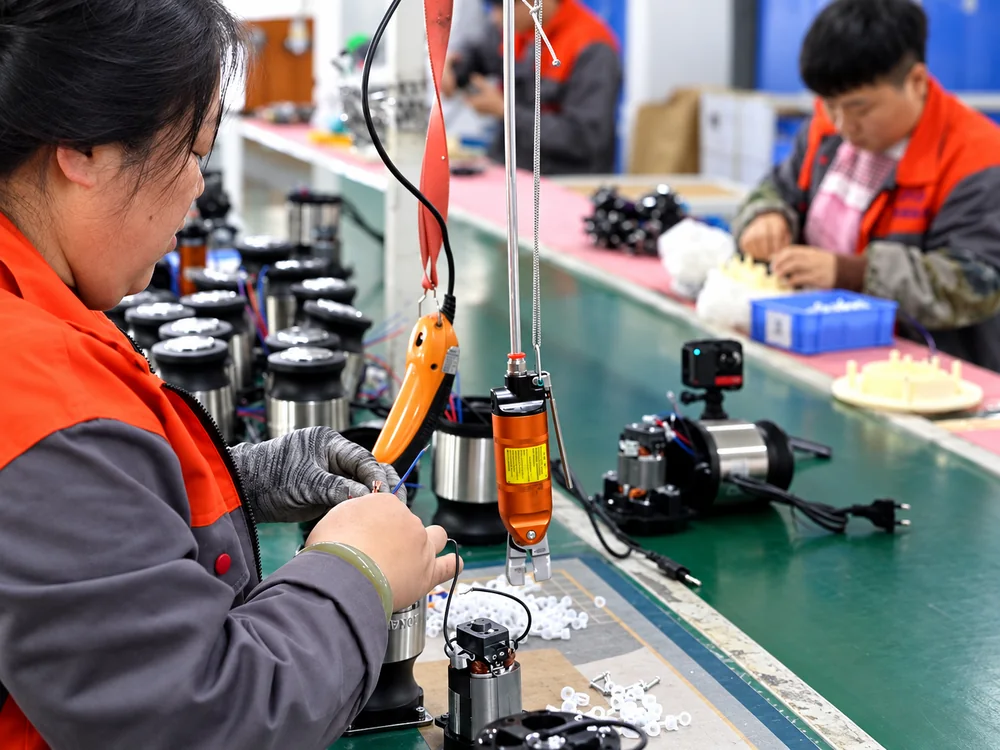
JINJIE's manufacturing information identifies the model, quantity, component availability, packaging readiness and requested shipment date as schedule inputs. Use those inputs to frame the inquiry. A general factory process description is not evidence that a particular slot or component supply has been reserved for your project.
Keep the requested date separate from the supplier's response. The former describes what your business needs. The latter should say what can be offered, under which conditions and to which delivery point. A purchase request carrying your preferred date does not resolve that discussion by itself.
Find the dependency that actually determines completion
Ask for the small number of dependencies that control the proposed finish. Some work must wait for an earlier result; other work may proceed at the same time. Adding every activity together can exaggerate the period, while assuming everything overlaps can hide a genuine delay. The manufacturer's proposed sequence should explain which case applies.
Consider a hypothetical planning example, unrelated to JINJIE's actual timing. After the same release point, component preparation takes twelve working days and approved printed materials take eight working days. If those activities can run in parallel, and the next stage needs both, readiness is twelve days away, not twenty. If subsequent assembly and release work takes six days, the simplified total is eighteen working days.
Now suppose the printed-material branch changes from eight to fifteen days. The simplified total becomes twenty-one days: fifteen before the shared next stage, plus six after it. The seven-day change in printing adds three days to the total in this example. It uses the four days previously available before that branch would have controlled the next stage.
The calculation assumes parallel work is actually permitted, the same start point applies and the six-day stage remains available. A lost production slot could change the result. Ask the manufacturer to confirm the dependencies rather than treating this arithmetic as a production promise or a reason to dismiss its updated estimate.
This distinction helps evaluate an acceleration proposal. Paying to shorten the eight-day branch to six days would not improve the original eighteen-day finish under those assumptions, because the twelve-day branch still controls it. Spend attention on the activity that can move the required endpoint, not the easiest activity to describe as faster.
Ask about partial readiness in practical terms. Components arriving in several deliveries may or may not support a useful first production quantity. The answer depends on what each complete unit needs and how work is organized. A high percentage of purchased components received is not automatically the same percentage of complete appliances available to make.
For a branded blender, a quantity of finished motor bases cannot replace missing matched jars, lids or required retail materials. Track readiness for the complete sellable version rather than using the most advanced component as a proxy for the order. This also makes progress reports easier for the buying team to interpret.
Keep the schedule detailed enough to support decisions, but avoid demanding a minute-by-minute factory plan that your team cannot use. The buyer normally needs the controlling dependency, its current forecast, the next check and the consequence of a change. Those facts are more useful than a long list of activities with no connection to the promised date.
Work backward from the delivery point your launch needs
Identify the commercial deadline first. A retailer may require goods at its distribution center before a promotion starts, while an importer may need the shipment available for a planned collection. State the named location and required condition. The factory cannot evaluate the same deadline meaningfully if one team means loading and another means shelf availability.
Ask the responsible transport provider for the route assumptions after the supplier's handover point. Keep transport booking, collection, transit and destination handling visible where they apply. Do not turn the supplier's production estimate into an all-inclusive arrival date by adding an unverified shipping duration found in a previous order.
Allow time for your own receiving and retail preparation where necessary. Goods arriving at a building may still need to be booked in, checked and allocated before a retail launch can use them. Your warehouse or channel team should define that requirement. The appropriate allowance depends on the actual receiving arrangement, not a universal number of extra days.
Separate a preferred shipping opportunity from an accepted transport booking. If missing one departure would materially affect the launch, ask how the schedule will be reassessed as the goods-ready forecast changes. Do not keep the original arrival date visible after the underlying handover assumption has become impossible.
Use uncertainty where it belongs. If the product is ready but the onward schedule remains unconfirmed, say so. If a component date is the unresolved point, do not hide that uncertainty in a vague shipping allowance. A buyer can make a better decision when the unknown has an owner and a consequence.
Consider whether an early partial shipment has independent value. It should contain the complete product and materials needed for the intended customer offer. A first shipment that cannot be sold, demonstrated or distributed as planned may create extra handling without protecting the launch. Compare its actual purpose with the additional transport and receiving work.
A fixed promotion date does not make an uncertain product ready. If the available route cannot meet a mandatory requirement, revise the retail plan or consider an already suitable product with a separately confirmed schedule. Keep that alternative distinct from the changed OEM project so the two versions do not become mixed in sales material.
Put buyer inputs into the same schedule as factory work
The OEM and ODM preparation process includes the product, specification, artwork and packing details. Establish when the manufacturer needs each input for your chosen route. Early discussion can begin before everything is final, but work that depends on an accepted file cannot be treated as unconditionally underway while that file is still being written.
Assign an owner on your side for each time-sensitive decision. Product, marketing and purchasing teams may all contribute, but one person should communicate the accepted result. An unanswered question between those teams can consume time without appearing in a factory progress report. Make that dependency visible before the date becomes urgent.
Distinguish a response deadline from a completion deadline. Sending feedback on a sample is not the same as completing the decision if the feedback requests another change. Ask what work follows the response and when the resulting version can be evaluated. A plan that allows one feedback cycle should not quietly assume several additional cycles fit inside it.
When artwork depends on a final product photograph or packed dimensions, show that dependency. Some layout work may proceed earlier, but final release may still require the accepted configuration. This avoids repeatedly asking a designer to finish material whose essential inputs have not yet been settled.
Give the factory one current set of files at the agreed handover. Retain earlier versions for traceability without presenting them as alternatives still open for production. If a later correction is necessary, identify the affected file and ask whether the dependent work has begun before assuming that replacement takes no time.
Do not approve an unresolved technical question solely to preserve the date. Use the quality and testing discussion to identify the evidence needed for the particular decision. The schedule should accommodate that necessary work. It should not redefine a missing result as acceptable because a shipment opportunity is approaching.
For optional preferences, decide whether they belong in the first order before they become a timing problem. A deferred decorative change may leave the essential customer offer intact. A missing function central to that offer is different. Describe the commercial consequence so the team can choose deliberately instead of treating every requested change as equally urgent.

Evaluate a recovery plan by what it changes
When a milestone moves, request an updated dependency and forecast rather than a repeated assurance to hurry. What event changed? Which downstream work is affected? What is the earliest supported new finish? A useful answer distinguishes completed work from the work still exposed to delay.
|
Proposed response |
What to verify |
When it may fail to protect the deadline |
|---|---|---|
|
Expedite one component |
Whether that component controls complete-unit readiness |
Another required item still arrives later |
|
Release a partial quantity |
Whether complete sellable sets and shipping arrangements are available |
The early quantity lacks required contents or retail value |
|
Use another component |
Fit, function, version and evidence consequences |
Substitution creates new evaluation or unsupported claims |
|
Change the transport plan |
Actual handover date and confirmed route proposal |
Goods readiness, rather than transit, remains unresolved |
|
Defer an optional feature |
Whether the retained product still meets the launch requirement |
The feature is essential to the promised customer use |
Ask which assumption makes the recovery date possible. If it requires your team to approve a file by a certain time, determine whether that is realistic. If it relies on a new supply proposal, ask whether the required item and timing are confirmed. A recovery schedule made entirely from best-case assumptions is not a stronger commitment than the original estimate.
Keep cost and benefit connected. Expedited work may add expense, but the relevant question is whether it protects an outcome worth that expense. If it saves time before a later unchanged bottleneck, it may not move delivery at all. Ask for the effect on the agreed endpoint before choosing among paid options.
Treat substitutions as product decisions, not administrative shortcuts. A component that appears similar may require another fit, function or document review. The buyer should know which version would be supplied and which checks remain necessary. Preserve the agreed product requirement while assessing whether the alternative genuinely saves time.
Avoid using a general completion percentage as the sole progress measure. An order described as ninety percent complete can still be held by one indispensable item. Ask what is needed to release the agreed quantity and when that specific requirement is expected to be satisfied. This question is useful without requiring the buyer to manage the factory's daily operations.
Update the people affected by the new date. The transport contact, warehouse and retailer may need different information, but their plans should use compatible assumptions. Do not let one team continue arranging collection against an old finish while another has already accepted a later version of the schedule.
Reconfirm timing for repeat orders rather than copying it
A successful first order provides a useful reference, but it does not reserve the same conditions indefinitely. Ask what has changed in the quantity, product version, materials and required delivery window. A repeat order may avoid some earlier development work while still requiring a fresh production and shipment confirmation.
Separate an unchanged product from unchanged supply readiness. The specification can remain identical while component availability or scheduling differs. Conversely, familiar-looking goods may carry a changed electrical or packaging version. Both situations matter to the timetable, but they call for different questions.
Share a forecast with its status clearly stated. An estimate of future demand can help discussion, but it should not be confused with an accepted order, reserved material or agreed production slot. Ask what preparation the supplier is actually offering against the forecast and what commitment your business would need to make for it.
If material is proposed for advance preparation, establish what is being committed and for which version. More preparation can reduce one later dependency while creating a stock or change-management decision. Do not assume it removes every step between a reorder and goods ready for collection.
Retain actual milestone dates from the completed order. Compare the original assumptions with what happened, identifying whether differences came from buyer decisions, material readiness, production or onward arrangements. The purpose is to improve the next plan, not simply to record that the last shipment was late or on time.
Use that experience selectively. A delay caused by unfinished artwork need not justify a permanent allowance on an unchanged repeat pack. A new product change, however, should not inherit the faster repeat-order assumption. Build the next estimate from the work it actually requires.
Request a schedule for your actual OEM order
Send JINJIE your timing requirements with the selected appliance, quantity, destination market, customization status and required delivery point. Identify the buyer inputs already complete and those still pending. Request the proposed start conditions, goods-ready milestone and controlling dependencies before using the response in your launch calendar.
FAQ
Does sending the deposit automatically start the production lead time?
Only if the accepted arrangement defines that as the start and any other required conditions are satisfied. Ask whether product details, artwork or materials remain outstanding. A payment event and readiness to begin the next activity are not automatically the same milestone.
Should we add every quoted stage together?
Not without checking the dependencies. Some activities may overlap, while others must wait for an earlier result. Ask which sequence the supplier's estimate assumes and whether an available production slot depends on those inputs arriving on time.
Can we hold the original date while requesting a different plug version?
Ask for a version-specific response before relying on that date. The proposed change may affect components, markings, documents or preparation. Its impact should be assessed for the actual order, even if the outside appearance of the appliance remains similar.
What if the factory date is confirmed but the retailer's receiving appointment is not?
Keep those as separate statuses. Coordinate the receiving requirement with the responsible logistics and warehouse contacts before promising availability. Finished goods at the supplier do not establish that the destination can receive and release them on the desired day.