A small appliance SKD supplier proposal changes more than the condition of the goods in the shipping carton. It changes where the appliance is completed, who performs the remaining work and how the finished product is checked before sale. A lower price for partly assembled goods is not enough to establish that local assembly is the better purchasing route.
Start with the complete product your customer will receive, then work backward to the proposed supply split. Define what arrives assembled, what arrives separately and what your local operation must provide. The useful comparison is the cost and reliability of producing a saleable appliance through each route, including the work that no longer happens at the original factory.
JINJIE's OEM and ODM inquiry process allows buyers to specify a need for partly or fully unassembled supply. The exact model, breakdown, quantity conditions and support require project confirmation. This is not a statement that every catalog appliance has an available SKD or CKD kit, or that JINJIE provides a complete local assembly line.
Describe the supply split instead of relying on SKD or CKD alone
SKD refers to semi-knocked-down supply, while CKD refers to completely knocked-down supply. Those broad labels do not describe the exact contents of a particular appliance proposal. Ask the supplier to identify the condition of each supplied assembly and the remaining operations. Two offers using the same abbreviation may leave different amounts of work to the buyer.
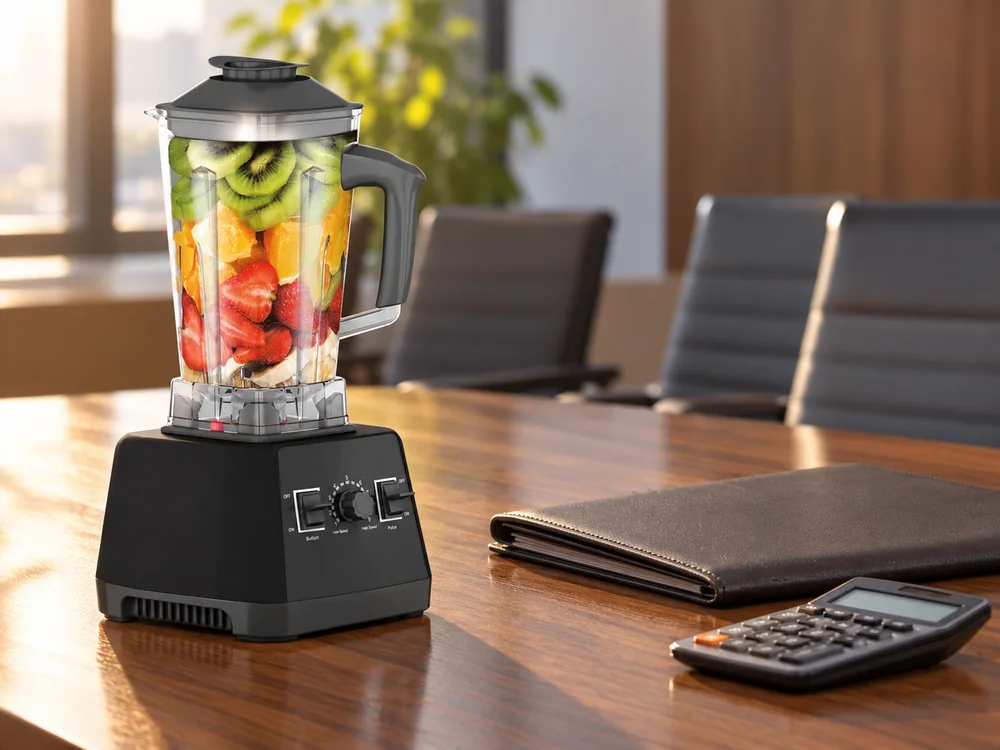
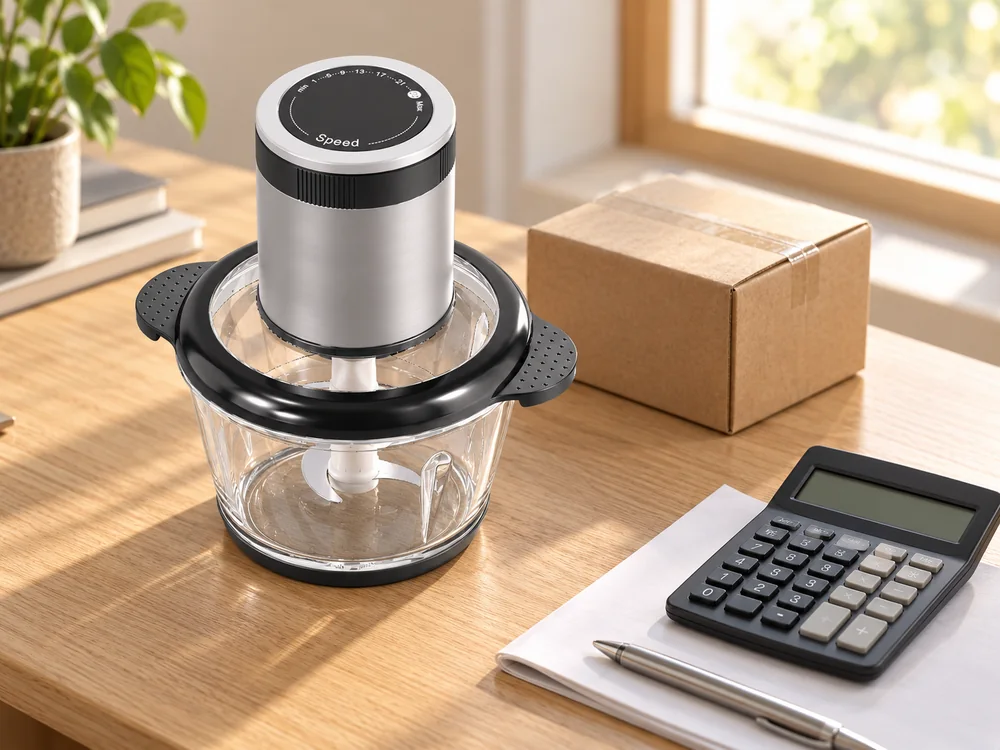
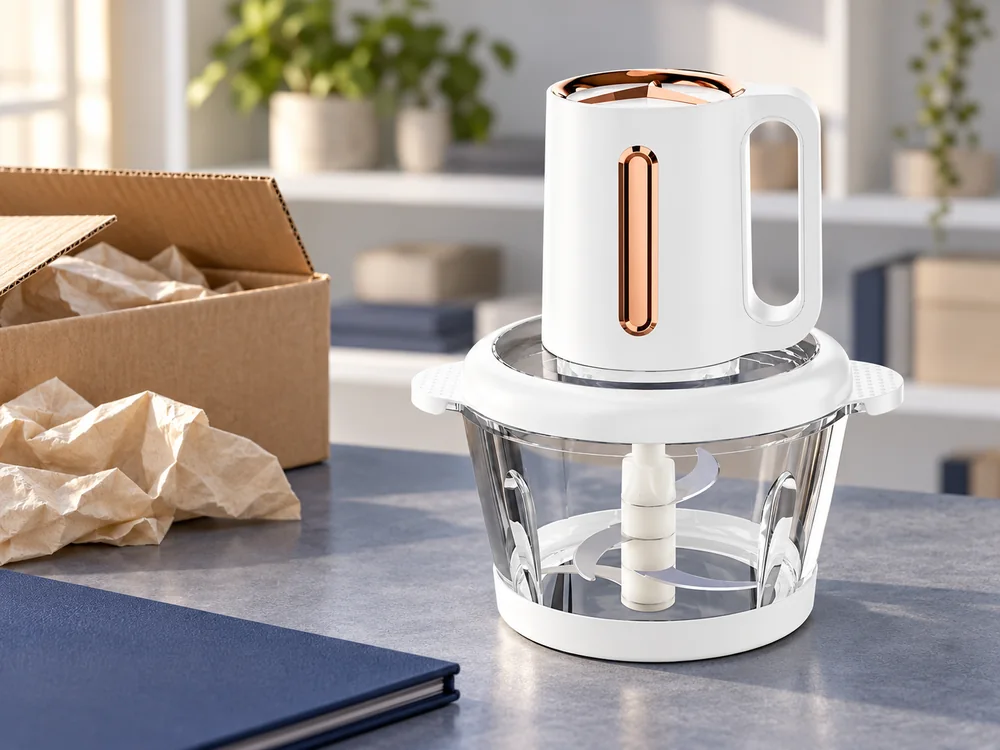
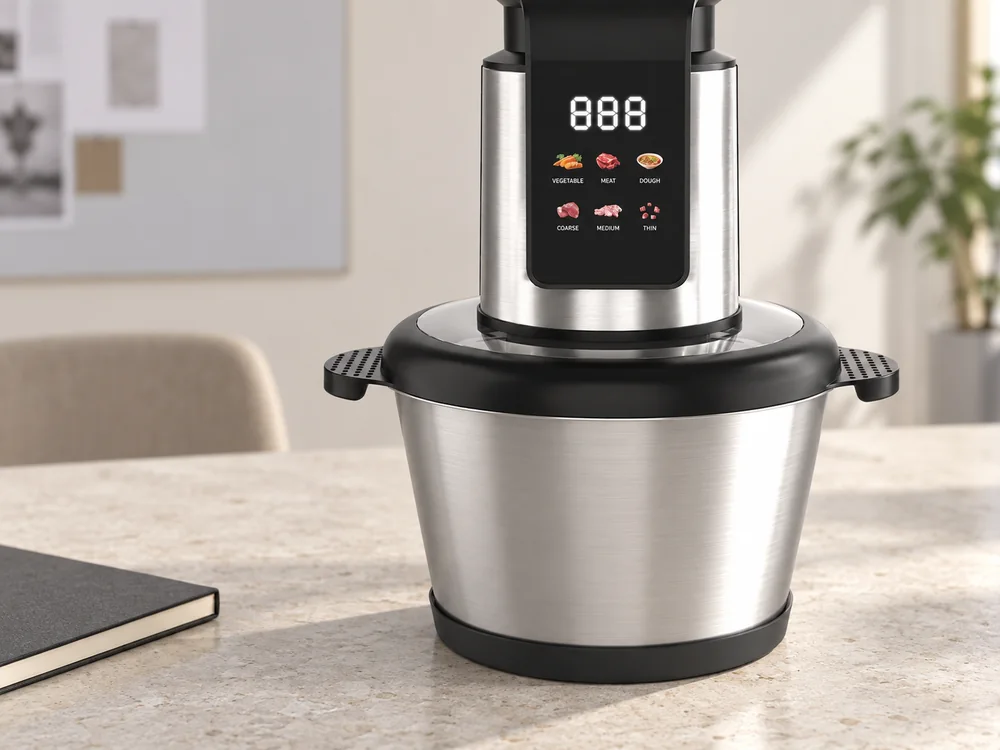
Choose a definite reference appliance first. For a bowl chopper, the proposal may involve the motor unit, bowl, lid, cutting assembly and retail materials. For a blender, it may involve the base and matched jar assembly. These are product groups for discussion, not permission to dismantle any offered model into a buyer-selected arrangement.
Use the JINJIE electric chopper range to identify a starting product where that is the intended category. Request a model-specific response. A photograph of loose parts elsewhere in the factory does not confirm that the same parts can be purchased as a kit or completed using your planned local process.
Describe the business reason for considering local assembly. It might be an existing qualified production operation, a particular distribution arrangement or a proposed localization project. The supplier needs to understand that reason to offer a relevant split. If the main aim is simply a lower headline unit price, compare the full completed-product cost before choosing the route.
Keep loose consumer accessories separate from unfinished manufacturing work. A finished appliance packed with a detachable jar is not necessarily a manufacturing kit. A buyer who intends to fit electrical or structural parts locally is taking on a different task from putting an already complete product and manual into a retail box.
Ask which elements the supplier recommends leaving assembled and why. A useful response can preserve a matched or evaluated subassembly while moving other agreed work locally. More disassembly is not automatically more economical. It can create additional handling, identification, assembly and verification requirements that outweigh a saving elsewhere.
Record the accepted split in the offer rather than leaving it in a call summary. The contents, supplied condition and local responsibilities should be clear enough for purchasing, receiving and production to use the same interpretation. If that description remains unresolved, a quoted price does not yet represent a comparable complete proposal.
Allocate the work needed to reach a saleable appliance
List the work left after the goods arrive. Identify who provides the required parts, tools, instructions, competent personnel and relevant checks. Do not assume these are included because the supplier has agreed to discuss SKD supply. Ask what the proposal actually delivers and what the receiving operation must arrange independently.
The buyer's local team should review whether it can perform the proposed work. A warehouse used to handling sealed cartons may not have the preparation, supervision or equipment needed for manufacturing operations. This is a capability question to settle before ordering the kit, not something to discover after the first containers arrive.
|
Area to allocate |
Supplier-side question |
Buyer-side question |
|---|---|---|
|
Supplied assemblies |
What is complete and what remains unfinished? |
Which operations can our site perform competently? |
|
Components and consumables |
Which identified items are included? |
What must be sourced locally to the agreed requirement? |
|
Work information |
Which applicable instructions or references are supplied? |
Who controls their use and trains the responsible staff? |
|
Product checks |
What has been checked before dispatch? |
What must be checked after local completion? |
|
Retail release |
Which labels, manuals and packaging are included? |
Who confirms the completed sellable version? |
Do not turn this discussion into improvised technical instructions. The supplier and qualified local technical team should define the operations and acceptance requirements appropriate to the product. Purchasing can ask what resources and evidence are necessary without inventing assembly settings, wiring procedures or safety-test limits.
Clarify the boundary of any proposed support. A component list, assembly reference, remote explanation and on-site training are different deliverables. Ask which are available, in what form and under what commercial conditions. Plan for the support actually agreed rather than assuming someone will travel to resolve a problem later.
Discuss access to the information necessary for the assigned work. The buyer may not need unrelated confidential manufacturing details, but the receiving operation needs enough controlled information to complete and identify the agreed product correctly. If a critical task cannot be performed with the proposed information, resolve the supply split or access arrangement before committing.
Keep responsibility connected to a result. Saying that the supplier handles quality and the buyer handles assembly is too vague when assembly can affect the finished product. Identify which checks take place before shipment, which follow local work and who authorizes the product's release. The arrangement must describe the complete appliance, not merely two separate organizations.
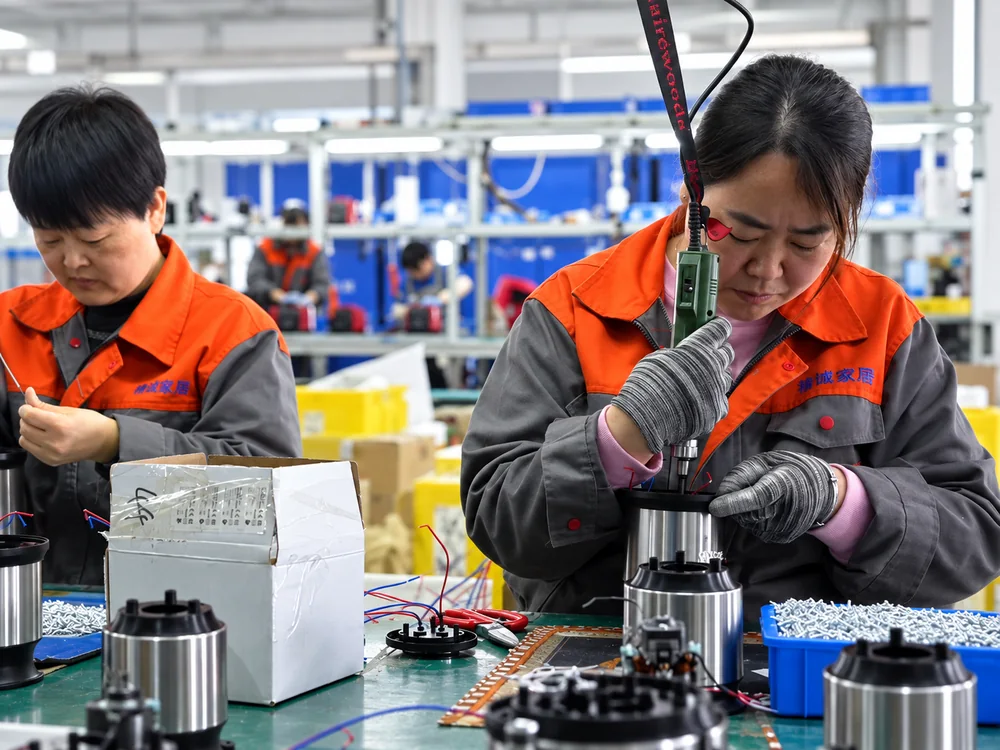
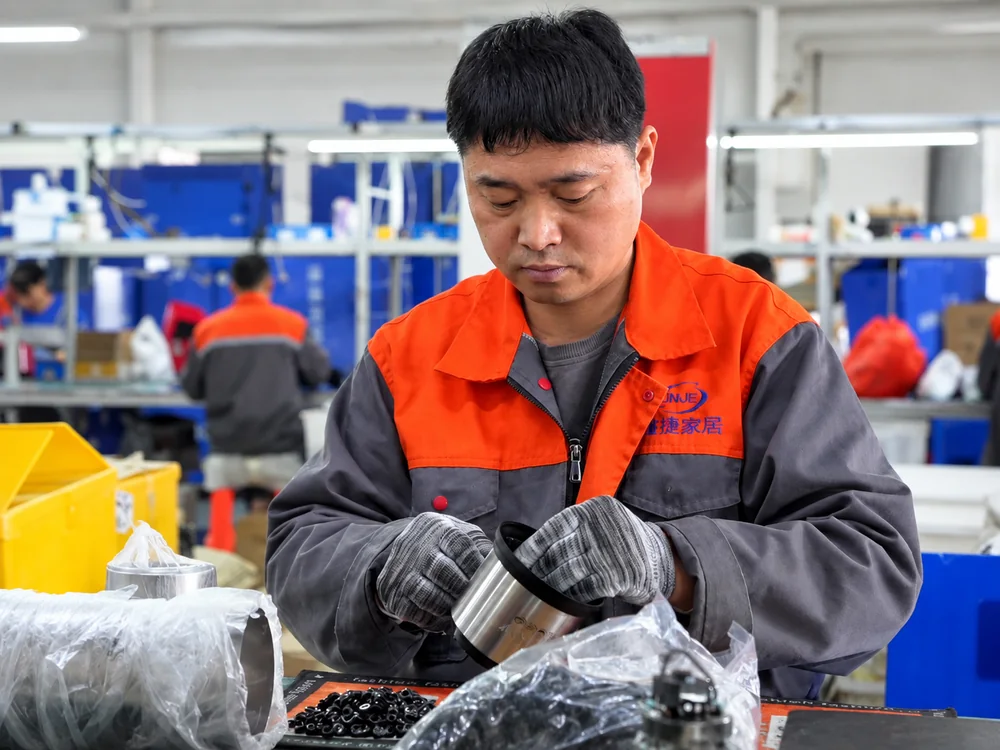
Use JINJIE's manufacturing workflow as a discussion reference for component preparation, assembly, checking and packing. Moving some work to another site does not make that work disappear. Determine where the relevant responsibilities sit in the proposed route without claiming that your site duplicates JINJIE's factory arrangement.
Order balanced quantities that can become complete products
Compare quantities by the number of complete appliances they support. A kit proposal may ship components in separate bulk packs rather than one box per finished unit. The receiving operation needs an agreed way to reconcile those quantities with the intended product count and identify any shortage before issuing material to assembly.
For a hypothetical example, assume each appliance needs one motor assembly, one matched bowl-and-lid set and one cutting assembly. A delivery containing one thousand motor assemblies, one thousand bowl-and-lid sets and nine hundred eighty cutting assemblies supports at most nine hundred eighty complete sets before other requirements are considered. The excess motors do not compensate for the missing cutting assemblies.
That example illustrates quantity balance only; it is not a JINJIE kit specification. The actual component list and quantity per appliance must come from the agreed model-specific proposal. Small fasteners or other required items also need their correct quantities where they form part of the supplied arrangement.
Keep any agreed extra parts separate from the base quantity. They may be intended for a defined purpose, but they should not silently hide an incomplete shipment. Ask how the offer distinguishes the ordered production requirement from additional material and how both are identified in the packing information.
Define receiving units. A count of bags, trays or cartons is not always a count of individual components or appliance sets. The documents should show the quantity basis clearly enough for your team to reconcile it. Where several packs together make one production quantity, retain their relationship through unloading and storage.
Consider the practical order of opening and issuing bulk packs. If one package contains components for several production batches, your site needs to preserve the identity and remaining quantity after it is opened. An outer carton label alone may not remain with material transferred to smaller containers. Ask the local team how it will maintain that connection.
For multiple electrical versions or colors, balance each version separately. A total quantity that looks correct can still leave one variant incomplete and another overstocked. Request the exact split and compatible part references. Do not assume visually similar assemblies can be exchanged to finish whichever order is more urgent.
If a shortage is found, identify the missing item, affected version and number of complete products held up. This is more useful than reporting only that the shipment is short by one carton. It lets both parties evaluate replacement, timing and any separately acceptable production quantity without guessing the commercial impact.
Prove the local route with a representative trial
Before a volume commitment, discuss a trial that represents the proposed supply condition and the receiving operation's actual work. A finished sample from the original factory can establish the intended product reference. It does not show that the local process can reliably turn the proposed kit into that product.
The relevant trial uses the agreed components, information and qualified local resources. Ask the technical teams what quantity and evaluation are appropriate for the decision. Avoid imposing a universal sample size without understanding the operations, or treating one attractive completed unit as proof of the whole arrangement.
Record where the trial encounters uncertainty. Missing information, a wrong identified component and a local workmanship issue require different responses. Preserve enough evidence for the responsible team to investigate, including the supplied version and the point at which the difference became visible. Do not decide the cause solely from which company last handled the product.
Agree what constitutes a successful trial before running it. The result should address the remaining operations and the finished product requirements relevant to the proposal. A trial that only demonstrates that parts can be placed together does not settle every functional or release question.
Use the quality and testing discussion to distinguish supplier-side checks from those required after local completion. A result on an earlier subassembly has a defined scope. Ask the responsible technical team which additional evidence is needed for the finished version and who will review it.
Keep powered operations within qualified procedures and properly equipped workplaces. Do not ask a purchasing employee to demonstrate exposed electrical parts or an uncovered cutting assembly for a video. The procurement decision concerns whether a suitable process and evidence exist, not whether someone can make an unfinished device run informally.
Include packaging in the trial when the local site performs final packing. The finished appliance, supplied accessories, instructions and protection must form the intended retail offer. Bulk component transport packaging is not automatically suitable as the customer's box or as final-product protection during distribution.
Resolve significant trial findings before treating the route as ready. A revised instruction may address one issue, while a changed component or process may require another review. Keep the accepted outcome with the kit definition so the volume order follows the trial result rather than the earlier proposal that needed correction.
Compare the cost of completed goods, not the kit price alone
Put a finished-goods offer beside the proposed SKD or CKD route on the same customer-product basis. Identify the work and expenses that move to the buyer. A comparison is incomplete if one side ends at packed appliances and the other ends at bulk components delivered for further work.
Request actual package measurements for the proposed supply split. Do not assume that disassembly produces a particular freight saving. Components may require separate protection, and the total shipment includes every pack needed to complete the agreed quantity. Evaluate the actual transport proposal rather than the visual impression of a smaller housing.
|
Cost or commitment |
What belongs in the comparison |
Question that prevents a misleading saving |
|---|---|---|
|
Supplier's offer |
Complete agreed kit contents and preparation |
Are any necessary items or services excluded? |
|
Transport and handling |
All component packs and destination movements |
Are we comparing the same quantity and delivery point? |
|
Local operations |
Agreed assembly, supervision, checking and packing |
Which work is new to the receiving business? |
|
Equipment and preparation |
Required resources and their cost basis |
Is the forecast large enough to justify this commitment? |
|
Unfinished inventory |
Material awaiting completion and product release |
How much cash remains tied up before goods can be sold? |
Separate recurring cost from initial preparation. A new fixture, training arrangement or other agreed setup item may require money before the first saleable unit is produced. Use a realistic quantity when allocating that cost for comparison. An optimistic annual forecast should not be presented as if those units were already ordered and completed.
Include the cost of coordinating two operations. Someone must reconcile material, investigate differences and maintain product information between the supplier and local site. That work may be manageable within an existing organization, but it should not be assumed to require no resources simply because it does not appear on the kit invoice.
Check any expected customs or tax benefit with the appropriate local adviser before using it in the business case. This article does not assign a classification, duty rate or local-origin status to a supply arrangement. The SKD or CKD label is not a substitute for advice on the actual goods and destination.
Test the commercial case at a lower completed volume as well as the forecast. If sales are slower or a required component is delayed, the local operation may hold unfinished inventory rather than saleable stock. Compare that exposure with buying a smaller or differently timed quantity of finished goods, where the supplier offers such an alternative.
Choose the route only when the supported customer offer, local capability and complete cost make sense together. A proposal can be technically possible without being the right commercial choice for a buyer's first order. Equally, an established qualified assembly operation may have a different cost and control position from a business starting from a warehouse alone.
Keep revisions and after-sales responsibility connected across sites
Use one accepted product and kit reference across the two operations. If the supplier changes an assembly or the buyer changes a locally sourced item, identify the effect on the complete product. A change at either site can create a new combination that was not represented by the agreed trial.
Define how proposed substitutions are communicated and assessed. Do not let local purchasing select a familiar-looking item merely because it is available sooner. The relevant technical reviewer needs to determine whether the alternative meets the agreed requirement and what further evaluation or document update it needs.
Retain the relationship between incoming components, local completion batches and finished product identity at the level the agreed process requires. When a problem appears after sale, both sides need enough information to identify the affected version. A single undifferentiated record of all kits ever purchased may not support that investigation.
Discuss the response to an after-sales issue before the first volume shipment. Who gathers the product information? Who investigates the supplied assembly and local work? What remedy can each party offer under the agreed commercial terms? Do not assume that the factory's finished-goods arrangement automatically applies unchanged to locally completed appliances.
Keep fault findings separate from responsibility assumptions. A customer return after local assembly does not establish that local work caused it, just as a supplied component does not automatically make every later issue the supplier's responsibility. Ask for an investigation tied to the actual product and evidence before assigning a remedy.
For repeat orders, review both the kit and the local process. An unchanged purchase description can conceal a new local material, revised instruction or different supplied assembly. Maintain the accepted relationship so the next order reproduces the intended customer product rather than merely repeating the same abbreviation on an invoice.
Discuss a model-specific supply proposal
Contact JINJIE with the reference appliance, intended supply condition, destination, quantity and local work your operation can perform. Identify the technical resources and support you expect to need. Ask for the proposed split, complete contents, responsibilities and trial route before comparing the offer with finished-goods supply.
FAQ
Can a complete appliance sample also represent the shipping condition of an SKD order?
It can represent the intended finished product, but the proposed shipping condition needs its own description and review. Ask which assemblies arrive complete, which items arrive separately and what packaging identifies the quantities. Keep those two references linked without treating them as the same evidence.
Can we source a missing component locally to keep production moving?
Only after the relevant technical and commercial review accepts the proposed item. Identify its specification, compatibility and any evaluation needed. Availability alone does not establish that a substitute belongs in the agreed appliance, even when its appearance seems similar.
Does ordering CKD mean the supplier will provide training or equipment?
Not automatically. Ask which support and resources are included in the actual proposal and which your business must arrange. A commercial label does not define a complete service package. Resolve any critical support gap before committing to operations your site cannot yet perform.
Should we start with one product or several local assembly variants?
Choose a scope the qualified local operation can identify, complete and check consistently. Several variants may be justified, but each needs balanced material and clear references. Compare their preparation burden with the customer value rather than assuming that a shared appearance makes the additional work negligible.