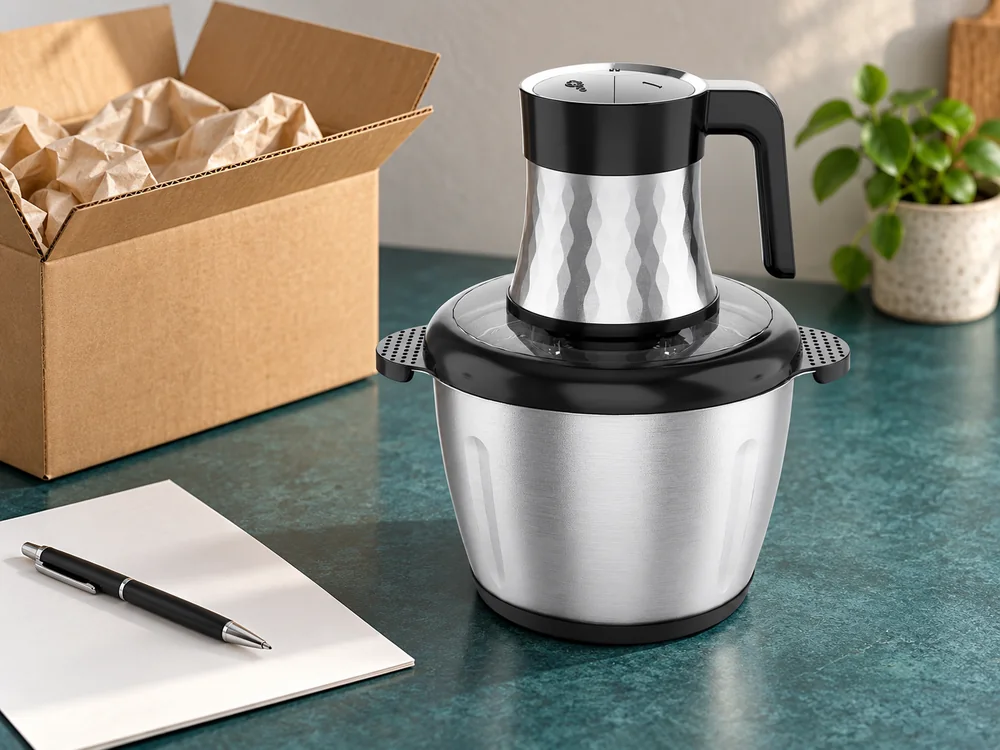
A retailer sees more choppers coming back and asks the factory to change the product. Yet the increase may include duplicate service tickets, refunds without a returned unit and sales from an earlier promotion. Before committing to another order, the buyer needs to establish what happened to which appliances and what the finding actually supports.
Small appliance returns analysis should lead to a purchasing decision. It can justify investigating an identified product issue, correcting an inaccurate retail description, changing an agreed presentation or continuing a defined replenishment. A total return count cannot choose among those actions by itself.
This guide is for household appliance importers and private-label retailers reviewing their own customer records. Its calculations are invented examples, not JINJIE return rates. Possible safety concerns require prompt handling through the responsible technical and market-safety route. Do not wait for a monthly commercial report or a high complaint count before escalating a potentially serious issue.
Decide which commitment the review needs to inform
Start with the open purchase. Is the business about to repeat the same configuration, increase the quantity, add a channel or replace a product? The analysis should identify what would change that decision. Collecting every available metric without a named next commitment makes it easy to confuse an interesting pattern with a purchasing reason.
A repeat order needs evidence about the actual supplied version and its customer use. A proposed new configuration needs a comparison with what is changing. A new channel may introduce different expectations, instructions or delivery handling. Keep these questions distinct even when the same appliance appears in each.
Record the decision date and the information available by then. Some customers have owned the latest units for only a short time. Earlier units may have much longer exposure. The buyer can make a limited decision with that uncertainty visible rather than claiming the newest stock has proved a lower long-term return rate.
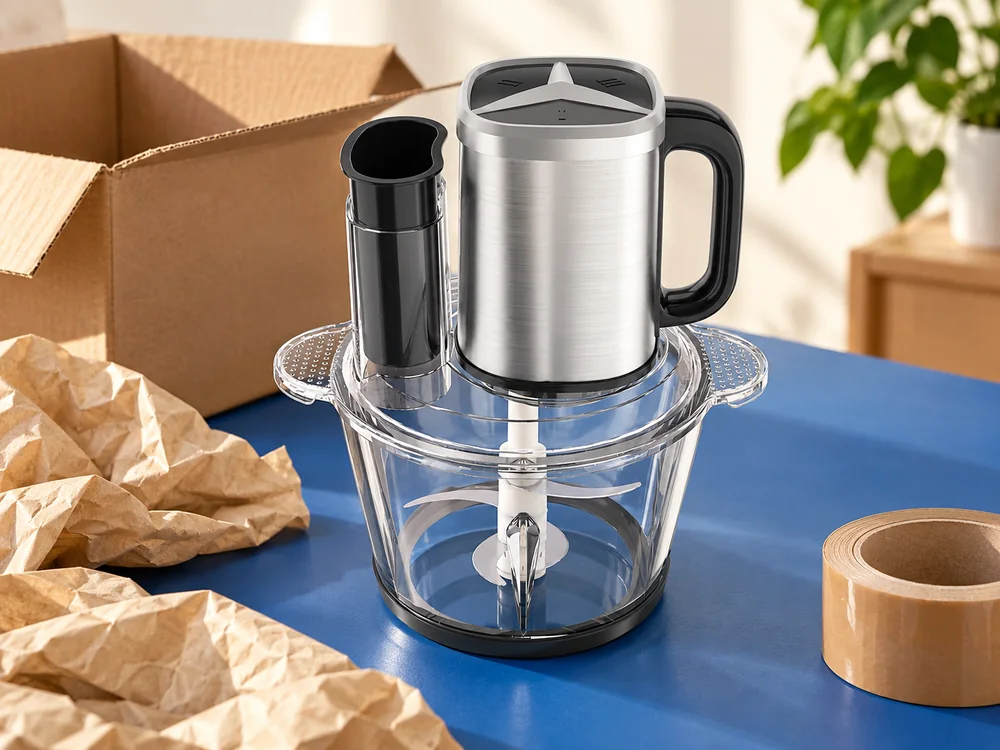
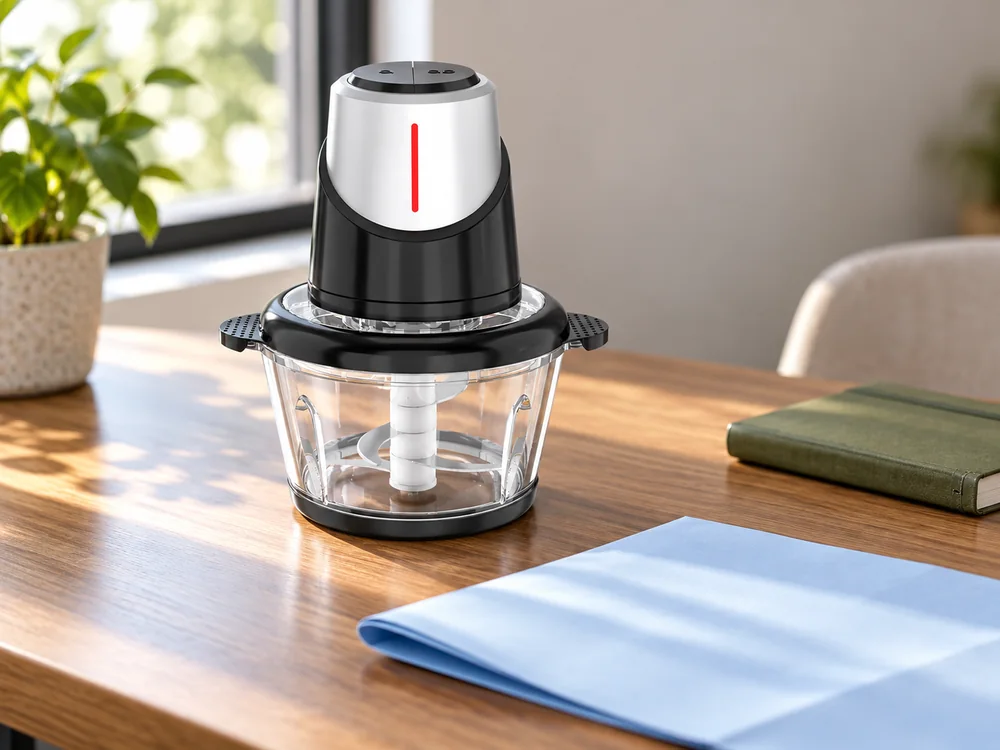
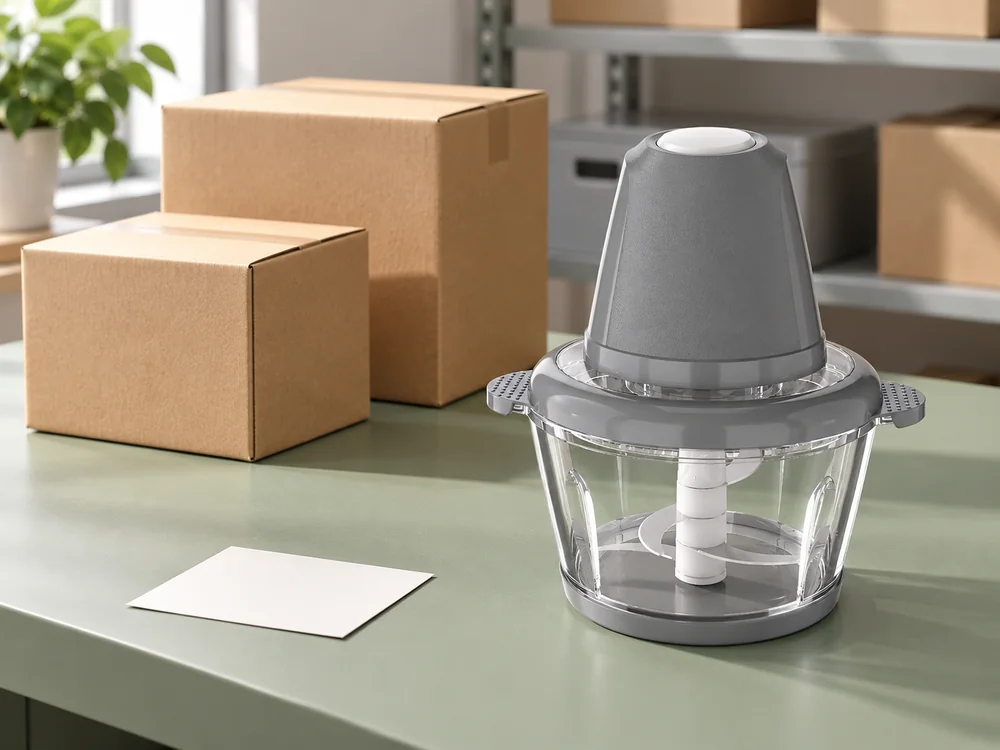
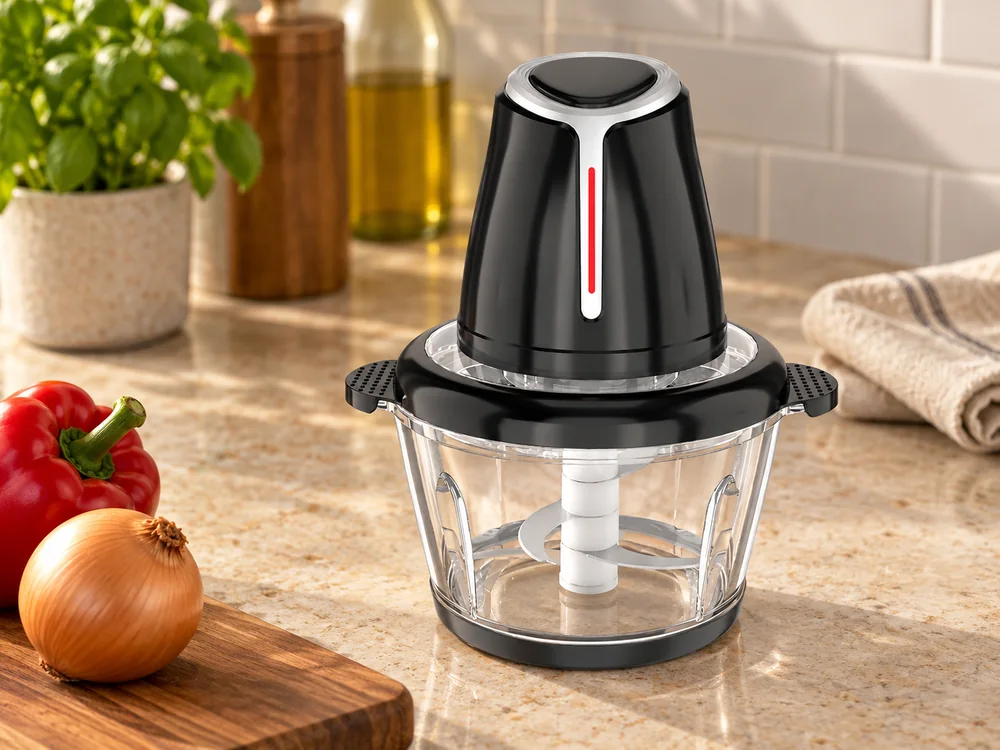
Use the JINJIE electric chopper range to identify a complete product proposal. The quotation lists SD-04 with a nominal 2 L glass bowl, 400 W and digital controls. Keep that reference with the actual market version and supplied set; a similar-looking photograph is not sufficient to assign another model’s customer records to it.
Separate the customer case, physical unit and financial transaction
One appliance can create several contacts. A buyer might open a return request, send two messages and later receive a refund. Counting all four events as four returned units would distort the review. Preserve a case identity and connect the events to the product quantity involved.
Likewise, money moving back to a customer does not always mean an appliance physically came back. A partial adjustment for a missing item, an order cancellation and a refund for one returned unit have different meanings. Keep financial remedies useful for cost analysis without using them as an automatic count of product faults.
Shopify’s official reporting guidance distinguishes returns from refunds and explains that report dates and grouping can change the totals shown. The practical lesson is to understand the fields in your own system before comparing exports. A finance report and a unit-return report may both be correct while answering different questions.

Record the number of appliances involved, whether they were received back and whether a finding has been established. An unopened change-of-mind return may be a real commercial cost without establishing a functional problem. A complaint awaiting examination remains a reported condition, even when the retailer has already settled the customer remedy.
Preserve the original customer description beside any standardized category. “Does not work” could describe different observations that need different follow-up. A short category helps grouping, but deleting the actual account can remove the detail needed to decide whether cases are comparable.
Keep reported reasons distinct from confirmed findings
Use categories that match the appliance purchase: customer preference, presentation mismatch, missing supplied item, transit condition, reported performance concern and possible safety concern. These are starting points for review, not a diagnosis. Allow an unresolved category instead of forcing every case into a confirmed cause.
Shopify’s category-specific return reasons illustrate why consistent descriptions can support inventory and product decisions. A retailer can apply the principle with its own records without needing that particular platform. The same reason should mean the same thing across stores, channels and reporting periods.
Retain two separate fields when necessary: what the customer reported and what the qualified review found. A customer reporting a broken component may be accurate, but the available information may not establish when or why the damage occurred. An examination can add a finding without rewriting the earlier report as though the cause was known from the start.
For a missing-item case, compare the received set with the agreed complete offer. Determine whether the item was included, optional or merely shown in a photograph. A complaint can reveal an inaccurate product page, a packing difference or incomplete customer information. Those possibilities lead to different next-order actions.
| Record in the return review | Keep separate from it | Purchase question it can inform |
|---|---|---|
| Customer’s reported reason | Confirmed technical cause | Which focused investigation is needed |
| Returned appliance quantity | Number of messages or refunds | How many identified units are involved |
| Physical condition when received | Assumed origin of damage | Whether handling, packing or product review is needed |
| Supplied model and version | Generic family name | Which proposed replenishment may be affected |
| Customer remedy and cost | Future prevention | Whether the commercial offer remains viable |
| Unresolved observation | Confirmed inability to meet a requirement | Which dependent decision remains on hold |
Compare sales groups with meaningful exposure
A monthly return count divided by that month’s sales can be misleading when returned appliances were sold earlier. Separate a reporting-period workload measure from a sales-group measure. The first helps staff plan handling; the second helps a buyer understand the experience of a defined group of sold units.
For an invented example, 18 identified returned units from 600 sold units equal an observed 3%. Another group with 12 from 200 equals 6%. The second group has fewer returned units but a higher observed proportion. Neither percentage is automatically a manufacturing defect rate or an industry benchmark.
The groups also need a stated observation basis. If the first has been with customers for six months and the second for two weeks, their percentages do not represent comparable exposure. Product versions, channels and return policies may differ as well. Make the comparison narrower before treating the change as a product trend.
Show counts beside percentages, particularly for small groups. Two cases from 20 sales give 10%, but the review has only two cases to explain. That may justify urgent action for a serious finding or focused follow-up for another concern. It does not establish a stable future percentage merely because the arithmetic is exact.
Preserve the date on which the review was extracted. Later reports can add cases to an older sales group. If the business refreshes its analysis, retain enough identity to distinguish a developing result from a change in definitions or a corrected duplicate.
Group the data around plausible purchasing differences
Split the records first by the differences that could change the proposed purchase. Actual model, configuration, market version, channel and supplied presentation are usually more useful than broad labels such as premium or economy. Avoid creating dozens of tiny groups with no decision attached.
Compare one difference at a time where the records permit. If a retailer changes the appliance, manual and delivery partner together, a later change in returns cannot be assigned to the appliance alone. The next purchase may still need a practical adjustment, but the explanation should acknowledge which causes remain unresolved.
Look at the customer’s intended task. If several customers expected a use that the product was never offered to support, review the retail promise and whether the selected appliance suits the target audience. Removing an inaccurate claim is different from making a supported product less useful. Do not compensate by inventing new performance promises.
Use the JINJIE OEM and ODM discussion when the evidence points toward a proposed configuration or presentation change. Describe the observed purchasing problem and ask what available options could address it. A requested change is not an accepted manufacturing solution, and a changed component can require a separate product evaluation.
Keep the existing customer obligations visible while reviewing future supply. Better instructions for the next order do not settle a complaint from an earlier customer. An approved new presentation should not be recorded as though all old stock has already received the update.
Ask the factory a focused question supported by identified cases
Send a concise group of relevant cases with product identity, observed condition and the reference used. Explain whether you need help interpreting a functional observation, comparing a received set or evaluating a proposed change. A large spreadsheet without that question can slow the useful review.
Choose examples that represent the pattern and preserve exceptions. If most cases concern one supplied version but one concerns another, identify the difference. Do not remove inconvenient cases simply to make the explanation cleaner. Equally, do not assume a single unusual case proves that every product in the family has the same problem.
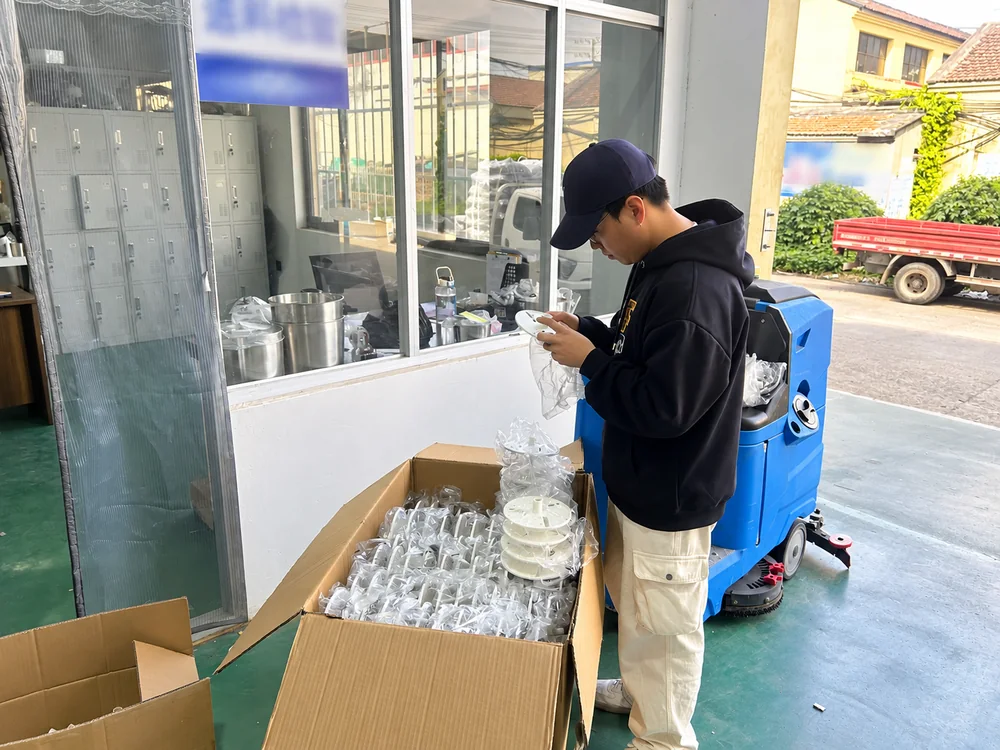
Ask what examination or other evidence would resolve the uncertainty and who can provide it. Returned goods may require a qualified review under an agreed handling route. Customers should not open electrical assemblies, bypass controls or repeat an unsafe event to create better evidence for purchasing.
The JINJIE quality and testing overview can start a product-specific discussion. It is not evidence that these hypothetical returns have occurred or that a particular cause has been confirmed. Compare the response with the identified requirement and the purchasing question, rather than with the number of instruments in a general factory photograph.
Missing evidence calls for a defined follow-up and a hold on the conclusion that depends on it. Confirmed inability to meet a mandatory requirement can justify a different offer. Keep those states separate so an unfinished investigation does not become an automatic rejection or an unsupported approval.
Calculate the commercial consequence without mixing incompatible costs
Use the actual consequence of each case. A replacement appliance, a partial credit, local handling and two-way freight may occur in different combinations. Add recorded costs on a defined basis, avoiding duplicate amounts already included in another line.
In an invented planning example, 10 cases cost USD 28 each to resolve and another eight cost USD 6 each. Their recorded resolution cost is USD 280 plus USD 48, or USD 328. Dividing by 600 sold units gives approximately USD 0.55 per sold unit for these recorded costs. It does not include every future case or every possible service expense.
If an unconfirmed estimate for eight unresolved cases is added, show it separately from the USD 328 already recorded. Replacing actual and estimated figures with one unlabeled total makes it harder to see what the purchase decision depends on. Update the estimate when those cases are resolved.
Compare the consequence with the proposed next-order contribution on the same cost basis. A lower unit quotation may leave less commercial value if an identified presentation mismatch creates more handling. Conversely, an expensive product change may not address the documented reason customers return the appliance. Use the calculation to choose the next investigation or offer, not to assign blame from a margin figure.
Turn the pattern into one scoped next-order action
A useful analysis names the result, the uncertainty and the next commitment it affects. The answer might be to continue a limited repeat order with the present scope, correct the retail description before launch, request an identified investigation or evaluate a changed offer. Avoid reopening every settled feature because the total return count increased.
Where a cause is established, carry the relevant action into the actual purchasing references. If the agreed supplied item changes, update the complete offer. If the public description changes, identify where it must appear. If goods need a separate stock decision, give that decision its own scope and owner.
| Finding after review | Next-order decision to consider | Evidence still needed |
|---|---|---|
| Counts include duplicated contacts | Correct the analysis before changing the order | Reconciled unit identities |
| Returns concern an inaccurate retail promise | Correct the promise and review the intended audience | Current approved product scope and channel content |
| Identified supplied-item mismatch | Resolve affected sets and carry the agreed content into replenishment | Relevant corrected-set and next-order references |
| Functional observation remains unexplained | Hold the dependent increase or change | Focused qualified investigation |
| Mandatory requirement cannot be met | Select another supported offer | Current alternative proposal |
| Records support the existing offer with stated limits | Continue the defined commitment | Current commercial and product conditions |
Review later results without claiming success too early
Define what a proposed action should change. A clearer contents photograph should address a contents expectation, not promise to reduce unrelated transit damage. A different packaging proposal needs the relevant assessment before its effect is credited. The follow-up should examine the question the action was intended to answer.
Use identifiable later sales groups and comparable observation periods where possible. Preserve changes in channel, promotion or policy. A lower early count can be encouraging without proving a lasting reduction or establishing that one action caused it.
Keep unresolved cases available for the next review. Do not reset the record simply because a new purchase has been placed. At the same time, stop demanding additional analysis when the identified purchasing question is settled and no new material issue has appeared.
Discuss a defined product question with JINJIE. Share the model, proposed repeat order, anonymized observations and the decision you need to make. Ask for the relevant review route or available revised offer; do not present a generic return percentage as a confirmed product diagnosis.
FAQ
What if the retailer cannot connect a return to its original sale?
Keep the case useful for handling and investigation, but mark its sales-group identity unresolved. Do not silently add it to the latest cohort. Improve identification for future records and state which comparisons remain incomplete.
Should change-of-mind returns be excluded entirely?
Not from commercial cost analysis. Keep them separate from established product findings. They may help evaluate presentation, audience fit or channel economics without proving a manufacturing problem.
Can a small number of complaints justify a purchasing hold?
Yes, depending on the consequence and requirement, not a universal numerical threshold. A possible safety issue needs prompt escalation. For other unresolved matters, define which commitment depends on the answer instead of automatically stopping unrelated purchasing.
What if the factory cannot reproduce the reported condition?
Record that result with its actual product and assessment conditions. Compare it with the customer observation and determine what remains different or unknown. An unreproduced report is not automatically a confirmed defect or proof that the original observation was false.