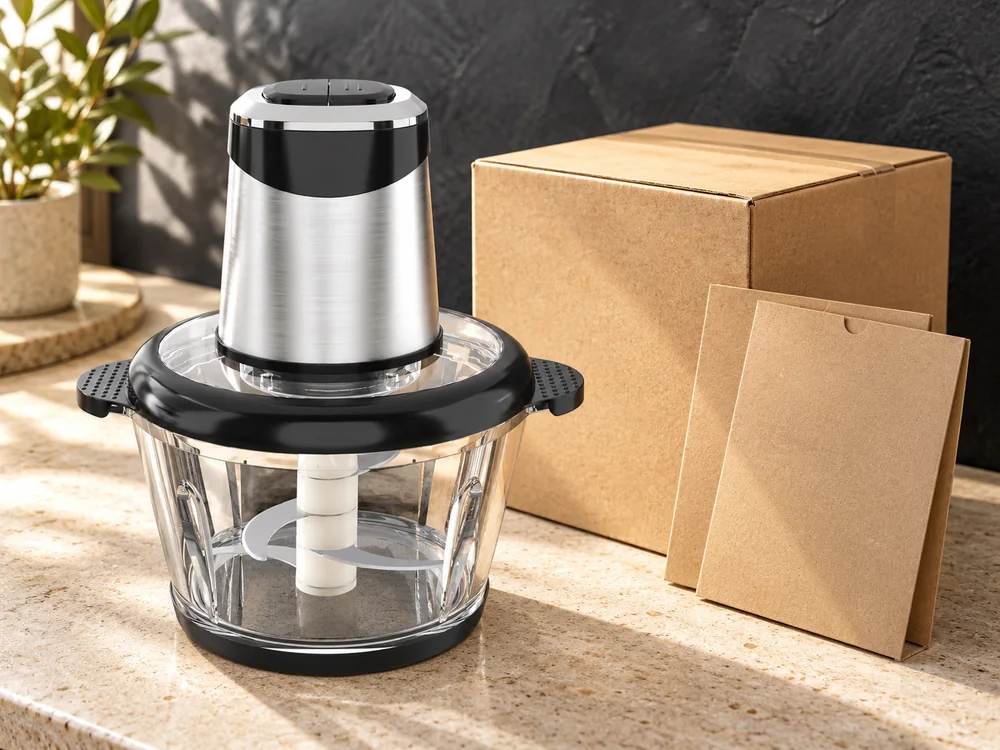
One supplier offers finished appliances in small replenishment quantities. Another proposes a branded production order with a lower unit price and a larger commitment. Both might suit the same retail category, but they solve different buying problems. A buyer needing stock for next month’s sales should compare them differently from a brand developing a continuing product line.
When comparing small appliance wholesale suppliers, identify whether the proposal concerns existing finished goods, an appliance to be produced for your order or a combination of the two. Match the route to the customer offer, useful arrival, full cost and repeat-supply requirement. The preferred supplier is the one whose actual proposal fits that task, not automatically the company described as factory-direct.
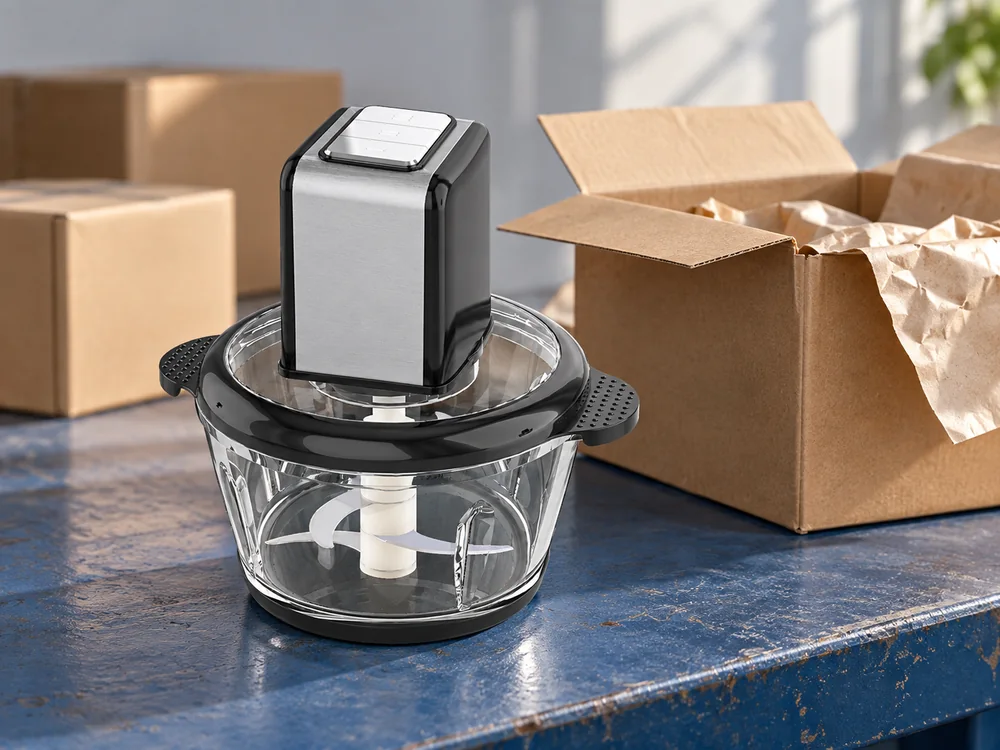
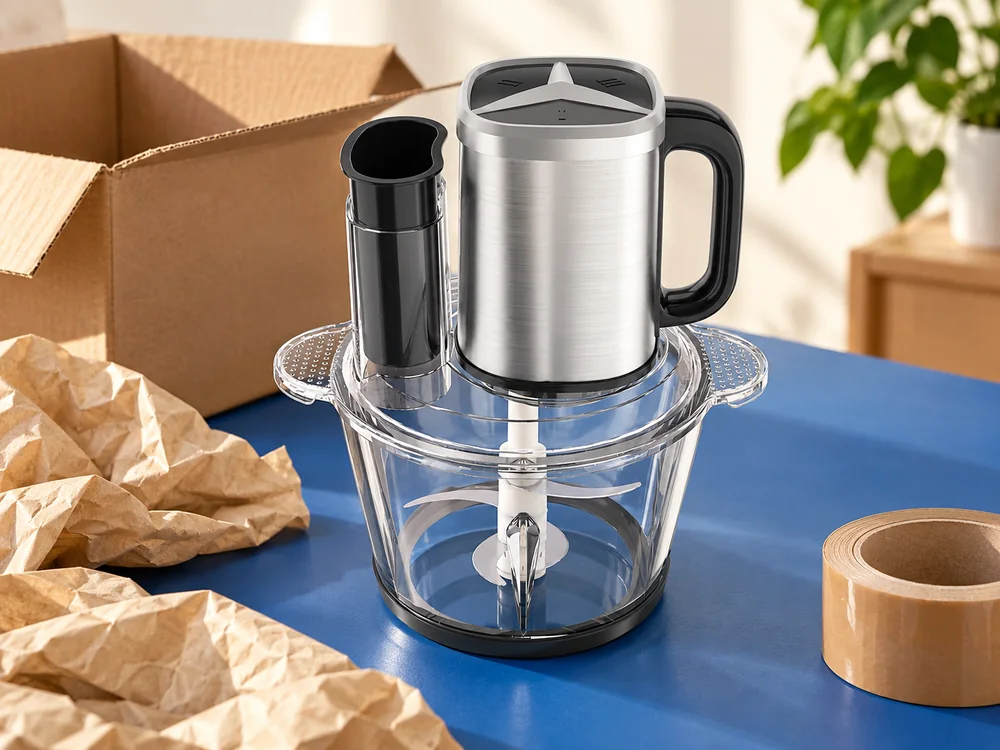
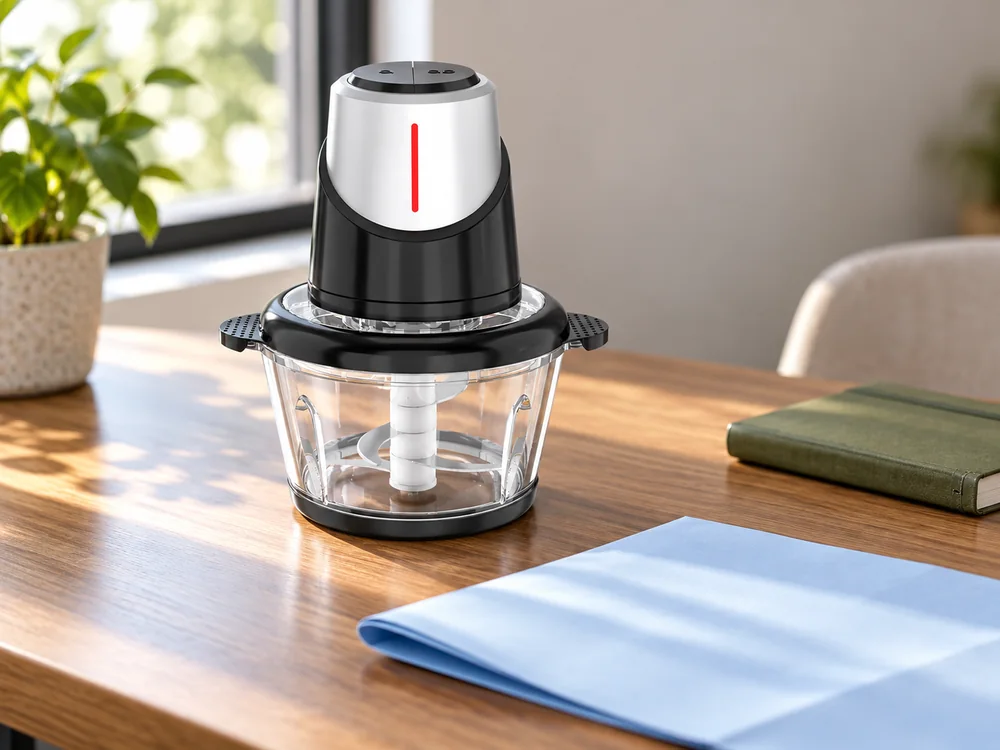
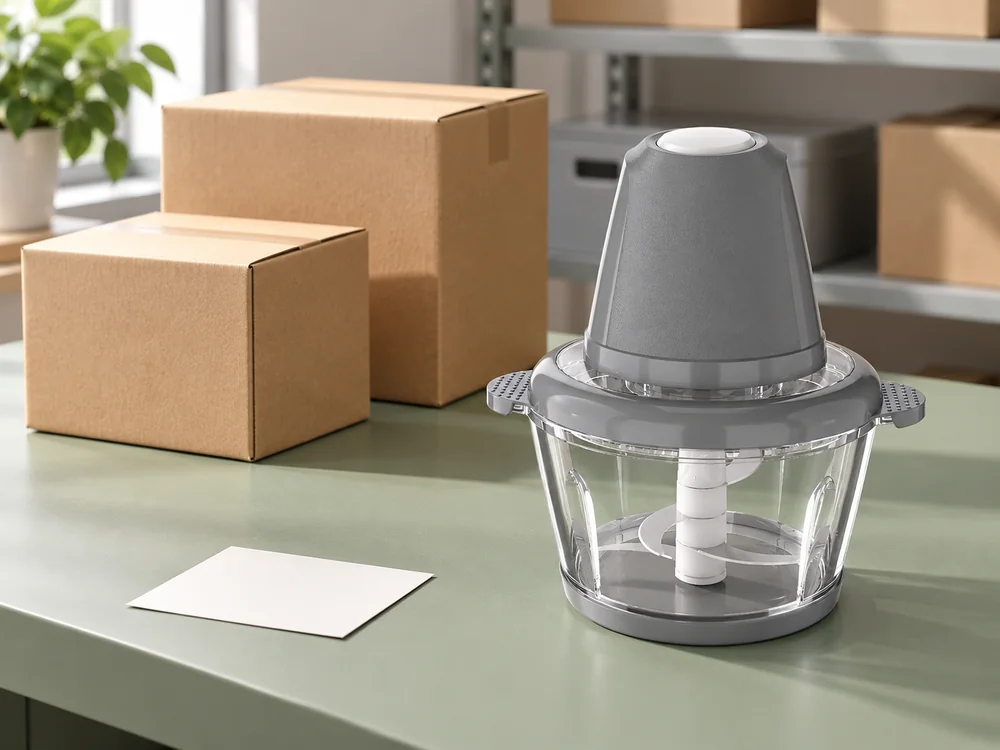
This comparison focuses on household food-preparation appliances relevant to JINJIE, including bowl choppers and countertop blenders. JINJIE’s current stock, minimum quantities and preparation dates need a product-specific response. This article does not advertise a ready-stock program or list approved third-party wholesalers.
Choose the buying task before the supply route
For urgent replenishment, the buyer needs an identified product that can enter its sales channel in time. Additional branding may be less useful than a suitable existing presentation and a confirmed quantity. A current-model production offer can still be considered if its complete delivery sequence fits, but the factory label does not create immediate stock.
A private-label launch has another requirement. The product, supplied contents, brand presentation and supported market version need to form a coherent retail offer. Existing goods may answer that need, require available preparation or be unsuitable for the intended identity. Compare what can actually be changed before choosing the faster-looking proposal.
Write down what cannot change: the customer task, destination version and essential contents. Then separate preferences such as an optional color or decorative package. This gives you a fair way to assess a stock proposal against an OEM alternative without treating every difference as either unacceptable or irrelevant.
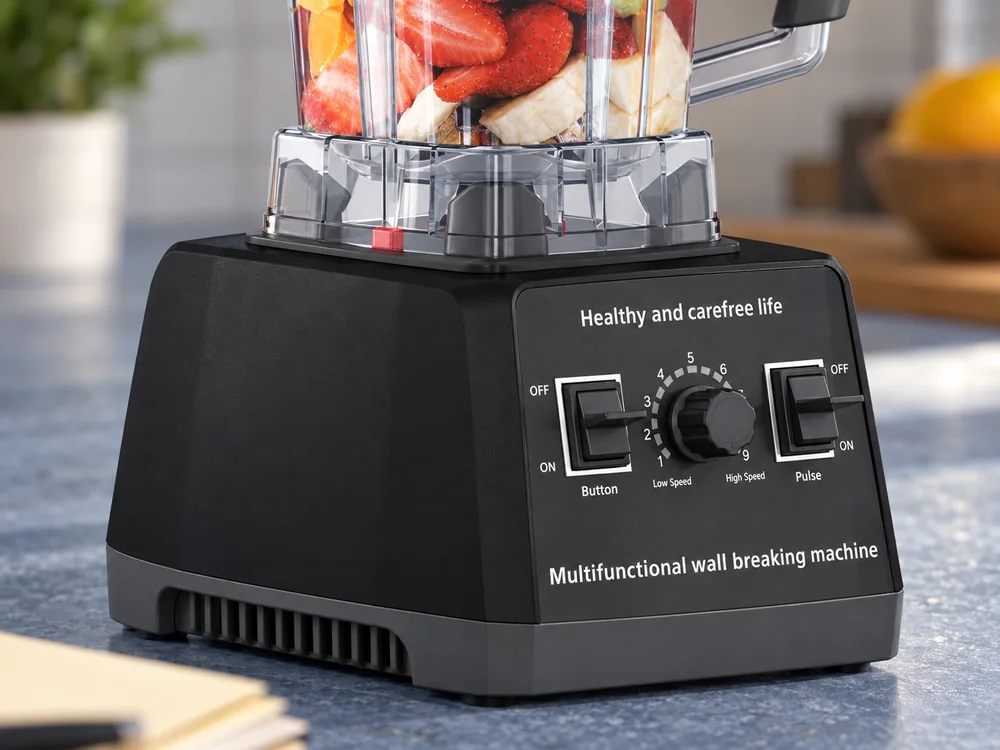
Use the JINJIE countertop blender category to identify the appropriate format. PBJ-01 is listed in JINJIE’s quotation with a nominal 2 L PC vessel and 1200 W. It is a specific product reference, not a ready-stock statement or a guarantee of a particular blending task. Obtain the supplied configuration and operating information for the version under discussion.
Consider your team’s remaining work. A locally obtainable complete product may remove some import coordination but leave brand and support questions. A manufacturer proposal may give access to product preparation while requiring more buyer decisions before sale. Compare those actual work packages rather than assigning a fixed advantage to either business type.
Establish what the word stock means in the proposal
Ask which exact finished units are available for your purchase and where they are held. A catalog listing, component balance or photograph of cartons is not an allocation. The seller should identify the configuration, condition, quantity basis and proposed release arrangement that belong to its current offer.
Separate finished, saleable units from goods awaiting preparation. An appliance can be assembled while still requiring matched contents, instructions, marking or retail packing. Ask what remains and who performs it. The route is useful when that work has a feasible answer, not merely when the motor base is already present.
Obtain the offered condition explicitly. New stock, display units and customer-return goods are different purchases. If a seller offers mixed-condition inventory, the buyer needs a lot-specific description and a channel that can responsibly sell it on that basis. JINJIE’s household OEM discussion should not be read as an offer of returns, clearance lots or used appliances.
Ask whether one order line contains the same configuration throughout. A product family can have similar-looking controls or vessels without forming one interchangeable retail SKU. Where an offer contains different versions, identify each and decide whether your receiving, listing and support processes can handle that mix.
Stock information is useful at a defined point in time. Ask how the seller will reconfirm or allocate the proposed quantity before you rely on it. Do not assume a nonbinding availability reply reserves goods. Equally, an outstanding allocation answer is a question to resolve, not evidence that the seller has no stock.
| Proposed supply basis | What the buyer is purchasing | Question that determines usefulness |
|---|---|---|
| Existing complete finished goods | An identified quantity in its offered condition and presentation | Can those units serve the channel by the useful date? |
| Finished appliance awaiting retail preparation | Existing product plus specified remaining work | Who completes the missing work, at what scope and timing? |
| Current model produced to order | A defined build and complete retail configuration | Does its commitment fit the launch or replenishment plan? |
| Changed OEM product | An appliance requiring agreed product work | Is the change worth its development and buying exposure? |
| Mixed finished-stock offer | Several identified versions or conditions | Can each line be received, described and supported accurately? |
Check how far the existing offer can be adapted
Start with the current presentation and compare it with the intended sale. Identify the existing product identity, instructions, packaging and supplied contents. Determine whether the goods are suitable as offered before asking for changes that could erase the proposed route’s timing benefit.
Branding is not simply a request to put another logo on any finished unit. Ask what rights and preparation the seller can provide for its actual offer. Keep a resale purchase of existing branded goods distinct from a private-label proposal. Do not assume ownership of stock permits another brand’s marks or required product information to be replaced.
Use JINJIE’s OEM and ODM discussion for available platform branding and proposed product changes. Ask whether your requirement can use the current configuration or needs further work. A new panel, vessel or electrical version can change the supply basis even when the outer housing looks familiar.
Confirm the complete contents after the proposed adaptation. A cheaper stock offer with fewer tools may still be suitable, but it is a different customer purchase. Compare what the customer receives and the work your channel must perform. Adding an unconfirmed accessory from another source does not turn it into a matched manufacturer-approved set.
If the product’s existing presentation meets the channel need, retain it unless a change has a clear commercial purpose. If essential presentation is missing, obtain a complete revised offer. Do not budget for buyer-side relabelling or repacking as a trivial task before the responsible parties have assessed what it involves.
Compare the complete landed and saleable cost
Use the same cost boundary for both proposals. Include the identified goods, required preparation, movement to the chosen receiving point and any channel work needed before sale. A quotation at the factory and one delivered to a local warehouse cannot be compared as though their remaining responsibilities are identical.
Separate per-unit cost from the quantity committed. Suppose, solely as an invented example, a finished-stock offer is 100 units at a complete compared cost of 24 each. A production offer is 500 units at 18 each plus 600 of preparation work. The former commits 2400. The latter commits 9600, or 19.20 per ordered unit on those assumptions. Other costs are included only if the example’s compared boundary already covers them.
The production option has a lower unit basis but requires 7200 more and 400 additional units. That can be useful with adequate demand and funding. It can also be excessive for a retailer needing a short replenishment of 100. These quantities and costs are hypothetical, not JINJIE terms or a claim that stock offers always permit smaller purchases.
Compare the value of the extra inventory, not just the apparent saving on the first hundred units. If demand is uncertain, show how much money remains tied up after the opening sales. Include the work of storing and later selling that balance. Expected future revenue is not cash already available for the purchase.
A repeated smaller stock purchase may cost more per unit but reduce the current commitment. Ask whether its future availability and terms support that plan. It is not a valid comparison to assume unlimited replenishment at today’s price while treating the production order as fully committed.
Include your own administration and preparation where material. Several small receipts can require more receiving work; one larger order can require more storage. Use the actual business arrangement rather than an invented universal fee. The useful comparison should make the different retained work visible without burying it in a vague convenience premium.
Make arrival and availability comparable
Define when your business needs saleable goods at a named point. Then ask each seller how its proposal reaches that condition. Local stock, overseas finished goods and an OEM build have different sequences, but any route can fail a deadline if the remaining work is ignored.
A stated dispatch date needs its starting conditions. Ask what must be accepted or paid, which preparation remains and what movement the seller is quoting. Treat onward transport and destination receiving as separate responsibilities when they are outside that scope.
Keep the confirmed quantity beside the date. A supplier able to release part of your requirement may have a useful offer, provided the smaller allocation has a purpose. Compare it with the cost and work of another receipt. Do not let one available carton stand in for an entire stock requirement.
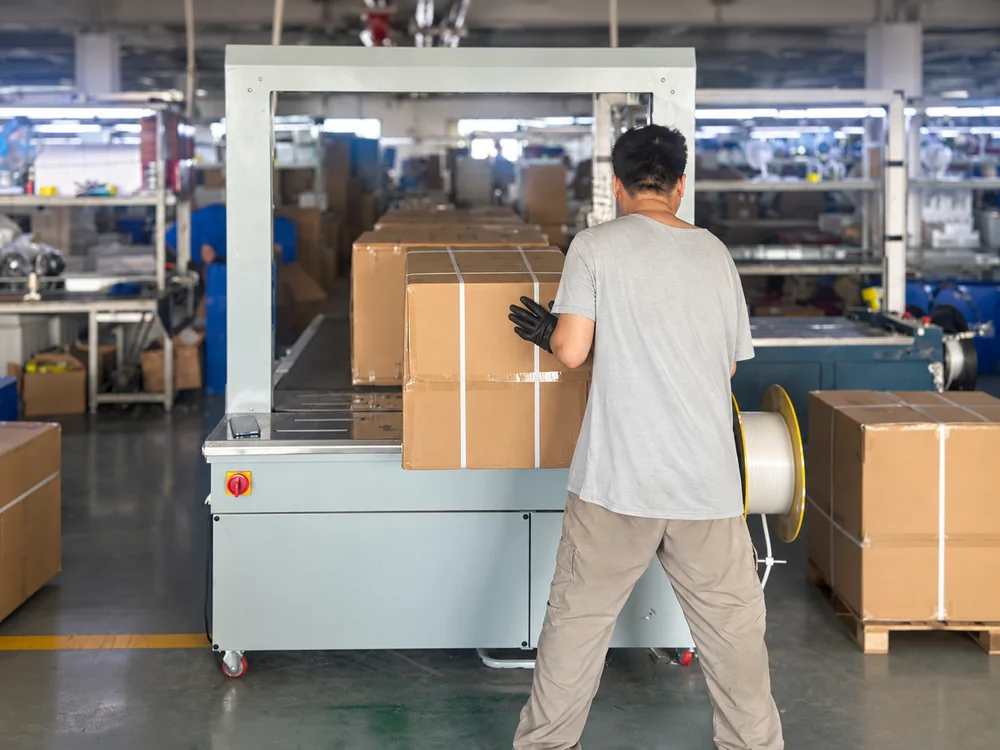
Avoid using a general warehouse or assembly image as proof of your order’s readiness. The JINJIE manufacturing overview provides process context. Current availability, preparation and release need the response for your selected model and complete configuration.
Where a deadline is mandatory, a confirmed failure to meet it changes the proposal’s value. A pending answer requires clarification and a held dependent commitment. Keep those states distinct. The buyer can pursue an alternative while waiting without declaring an unanswered offer technically unsuitable.
Decide whether the route supports a continuing SKU
A one-time stock purchase can be useful for a bounded allocation or demand test. It should not automatically become a permanent listing. Ask how the seller would respond to a repeat requirement and whether the same complete offer is expected to remain available.
For an existing brand, establish what sales and support information belongs to that specific purchase. Product responsibility, return handling and any warranty arrangement depend on the offer and applicable channel requirements. A logo on the appliance does not tell you which seller will handle your order problem.
For a private-label line, keep the approved configuration and presentation identifiable between purchases. A manufacturer may offer a continuing platform, but current components, quantity conditions and timing still need a repeat proposal. Continuity means an understood change route, not a promise that no detail will ever change.
Separate a stock trial from the product you intend to manufacture later. If the trial uses another vessel, control format or brand proposition, its sales may not validate the later offer. Record which commercial question the trial answers and which product selection remains open.
Consider a transition only where the goods and customer promises can remain clear. A channel can sell down an existing stock SKU before introducing a new private-label SKU, but should not use the same listing indiscriminately for different complete products. Identify the receiving and customer-support consequences before treating the sources as interchangeable.
Select the proposal, not the supplier label
Compare the product match first, then the complete commitment and usable date. A stock seller can offer unsuitable goods quickly; a manufacturer can offer a suitable product too late for the immediate task. Neither advantage should be decided without the actual proposal.
| Buying situation | Route worth evaluating | What would change the decision |
|---|---|---|
| Defined short replenishment with usable existing presentation | Current finished-stock offer | Unavailable allocation, wrong version or unsuitable condition |
| Continuing private-label line with accepted demand | Defined platform production offer | Excessive commitment or missing essential product support |
| Brand preference is optional and timing is tight | Suitable unchanged offer | Required channel identity cannot be met as offered |
| Product change is central to the customer purpose | Supported OEM work | Change proves infeasible or cannot fit the business case |
| Demand test followed by a different planned product | Separate bounded trial and later proposal | Trial results do not answer the later purchase question |
Choose an explicit next step. Request a current stock allocation, clarify remaining preparation or commission a sample for an open selection question. After selection, final approval samples may still be needed for the agreed configuration and presentation. The next action should improve the actual purchase rather than expand a supplier comparison indefinitely.
Ask JINJIE for the supply basis of your selected appliance
Send JINJIE your wholesale requirements with the household product reference, destination, complete contents, quantity and useful receiving date. Identify what presentation can remain standard and what must be branded or changed. Ask which current supply route is available and request its full commitment and preparation scope before comparing it with other offers.
FAQ
Can a manufacturer also supply existing finished stock?
It can be one possible offer, but availability is not established by the company description. Ask for the current finished quantity, version and release conditions. Compare that proposal as stock supply rather than applying an assumed production schedule to it.
What if the lowest-cost stock offer is overseas?
Compare the complete route to your receiving point, including the actual movement and preparation responsibilities. Finished stock overseas is not the same as saleable stock locally available. Keep the proposed quantity and useful arrival attached to the cost comparison.
Can one supplier provide standard goods first and a private-label version later?
Ask for two clearly identified offers and the transition work. The arrangement may be useful when the standard product has its own channel purpose. Do not promise that the first stock validates every feature, presentation or commercial condition of the later version.
What if another seller’s small quantity fits but JINJIE’s proposed order does not?
Compare the suitable complete offers on their actual terms. You can ask JINJIE about available alternatives, but no smaller quantity should be assumed. If the current proposal exceeds your stock or funding limit, retain it for a different requirement rather than increasing the present demand estimate to justify it.