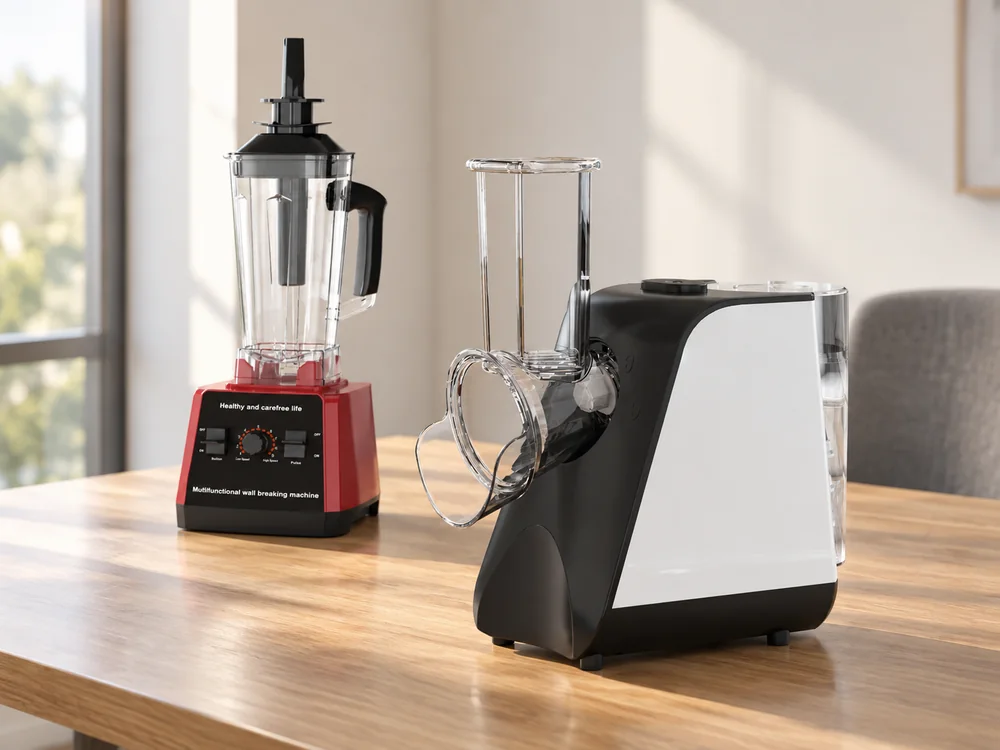
Buying several kitchen appliances from one manufacturer can reduce the number of product discussions your team has to coordinate. It can also tie several launches to a supplier whose strongest product fits only part of your range. The useful question is how much of the proposed assortment belongs with that manufacturer, rather than whether one company can fill an entire catalog.
A small kitchen appliance OEM manufacturer should be assessed against the products you intend to sell under your brand. For a food-preparation range, a bowl chopper, countertop blender and handheld blender have different customer roles, assemblies and purchase commitments. A shared logo does not make them one manufacturing project.
This guide considers household food-preparation appliances for importers and private-label retail brands. JINJIE's relevant categories are electric bowl choppers, countertop blenders, immersion blenders and electric salad makers. Other kitchen categories need their own confirmed source. The objective is to choose a workable manufacturing relationship without assuming that supplier consolidation is automatically cheaper or that every product should launch together.
Define the product basket before choosing one manufacturer
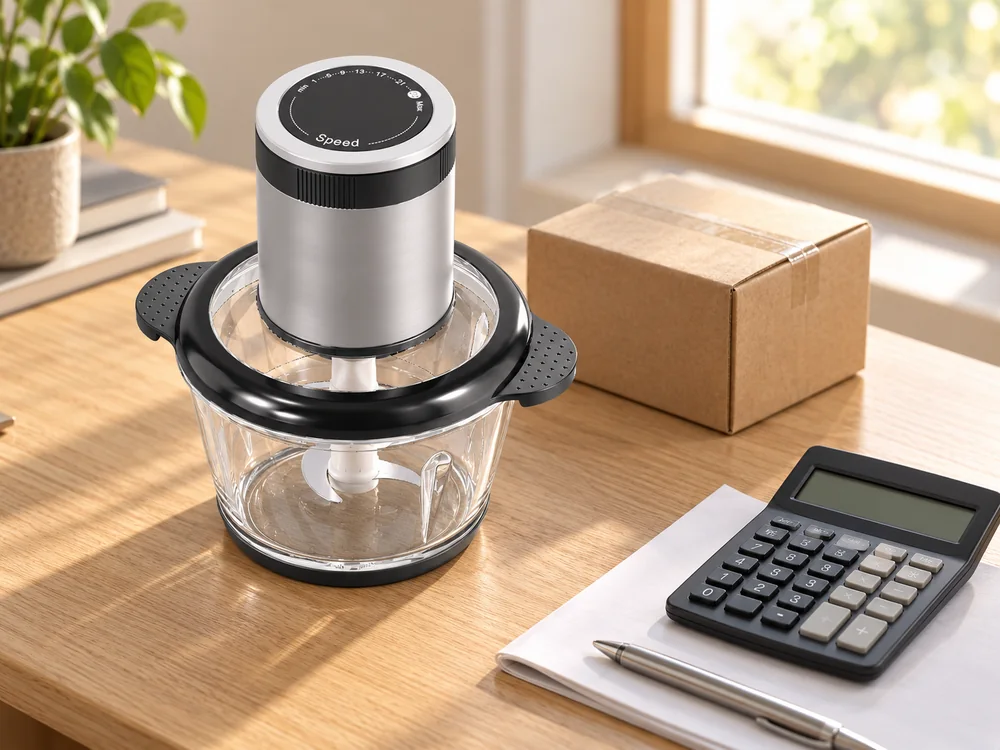
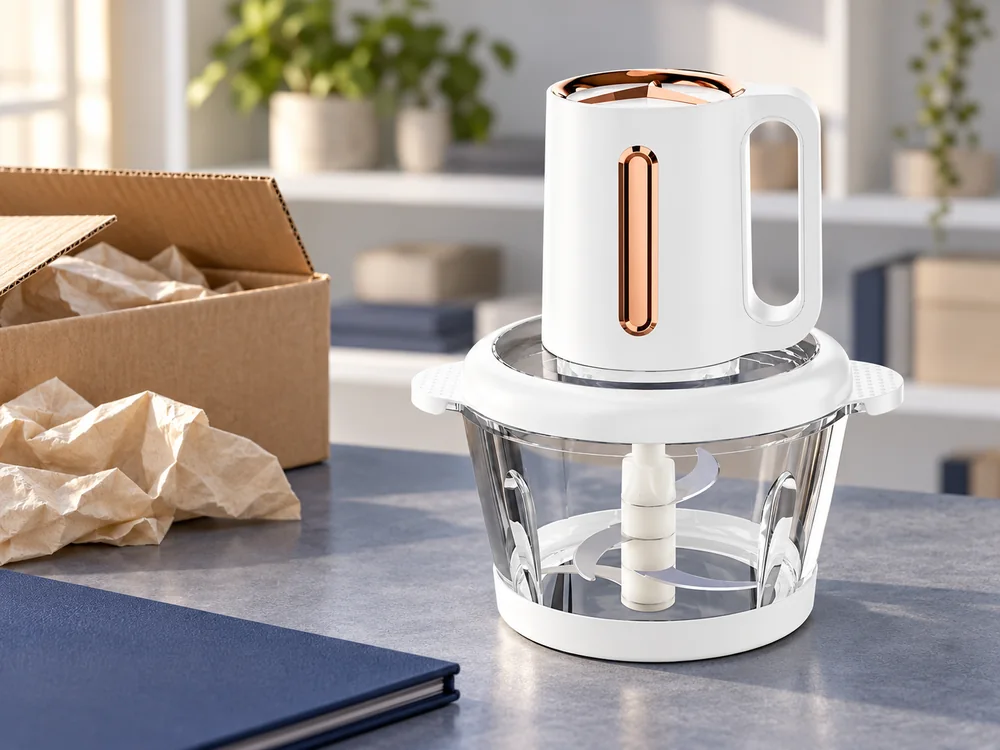
List the products the proposed range actually needs, with a customer task beside each. A chopper may address bowl-based preparation, while a salad maker addresses identified slicing and shredding results through its matched tools. Calling both food processors can conceal the reason for stocking them separately.
Start with the appliance that gives the range its clearest customer purpose. Then ask what a second category adds. The next product might serve a different preparation method or a different customer situation. It should have a reason to exist beyond making the brand's range look larger in a launch photograph.
Use JINJIE's electric food chopper range and other current category information to identify real starting products. Record the selected model for each proposed line. A broad company introduction is useful for discovering possible categories, but purchasing still needs a specific offer within each category before comparing suppliers.
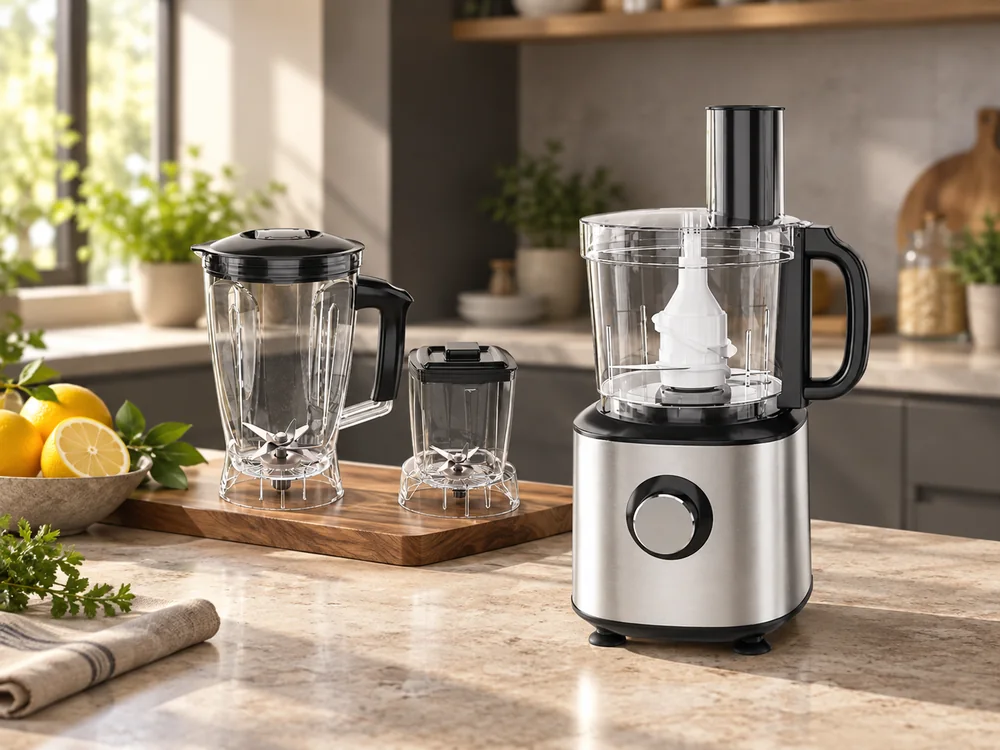
The current quotation illustrates this distinction. SD-01 is a bowl-chopper reference, PBJ-01 is a countertop-blender reference, and SLJ-01 is an electric salad-maker reference. They belong to different product discussions. Their containers, tools and commercial conditions cannot be pooled merely because the same company quotes them.
|
Proposed category |
Customer role to define |
Separate purchasing question |
|---|---|---|
|
Electric bowl chopper |
Identified household chopping tasks in a matched bowl assembly |
Which complete bowl, lid and blade configuration is offered? |
|
Countertop blender |
Permitted blending tasks in the selected jar |
Which jar, controls and electrical version belong to the offer? |
|
Immersion blender |
Handheld preparation with the supplied shaft or accessory set |
Is the purchase a standalone version or an identified complete set? |
|
Electric salad maker |
Specified slicing or shredding results |
Which cutting tools, holder and other supplied items match the machine? |
Keep unsupported categories outside the proposed JINJIE basket. A range plan containing kettles, coffee machines or a citrus press does not establish that those products are available from the same source. Send those needs separately for confirmation or identify another supplier. Do not let the convenience of one conversation replace product matching.
Also separate required products from possible later additions. If the launch needs a chopper and a blender, an optional third category should not distort the initial supplier decision. A manufacturer can be suitable for those two purchases even when another product remains under investigation.
The result should be a short buying list with an intelligible role for every appliance. That list gives a manufacturer something concrete to answer. It also makes it possible to reject an unsuitable product without abandoning the useful parts of the relationship.
Compare category responsibility before consolidating supply
Ask how the proposed manufacturer takes responsibility for each complete appliance. The answer may involve internal assembly and externally sourced components. What matters is whether the relevant inputs, checks and final offer are coordinated for your selected product. Making every individual component in-house is a separate requirement, if your project has one.
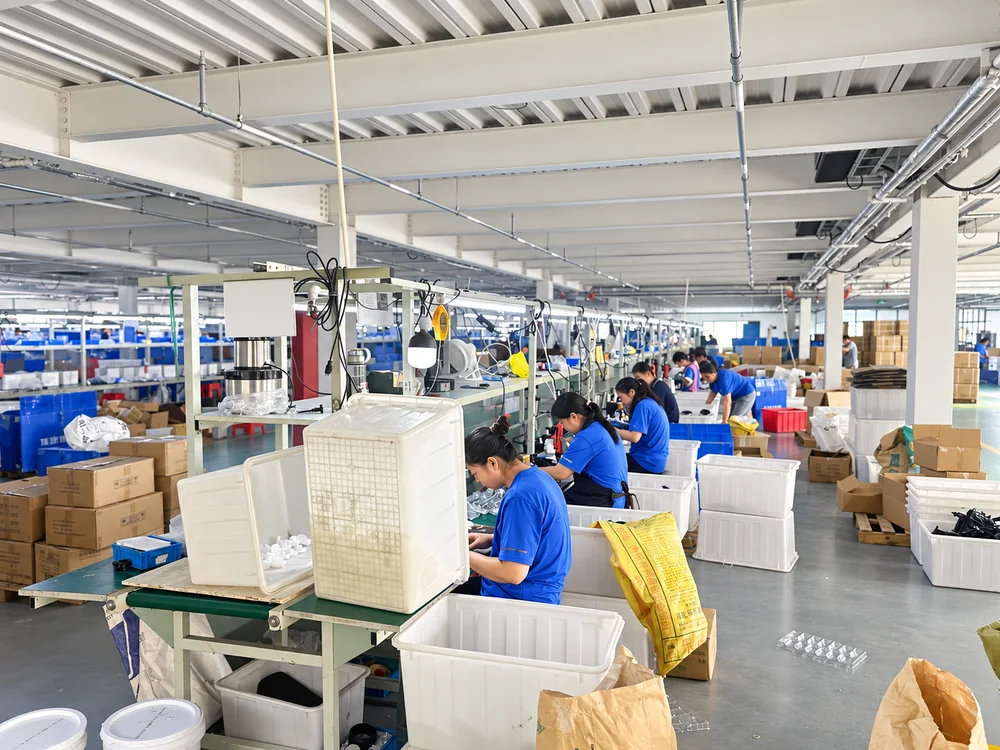
Read JINJIE's manufacturing process as a starting point for that discussion. It describes preparation, assembly, checks and packing against agreed product details. Ask which operations and responsible contacts apply to the proposed categories. A process description should lead to product-specific answers where the purchase depends on them.
A company can give a strong explanation of one appliance and a preliminary answer on another. Evaluate those separately. For example, a defined chopper offer does not resolve an unanswered question about a blender jar. The buyer can continue the first discussion while keeping the second proposal open.
Ask for a category-level contact arrangement if the basket involves several technical teams. The buyer should know who can answer a jar question and who can settle a cutting-tool question, while retaining one route for the commercial decision. This becomes especially useful when two replies appear to conflict: the issue can be returned to the responsible people without asking a general sales contact to make an unsupported technical judgment.
Supplier consolidation is most useful when it removes coordination work that would otherwise sit with the buyer. One contact may be able to return consolidated commercial responses and identify the right product specialist. That has practical value. It does not mean the buyer can stop reviewing each category's actual offer.
Look at where responsibility would become unclear. If one party quotes the product and another answers technical questions, find out who returns the final agreed answer. If an optional category comes from a different manufacturing source, ask how that relationship is handled. A different source is not automatically unacceptable, but it should not be hidden behind a single sales email.
Compare the work your team would retain under each arrangement. With separate suppliers, the buyer coordinates product references and delivery planning across businesses. With one manufacturer, it still coordinates its own brand decisions, market requirements and category choices. The right arrangement depends partly on which of those tasks your team can manage well.
Avoid making one weak category acceptable by averaging it with stronger ones. If a required appliance cannot meet the brief, remove it from the consolidated proposal or wait for a suitable answer. A convenient overall relationship cannot compensate for a product that fails the customer's central requirement.
Share the brand identity without forcing identical products
A family of products can look related without using identical housings, controls or materials. Begin with the brand elements customers should recognize across the range. Then decide how each element can be applied to the available products without unnecessary structural changes.
JINJIE's OEM and ODM options distinguish branding on a current product from changes requiring further design or tooling work. Use that distinction separately for each category. One appliance may need only presentation work while another requires a change that affects its physical construction.
Color is a useful example. A proposed brand color may appear on different materials or finishes across the range. Review actual appearance references where consistency matters. A color name in four quotations does not establish that the finished surfaces will look identical under the same lighting.
Define what visual consistency means for the project. It might mean a common accent and logo treatment, with the main housing following each product's available design. Exact matching across every surface is a more demanding request. Let the manufacturer explain the available approach and any additional work before making that match essential to the launch.
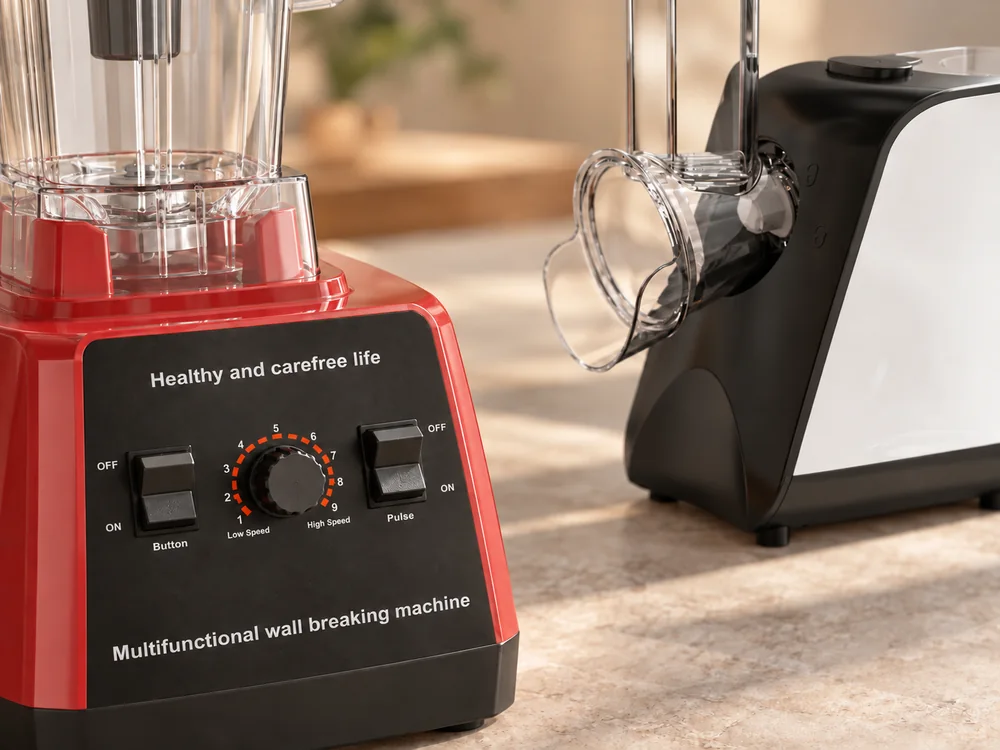
Controls deserve their own product decision. A countertop dial, a handheld button and a salad-maker switch serve different operating arrangements. Forcing one visual control idea across all three can create development work without helping the customer. Preserve the function each product needs, then seek an appropriate family resemblance.
The same principle applies to printed information. A common packaging style can make the range recognizable, while each box still needs the correct product photograph and contents. Instructions must describe the actual appliance. Reusing a page about attachment removal because another model looks similar can introduce a specific operating error.
Prepare shared brand files once, but keep product-dependent files identifiable. The designer should know which elements are common and which require a category-specific answer. This avoids the two extremes of redrawing everything independently and copying a complete document into an unsuitable product.
If one optional visual change becomes expensive or slow, decide whether the current alternative still fits the brand well enough. That is a commercial choice. Keep a required functional difference separate so it cannot be waived accidentally during a conversation about appearance.
Price the assortment as separate commitments
Request an itemized commercial proposal for the chosen products. Each line should identify the complete retail unit, relevant version and quantity basis. A grand total can help with budget planning, but it should not hide how much stock or preparation work belongs to each category.
Do not assume a combined quantity satisfies every minimum. A proposed order of several appliances may still have separate conditions for models, finishes or printed materials. Ask whether any quantity can be combined and exactly which requirement that combination satisfies. Until confirmed, treat the items as separate commitments.
Compare quoted savings with the stock needed to obtain them. An attractive unit price on an optional appliance can increase the total purchase beyond what the channel can sell. Consider the cash tied to that additional stock alongside any coordination benefit from one supplier. A discount has little purchasing value if it creates an unwanted range extension.
Separate product charges from shared project expenses and category-specific work. A common design file may serve several packages, while each package still needs an appropriate layout and physical packing arrangement. Ask what each charge covers. Do not assume the same preparation cost should be paid repeatedly or that all repeated work is free.
Use the complete retail offer as the comparison unit. An immersion-blender set includes assemblies that a standalone proposal may omit. A salad maker needs its selected tool set. An incomplete low-priced line can distort the apparent cost of the overall range, especially when the omitted contents are added after the supplier has been chosen.
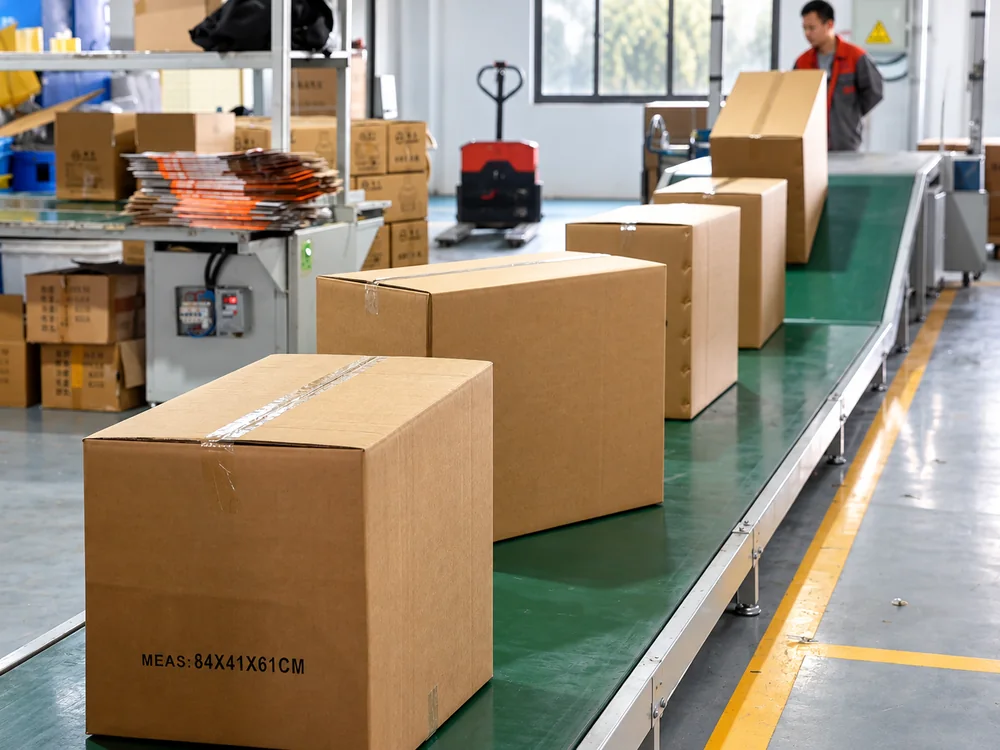
Shipment planning also needs actual packed information. Obtain the relevant carton arrangement, quantity and weight for each selected version before asking for a combined transport estimate. A shared supplier address does not make the products share the same carton or packing density.
Ask what happens if one category's quantity changes before commitment. It may affect that line alone or alter a combined commercial proposal. Keep the supplier's actual condition visible. This lets the buyer reduce the basket deliberately instead of discovering that an assumed saving depended on an order mix it no longer wants.
Consider your internal budget ownership as well. If different category managers fund different products, allocate shared expenses in a way they understand before approving them. The supplier's invoice structure and your commercial reporting need not be identical, but the total commitment should be traceable to the products and work selected.
For a proposed combined promotion, distinguish the saleable units from demonstration stock and photography samples. A sample borrowed for a buyer presentation is not necessarily available for sale, and a display appliance may need a different handling plan after the event. Give those quantities a purpose in the inquiry so they do not silently reduce the opening stock allocated to retailers.
Plan independent approvals within a coordinated launch
A common launch date does not make all products ready at the same time. One may use a settled current configuration while another awaits a new finish or a product-specific answer. Plan the remaining decisions by appliance before promising the combined range to a retail customer.
For each sample, state what it needs to establish. A presentation sample can answer appearance questions without settling a changed functional assembly. An existing standard appliance can help the team understand handling while leaving the requested branded version unfinished. Keep that distinction attached to the product under review.
The quality and testing discussion should follow the selected versions and their intended tasks. Evidence for one category does not transfer automatically to another. Nor does a successful check on one electrical version establish every version planned for other markets.
Give each product an explicit readiness decision, then decide what that means for the combined launch. If a mandatory product remains unresolved, the range launch may need to wait. If an optional product is late, a smaller opening range may still serve the retailer. The choice should follow the commercial promise already made to that customer.
|
Supply arrangement |
When it can fit the buying plan |
Trade-off to settle |
|---|---|---|
|
One manufacturer for the complete confirmed basket |
Every required product has an acceptable offer and coordinated preparation is useful |
Several products depend on one commercial relationship |
|
One manufacturer for a core group |
The strongest matches cover the main food-preparation need |
Other categories need separate coordination |
|
Separate category suppliers |
Product requirements favor different sources |
The buyer carries more cross-supplier planning |
|
Staged category launch |
A smaller first range still serves the customer |
Later products need a fresh commercial and readiness decision |
Discuss separate shipment as an option with consequences. It can let a ready product move while another remains unfinished, but handling and transport costs may change. Waiting can preserve a combined shipment while delaying saleable goods. Obtain the available proposals rather than assuming either route is always preferable.
Preserve the identity of partially approved work. If three products have accepted artwork and the fourth needs correction, the response should identify that fourth product. A message saying the range is approved can allow an unfinished detail to disappear into a broad instruction.
Keep one consolidated buyer response without suppressing specialist input. Product, design and purchasing teams may each need to decide different points. Gather those answers into a version-specific instruction before returning it to the manufacturer. Coordination is useful when it produces a clear decision, not when it hides disagreement.
Decide the scope of the relationship before adding categories
Choose the products the manufacturer can support on terms your business can use. The answer may be the complete basket, a core group or one initial category. None of those outcomes needs to be presented as a failure of supplier consolidation.
Record why each product belongs in the chosen arrangement. For one category, it may be a suitable existing platform. For another, it may be a defined development proposal that justifies the work. If the reason is only that the company already supplies something else, the product decision is incomplete.
Keep future additions outside the current commitment until their own proposals are ready. An agreed chopper order does not reserve the price or availability of a blender considered for next season. Request the later offer when its customer role and requirements are clear enough to assess.
Plan how the brand would handle a category being removed or replaced. Retain usable product references and the agreed rights to buyer-supplied artwork or commissioned work. Actual ownership and access arrangements must be settled commercially. Paying for a change should not be treated as proof of rights that the parties have never discussed.
After the first purchases, review the relationship using category-level experience. Separate problems caused by the product proposal from delays caused by your own late decisions or changed order mix. This helps determine whether the next step is to improve coordination, change one offer or reconsider the manufacturing relationship.
Discuss a defined food-preparation range with JINJIE
Send JINJIE your proposed product basket with the customer role, preferred reference, destination market and estimated quantity for each appliance. Identify required categories and optional later additions. Ask for separate product offers and a clear explanation of any shared commercial or preparation conditions before deciding how much of the range to place together.
FAQ
Can one factory quotation cover products for different markets?
It can contain several proposals, but each needs its own destination version and relevant requirements. Keep quantities and printed information tied to the correct product and market. A shared quotation does not make plugs, markings or product documents interchangeable across its lines.
What if only one product needs new tooling?
Keep that development scope and its conditions separate from the current-product offers. Ask whether the other products can proceed independently. Decide whether launching without the new item still meets the retailer's needs rather than making every appliance wait by default.
Should we ask for the same accessories across the range?
Only where a real customer need and confirmed product compatibility support the request. Visual similarity or a common brand is not evidence that assemblies can be exchanged. A consistent way of identifying each product's own accessories may be more useful than attempting physical interchangeability.
Does choosing one manufacturer rule out another supplier later?
That depends on the actual commercial agreement, including any specifically negotiated exclusivity. Do not assume such a restriction exists or does not exist. Clarify the intended scope before committing, and assess a later category against its own requirements and the obligations already agreed.