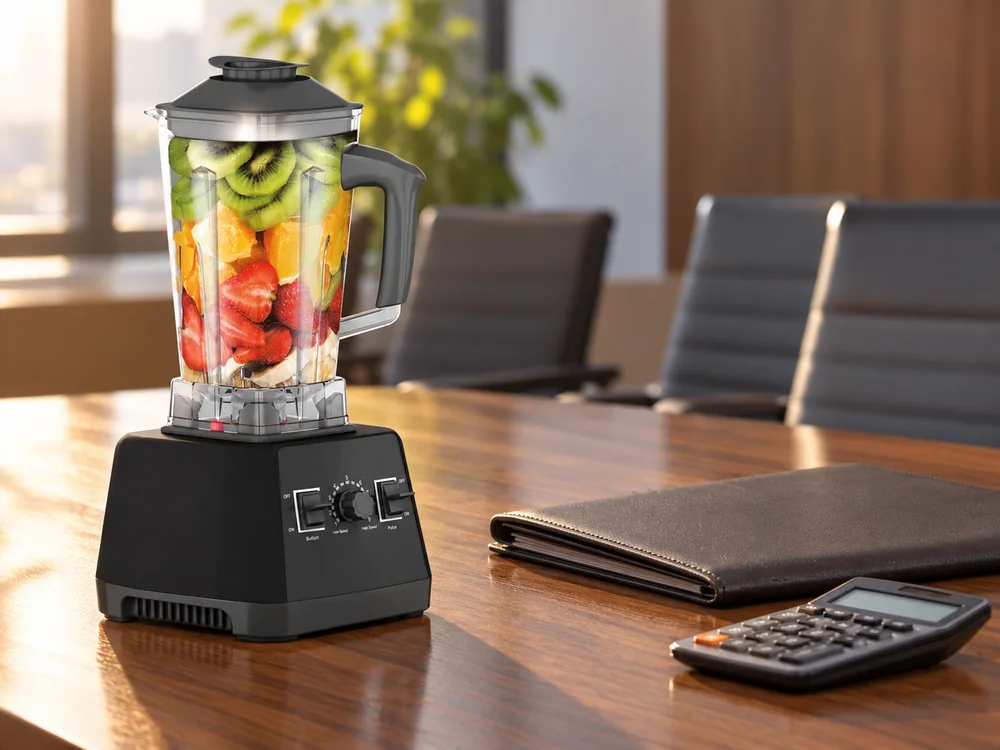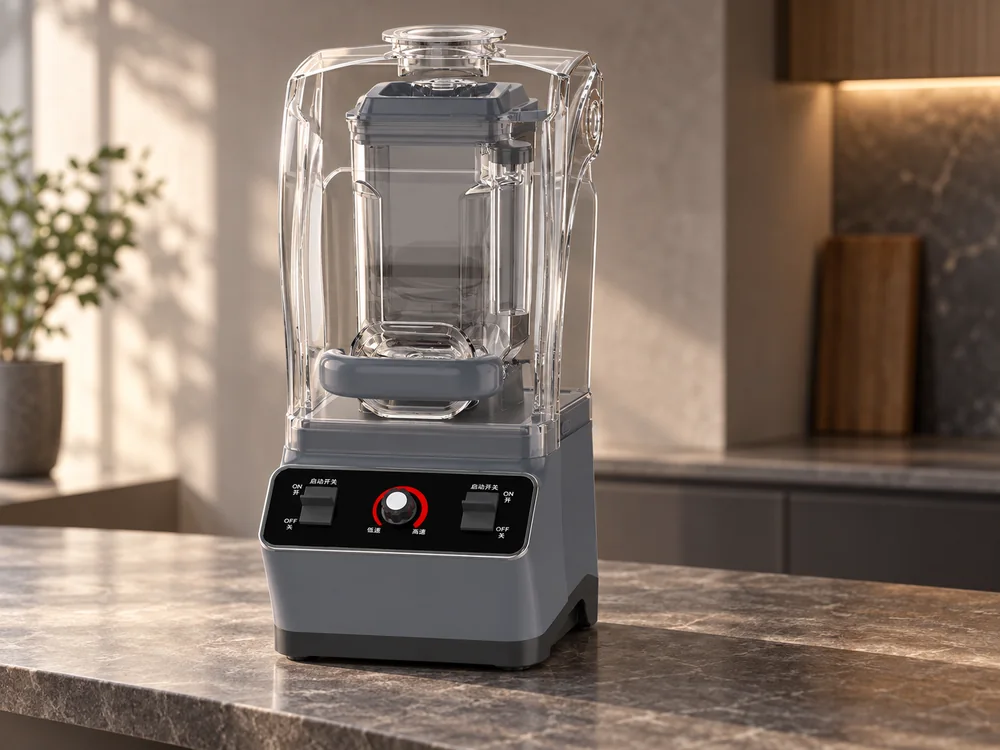
A sound enclosure adds a visible buying decision to a blender. It changes what the customer has to place on the counter, open and work around, while the jar and controls still need to suit the intended preparation task. Choosing a sound enclosure blender manufacturer therefore starts with the complete appliance, not a promise that any transparent cover will make any blender quiet.
JINJIE's quotation lists BSJ-01 and BSJ-A1 with a nominal 2 L PC jar, a 1500 W power entry and a sound-cover configuration. BSJ-A1 is separately described with intelligent control. These are starting products for discussion, not measured noise results or proof of continuous foodservice operation.
This guide is for importers and private-label buyers considering complete countertop products for resale. It does not offer a universal aftermarket enclosure or approve an appliance for a café's operating schedule. It explains the product and supply questions that make a covered blender worth selecting, including how to keep the retail promise within the evidence available for that version.
Separate a complete covered blender from an add-on enclosure
An enclosure sold for an existing appliance and a complete blender supplied with its matching cover are different purchases. In the first case, compatibility with the existing machine is central. In the second, the manufacturer should identify the whole appliance and the way its cover, jar and base work together.
State which purchase you want. If the requirement is a finished private-label appliance, ask for the covered model with its complete supplied contents. Do not start by selecting a cover from one photograph and a motor base from another. That creates a combination the supplier may never have offered.
Use the JINJIE blender range to identify current covered models. The range distinguishes them from other countertop platforms. Keep the selected reference in the inquiry so the response can address that appliance rather than a general accessory idea.
If you already sell an uncovered blender, adding a separate enclosure is not automatically the simplest upgrade. The required space, access and supported operating arrangement need a product-specific answer. A cover that physically surrounds the unit is not sufficient evidence that the resulting combination is appropriate.
For an existing covered model, identify whether the photographed cover is included in the quoted retail unit. Ask the same question about the jar, lid and other supplied items. An attractive complete image can sit beside a price that describes a different purchasing unit, especially when several options are discussed together.
Also establish the intended customer. A household buyer comparing countertop appliances and a restaurant operator specifying repeated service have different requirements. Buying many units for resale does not turn the appliance into professional equipment. Keep the intended operating conditions attached to the actual model, regardless of the order quantity.
The first useful outcome is one clear proposal: a named complete covered appliance for a defined customer task. If the request instead depends on a third-party blender or on a cover sold alone, keep that as a separate availability and compatibility inquiry. Do not let those unresolved accessory questions cancel a suitable complete-product discussion.
Compare the actual configurations and their manufacturing interfaces
The BSJ-01 and BSJ-A1 entries share the quoted capacity, jar-material field and power value, but they are separate model references. The additional intelligent-control description on BSJ-A1 needs its own explanation. Ask for the actual settings and their meanings before treating it as a customer benefit.
Do not infer automatic recipes, sensing or a particular blending result from that description. A different panel can support a different operating experience, but the manufacturer needs to identify what the proposed version actually does. Decide whether the difference matters to your customers before adding another SKU.
The nominal 2 L value identifies the jar format. It does not state the allowed fill for every ingredient or operation. Similarly, 1500 W identifies the quoted power entry without establishing a permitted operating schedule. Keep these values useful as specification references without asking them to answer a different question.
|
Configuration element |
What to identify in the offer |
Why it can change the purchase |
|---|---|---|
|
Complete model |
BSJ-01, BSJ-A1 or another specifically proposed version |
Keeps control and physical differences tied to the price |
|
Jar assembly |
Supplied jar, lid and matching drive relationship |
Avoids comparing incomplete or incompatible combinations |
|
Sound cover |
The cover supplied with that model and its permitted handling |
Defines the covered product rather than a loose accessory |
|
Controls |
Actual controls and confirmed functions for the selected version |
Supports a truthful reason for any price step |
|
Electrical version |
Destination voltage, frequency and plug |
Identifies the appliance being prepared for the market |
Ask who is responsible for the cover's relationship to the complete appliance. The buyer needs an answer when a cover, handle or jar reference changes. It does not need an unsupported claim that every plastic or electrical part is made in the same workshop.
JINJIE's manufacturing information describes assembly against agreed product details and relevant checks. Connect that discussion to the selected covered version. Ask how the complete model is identified during preparation and packing, including any differences between control variants.
Keep protective functions separate from visible controls. A quotation can name a protector without describing its behavior in every situation. Obtain the relevant instructions if that behavior matters to the purchase. Do not describe an automatic stop or cover interlock from appearance alone.
The manufacturer should return a usable product explanation. If it proposes another covered model, compare the changed elements before accepting it as equivalent. A shared power value or similar enclosure outline is not enough to explain whether the new proposal still answers your brief.
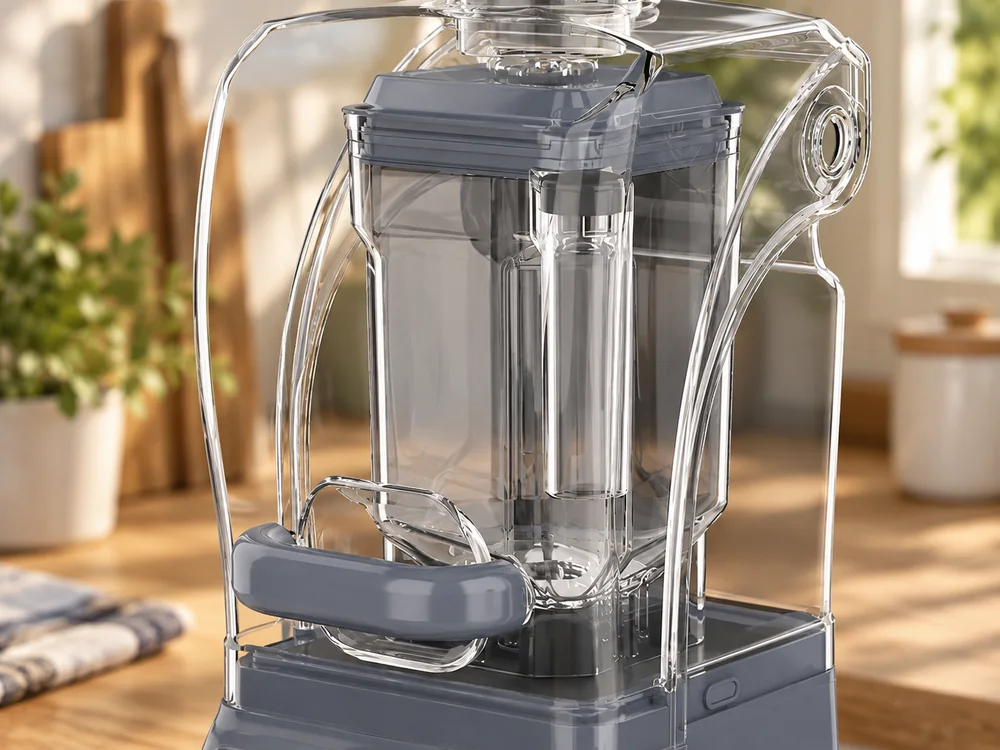
Check the working space rather than only the closed footprint
A closed product photograph shows one state of the appliance. The buyer also needs to understand how the customer accesses the jar and performs the permitted operating steps. That working arrangement can affect suitability even when the closed unit appears to fit the intended counter.
Request the relevant dimensions for both the product at rest and the clearance needed during use. Ask the supplier to show the actual opening arrangement rather than infer a hinge path from a front image. If a cover lifts away, swings or moves in another way, review that model's real design before planning the display space.
Consider the customer's route through an ordinary permitted preparation task. Where does the jar go while being filled? How is it returned? Can the controls be seen and reached with the appliance in its intended position? Observe those steps on the selected sample instead of judging them from the cover's visual size.
An overhead cabinet or a shallow retail display can expose a practical difference between products. Obtain the relevant opening clearance before assigning a place. If the appliance must be moved each time it is accessed, decide whether that is acceptable for the intended customer rather than quietly leaving it out of the selling explanation.
The cover and jar lid should remain distinct in the instructions and product presentation. One is not a substitute for the other unless the actual design and instructions say so. A photograph through a clear enclosure can make it difficult to identify separate parts, so ask for a view that resolves the specific uncertainty.
Cleaning adds another space and handling question. Request the permitted care method for the cover and for the jar assembly separately. Do not assume that a transparent part is dishwasher-safe or can be removed without following the manufacturer's directions. The sales team needs the actual answer for the supplied product.
Review the exterior as a retail object too. Transparent surfaces make the jar visible, but photographs can also show reflections that conceal details. Choose product views that explain the real covered structure without retouching away seams, hinges or other functional features. The customer should recognize the product that arrives.
If the covered format adds handling that your customer does not want, an uncovered model may remain the better fit. That is a product-positioning decision, not a reason to invent a fault in either format. Select the arrangement that suits the supported task and available working space.
Decide which sound claims the available evidence supports
The term sound cover describes the offered configuration. It does not supply a verified decibel reduction, a guarantee of silent operation or a comparison with every uncovered blender. Keep the distinction clear before the brand builds a sales message around quietness.
Ask what evidence is available for the selected complete model and what that evidence can establish. A supplier may have a demonstration, an identified measurement or a relevant report. Review the actual material rather than assuming that a sound-cover entry in the quotation includes a particular acoustic assessment.
For a proposed comparison, find out which appliances and operating conditions were compared. The jar contents, selected operation and recording arrangement should be identifiable. If the comparison uses a different machine, it cannot establish the result for your selected version without a sound product-specific basis.
A promotional video can help show the product and its operation. It should not be treated as a numerical measurement simply because the soundtrack sounds quieter. If a measured claim is essential to the launch, request a suitable assessment from the responsible technical team before putting that number on the packaging.
Use JINJIE's quality and testing information to start the evidence discussion, then ask specifically about the unresolved sound requirement. General electrical or functional checks do not automatically answer an acoustic comparison. Naming a test department is not the same as supplying the needed result.
Decide how important the unresolved claim is to the purchase. If the retailer requires a defined measured reduction, keep selection conditional until that requirement is answered. If it is evaluating a complete covered product without a numerical promise, other product and commercial work can continue while the available evidence is clarified.
Describe the supported feature precisely in the meantime. A photograph and accurate description can show that the selected blender includes its sound cover. Avoid replacing an unavailable number with equally broad language such as silent in any kitchen. A less dramatic claim is preferable to one the product record cannot support.
Keep the proposed retail wording with the evidence review. The technical team should see the statement the brand intends to make, not just a request for any test document. That makes it easier to decide whether the evidence answers the actual customer promise or whether the wording needs narrowing.
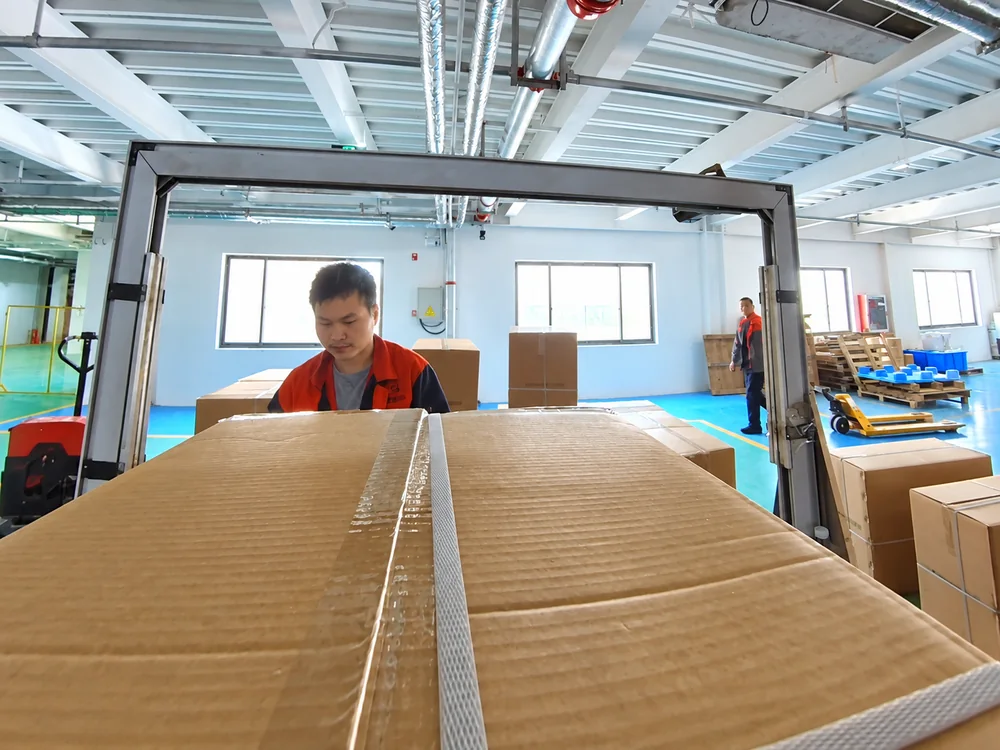
Compare the whole packed offer and its support cost
Request the complete covered-appliance price with the relevant version, supplied contents and quantity basis. Compare that offer with an uncovered alternative only after identifying what changes. Do not treat the price difference as the cost of the cover alone if the jar, controls or platform also differ.
Ask for packing information for the selected covered version. Nominal jar capacity cannot supply the retail-box or shipping-carton size. A packaging plan for another model may leave out the space or protection needed for the actual cover, even when both products are described as 2 L blenders.
Protection should address the complete product as packed. Ask how the cover, jar and other supplied parts are positioned in the proposed presentation. Do not prescribe a particular insert solely from a photograph. The useful question is whether the real packed arrangement protects and identifies the selected contents on the agreed delivery basis.
|
Commercial difference |
Information to obtain |
Buying response |
|---|---|---|
|
Different covered control versions |
Complete price and confirmed functions for each |
Pay for a difference the channel can explain |
|
A cover shown but not listed |
Written contents of the priced unit |
Resolve the offer before comparing totals |
|
Provisional packing |
Actual proposal and any remaining packing work |
Keep transport estimates tied to their basis |
|
Requested replacement cover |
Exact identity, availability and commercial terms |
Promise separate support only when agreed |
|
Required sound claim remains unsupported |
Relevant evidence or narrower proposed wording |
Hold the claim or the purchase if it is essential |
Transparent surfaces also make cosmetic acceptance worth discussing. Agree how relevant visible marks will be assessed against the selected product and packing proposal. Avoid inventing a universal tolerance or requiring a photograph to decide every future case. The parties need an understandable reference for the actual order.
Ask what happens if a customer reports damage to the cover while the rest of the appliance remains intact. A separate replacement cover, complete-unit remedy or another agreed response may be available. None is automatic. Confirm both the matching item and its supply terms before advertising replacement-cover availability.
Include the practical handling cost in that discussion. A nominal component price does not describe identification, protection and delivery. A complete-unit replacement uses more stock but may fit some service arrangements better. Choose the response your business can carry out under the terms actually agreed.
For minimum quantities, separate the model from optional finish and packaging requirements. Obtain current conditions for the selected version. A request combining covered and uncovered models does not establish that the quantities can be pooled, and an earlier standard order does not reserve the same conditions for a new private-label presentation.
Limit customization to changes with a clear customer purpose
Start with the nearest suitable covered platform. JINJIE's OEM and ODM process allows a discussion of branding, presentation and product changes, but those routes involve different work. State which part of the current proposal needs to change and why.
A logo or control-language request may be primarily a presentation task. Changing the cover's shape, opening arrangement or relationship to the jar is a physical product request. Ask what engineering and validation work it requires. Do not assume that a small-looking change can be judged on appearance alone.
Keep optional styling outside mandatory operating requirements. If a current finish is acceptable, it may let the project proceed without a preferred color. If the customer cannot access the jar in the intended space, a new color will not solve the problem. Give the manufacturer that distinction in the brief.
Choose the sample that answers the unresolved decision. A standard model can help assess handling, while a changed cover needs an appropriate representation of that change. Do not treat approval of a color chip as acceptance of a new opening mechanism or a new noise claim.
Once the covered product is selected, retain its complete reference for later orders. A revised cover, jar or panel should be identified before commitment. Review the effect on customer use, images and any evidence supporting the retail description, rather than accepting a revision because the model family still looks familiar.
Request a defined covered-blender proposal
Send JINJIE your covered-blender requirements with the preferred model, intended customer use, available working space, destination market and estimated quantity. Include the sound-related statement your retailer wants to make. Ask for the complete configuration, packing proposal and any evidence needed to decide whether that specific offer fits the launch.
FAQ
Can we order the enclosure separately for another blender?
Treat that as a separate inquiry. Identify the existing appliance and ask about both compatibility and standalone supply. The presence of a covered model in JINJIE's range does not establish a universal enclosure service or compatibility with a third-party product.
What if the retailer insists on a decibel figure before sampling?
Ask whether suitable evidence already exists for the proposed model and conditions. If it does not, leave the figure unpromised and discuss the required assessment. A power rating, cover photograph or edited demonstration cannot substitute for the requested measurement.
Should the sample include the final branded box?
It depends on the decision being made. An actual covered product can support an initial handling review, while final packing and artwork need their own agreed references before production. Identify any provisional presentation so the sample is not treated as approval of work it does not represent.
Can an improved-looking cover be accepted on a reorder without another review?
Ask what changed and how it affects the complete product. If the change concerns fit, access, permitted operation or an existing claim, obtain the appropriate review. A cosmetic description alone does not establish that the previous product assessment still applies unchanged.