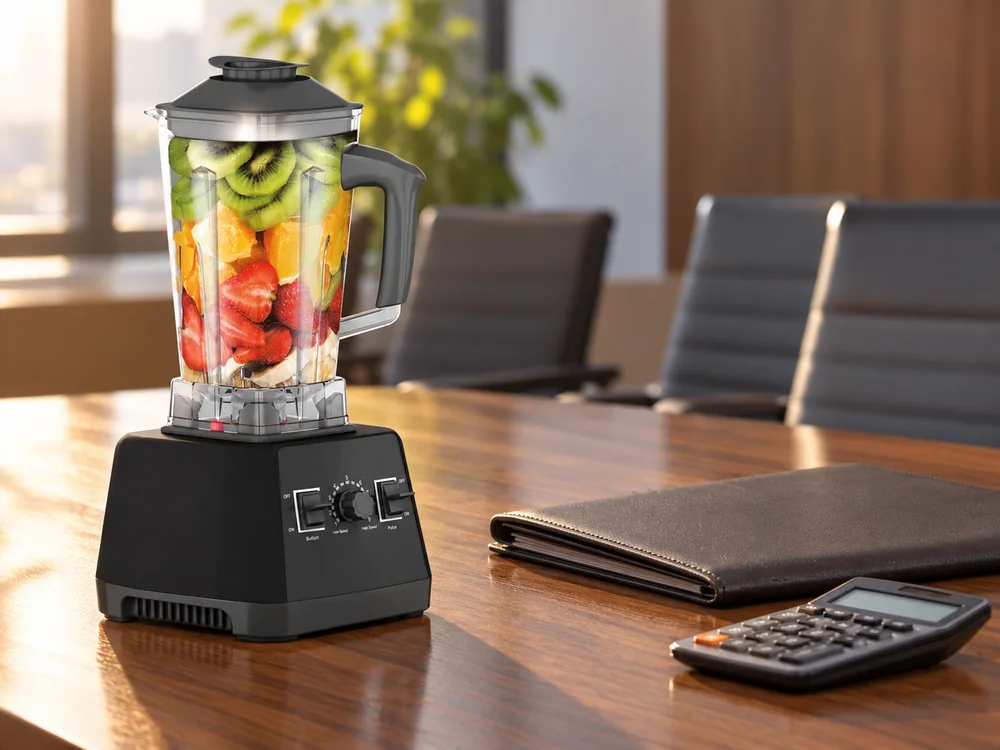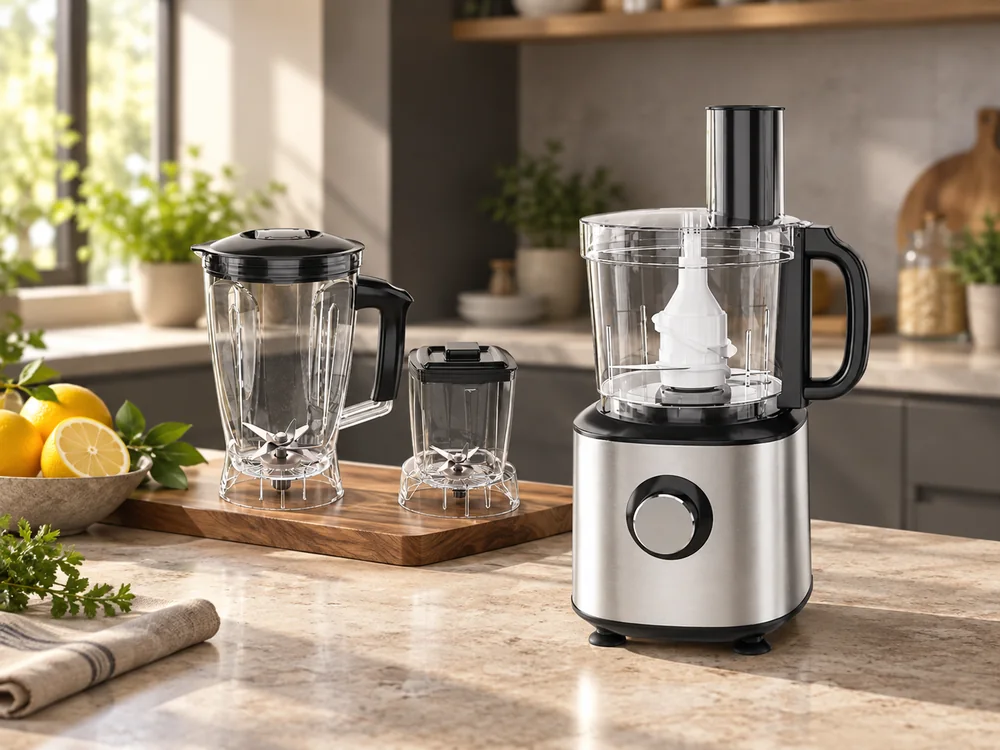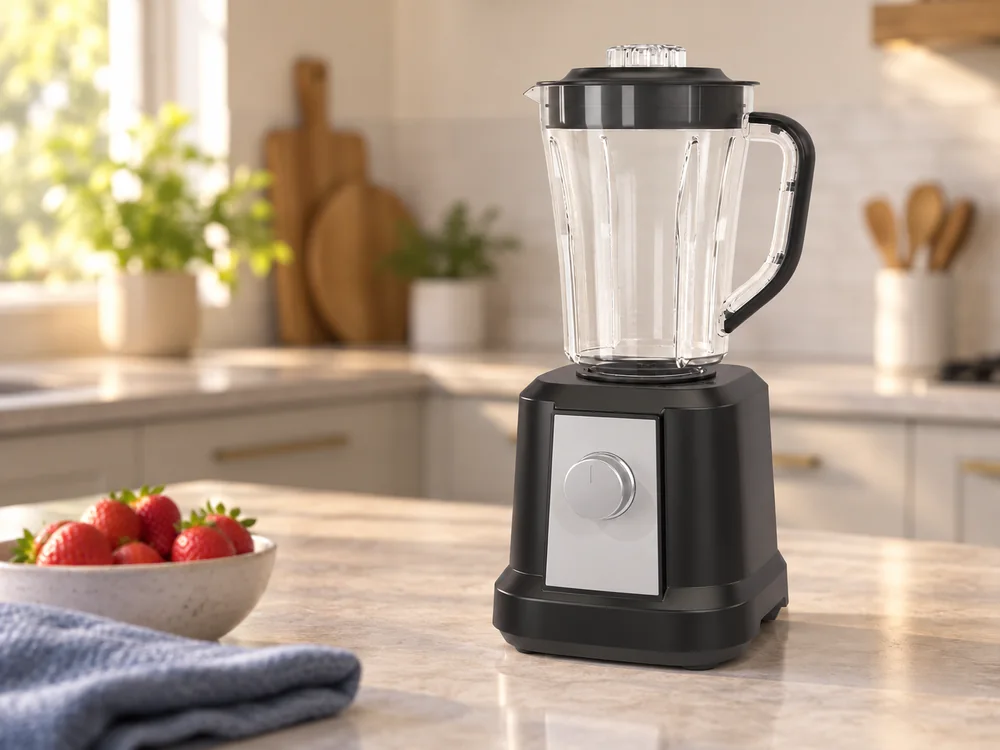
A smoothie blender wholesale inquiry should say who will use the appliance, which drinks it must prepare and what the retail box needs to contain. Buying many units for resale is different from buying equipment to serve a busy drinks counter. The order quantity tells a supplier how many appliances you want, not how each one will be operated.
For household retail, start with the drink your customer expects to make regularly. Build the product offer around that task, then consider useful secondary preparations. This gives an importer a reason to select a particular jar, control arrangement and complete set instead of comparing loosely described smoothie machines on price alone.
JINJIE's current quotation includes BL1161 and BL1261 with nominal 1.5 L AS jars and 600 W entries, and PBJ-01 with a nominal 2 L PC jar and a 1200 W entry. These are candidates to discuss against a preparation brief. Their specifications do not establish the result of an untested recipe.
Define what your smoothie blender wholesale order will sell
Describe the retail customer before sending a model list. A product intended for household drinks needs a clear preparation story that can be explained on a shelf or product page. A customer planning repeated orders in a café has another requirement, including evidence of suitability for that operating environment and workload.
Keep that distinction in the inquiry even when both customers use the word smoothie. For this article, the purchase is a batch of household appliances for resale. If foodservice use is essential, bring it to the supplier at the beginning rather than treating it as a later marketing variation of the same offer.
State whether you need a handled jug, a small personal-cup system or another format. The JINJIE blender range provides the current product starting points. A handled jug can be assessed for the planned household preparation and pouring routine. A personal-cup request also needs confirmation of its supplied lids and intended drinking arrangement.
Decide where this product sits in your business. A kitchen-appliance retailer may already have a general blender and need a clearly differentiated drinks offer. A new brand may need one understandable launch product. In either case, write the reason a customer would select this item without relying on the word professional or an oversized power claim.
Separate the required proposition from optional ideas. If the offer depends on a particular drink, that preparation belongs in the initial evaluation. An additional recipe booklet or another finish can remain optional. This distinction helps preserve the purpose of the purchase when the supplier offers alternatives with different costs or preparation requirements.
Give the supplier your intended market, electrical version and expected order quantity alongside that customer description. These details allow the proposal to address a real retail project. They also reduce the chance of receiving a low-price example whose jar, power arrangement or included items differ from what the business intends to sell.
Use a small drink brief to narrow the product choice
A useful drink brief describes ingredients in their starting condition, the intended quantity and the finish the customer expects. The word fruit is not enough if the proposed preparations include different textures or temperatures. Identify the actual requirement, then ask which current model and permitted method are suitable for evaluation.
Choose one principal preparation and a limited number of relevant secondary ones. The principal preparation should justify the product's retail position. Secondary tasks should add something customers are likely to use, not simply lengthen a list of functions. Each additional promise creates another question about product suitability and customer instructions.
|
Requirement in the drink brief |
What the supplier needs to understand |
Purchasing consequence |
|---|---|---|
|
Main household drink |
Ingredients, starting condition and desired finish |
Determines whether the model is a relevant candidate |
|
Intended serving |
Required usable quantity within the permitted loading |
Connects the jar choice to the actual customer task |
|
Secondary preparation |
Its importance to the retail proposition |
Shows whether it is essential or can be omitted |
|
Frozen ingredients or ice |
The precise request and model-specific permission |
Keeps a demanding use separate from a general smoothie description |
|
Preparation before blending |
What the customer must do before loading |
Allows the whole routine to be judged, not only the finished drink |
Ask the supplier to distinguish an unsupported request from a request that can be assessed using a different permitted method. A change in preparation may be acceptable to your customer, or it may remove the convenience that motivated the purchase. Purchasing needs to make that choice explicitly, with the retail team involved where necessary.
For example, a brand might be comfortable explaining a preparation step for its main recipe but unwilling to require a different method for every advertised drink. That is a commercial choice to evaluate on samples. It is not a reason to conceal preparation steps in a demonstration or assume the customer will discover them later.
Avoid making the most demanding optional recipe the default requirement for the entire order. First decide whether it is important enough to affect the product selection. If it is central, retain it as a firm condition. If it adds little to the customer offer, removing it may leave a coherent product without requiring another configuration.
Keep recipe requirements separate from nutritional promises. A blender supplier can discuss the appliance and its preparation scope. It does not follow that the product supports a health claim about a finished drink. For the appliance offer, concentrate on the documented use, practical preparation and actual supplied components.
Compare the jar, controls and complete set against that brief
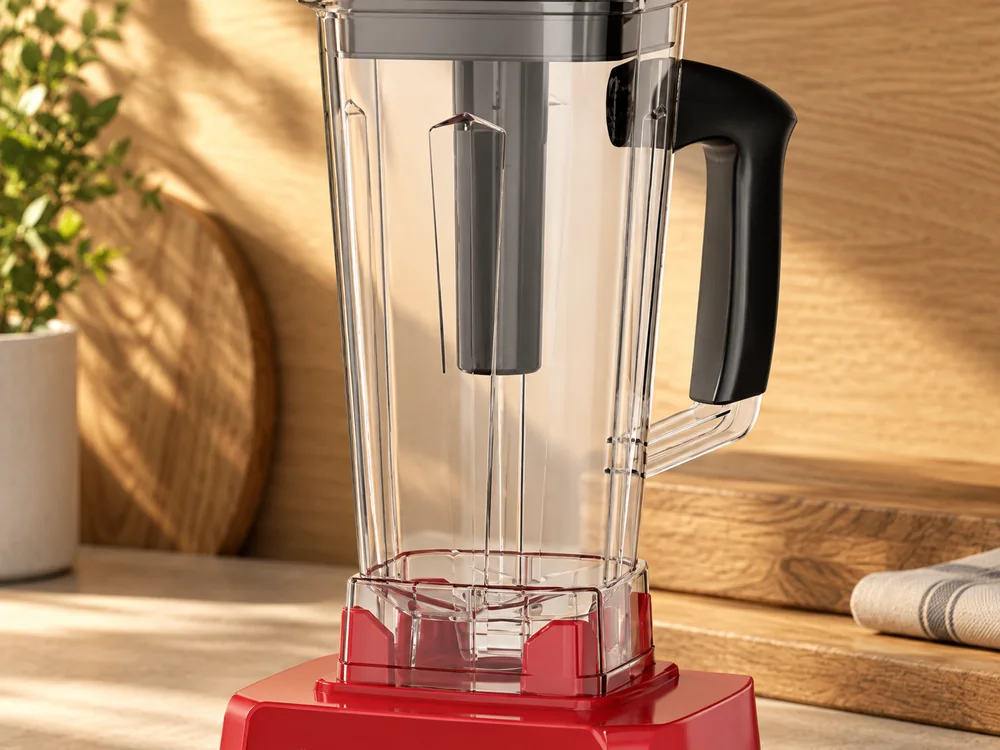
Nominal jar volume is a starting specification. Compare it with the permitted loading for the planned preparation and the amount the customer wants to serve. A nominal 2 L jar does not automatically deliver two liters of a particular finished smoothie. The useful question is whether the documented method accommodates the required task.
BL1161 and BL1261 share the quoted 1.5 L AS and 600 W entries, while their control descriptions differ: adjustable speed for BL1161 and intelligent control for BL1261. Ask to see the actual interface and instructions. The descriptions identify options; they do not establish which option produces the better drink for your brief.
Assess how the customer will use the controls during the agreed preparation. Can the retail team explain the operation accurately? Does a proposed program correspond to the permitted recipe and quantity? A screen or a greater number of buttons should earn its place through a useful customer interaction rather than appearance alone.
PBJ-01 provides a different quoted starting point, with a handled 2 L PC jar and a 1200 W entry. Compare it when its complete product format is relevant. Keep the jar, base and operating instructions together when evaluating it. A higher power entry by itself does not resolve the quality of the finished drink or the allowed operating duration.
Review the handling after operation as carefully as the controls. Observe removing the jar, pouring into the intended serving vessel and following the cleaning instructions. These steps help determine whether the product suits the household routine. Use the actual assembly rather than demonstrating a convenient replacement jar that will not be supplied.
Ask what belongs in the standard retail set and what is optional. An extra container, another attachment or a different lid may change the customer offer, but only if its compatibility and intended use are confirmed. Keep the base offer identifiable so a photograph of several alternatives does not become an accidental promise to supply all of them.
Consider storage with the complete set present. A product that appears compact on its own can occupy more space with optional components. If a proposed accessory has no clear role in the drink brief, compare the simpler offer before expanding the package. The buyer should be able to explain what each included item contributes.
Turn the sample result into an honest retail description
Request a sample that can answer the unresolved product question. If the main concern is the drink result, an identified functional sample may be appropriate before custom packaging is prepared. If the decision depends on a particular jar or control version, that feature needs to match the proposal being evaluated.
Keep the agreed ingredient condition, quantity and permitted operating method with the observations. This makes the result useful to colleagues who did not watch the trial. It also helps the supplier understand a concern without guessing whether the sample, recipe or method differed from the intended evaluation.
Assess the finish in a way the purchasing and retail teams both understand. A photograph of a drink can communicate appearance, but it cannot settle every question about texture. Use an agreed assessment of the actual preparation, and record any additional step needed to obtain the result. Avoid turning a favorable image into a broader performance claim.
JINJIE's quality and testing information provides a route to discuss checks for the selected product. Keep the intended preparation assessment distinct from other product checks. The aim is to obtain the information needed for this purchase, without treating an unrelated inspection as proof of the advertised drink result.
Once a preparation is supported, decide how to explain it. The product page should identify the relevant use and supplied set clearly. A short demonstration should follow the documented method and show the same product version. The instructions can provide the detail, while the headline and main image remain understandable to a shopper.
If one secondary recipe falls short, return to its importance in the brief. You may keep the selected appliance for the main task and remove that secondary promise, or decide that another candidate is necessary. Preserve the actual finding. An unsuccessful optional use does not need to be described as a product failure across every application.
An unexpected operating condition needs a different response from an ordinary preference about finish. Stop and follow the applicable instructions, then ask the responsible technical team to assess the issue. Repeatedly trying the same condition to obtain a better video is not a useful way to settle a purchasing concern.

Request a complete wholesale quotation, including the retail pack
Send the selected configuration with the quotation request. Identify the model, electrical version, jar assembly, set contents, finish, destination market and quantity. This allows the supplier to price a defined household product. Keep alternatives separate if you still need to compare a basic set with a more extensive offer.
For a private-label project, discuss the OEM and ODM options against that product. Branding an existing configuration differs from changing an interface or adding a new component. Ask which work is included in the proposal and which needs further assessment before comparing dates and costs.
|
Quotation item |
Detail to compare |
Why the unit price alone is incomplete |
|---|---|---|
|
Appliance and included items |
Exact jar, base, electrical version and set contents |
Two prices may describe different retail products |
|
Branding work |
Agreed finish, logo placement and any separate charges |
Presentation choices can change the project scope |
|
Retail packaging |
Box, protection, instructions and confirmed artwork |
The finished product must be supplied in a usable retail pack |
|
Order conditions |
Quantity basis for each model or variation |
A total inquiry quantity may not apply to every individual version |
|
Packing and delivery basis |
Confirmed carton information and quotation terms |
Freight and handling comparisons need the same commercial basis |
Request the actual minimum and quantity conditions for the selected proposal. Ask whether quantities are calculated by model, finish, electrical version or another distinction. Do not spread one quoted minimum across several versions unless the supplier confirms that arrangement. The opening order needs a practical mix, not only an attractive total quantity.
Review the package as part of the product. A jar, lid and base need appropriate protection in the proposed configuration, and the included-items information must agree with the contents. Ask for the packed dimensions, weight and carton quantity relevant to that offer. Data from another version can distort the transport comparison.
Clarify which stages affect readiness: product selection, branding details, artwork approval, sample work and the actual order arrangements. Obtain a project-specific response from the supplier. An early target date is useful for discussion, but your retail launch should follow the confirmed preparation and delivery plan rather than a general factory estimate.
Align the electrical description, label, instructions and retail wording for the destination market. JINJIE's compliance documentation page explains the product-specific discussion to have. Request the applicable files for the selected version; a certificate name in a catalog is not enough to establish the scope of every configuration.
Keep the drink offer consistent through launch and reorder
Before launch, put the approved product beside its planned images and description. Check that the displayed jar, controls and included items match the order. A decorative glass or ingredient bowl can belong in a scene without belonging in the box, but the set-contents image should leave that distinction clear.
Give the retail team the agreed preparation boundaries in usable language. The shopper needs to understand how the product fits the intended routine. Avoid expanding a supported household drink into an unrestricted promise about frozen foods, ice, hot liquids or repeated commercial operation simply because those phrases appear in other listings.
Where the business sells more than one blender, explain the difference through the customer's task or the actual set. A second model can be useful when it addresses a distinct need. Two nearly identical offers with different adjectives make the sale harder to explain and leave purchasing with more versions to maintain.
Retain the approved configuration reference for replenishment. A request for the same smoothie blender should identify the model and the agreed contents, not just reuse a lifestyle photograph. That helps the supplier distinguish a repeat order from a new proposal using a similar housing or a revised control arrangement.
Ask how proposed changes will be communicated. A different jar, attachment or electrical version can affect the earlier evaluation and the retail material. Review the consequence before accepting the substitution. A new finish may need updated photography, while a changed operating assembly may also require renewed product assessment.
Use early customer questions to improve the explanation before expanding the range. Repeated uncertainty about set contents or preparation can reveal unclear retail information. Reports about an unexpected product condition need their own assessment. Keep those two types of feedback separate so a wording change is not used to dismiss a product concern.
The next order can then build on a defined household offer: the intended drink is supported, the contents are clear and the quotation matches what will be sold. Add another version when it answers a real customer requirement. There is no need to create a broader smoothie range before the first product's role is understood.
Discuss your household smoothie blender order
Send JINJIE your wholesale blender brief with the main preparation, intended retail channel, destination market, preferred model or jar format and expected quantity. Include essential set contents and optional branding separately. Ask for a current matching proposal and the sample information needed to select it.
FAQ
What if the supplier demonstrates a different fruit mixture?
Ask which question that demonstration answers and whether your specified preparation remains to be assessed. A different mixture can help explain the appliance, but it does not automatically settle your main retail requirement. Keep the original brief open until a relevant result or an acceptable alternative is agreed.
Can an unbranded sample support a private-label order?
It can support the product questions for which it is representative. Identify differences from the intended order, including the jar, electrical version and controls. Branding and packaging still need their own agreement. If a difference affects the main preparation, obtain the relevant assessment before relying on the sample result.
Should an extra jar be included in every retail box?
Only when it creates a useful, confirmed customer benefit that justifies its full cost and packaging. Ask about compatibility and the actual set arrangement. An extra jar should not be presented as permission to shorten required motor recovery or to use an unsupported recipe.
Can I change the opening order mix after approving samples?
Discuss the proposed mix with the supplier before treating the change as accepted. Different versions may have their own quantity and preparation conditions. Keep each selected configuration identifiable, and ask how the change affects the quotation, packaging work and current readiness plan.