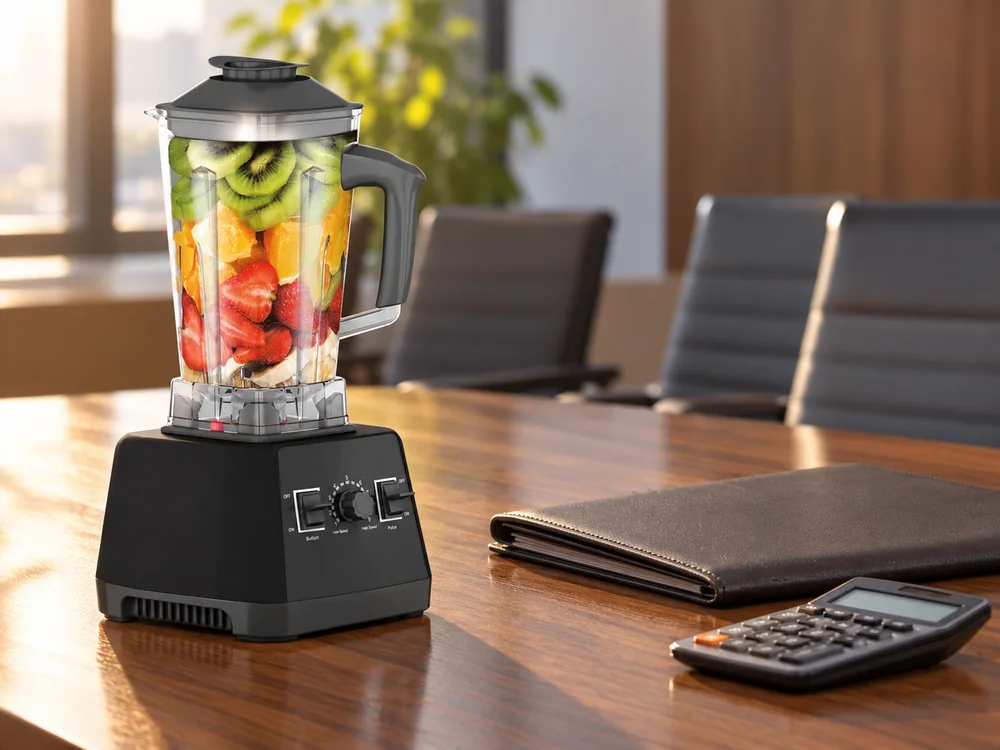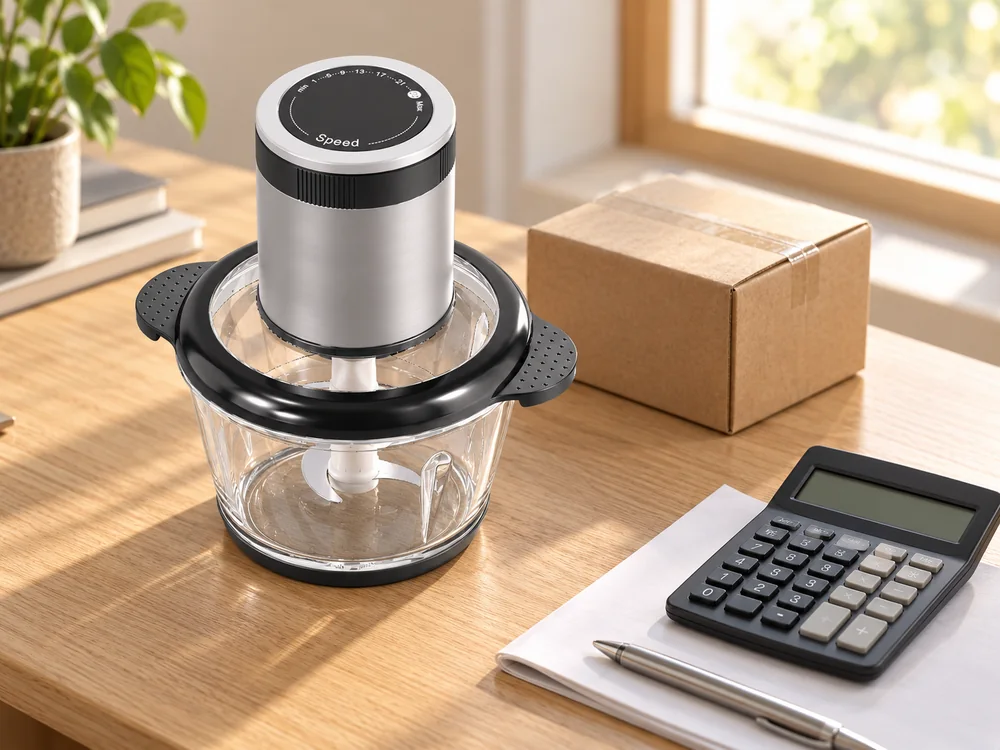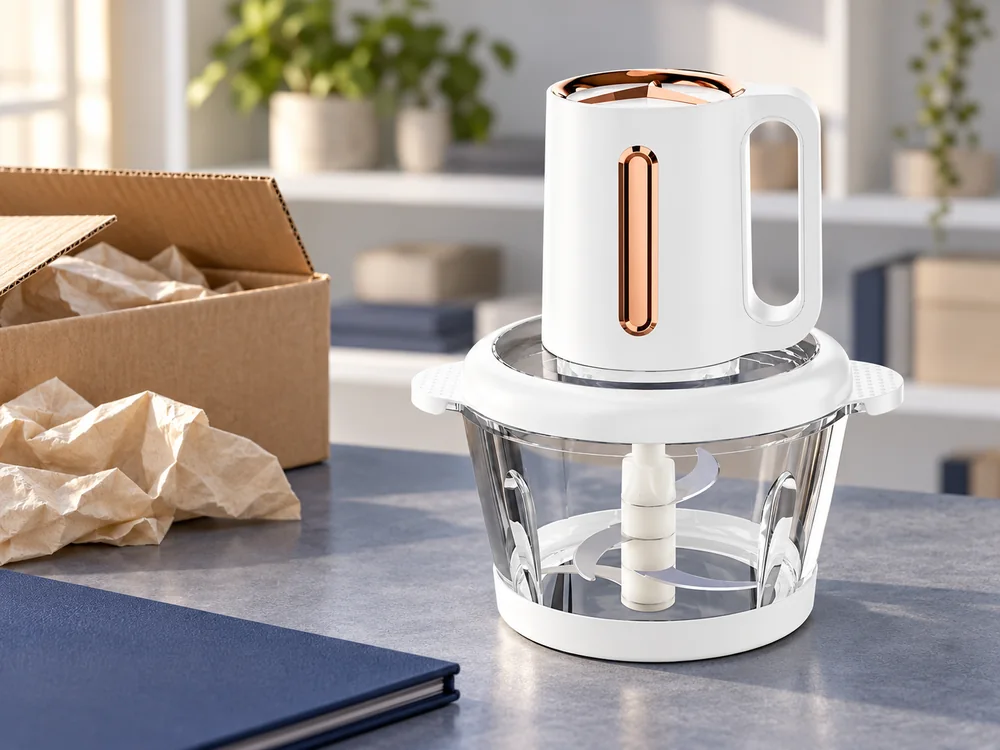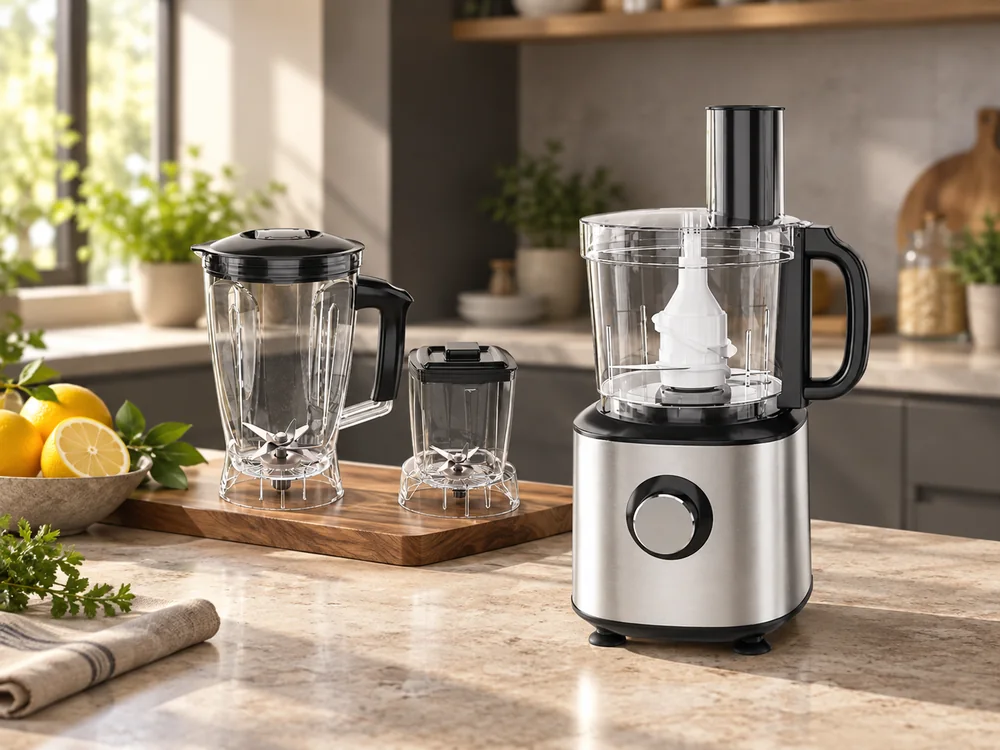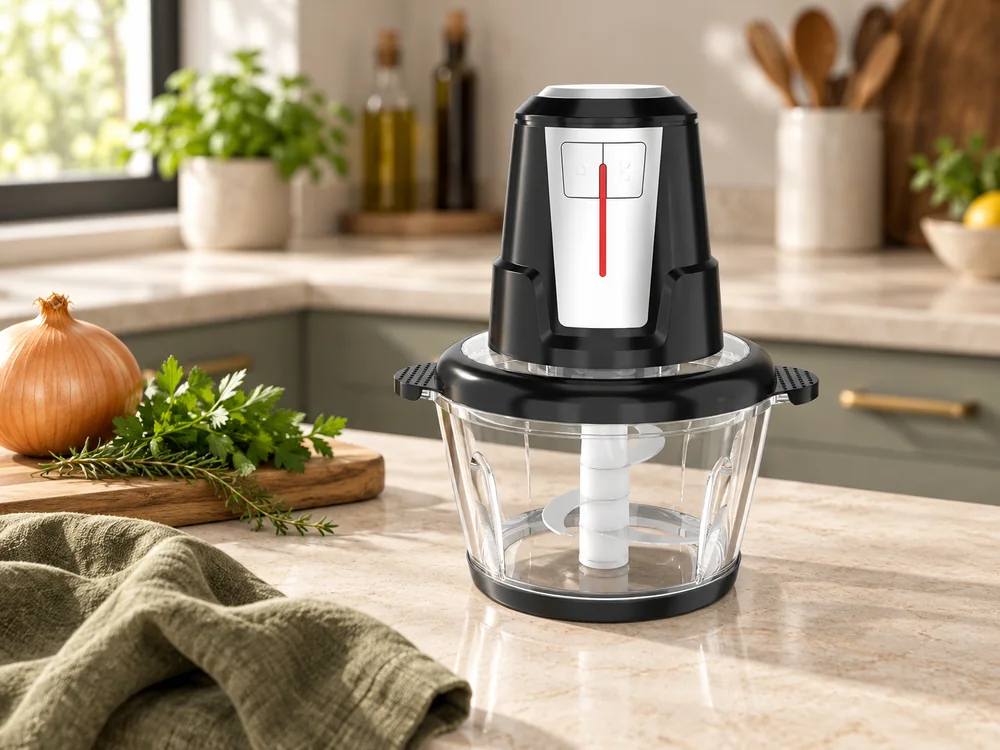
A vegetable chopper manufacturer may offer a hand-operated cutter, a household electric bowl chopper or a much larger processing machine. Before comparing suppliers, decide what the customer should be able to prepare. Chopped onions for cooking, sliced vegetables for serving and a defined dice are different product briefs, even when the catalog puts them under the same name.
For an importer or private-label brand, the buying decision is which complete appliance can support a clear retail promise. That includes the preparation before chopping and the work afterward. A product that looks fast in a short demonstration may still be the wrong choice if the customer needs a different cut, a different batch or an easier way to empty and clean the assembly.
This guide concerns sourcing household electric bowl choppers for vegetable preparation. JINJIE's category information includes vegetables and chopped aromatics, with suitability tied to the selected model and its instructions. It does not establish industrial throughput, continuous commercial use or precision dicing for these products.
Choose a vegetable chopper manufacturer by the required output
Start with an example of the food at the point where the customer will use it. Does the recipe need visibly chopped pieces, slices, shreds or a particular cube size? Give the supplier that description before sending a preferred housing photograph. A strong visual preference can otherwise lead the discussion toward a product whose mechanism does not answer the original need.
A bowl chopper processes ingredients inside its own container. A feed-through slicer or shredder sends prepared food through a cutting arrangement into a receiving container. Those formats create different workflows. Do not select between them by counting advertised functions or by assuming that every appliance pictured beside vegetables produces the same result.
The JINJIE electric meat chopper range is the relevant starting point for a household bowl-chopping inquiry. The category name does not confine every inquiry to meat, but neither does it remove model-specific limits. Describe the vegetables, starting condition and intended result so the proposed appliance can be considered for that use.
|
Customer's preparation request |
Product format to investigate |
Important purchasing distinction |
|---|---|---|
|
Chopped ingredients prepared within a container |
Household electric bowl chopper |
Agree the food, texture and permitted batch for the actual model |
|
Slices or shreds collected outside the appliance |
Feed-through slicer or shredder |
Identify the cutting tool, preparation and receiving arrangement |
|
A defined dice |
A confirmed dicing mechanism |
Do not infer this result from a general chopping description |
|
A manually operated preparation tool |
Appropriate manual cutter |
Keep the operating method and customer effort distinct |
|
Repeated high-volume processing for a business |
Equipment documented for that duty |
Household capacity and power figures do not establish commercial suitability |
If the first conversation exposes a format mismatch, change the product shortlist. There is little value in requesting packaging prices for a bowl chopper when the essential requirement is a uniform slice. Equally, a buyer seeking chopped cooking ingredients need not acquire a larger cutting system merely because it appears in the same search results.
Keep two requirements separate when both are important. A retail range may legitimately need a chopper and a slicer, but each needs its own customer task and purchasing specification. Combining their photographs under one broad description can suggest that either product performs both jobs. The product explanation should remain clear before branding work begins.
Give the manufacturer a usable vegetable-preparation brief
List the main preparation task first, followed by any secondary uses. “Onions for everyday cooking” is a starting point; it still needs the intended texture and approximate preparation quantity. “All vegetables” provides almost no basis for choosing a model. It also creates a marketing promise that is difficult to substantiate across foods and starting conditions.
Describe the input as the customer would prepare it under the instructions. Include whether it is peeled, cut into pieces or otherwise prepared before loading. Do not assume that a whole ingredient shown beside the appliance is intended to enter it whole. Presentation props and permitted loading are different things.
Ask the manufacturer to respond to the brief with a suitable model and the applicable operating information. The response should identify any preparation necessary for the proposed use. If a particular ingredient or condition falls outside that scope, decide whether it is essential. An optional recipe idea can be removed without abandoning a product that suits the main task.
Keep the main use prominent when comparing alternatives. A hypothetical buyer may prioritize chopped onions while treating a second vegetable as a useful extra. Another buyer may need that second vegetable for the central retail promise. The same unanswered question can therefore be a minor limitation in one project and a reason not to proceed in the other.
For quantity, explain the expected preparation job rather than translating nominal bowl liters into a food weight. The permitted load depends on the model and input. Ask for the relevant loading instructions and evaluate the proposed batch within them. Empty space visible in a bowl is not a basis for increasing the load.
State the destination market and proposed electrical version early. Keep them with the sample request so the commercial team does not compare a demonstration of one version with a quotation for another. The brief need not contain an invented technical solution. It needs enough information for the manufacturer to identify which current configuration can be considered.
Finally, explain the expected retail position. A simple cooking-preparation product and a broad recipe-led set may require different presentation and supporting information. This does not justify unsupported additional functions. It tells the manufacturer which of the available, confirmed features the buyer needs to explain most clearly.
Evaluate the whole preparation routine, not only the chopping moment
A short video often begins with food already prepared and ends before the bowl is emptied. For procurement, ask to see the complete permitted routine. What preparation was required? How was the product assembled? How was the food removed? Which parts were cleaned, and how? These steps determine whether the appliance fits the intended customer experience.
Compare the same task across candidates. Keep the ingredient condition, intended quantity and desired result identifiable. If one demonstration uses a different starting preparation, record that difference rather than attributing the whole result to the machine. The buyer needs to understand what the customer would have to do to obtain a comparable outcome.
Examine the complete output, not just the portion arranged for the camera. Decide whether the result answers the cooking brief and whether any further preparation is needed. Do not demand an exact particle-size claim unless a suitable specification and evaluation support it. A descriptive result agreed with the supplier may be more appropriate for the retail use.
Watch how the contents are accessed after operation, following the product's instructions. Handling a lid, removing an assembly and transferring food can matter as much to a household customer as the controls. Assess those steps on the identified sample. Avoid turning a personal handling preference into an unsupported claim that one design is universally safer or more efficient.
Cleaning information belongs in the selection discussion. Ask which components can be cleaned by which method and which parts must remain protected from water. Do not infer dishwasher suitability from a removable bowl or a smooth surface. The useful purchasing question is whether the documented cleaning routine fits the product's intended retail position.
Storage also deserves a practical look. The complete appliance may need a different space from its base alone, and removable parts need a clear home. Request measurements where shelf height or storage space is a genuine constraint. A lifestyle image cannot provide accurate dimensions, even when the setting resembles the customer's kitchen.
Use the quality and testing discussion to identify the checks relevant to the proposed product. Keep an observed preparation result separate from electrical or other technical testing. One successful food demonstration does not establish all the characteristics needed for the market, and a general quality statement does not answer the customer's cooking task.
Compare the manufacturer's actual product proposal
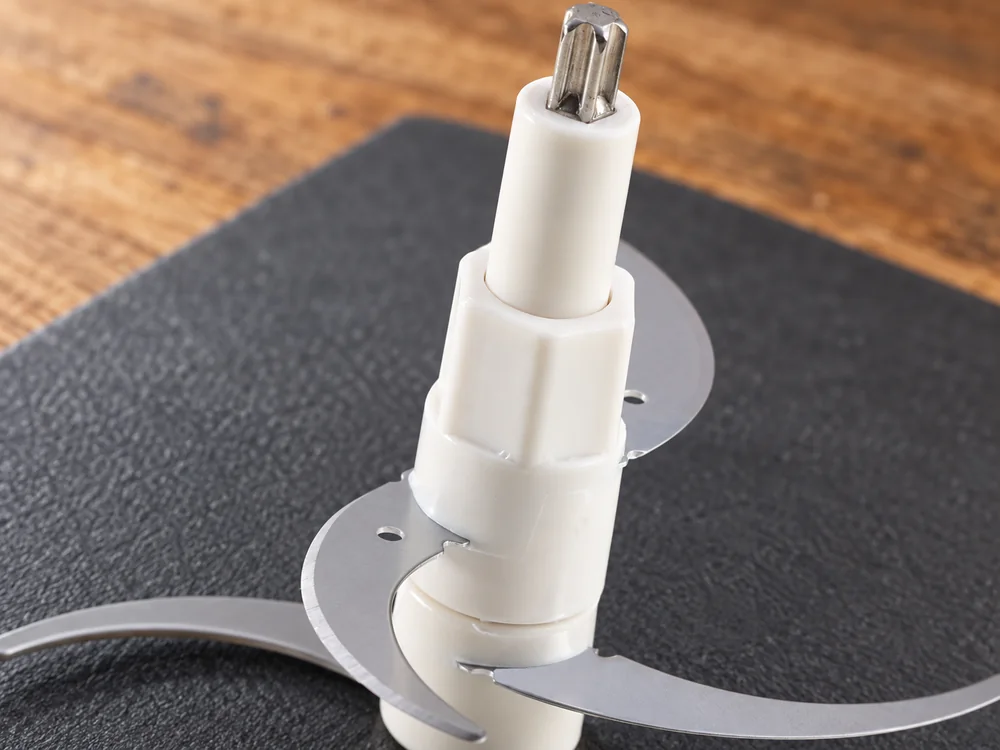
Once the preparation brief is clear, ask each manufacturer to identify the complete offered configuration. Include the motor unit, bowl, lid, blade assembly, controls and supplied items. A proposal that names only the housing leaves too much unresolved. Visually similar products can have different assemblies and different instructions.
Use model references as identifiers rather than substitutes for descriptions. Keep the quoted model with a concise account of its bowl and supplied assembly. If the supplier proposes an alternative, ask what changes for the required vegetable-preparation task. A similar capacity or appearance does not establish that it will serve the same retail promise.
Bowl material can be considered where it affects the intended presentation or handling. A transparent bowl allows the contents to be seen, while a metal bowl presents a different appearance. Compare the actual complete samples and packing proposals. Neither material name supplies evidence of a particular chopping texture, permitted ingredient list or usable load.
Ask what the controls do on the selected version. More buttons do not automatically answer more preparation needs. If the simpler current configuration supports the main task, it deserves a comparable quotation. If a particular interface is important to the retail concept, identify it as a requirement and confirm that the instructions and presentation match it.
The manufacturer should also explain whether the proposal is a current product, a current product with branding changes or a development request. Those are different purchasing commitments. A request for a new bowl arrangement or control behavior should not be treated as ordinary label customization. It may require technical assessment before a meaningful offer can be made.
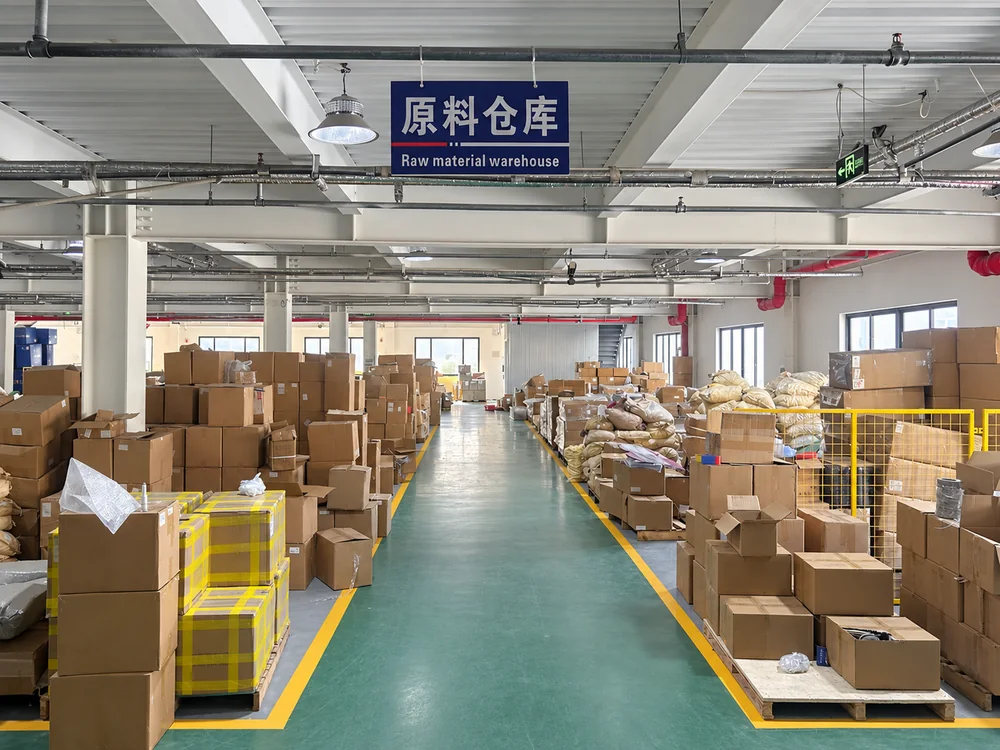
Keep factory background relevant to the product decision. Photographs of assembly or inspection can help explain the manufacturing context, but they do not prove a specific chopping result. Ask for the response to your actual preparation brief. A broad catalog and an attractive factory tour are useful context only when the proposed appliance itself fits the required job.
If two proposals remain viable, compare the unresolved questions that could change the choice. One may need a clearer handling demonstration; another may need confirmation of an essential ingredient. Request the evidence that resolves those questions. Ordering every color option would add samples without improving the underlying decision.
Keep vegetable claims and retail presentation within the chosen scope
Food imagery is part of the product promise. A box covered with different vegetables may imply broader capability than the confirmed instructions support. Choose images and wording from the uses established for the selected product, and distinguish a general preparation setting from a claimed processing result.
Name the principal task plainly. If the product is being selected for chopped ingredients, avoid presenting it as a precision dicer or a substitute for every kitchen preparation appliance. A narrower, understandable description can give the customer a better reason to buy than a long function list whose meanings are unclear.
JINJIE's OEM and ODM options provide a route for discussing the product's branding and presentation. Start that work from the selected appliance and agreed use. Color, logo and retail packaging should help explain the offer; they cannot extend the appliance's documented operating scope.
Review any recipe-led claim against the steps actually required. If the appliance only prepares one ingredient in a recipe, the wording should say that. A finished dish beside the product should not suggest that the machine completes cooking or every preparation stage. This distinction is especially important when the retail presentation uses several attractive food photographs.
Keep included items clear in both images and text. A serving bowl, board or spoon used to create a natural scene may be a prop. The purchasing record and retail contents information should identify the supplied items without relying on the viewer to guess. Do not add an accessory to the offer simply because it appeared in a styled photograph.
When an essential use remains unresolved, hold the affected claim and product decision open. When only an optional use is unconfirmed, the buyer can choose to proceed with a narrower offer. Record that boundary so a later artwork revision does not quietly reintroduce the unsupported food or result. This keeps commercial progress connected to the actual appliance.
Select a complete offer that preserves the main cooking task
Compare prices only after the proposed product and retail contents are identifiable. Use the same order quantity, market version and packaging basis where possible. If an offer excludes something needed for the intended presentation, ask for the complete price before treating it as the lower-cost equivalent.
The following situations lead to different purchasing actions. They should not all end in a request for another generic demonstration.
|
Finding during selection |
What needs to be resolved |
Purchasing response |
|---|---|---|
|
The required result belongs to another product format |
Whether the mechanism suits the main task |
Change the shortlist before spending on branding |
|
The main use is suitable but a secondary food is unconfirmed |
Whether that extra use is essential to the offer |
Narrow the presentation or request a targeted evaluation |
|
The result is suitable but preparation is inconvenient |
Whether the complete routine fits the customer |
Reconsider the retail position or compare another product |
|
Two offers show similar housings but different assemblies |
Which complete product each price includes |
Obtain configuration-specific quotations |
|
A lower price depends on removing a required item |
Whether the revised set still serves the main task |
Compare the complete offer, not the isolated unit price |
Consider the opening quantity in relation to the number of versions. A second bowl or control option can create another retail choice, but it also needs a clear description, purchasing reference and stock commitment. Add it for an identifiable customer reason. Do not increase the assortment merely because several variants were available during sampling.
Keep the reason for the final choice with the order reference. If the selected product suited a particular preparation routine, that reason should remain visible when someone later proposes a substitute. Replenishment should return to the same requirement, with current availability confirmed, rather than rely only on a familiar catalog image.
The useful outcome is a defined appliance, a supportable vegetable-preparation promise and a complete offer the buyer can compare. Remaining optional ideas can stay outside the first commitment. Essential unanswered questions should remain visible until they are resolved.
Discuss the product you need to sell
Send JINJIE your vegetable chopper requirements with the main ingredients, desired result, expected preparation quantity, destination market and retail-set requirements. Include a reference image if you have one, but explain the task behind it. Ask for a suitable current configuration and the information needed to decide whether it belongs in your range.
FAQ
What if the supplier demonstrates a different vegetable from the one in my brief?
Treat it as background, not an answer to the unresolved use. Ask for the intended ingredient to be considered for the identified model within its instructions. If that ingredient is essential and remains unconfirmed, the product decision is still open. A successful demonstration with another food does not close that gap.
Can I sell the product mainly for vegetables if the category calls it a meat chopper?
The retail description should follow the selected model's supported uses. JINJIE's category discusses vegetables and aromatics as well as meat, but confirm the actual model and instructions before choosing the wording. A category name alone should neither rule out a suitable use nor authorize every vegetable claim.
Should I request a second sample when only the bowl appearance changes?
First ask whether the complete assembly or handling changes and whether the difference matters to the purchase. A physical comparison may be useful for presentation or handling. If the decision concerns a food result, identify the relevant technical difference before assuming another bowl appearance will resolve it.
What should happen if a retailer asks for a broader food claim after approval?
Refer the new use to the supplier with the selected model and intended preparation conditions. Keep the existing presentation unchanged until the additional scope is supported. If the new request requires another product, evaluate it as a separate offer rather than expanding the original appliance's claims through copy alone.